Pressure, Power Cuts and People on the Streets: What the World's Top Five Stories Mean
Foreign Affairs Forum | Dr. Antonio Bhardwaj (Dr. 🆎)
Introduction
This weekend, five big stories showed how countries compete today.
They do not only fight with soldiers and tanks. They also use ships, electricity, trade, climate talks and elections. This simple FAF article explains each story in plain language and shows how they connect.
The United States Widens Pressure on Iran
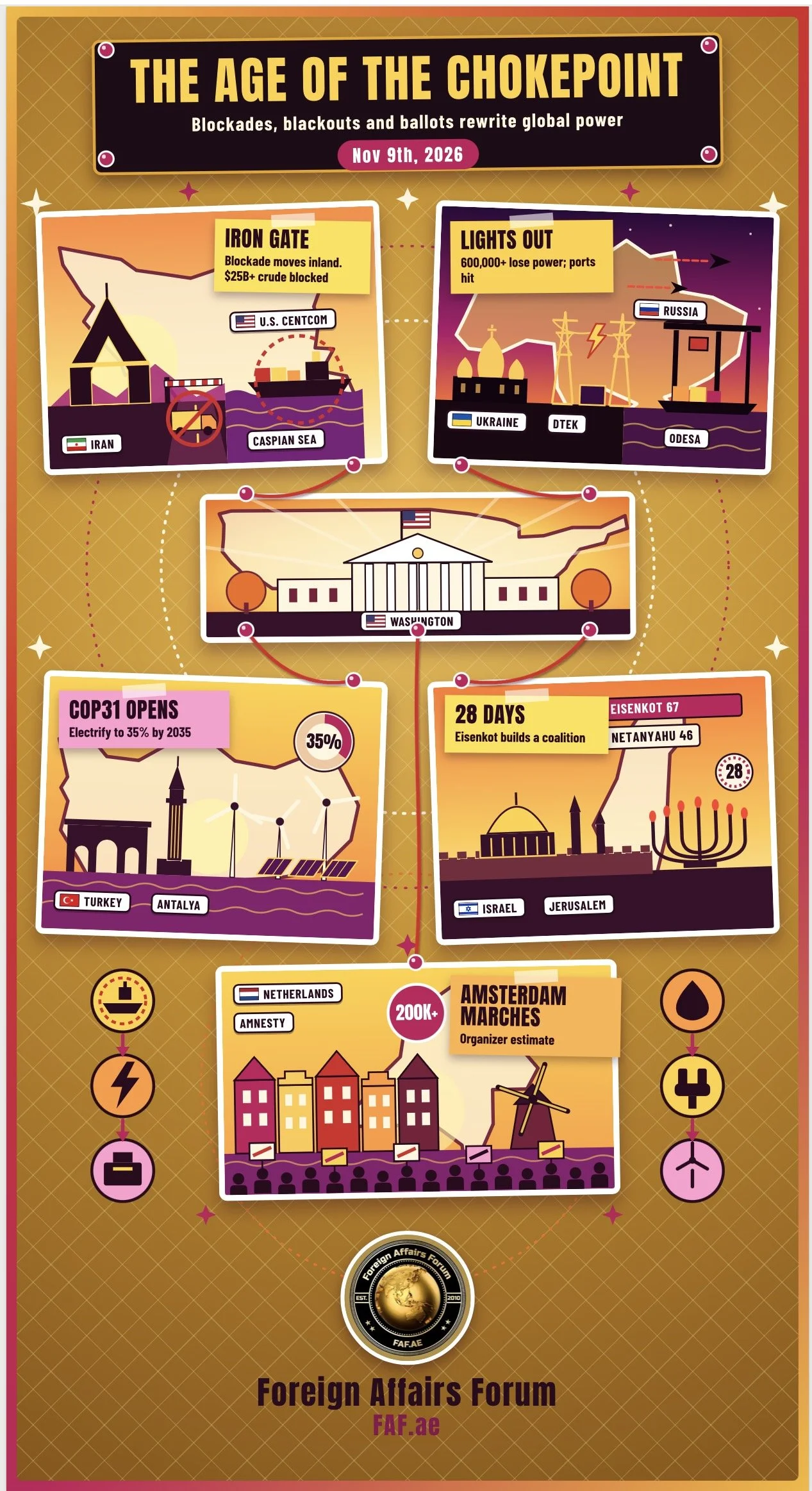
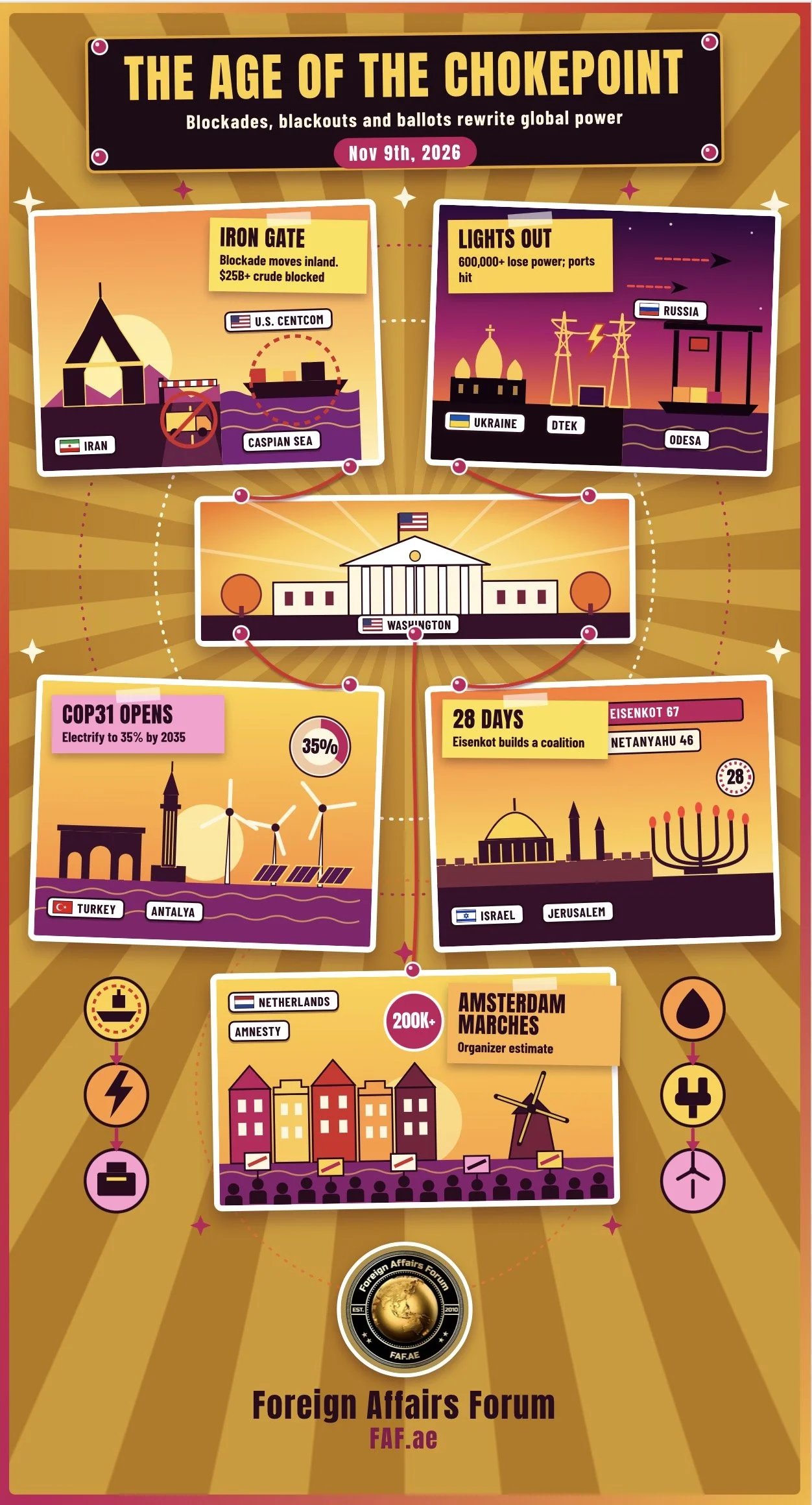
The United States has been blocking Iranian ships at sea for months. This stops Iran from selling its oil. American officials say the blockade has kept more than $25 billion of Iranian oil off the market.
Now Washington has started a new group called Task Force Iron Gate. Its job is to stop weapons, banned goods, special technology and illegal money from moving into or out of Iran by land and across the Caspian Sea.
The Caspian is a large inland sea shared by five countries. One investigation found that Iran has imported at least $2 billion worth of military equipment since January 2025, through networks that involve Russia, Central Asia and China.
Why does this matter? Iran found a new way to trade when its southern ports were blocked. The United States wants to close that way too. The risk is that more checks near Iran's borders could raise tension. There are also legal questions. Can one country stop trade that crosses other countries' land? The United States will need to answer that clearly.
Dr. 🆎 says, "When one door is closed, a determined country finds another. The real test is whether pressure leads to talks or to a wider fight."
Russia Hits Ukraine's Power and Ports
Russia says it hit power stations in Ukraine and three cargo ships near the ports of Odesa and Chornomorsk. Moscow claims the ships carried military goods. That claim could not be checked by independent sources.
A Ukrainian energy company, DTEK, said the attacks damaged important power equipment in the Dnipropetrovsk region. More than six hundred thousand people lost electricity. Winter is close, so this is serious. People need power for heat, water, hospitals and factories.
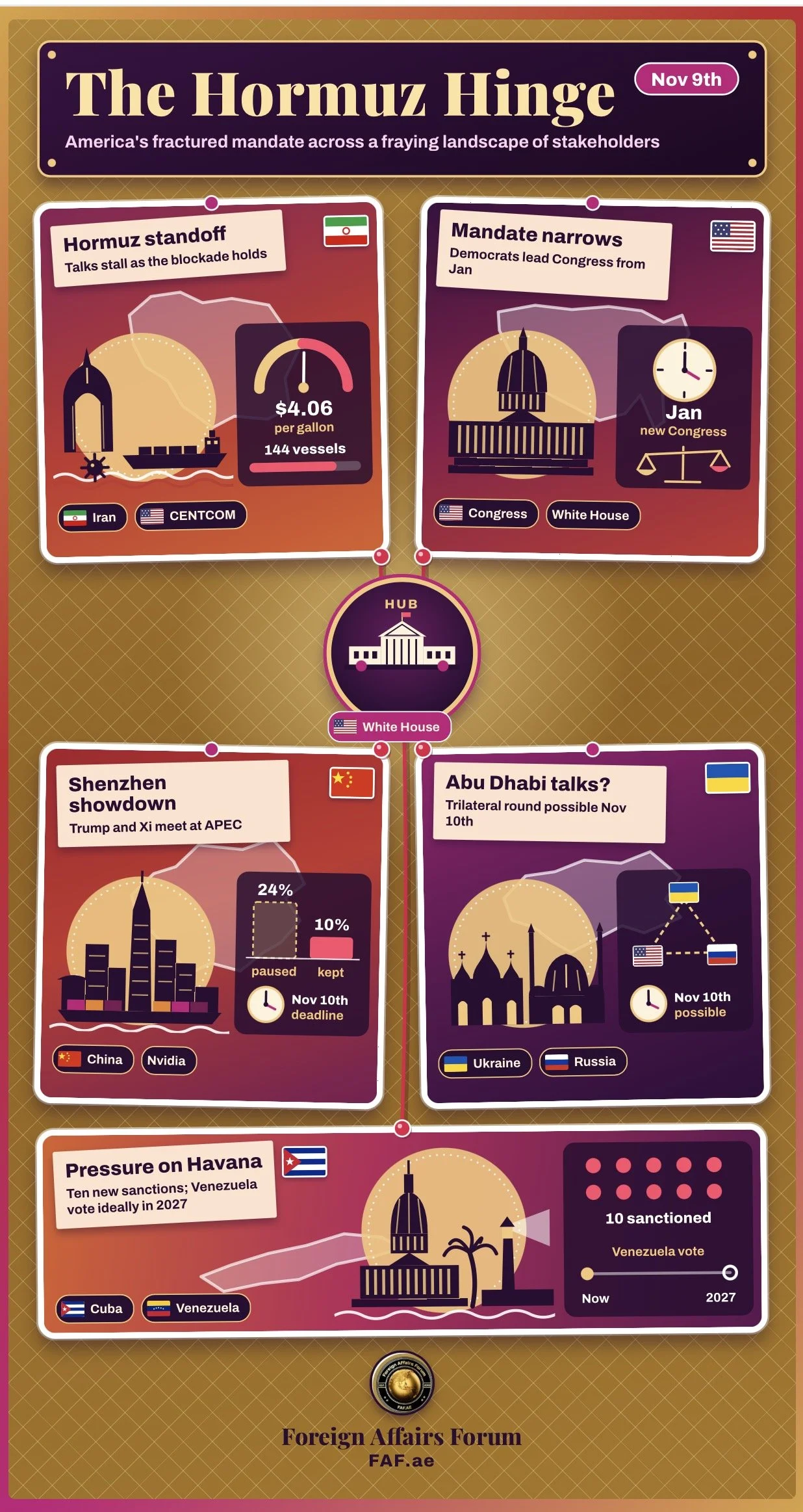
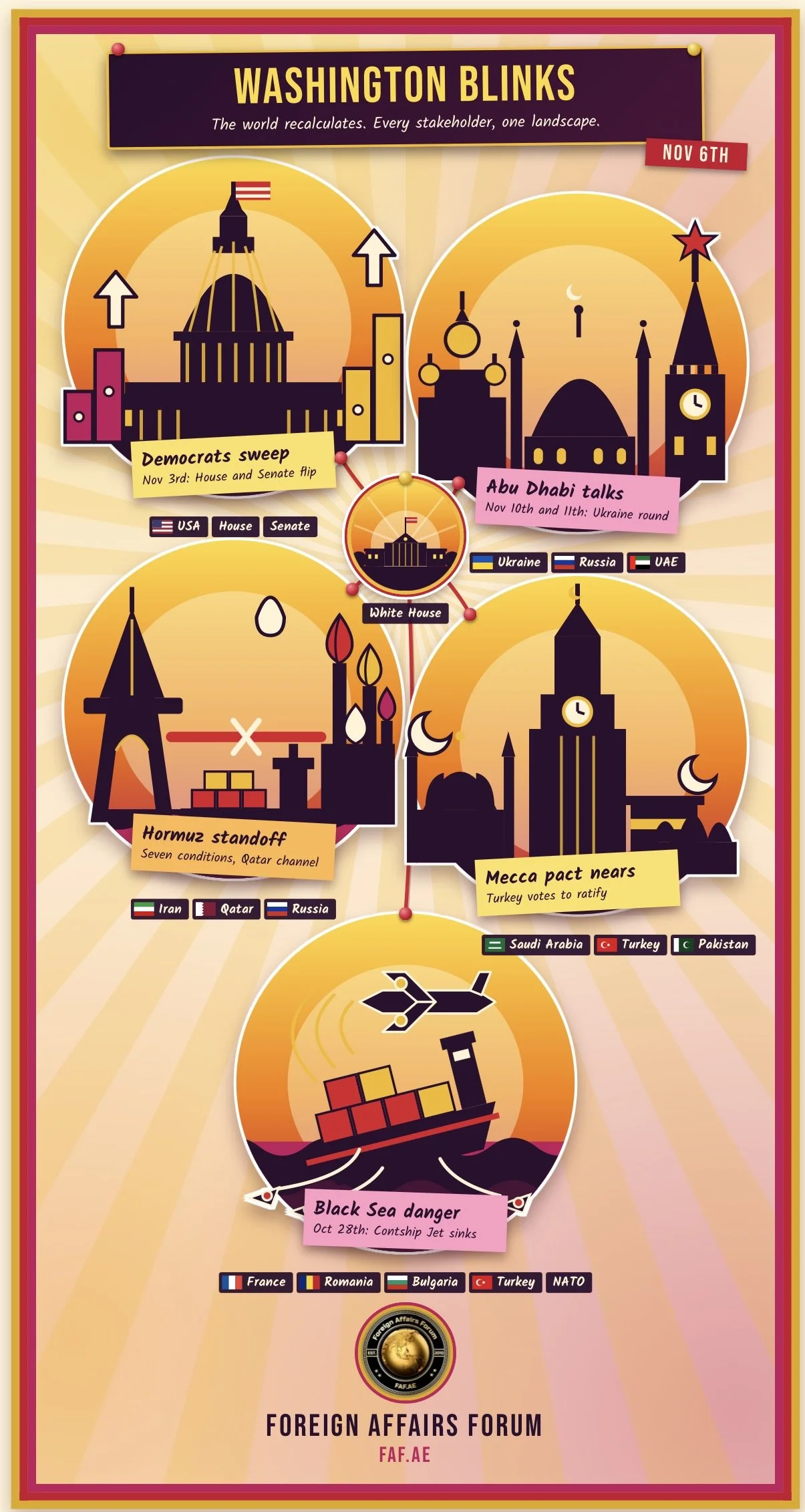
The attacks came just before new talks between the United States, Russia and Ukraine in Abu Dhabi. These talks are expected on Nov 10th and 11th. Many observers believe Russia wants to show strength before sitting at the table. Ukraine wants the Black Sea shipping routes reopened and safe, because its farm exports depend on them.
If the talks can agree to stop attacks on power systems and civilian shipping, that would help ordinary people and also calm world food markets.
Dr. 🆎 explains, "Power grids and ports are the lifelines of a modern country. Protecting them should be the first thing any peace effort achieves."
The World Meets in Turkey for COP31
Representatives from nearly two hundred countries have gathered in Antalya, Turkey, for the United Nations climate conference called COP31. It runs from Nov 9th to Nov 20th. Turkey is hosting, and Australia is leading much of the political negotiation.
The main idea from the hosts is electrification. This means using more electricity, for example in cars, buildings and factories, instead of burning oil, coal and gas directly. Turkey proposes that electricity should supply about 35% of the world's final energy use by 2035. Today it supplies a little over 20%. The goal is voluntary, not legally binding.
Not everyone agrees on how fast to stop using fossil fuels. The United States is not taking part, because President Trump has withdrawn from international climate cooperation. The war involving Iran has pushed up energy costs, and artificial intelligence is using more and more electricity. These things make agreement harder.
Success at COP31 should be judged by money and action, not by speeches. Countries need to promise real funding and deliver real projects.
Dr. 🆎 adds, "Building clean power is now a security matter too. Any country that controls its own electricity is harder to pressure."
Israel Begins the Search for a New Government
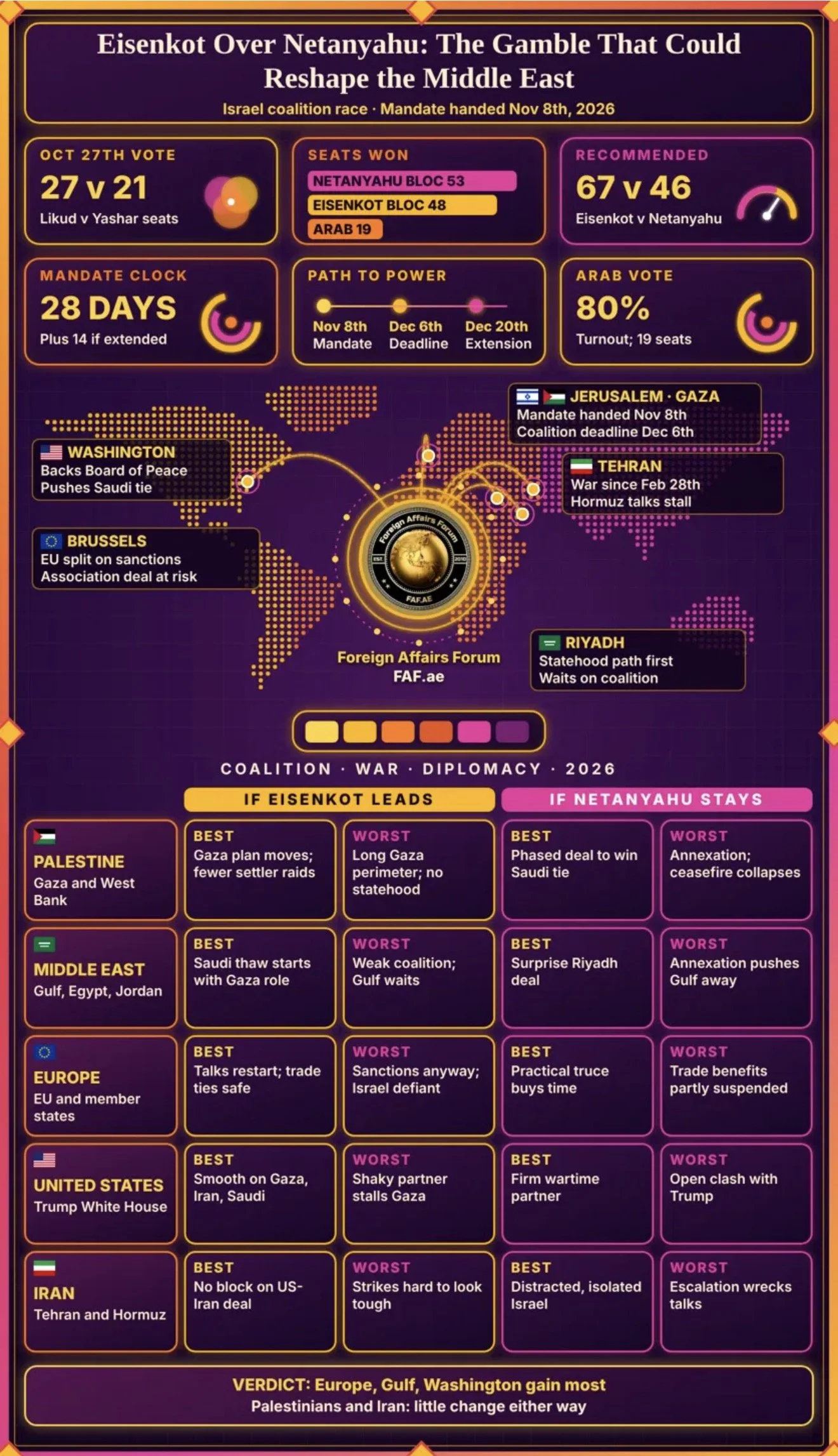
Israel held an election on Oct 27th, but it did not produce a clear winner. Israel's president, Isaac Herzog, has now invited Gadi Eisenkot, the leader of the opposition, to try to form a government. Eisenkot, a former army chief, won the support of sixty-seven members of parliament, while forty-six backed Prime Minister Benjamin Netanyahu. Seven did not choose either man.
Eisenkot has twenty-eight days to build a coalition. He can ask for fourteen more days. If he fails, the president can give the task to someone else, and Netanyahu could still get a chance. Until a new government is formed, Netanyahu remains in charge as a caretaker.
The talks are hard. The parties disagree about working with Arab-led parties, about military service for ultra-Orthodox men, and about whether leaders might share power. Being asked to form a government is important, but it does not guarantee success. Eisenkot needs a real majority that will stay together.
The outcome matters for the whole region because the next Israeli government will decide how to deal with Iran, Gaza and Lebanon.
Dr. 🆎 notes, "A government that is weak at home finds it hard to make bold choices abroad. Stability is a security asset."
A Huge March in Amsterdam
Tens of thousands of people marched through Amsterdam on Sunday. The Dutch branch of Amnesty International estimated that more than two hundred thousand people took part. This number comes from organizers and has not been independently confirmed.
The marchers asked the Dutch government to do more about Israel's military operations in Gaza. They wanted tougher trade sanctions, limits on arms sales and stronger diplomatic pressure. The Netherlands has already banned imports from Israeli settlements. Prime Minister Rob Jetten defended what his government is doing and said pressure is also being put on Hamas and other armed groups. Israel rejects the claim that its actions amount to genocide.
The march shows how public opinion can shape foreign policy in democracies. The key question is whether Europe will act together. If countries act separately, the effect will be small. If they act as a bloc, the effect on trade and arms sales could be large.
How the Five Stories Connect
At first these stories look separate, but they share three lessons. First, economic tools have become weapons. A blockade in Iran and attacks on power plants in Ukraine both aim to weaken a country by hurting its economy. Second, politics at home shapes policy abroad. Israeli coalition talks and Dutch street protests both show that leaders must keep public support. Third, energy ties everything together. Oil prices, electricity grids and climate promises are all linked to war and peace.
Dr. 🆎 puts it this way: "We used to measure power by the number of weapons. Now we must also measure it by how well a country can keep its lights on, its ships moving and its people united."
What to Watch Next
Watch whether Task Force Iron Gate really changes how Iran buys weapons and moves goods. Watch whether the talks in Abu Dhabi on Nov 10th and 11th go ahead and protect energy and shipping. Watch whether COP31 produces real money and firm plans for electricity, adaptation and cutting emissions. Watch whether Eisenkot can win a majority within his deadline. And watch whether the Amsterdam march leads to joint European action on sanctions and arms sales.
Conclusion
The main lesson of this weekend is that power now depends on resilience. Countries that can protect their power grids, factories and trade routes, and that keep the trust of their own people, will do better in a long period of instability. Leaders who rely only on pressure, without a plan for peace, may find that the pressure creates new problems.
Dr. 🆎 ends with a simple thought: "Strong systems need wise people. The best technology and the strongest economy still depend on good judgment and public trust."