Five Big Stories Shaking the World: What They Mean in Simple Words
Introduction
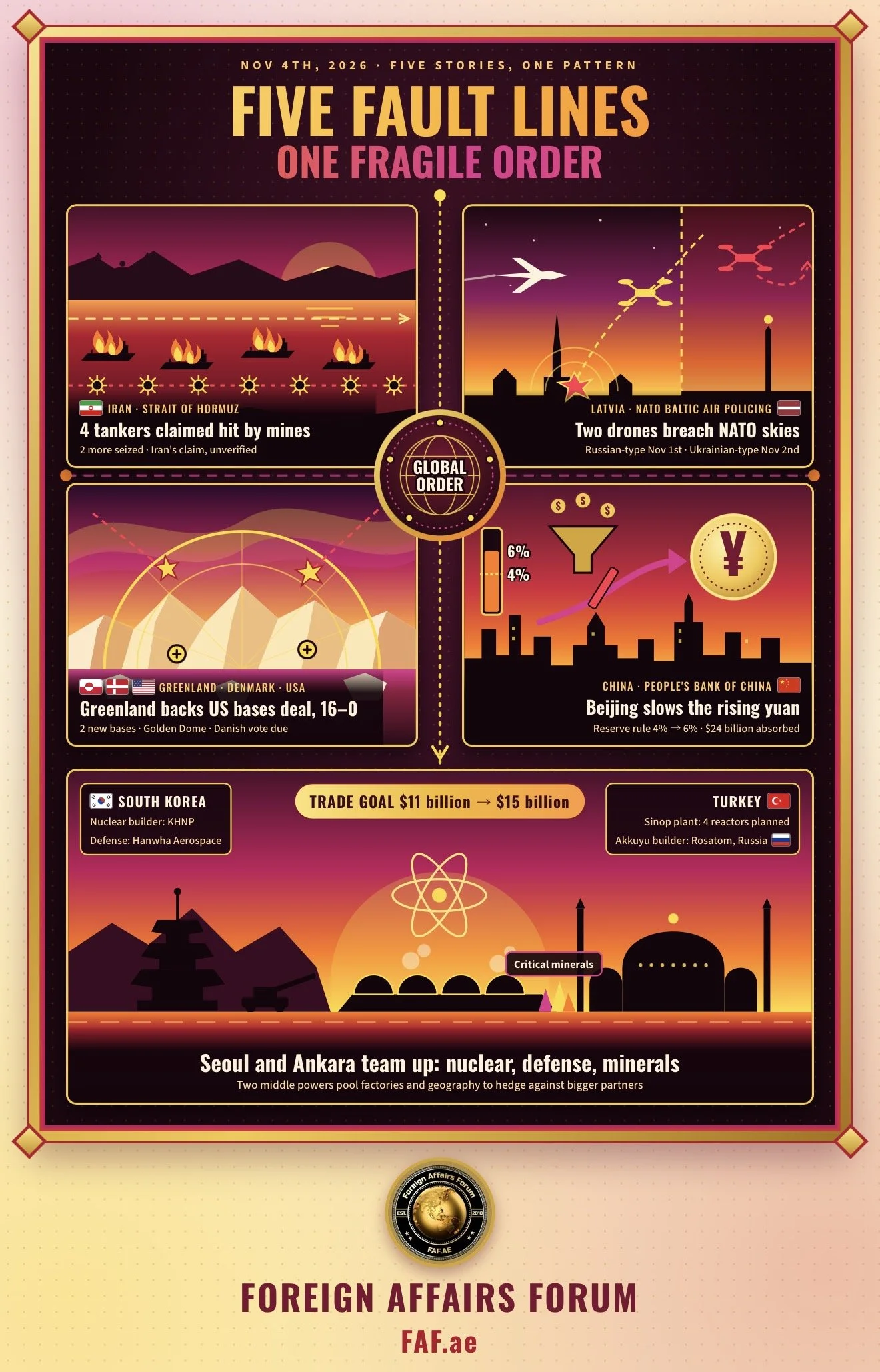
Many important things happened in world politics this week. Voters in the United States changed who controls their Congress. Leaders are getting ready to talk about the war in Ukraine. Iran and the United States are arguing over how to end their conflict. Three countries are forming a new military team. And ships in the Black Sea are being attacked.
FAF article explains each story in simple English and shows how they connect.
Dr. Antonio Bhardwaj (Dr. 🆎), an expert in human-centred super intelligence, geopolitical strategy, AI warfare and bioterrorism risk, shares his thoughts along the way. After this first mention, he is called Dr. 🆎.
Story One: Americans Change Congress
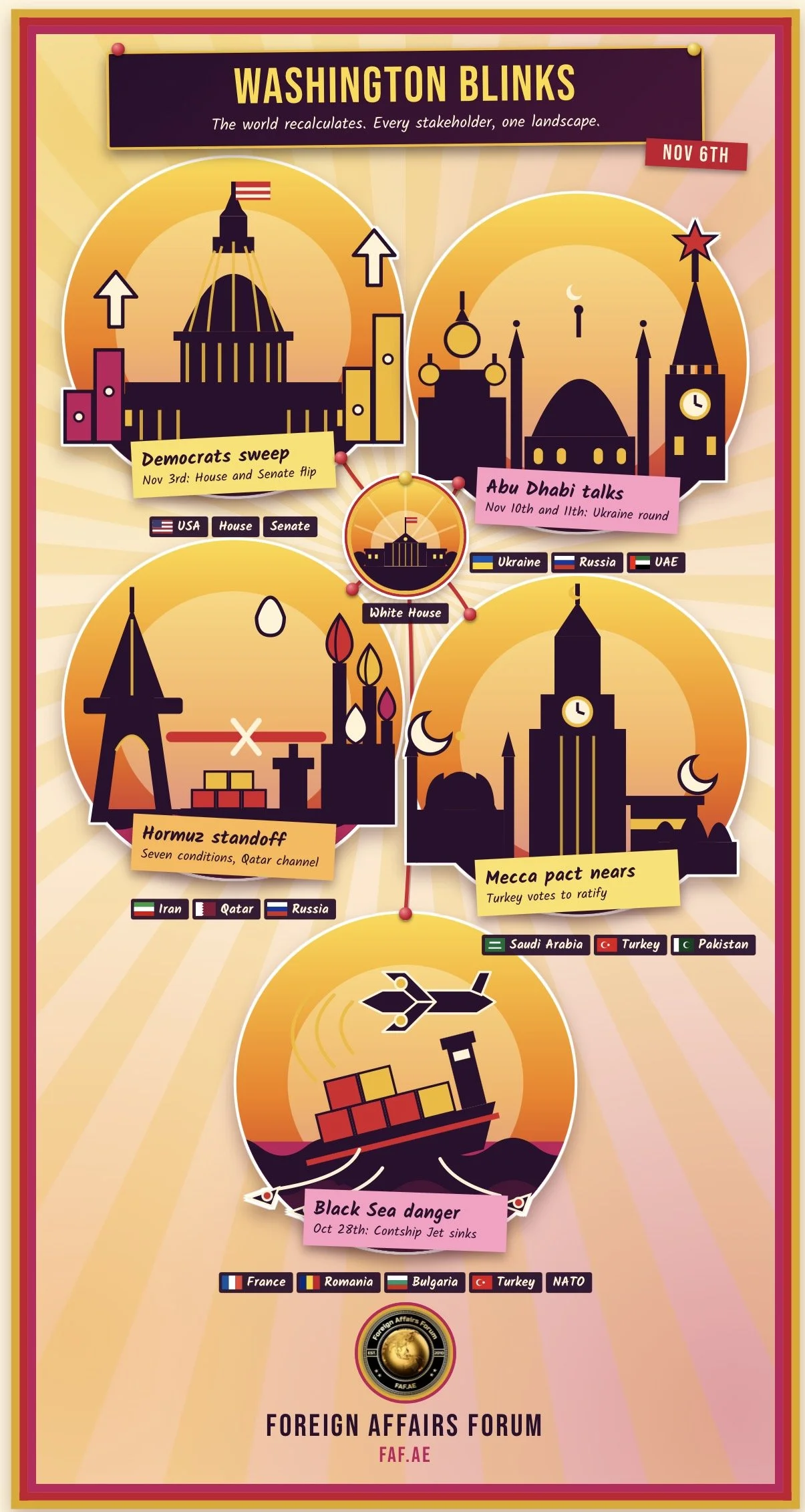
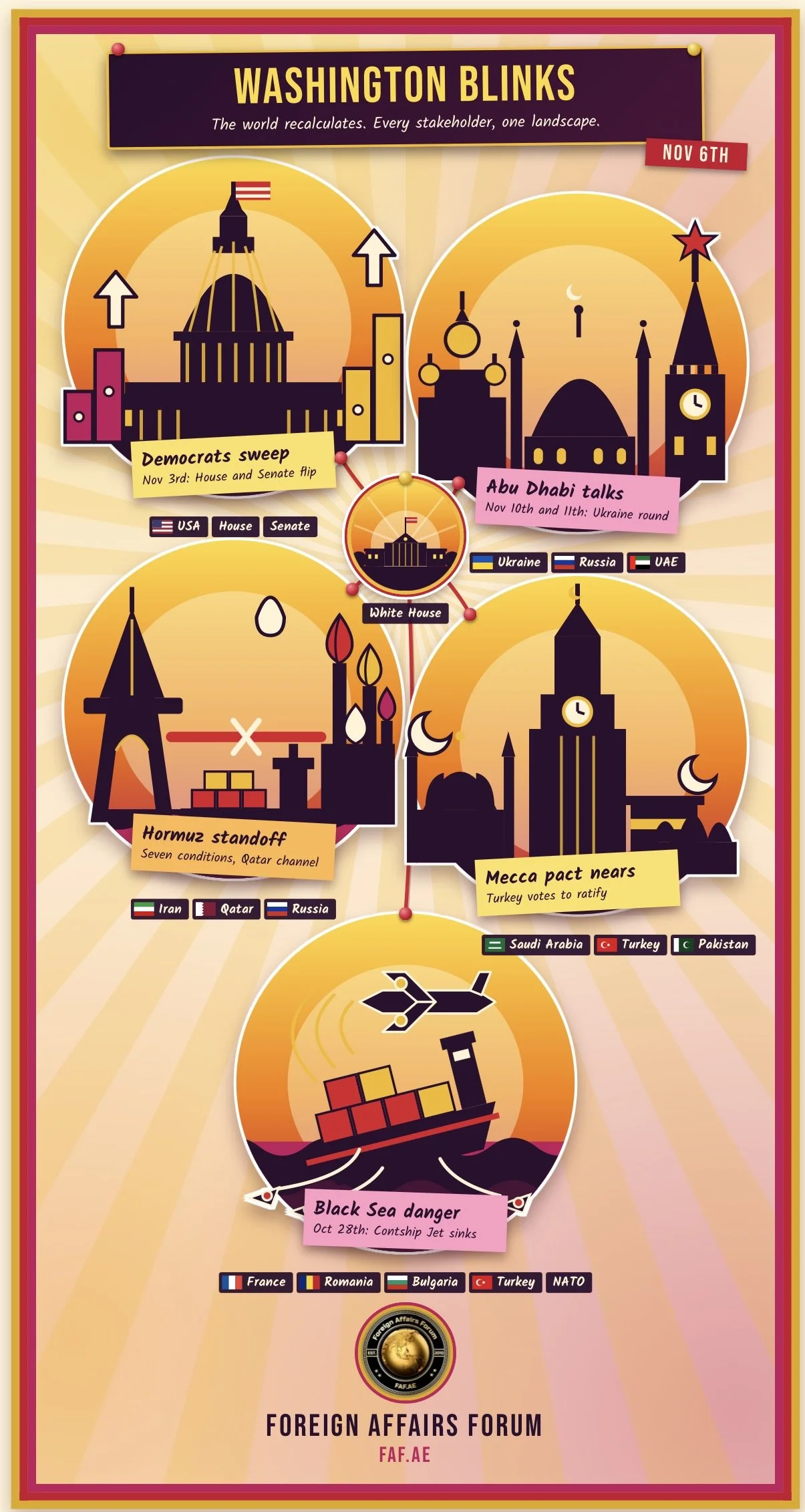
On Nov 3rd, American voters gave the Democratic Party control of both the House of Representatives and the Senate. Many voters were unhappy about high prices. The war with Iran and new taxes on imported goods pushed up the cost of fuel and daily items. The president's approval rating was only in the low to mid 30s.
This does not mean the president loses his powers. He still leads the army and talks to other countries. But Congress controls the money. It can hold hearings, ask hard questions and slow down plans it dislikes. Other countries are watching closely. China hopes for easier trade talks. Iran hopes Congress will limit new attacks. European countries hope for steadier American policy. In simple terms, what happens inside America now changes what happens around the world.
Story Two: Talks About Ukraine
The war in Ukraine is now in its fifth year. New talks are planned in Abu Dhabi on Nov 10th and 11th. Russia, Ukraine and the United States are expected to take part. The American president also said he met a Russian envoy, Kirill Dmitriev, and felt hopeful.
The hardest questions have not changed. Who controls which land? What protection will Ukraine have if fighting starts again? How will Europe stay safe?
Dr. 🆎 warns that a quick agreement without strong promises can be like a bandage on a deep wound. "A ceasefire that nobody can enforce only delays the next crisis," says Dr. 🆎.
Story Three: Iran and the Strait of Hormuz
The war between Iran and the United States has lasted about seven months. Early this year, the Strait of Hormuz, a narrow sea road that carries much of the world's oil, was closed. Prices jumped and many countries suffered. A deal in June briefly helped, but it later fell apart.
Now Iran has sent a nuclear proposal through Qatar. It also lists seven conditions. These include ending the American naval blockade, freeing frozen money, and easing sanctions on oil. Iran says it will reopen the strait within seven days if these conditions are met. The United States answered, but Iran said the answer was not enough. America wants nuclear questions discussed from the very beginning. Iran says its nuclear policy has not changed and that it remains in the nuclear non-proliferation treaty.
This week, a senior Iranian official, Mohsen Rezaei, met Russian President Vladimir Putin in Moscow. Russia cannot fix Iran's problems alone, but the meeting shows that Moscow wants to stay important in the Middle East.
Why does this matter to ordinary people? When the strait is closed, petrol and heating cost more, factories pay more for energy, and shops raise prices. So a decision made in a faraway meeting room can change what a family pays at the supermarket.
Story Four: A New Defence Team
In August, Saudi Arabia, Pakistan and Turkey signed the Mecca Joint Defence Agreement. The idea is simple: if one of them is attacked, the others will help. It is similar to the promise inside NATO. Saudi Arabia and Pakistan have already approved it. Turkey's parliament committee approved it on Oct 27th, and the full parliament is expected to vote soon.
Turkey says the pact is for defence, not attack. Turkish help is likely to focus on air defence, electronic warfare, intelligence and military technology. This matters because Saudi Arabia has been hit by missiles and drones from Houthi groups in Yemen. The pact shows that regional countries now want their own security plans and do not want to rely only on America. It can make attackers think twice, but it can also pull more countries into a fight.
Story Five: Danger on the Black Sea
On Oct 28th, three sea drones hit the container ship Contship Jet. It later sank. All eighteen crew members were saved. A French patrol aircraft in Romania saw the drones coming and gave a warning, and that saved lives. Still, the aircraft could only watch. It could not stop the drones.
This was one of nine merchant ships hit in October. Nobody has proved who is behind the latest attack. Russia says it is not involved. Because of this danger, France will keep its aircraft in Romania for several more weeks. Bulgaria, Romania and Turkey have also agreed to work together more closely.
Insurance is another hidden cost. When ships travel through dangerous waters, insurance companies charge much more. Those extra costs are passed on to buyers of grain, fuel and other goods. Farmers who depend on the Black Sea to sell their crops also suffer when ships are delayed or do not sail at all.
Dr. 🆎 explains the lesson clearly. "A cheap drone can threaten a very expensive ship and its crew," says Dr. 🆎. "We need smart systems that see danger early, but a human being must always decide when force is used."
How the Stories Connect
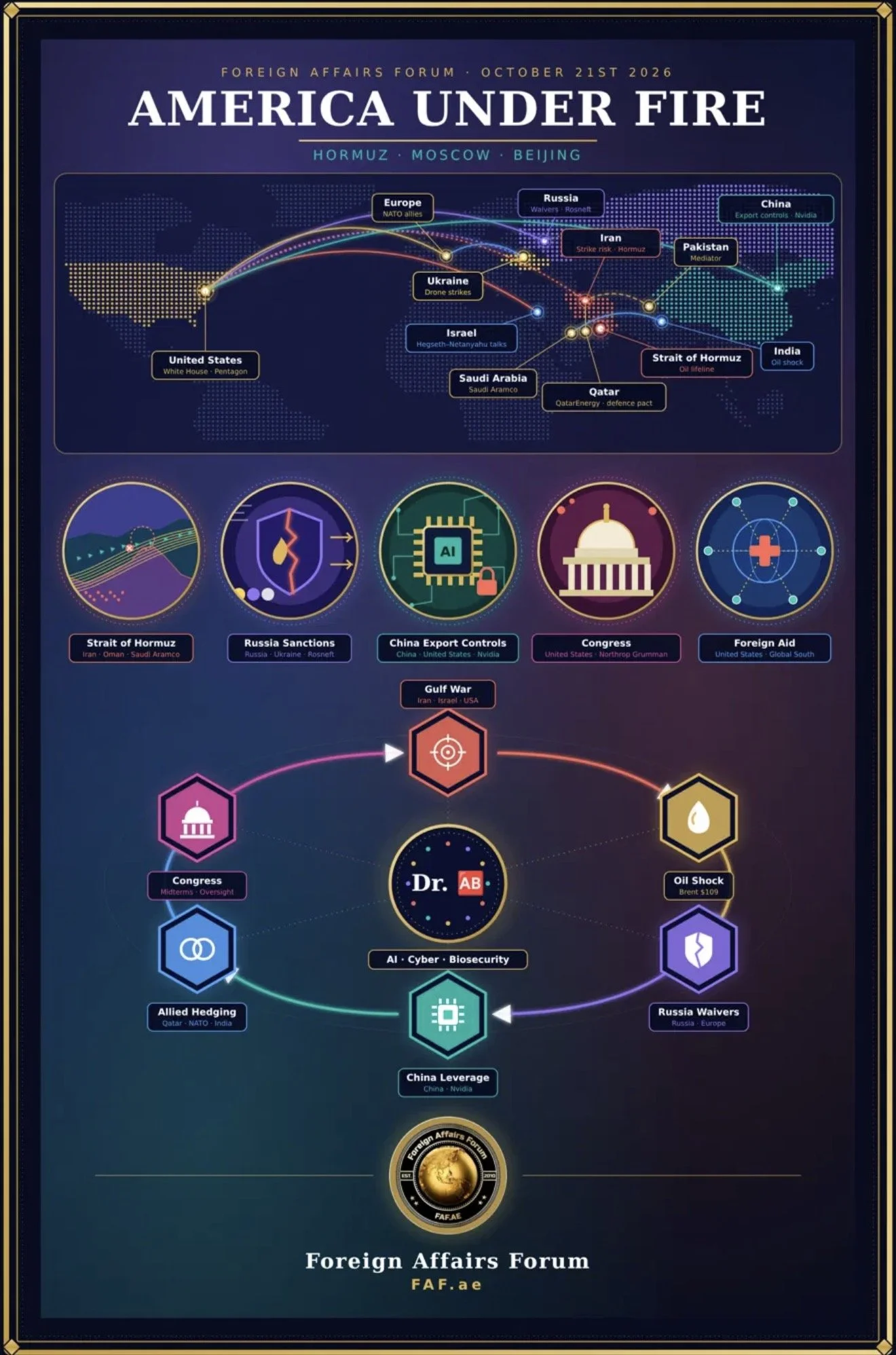
These five stories are parts of one big picture. High prices caused by war and taxes helped change the American vote. That vote changes how other countries bargain with Washington. The war with Iran made Gulf countries feel unsafe, so they built a new defence team. Russia watches all of this, talks to both sides and benefits when oil prices stay high. And ships in the Black Sea and the Strait of Hormuz show how a small attack in a narrow place can hurt families far away through higher bills and food costs.
Europe has a special place in all of this. European countries depend on the Black Sea for grain and shipping, on the Gulf for energy, and on America for protection against Russia. Yet they often have the least say in the big decisions. If European leaders speak with one voice and build real strength, they can help shape the outcome. If they stay divided, others will decide for them.
Every country is trying to solve four problems at once: keep soldiers and citizens safe, hold talks, protect energy supplies, and keep voters at home satisfied. If one problem is handled badly, the others get harder.
Dr. 🆎 also warns about a quieter risk. When leaders are distracted, dangerous groups may look for gaps. This includes cyber attacks and misuse of biology. "Preparing for new kinds of threats, including biological ones, must continue even when the news is full of wars," says Dr. 🆎.
What Could Happen Next
There are some sensible steps. Washington and Congress should agree on a few clear promises so friends and rivals know what to expect. The Ukraine talks should include Europe and focus on promises that can truly be enforced. Iran and America can try a step-by-step plan: reopen the strait, ease some sanctions and begin nuclear talks together, with observers checking each step. The Mecca pact members should explain clearly that their agreement is defensive. NATO countries should build real protection for ships, not only cameras and warnings. And governments should keep emergency stocks of fuel and food, and keep open phone lines between militaries to stop accidents from becoming wars.
The human side matters most. Sailors who are missing, families living under the threat of missiles, and people struggling with prices are the true test of whether leaders succeed.
Dr. 🆎 says that good technology and good policy must always begin with protecting people.
Looking ahead, the next few days are important. If the Abu Dhabi talks make even small progress, markets may calm and shipping fears may ease. If they fail, tension could rise again in Ukraine, in the Black Sea and in the Gulf. Nobody can be sure, so leaders must prepare for both outcomes.
Conclusion
The world is changing quickly. American voters have changed the balance of power at home while their country is helping to manage several conflicts abroad. The countries that handle this best will be those that plan carefully, keep their promises and protect ordinary people.
Dr. 🆎 ends with hope. "Technology moves fast, but wisdom must move with it," says Dr. 🆎. "If we use intelligence to widen our choices and not shrink them, we can still steer this century toward peace."