Israel's New Leader? What Eisenkot Instead of Netanyahu Could Mean for the World
Summary
What Has Happened
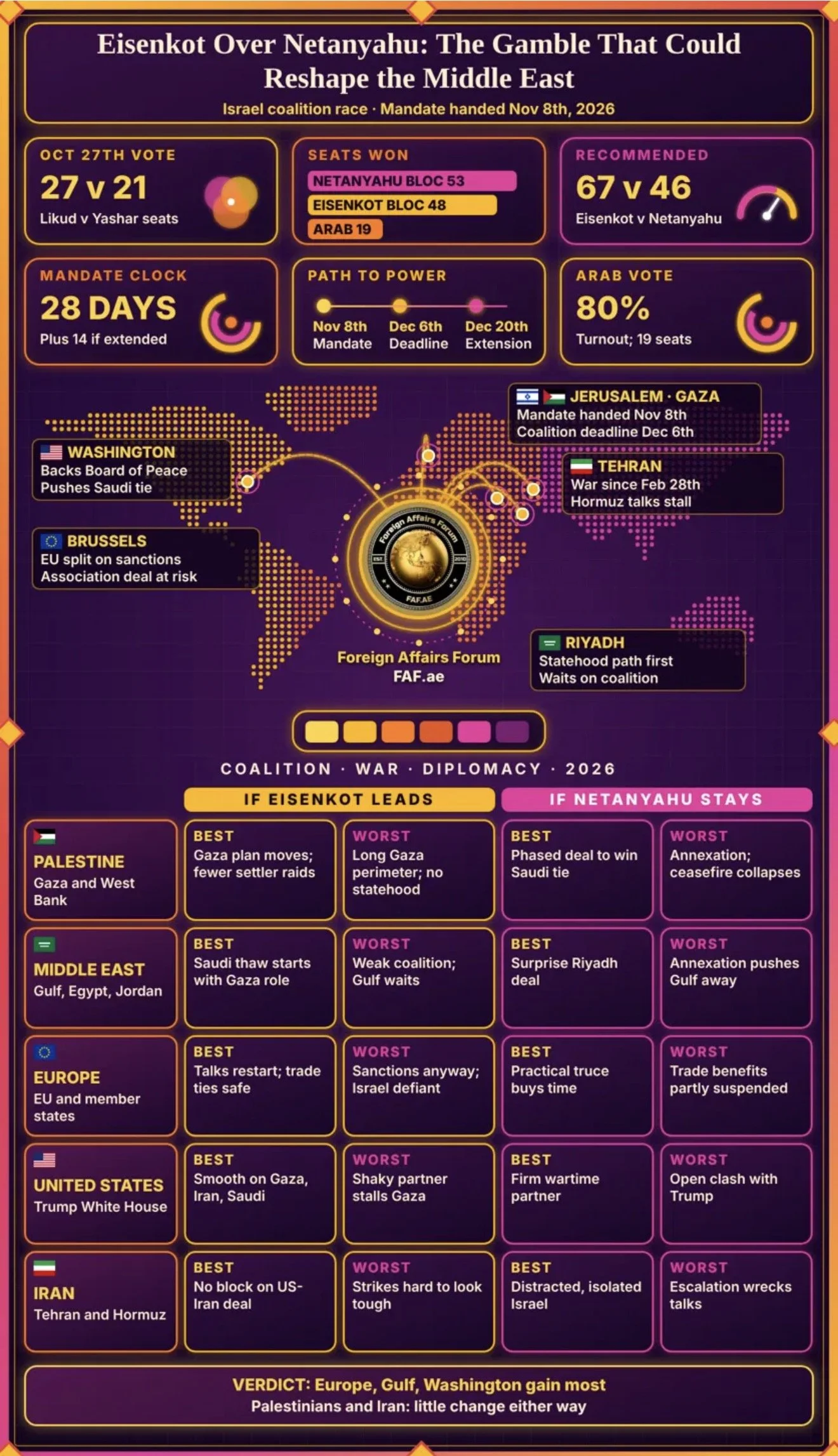
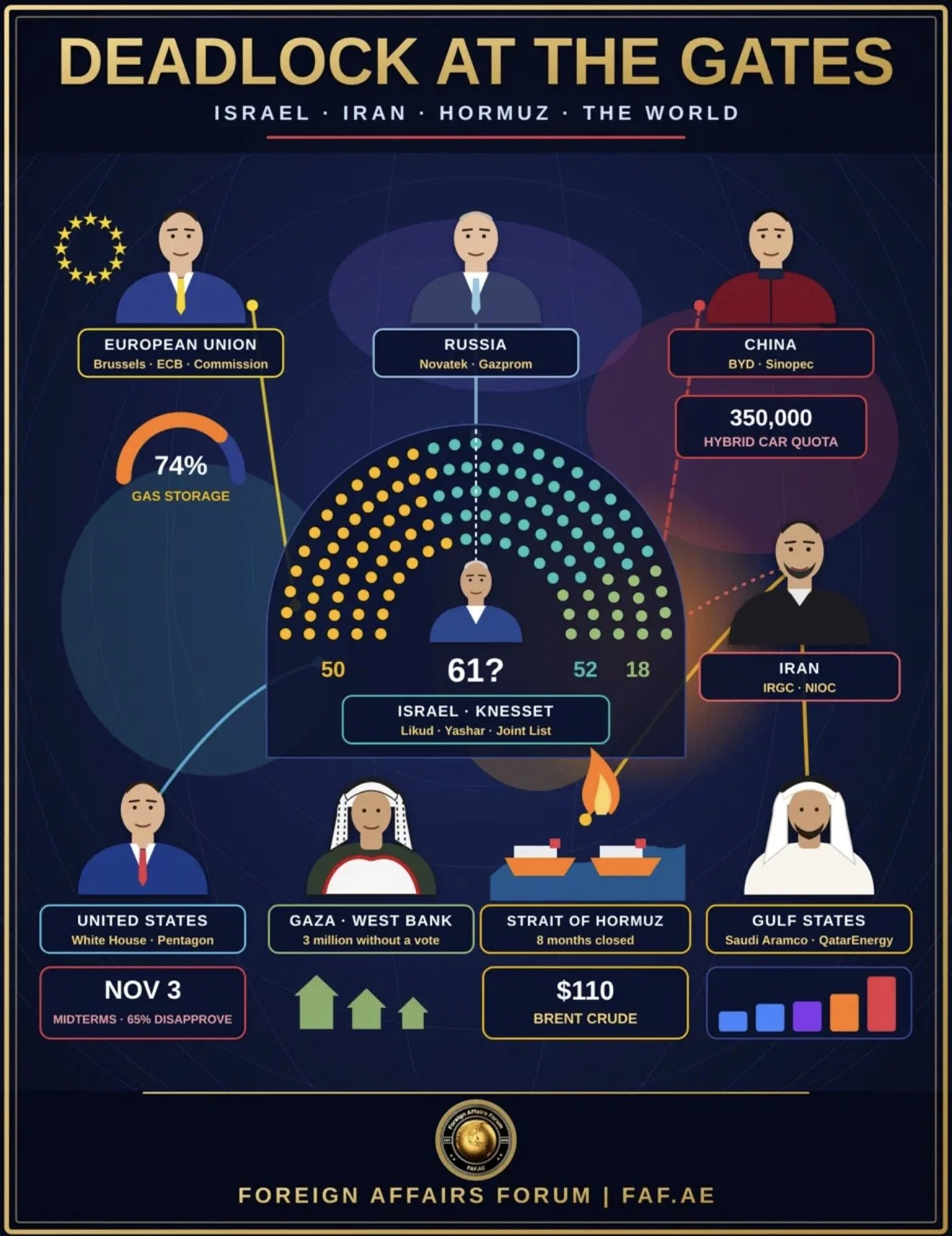
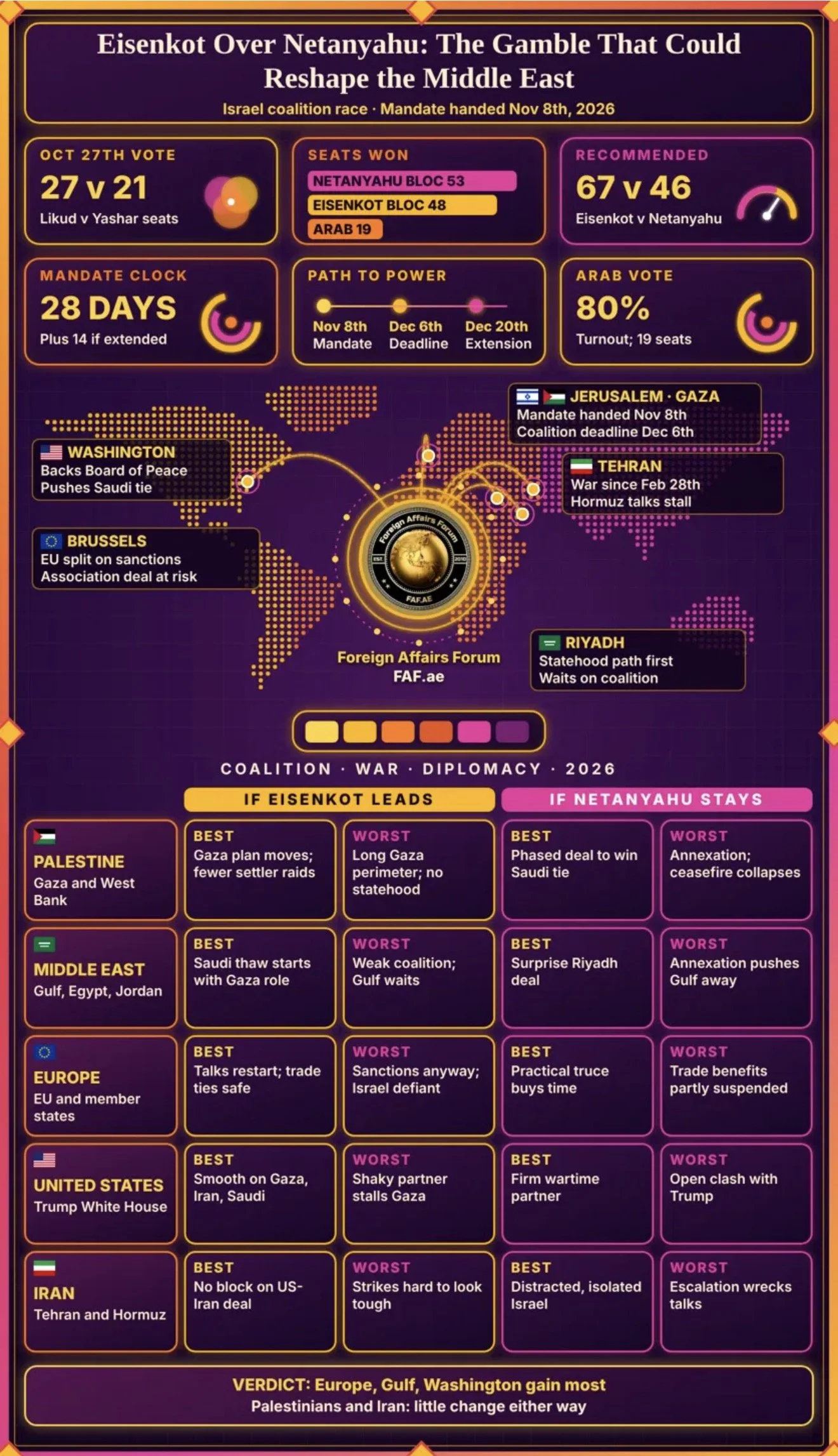
Israel's president, Isaac Herzog, has chosen Gadi Eisenkot, not Prime Minister Benjamin Netanyahu, to try to form the next government. Eisenkot is a former army chief who leads a centrist party called Yashar. Israel voted on Oct 27th. Netanyahu's group of parties won fifty-three seats. Eisenkot's group won forty-eight. Arab-led parties won nineteen. Nobody reached sixty-one, which is the number needed to rule.
After talks on Nov 5th, sixty-seven lawmakers said they wanted Eisenkot to lead. Only forty-six said they wanted Netanyahu. So Herzog gave the job to Eisenkot, and the formal ceremony is today, Nov 8th. Eisenkot has twenty-eight days to build a government, and he can ask for fourteen more. If he fails, Netanyahu gets a chance. If both fail, Israel goes back to the polls within ninety days.
This is not a done deal. His allies disagree on big questions, such as whether to work with Arab parties and whether ultra-Orthodox men should serve in the army.
Dr. 🆎 says this is the real story: the choice of leader matters, but the ability to hold a government together matters just as much.
Who Is Gadi Eisenkot?
Eisenkot led Israel's army from 2015 to 2019. He later joined Netanyahu's war cabinet after the Hamas attack of Oct 7th, 2023, then left it in 2024 because he felt the war had no clear political goal.
In 2025 he started his own party. He promises honest government, equal military service for everyone and a team without extremists.
Eisenkot is not a dove. He says a Palestinian state is not realistic after Oct 7th. He wants Israel to keep the Jordan Valley and the large settlement areas.
On these points he and Netanyahu are close. The big difference is style and approach. Eisenkot is seen as calmer, more careful and more willing to work with other countries. Netanyahu is seen as more confrontational and is wanted by the International Criminal Court, which makes travel harder for him.
What Is at Stake Right Now
Several big crises are happening at the same time. In Gaza, a ceasefire began on Oct 10th, 2025, under a plan by President Trump.
More than 73,000 Palestinians have died in the war, according to Gaza's health officials. The plan calls for Hamas to give up its weapons, for Israeli forces to pull back and for an international force to keep order. Progress has been slow and Israeli strikes continue.
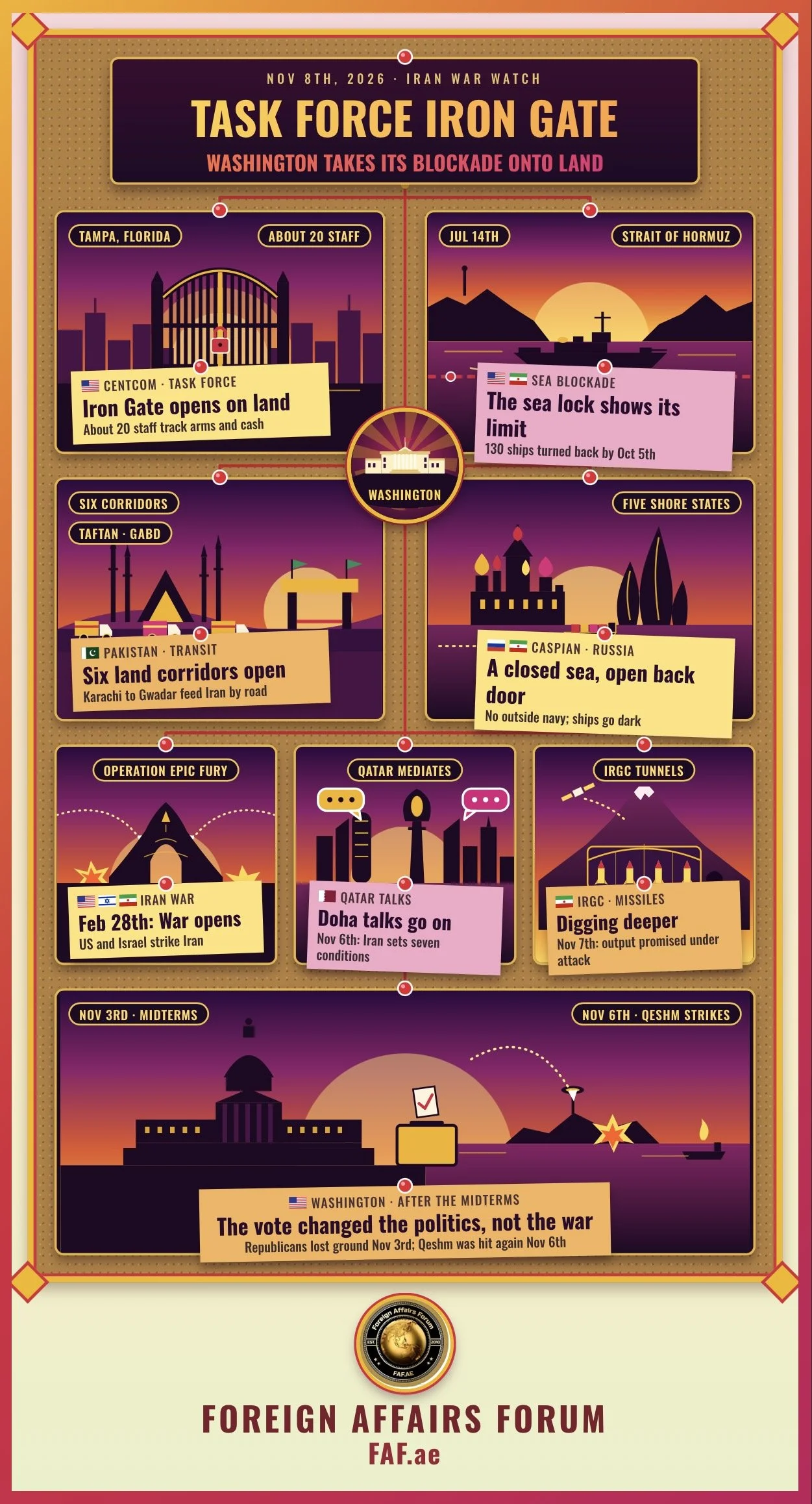
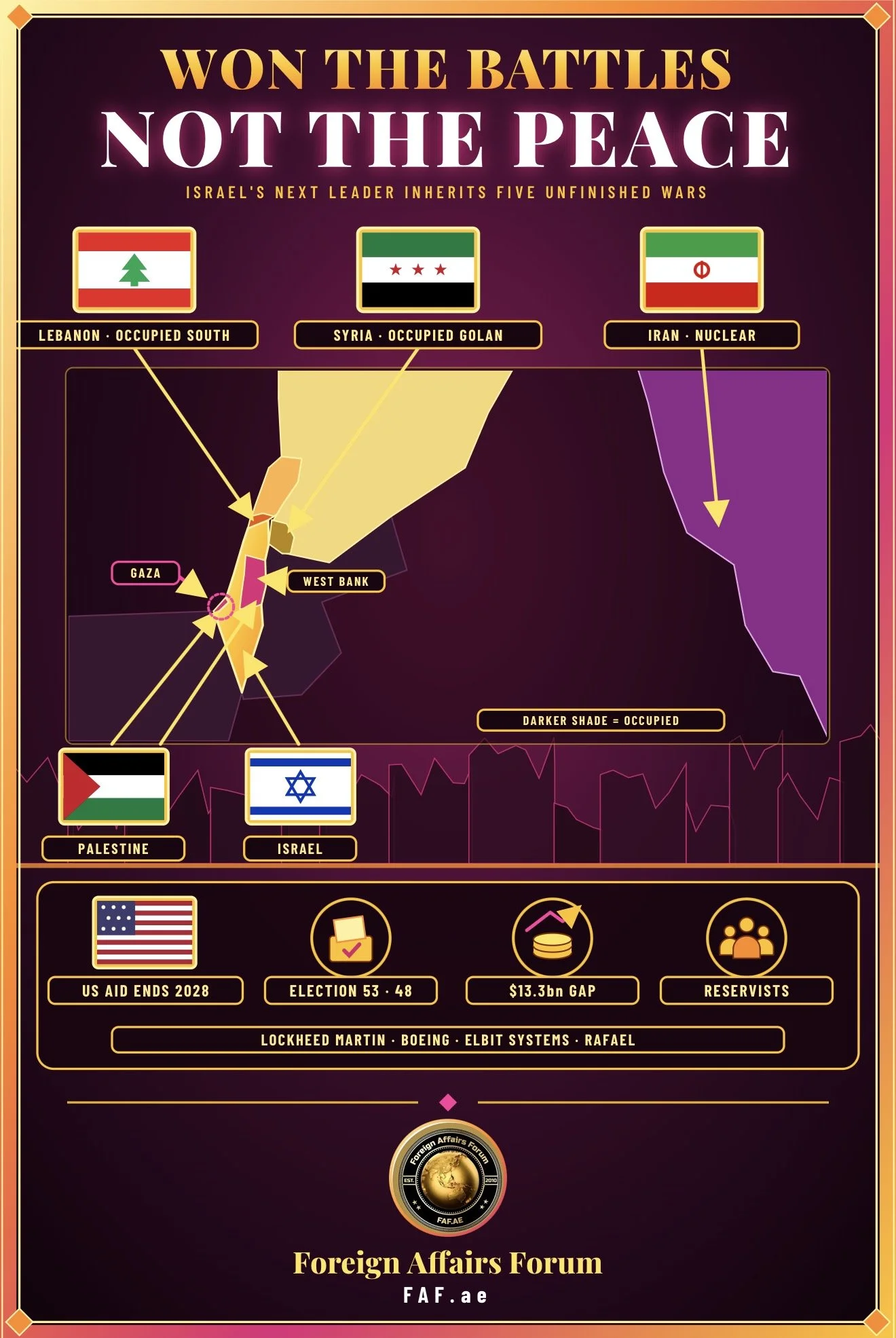
With Iran, the United States and Israel started a war on Feb 28th, 2026. The Strait of Hormuz, a key route for the world's oil, has been disrupted. Talks are going on, but fighting also keeps flaring up. In Lebanon, a ceasefire from April is often broken.
Would Each Region Be Better Off?
Most would be somewhat better off under Eisenkot, but not by a huge amount.
Palestinians have the most to lose and the least power.
Under Eisenkot, the best case is that the Gaza plan finally moves forward. Aid and rebuilding could start, fewer people could die, and settler attacks in the West Bank could fall. The worst case is that Eisenkot, running a weak government, keeps Israeli troops in Gaza for a long time and gives Palestinians no real path to a state. Under Netanyahu, the best case is that he agrees to the Gaza plan to win American and Saudi support. The worst case is that he again depends on far-right ministers, refuses to disarm Hamas by agreement, grabs more land in the West Bank and lets the ceasefire fall apart.
The wider Middle East would see more difference.
Saudi Arabia says it will only recognize Israel if there is a real path to a Palestinian state.
Eisenkot does not promise that, but he talks about working with Arab countries and bringing them into Gaza's future. Under him, the best case is a slow thaw with Saudi Arabia and a pause on annexation. The worst case is a weak Israeli government that cannot offer anything, so the Gulf waits and does nothing. Under Netanyahu, the best case is a surprise deal with Riyadh, though his own partners would try to block it. The worst case is annexation or strikes that push Arab countries into a harder position. Egypt and Jordan would likely feel safer under Eisenkot, because he is less likely to push Palestinians out of their land. In Lebanon, Eisenkot might prefer a deal, while Netanyahu might keep a permanent buffer zone and risk a bigger war with Hezbollah.
Europe would gain from the change.
Many European governments dislike dealing with a prime minister who faces an international arrest warrant. Under Eisenkot, the best case is that talks restart, trade ties are protected and the push for penalties slows down. The worst case is that Europe does not trust Eisenkot because he rejects a Palestinian state, imposes penalties anyway and pushes a weak government toward anger and defiance. Under Netanyahu, the best case is a quieter, more practical relationship that buys time. The worst case is a sharper break, with partial suspension of trade benefits and more countries recognizing Palestine.
The United States cares about winning deals and avoiding fights.
Under Eisenkot, the best case is smooth teamwork on Gaza, a calmer approach to Iran and a possible Saudi deal that Trump can celebrate. The worst case is that his coalition is too shaky to keep its promises, leaving Washington with a partner it cannot count on. Under Netanyahu, the best case is that he stays a firm wartime partner and helps with Saudi talks. The worst case is open disagreement with Trump over Iran, Gaza and the Saudi nuclear plan, at a time when many Americans are tired of the war.
Iran is the hardest case.
Under Eisenkot, the best case for Iran is that Israel does not block a deal with the United States and accepts a truce in Lebanon.
The worst case is that Eisenkot strikes hard to look tough. Under Netanyahu, the best case for Iran is that Israel is distracted by politics and isolated from Europe, so it has less sway in Washington. The worst case is that Netanyahu escalates against Iran to rally voters and to wreck any peace deal. In the end, Iran's future depends more on talks between Tehran and Washington than on who leads Israel.
What Could Go Wrong?
Several things could go wrong.
Eisenkot may fail to build a government. To win a majority he may need ultra-Orthodox parties, who want to avoid army service, or Arab parties, who some of his allies will not accept. If his government is weak, it may collapse within months, as the last Israeli government that included an Arab party did.
Eisenkot could also prove tougher than expected on Iran or Hamas, to look strong. Netanyahu also stays in charge of the army until a successor is sworn in.
There is also a danger from technology. Dr. 🆎 explains that armies now use artificial intelligence to sort information and suggest targets quickly.
That speed leaves less time for people to think carefully. Dr. 🆎 says the next Israeli prime minister must make sure humans stay in charge of the biggest decisions, because a mistake made at machine speed could start a much larger war.
What Should Happen Next?
Eisenkot should decide quickly what kind of government he wants and publish a clear plan.
The United States should support him with a clear step-by-step plan for Gaza, covering disarmament, Israeli withdrawal, an international force and a link to a Saudi agreement. It should also stop Netanyahu from starting big military actions while he is still in charge.
Europe should avoid new penalties for now, but it should state clear and fair conditions for better ties, such as less settler violence and more aid access to Gaza.
Gulf states, Egypt and Jordan should offer Eisenkot real roles in Gaza's rebuilding and police training in return for a pause on annexation. And Iran and the United States should finish their talks on Hormuz, sanctions and the nuclear program, so that the new Israeli government inherits a deal and not a war.
The Bottom Line
Would the region be better off with Eisenkot instead of Netanyahu?
For Europe, the Gulf, Egypt, Jordan and Washington, probably yes. For Palestinians, only a little, because both men reject a Palestinian state in the near term. For Iran, it depends on the talks with America more than on any Israeli leader. Eisenkot's biggest challenge is not the world outside but the politics at home. He has 28 days to turn a paper majority of 67 into a working government.
Dr. 🆎 ends with a simple message. A new leader can change the tone, but real change needs trust, clear plans and humans who stay in control of the hardest choices. The next four weeks in Jerusalem will decide whether this moment becomes a turning point or just another round in a long contest.