Trump Looks Abroad: What a Weakened President Can Still Do
Introduction
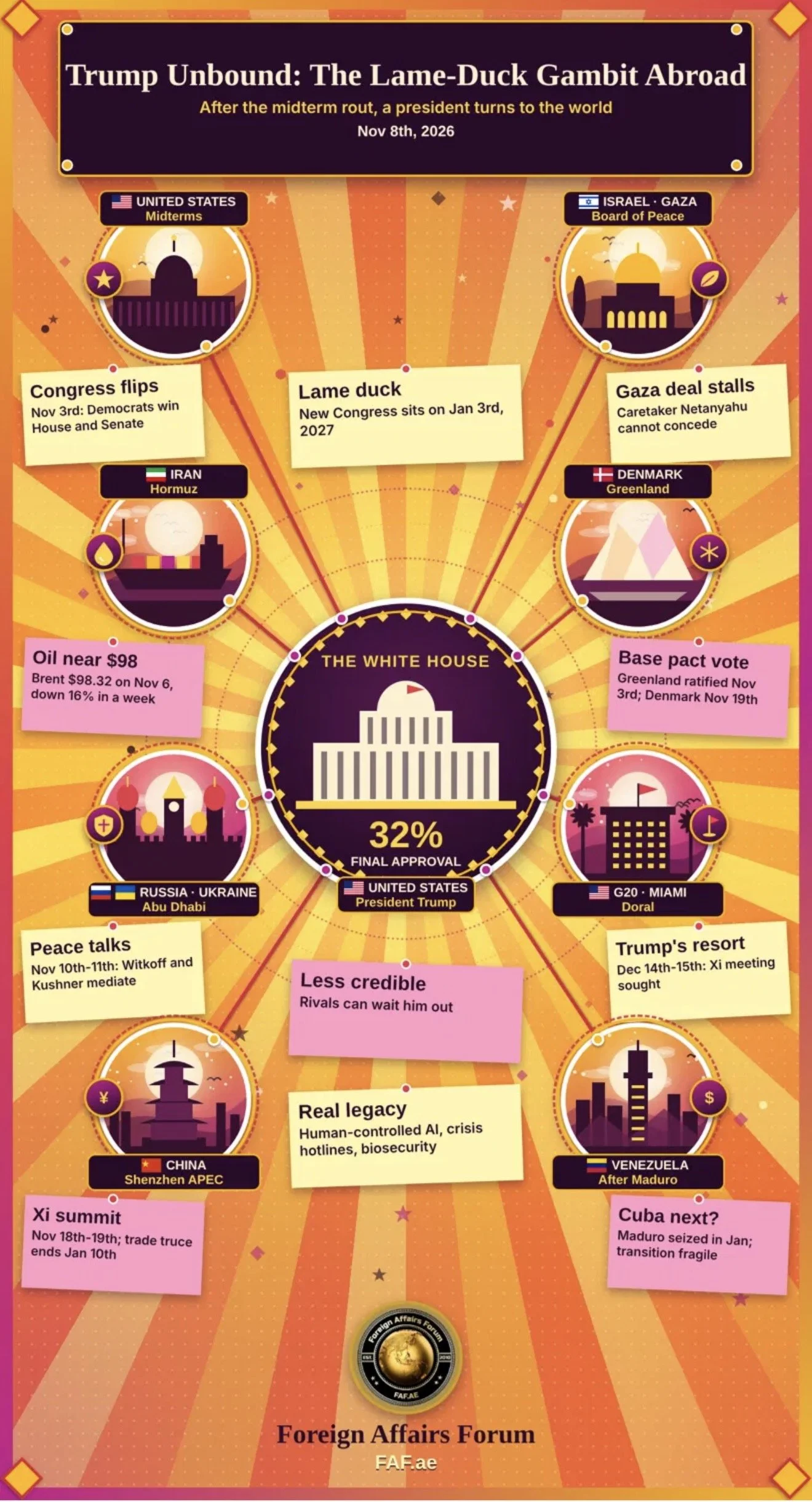
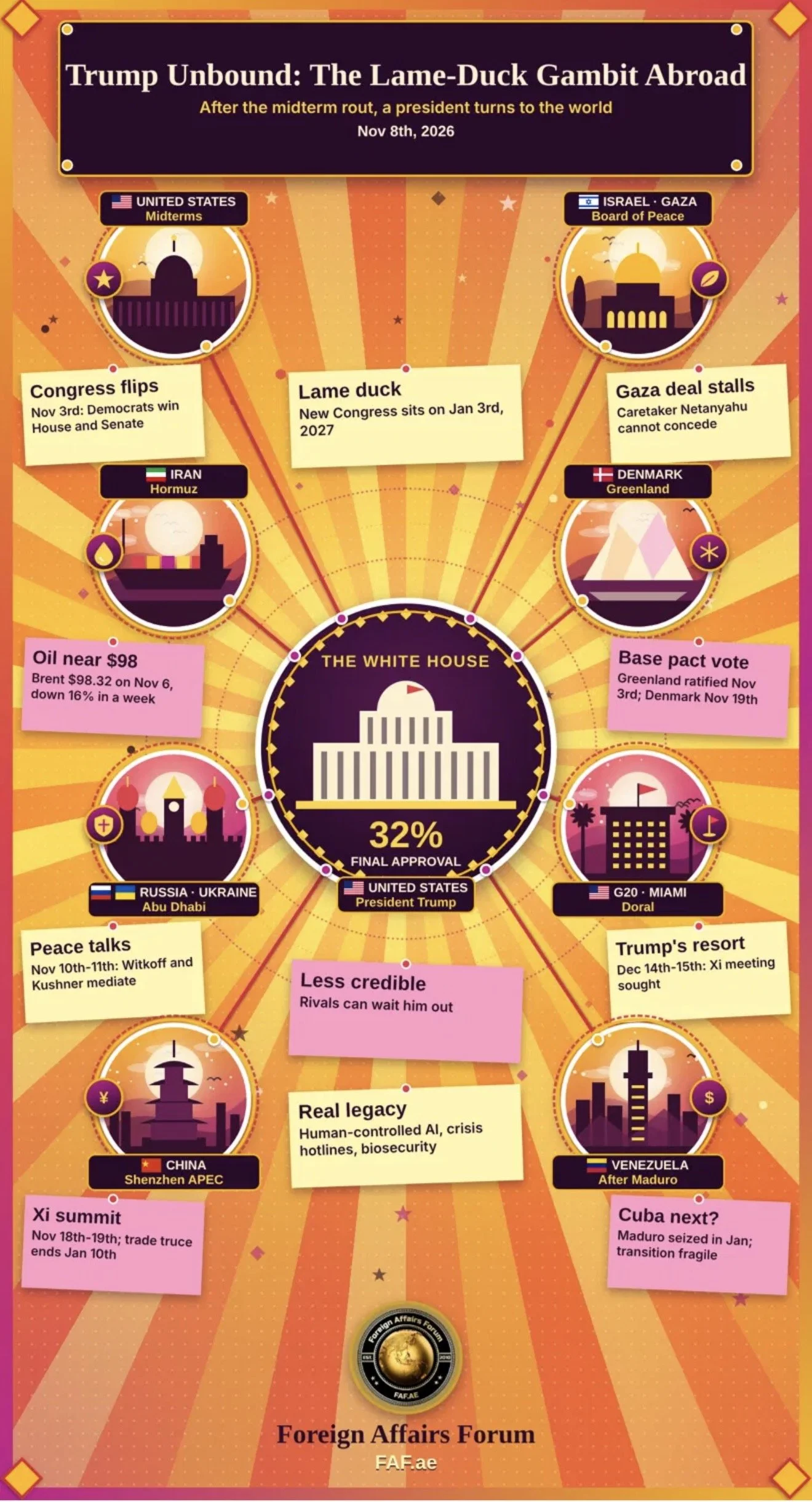
On Nov 3rd, American voters took away Donald Trump's control of Congress. Democrats won the House of Representatives and the Senate. It is the first time in twenty years that a president has lost both at the midterm elections.
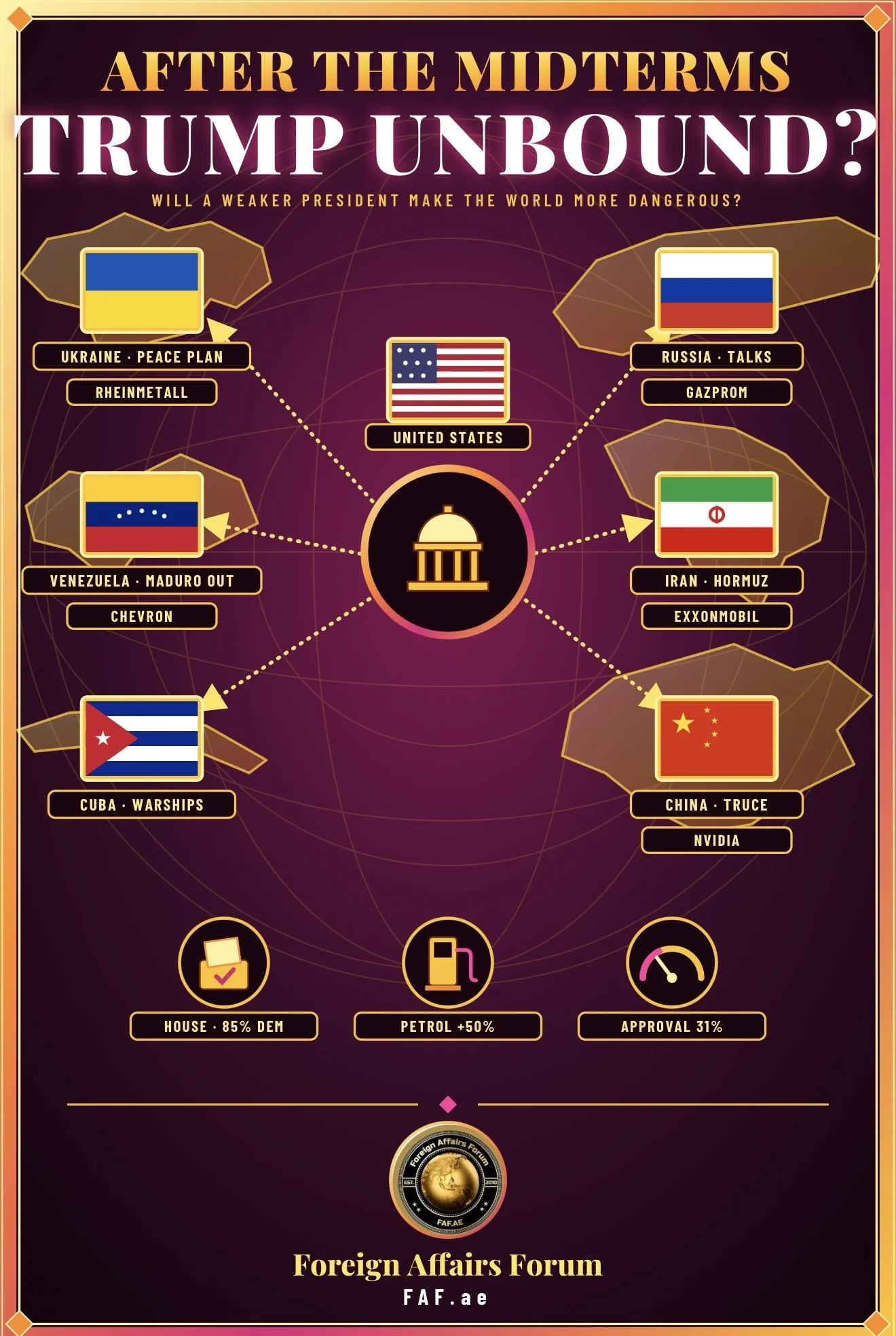
Trump's approval rating was around 32% just before the vote. Voters were angry about the war with Iran, high prices and the growing number of AI data centres in their communities.
Now Trump cannot easily pass new laws. But he still has great power abroad. He is commander-in-chief. He can meet world leaders, strike deals, punish countries with sanctions and send troops. Many presidents before him turned to foreign affairs when they were weak at home. Ronald Reagan did it after his scandal. George W. Bush did it after the 2006 midterms. Trump is likely to do the same.
His calendar shows it. On Nov 10th and 11th, American, Russian and Ukrainian teams will talk in Abu Dhabi about ending the war in Ukraine.
On Nov 16th, Trump is due in Manila for a summit of Southeast Asian nations.
On Nov 18th and 19th, he is due in Shenzhen, China, for a big Asia-Pacific summit. There he may meet Xi Jinping for the third time this year. In December, on Dec 14th and 15th, he will host the G20 leaders at his own golf resort, Doral, in Miami.
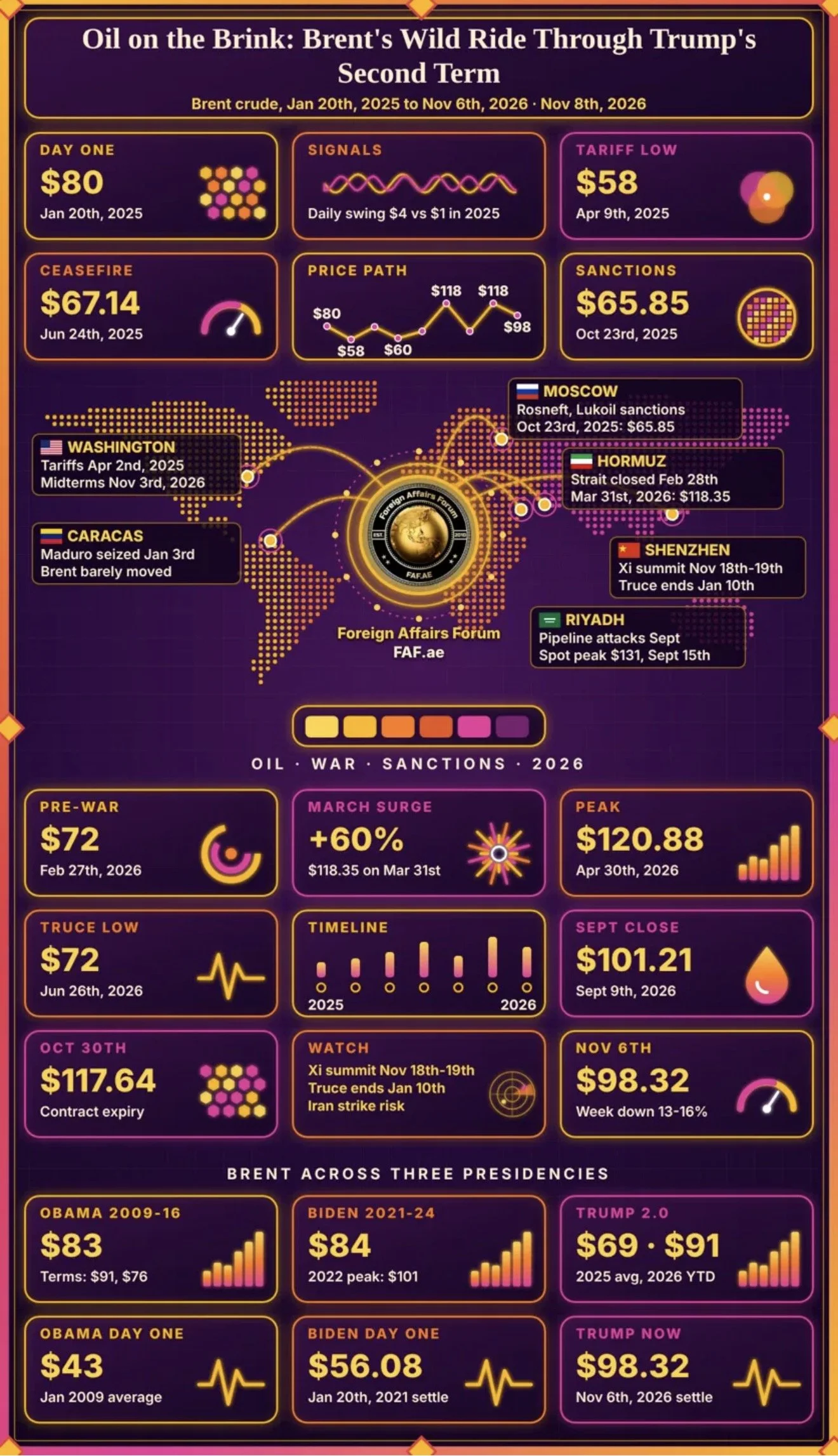
The Iran war is the hardest problem. It began on Feb 28th, when the United States and Israel attacked Iran. Since then, most ships have been unable to pass through the Strait of Hormuz. About a fifth of the world's oil and gas normally travels through this narrow sea lane.
Oil prices have jumped. Brent crude reached $108 a barrel in October and is near $98. High fuel prices hurt families, and that is one reason Trump lost votes.
Qatar, Oman and Pakistan are trying to help the two sides talk. Iran says it could reopen the strait quickly if the United States lifts sanctions and reduces its military presence nearby.
Trump does not want to look weak, so these demands are hard for him. Yet he also wants lower oil prices. He could make a deal. He could also order new strikes, as some people around him, and Israel's leader, have urged. Nobody outside his small circle knows which way he will go.
Ukraine is another big test.
Trump's envoys, Steve Witkoff and Jared Kushner, lead the talks. Trump has stopped most direct American money and weapons for Ukraine and has pushed Kyiv to accept a deal. Europeans worry that a peace plan might be agreed without them and might reward Russia. Ukraine's president, Volodymyr Zelensky, says he is ready to meet Vladimir Putin and Trump. Russia says a three-way meeting with Xi in China is being planned, but the United States has not confirmed it.
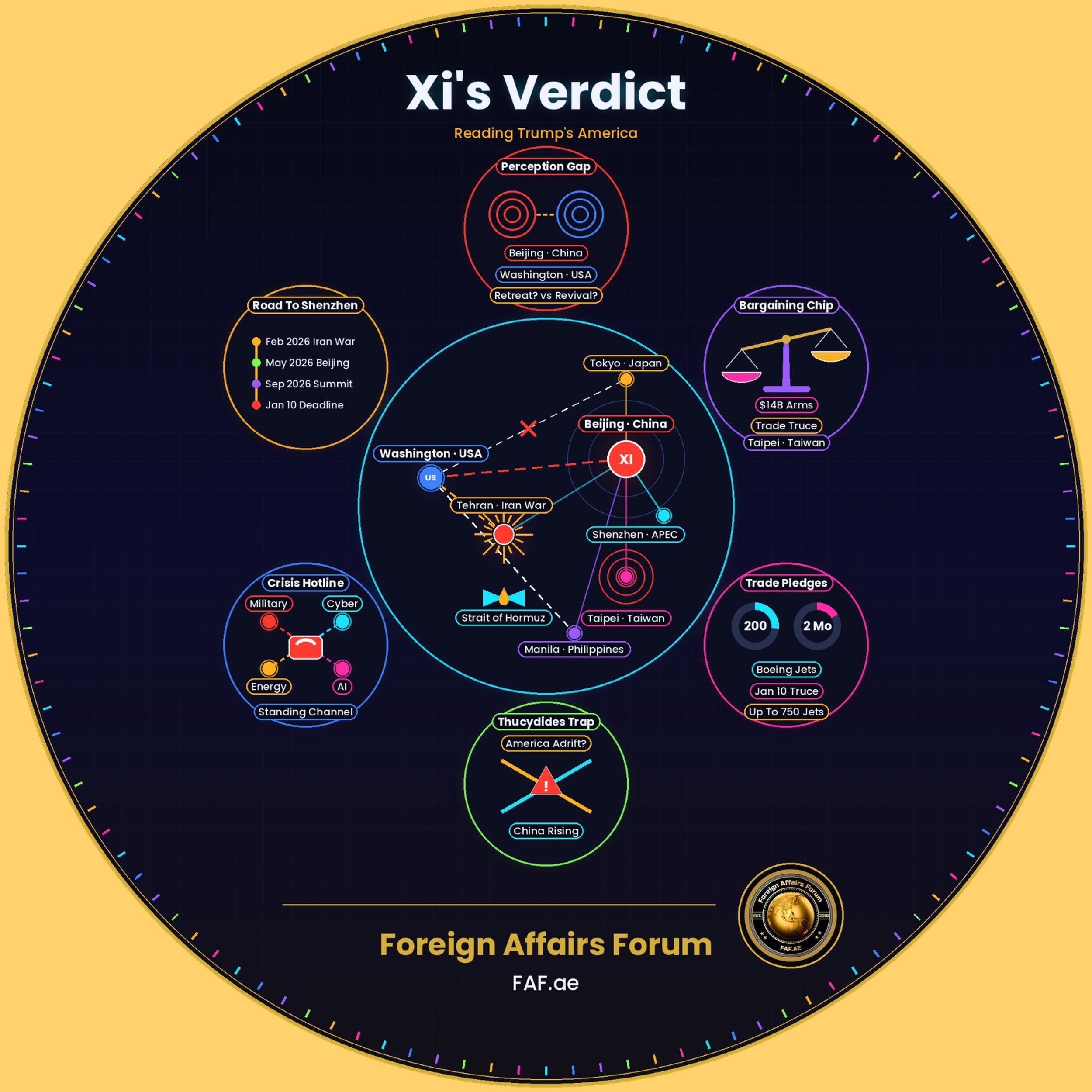
With China, Trump prefers personal friendship with Xi. He visited Beijing in May. Xi visited Washington in September.
They agreed to keep a trade truce until Jan 10th, 2027. They also agreed to cut some tariffs and to set up a new line of contact on artificial intelligence. But big problems remain, such as rare earth minerals, computer chips and Taiwan. Trump has approved an $11 billion arms sale to Taiwan and is holding back another one worth about $14 billion. He sees it as a card to play in talks.
In Gaza, Trump chairs a group called the Board of Peace. In July he announced a deal for Hamas to give up its weapons.
But progress is slow. Israel says it will not pull back until Hamas is fully disarmed. Arab and Muslim countries say Israel keeps breaking the ceasefire. Making things harder, Israel's own election on Oct 27th ended without a clear winner. Prime minister Benjamin Netanyahu is now a caretaker leader. A leader like this cannot make big promises.
Greenland shows how Trump's style can work and also cause harm.
Early this year he threatened to take the island from Denmark, which is a friend and a NATO ally. After months of anger, the United States, Denmark and Greenland signed a security agreement in September. It allows new American bases. Greenland's parliament approved it on Nov 3rd. Denmark's parliament will vote on Nov 19th. Trump got what he wanted, but Europe now trusts him less.
Why does this matter?
Because a lame-duck president has a problem. He can act, but his promises are less believable. Other leaders know he has only two years left, and the new Congress will start work on Jan 3rd, 2027.
Democrats will hold hearings. They will ask about the Iran war, about boat strikes in the Caribbean, about the end of aid to Ukraine and about the Trump family's business deals. They will also control government spending. They cannot easily cancel his decisions, but they can slow them down and make them public.
Foreign leaders have a simple choice.
They can give in to Trump now, or they can wait. Many will wait. Xi, Putin and Iran's leaders all know that deals made with a weak president can be undone by the next one. That makes talks slower and more difficult. It also makes Trump more tempted to take a bold step, such as a surprise strike or a grand announcement, to look strong again.
Dr. 🆎, who studies human-centred AI, war and the risk of biological attacks, says there is a quieter danger. In his view, fast and showy diplomacy leaves little time for the boring but vital work of safety. Modern weapons use AI to find targets and help commanders decide quickly. In a crisis like the one around Hormuz, a few minutes can matter.
Dr. 🆎 argues that humans must always stay in control of any decision to use force. He also says that new pandemics or biological attacks do not stop at borders, so countries need shared systems to detect and trace them.
This is why the new AI contact line between Washington and Beijing matters more than it seems.
Dr. 🆎 believes Trump's best legacy would not be a loud summit. It would be lasting rules: human control over military AI, direct crisis hotlines with rivals and joint work on biosecurity. Those things could survive long after he leaves office.
What should the main stakeholders do now?
For the White House, the wise path is to use the talks in Abu Dhabi and Shenzhen to build agreements that last. That means including Ukraine and Europe in any peace deal, linking relief for Iran to the real reopening of the Strait of Hormuz, and keeping the AI channel with China alive. For Congress, even Republicans who are leaving office can back rules on war powers and help for Ukraine now.
After January, Democrats can combine oversight with clear laws on when a president may use force.
For Europe, the lesson is to prepare. It should plan for its own defence, support Ukraine with its own money and speak with one voice.
For Gulf mediators, the job is to keep talking to both Washington and Tehran and to find ways for each side to claim a win. For Israel, the task is to form a stable government that can carry out the Gaza plan.
History suggests that lame-duck foreign policy works best when the other side also wants a deal and when legislatures support the result. Reagan's arms treaty with the Soviet Union is the good example.
Clinton's last-minute push for Middle East peace is the warning. Trump now stands between those two paths.
The next few weeks will show which one he takes.
If he chooses patient, shared agreements, he may leave something solid behind. If he chooses surprises and spectacle, the risks will grow for oil prices, for allies and for peace. The world will be watching every stop on his travel plan.
Dr. 🆎 reminds us that the real test of leadership is not how loud a deal is announced, but how long it lasts.