Five Stories That Show How the World Is Changing
Summary
This week has brought five big news stories. They look different, but they share one idea. The world is struggling to control powerful new tools, protect important supplies and keep order in places where governments are weak. This article explains each story in simple English.
Robots That Can Choose Targets
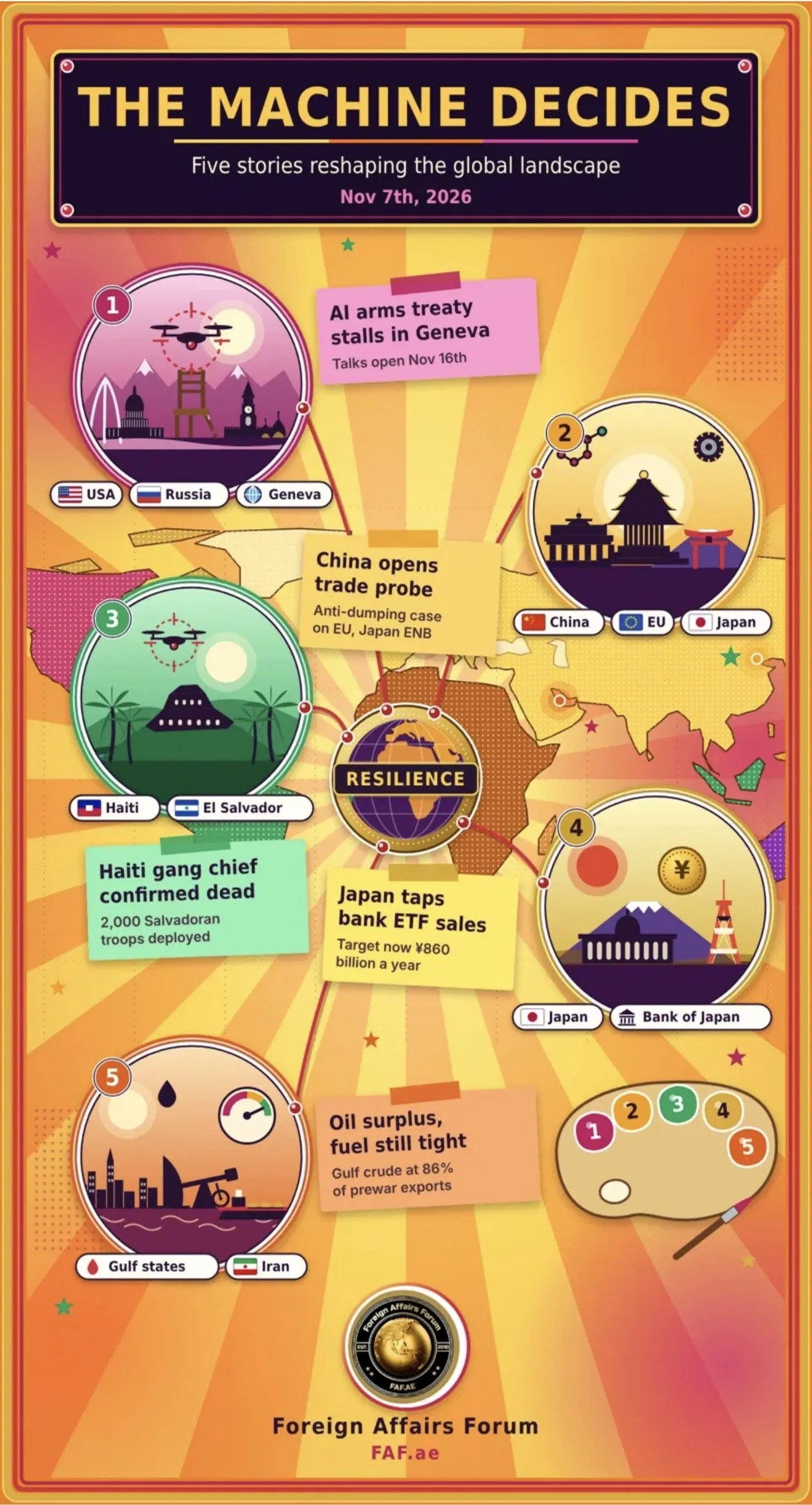
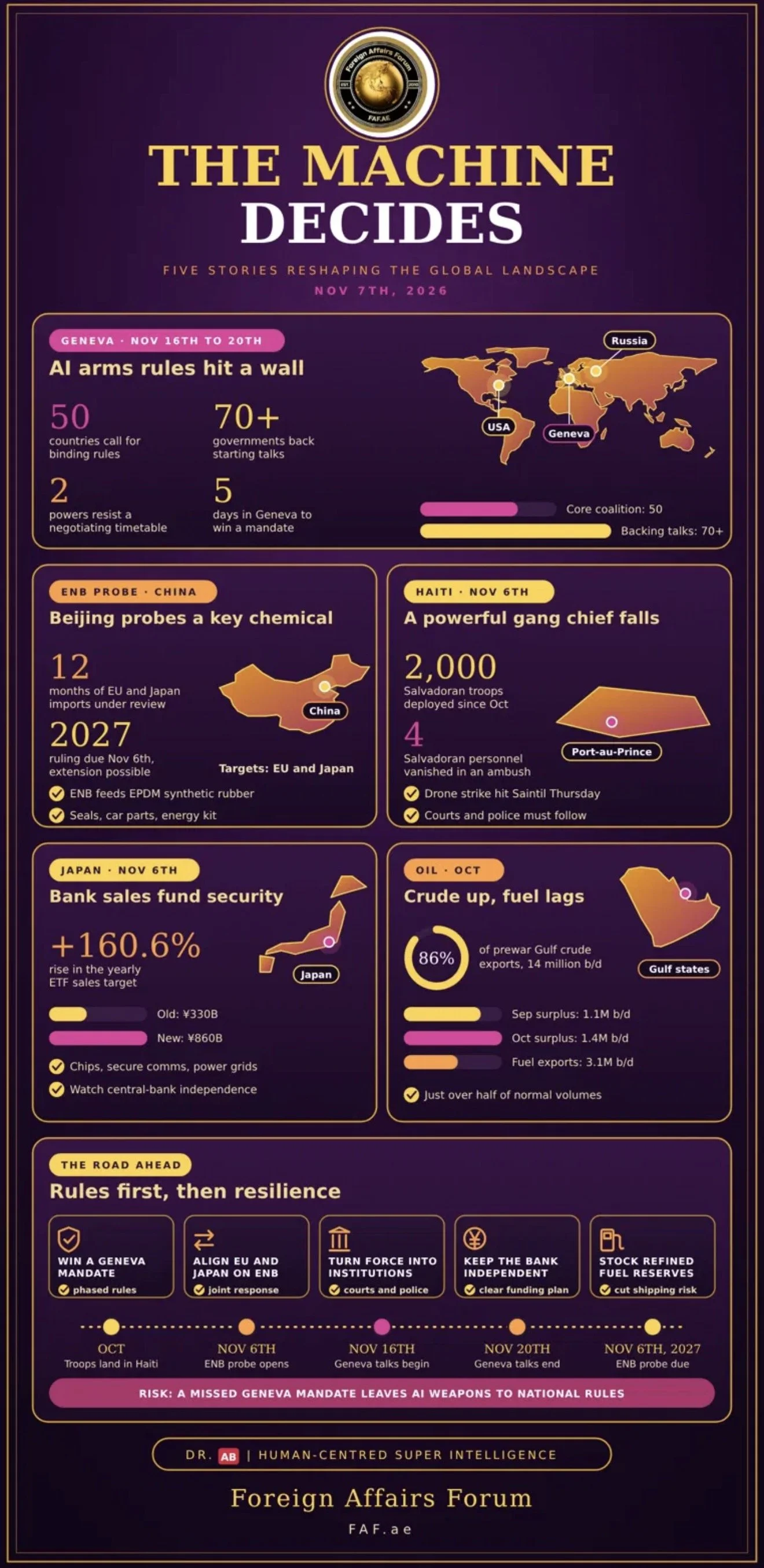
The first story is about weapons that can pick and attack targets without a person approving each attack. These are called autonomous weapons. Many countries are worried about them. About fifty countries, including France, Germany, Ireland, Brazil and Mexico, want the world to start talks on a treaty with strict rules. More than seventy governments reportedly support starting those talks.
The United States and Russia do not want to promise a date for these talks. The United States prefers that each country makes its own rules and follows the laws of war. Russia and a few other countries also oppose a fixed schedule. The Red Cross says that promises are not enough and that countries must agree on rules that are binding.
The big meeting is in Geneva from Nov 16th to 20th. If countries agree to start negotiations, it could be a turning point. If they do not, each country will keep making its own rules, and the technology will keep moving forward.
Dr. 🆎, an expert on human-centred artificial intelligence, war and bioterrorism risk, says the problem is simple to describe. Machines can act in a fraction of a second. People need time to think. If we let machines decide who lives and who dies, we may lose the time that leaders need to avoid a bigger war.
Dr. 🆎 believes that a human being must always remain responsible for the decision to use deadly force.
China Opens a Trade Investigation
The second story is about trade. China has started an investigation into a chemical called ethylidene norbornene, which people often shorten to ENB. Factories use it to make a kind of synthetic rubber called EPDM. That rubber goes into car parts, seals and equipment used in energy systems.
China says that companies in the European Union and Japan may have sold this chemical at unfairly low prices between July 2025 and June 2026. This is called dumping. The investigation will also check whether Chinese companies were hurt. No decision has been made. The investigation is expected to end by Nov 6th, 2027, although China may take longer.
This case is smaller than the fights over computer chips or rare earth metals. But it shows something important. Countries now protect even specialised chemicals, because factories depend on them. If China decides to add extra taxes, European and Japanese sellers could lose business, and Chinese companies might build more of their own supply.
Dr. 🆎 says that trade is no longer only about prices. It is also about trust and safety. A country that depends on one source for a key material can be pressured during a dispute, so governments are trying to build stronger supply chains at home and with friends.
Haiti and the Death of a Gang Leader
The third story comes from Haiti, a Caribbean country where gangs control large areas. The government has confirmed that a powerful gang leader named Mathias Saintil has died. Prime Minister Alix Didier Fils-Aimé announced this on Nov 6th. A human-rights group told Reuters that Saintil was badly hurt in a drone strike in a gang-controlled area near Port-au-Prince on Thursday and later died while receiving treatment.
This is one of the biggest blows to the gangs since 2024. About two thousand soldiers from El Salvador have arrived in Haiti since October to help in the fight. Earlier, four Salvadoran personnel serving with an international force went missing after an ambush.
This is good news for people who want peace, but it does not end the crisis. When a gang leader dies, other fighters may try to take his place or seize his streets. Soldiers can clear an area, but ordinary people need police they can trust, courts that work and leaders they can vote for. Without these, the gangs can return. Closed roads and ports also make food, fuel and medicine harder to move.
Dr. 🆎 notes that drones are now used in this fight too. That connects Haiti to the same question as the first story: who is responsible when technology is used to strike from far away? Dr. 🆎 says that every use of force must have clear rules and clear responsibility, even when the target is a criminal group.
Japan Plans to Use Bank Money for Security
The fourth story is about Japan. The Bank of Japan owns a large amount of exchange-traded funds, which are baskets of company shares it bought in past years to support the economy. It is now selling them slowly. The bank recently raised its yearly selling target from ¥330 billion to ¥860 billion.
Prime Minister Sanae Takaichi says that money from these sales should help pay for investments that protect Japan's economic security. These could include areas such as advanced chips, secure communications and strong power networks. Japan wants to stay competitive as the United States and China compete in technology.
There is a worry, however. Central banks are supposed to make decisions free from political pressure. If it looks like the government is using the bank's sales to pay for its own plans, people may start to doubt that the bank is truly independent. Japan also has to deal with high public debt, rising prices and worries about the value of technology companies.
Dr. 🆎 says that the idea of linking money and security is sensible, but trust is the foundation. Japan will do best if it explains clearly how the money will be used and keeps the central bank separate from politics.
More Oil Than Expected
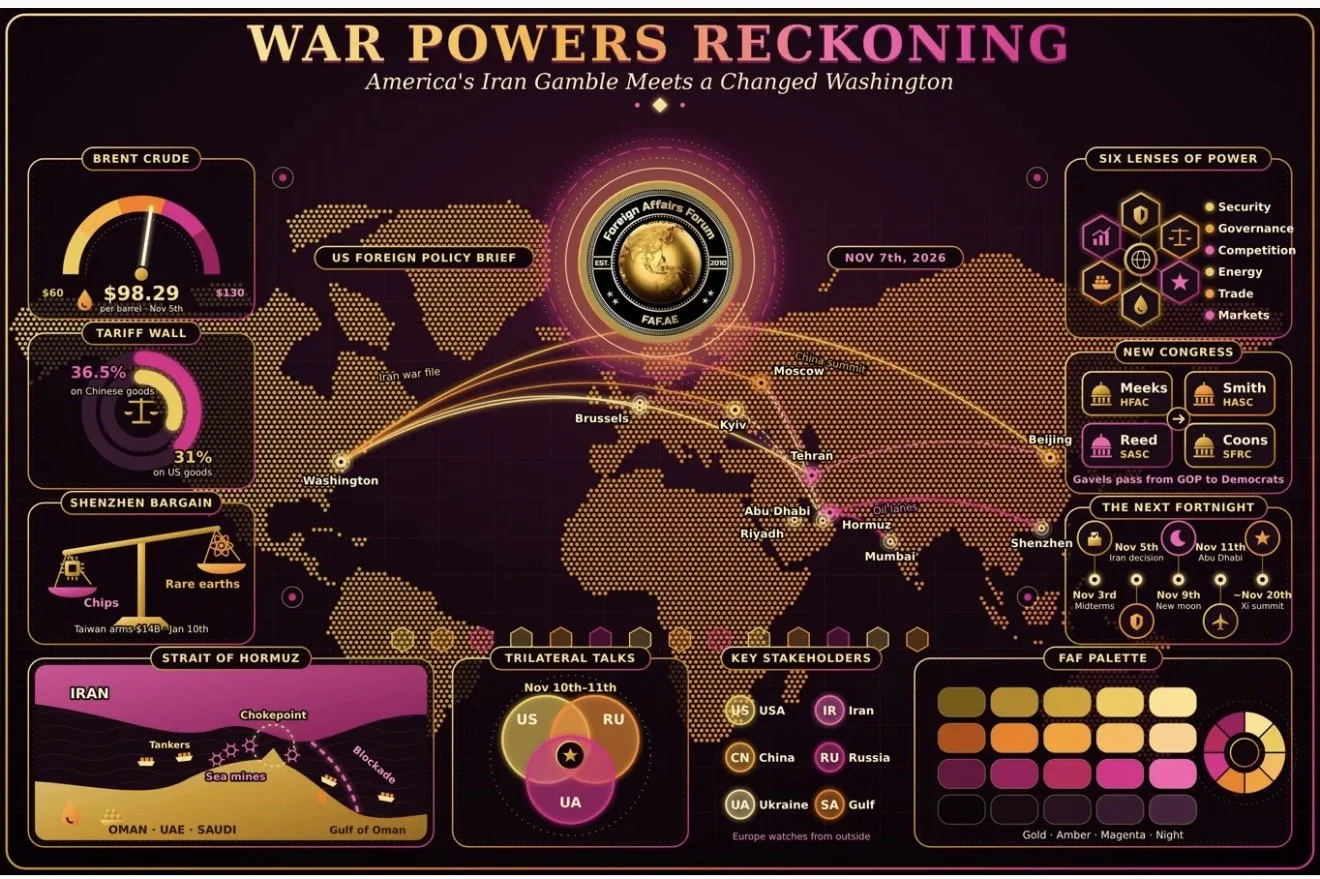
The fifth story is about oil. Even though the conflict involving Iran is still unresolved, new estimates suggest that the world now has more oil than it needs. JPMorgan estimates that supply was about 1.1 million barrels per day higher than demand in September, and about 1.4 million barrels per day higher in October. Goldman Sachs says that stored oil stayed about the same in September and October, after falling a lot earlier in the year.
Three reasons help explain this. Middle Eastern exports are recovering, other countries are producing more, and demand is weaker. In October, Gulf exports of crude oil and condensate averaged about 14 million barrels per day, or 86% of the level before the war.
But the picture is not fully healthy. Exports of fuels such as petrol, diesel and jet fuel were only about 3.1 million barrels per day, a little more than half of normal. That means there may be enough crude oil but not enough finished fuel. Also, these numbers are estimates, not final official figures.
If oil stays cheap, importing countries such as India may benefit, because fuel and transport costs can fall. Oil-exporting countries, including Russia and some Gulf states, may earn less. Dr. 🆎 advises importing countries to build reserves of finished fuel and keep shipping routes safe, because a surplus today can disappear quickly if a sea route is blocked.
What These Stories Have in Common
All five stories are about control. Who controls the rules for dangerous technology? Who controls the supply of key materials? Who controls streets in a country where the government is weak? Who controls the money that pays for security? And who controls the fuel that keeps trucks, ships and aeroplanes moving?
The answer in each case is the same. Strong power alone is not enough. Countries also need trusted rules, honest institutions, strong factories and secure energy. Countries that build all of these will be better prepared for the years ahead.
What to Watch Next
Watch whether the Geneva meeting from Nov 16th to 20th agrees to start talks on binding rules for autonomous weapons. Watch whether China widens its trade investigation to other special materials. Watch whether Haiti's forces can hold the areas they clear and whether courts and police begin to work. Watch whether Japan explains how it will spend the money from bank sales without weakening the independence of its central bank. And watch whether the oil surplus grows and whether finished fuel exports return to normal.
Final Thought
Dr. 🆎 offers a simple closing message. Technology is moving fast, but human responsibility must move with it. The countries that succeed will be those that keep people accountable, build trust with others and prepare for shocks before they arrive.