A Beginner's Guide to a World Being Rewritten: Seven Events Showing How Power Is Shifting in 2026
Executive Summary
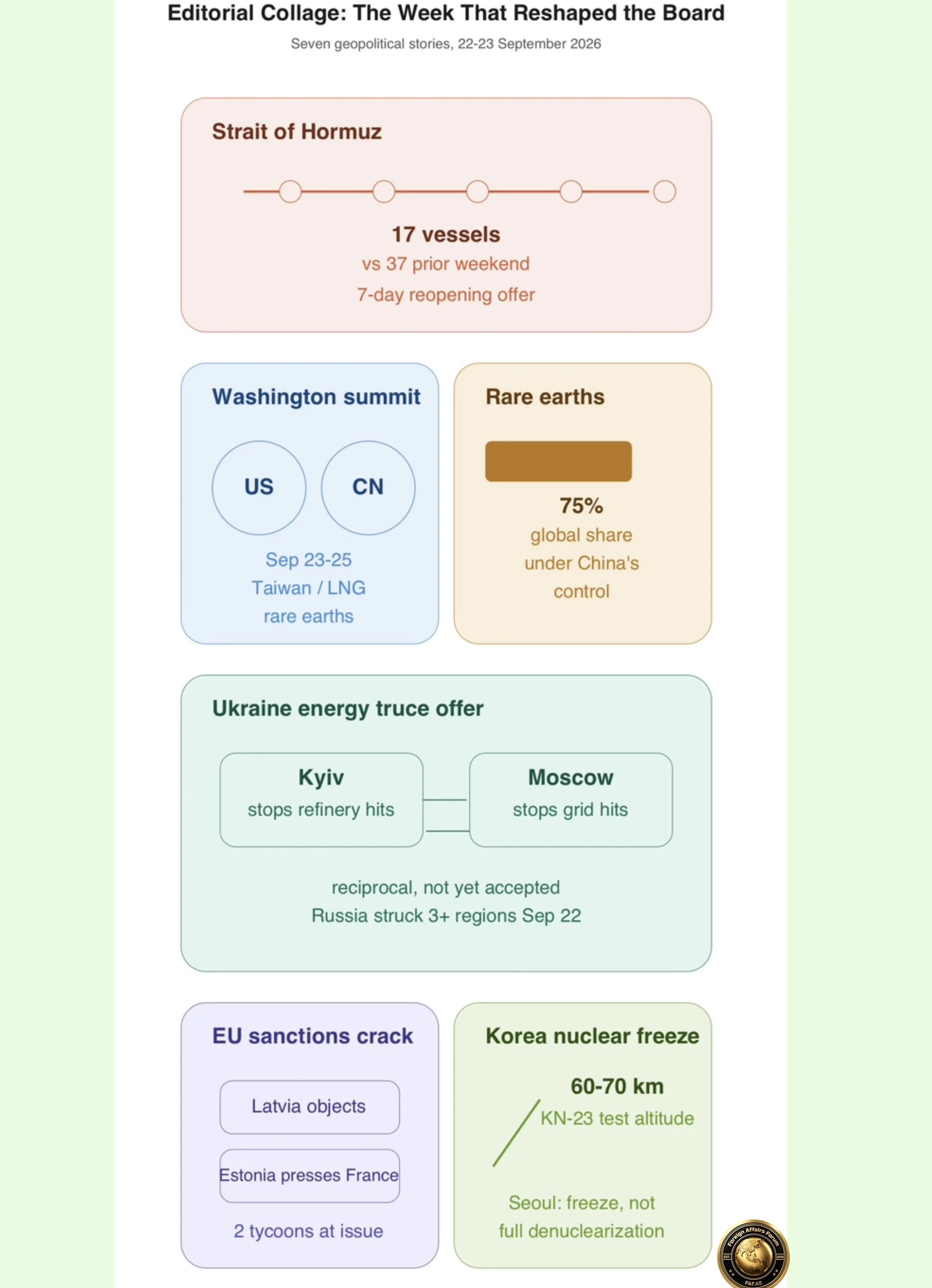
At the end of September 2026, seven events showed that the world order is changing fast.
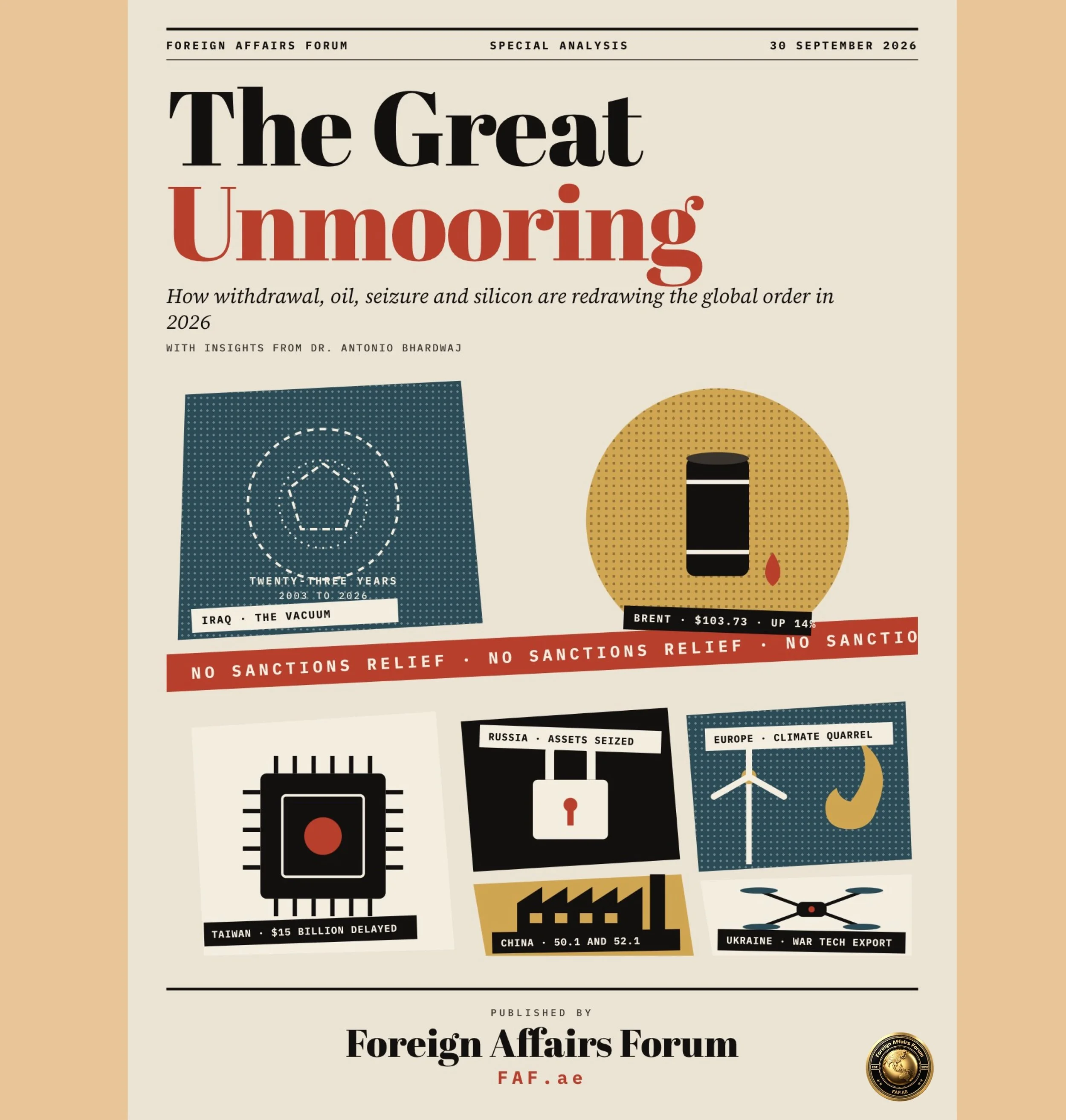
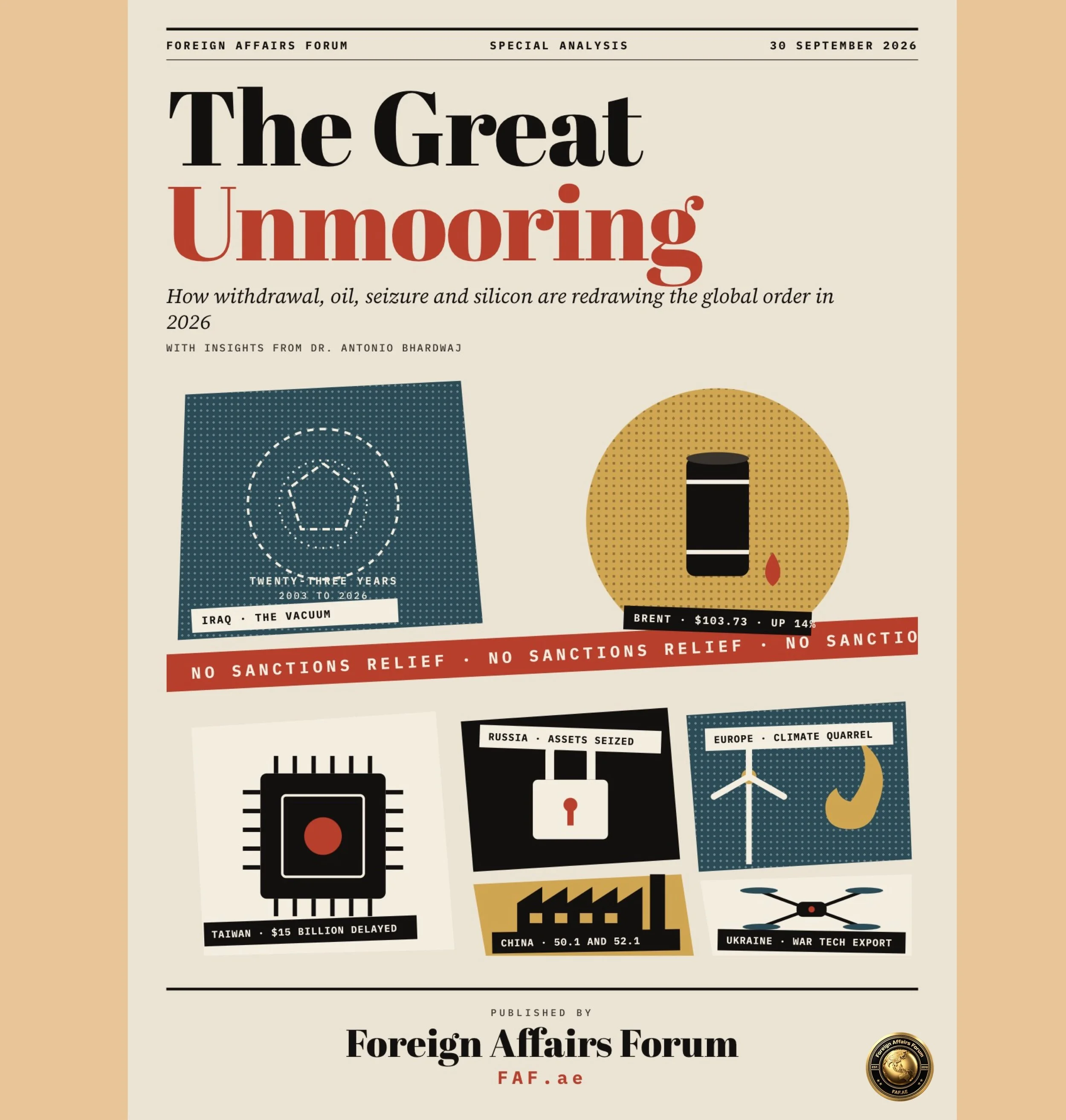
The United States finished pulling its last troops out of Iraq after 23 years.
President Trump refused to ease sanctions on Iran, and oil rose above $103 per barrel.
Senators asked the White House to release more than $15 billion of delayed help for Taiwan.
Russia took control of the local businesses of three European companies.
Two European countries pushed to relax climate rules.
China's factories grew again, and Ukraine said it wants to sell its wartime technology to the world.
These events are linked.
The United States is moving its attention from the Middle East to Asia. Money, oil and technology are being used as tools in the struggle between countries. Energy prices connect global politics to the cost of living for ordinary families.
Dr. Antonio Bhardwaj (Dr. 🆎), an expert in human-centered superintelligence, AI warfare and bioterrorism risk, says the big race is now about who controls the industries and technologies behind artificial intelligence.
Introduction
Big changes in world affairs often happen quietly. A country leaves a base, a price moves, a law is debated, and only later do people see that an era has ended.
That is what makes this week important. Several old beliefs are being tested at once: that America would guard security in the Gulf, that business could stay separate from rivalry between nations, and that Europe's climate plans would move ahead smoothly.
FAF article explains the seven events in plain language. It looks at the background, the latest facts, the causes and effects, and what should happen next.
Dr. 🆎 helps to explain the links. As Dr. 🆎 puts it, "Every headline this week is part of one story. The story is about who controls energy, factories and intelligent machines."
History and Current Status
The United States sent troops into Iraq in 2003 to remove its government.
The war led to years of violence. When American forces left in 2011, Islamic State grew strong and took large areas in 2014. America came back in a smaller role, helping Iraqi forces with information, training and counterterrorism. A plan agreed in 2024 to end that role has now been completed.
Taiwan has its own history. Since 1979, America has promised to help Taiwan defend itself, while staying deliberately vague about whether it would fight for the island. This kept peace with China for decades. It only works if American weapons keep arriving and if China never thinks that trade deals can buy American silence.
Business has changed too. After the Cold War, people believed that foreign companies were safe in any country. That belief weakened after Russia invaded Ukraine in 2022. Sanctions and counter-sanctions grew, and Europe learned how much it depended on imported energy.
Key Developments
First, American troops have left Iraq.
The worry is the empty space they leave. American forces helped Iraq with intelligence and training against Islamic State, and militias backed by Iran are still powerful there. Without the Americans, Iran may gain more influence along the route linking Iran, Iraq, Syria and Lebanon.
Second, President Trump denied reports that he would ease sanctions on Iran.
Qatar is still helping the two sides talk indirectly. Oil rose to about $103.73 per barrel, a gain of about 14% this month. Saudi Arabia has reopened more export routes, and Middle Eastern oil exports are at their highest since February, so supply is improving even though political danger remains high.
Third, four Republican senators want the government to release more than $15 billion in delayed help for Taiwan.
The Senate Armed Services chairman, Roger Wicker, said America must keep its promises. Taiwan's defense minister says Washington has promised that its policy has not changed after last week's meeting between President Trump and President Xi.
Fourth, Russia has placed the local businesses of Nestlé, Metro and Auchan under temporary state control.
It says this is a response to Europe's role in the war in Ukraine. About one hundred and thirty-five foreign-linked businesses have faced similar action, and European banks such as UniCredit and Raiffeisen could be next.
Fifth, Italy and the Czech Republic want to relax parts of the European Union's climate rules because energy is so expensive.
They want delays to new methane rules and to a carbon-pricing plan for transport and heating due in 2028. Spain, Portugal and Luxembourg want the opposite: a firm 2040 target for renewable energy.
Sixth, China's official factory index rose to 50.1 from 49.8, and a private survey reached 52.1, its highest in five months.
Growth in AI-related products helped. Property, spending and investment remain weak.
Seventh, Ukraine wants to sell drones, cyber defense, AI and digital government tools to the world, using what it learned in the war.
Latest Facts and Concerns
The main worry in Iraq is that Islamic State could return. Iraqi forces are experienced, but they have depended on American support. It will take months to know whether they can manage alone.
The talks with Iran are stuck. Without any hope of relief from sanctions, Iran has little reason to compromise, and without compromise, America will not soften. A single incident at sea could quickly turn into a larger crisis. Oil above $100 pushes up prices for transport and goods, and it makes life harder for countries that must import fuel.
On Taiwan, the worry is about belief as much as weapons. If China thinks America is hesitating, it may become bolder. Taiwan also makes most of the world's most advanced computer chips, so a weaker defense would affect AI, electronics and technology companies everywhere.
Dr. 🆎 says, "Taiwan is the chokepoint of the thinking economy. The chips made there train the systems that will shape security for decades."
For businesses, Russia's actions send a clear message: property in a rival country may not be safe in a crisis. In Europe, high energy bills are turning a technical climate debate into a political fight. In China, stronger exports may bring new complaints that it produces too much.
Dr. 🆎 also warns about Ukraine's plans: "When autonomous weapons become an export industry, safety rules must travel with them. Human control and careful export checks are the conditions that keep innovation safe."
Cause-and-Effect Analysis
Start with America's change of focus. Because Washington wants to concentrate on China, it is reducing its presence in the Middle East. This gives Iran and its allies more room to act, which worries Gulf states and Israel and makes talks with Tehran harder.
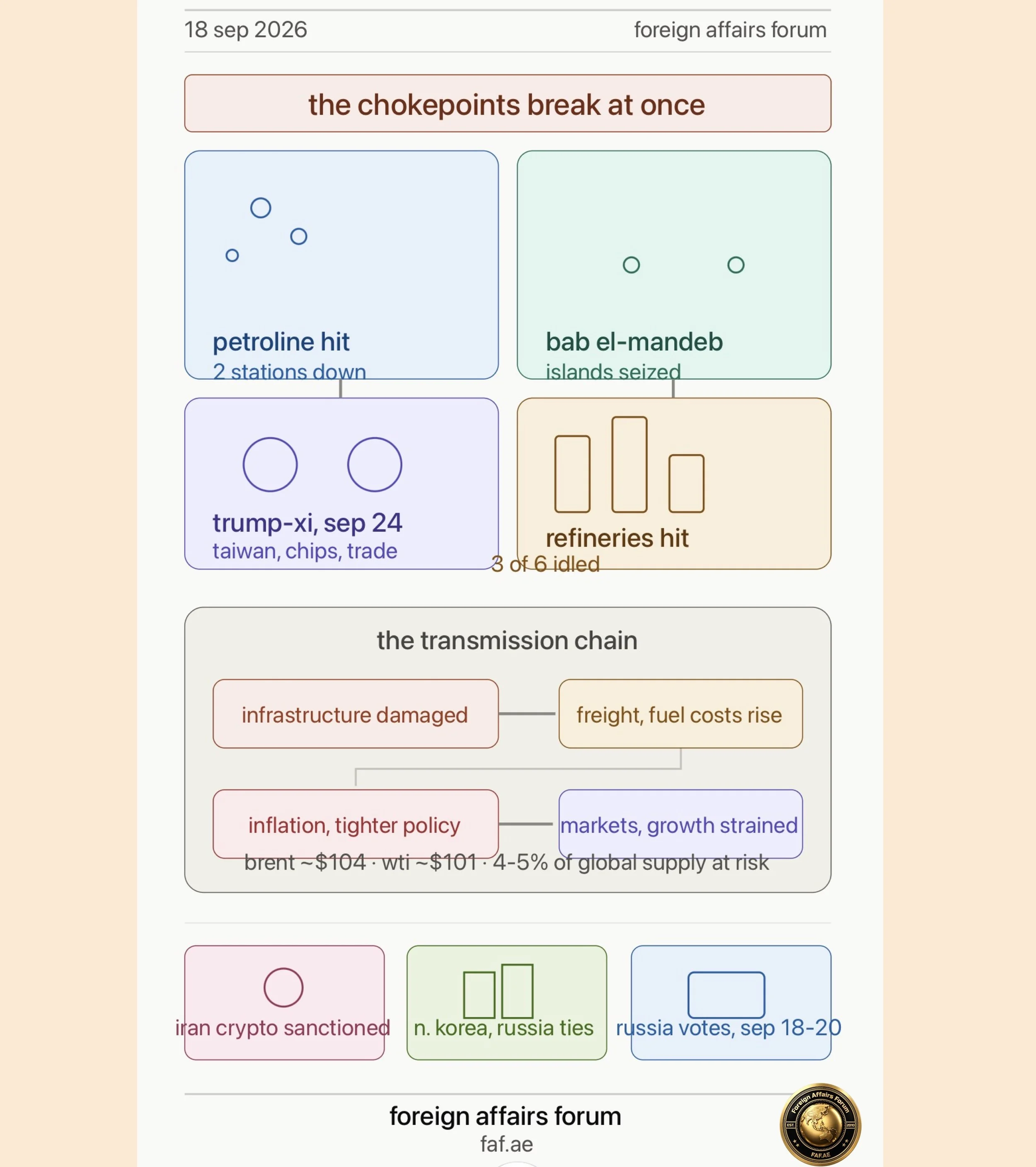
Next, the Iran conflict raises the danger to oil shipping. Traders add that danger to the oil price, so costs rise for transport and factories. Higher prices make it hard for central banks to cut interest rates, and countries that import energy see their currencies weaken.
High energy costs then hurt European industries such as steel, chemicals and cars. Governments respond differently. Some want to ease climate rules, while others want to build renewable power faster to depend less on imports.
Sanctions on Russia cause Moscow to hit back by seizing European property. That makes companies more nervous about investing in rival blocs, so they move investments to safer, friendlier countries, which deepens the split between blocs.
Between America and China, better trade relations create new suspicion. Each side wonders whether the other is using economics to gain a security advantage.
Dr. 🆎 calls this "the paradox of managed rivalry."
Finally, the AI boom has raised demand for electronics, batteries and machinery, which is helping Chinese factories grow. Governments answer with subsidies and export controls, which duplicate supply chains and raise costs. The full chain runs like this: division between nations causes energy insecurity, which causes industrial policy, which causes duplicate supply chains, which cause higher spending everywhere.
Future Steps
America and its partners should keep supporting Iraqi forces with intelligence, remote training and money, and should encourage neighbors to help Iraq rather than compete for control of it. They should also keep the Qatar channel open with Iran, aiming for small, checkable agreements on shipping, militias and energy sites that would lower the risk in oil prices.
Importing countries should buy energy from more places, build larger reserves and protect shipping routes. Washington should release the Taiwan aid or explain publicly why it is delayed, while telling Beijing that trade talks are not a bargaining chip for security. Europe should look for designs that combine climate goals with affordability, such as releasing carbon permits when prices spike while keeping long-term targets.
Governments and companies should prepare for more asset seizures by studying their exposure and planning ahead. Finally, countries should set clear rules for exporting military technology so that humans always stay in control.
Dr. 🆎 adds that AI and biological risks need the same care: "Tools that make science faster can also make misuse easier, so monitoring and international rules are essential."
Conclusion
The events of this week show a world where security, business, energy and technology are tied together. Some of the change brings danger, such as the gap in Iraq, oil above $100 and the risk to foreign investment. Some brings opportunity, such as new energy suppliers, stronger industries and new technology exporters like Ukraine.
Three things are worth watching next: whether Qatar can restart real talks between America and Iran, whether Washington releases the Taiwan package, and whether Russia takes over major European banks.
Dr. 🆎 ends with a simple message: "Resilience, not dominance, will define the next order. Countries that diversify, protect their institutions, control technology wisely and keep talking will survive shocks that break the rigid."