Five Crises, One Week: What America's Big Foreign Policy Moment Means for You
Summary
America is facing several big foreign policy tests at the same time.
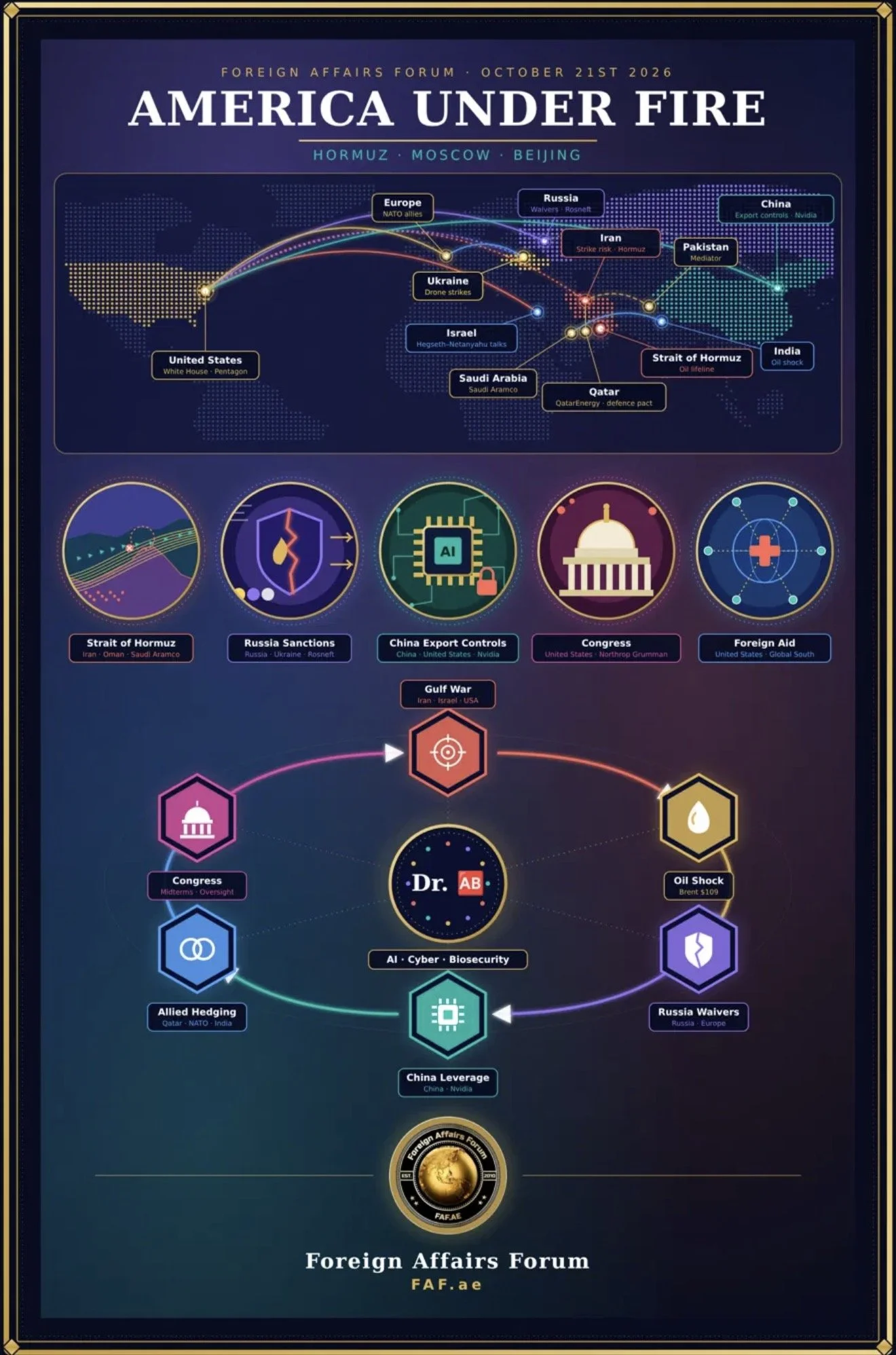
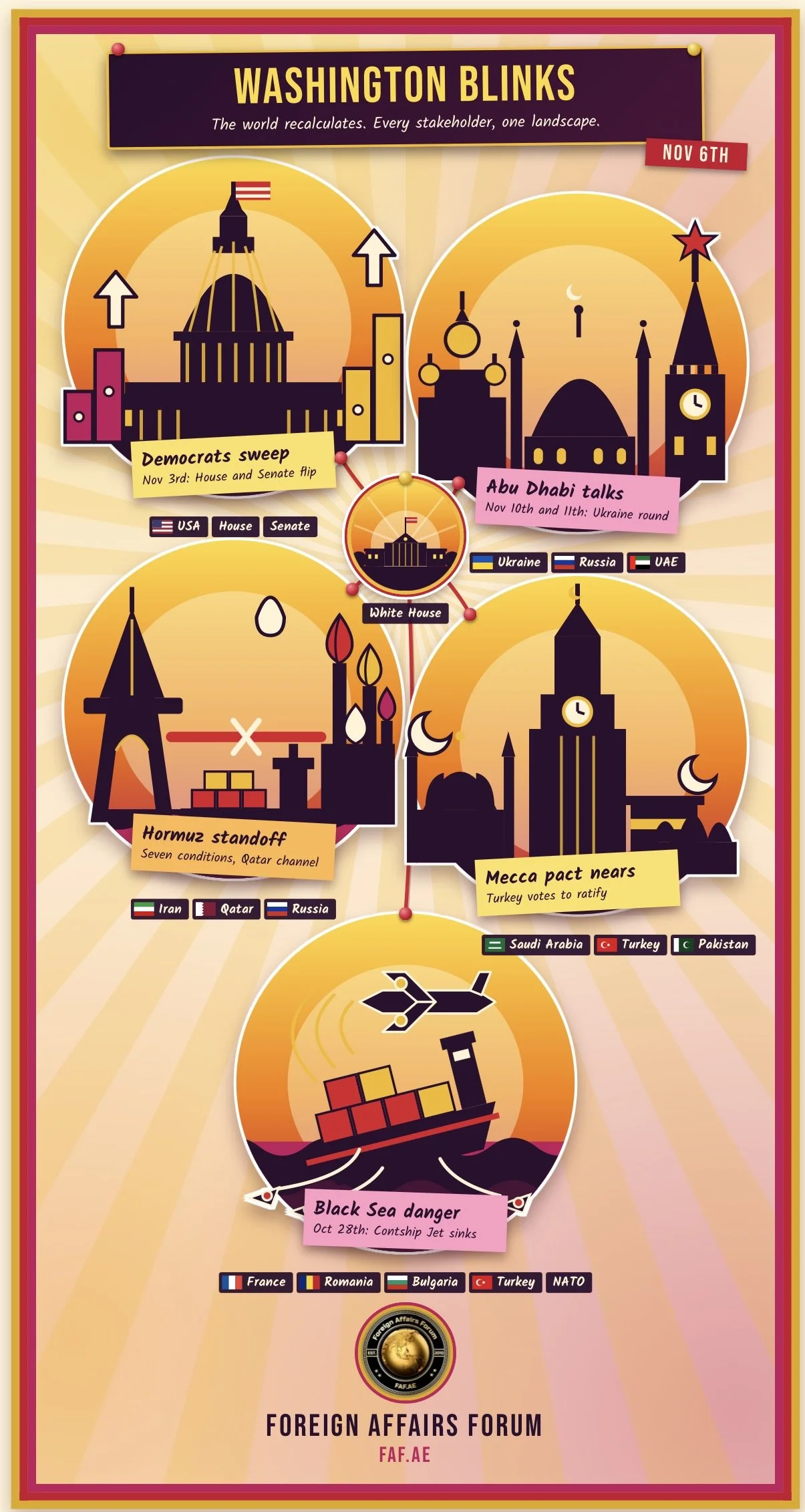
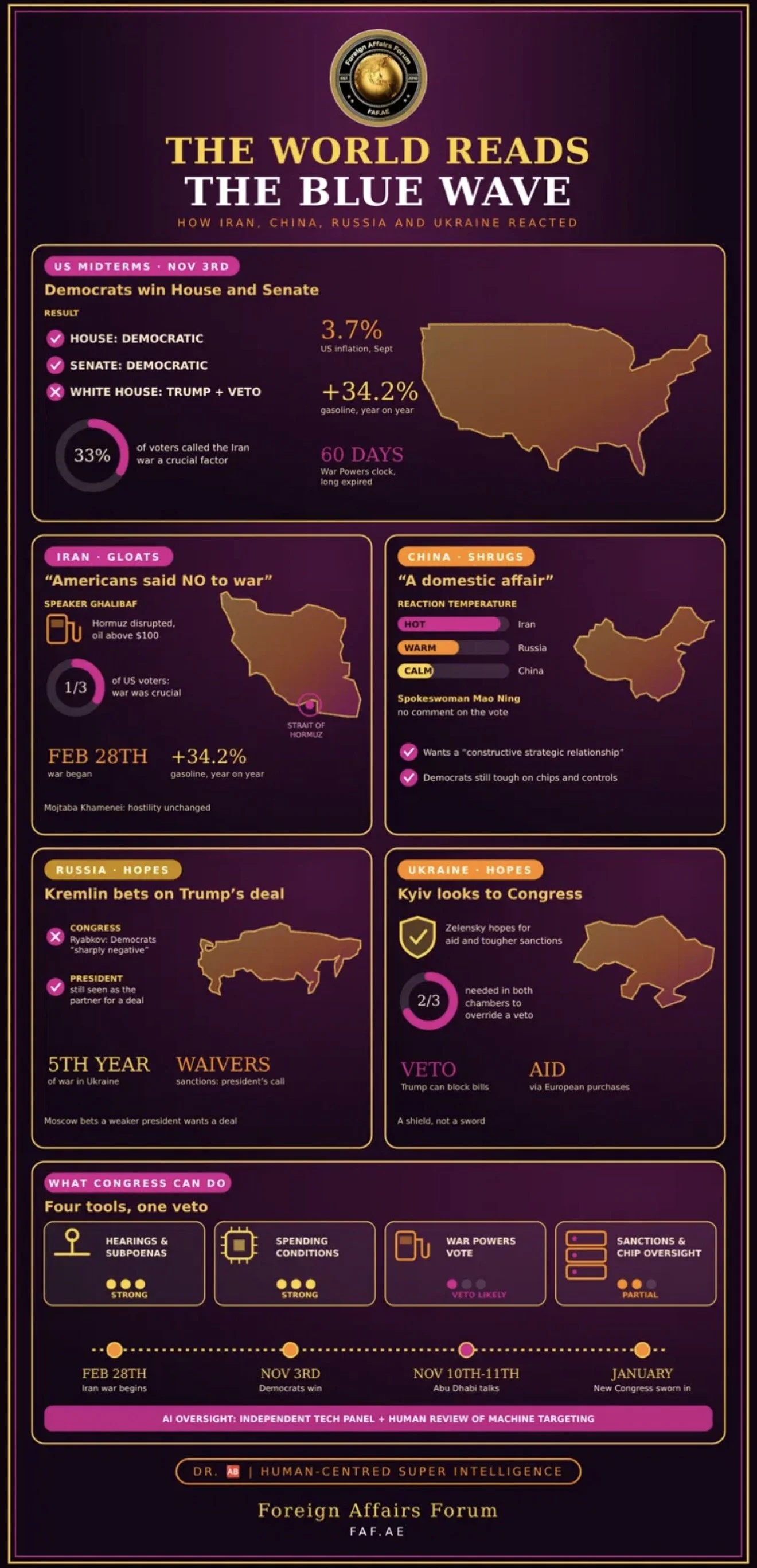
The President is deciding whether to restart major attacks on Iran. Iran has sent a nuclear proposal through Qatar. Voters have given Democrats control of Congress from January, which will change how the country debates war and spending. The President will soon meet China's leader, Xi Jinping, in Shenzhen. And Russia, Ukraine and the United States are about to hold talks in Abu Dhabi. Oil prices, which sit close to $100 a barrel, connect all of these stories.
Introduction
This FAF article explains the main events in plain language, shows how they connect, and says what might happen next.
Dr. 🆎, an expert in superintelligence who studies how artificial intelligence changes war and politics, gives a simple way to think about it. "Do not look at each crisis alone," he says. "Look at how they push on one another. Speed is the real danger now. When everything moves fast, leaders have less time to think, and mistakes become more likely."
Where Things Stand
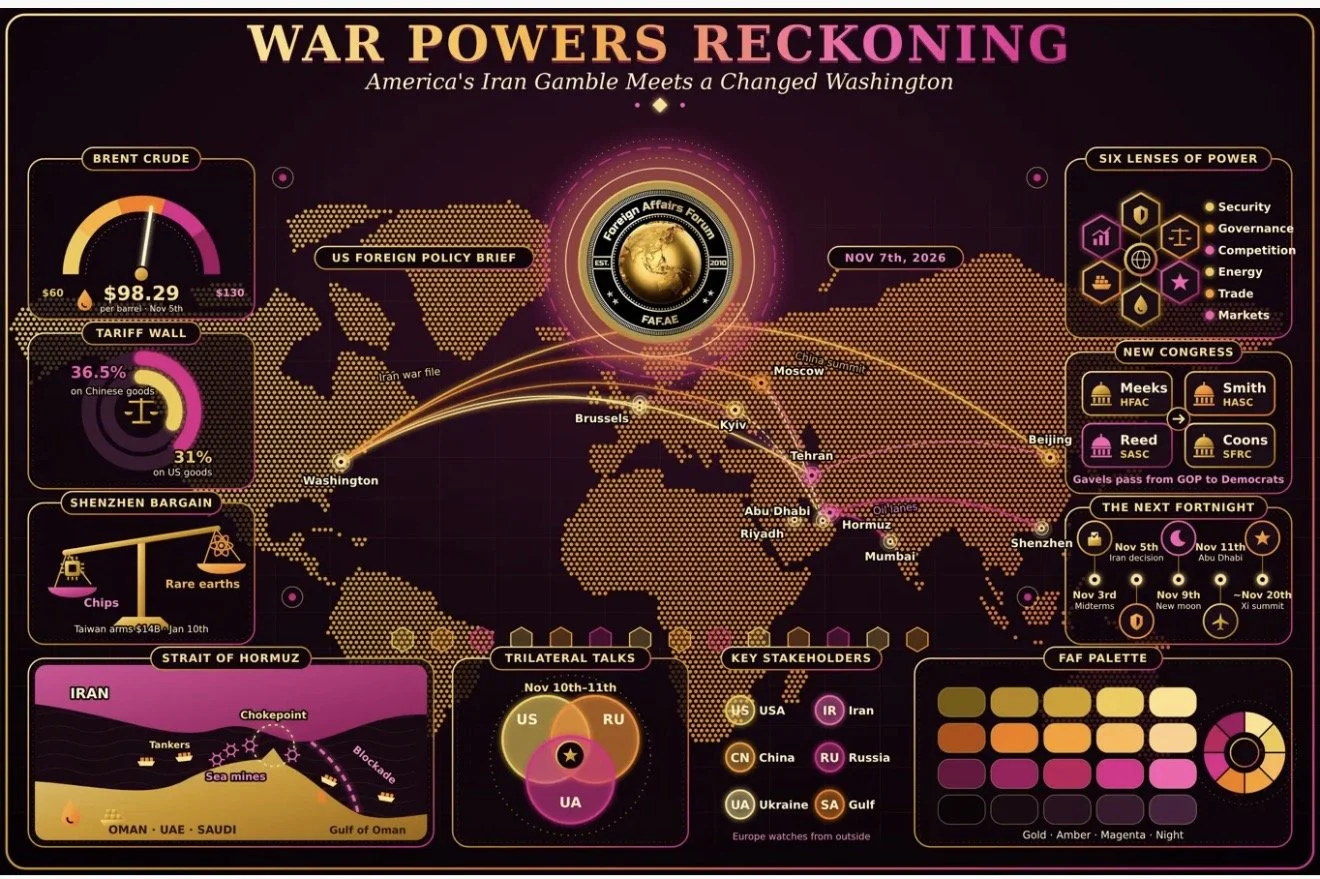
For decades, the United States has protected shipping lanes in the Persian Gulf, because a large share of the world's oil travels through the narrow Strait of Hormuz. Today that strait is a danger zone. America is blocking Iranian ports. Iran and its allies are attacking ships. This week, tankers caught fire in the strait, and one was reported to have hit an Iranian sea mine. Eighteen Americans have died in the conflict so far.
At home, the election on Nov 3rd changed the picture. Democrats will lead the committees in Congress that watch over the State Department and the Pentagon. Several experienced Republican voices on national security have lost their seats or are leaving. Some Democratic leaders say they want to vote on ending the Iran war and to take back some of the power that Congress gave up over the years.
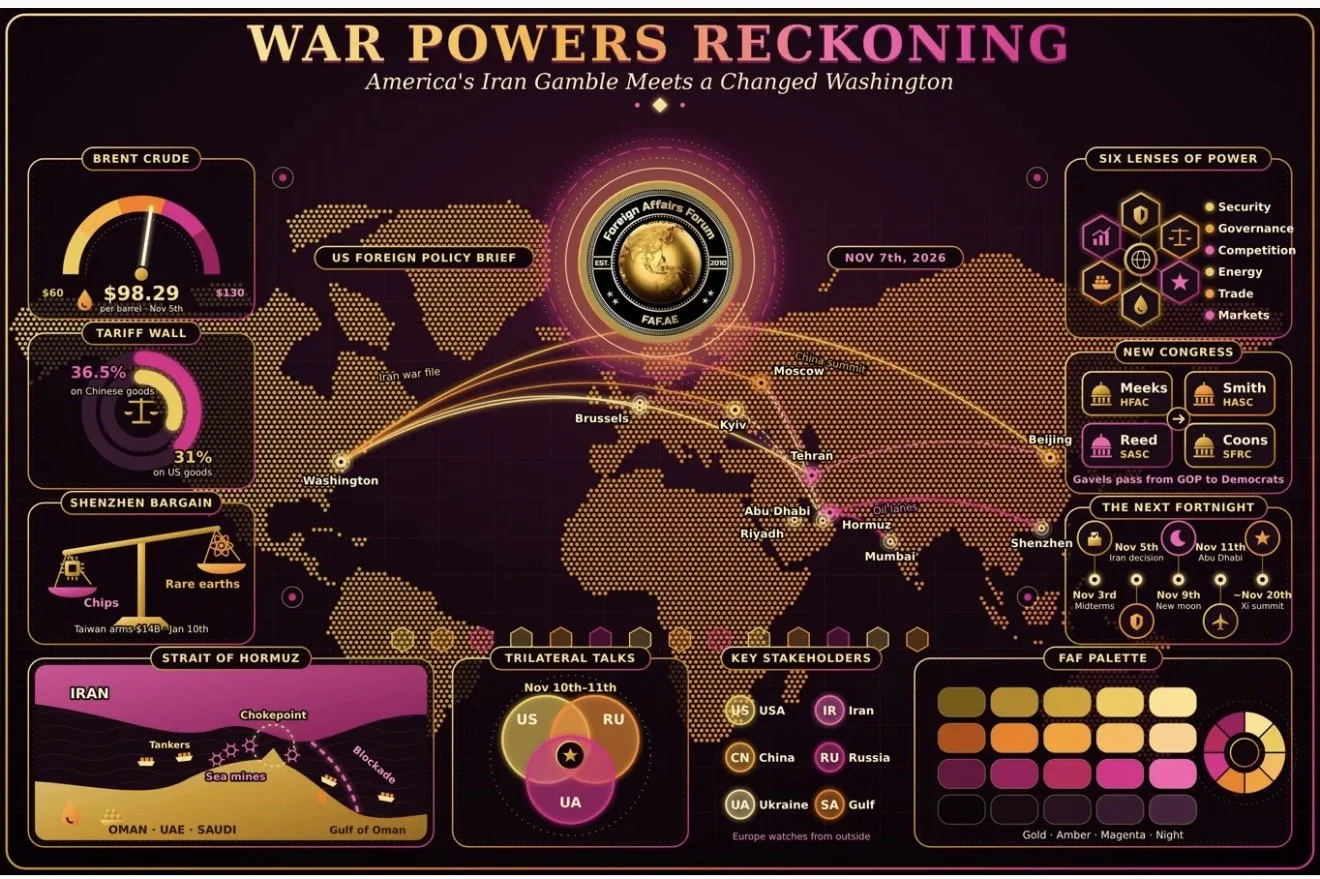
With China, the two countries are living in a truce. Each side charges high taxes on the other's goods, about 36.5% on Chinese goods entering America and 31% on American goods entering China. China has delayed its limits on rare earth minerals, which are vital for phones, cars and weapons, until Jan 10th.
What Happened This Week
On Nov 4th and Nov 5th, the President met with his national security team to decide whether to resume major strikes on Iran. Military planners are reportedly ready, though no new order has been given.
At the same time, Iran sent a formal nuclear proposal to Washington through Qatar. Iran listed seven demands before more talks can happen. They include payment for war damage, an end to sanctions and the blockade, the return of frozen money, fewer American forces in the region, and a permanent end to the war. Washington is studying the proposal. Iran's security chief also visited Moscow to meet Vladimir Putin, which shows that Russia wants a role in whatever comes after the war.
The fighting is spreading. The Houthis in Yemen claimed a drone attack on an airport in Dammam, Saudi Arabia. Turkey's parliament approved a defence agreement with Saudi Arabia and Pakistan. An American aircraft carrier group is not expected in the region until at least mid-November.
In Washington, the Defense Secretary, Pete Hegseth, asked Congress for at least $350 billion in defence money, though reports say his own job may be at risk. The State Department denied a report that Secretary of State Marco Rubio might quit.
On China, the President will meet Xi Jinping at the APEC summit in Shenzhen in about two weeks. It will be their third meeting this year. Critics at home are unhappy about a delayed $14 billion arms sale to Taiwan, easier rules for selling advanced chips to China, and Beijing's support for Iran.
On Ukraine, Russia has confirmed talks in Abu Dhabi with American and Ukrainian teams, with reports pointing to Nov 10th and Nov 11th. Europe has not been invited. Ukraine expects small, practical steps rather than a big deal. These include a pause in attacks on energy and shipping, swaps of prisoners, and the return of Ukrainian children taken to Russia. A Russian official has also said that sanctions relief for a Russian state investment fund is under discussion.
Why These Stories Matter Together
The easiest way to see the connection is through oil. If America strikes Iran harder, shipping in the Gulf could stop, and the price of oil could jump. Higher oil prices mean higher prices for petrol, food and almost everything else. They also help Russia, which earns money from selling oil. This week the price of Brent crude fell more than 8% on Nov 4th, then rose again to $98.29 a barrel after new tanker attacks. A real peace deal with Iran could push prices down quickly.
Politics is the second link. Voters have shown that they are tired of the Iran war. The Vice President has reportedly said the war cost his party the election. That makes it harder for the President to escalate without paying a political price, and it gives Iran a reason to wait and see whether Congress will limit him.
China is the third link. Beijing wants steady trade, easier access to technology, and fewer American pressures on Taiwan. A distracted America may be easier to bargain with. If the President delays the Taiwan arms sale or relaxes chip rules, China may think it can buy American restraint with trade deals.
Russia is the fourth link. If America gives Russia sanctions relief before a ceasefire, Moscow gets money without giving up anything. European leaders and many American lawmakers would likely see that as a mistake. Meanwhile, Russia is building ties with Iran, so a weak American response in one place can encourage trouble in another.
Dr. 🆎 adds a warning about technology. "Cheap tools, like sea mines, drones and software, now let small forces hurt big powers," he says. "Artificial intelligence can help leaders see more clearly, but it can also hurry them into bad choices. Humans must stay in charge of the biggest decisions. I am also worried about biological weapons. When countries feel threatened, rules against the worst weapons can weaken. We need strong early warning systems so that the world can spot and stop a biological attack before fear spreads."
What Worries Experts Most
The first worry is that a war meant to force talks could end up closing the door on talks. Strikes can make Iran's leaders feel that only a nuclear weapon can protect them.
The second worry is energy. With oil already close to $100, a serious disruption in the Gulf would be felt by families and businesses everywhere.
The third worry is that allies are making their own plans. The new Turkey, Saudi Arabia and Pakistan agreement shows that countries in the region no longer assume America will solve every problem for them.
What Should Happen Next
Experts suggest several steps. First, the President should set a clear goal for any new military action and link it to a plan for talks. The Qatar channel should be used seriously. Some Iranian demands, such as war payments, are unlikely to be accepted, but others, such as step-by-step relief from the blockade in return for limits on nuclear work and safe shipping, could be discussed.
Second, America and its partners should work together to clear sea mines and protect shipping, with help from Gulf states and from Asian countries that buy Gulf oil.
Third, the White House should speak early with the new congressional leaders about war powers, the defence budget and Ukraine. A shared approach would make American promises more believable.
Fourth, before meeting Xi Jinping, the President should decide his top goals. These should include keeping rare earth supplies flowing after Jan 10th, enforcing rules on the most sensitive chips, and handling the Taiwan arms question in a way that keeps deterrence strong. Allies should be briefed first.
Fifth, on Ukraine, any easing of sanctions should depend on real progress toward a ceasefire, and Europe should be kept in the conversation.
Sixth, governments should set rules so that people, not machines, make the final call in military operations, and they should build shared systems to detect biological threats early.
Conclusion
This is a week that tests American leadership. The United States has great power, but power alone does not solve problems unless it is tied to clear goals. The crises with Iran, China and Russia are different, yet they pull on one another through oil, politics, technology and trust. If leaders treat them as one connected system, they have a chance to lower the temperature. If they treat each problem alone, they risk a wider and more costly conflict.
Dr. 🆎 sums up the challenge this way. "Wisdom is not about having the fastest machines or the biggest army," he says. "It is about keeping enough time and space for good human judgement. The next two weeks will show whether America can do that." The answer will matter far beyond Washington, because it will help shape the world of the 21st century.