Chips, Computers and Fear: Why the World Is Fighting Over Silicon
Executive Summary
In the first week of November 2026, chip company shares fell sharply in the United States and then in Asia. Investors doubted that huge spending on artificial intelligence will pay off, and feared that politics in Washington could slow the building of data centres.
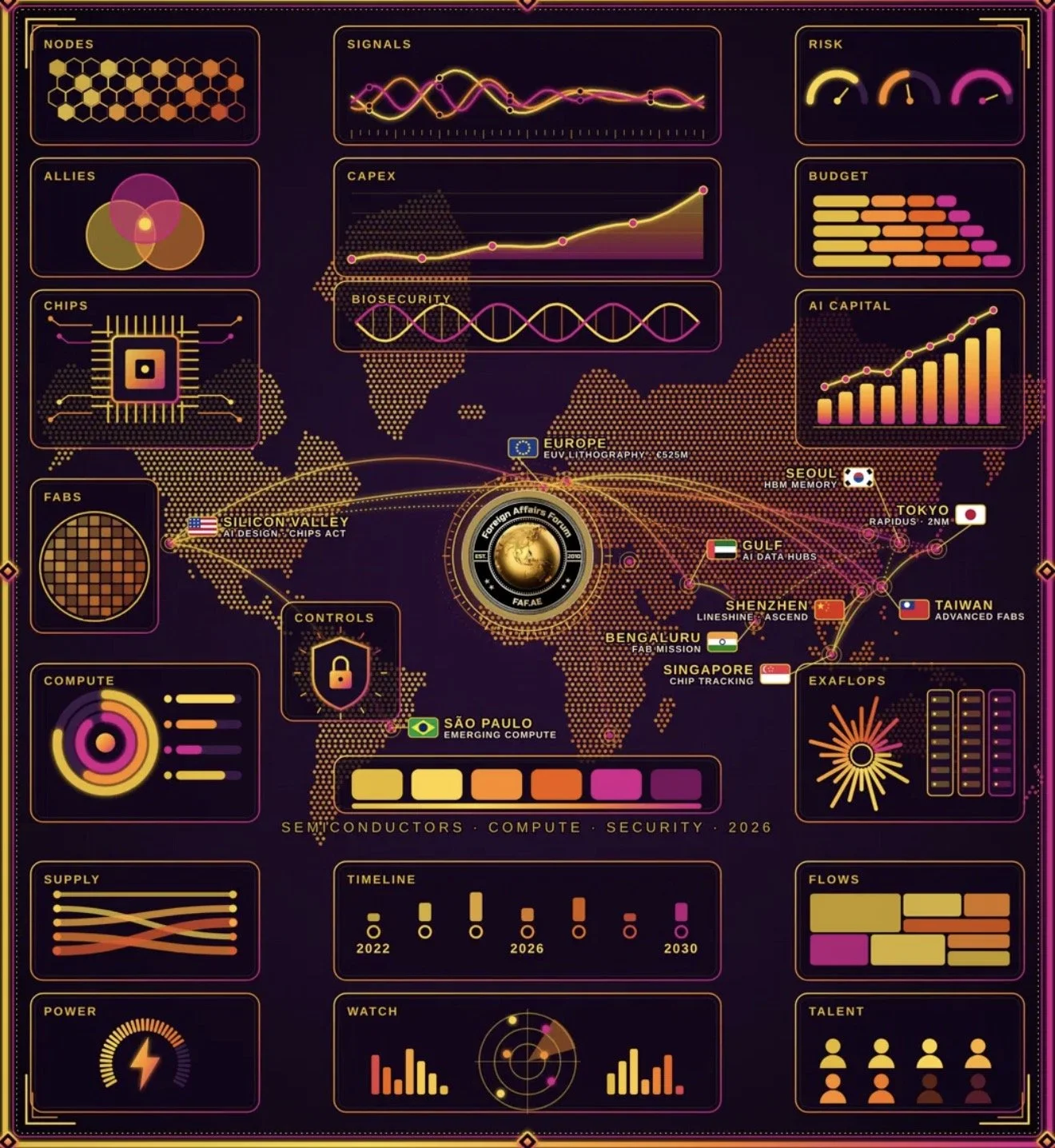
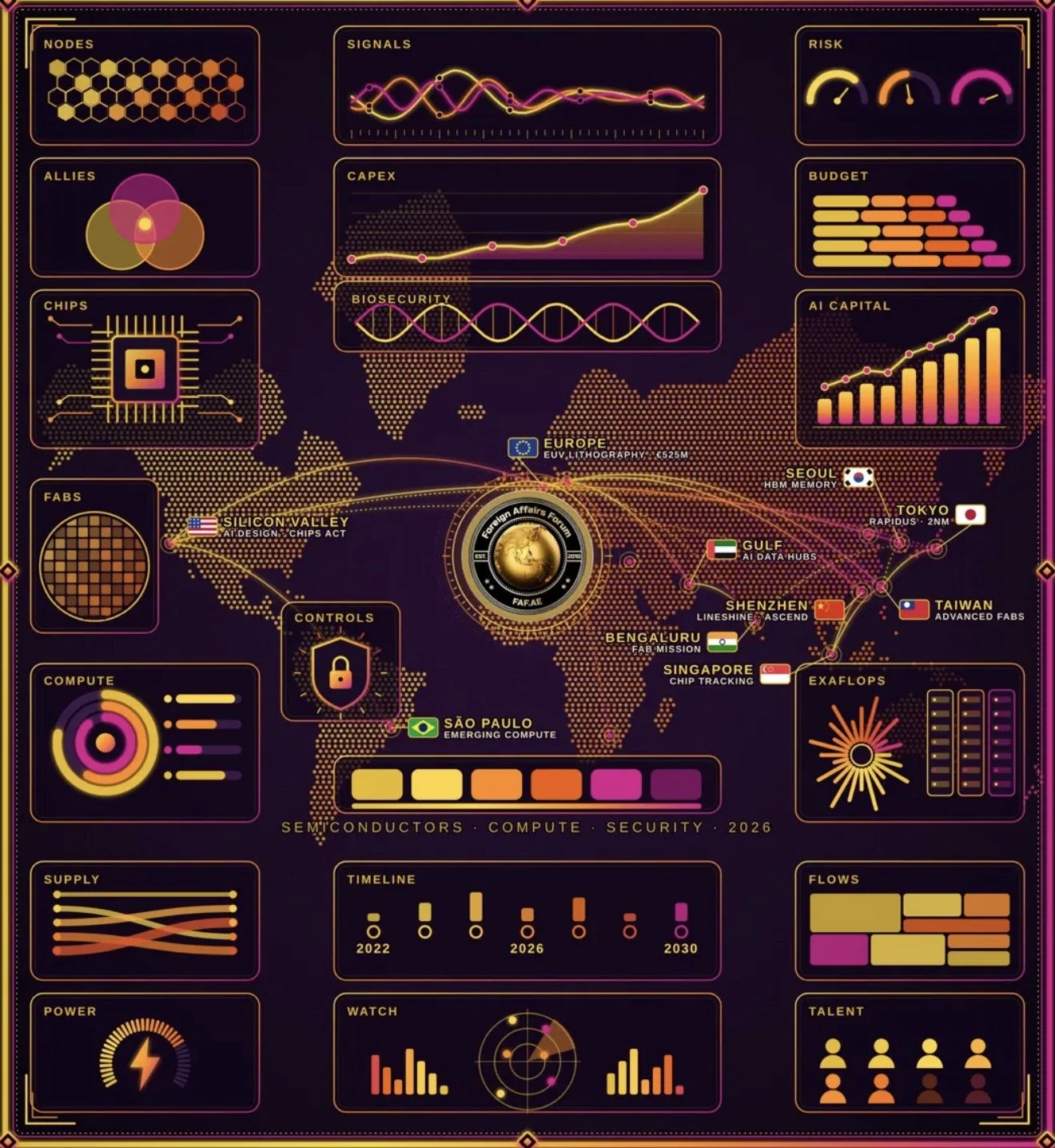
At the same time, governments kept fighting over who may buy and use the best chips. America is trying to track its chips after they are sold. Europe has set aside €525 million for chip-design start-ups. China is reportedly preparing to train a top AI model on chips made at home, and its LineShine supercomputer still leads the world ranking.
Dr. 🆎, an expert on superintelligence, AI warfare and bioterrorism risk, warns that the real question is not only who owns the chips, but who can control what they are used for.
Introduction
Chips are tiny pieces of silicon that act as the brains of modern machines. They run phones, cars, hospitals, banks and armies. The most advanced chips also train artificial intelligence, which can write, translate, design drugs and guide weapons. Countries now treat chips the way they once treated oil and steel. Whoever has them gains wealth and power, and whoever lacks them risks being left behind.
Dr. 🆎 says people make a mistake when they treat chips, AI and dangerous weapons as separate subjects. In his view they are links in one chain. Factories make chips, chips power computers, computers train AI, and AI in the wrong hands can make cyberattacks or harmful biological agents easier to carry out. A story about chip sales can therefore also be a story about safety.
History and Current Status
The story began in 1947, when scientists in the United States invented the transistor. For decades America led the industry.
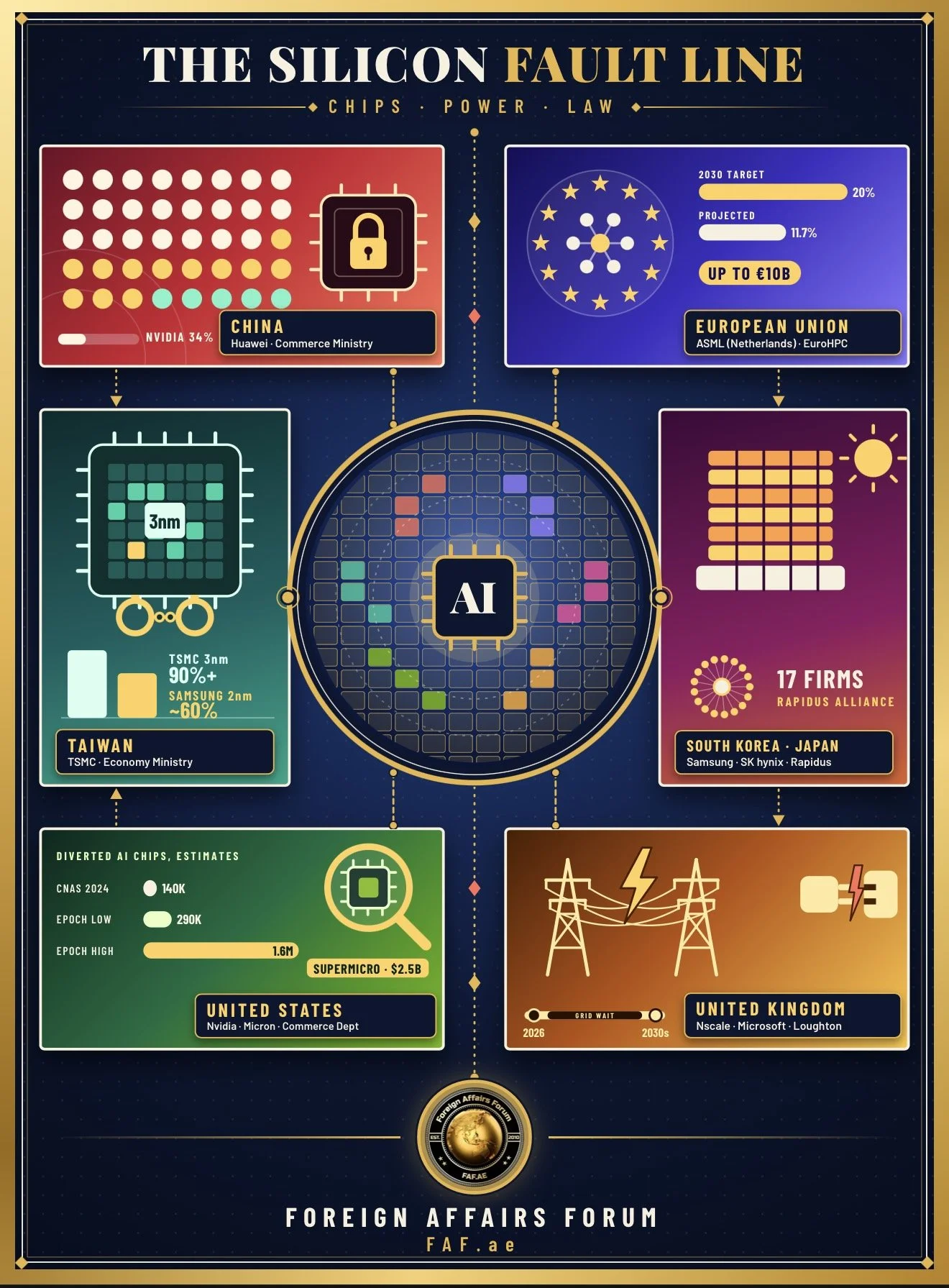
In the 1980s Japan grew strong in memory chips, and Washington began to worry about depending on others. Then TSMC, founded in Taiwan in 1987, changed the business by building chips designed by other firms. This worked well, but it meant that most of the world's best chips came from one island and a few factories in South Korea. One more firm matters greatly: ASML of the Netherlands makes the machines that print the smallest patterns on chips, and nobody else sells them at that level.
After the shortages of 2020 and 2021, governments acted. In 2022 America passed a law giving about $52.7 billion to chip making and research, and it limited sales of advanced chips and tools to China.
The European Union passed its Chips Act in 2023, hoping to lift Europe's share of world production from about 9% to 20% by 2030. China poured money into its own industry for years.
Key Developments
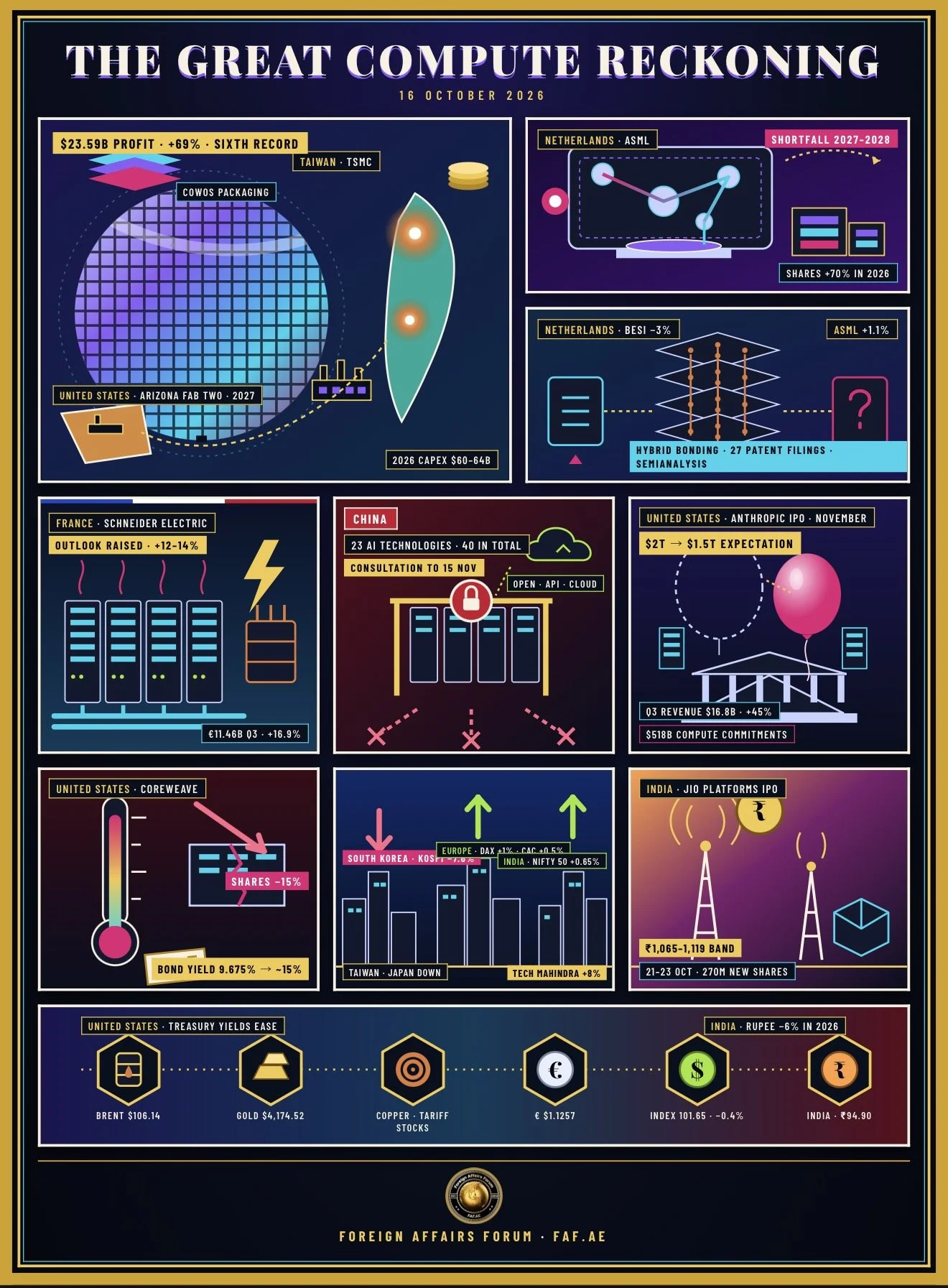
The biggest news was the sell-off. On one day in America, the Nasdaq fell about 5.5% and an index of chip companies fell about 12.2%. On Nov 6th the shock reached Asia. SK Hynix fell about 10%, Samsung about 6%, TSMC close to 5%, and Taiwan's main index closed down about 4.5%. Analysts blamed doubts about AI profits, fears of tougher rules on data centres and public anger about electricity bills, and a rush of forced selling.
The second story was about enforcement. Reports said Nvidia now asks cloud companies in South-East Asia to use software that estimates where its chips are located, in order to stop smuggling to China. Some outlets also reported that American intelligence believes China's spy agency recruited an executive linked to Megaspeed, a Singapore company already under investigation. China called the claim groundless, and no charges have been announced.
The third story came from Europe. On Nov 4th and 5th the European Commission launched a €525 million platform giving chip-design start-ups software tools, factory access and grants of up to €16 million. European firms earn less than 1% of world chip-design income, and officials hope more European designers will give European factories more customers.
The fourth story came from China. Technology websites reported that DeepSeek plans to train its next model entirely on Huawei's Ascend chips. Neither company has confirmed it. Huawei did say in September that its newest chips will be sold only inside China, because demand there exceeds supply.
The fifth story is the supercomputer ranking. In June 2026, China's LineShine in Shenzhen took first place on the TOP500 list at about two point two exaflops. America's El Capitan is second, and Europe's JUPITER in Germany has passed the one exaflop mark. The next ranking is expected in mid-November.
Latest Facts and Concerns
It is important to separate what is known from what is only reported. The market numbers are well recorded, although some Asian figures were taken during the trading day. The reasons for the sell-off are opinions from analysts. The stories about tracking, smuggling and spying rely on news reports that often use unnamed sources.
Several worries are still clear. The rules are leaky: a rule about shipping boxes does not stop a company from renting computer power over the internet. A proposed American law would treat such access as an export, but it has not passed. Too much of the supply chain sits in a few places, and a war, earthquake or cyberattack near Taiwan could shake the world economy. Data centres also use a great deal of electricity, and voters may push back.
Dr. 🆎 adds a further worry. Powerful computers that help scientists find new medicines could also help bad actors design dangerous germs or attack power grids and hospitals. He believes governments give this too little attention because they see chip rules only as business or military matters.
Cause-and-Effect Analysis
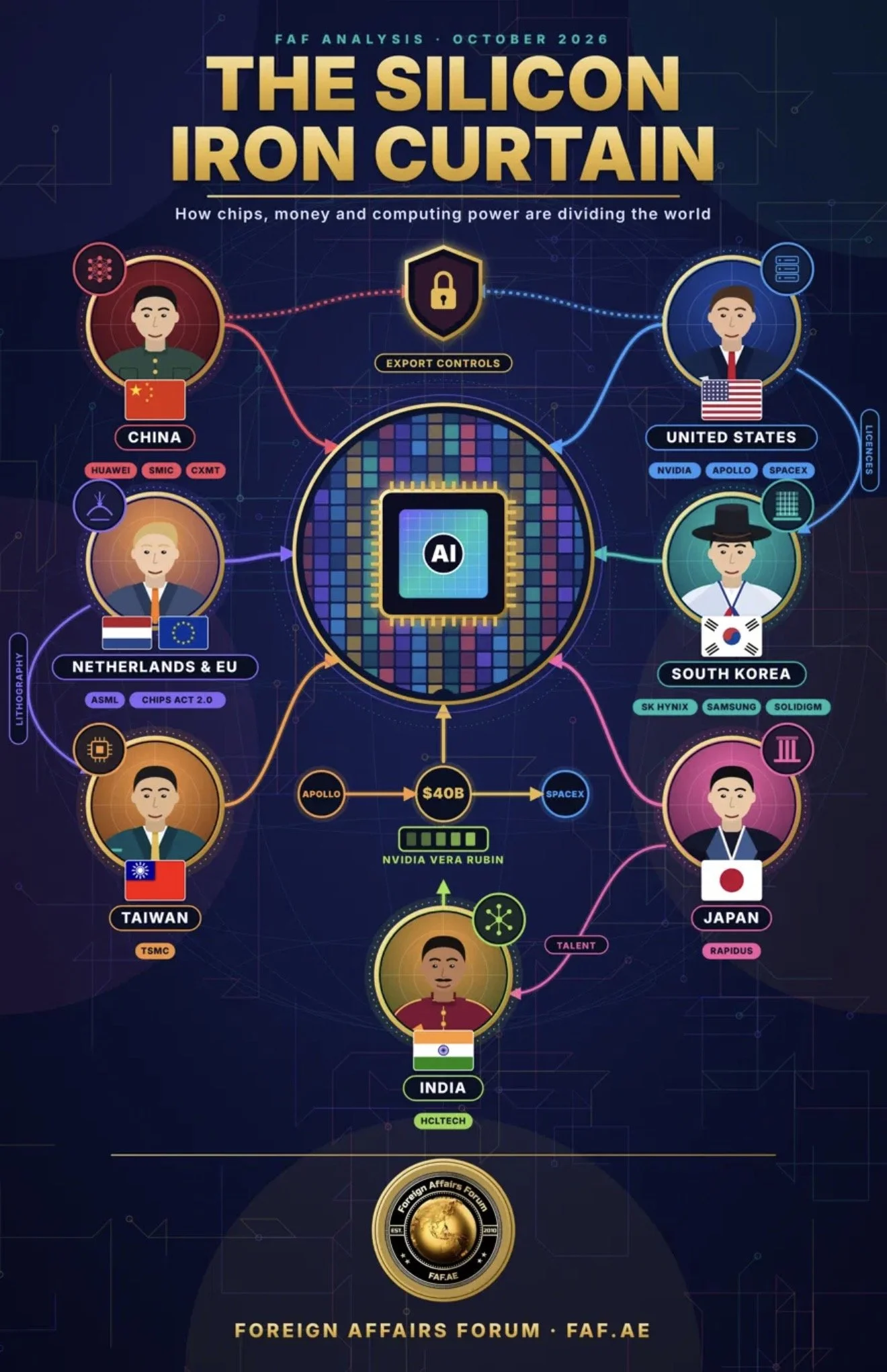
The first chain begins with American limits on chip sales to China. The limits made the best chips harder and costlier for Chinese firms to get. But they also pushed China to build its own chips and to write software that squeezes more power from weaker ones. The limits therefore slow China down and push it toward independence at the same time.
The second chain begins with Chinese demand for Nvidia chips. Because legal supply is limited, smugglers use middlemen or rent computer power remotely. Washington and Nvidia answer with more tracking, which treats advanced chips as controlled goods even after they are sold. Dr. 🆎 calls this useful but not enough, because knowing where a chip sits does not reveal what it is doing.
The third chain links politics and money. AI firms are valued highly because people expect data centres to keep growing. Data centres need land, power and public support. When voters or leaders turn against them, investors panic, and the shock travels to Asian firms that spent heavily to serve this demand. A political change in Washington can therefore lower prices in Seoul and Taipei. Asian governments then promise more public money, which sharpens the race for subsidies.
The fourth chain concerns Europe. Subsidies can build factories, but factories need customers. By funding designers, Europe hopes to create them. The idea is sound, but the sum is small beside American and Chinese spending, and Europe must stop its best engineers from moving abroad.
Finally, a Chinese machine at the top of the supercomputer list shows that China can reach very high speed even without the newest Western chips. But the ranking measures one kind of mathematics, and training large AI systems is a different task. LineShine shows strength in science and simulation, which may include military modelling, but says less about the race to build the biggest AI models.
Future Steps
Several steps would help. The countries that lead in chips should agree on common rules and shared methods to track the most advanced chips and share news of smuggling. If rules differ, smugglers will use the weakest link. Remote access to powerful computers should be covered by law. Governments should also spend carefully, favouring safer supply chains and power networks over capacity that may prove unnecessary.
Dr. 🆎 urges the world to link the control of computing power with the control of biological and cyber risk. He proposes an international technical body, like the agencies that watch nuclear material, that would set tests for dangerous AI abilities, receive confidential reports of problems and keep lines open between rival powers. Humans, he stresses, must stay in charge of decisions that cannot be undone, especially in military systems.
America and China should also keep a small, steady conversation on AI in war and biology, even while they disagree on trade.
Conclusion
The first week of November 2026 showed how fragile the present system is. One day of falling prices revealed how closely Asian industry depends on American politics and money. Smuggling and spying stories showed that business and national security can no longer be separated. Europe is changing its approach, China is working to stand on its own, and the supercomputer ranking shows that no single country owns the future of technology.
The deeper lesson, as Dr. 🆎 puts it, is that the question is no longer only who has the most chips, but who can manage the results of what those chips make possible. The 21st century will be shaped not only by machines, but by the rules, honesty and human judgment that guide them. Countries that build powerful computers without strong safeguards may find that they have placed great power on weak ground.