Obama or Trump: Who Did More for America?
Introduction
Barack Obama and Donald Trump led the United States in very different ways.
People still argue about which one did more good for ordinary Americans.
This FAF article looks at six big differences between them, explains how to judge the results, and shows what Obama did when he lost control of Congress. It uses facts available on Nov 6th, 2026.
Dr. Antonio Bhardwaj (Dr. 🆎) is an expert in human-centred super intelligence, AI warfare and bioterrorism risk. Dr. 🆎 says, "A president is measured by how well ordinary families live and how safe the country is. Both depend on strong institutions and trusted friends abroad."
Where Things Stand Today
Obama became president in 2009, in the middle of the worst financial crisis since the 1930s.
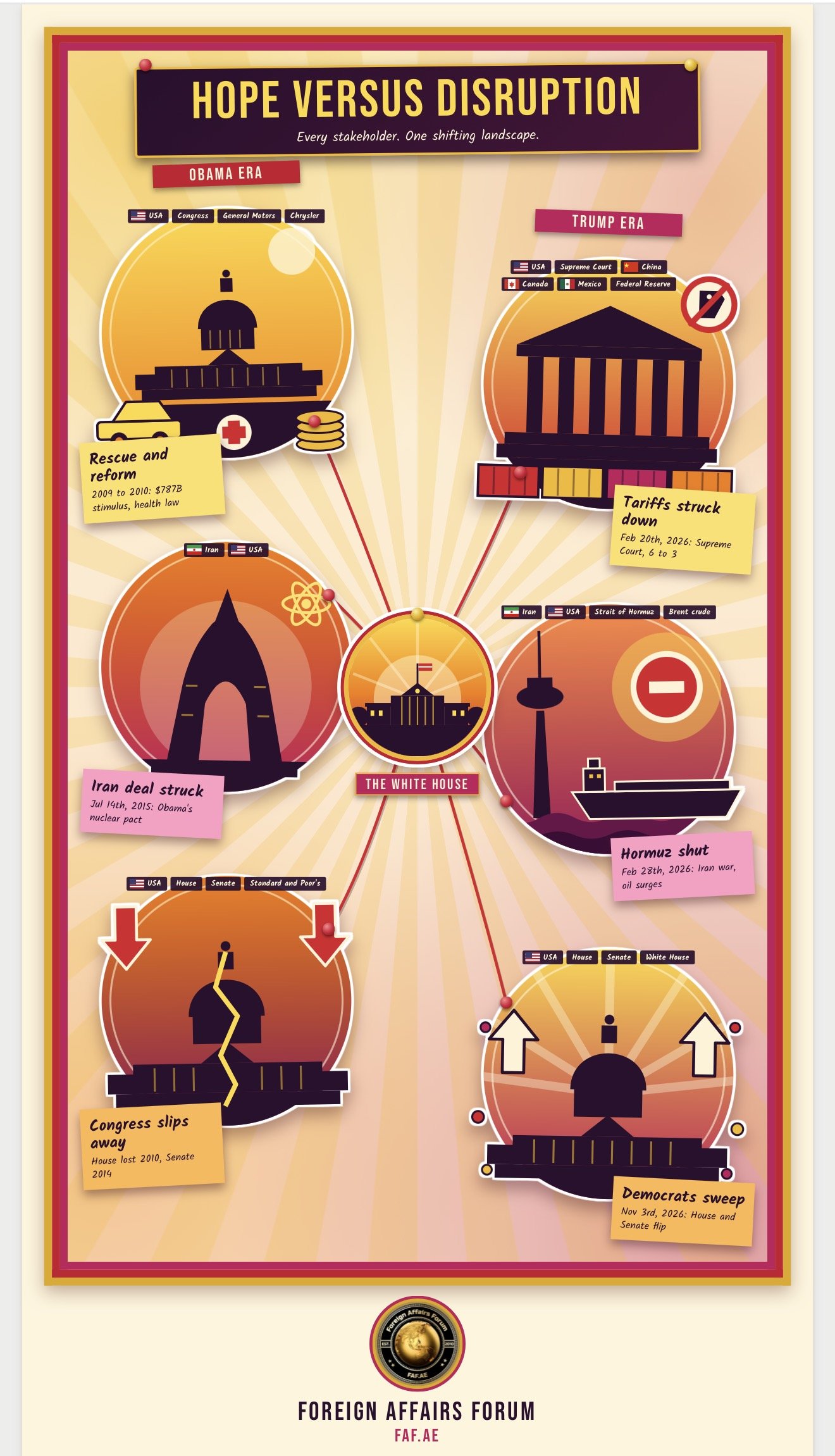
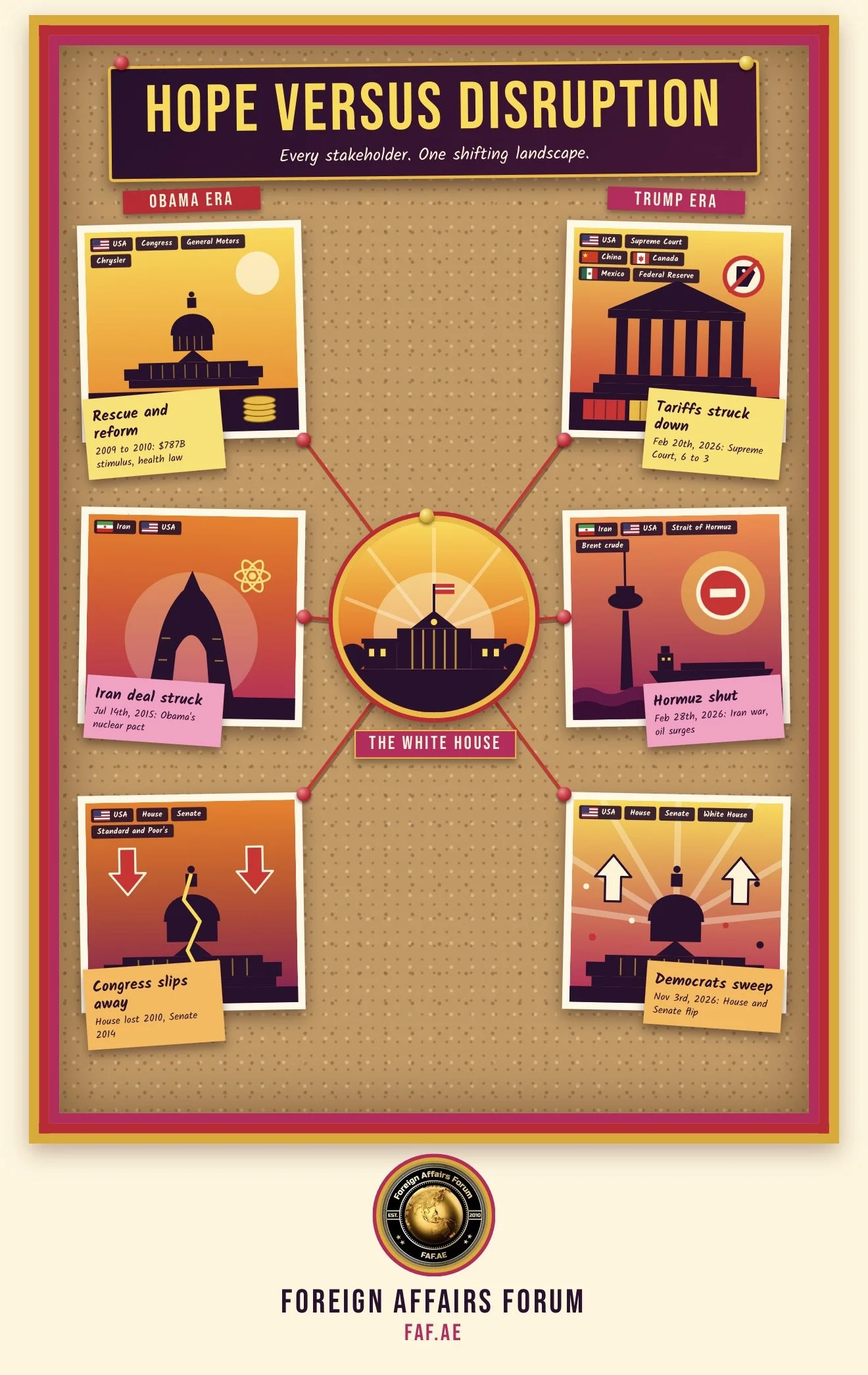
Unemployment rose to 10.0%. His government spent $787 billion to restart the economy, saved the car industry and passed a major health law. When he left in 2017, unemployment was 4.7%, the deficit had shrunk, and prices were rising slowly, at about 1.4% a year.
Trump first became president in 2017. He cut taxes, put tariffs on Chinese goods and appointed three Supreme Court judges.
Unemployment fell to 3.5% before the pandemic, and then rose to 14.7% in April 2020. He returned to office in January 2025.
Since then he has passed a large tax and spending law, raised tariffs sharply, and fought a war with Iran that began on Feb 28th, 2026.
The Six Big Differences
The first difference is health care.
Obama's health law helped about twenty million more people get insurance, and the share of Americans without it fell from about 16% to about 9%. Trump tried to repeal the law in 2017 and failed by one vote. In his second term, his budget law cut spending on Medicaid, the government health plan for people with low incomes.
The second difference is how each used presidential power.
Obama used executive orders too, for example to protect young immigrants who arrived as children. But he mostly followed normal rules. Trump has used his power more directly. He has cut the federal workforce, sent National Guard troops into Democratic-led cities and carried out a very large immigration campaign. Border crossings have fallen, and about 48% of people approve of his work on border security. Courts, however, have often pushed back.
The third difference is taxes and government debt.
Obama started with big spending to fight the recession, then cut the yearly deficit from almost 10% of the economy to about 3%. Even so, the national debt grew a lot. Trump cut taxes twice, in 2017 and 2025, without matching spending cuts. An independent budget office says the 2025 law will add about $3.4 trillion to the debt over ten years.
The fourth difference is trade.
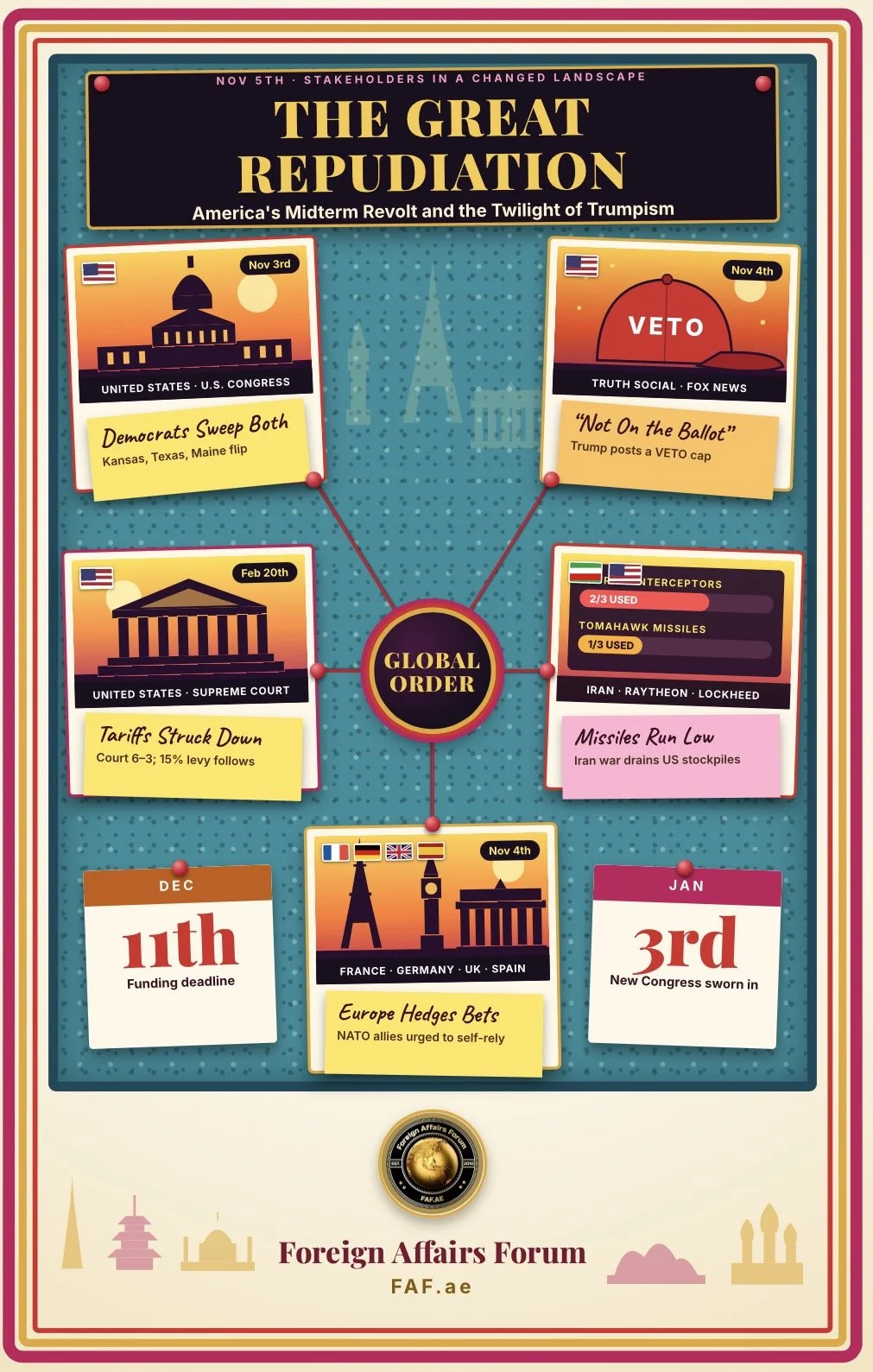
Obama liked trade deals with clear rules and negotiated a big Pacific agreement, which Congress never approved. Trump believes tariffs, which are taxes on imported goods, give America power. In February 2026 the Supreme Court ruled, by six votes to three, that he could not use an emergency law to set his widest tariffs. Some other tariffs remain, and studies suggest tariffs pushed up the price of goods by about 3.1%.
The fifth difference is friends and allies.
By 2016, about 64% of people in surveyed countries had confidence in the American president. In 2017 it fell to about 22%. Obama worked closely with allies on sanctions against Russia and on the fight against the Islamic State group. Trump treats alliances like business deals. He has pushed Denmark over Greenland, cut help for Ukraine and hinted that allies who do not help enough may lose protection.
The sixth difference is how each used force and talked to enemies.
Obama ordered the raid that killed Osama bin Laden, ended combat in Iraq and signed a 2015 nuclear deal with Iran. Trump left that deal, ordered the killing of the Iranian general Qasem Soleimani in 2020, and in 2026 captured Venezuela's president and fought the war with Iran. The war shut the Strait of Hormuz for more than three months and caused the largest oil supply shock on record. A temporary deal in June reopened shipping, but the nuclear dispute is not solved.
Dr. 🆎 adds, "Artificial intelligence and engineered biology are the new security battlegrounds. Allies who trust one another can set safe rules for them. Allies who feel ignored will go their own way."
How to Judge the Results
This FAF article uses four tests.
The first is how well people live, which includes jobs, incomes and health insurance. The second is economic stability, which includes growth, inflation and debt. The third is the cost of living, which is how much everyday things cost compared with pay. The fourth is how America stands in the world.
Circumstances matter too. Obama faced a massive crash and a hostile Congress. Trump's first term began with a healthy economy and ended with a pandemic. His second term has faced a tariff shock, a six-week government shutdown in autumn 2025 and an oil price jump caused by the Iran war.
On the evidence today, Obama's record is stronger on stability, health insurance, low inflation and relations with allies. Trump's first term is stronger on pre-pandemic jobs, border control and the courts. Trump's second term is not finished, but early results on prices are weak. Inflation was 3.7% in September, and only 17% of adults approve of his handling of the cost of living. Another person could weigh these tests differently, for example by valuing border security above all.
When Obama Lost Congress
In 2010, Democrats lost sixty-three seats in the House of Representatives, and Republicans took control of it. In 2014, they also lost the Senate. Obama then faced a hard situation. Big bills were almost impossible to pass. In 2011, a fight over the debt limit took the country close to default and led to a lower credit rating. In 2013, the government shut down for sixteen days. In 2016, the Senate refused to consider his Supreme Court nominee, Merrick Garland.
Obama answered in four ways. He used short periods when his party still had power, such as late 2010, to pass tax measures, end the ban on openly gay soldiers and approve a nuclear arms treaty with Russia. He made budget deals he did not like, to avoid disaster. He used executive orders and agency rules on immigration, climate and finance. And he used international agreements, such as the Paris climate deal and the Iran nuclear deal, which did not need a Senate vote.
He kept his health law alive, saw steady job growth and cut the deficit. But many of his executive actions were later blocked by courts or reversed by Trump. The lesson is that quick action without Congress can be undone just as quickly.
Latest Facts and Worries
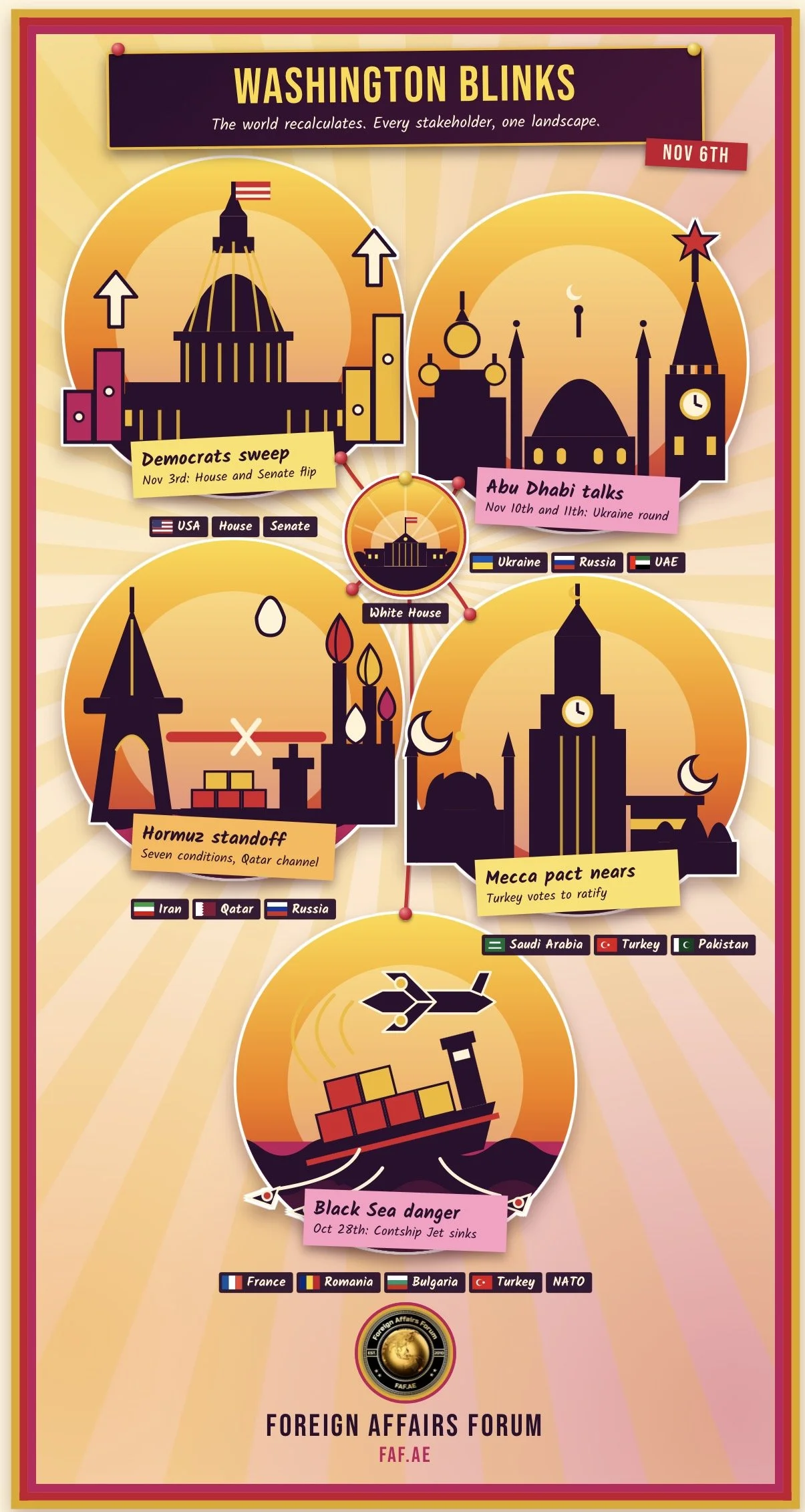
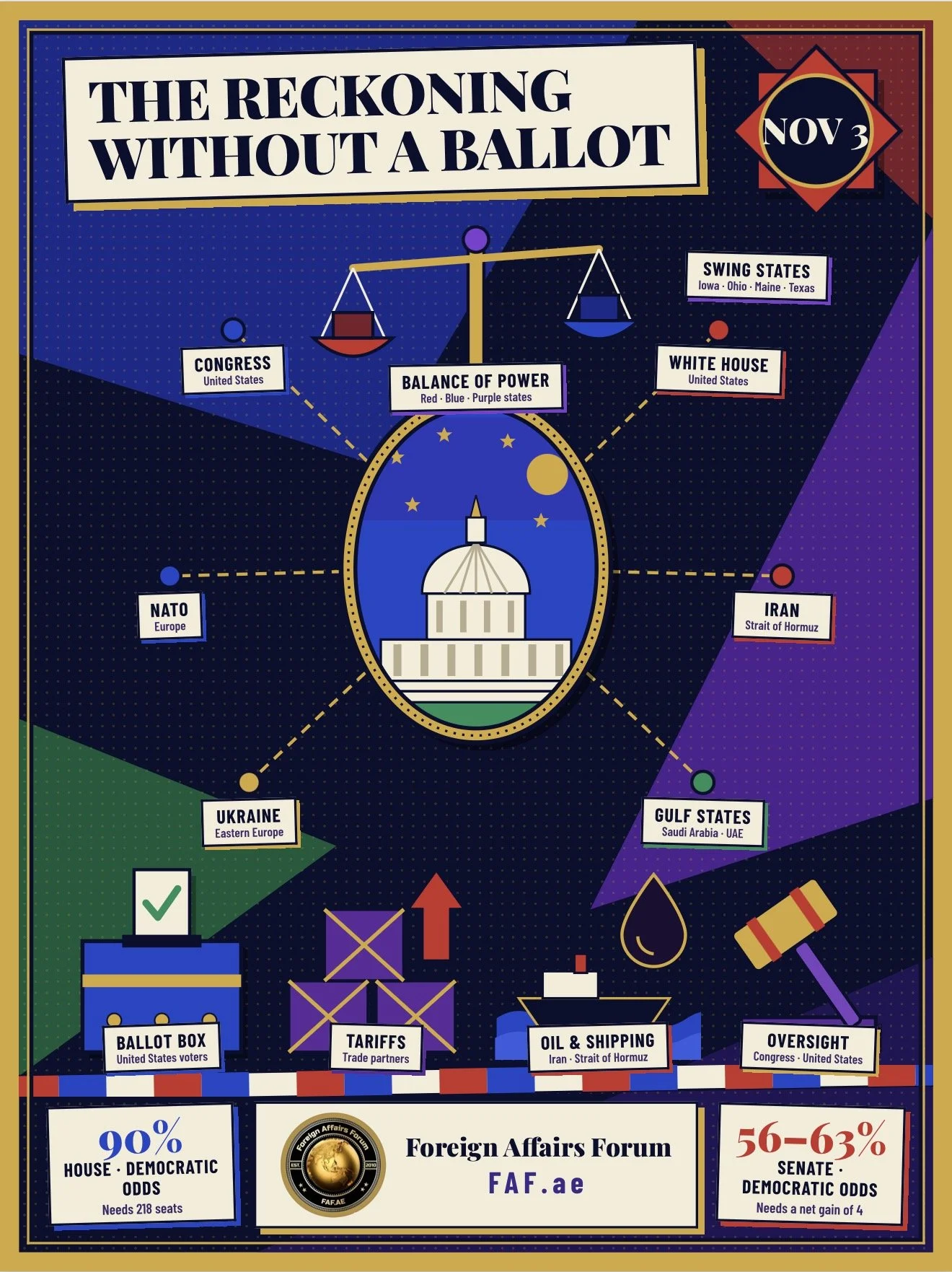
On Nov 3rd, 2026, voters gave Democrats control of the House and the Senate. They won the House by a very large margin, perhaps more than two hundred and fifty seats, and the Senate with at least fifty-one seats. Prices were the main reason. Trump's approval rating is in the low to mid 30s.
The economy is mixed. The stock market is up more than 11% this year, but jobs are growing slowly, at only about fifty thousand a month, and shoppers feel gloomy. Gas prices rose by about half after the Iran war began.
There are also security worries. The Iran deal is temporary. Russia and China have used American distraction to their advantage. Dr. 🆎 warns, "Fighting between parties in Washington must not weaken the agencies that guard against cyberattacks and engineered diseases."
Why Things Happened
The causes are fairly easy to follow. Tariffs raised prices. Higher prices made people unhappy, and unhappy voters supported the opposition. And when a president loses Congress, he has to bargain or act alone, as Obama learned.
What Should Happen Next
Congress and the White House should avoid another shutdown and agree on a budget. They should work on prices by easing tariffs on household goods, building more homes, keeping health premiums steady and reducing dependence on Middle East oil. They should turn the temporary Iran deal into a lasting one with inspections. They should rebuild trust with allies in Europe and Asia. They should also restore the government's ability to collect reliable data.
Finally, Dr. 🆎 urges the United States and its friends to agree on rules for military artificial intelligence, to keep humans in charge of life-and-death decisions and to screen orders for dangerous biological materials.
Conclusion
Obama and Trump show two ways of leading.
Obama relied on institutions, partners and steady reform. Trump relies on pressure, surprise and personal control.
On the four tests used here, Obama's record looks stronger overall, especially on stability, prices and friendships abroad, while Trump's supporters can point to jobs before the pandemic, a tougher border and a changed court system. The final judgement depends on what people value most, and Trump's second term is still unfolding.
Dr. 🆎 concludes, "Trust at home and trust abroad decide whether any president's legacy lasts."