Anthropic's Stock Market Story Explained: What Happened and What Comes Next
A plain-language guide to the biggest stock market debut in history, and why investors are nervous
The Big Picture
Anthropic is the company that makes Claude, an artificial intelligence tool used by millions of people and thousands of businesses.
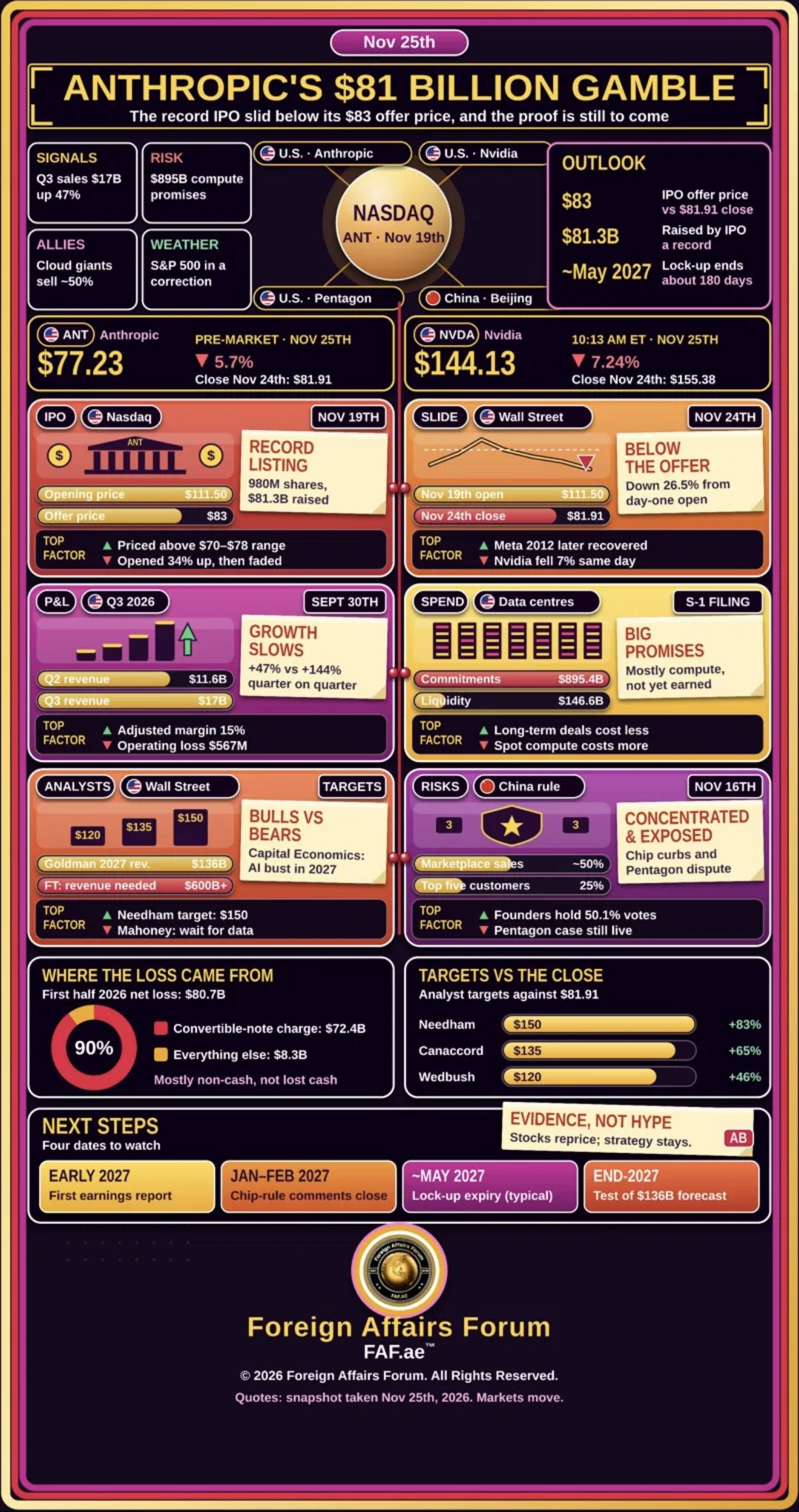
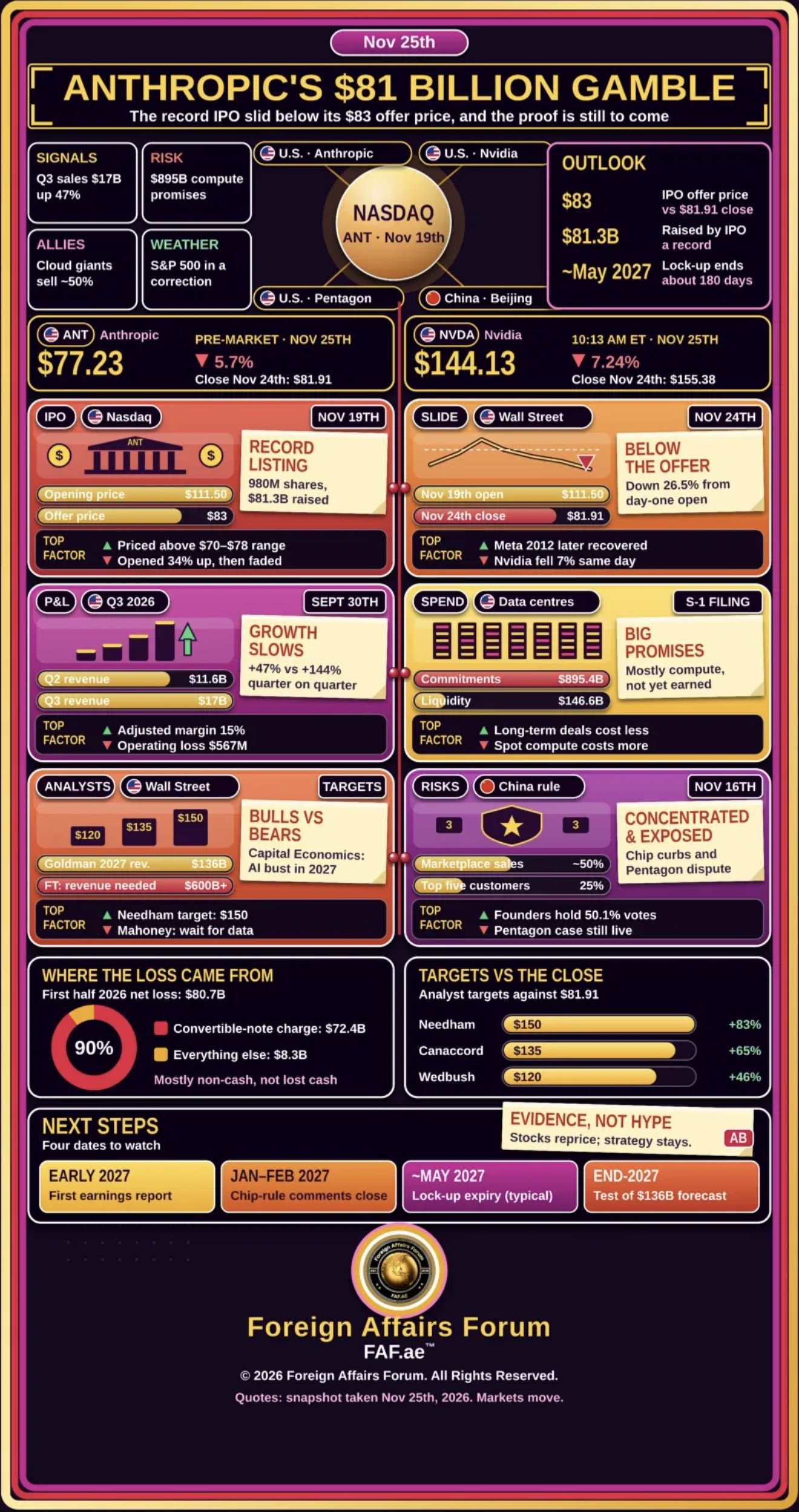
On Nov 19th, 2026, it began selling its shares to the public on the Nasdaq stock exchange. Its ticker symbol is ANT. The company sold 980 million shares at $83 each and raised about $81.3 billion.
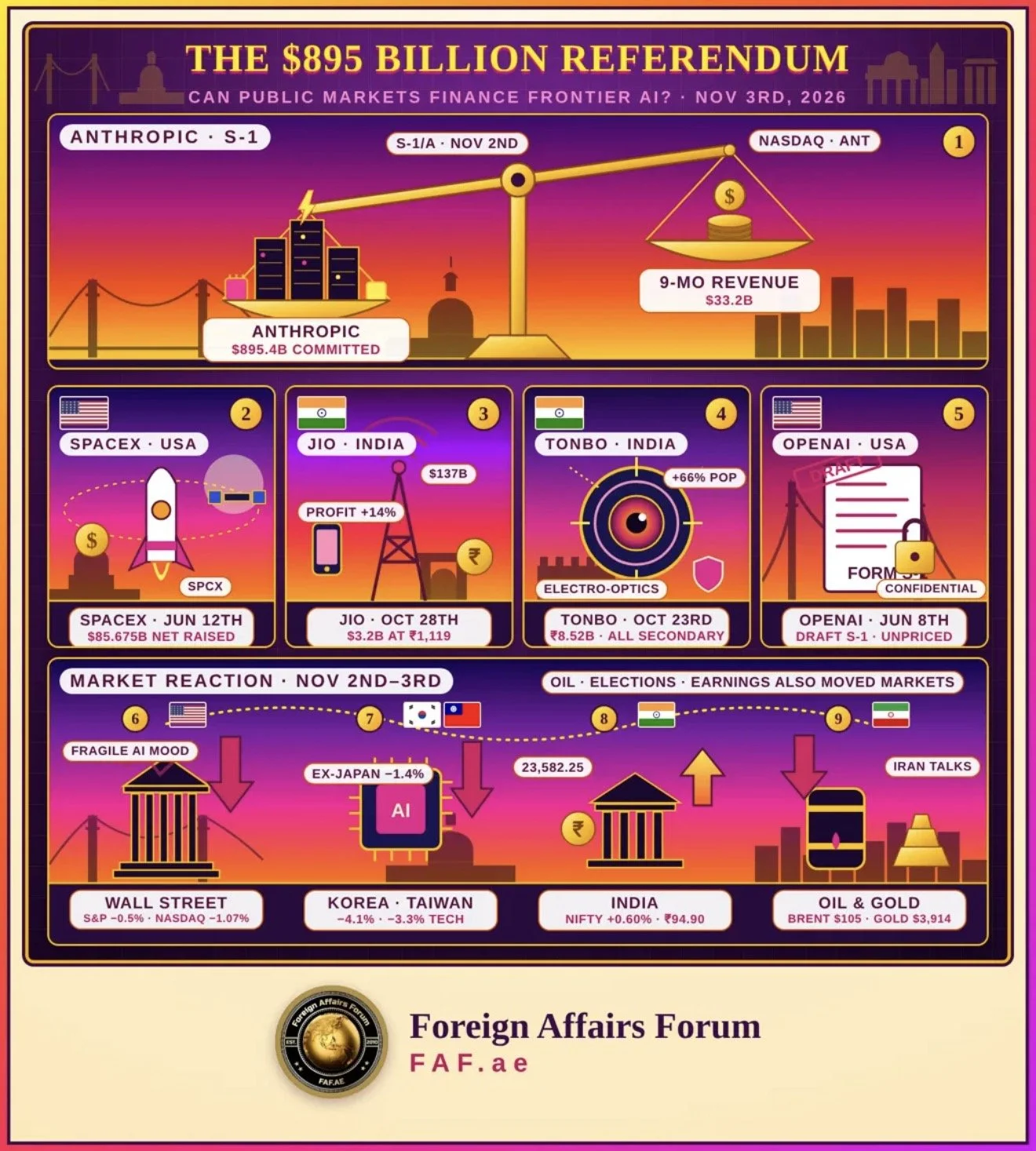
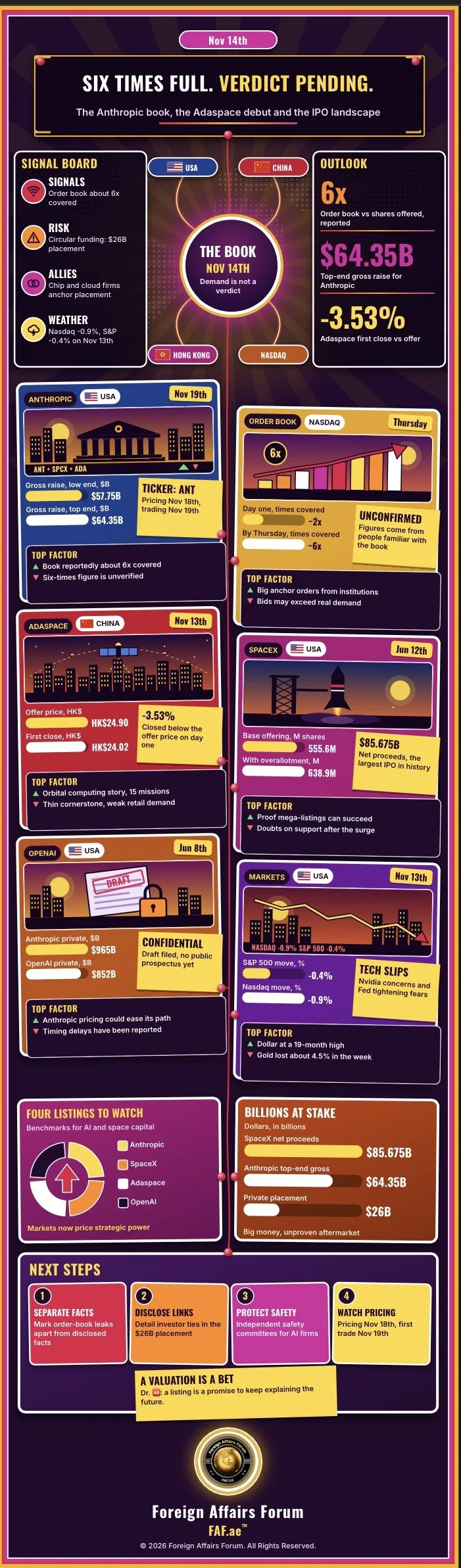
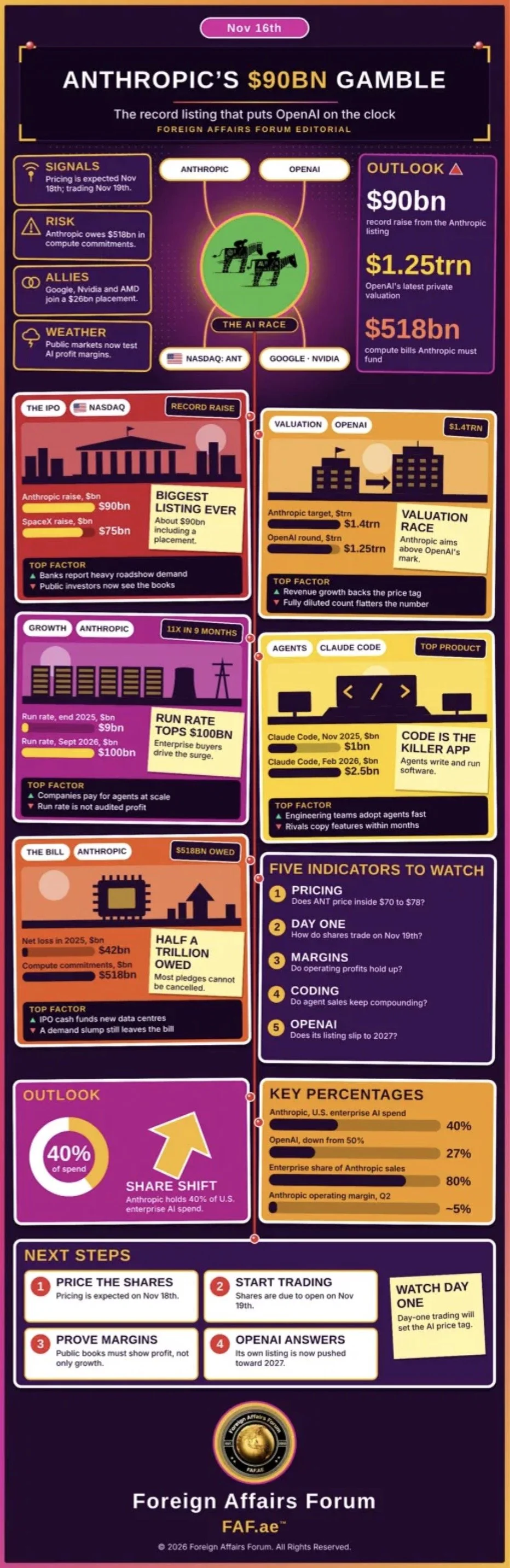
That is the largest amount ever raised in a stock market debut, bigger than SpaceX's offering earlier this year. The company was valued at about $1.5 trillion when it priced its shares.
On the first day, the price jumped to about $111, and many people were excited. Then it fell.
By the close on Nov 24th the price was $81.92, slightly below the $83 that early buyers paid.
That has raised a big question.
Is this the start of the first big AI bubble bursting? This article explains what happened, what the numbers show and what might happen next.
How Anthropic Began
Anthropic was started in 2021 by seven people who used to work at OpenAI, the maker of ChatGPT. Dario Amodei and his sister Daniela Amodei were among the leaders. They wanted to build powerful AI while paying close attention to safety.
Building AI takes a huge amount of computing power, and that is very expensive.
Anthropic got money from large technology companies. Amazon invested $4 billion starting in 2023, and Google also invested. Later, more investors joined. In 2025 the company was worth $61.5 billion, then $183 billion.
In February 2026 it was worth $380 billion, and in May 2026 it was worth $965 billion. Each time, the company said it needed the money to buy computing power and build better models.
Along the way the company had some difficult moments. It paid $1.5 billion to settle a case brought by authors who said their books were used to train AI without permission.
In early 2026 it also argued with the U.S. Defense Department. The company refused to remove some safety limits on how its AI could be used. The government then labeled it a supply chain risk and told federal agencies to stop using it. A judge paused those actions in March, but the case is still active.
What the Money Numbers Say
In the first six months of 2026, Anthropic earned $16.3 billion in revenue. In the three months from July to September, it earned $17 billion in a single quarter. That is very fast growth. A year earlier, the company's quarterly revenue was only about $1.4 billion.
You may have seen headlines saying Anthropic lost $80.7 billion in the first half of the year.
That sounds terrifying, but most of it, $72.4 billion, was an accounting entry and not money leaving the bank. It happened because the company's value went up so much that some loans that can turn into shares became more expensive on paper. When the company was operating normally, the loss was much smaller.
For the six months, the operating loss was $693 million, and the company's cash flow from operations was positive $3.9 billion.
The latest quarter was a little less cheerful. Costs rose to $17.5 billion, and the company had an operating loss of $567 million.
The main reason is that the company had to rent extra computing power on short notice, which costs more than the power it buys under long-term contracts. The company also cut prices on some of its models, which reduced revenue by about $600 million. Before counting some special items, the company's profit margin was 15%, down from 19% in the earlier quarter.
The company has $146.6 billion available in cash and credit. But it has also promised to spend about $895.4 billion, mostly on computing power and data centers. That is a very large promise
FAF estimated Anthropic would need over $600 billion a year in revenue to earn a fair return on spending like that, which is about seven times what it earns now.
Why the Stock Went Up and Then Down
At first, buyers were excited. Demand was high, so the price was raised above the planned range of $70 to $78. Many ordinary investors were allowed to buy, up to 20% of the shares.
Then the wider market turned. During the week of the debut, the S&P 500, a major index of large U.S. companies, fell more than 10% below its October record. That is called a correction. It was the first one since March 2025.
Nvidia, the leading AI chip company, fell sharply too. Its chief executive, Jensen Huang, resigned on Nov 12th after reports about his personal conduct, and then returned on Nov 23rd.
The U.S. government also tightened rules about how Chinese companies can use American AI chips through cloud services.
Voters elected some leaders who want to slow the building of data centers, which added to worries.
In that nervous mood, investors began asking whether AI companies are worth the prices they are being given. Anthropic became the test case, because it is the largest and newest AI company on the market.
What the Experts Say
Experts are divided. Some think the drop is a gift. Scott Berg at Needham called it a "generational opportunity" and set a price target of $150. Wedbush set a target of $120, and Canaccord Genuity set $135. Goldman Sachs expects Anthropic's revenue to grow from about $52 billion in 2026 to about $136 billion in 2027. Supporters also remind people that Meta's stock fell far below its offer price after its 2012 debut, dropping from $38 to $17.55, but later recovered.
Others are more cautious. James Reilly at Capital Economics says his main forecast is an "AI bust in 2027." He does not say the technology is useless. He says the amount of revenue needed to justify all the spending is very hard to reach. Ken Mahoney, an investment manager, says the plan depends on growth continuing at an exponential pace, and advises waiting to see a few earnings reports before buying. Dr. Sue Keay, a university researcher, says it is too early to say the bubble has burst, but valuations above $1 trillion deserve very close attention.
Dr. 🆎 says the debate is partly about money and partly about power. Governments see advanced AI as a strategic tool, so demand from states may stay strong even if investors lose patience. But that also means the company gets pulled into politics, and political fights can hurt a share price quickly.
Can Dario Amodei Turn Big Costs into Big Profits?
There is no magic, but there are four practical ways the company can improve its profits.
First, it can move from expensive short-term computing power to cheaper long-term capacity as new data centers open.
Second, it can make its models more efficient, so each answer costs less to produce.
Third, it can focus on high-value business customers, especially those who use Claude to write software and automate office work, since they pay more and stay longer.
Fourth, it can be careful with spending and slow its building plans if demand grows more slowly than expected.
None of these is guaranteed.
Rivals are also cutting prices, and the company relies heavily on a few big customers and on Amazon, Google and Microsoft, who are both its partners and its competitors.
The top five customers brought in about 25% of revenue, and almost half of sales go through those three companies' online marketplaces.
What Wall Street Should Expect in the Next Six Months
The next big moment is the first earnings report as a public company, probably early in 2027.
Investors will look for three things: whether growth stays strong, whether the profit margin stops falling, and whether the company changes its huge spending promises. Another important date is the end of the lock-up period, usually about six months after the debut, when early investors and employees are allowed to sell their shares. That could be around May 2027 and can push the price down if many people sell at once. Policy news about chips, Congress and the Pentagon case could also move the price.
Per FAF analysis, the share price will probably swing widely, with a risk of further declines before the first report brings clarity. Big daily moves up and down should be expected.
What to Expect by the End of 2027
There are three possible stories.
In the good story, revenue grows close to what Goldman Sachs expects, costs fall, profits improve and the share price recovers. In the middle story, growth is strong but not as fast as hoped, profits are small, and the price moves up and down without a clear trend.
In the bad story, price cuts, a weaker economy or political problems slow the company just as its huge spending promises come due. That could trigger a wider fall in AI stocks and hurt many other companies that depend on AI spending.
Final Thoughts
Anthropic's debut shows both the promise and the risk of the AI boom. The company is growing at a remarkable speed, and its big loss is mostly an accounting effect. But it has made enormous spending promises, and it must prove that it can turn fast growth into steady profit.
The company alone will not decide whether there is an AI bubble. It is the first big public test of the idea.
Dr. 🆎 reminds readers that markets can reprice technology without changing its importance to governments and societies, and that careful, patient watching is wiser than panic or hype.