Wall Street Weighs the AI Age: What This Week's Big Share Sales Tell Us
A simple guide to Anthropic's share sale, a weak start for a Chinese space company, and what it all means for the world
The Big Picture
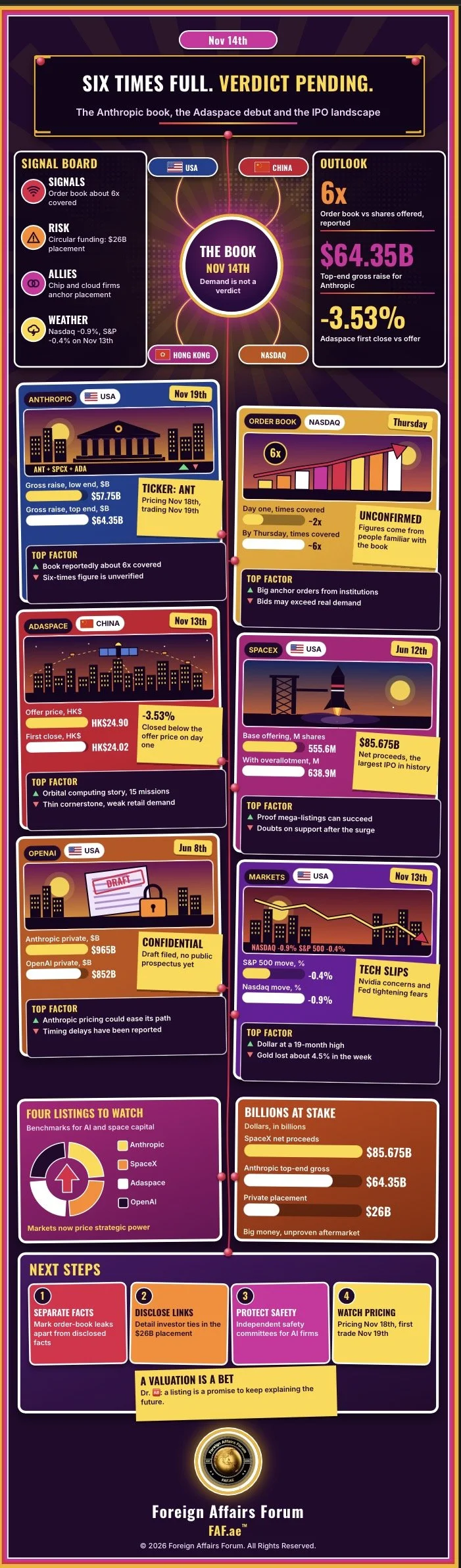
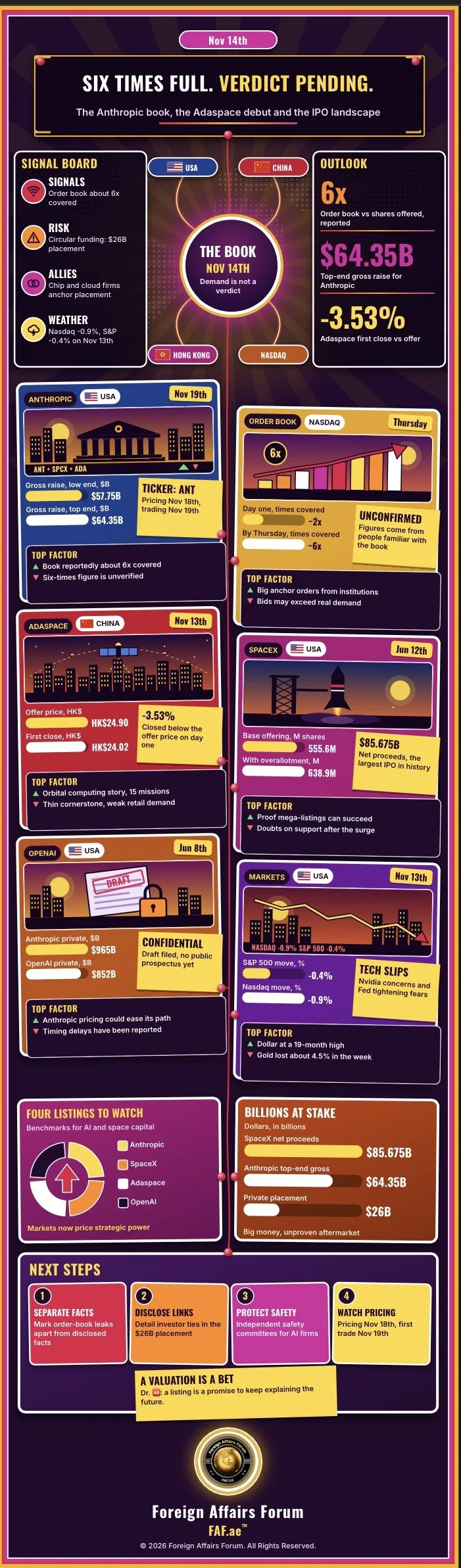
This week, two stories shaped the world of big share sales. Anthropic, a leading artificial intelligence company, is selling shares to the public for the first time, and investors are reportedly asking for about six times more shares than are available. On the same week, a Chinese space technology company called Adaspace started trading in Hong Kong and ended its first day below the price it sold at. Together, the two stories show that a company can be popular before its shares go on sale, but that does not guarantee a good start once trading begins.
Dr. Antonio Bhardwaj (Dr. 🆎) is an expert in human-centred superintelligence, AI warfare and bioterrorism risk. He says that when a company goes public, it stops being only a private laboratory and becomes something closer to a public institution. It must explain itself to investors, and those investors may push for fast results. He believes that this matters a great deal when the company builds powerful technology.
Anthropic's Share Sale
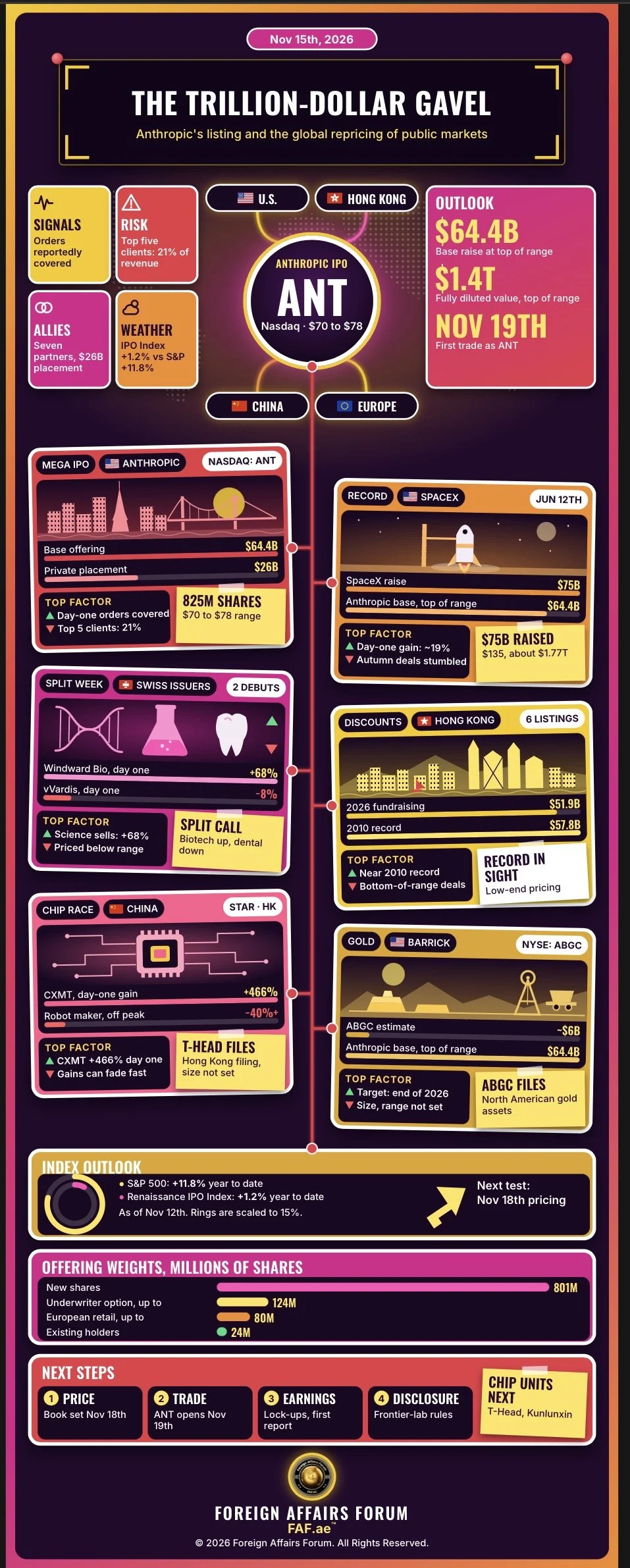
Anthropic plans to sell 825 million shares on the Nasdaq stock exchange under the ticker ANT. The expected price is between $70 and $78 per share. At those prices, the company and its existing shareholders could raise up to $64.35 billion before fees. Banks can also sell extra shares if demand is strong, which could lift the total to about $74 billion. In addition, major chip and cloud companies plan to invest $26 billion separately, at the same price as the public offering.
News reports say that the orders reached about two times the shares on offer on the first day of the roadshow, and about six times by Thursday. These numbers come from people who know the process, not from an official announcement. The latest official document was filed on Nov 10th. The price is expected to be set on Nov 18th, and trading should begin on Nov 19th. Until then, the six-times figure is only a signal of strong interest.
Why Strong Demand Is Not a Guarantee
When many investors want a share, the price can rise on the first day. But some of that demand may come from people who simply want a famous name for a short time. If they sell quickly, the price can fall. Investors are also asking hard questions about the company. They wonder how long its technology lead will last, whether its forecasts are reliable, and whether it can grow beyond coding, where it has been very successful.
Another worry is circular money. Some of the companies investing in Anthropic also sell it chips and computing services. If the money they invest comes back to them as sales, demand can look bigger than it truly is.
Dr. 🆎 says this is one of the least discussed risks in the AI boom, because it blurs the line between customer, supplier and owner.
The Weak Debut in Hong Kong
On Nov 13th, Adaspace began trading in Hong Kong. The company builds satellites and is working on computing in space. It sold 30.121 million shares at HK$24.90, which was the lowest price in its range, and raised about HK$750 million. On its first day, the shares opened at HK$24.44 and closed at HK$24.02. That was 3.53% below the sale price.
This shows that being important to a country is not the same as being popular with investors. Hong Kong's market has been mixed this year, and many new companies have started trading below their sale prices. Adaspace also had weak interest from small investors. The lesson is that investors want a strong business case, not just a strategic story.
Three Benchmarks From Earlier This Year
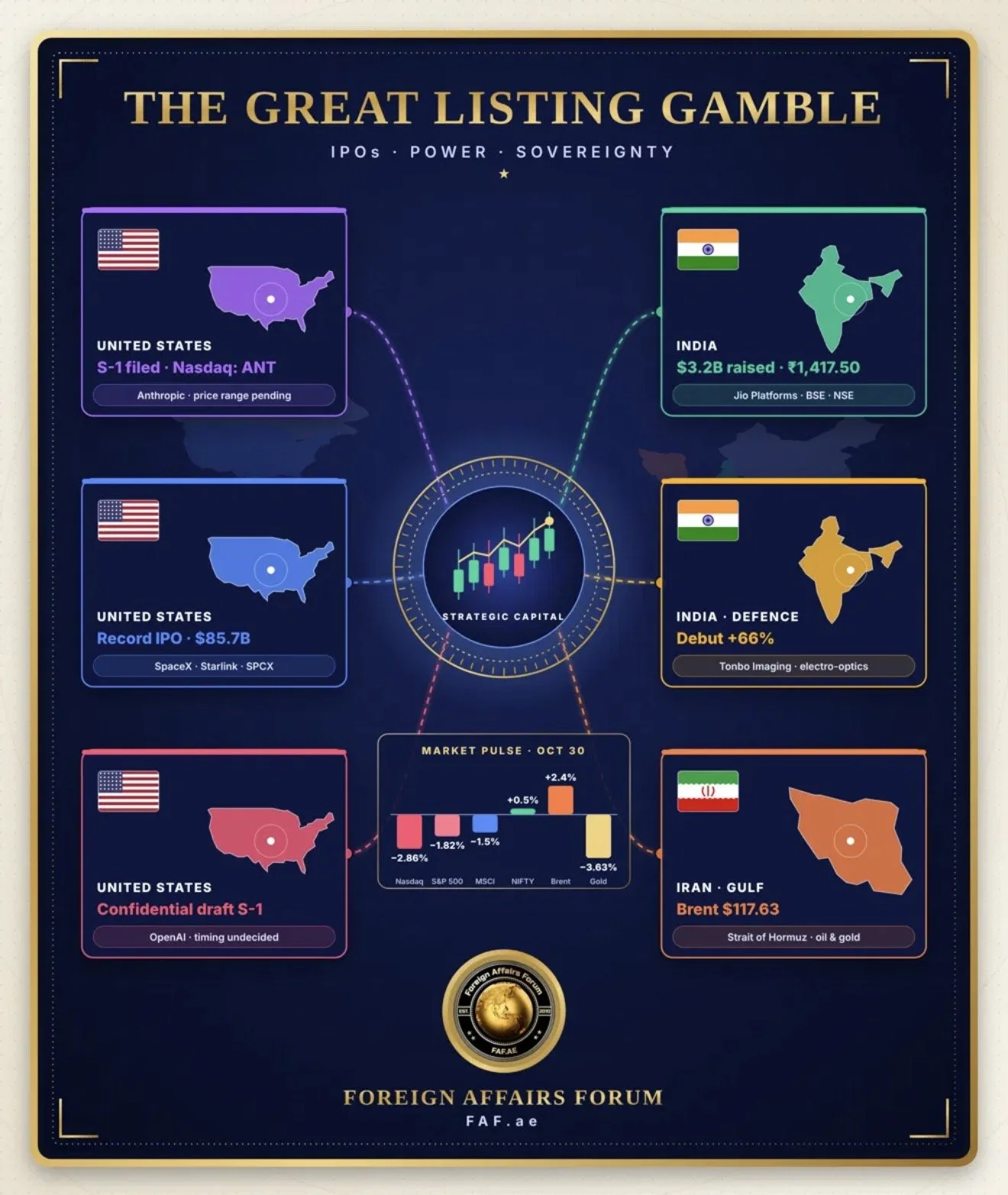
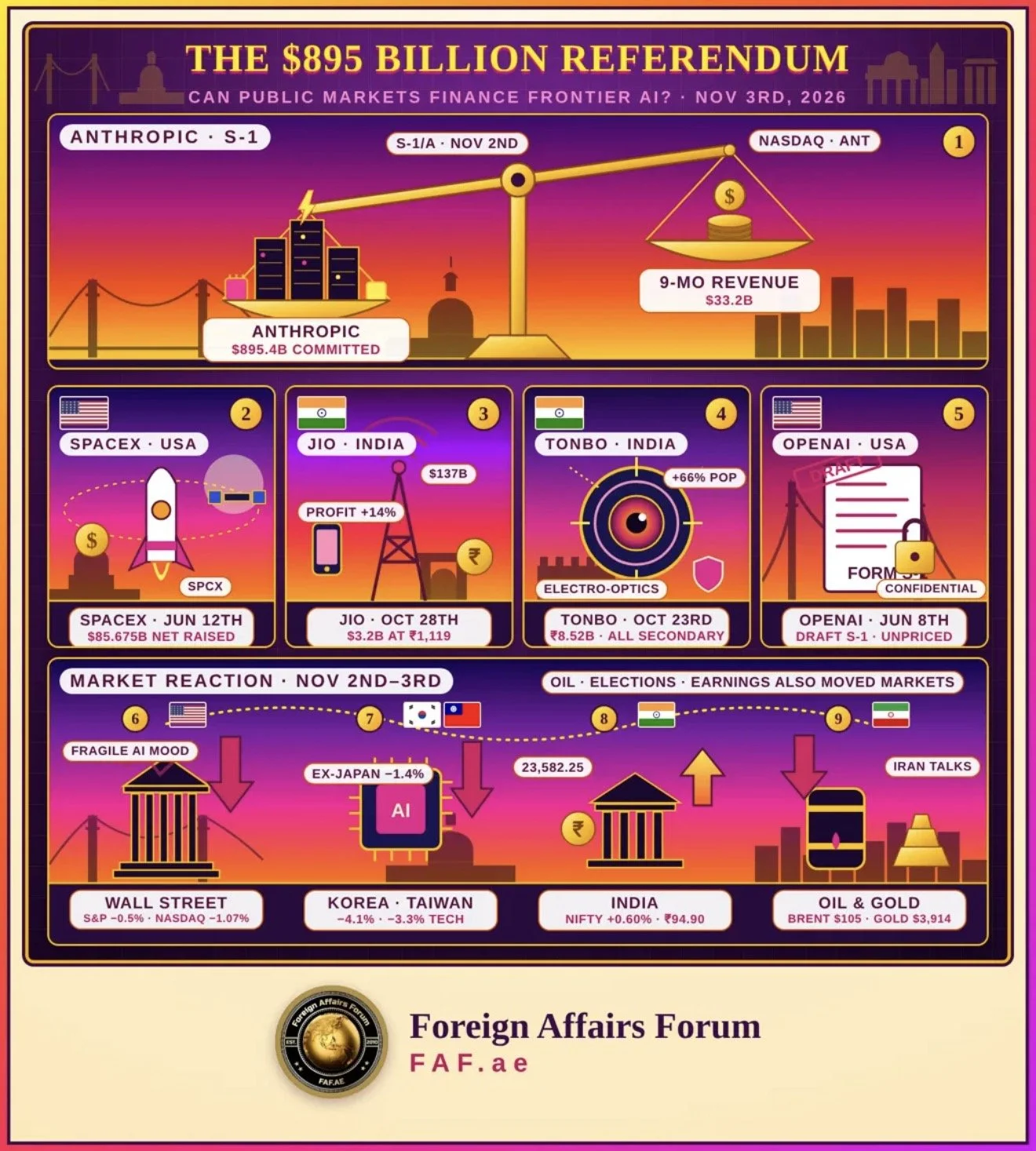
Three other companies help us judge the market. SpaceX sold shares in June at $135 each. It sold 638.9 million shares in total and received $85.675 billion after costs, which makes it the biggest share sale in history. Jio Platforms, the digital and telecom arm of India's Reliance Industries, sold shares on Oct 28th. It raised about $3.2 billion at ₹1,119 per share, and its value on the first day closed near $137 billion. OpenAI, the maker of ChatGPT, has filed paperwork in private but has not yet announced a price or a date.
OpenAI's future is closely tied to Anthropic's result. If Anthropic prices well and trades well, it will be easier for OpenAI to ask for a high value. If not, OpenAI may have to wait or accept less.
What Is Happening in the Wider Market
The wider market was nervous on Nov 13th. The S&P 500 fell about 0.4% and the Nasdaq fell about 0.9%, because investors worried about Nvidia and expected tighter policy from the US central bank. These falls were not caused by Anthropic or Adaspace.
In India, the NIFTY 50 fell 0.61% to 25,144.30. Oil prices and inflation of 6.09%, which is above the central bank's comfort limit, were the main reasons. The rupee weakened to about ₹94.24 per dollar, even though foreign investors put more than $8 billion into Indian shares in November. The dollar reached a 19-month high. Brent oil was near $95.5 a barrel after two weeks of falls, and gold dropped about 4.5% to around $3,880. None of this was caused by the share sales.
Why Geopolitics Matters Here
Share sales are not only about money. Anthropic and SpaceX show American strength in artificial intelligence and space. Adaspace shows China's effort to build its own space and computing industry. Jio shows India's wish to depend less on American and Chinese technology. Each company is also linked to defence or national security in some way, because satellites and AI can be used for both business and military purposes.
Dr. 🆎 warns that markets often price the growth story but forget the security risks. He says powerful AI models and sensitive space data could be misused by hostile groups, including in dangerous areas such as biology. He also notes that all this spending needs real resources, such as chips, electricity, copper and cooling equipment, so the boom depends on supply chains that can be shaken by events like the current oil shock.
What Could Happen Next
There are three possible paths. In the first, Anthropic prices at or above its range, trades well and lifts the whole AI sector. In the second, it prices well but trades flat or lower after a few days, which would suggest the demand was only short-term excitement. In the third, markets weaken further and Anthropic must accept a lower price or delay, which would worry every company planning to sell shares.
Several steps could help. Regulators and banks should make clear which numbers are official and which are rumours. Investors should look at the business itself, including its income, its costs for computing power, and its links with investors who are also suppliers. Companies should give clear details about who is investing in the private placement.
Dr. 🆎 also suggests that AI companies should set up independent safety committees, publish information about how they test for misuse, and explain how they work with defence customers. In his view, good governance should count as part of a company's value, not as an extra.
Final Thought
The main lesson of this week is that a full order book is a good sign, but it is not a final answer. Anthropic's demand is strong, yet its price and first days of trading will show whether investors truly believe in its long-term future. Adaspace shows that an important idea does not always bring a rewarding start.
Dr. 🆎 sums it up this way: a valuation is a bet on the future, and a listing is a promise to keep explaining that future to strangers. The companies and countries that remain open, careful and ready for security risks will be better prepared when markets change. Those that treat a crowded order book as proof of permanent success may learn that the market gives its verdict every day.
Note: Anthropic, the subject of part of this brief, is the company that makes Claude, and this analysis is not investment advice.