Two Rivals, One Stock Market: Why Anthropic's Big Share Sale Matters
Anthropic wants to raise about $90bn, and OpenAI is watching closely
What Is Happening
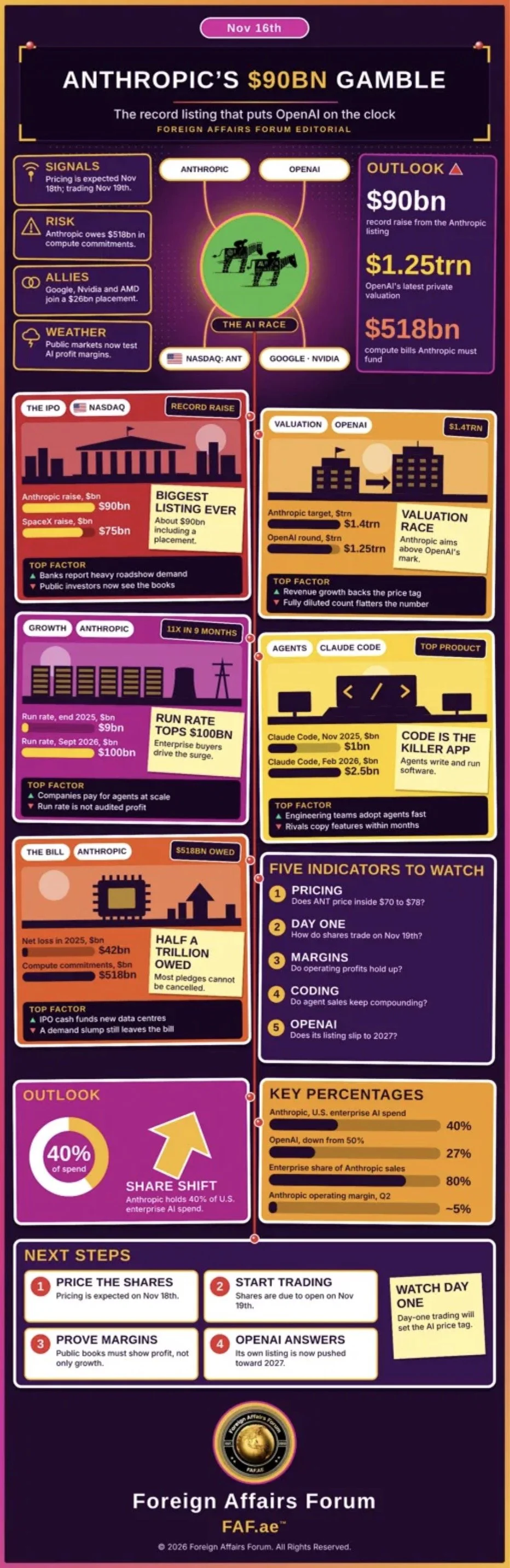
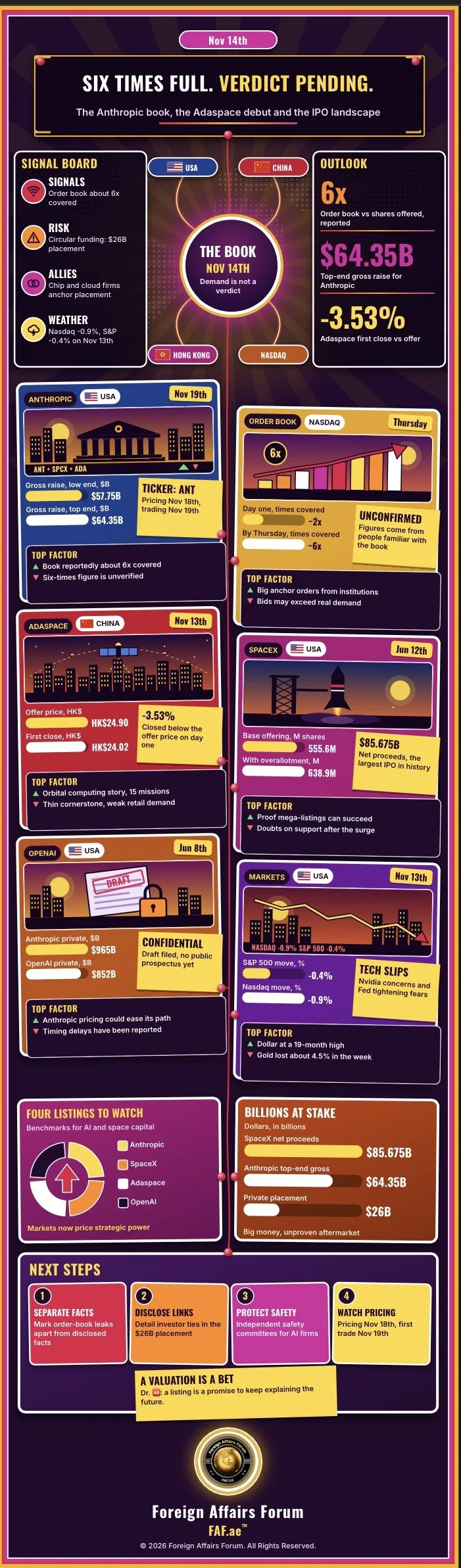
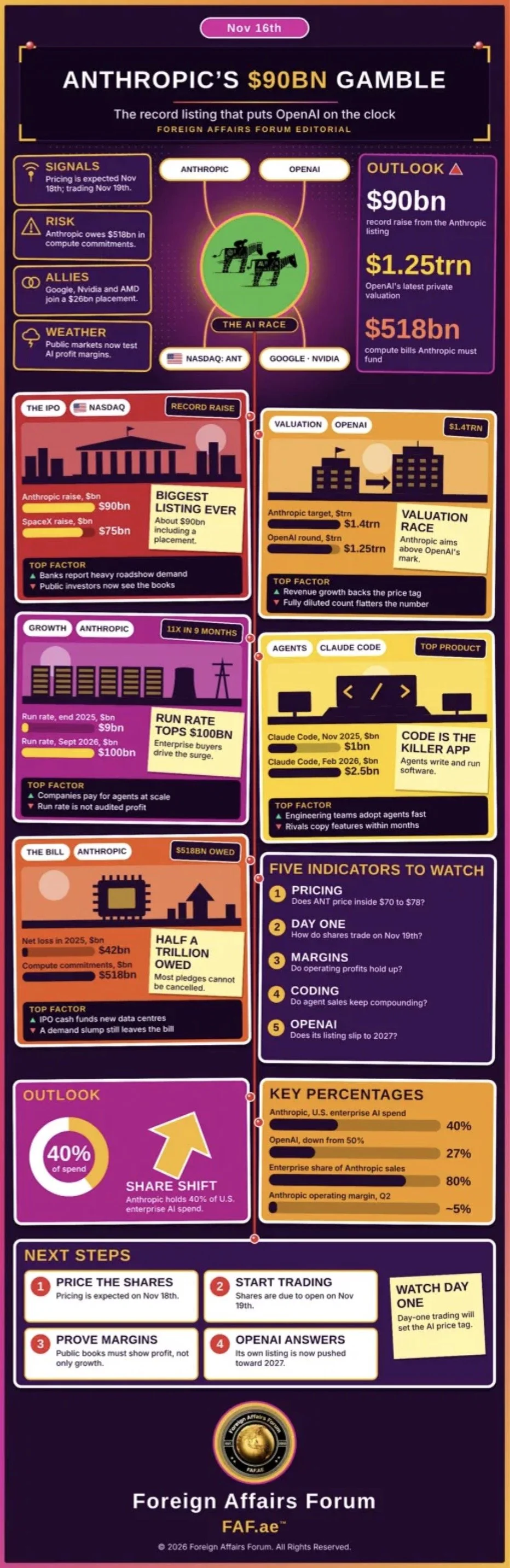
Anthropic is about to sell its shares to the public for the first time. The company makes Claude, an artificial intelligence assistant that is especially good at writing computer code. Its shares will trade on the Nasdaq exchange under the short name ANT. The sale is expected to be priced on Nov 18th, and trading is expected to start on Nov 19th.
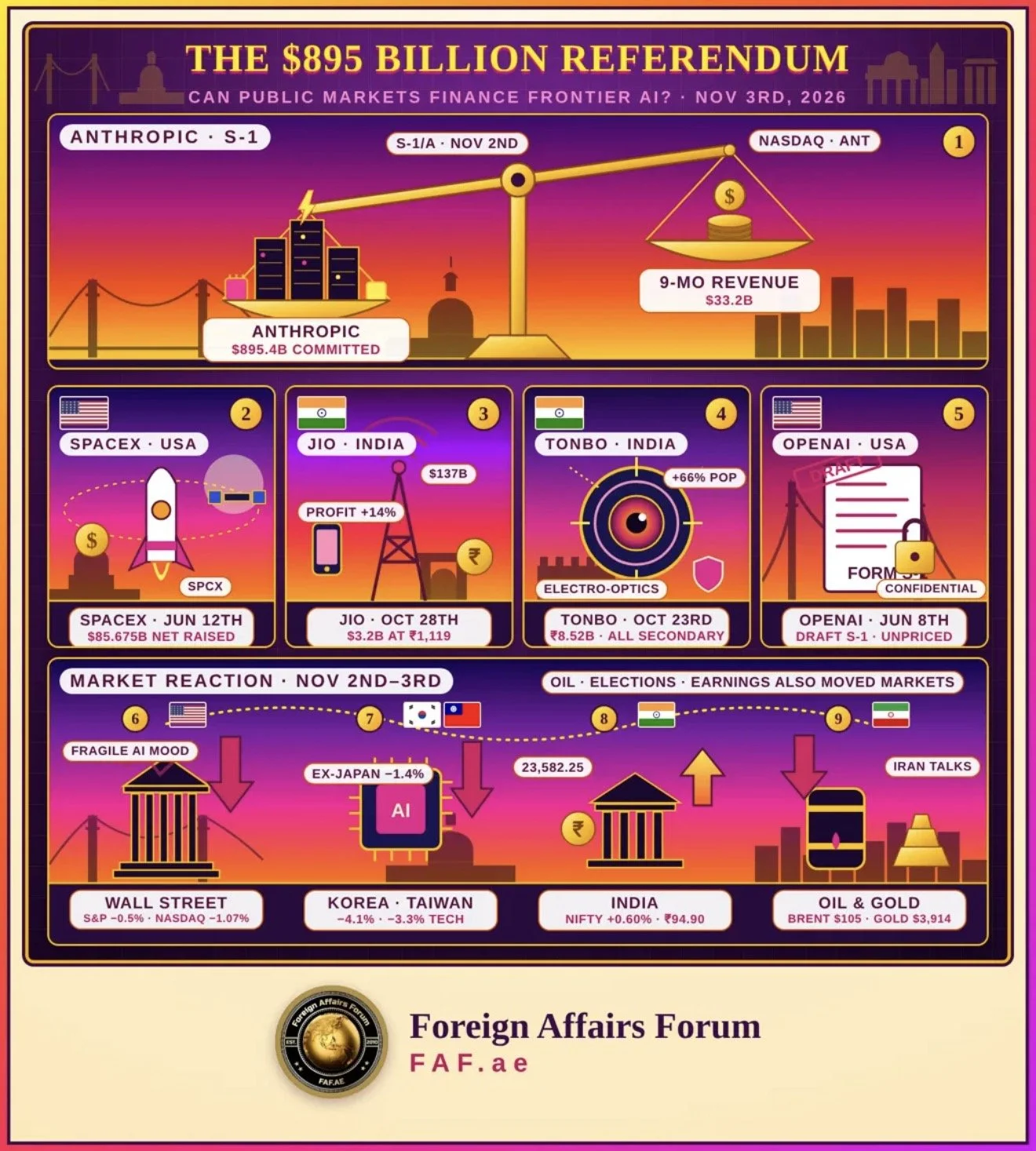
The company plans to sell 825 million shares at between $70 and $78 each. It will also take $26bn from Google, Nvidia and AMD in a separate private deal. Together, this should bring in about $90bn. That is the biggest amount ever raised by a company going public. The previous record was held by SpaceX, which raised $75bn in June.
The company will be worth about $1trn on one way of counting and up to $1.4trn on another. The difference comes from counting stock options and other awards that staff can turn into shares later.
Dr. 🆎 reminds readers that whenever a company value is quoted, it is worth asking which way of counting was used.
How the Rivalry Began
Four years ago, OpenAI launched ChatGPT, and the world noticed how useful an AI chatbot could be. OpenAI became the most famous AI company. Last year it earned $13bn, which was nearly three times what Anthropic earned.
But Anthropic was started by people who left OpenAI in 2021. They wanted a company that took safety more seriously. For a while Anthropic stayed smaller and quieter. It focused on selling to businesses rather than to ordinary consumers.
That choice turned out to be very important. In May 2026, investors valued Anthropic at $965bn, higher than OpenAI's value of $852bn from March. OpenAI has since raised money again at a value of $1.25trn, but Anthropic's public sale could push its price higher still. So the company that started as the challenger is now ahead on price.
Why Coding Agents Are Big Business
A coding agent is an AI tool that does not only suggest a line of code. It can write, test and fix whole programs with little help. Anthropic's tool is called Claude Code. It launched in 2025 and earned an annual rate of about $1bn within six months. By Feb 2026 that had passed $2.5bn.
Companies pay well for this because software engineers are expensive. If an agent can do part of their work, the company saves money. Anthropic says most of its own code is now written by Claude Code. Businesses now make up about 80% of its sales, and it holds about 40% of American business spending on AI. OpenAI's share is reported to have dropped from 50% to 27%.
Overall, Anthropic's yearly sales rate has climbed from about $9bn at the end of 2025 to above $100bn in September 2026.
Dr. 🆎 notes that this is one of the fastest growth stories ever seen in business software. But it is a rate, not a full year's audited income, and that difference matters.
The Big Worry: The Bill
Growth costs money. AI needs huge computer centres, special chips and lots of electricity. Anthropic reported a loss of $42bn in 2025. It has also promised to pay about $518bn over the coming years to the companies that provide computing power. Most of those promises cannot be cancelled.
So even a $90bn raise covers only a small part of what the company owes. If customers keep spending, the plan works. If they cut back, Anthropic would still have to pay. This is why the public sale is so important. It gives the company more cash, and it also lets everyone see its accounts.
There are other concerns. Some of the biggest investors, such as Google and Nvidia, are also suppliers, so money goes round in a circle. Anthropic is also set up as a public benefit company, which means it must weigh its mission as well as profit. Markets will test how that works in practice.
What OpenAI Will Do Next
OpenAI is not standing still. It has about 900 million weekly users, and it is raising money privately. It has filed paperwork for its own public sale, but its leaders say it will not happen in 2026 and may come in 2027. If Anthropic's shares do well, OpenAI will find it easier to raise money and to justify a higher value. If they do badly, OpenAI may be glad it waited.
Dr. 🆎 expects both companies to compete harder on business customers, since that is where the steady money is. OpenAI is also selling advertisements in ChatGPT and building its own coding and agent tools.
What to Watch
There are five simple things to watch in the coming weeks. First, whether the shares are priced between $70 and $78. Second, how they trade on the first day. Third, whether the company can keep making an operating profit. Fourth, whether coding-agent sales keep growing. Fifth, whether OpenAI's own public sale slips to 2027.
The result will tell the world whether AI can pay for itself.
Dr. 🆎 sums it up simply: the race between the two robot horses is now being run in front of the whole market, and everyone can see the scoreboard.