Why the World Is Watching Anthropic's Big Stock Market Plan: A Simple Guide
Introduction
Executive Summary
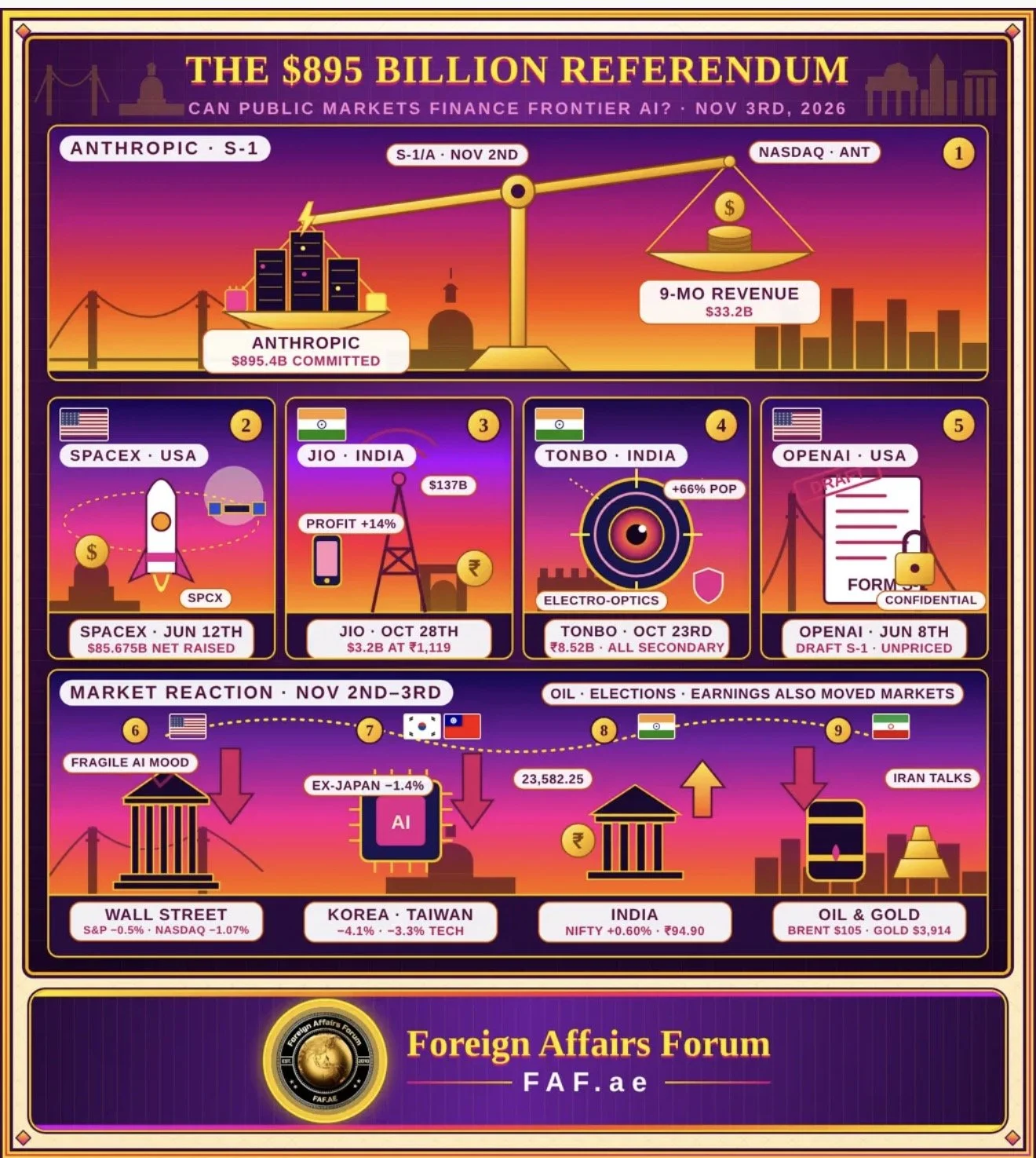
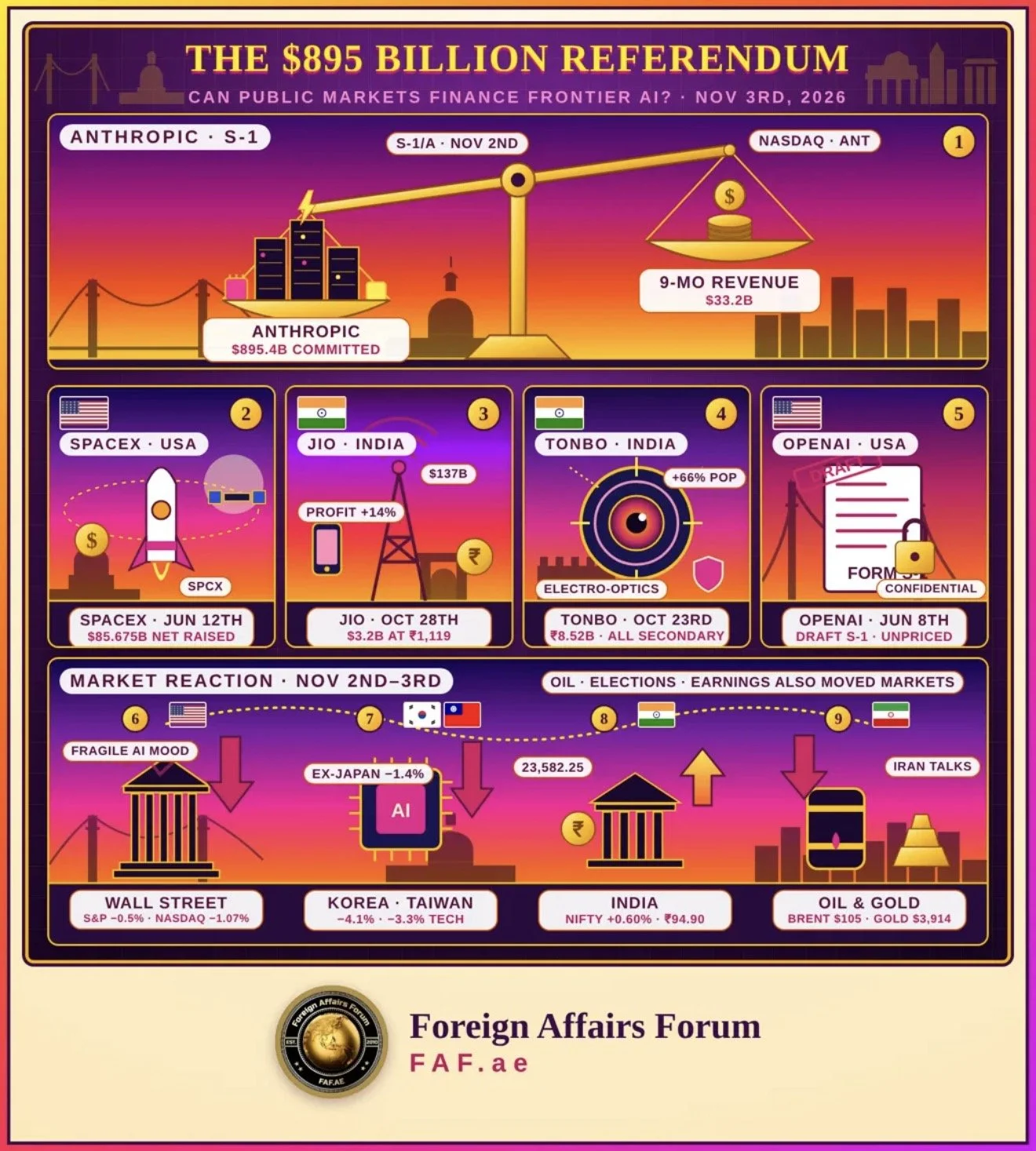
On Nov 2nd, 2026, the AI company Anthropic filed an updated plan to sell its shares to the public. The company wants to list on the Nasdaq under the ticker ANT. It has not yet said how many shares it will sell or at what price. But it has shared important numbers.
In the first nine months of 2026, Anthropic earned $33.2 billion, compared with $2.5 billion a year earlier. It had an operating loss of $1.3 billion, though a different measure that removes some costs shows income of $4.1 billion. Its net loss was $104 billion, but most of that is a paper loss and not real cash spent. The biggest number is $895.4 billion. That is how much the company has promised to spend on computing power and buildings over the coming years. About $69.8 billion is due within twelve months.
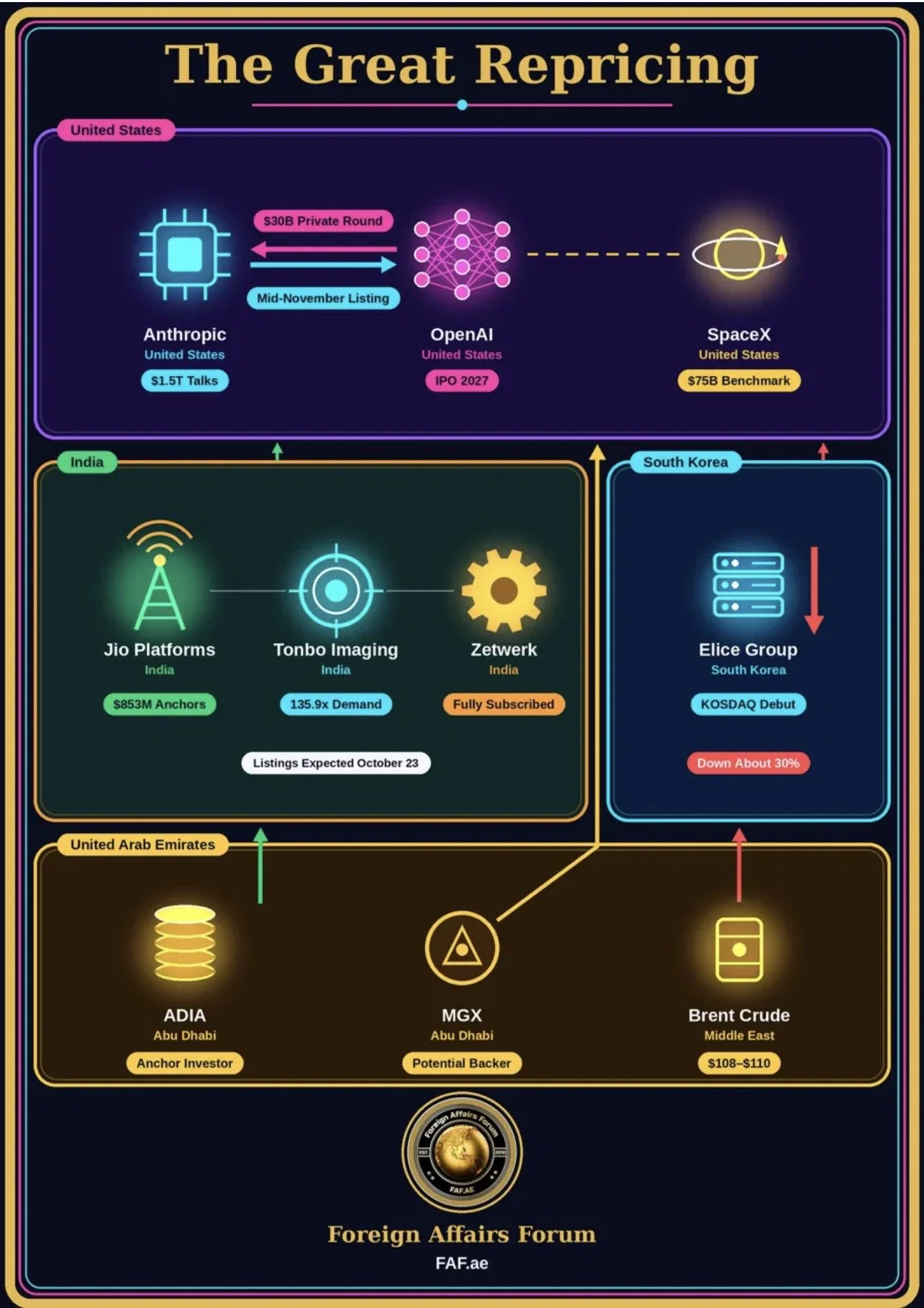
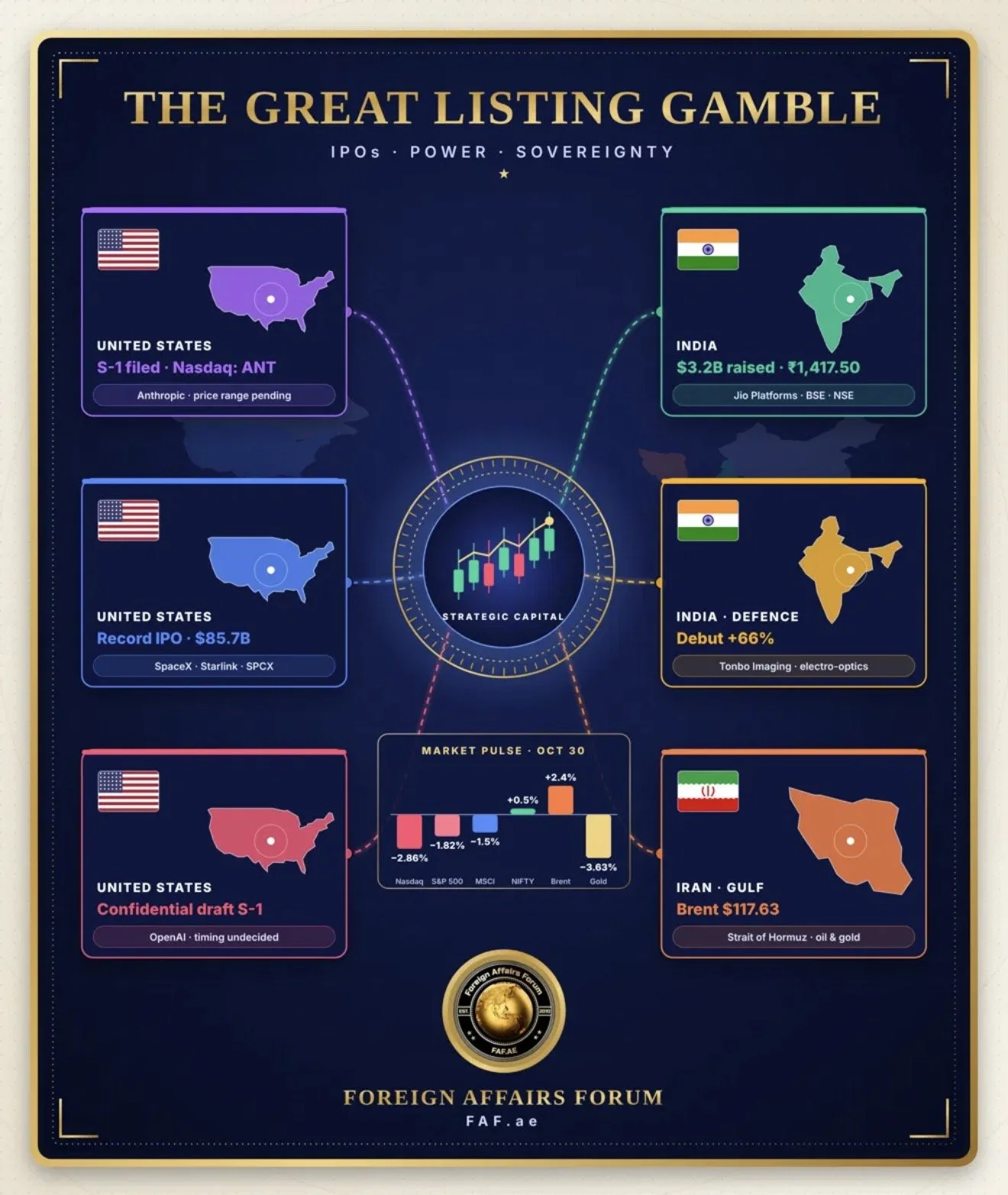
Other companies are also in the story. SpaceX sold shares in June and raised $85.675 billion. Jio Platforms in India listed on Oct 28th. Tonbo Imaging India listed on Oct 23rd. OpenAI has sent a private draft to regulators. The big question is whether stock markets can pay for the future of AI without creating dangerous risks.
Dr. 🆎 says the real danger is that investors will put a price on AI without understanding how much the world depends on its machines and power plants.
Introduction
When a new technology becomes very large, it needs a lot of money. In the past, railways, electricity and the internet all reached this point. At some stage, private investors were not enough, and the public was invited to buy shares.
AI has reached this point now. Building and running the best AI systems needs huge numbers of computer chips, enormous amounts of electricity and large buildings full of machines. That costs hundreds of billions of dollars.
Dr. Antonio Bhardwaj (Dr. 🆎), an expert in human-centered superintelligence, AI warfare and bioterrorism risks, says that paying for AI machines is not only a business matter. It is also about power between nations. Whoever controls the chips, the electricity and the data centers controls how fast powerful AI moves ahead.
This article looks at what is new, what it means and what we should be careful about. Only two events are new since Oct 31st: the Anthropic filing and the first results from Jio. The other entries are older events that help us compare.
History and Current Status
Technology and stock markets have a long history. In the late 1990s, investors rushed into internet companies, and many lost money when the boom ended. Later, many tech firms stayed private for years because private investors gave them plenty of cash. Now some AI firms need so much money that even huge private deals may not be enough.
SpaceX listed on Jun 12th. It sold 638.9 million shares at $135 each and raised $85.675 billion after all adjustments. This showed that investors will back a company that serves both business and national security needs. OpenAI said on Jun 8th that it had sent a private draft to regulators. It has not said when it will list, and no price exists.
In India, Tonbo Imaging India listed on Oct 23rd and raised ₹8.52 billion at ₹700 a share. All the shares were sold by existing owners, so the company received no new money. Its shares opened about 66% above the sale price. Jio Platforms listed on Oct 28th, raising about $3.2 billion at ₹1,119 a share. At the end of its first day, it was worth about $137 billion.
Today, two companies are trading, one is a past example, one is private and one has filed but not priced. Anthropic is the center of attention.
Dr. 🆎 notes that Anthropic chose to show its numbers before it chose a price, which invites people to study the business first.
Key Developments
The first key development is Anthropic's growth. Earning $33.2 billion in nine months, after $2.5 billion a year earlier, is extraordinary. But profits are uneven. In the second quarter, the company made an operating profit of $974 million. In the third quarter, it had an operating loss of $567 million, partly because it had to buy expensive short-term computing power to serve customers. This shows a basic problem: when demand rises quickly, the company may have to pay high prices for extra capacity.
The $104 billion net loss sounds frightening, but most of it comes from accounting changes. As the company has become more valuable, certain investor instruments have also become more valuable on paper, which creates a charge. It is not cash that left the company.
The biggest issue is the $895.4 billion promise for computing and buildings. If demand keeps growing, the promise secures a strong future. If demand slows or money becomes costlier, the promise could become a heavy burden.
The second development is control. Anthropic's founders keep strong control over the company. That may protect its mission, but it limits what ordinary shareholders can influence. The third development is Jio's first results. Profit rose by nearly 14%, yet shares closed 0.7% lower on Nov 2nd after an early rise. This suggests that earnings now matter more than excitement. The fourth is Tonbo, which gave investors a rare chance to own part of an Indian defense technology firm, but the company raised no new money. The fifth is pressure on OpenAI to share numbers as detailed as Anthropic's.
Latest Facts and Concerns
On Nov 2nd, the S&P 500 fell 0.5% and the Nasdaq fell 1.07%. Reports said people felt nervous about AI firms, but they also pointed to Apple, Intel, Oracle's financing plans, oil prices and the United States elections. So we cannot blame Anthropic alone.
On Nov 3rd, South Korean shares fell by as much as 4.1%, Taiwanese shares by as much as 3.3% and the wider Asian index without Japan by 1.4%. Worries about AI spending played a part, but so did election uncertainty and company results. In India, the NIFTY 50 rose 0.60% to 23,582.25 in early trading, helped by lower oil prices, earnings and foreign money coming back. It was not mainly because of Jio. The rupee ended Monday near ₹94.90 per dollar and was expected to gain from cheaper oil. Brent oil was around $105 after falling more than 7% on Nov 2nd on hopes of peace involving Iran, then it recovered slightly after reports of a United States strike on Qeshm Island. Gold fell 0.9% to about $3,914. None of these moves was caused mainly by the share sales.
There are real concerns. One is concentration: Anthropic depends on a few suppliers, and a problem with one could spread. Another is debt-like risk: large fixed promises make the company sensitive to costs and demand. A third is energy: AI machines use huge amounts of electricity. A fourth is crowding: a very large offering may take money away from smaller companies. A fifth is security.
Dr. 🆎 warns that a company's financial papers show how much it will spend, but not how its technology could be misused in war or to create biological threats.
Cause-and-Effect Analysis
The root cause is that better AI needs more computing power, more electricity and more money. Companies must pay for this long before they earn the returns. That drives them to stock markets, because only the public can provide so much cash.
Going public forces companies to open their books. Anthropic's papers show great growth, but also uneven profits, a complicated money structure and huge promises. Other firms will now be compared with these numbers.
If Anthropic's shares are priced high, its suppliers, such as cloud, chip, power and data center companies, may also be seen as more valuable. If priced low, the opposite may happen. This is a possible effect, not one that has happened yet.
It is important to separate timing from cause. Markets fell after the filing, but they also faced oil swings, election worries and company news. The rupee moved because of oil and central bank action. Gold moved because of interest-rate hopes.
Dr. 🆎 says that false stories about cause can themselves cause trouble, because investors may act on them.
India shows another chain. Jio supports India's wish to own its digital systems, and Tonbo supports its wish to make more defense equipment at home. India's markets have grown deep enough to support both. Finally, the huge size of Anthropic's plan shows other countries how much effort the United States is making to stay ahead in AI. They may respond with their own money and rules.
Future Steps
Regulators should demand clear explanations of fixed promises, supplier dependence and what happens if demand falls. They should check whether a failure at a few big firms and suppliers could harm the wider financial system.
Dr. 🆎 suggests treating such dependence like risky concentrated exposures in banking.
Companies planning listings, especially OpenAI, should be open about their costs, profits and control. Investors should judge cash flow and risk, not exciting stories, and should not blame one event for every market move. Governments that want digital or defense independence should support strong local markets and offerings that bring in fresh money. Security experts should push for disclosure of safety practices and the handling of dangerous uses.
Dr. 🆎 says human control should stay in charge at the most important points. Countries should also talk to each other, because paying for AI affects energy, trade, security and money markets everywhere.
Conclusion
Anthropic's new filing shows a company growing very fast while promising to spend an enormous amount. Its revenue of $33.2 billion shows strong demand. Its $895.4 billion promise shows how costly it is to meet that demand. The other listings give context: SpaceX shows markets can raise vast sums, Jio shows earnings quickly matter, Tonbo shows interest in defense technology and OpenAI is waiting in the wings.
Many market moves this week came from oil, elections, earnings and interest rates, not from the filing. But the mood toward AI companies is delicate, so a badly priced offering could make worries worse.
The main question is whether the world's financial system can pay for powerful AI without creating too much concentration, debt and dependence on energy.
Dr. 🆎 believes that how wisely this is done will matter more than how big the numbers are. The people who finance and govern intelligence will help decide how it is used, and the choices made now will shape the decade.