Five Speeches, One Reckoning: America's Midterm Moment
Foreign Affairs Forum | Dr. Antonio Bhardwaj (Dr. 🆎)| November 2nd, 2026
Executive Summary
On Nov 3rd, 2026, American voters will decide who controls both chambers of Congress, and the outcome will shape the second half of President Donald Trump's second term.
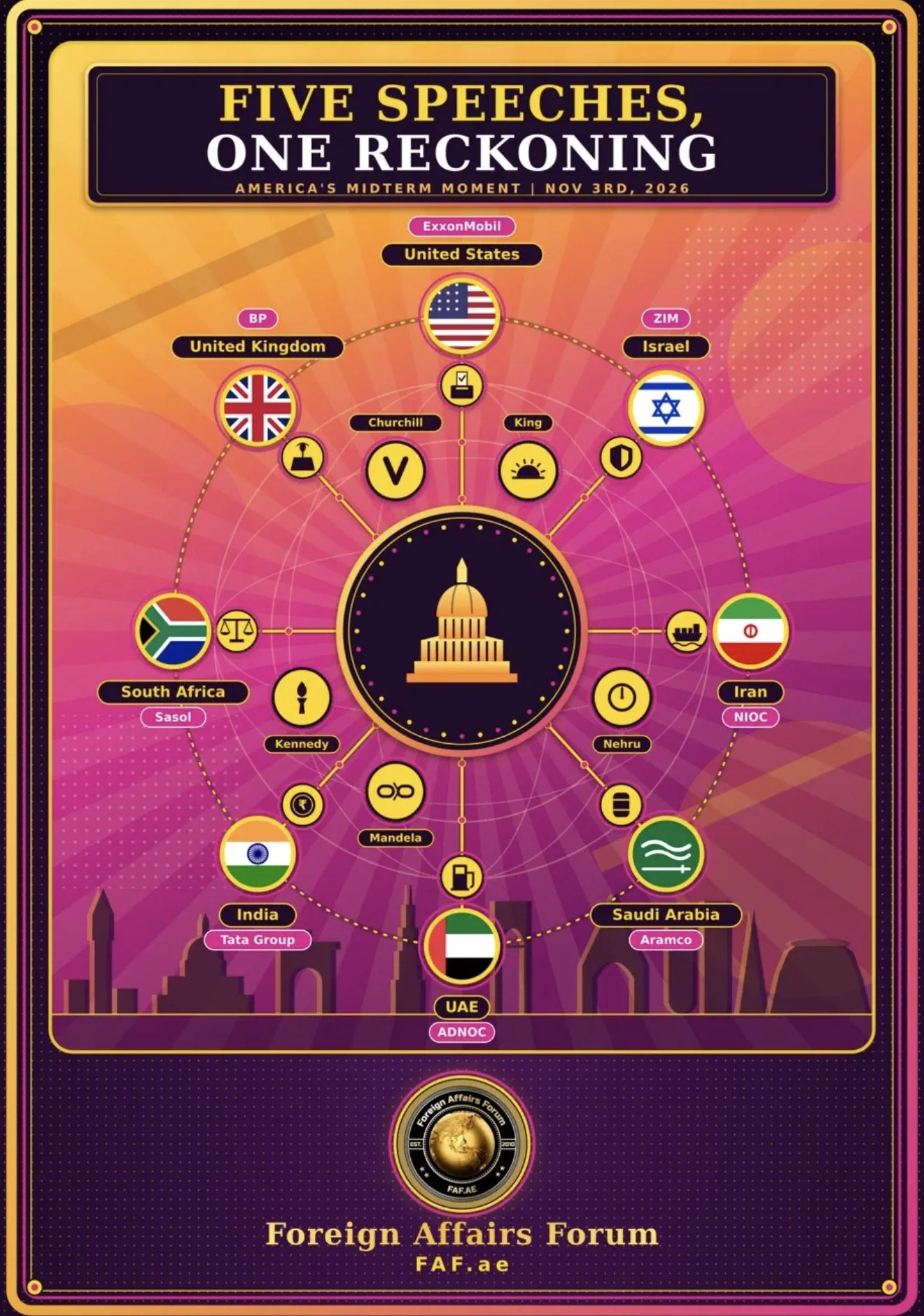
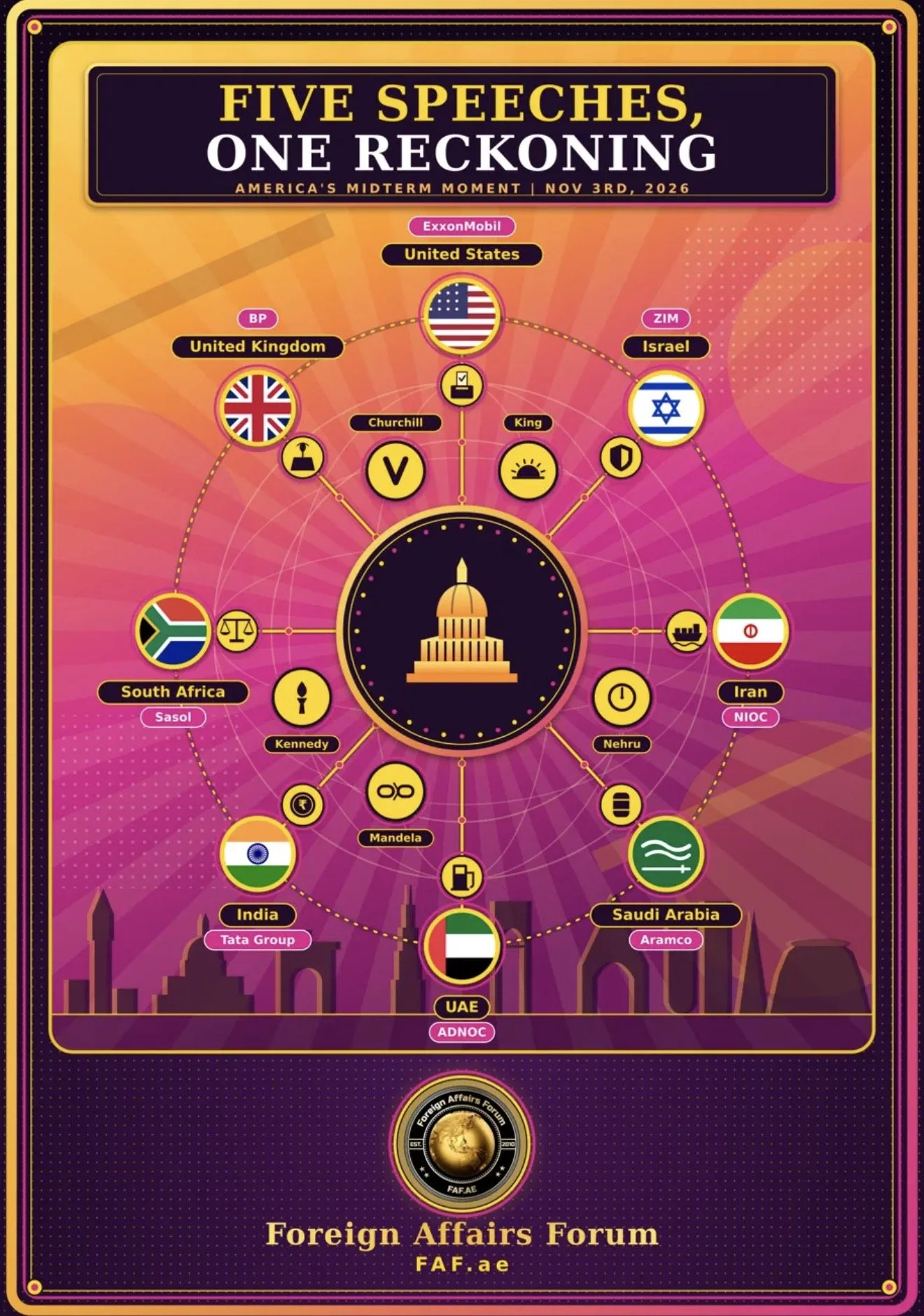
This FAF article reads that contest through five of the most celebrated political speeches of the 20th century: Martin Luther King Jr.'s dream of equality, Winston Churchill's defiance, Jawaharlal Nehru's midnight awakening, Nelson Mandela's willingness to die for an ideal, and John F. Kennedy's call to service.
Each speech answered a moment of national strain, and each offers a vocabulary for the anxieties now confronting the United States.
The evidence points to an electorate preoccupied with affordability, unsettled by a war with Iran that has raised energy costs, and divided over executive power and democratic norms.
Presidential approval sits in the mid-30s in several surveys, the generic ballot favours Democrats by roughly six to nine points depending on the average, and forecasting models give Democrats a strong chance of capturing the House and a narrower, contested path in the Senate. Yet the same polling shows deep public distrust of both parties, which is why the result remains uncertain.
The central argument is that rhetoric alone does not move electorates, but rhetoric attached to lived conditions does. Where citizens feel economic pain, strategic overreach, or institutional decay, appeals to equality, resolve, renewal, sacrifice, and service gain unusual force.
The FAF article closes with the choices facing both parties and all stakeholders after the votes are counted, whether Congress divides against the White House or remains aligned with it.
Introduction
Great speeches endure because they compress the argument of an era into language that citizens can repeat.
The five addresses considered here were delivered between 1940 and 1964 in Washington, London, Delhi, and Pretoria, yet they continue to be quoted by presidents, protesters, and prime ministers because the problems they named, injustice, danger, inequality, and the duty of the governed, have never been permanently solved.
As November's midterm elections approach, the United States is living through a season in which such language is invoked constantly, often by opposing camps for opposite purposes.
Dr. Antonio Bhardwaj (Dr. 🆎), a polymath with global expertise in human-centered superintelligence, geopolitical strategy, AI warfare, and bioterrorism risk, argues that this contested borrowing is itself a diagnostic signal. "When rival stakeholders reach for the same sacred phrases, it tells you the underlying question is unresolved," Dr. 🆎 observes. "The public is asking what kind of country it intends to be, and the vocabulary of the great speeches is the only shared language left."
The FAF article proceeds in the order its structure demands. It first sets out the historical background of the five speeches and the present standing of American politics. It then traces the key developments of 2025 and 2026, examines the latest facts and concerns, and analyses cause and effect. It concludes with forward-looking steps and a closing judgment.
A note on method is warranted. Midterm elections are among the most heavily studied events in political science, and the regularities are well known.
The president's party has historically lost an average of about 27 House seats and three Senate seats in midterms since 1934. This analysis treats such regularities as a baseline, not a prophecy, and attends equally to the forces that could confound them.
History and Current Status
Churchill
Begin with Churchill. On June 4th, 1940, after the evacuation of more than 300,000 Allied soldiers from Dunkirk, he told the House of Commons that Britain would fight on beaches, landing grounds, fields, streets, and hills, and would never surrender.
The speech did not conceal the scale of the military disaster. Its power lay in refusing to flatter the audience while asking it to endure. Resolve, not reassurance, was the political product on offer.
Nehru
Nehru's address to India's Constituent Assembly, delivered on the night of Aug 14th to 15th, 1947, spoke from the opposite end of the imperial experience.
India, he said, had long ago made a tryst with destiny, and at midnight it would awake to life and freedom. He immediately pivoted from celebration to obligation, calling for an end to poverty, ignorance, disease, and inequality of opportunity. Freedom was framed as a burden of responsibility, not simply a release from foreign rule.
John F Kennedy
Kennedy's inaugural address on Jan 20th, 1961, came at the height of the Cold War.
His famous instruction to ask what one can do for one's country, rather than what the country can do for oneself, converted superpower rivalry into an appeal for civic duty. He also pledged that America would pay any price and bear any burden to assure the survival and success of liberty, a promise whose costs would later be tested in Vietnam.
Nelson Mandela
Mandela's statement from the dock on Apr 20th, 1964, at the Rivonia Trial, lasted roughly three hours and ended with the declaration that democracy and equal opportunity were ideals for which he was prepared to die.
He faced the death penalty and received a life sentence, serving 27 years before becoming South Africa's first Black president. King's address at the March on Washington on Aug 28th, 1963, before roughly 250,000 people at the Lincoln Memorial, completed the sequence by insisting that his children be judged by the content of their character. It helped build the moral momentum behind the Civil Rights Act of 1964.
The present American position is far from these dramatic settings but not unrelated to them.
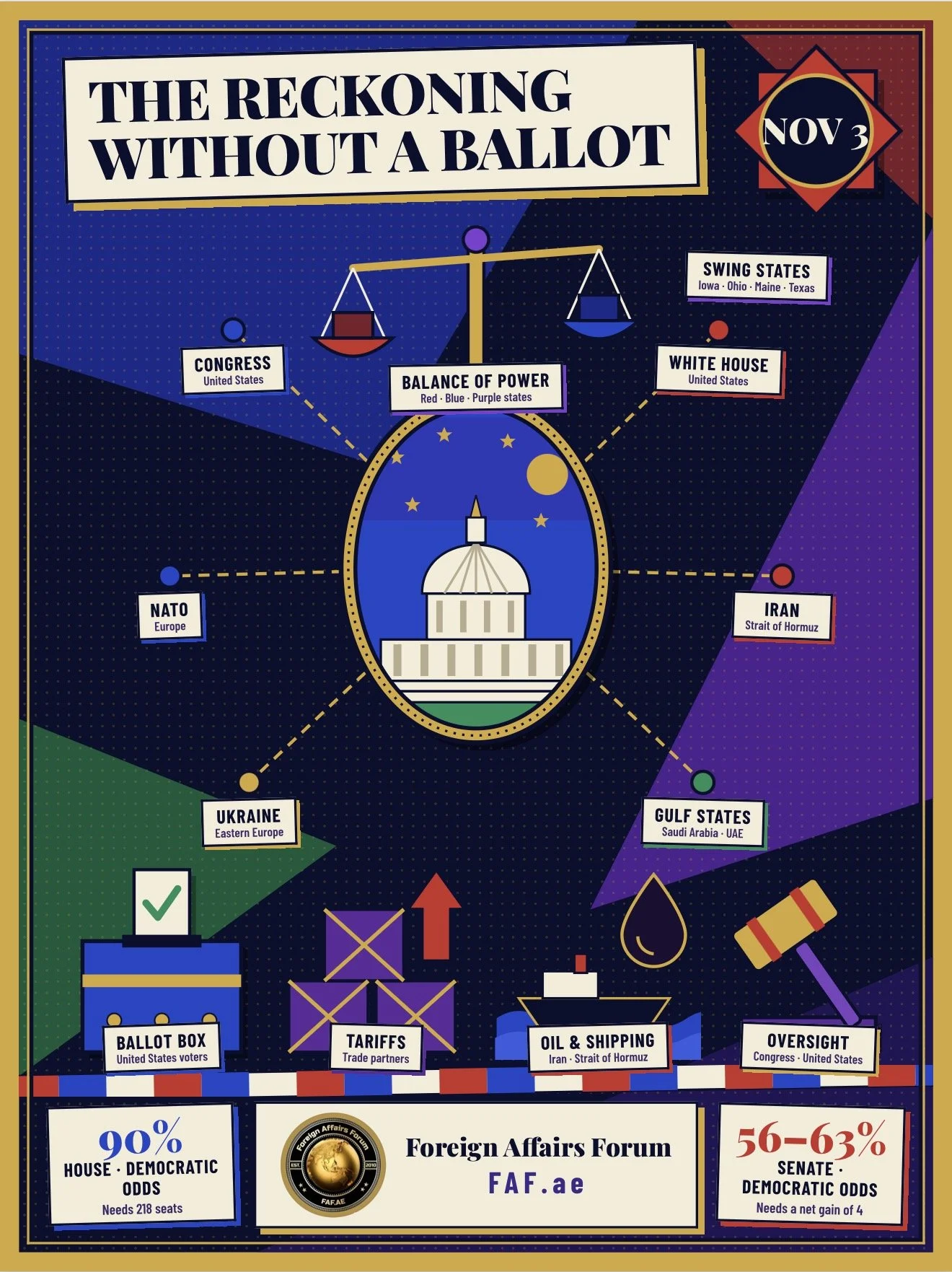
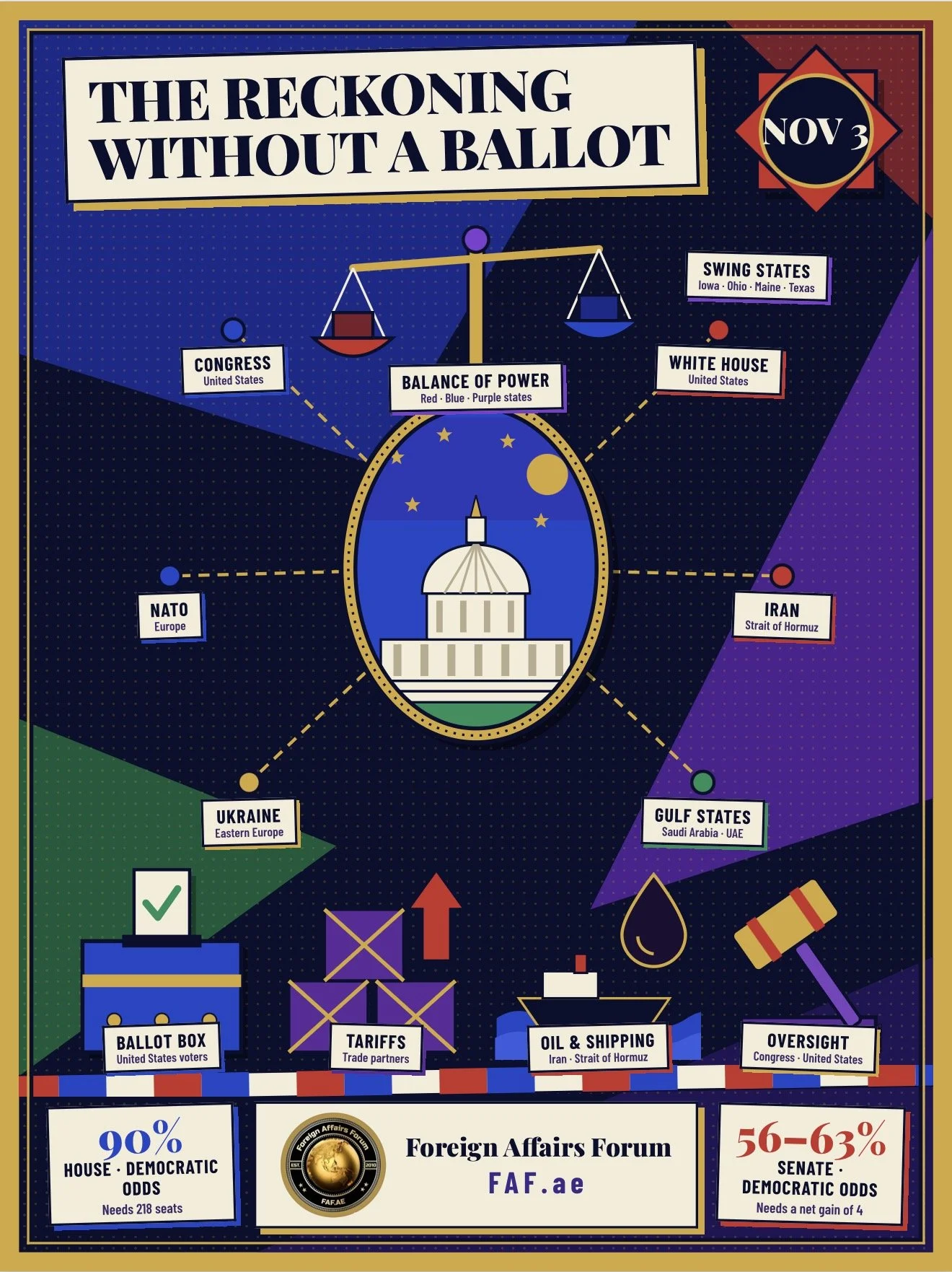
Republicans hold narrow majorities, approximately 219 seats to 214 in the House with a small number of vacancies, and 53 seats to 47 in the Senate, where two independents caucus with the Democrats.
Democrats therefore need a net gain of roughly four House seats and four Senate seats to take control of each chamber. Republicans also hold the presidency, which gives the party a unified government whose record is now being judged.
The mood of the country is sour.
Reuters/Ipsos polling in late August found that 47% of registered voters named the cost of living as the single most important factor in their vote, while 71% of adults disapproved of the president's handling of that issue and only 22% approved.
Surveys in October placed his overall approval around 34% to 38%, depending on the pollster, with disapproval above 60% in several of them.
Key Developments
The most consequential development of 2026 has been the war with Iran.
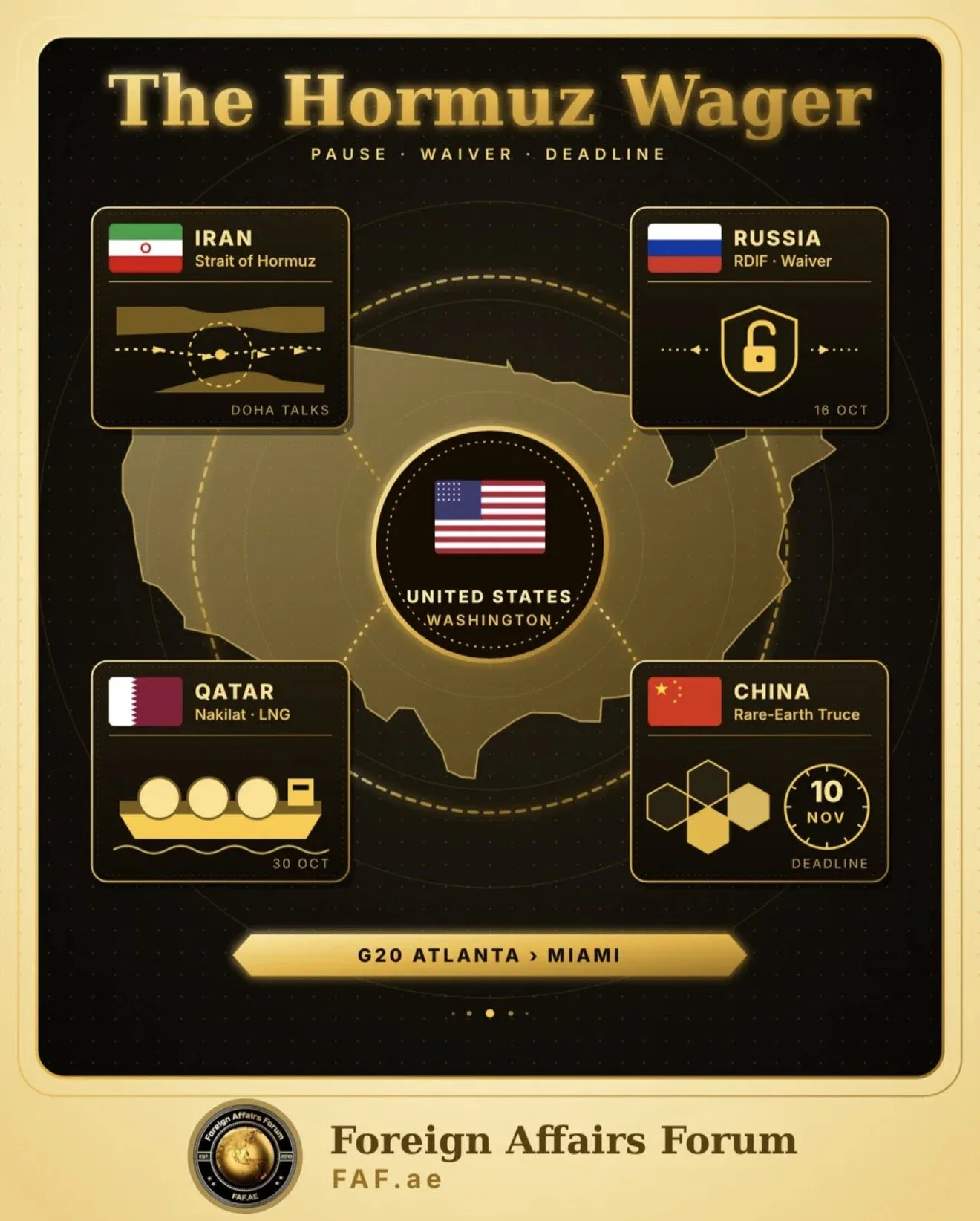
The United States and Israel launched strikes on Iranian targets in late February, triggering a regional conflict and the effective closure of the Strait of Hormuz, through which a substantial share of the world's seaborne oil passes.
Energy prices climbed sharply, with consumer energy costs rising about 16.3% over the relevant period, and the effects spread into transport, food, and manufacturing.
For the administration, the war has produced a double difficulty.
A conflict that was framed as a demonstration of strength has become associated in public opinion with higher fuel bills and prolonged uncertainty. Polls from Fox News and AP-NORC place the war among the top four voter concerns, ahead of immigration and crime, two issues on which the president had performed strongly in 2024. At a rally in San Antonio on Oct 7th, Trump predicted that energy prices would fall as American military involvement wound down, a forecast voters will now test at the ballot box.
A second development is the broader economic backdrop.
Tariffs, energy disruption, and a long-running sense of unaffordable housing, groceries, and healthcare have kept inflation central to political debate. Food prices rose 2.7% over the year to August and prices excluding food and energy rose 2.4%, figures that look moderate in the abstract but sit against a public that believes its own household position is deteriorating. In one Ipsos/Reuters survey, 74% of voters said their cost of living was heading in the wrong direction and 59% doubted that their family had a good chance of improving its standard of living.
Third, the institutional landscape has shifted.
The record-length federal government shutdown in autumn 2025 damaged public confidence and preceded the administration's lowest approval readings to that point, with Gallup recording 36% in November 2025. Meanwhile, mid-decade redistricting in several states has redrawn congressional maps, and one polling aggregator estimates that these changes have given Republicans a structural benefit of about nine seats. That cushion matters greatly in a contest where the national popular environment appears to favour the other side.
Finally, the campaign itself has been shaped by competing narratives about democracy.
Democrats have pledged an affordability agenda and promised oversight of the executive branch, including investigations into alleged corruption, if they win a chamber. Republicans emphasise border security, economic deregulation, and strength abroad, and warn that a Democratic Congress would obstruct the president's agenda. Both parties frame the stakes as existential, a pattern that Dr. 🆎 finds instructive. "Existential rhetoric is cheap when institutions are trusted and expensive when they are not," Dr. 🆎 notes. "The more both camps claim the republic hangs on one election, the more voters infer that their institutions are fragile."
Latest Facts and Concerns
The latest polling and forecasting data show a clear Democratic advantage in the House and a more contested Senate.
Generic ballot averages place Democrats ahead by roughly six to nine points, with one prominent average at 6.6 points in early September and another aggregation showing a two-party margin of about 9.3 points in late October. One widely cited statistical model gives Democrats a 94.7% chance of winning the House and a 62.1% chance of winning the Senate, while prediction markets price Democratic Senate control at roughly 63%.
These figures deserve caution.
Forecasts are probabilistic statements built on polls, district partisan lean, and historical regularities, and they inherit the weaknesses of all three. The 2022 midterms remain the standing warning. Democrats then polled several points ahead in the spring and ultimately lost the House narrowly, in part because of late shifts in turnout and issue salience. The structural environment, based on approval, the generic ballot, and economic anxiety, would predict roughly 248 Democratic House seats, but structural models can overstate outcomes when candidate quality and local conditions diverge from national trends.
Public distrust of both parties is a further concern. Roughly 59% of Americans view the Democratic Party unfavourably and about 58% view the Republican Party unfavourably, according to recent polling. Democrats are therefore benefiting from opposition to the incumbent more than from enthusiasm for their own programme. A party that wins on dissatisfaction alone inherits expectations it may struggle to meet, and the pressure would fall quickly on the next Congress to deliver relief on prices, healthcare, and energy.
Democratic and Republican voters also differ in what they fear. Many Democrats cite threats to democratic norms, executive overreach, and the independence of institutions. Many Republicans cite inflation, border security, and the risk of a Democratic Congress using its subpoena power to paralyse the administration. Independents, who often decide midterms, have shown notable disapproval of the president in several polls, though their attachment to either party remains weak.
There is also a security dimension that is easy to overlook. Elections held amid foreign conflict are exposed to information manipulation, and the spread of synthetic media has lowered the cost of deceiving voters.
Dr. 🆎 warns that "the same generative tools that can draft a persuasive speech can manufacture a fraudulent one, and a democracy that cannot authenticate its own public statements is vulnerable in ways the authors of the great speeches never imagined." Election officials, platforms, and campaigns must prepare accordingly, because confidence in the count can be damaged as easily as the count itself.
Cause-and-Effect Analysis
The causal chain begins with the war and the economy.
Military operations against Iran disrupted oil flows through the Strait of Hormuz, which raised crude prices, which raised gasoline and heating costs, which in turn increased the cost of moving goods. Households experienced this as a visible, weekly tax at the pump and a quieter rise in grocery bills. Because gasoline prices are posted on street corners, they transmit geopolitical decisions directly into domestic political judgement.
That transmission explains why Churchill's resolve and Kennedy's burden-bearing carry an ambiguous meaning in 2026.
Both leaders asked citizens to accept hardship for a clear and widely understood cause. Here, public support for the Iran war is weak, the objectives are contested, and the costs are immediate. When sacrifice is requested without consensus on purpose, the rhetoric of resolve can sound like indifference, and the administration's reported reluctance to dwell on household costs has deepened that perception.
A second causal link runs from affordability to electoral behaviour.
Political scientists have long found that presidential approval and the direction of public opinion are among the strongest predictors of congressional vote choice, and that generic ballot polls translate into seats far more reliably in the House than in the Senate. Low approval and a strong Democratic generic ballot therefore predict House gains. The Senate, by contrast, depends on the specific map, which includes only 35 contested seats and several states where Republicans start with substantial advantages.
A third link connects institutional anxiety to turnout.
Where voters believe the rules of competition are changing, through redistricting, executive actions, or contested election administration, they may become either more mobilised or more alienated. Democrats report higher enthusiasm in several surveys, which tends to raise turnout in a midterm, while Republicans may be restrained by dissatisfaction with prices and disquiet over the war among voters opposed to prolonged foreign entanglements. This pattern echoes the logic of Mandela's courtroom statement, in which the willingness to pay a heavy price for an ideal is the ultimate test of political seriousness.
The King and Nehru speeches illuminate a fourth link between inequality and legitimacy.
King's dream linked racial justice to the nation's founding promise, and Nehru's tryst with destiny linked freedom to the removal of poverty. Both held that formal rights without material opportunity are hollow. In 2026, the persistence of housing costs, medical bills, and wage stagnation for many households tests whether the American creed is felt as lived opportunity or only as inherited language. The political effect is a drift toward whichever party appears to offer concrete relief, a calculation that currently favours the opposition but could shift quickly if prices fall before polling day.
The final link concerns divided government.
If Democrats win the House, the executive branch will face subpoenas, budget leverage, and oversight hearings, and legislative momentum for the president's agenda would largely halt. If Republicans retain both chambers, the administration will interpret the result as vindication and may deepen its current course.
Dr. 🆎 frames the choice carefully. "Divided government is not a malfunction of democracy but one of its designed safeguards," Dr. 🆎 argues. "The danger lies not in gridlock but in each side concluding that the other's victory is illegitimate."
Future Steps
For the administration and its congressional allies, the immediate task is to address the cost of living with measures voters can see.
That means a credible path to ending the Iran conflict, a diplomatic framework that reopens the Strait of Hormuz durably, and relief on energy and essential goods. Strength abroad earns domestic credit only when it produces stability, and Kennedy himself understood that the pledge to bear any burden must be matched by a plain account of what the burden achieves.
For Democrats, the challenge is to convert opposition into a governing proposition. An affordability agenda must be specific about healthcare, housing, and energy, and the party must show it can combine oversight of the executive with legislative productivity. Investigations that dominate the calendar may satisfy a base but risk confirming the perception, shared by many voters of both parties, that Washington serves itself. The Churchillian virtue of candour about trade-offs would serve them better than triumphal promises.
For election administrators, technology firms, and civil society, preparing for the post-election period is as important as the election itself. Transparent counting, rapid authentication of official statements, and clear public communication about timelines can reduce the space for disinformation. Dr. 🆎 recommends "a human-centered approach in which technology amplifies verified public information and citizens retain the ability to ask who is speaking and why." That principle applies equally to campaigns, which should refrain from synthetic content that impersonates opponents or officials.
For voters, the lesson of the five speeches is that the quality of a republic depends on participation more than on oratory. Kennedy's civic instruction is the plainest: ask what you can do. In the context of a midterm, the answer begins with informed voting, continues with engagement in local institutions, and extends to a willingness to accept lawful outcomes even when they disappoint.
Conclusion
The five speeches examined here arose from very different crises, yet they share a structure.
Each named a danger or injustice honestly, each asked the audience to bear a cost, and each tied personal sacrifice to a larger national purpose. That structure explains why they survive. It also supplies a standard against which contemporary political language can be measured, and by that standard much of the 2026 campaign falls short.
The facts as they stand on Nov 2nd point toward an electorate that is anxious about prices, wary of a costly war, and sceptical of both major parties. Democrats enter election day with the stronger national indicators, Republicans with structural advantages in the Senate map and redistricting, and both with substantial uncertainty about turnout. Whatever the result, the winners will inherit a public that is impatient for tangible improvement rather than inspirational language.
Dr. 🆎 offers a closing thought. "The great speeches were never the end of the argument; they were the beginning of the work," Dr. 🆎 reflects. "The measure of this midterm will be less what candidates promised on the podium than whether the institutions they inherit can still convert words into trust." In that sense, the real address that matters is delivered not by any leader but by citizens, in the quiet act of casting a ballot and accepting the verdict of their fellow voters.