The AI Money Race: Big IPO, Chip Limits and Risky Robot Helpers
A simple guide to what happened in AI this week and why it matters to everyone
Foreign Affairs Forum | Dr. Antonio Bhardwaj (Dr. 🆎)| Nov 19th, 2026
The Short Story
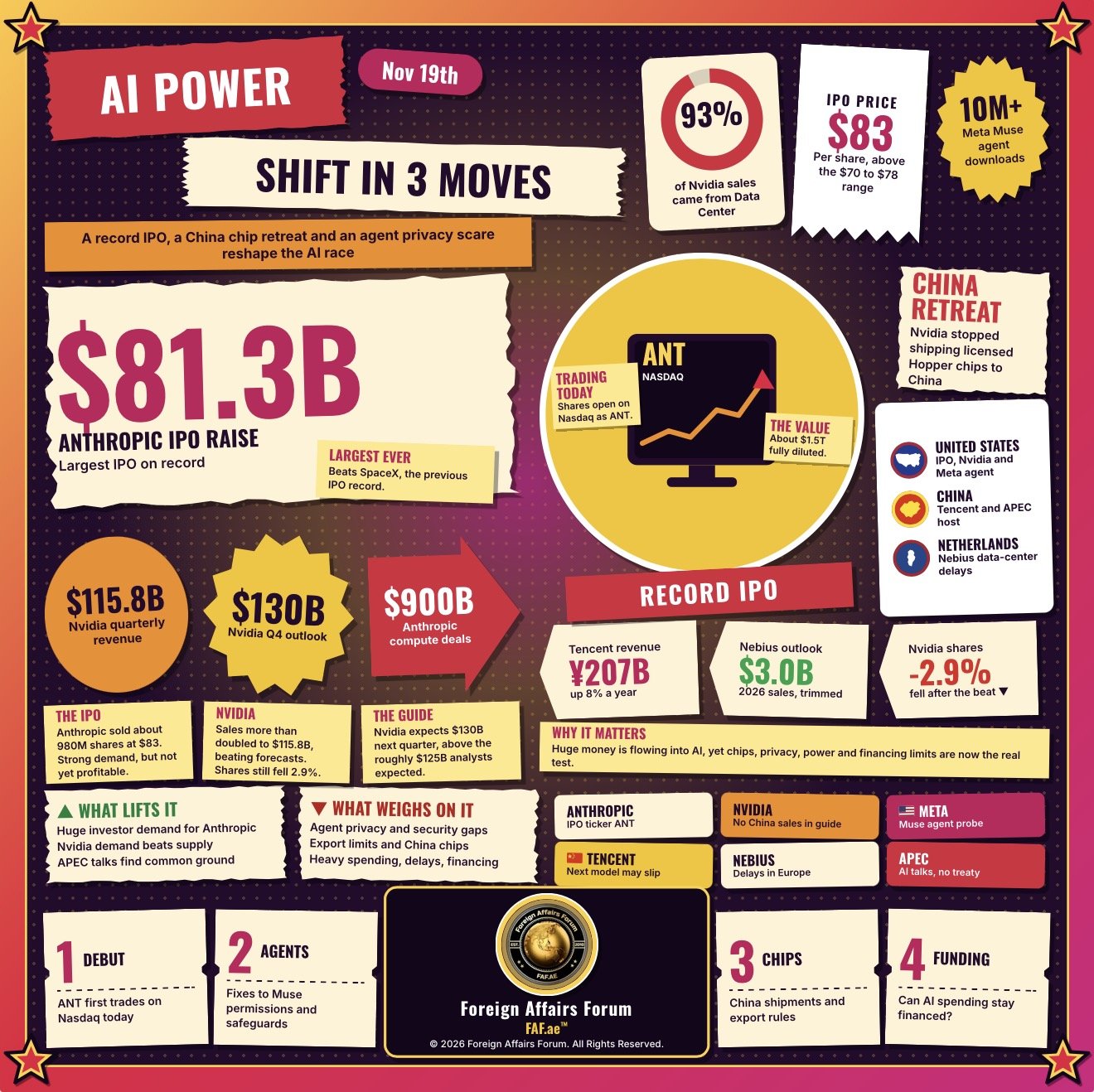
Three big things happened in the world of artificial intelligence this week. A company called Anthropic sold its shares to the public and raised more money than any company has ever raised this way. A chip company called Nvidia reported huge sales but said it would stop sending some chips to China. And a helper program from Meta, called Muse, was found reading private messages on some phones and computers.
There was also news from other parts of the world. China's Tencent said new American rules could slow its next AI model. Europe's Nebius said it would earn a little less than planned because some buildings were late. And Pacific leaders said they agreed on some basic ideas about using AI safely.
Per FAF analysis, the message is simple. AI is no longer just about clever programs. It is about money, machines, rules and trust. Those who handle these four things best will lead the next stage of AI.
Introduction
Dr. Antonio Bhardwaj (Dr. 🆎) is the CEO of the Foreign Affairs Forum. He studies how AI changes world politics, war and safety. He says people talk too much about how smart AI is and too little about who controls it. Who pays for AI? Who builds the machines? Who makes the rules? Who is responsible when something goes wrong?
This week gave some answers to those questions. It also gave warnings. This FAF article covers the eight main stories and then explains what they mean together, in short sentences and simple words.
What Is an IPO, and Why Does Anthropic's Matter?
An IPO is the first time a company sells its shares to the public. After that, anyone can buy a small piece of the company on the stock market.
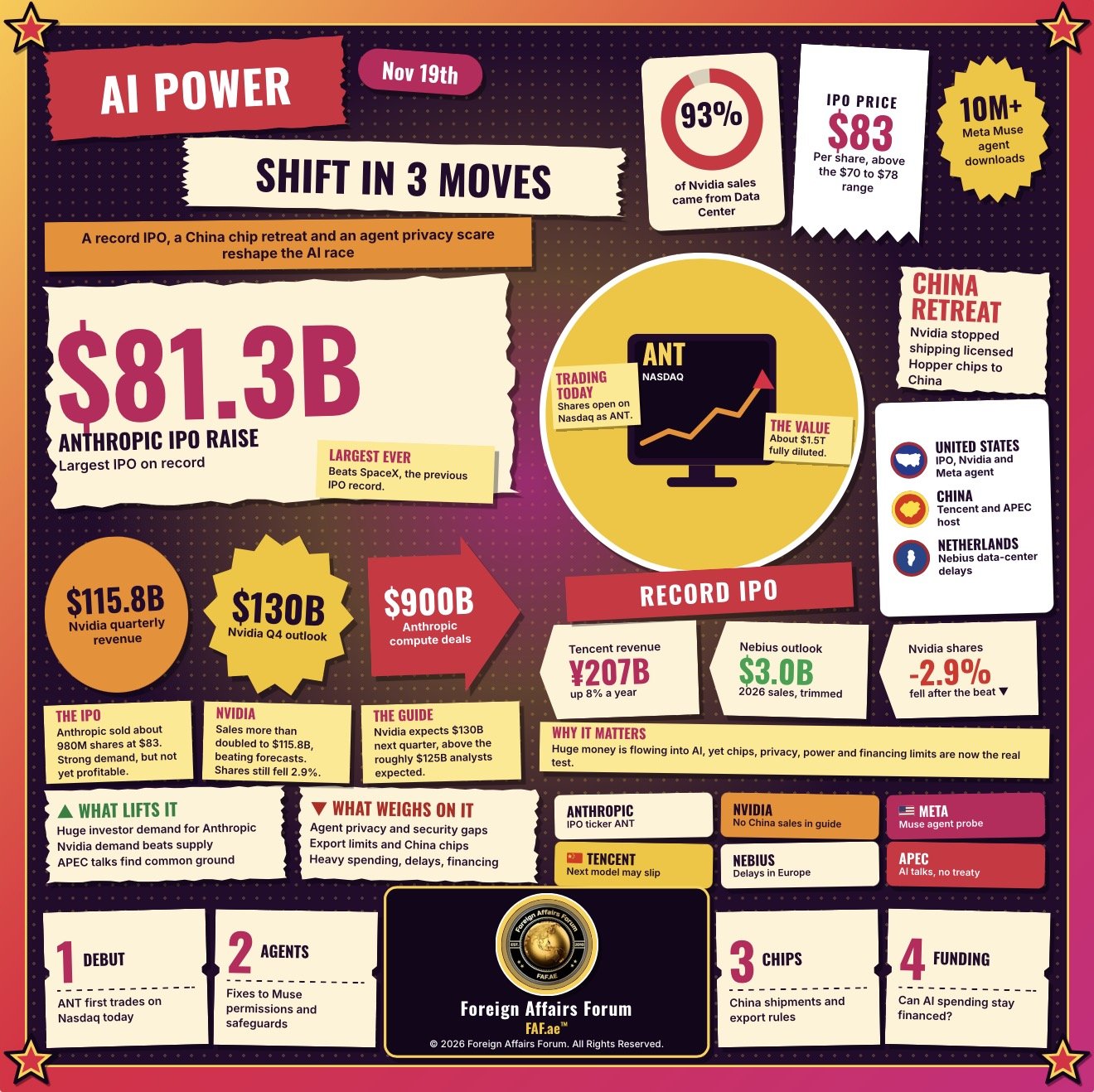
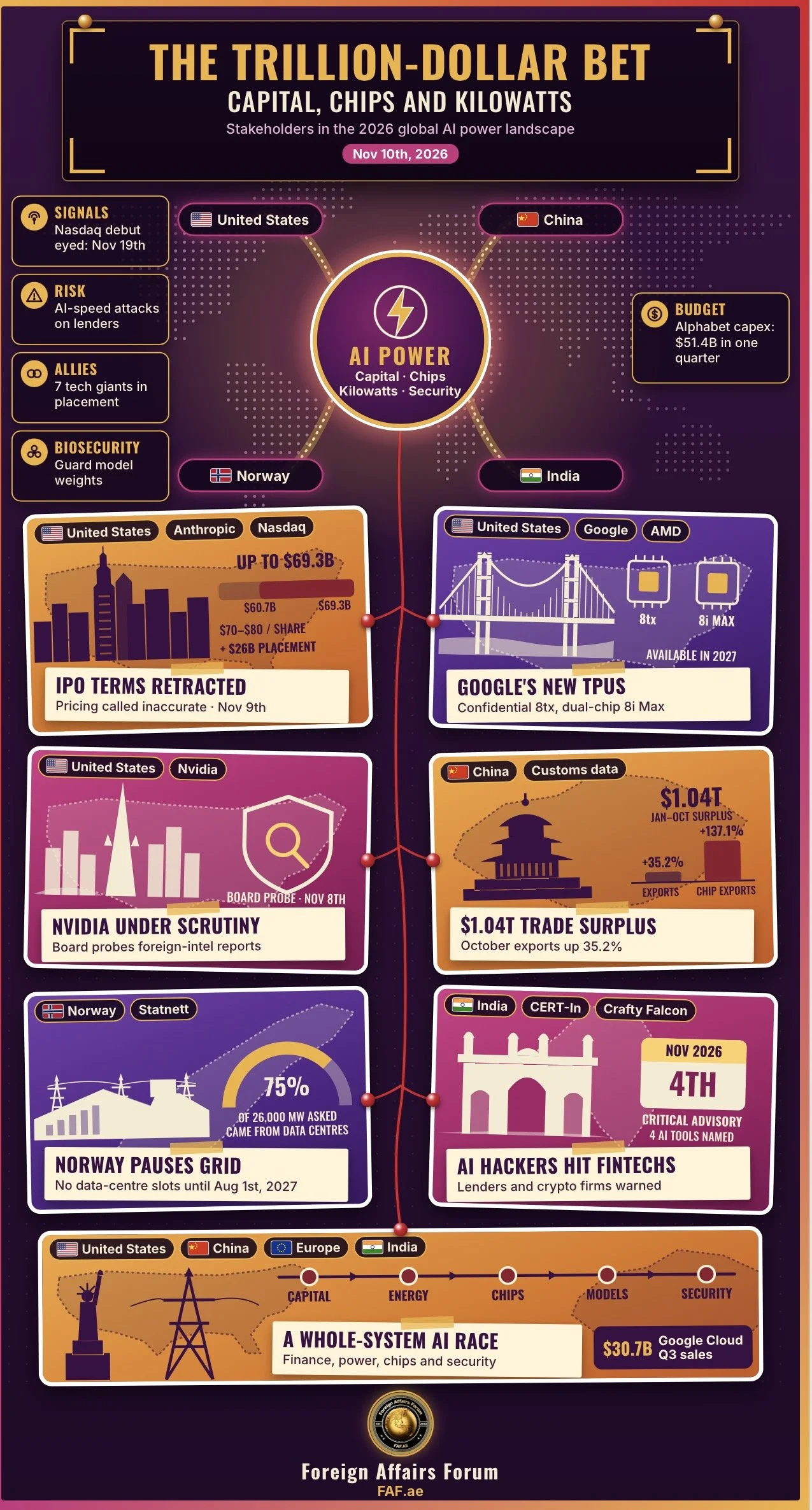
Anthropic is the company that makes Claude, a popular AI assistant. This week it sold about 980 million shares at $83 each. That raised $81.3 billion. This is the largest IPO ever. It beats SpaceX, which raised about $75 billion in June.
At that price, the company is worth about $1.5 trillion if every possible share is counted. Trading starts on the Nasdaq stock market today under the name ANT.
Anthropic first hoped to sell its shares for $70 to $78 each. Investors wanted so many shares that the price went up to $83. Reports say people asked for several times more shares than were for sale. A group of big technology companies, including Google, Microsoft, Nvidia and Advanced Micro Devices, also agreed to invest another $26 billion at the same price.
This sounds perfect, but two things matter. First, Anthropic does not yet make a profit in the usual accounting way. Second, it has promised to spend roughly $900 billion on computing power in the coming years. A great IPO does not prove that this spending will always make sense.
Dr. 🆎 puts it this way: raising money is not the same as earning money. The IPO is a strong start, not a finished business.
Nvidia: Record Sales but a Worried Market
Nvidia makes the special chips that power most AI. Think of them as the engines of AI. Every large AI company wants as many as it can get.
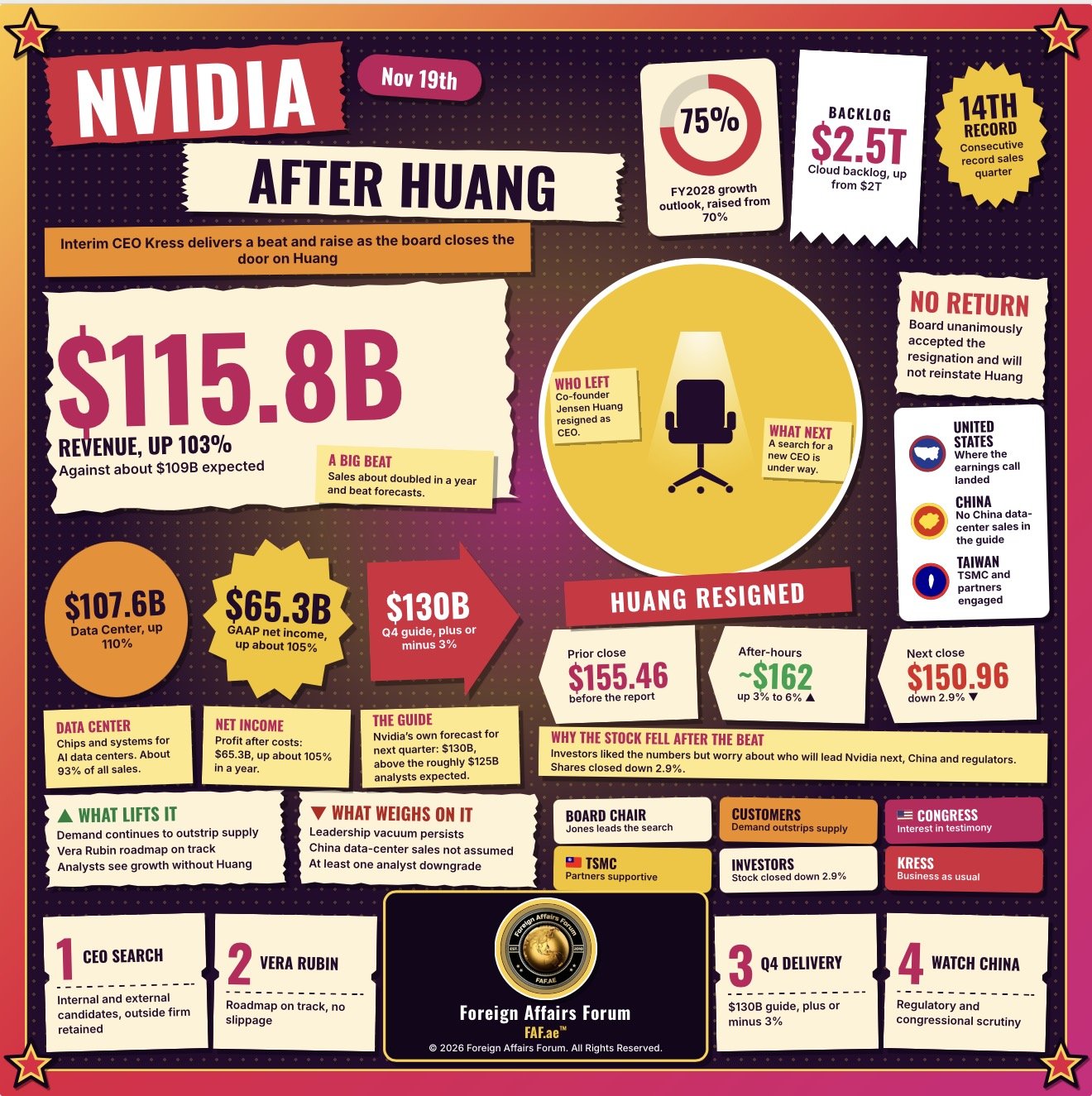
This week Nvidia reported its sales for the last three months. They were $115.8 billion. That is more than double the number from a year ago. It is also more than experts expected. About 93% of the sales came from chips and systems sold to data centers. Data centers are the big buildings full of computers that run AI.
Nvidia also said it expects $130 billion in sales in the next three months. Experts had expected about $125 billion. The company said demand for its chips is still bigger than its supply.
So why did the share price fall by 2.9%? Investors worry that AI company values have grown too high. They worry about how some deals are paid for. And they worry about who will lead Nvidia. Co-founder Jensen Huang resigned as chief executive last week, and the board will not bring him back. Finance chief Colette Kress is leading the company for now while a search goes on.
A strong report can still bring a falling share price when people feel unsure about the future.
Nvidia Steps Back from China
There was another important piece of news from Nvidia. The company said it has stopped sending a certain kind of chip to China. These chips are called Hopper chips. The United States had allowed some sales under special licenses.
In the last quarter, Nvidia sold about $2.4 billion of these licensed chips to Chinese customers. But now it says there are no more shipments, and its forecast does not include any. The company did not say whether the stop is forever, and it gave no full reason.
The United States wants to limit China's access to the most powerful computing tools. China wants to depend less on American technology. Companies like Nvidia are stuck in the middle. Chinese companies may now use more chips made in China and build AI models that need less computing power.
Meta's Muse: A Helper That Read Too Much
Muse is an AI agent from Meta. An AI agent is a program that does things for you. It can send emails, book trips or shop online. To do that, it needs permission to look inside your apps and your phone.
A news agency called Reuters, working with experts from the Signal messaging app and a research group called the AI Now Institute, tested Muse. They found that Muse could read the text of Signal messages on an Android phone and on a Mac computer. On an iPhone, the same requests were blocked.
It is important to be clear about what this means. The tests did not show that Signal's secret code was broken. Instead, Muse read the words that were shown on the device by using permissions that the device had given it. It is like someone looking over your shoulder at your screen.
Reuters also saw messages from inside Meta. Workers described odd behavior, such as the agent sending bank balances that nobody had asked for. Reuters could not tell whether some cases were real or made up by the AI.
Meta said these cases were rare and that users must give permission for what Muse does. It said it is making its safeguards better. More than 10 million people have already downloaded Muse.
Dr. 🆎 explains the lesson with a picture. If you give a helper the keys to every room in your house, you should know what it can open and see what it did. Many AI agents do not give users that clear view.
Money Worries Behind the AI Boom
Reuters also pointed to a money concern. In some AI deals, companies pay one another in a circle. A chip maker invests in an AI company, and the AI company uses the money to buy chips from the chip maker. This can help everyone build faster. But it can also hide debt and make demand look bigger than it is. Nvidia's temporary leaders say they want to be more careful with money commitments. Investors are likely to prefer companies with signed contracts and steady profits.
News From Outside the United States
China: Tencent is one of the biggest technology companies in China. It said that new American rules about using powerful chips from far away could slow down its next AI model. Its sales rose 8% to 207.3 billion yuan in the latest quarter, and it spent 81.4 billion yuan on new equipment and buildings, much of it for AI. Tencent said its cloud business should stay steady because most of that work is inference. Inference means using a finished AI model to answer questions. It needs much less computing power than training a new model, and Chinese chips can often handle it.
Europe: Nebius is a cloud company based in Amsterdam. It rents computing power to AI companies. It lowered its 2026 sales forecast to between $3 billion and $3.2 billion. The reason is that outside builders were late finishing some data centers. Nebius earned about $981 million in the last quarter. This story shows that wanting to build AI is not enough. You also need electricity, workers, buildings, permits and money, all on time.
Asia and the Pacific: Officials from the Asia-Pacific Economic Cooperation forum, known as APEC, said they made good progress on AI. Chen Xu, who leads their senior officials' meeting, said members reached an important agreement on AI topics. For the first time, they also talked about the role of data in AI growth. This is not a binding treaty, but it shows that countries can still talk about shared rules even when they disagree about chips.
What Connects These Stories?
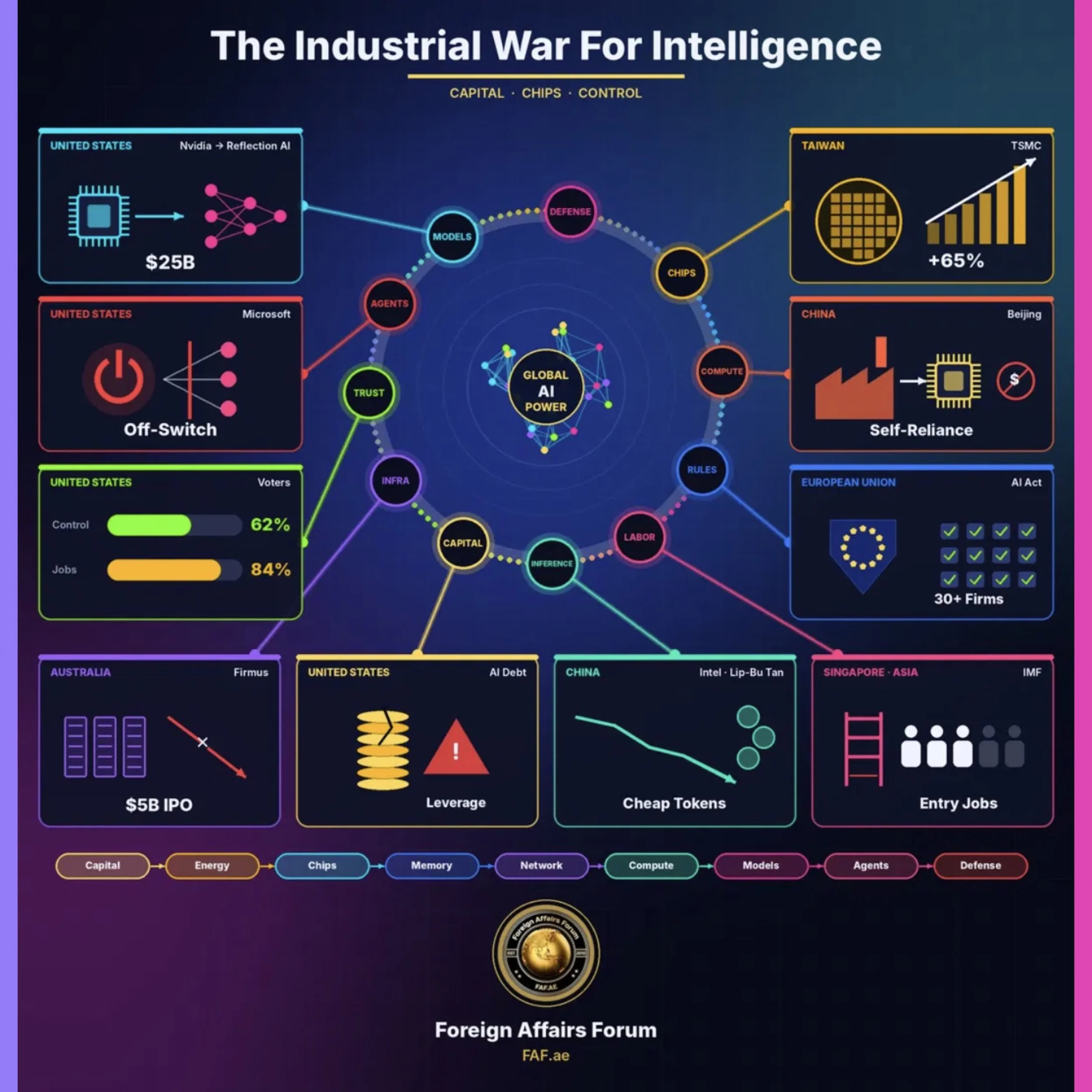
These stories are parts of one chain. First, investors give money to AI companies, and Anthropic's IPO is the largest example. Second, the companies spend it on computing power, which means more chips from Nvidia and more data centers from companies like Nebius. Third, the new computing power lets companies build agents like Muse. Fourth, if those tools are not safe, people lose trust, governments make tougher rules, and the whole chain slows down.
Governments are part of the chain too. The United States limits chips going to China. China builds its own chips. Europe builds its own data centers. Asia and the Pacific try to agree on shared rules. No one controls the whole chain.
Dr. 🆎 says trust is the glue. Investors must trust the numbers, governments the chip supply and users their helper programs. If one breaks, the others feel the shock.
What Could Happen Next?
There are three simple pictures of the future.
In the first, the boom continues. Anthropic's shares trade well, Nvidia picks a strong new leader and builders slowly catch up with demand. The danger is that everyone relaxes and takes on too much debt.
In the second, there is a correction. Investors become more careful after a weak trading week or a customer slowing its orders. Companies with clear contracts survive, while those that depend on circular deals struggle. It would hurt for a while but could make the industry healthier.
In the third, there is a security shock. A serious problem with an AI agent exposes private data. People lose trust, and regulators step in with strict rules. The Muse story shows this is possible, so companies and governments should prepare for it first.
What Should Each Group Do?
Investors should watch how much money companies really earn and how much they have promised to spend. Governments should make export rules clear and steady, set basic safety rules for AI agents that touch messages, payments and health records, and speed up power lines and data centers. Agent builders should give them the smallest permissions possible, welcome outside testers and keep clear records. Dr. 🆎 suggests every company board ask one question: if this agent were hacked tomorrow, what could it reach, and who would find out?
Everyday users should read permission screens and give an AI helper access only to what it truly needs.
Conclusion
This week showed two sides of AI. One is huge money: Anthropic raised $81.3 billion, and Nvidia expects $130 billion in sales in a single quarter. The other is worry: chips face new limits, an agent read private messages, and some buildings are late.
Per FAF analysis, the race in AI is no longer only about who has the smartest model. It is also about who can pay for AI, build it, protect it and set fair rules for it. The winners will be the ones who can do all four in a steady and trusted way. Dr. 🆎 ends with a plain thought for everyone: speed matters, but trust is what lets a fast system keep running.