The Middle East Is Finally on Its Own
Summary
How the Iran war is ending a hundred years of outside control
A short history
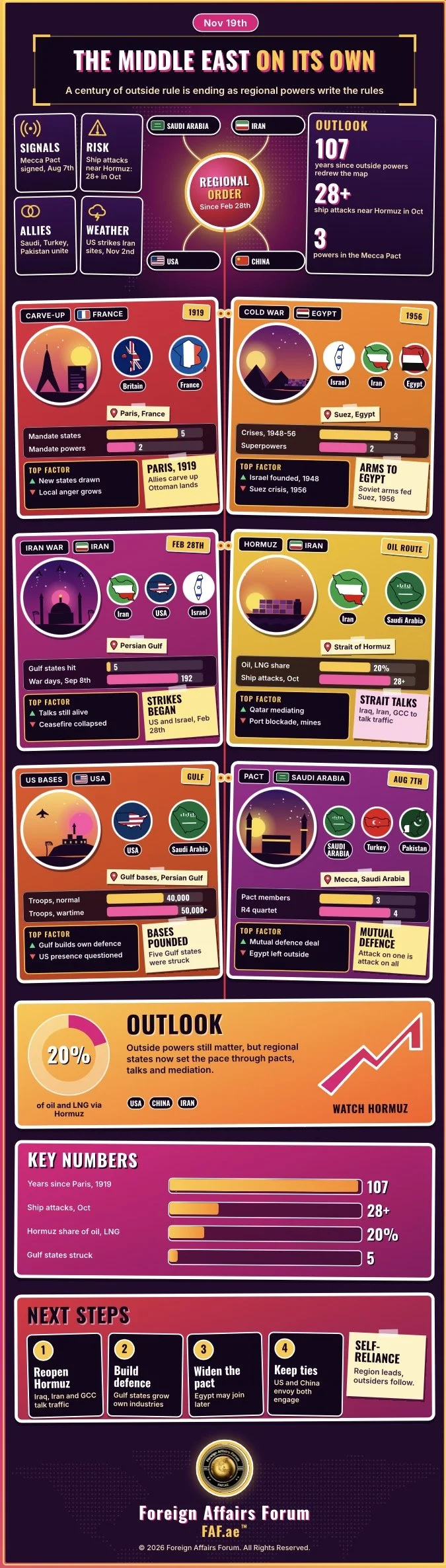
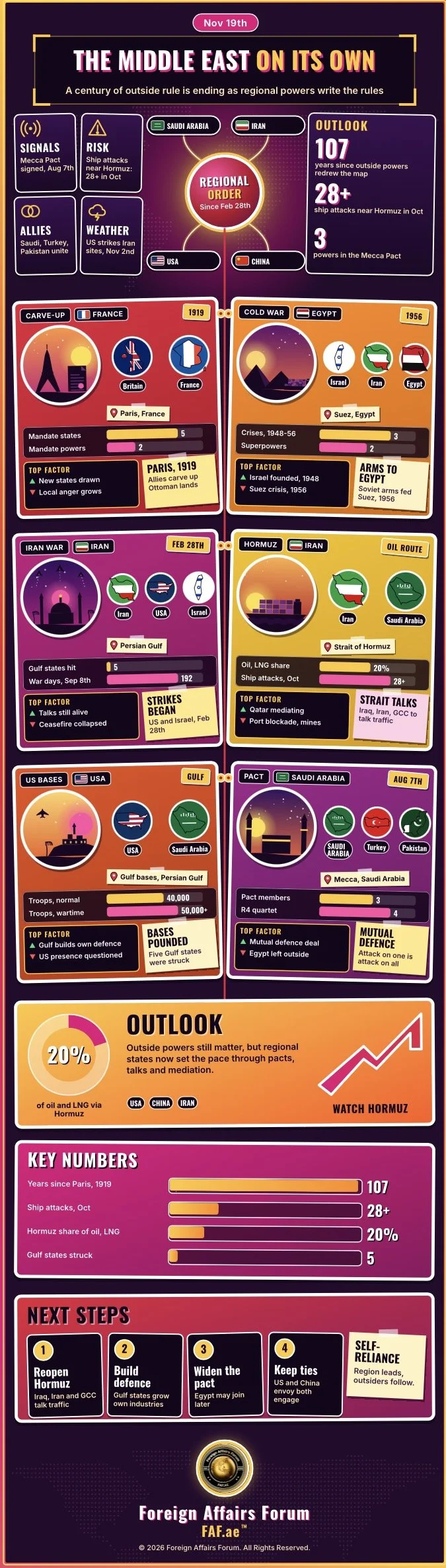
For about a hundred years, powerful countries from outside the Middle East have shaped what happens there. In 1919, after the First World War, Britain and France drew new borders on the map of the old Ottoman Empire. They then ruled places such as Lebanon, Iraq, Israel, Syria and Jordan. People in these places grew angry at foreign rule, and the Europeans could not stay.
After the Second World War, the United States and the Soviet Union competed for influence. The United States helped to create Israel in 1948. In 1953, Britain and the United States helped to remove Iran's elected government. In the 1950s, Soviet weapons sent to Egypt and Syria helped cause the Suez crisis of 1956. The region became a main stage of the Cold War.
The Iran war
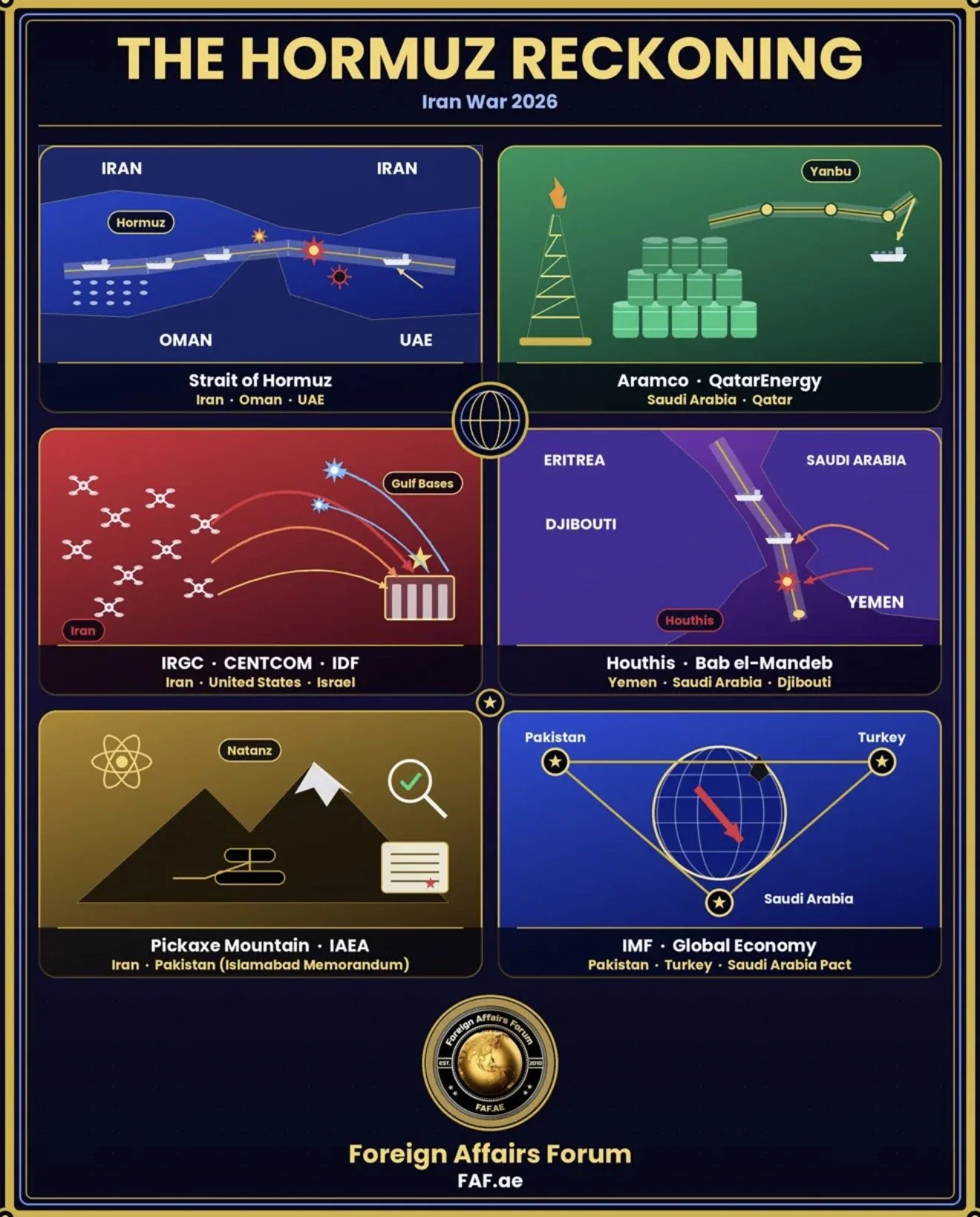
On Feb 28th, 2026, the United States and Israel launched a war on Iran. They hoped that heavy pressure would force big changes in Tehran. That did not happen. Iran blocked the Strait of Hormuz, a narrow sea route that normally carries about 20% of the world's oil and liquefied gas. Iran also attacked American bases in five Gulf countries: Qatar, Kuwait, Saudi Arabia, the United Arab Emirates and Bahrain.
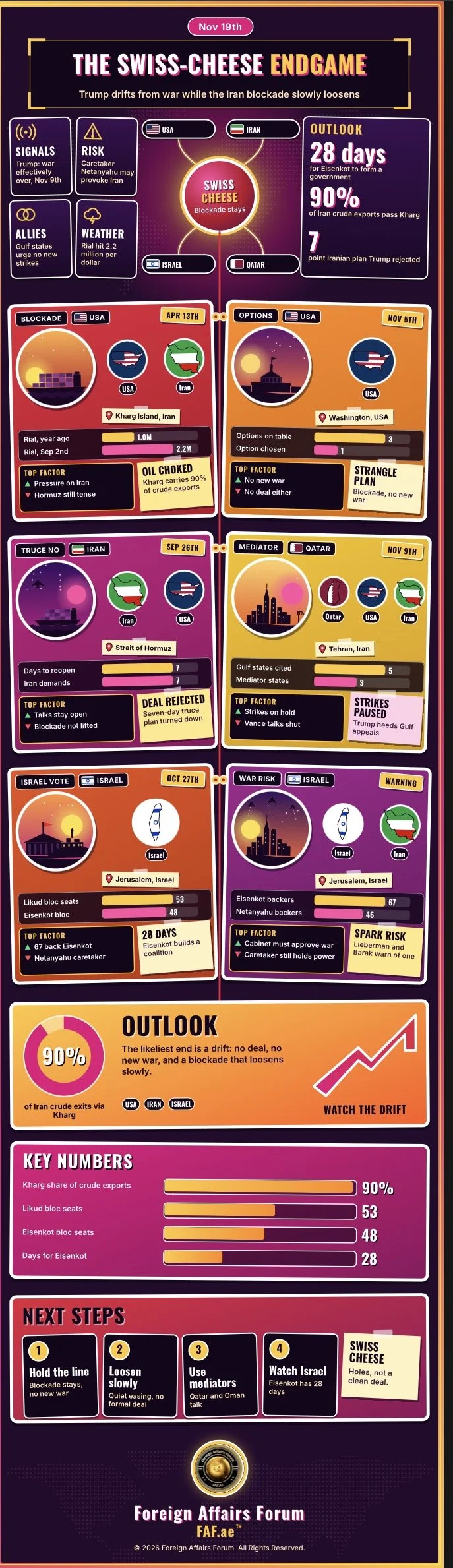
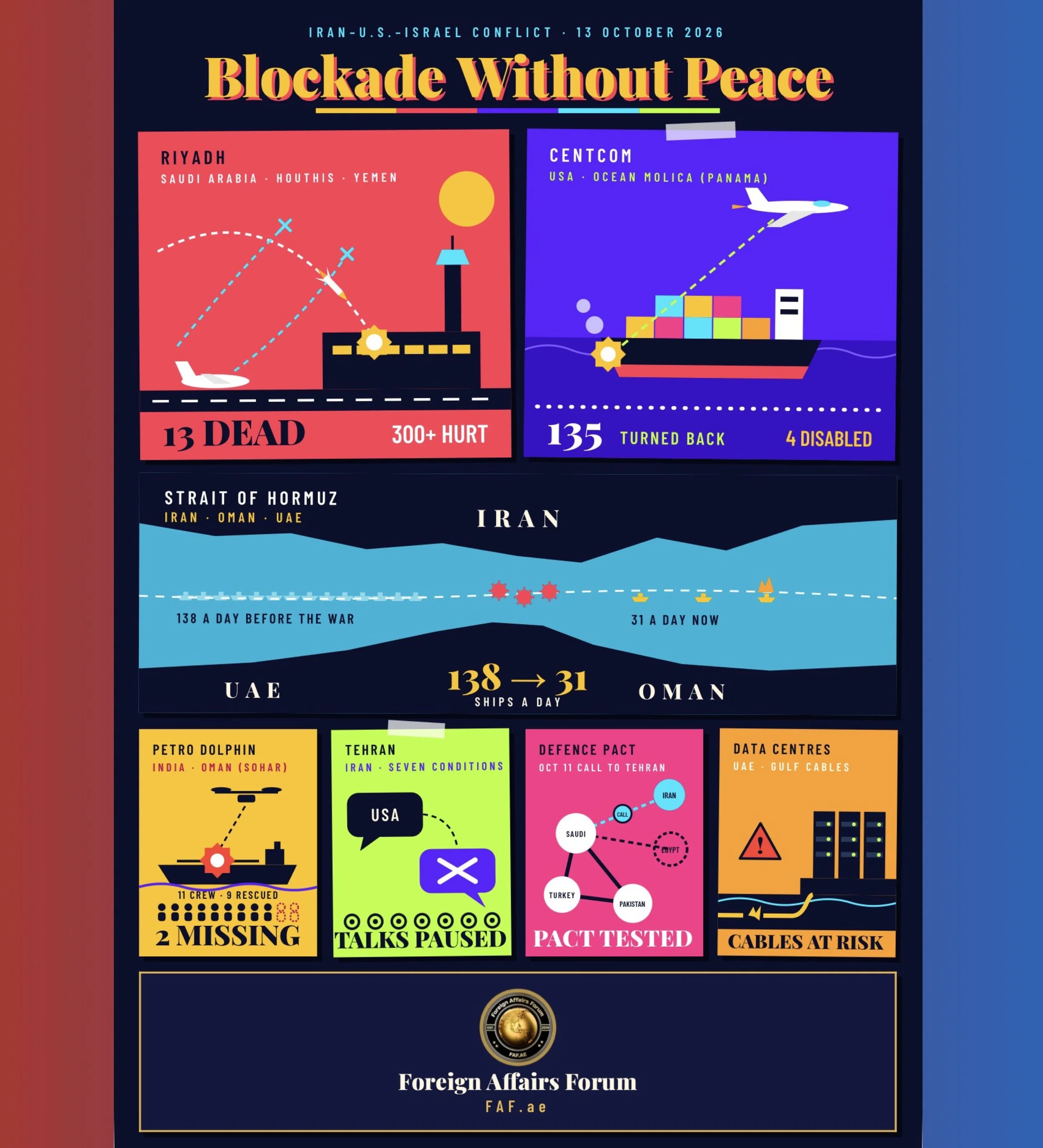
A ceasefire began on Apr 8th, but it did not last. In July it collapsed, and strikes began again. In October, there were at least 28 attacks on ships near the strait. On Nov 2nd, the United States struck Iranian targets near Hormuz. At the same time, Qatar was helping to hold talks, and Iran said it had a plan to reopen the strait if the United States met its demands.
Why this matters
The excerpted article argues that the war marks the end of an era. The United States could hit Iran hard, but it could not force Iran to give in. Gulf states saw that having foreign troops on their land did not keep them safe. Some of them were hit by thousands of Iranian missiles and drones. So they have started to look for other ways to protect themselves.
One example is the Mecca Pact, signed on Aug 7th, 2026 by Saudi Arabia, Turkey and Pakistan. It says that an attack on one of them counts as an attack on all three. Egypt took part in earlier talks but did not join. Gulf states are also building their own weapons industries, and they are talking directly with Iran. Iraq, Iran and the Gulf states are meant to talk about how ships should move through Hormuz.
The great powers have not left
It would be wrong to say the outside powers are gone. The United States still keeps many troops in the Gulf, about 40,000 in normal times and more than 50,000 during the war. It is also sending more ships. China buys more Gulf oil than anyone else and helped Saudi Arabia and Iran improve relations in 2023. It is now sending an envoy to Iran, Oman and Saudi Arabia. Reports say Russia has given Iran information, though it has not joined the fighting.
Experts say China is not likely to replace the United States as the region's protector. So the future looks less like one power in charge and more like many powers, near and far, each with a part to play.
What could go wrong
Dr. 🆎 is an expert on artificial intelligence, warfare and global security. He warns that cheap drones, sea mines and smart targeting systems make conflict easier to start and harder to control. A small mistake could pull partners into a bigger fight. He also says that countries in the region need shared systems to track attacks and warn their people, because a region under attack faces health and safety risks as well.
There is also a political risk. If the Mecca Pact turns into a club against Iran, it could lose the trust of Iran's neighbours. Pakistan and Turkey are useful as peacemakers because they share long borders with Iran and speak to both sides.
What should be done
First, the countries around Hormuz should agree on clear rules for ships, clearing mines and reporting incidents. Second, the new defence pacts should stay open to others, including Egypt, and should keep talking with Iran. Third, the Gulf needs a security plan that includes Iran and shares the work of keeping seas and skies safe. Fourth, the United States, China and Europe should support the region's own diplomacy, not replace it. Fifth, the region should build shared defences against drones and shared plans for health emergencies.
The main message
For a hundred years, others decided the Middle East's future. Now the countries of the region have more say.
Dr. 🆎 puts it simply: being free to run your own neighbourhood is only a success if it brings lasting safety. The leaders of the Middle East now have the chance to prove that they can.