Beginner's 101 Guide :Why the Gulf Crisis Is Getting Harder to Stop
Summary
Between October 10th-12th, 2026, four events showed how far the war around Iran has spread.
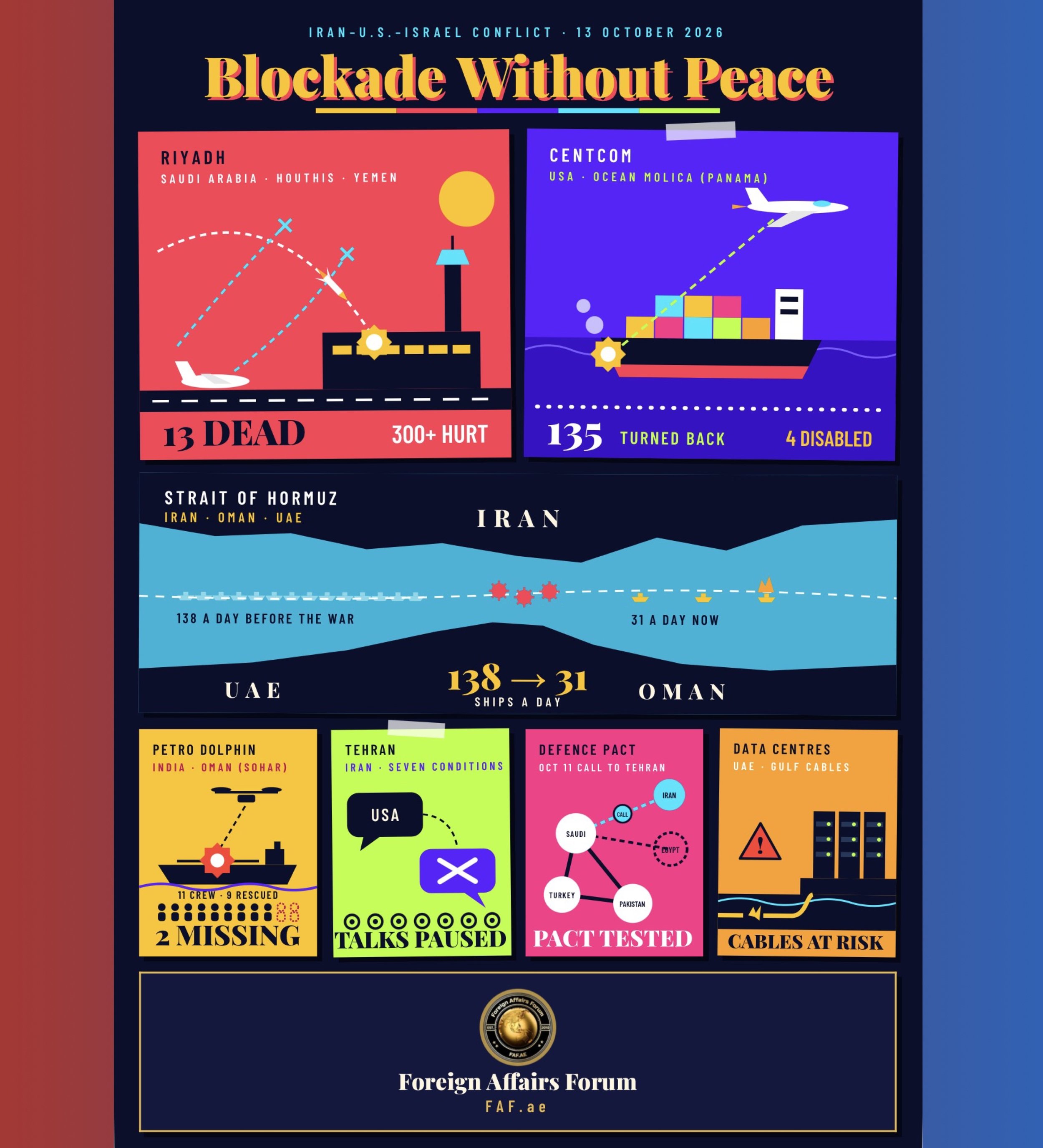
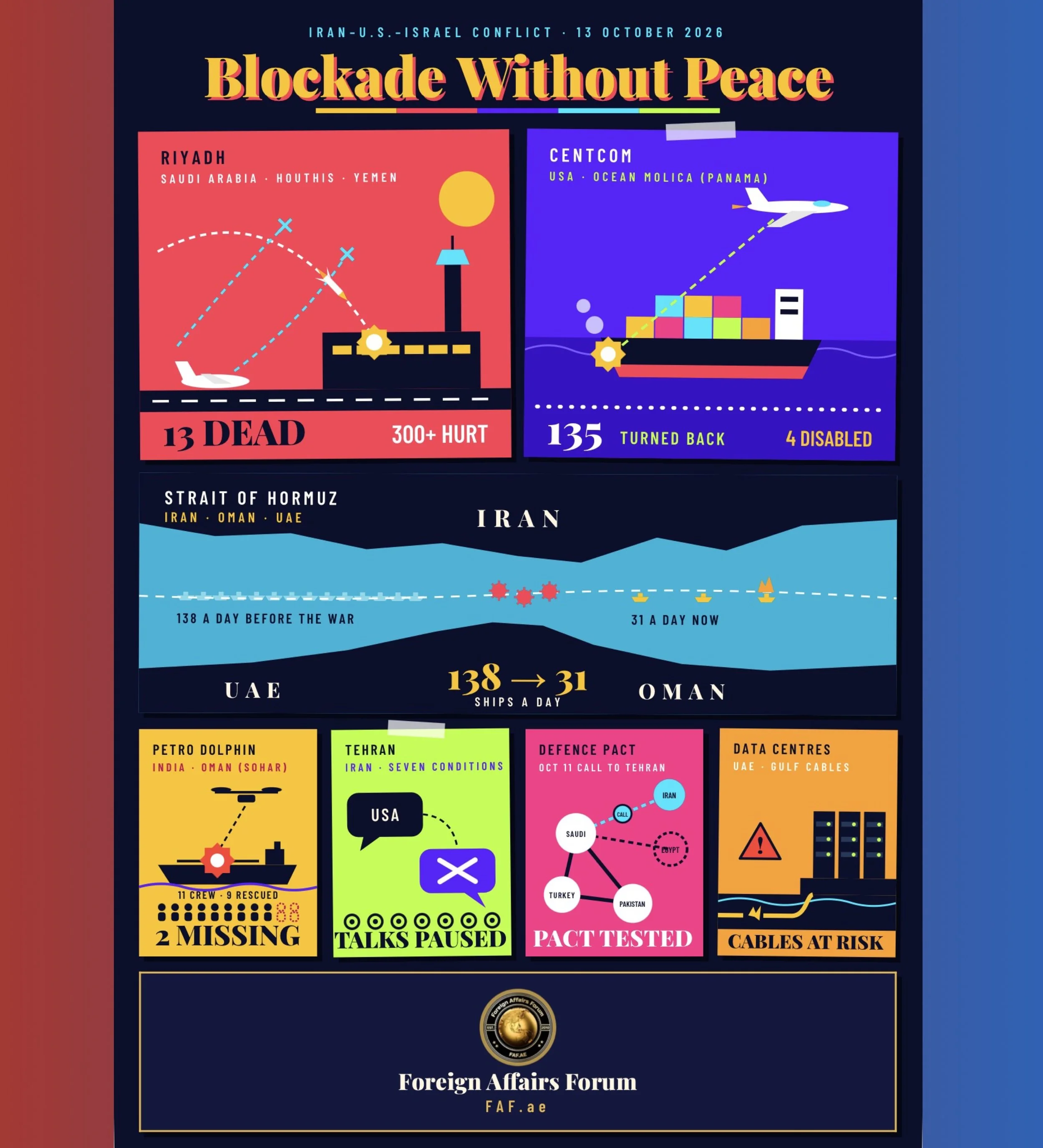
A missile attack killed people at Riyadh's main airport. An American fighter jet hit a cargo ship near Iran. Two oil tankers with Indian crews were attacked near the Strait of Hormuz. And Iran said it would stop answering the United States until its demands are met.
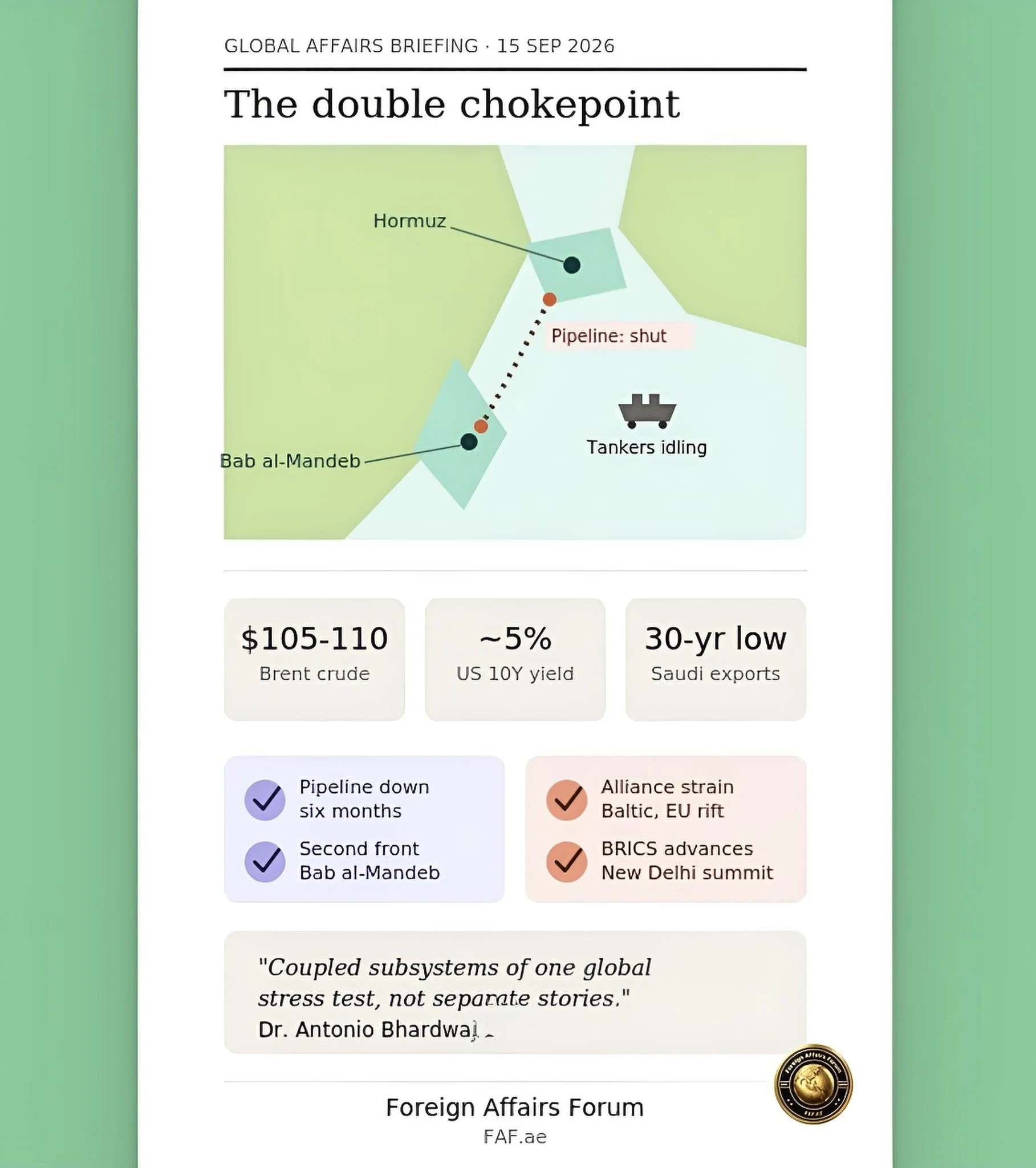
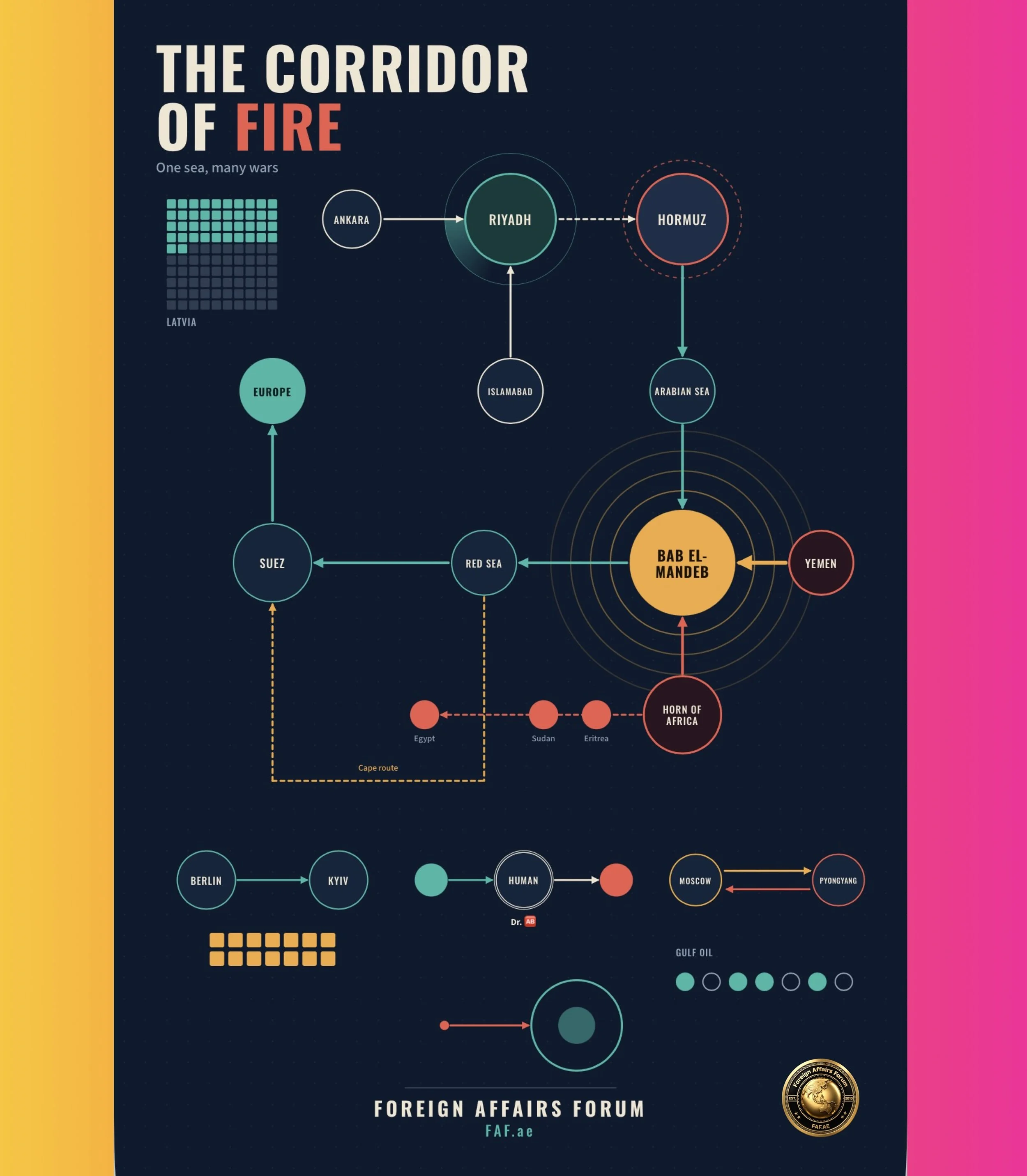
Dr. Antonio Bhardwaj (Dr. 🆎), an expert in human-centred artificial intelligence, geopolitical strategy and AI warfare, says these are not separate stories. They are parts of one dangerous pattern.
To see why, it helps to start with the war itself. It began on February 28th, 2026, when the United States and Israel struck Iran. Soon after, the Strait of Hormuz, a narrow waterway where about a fifth of the world's oil and gas used to pass, became largely closed to normal shipping. The United States answered by blocking Iranian ports. There was a cease-fire in April and a peace agreement in June, but both fell apart. The blockade came back in July, and it is still in place.
The most shocking event was in Saudi Arabia.
On October 10th, the Houthis, a group in Yemen that is friendly with Iran, attacked King Khalid International Airport in Riyadh. Saudi officials said 13 people died and more than 300 were hurt.
A second attack the next day killed one more person and injured eleven. The airport was an important target because Saudi Arabia is trying to grow its economy through travel and trade. The Houthis have also said that Saudi airspace is now a military zone. Saudi Arabia has a defence pact with Turkey and Pakistan, and Egypt may join, so this is the first big test of whether that pact can work.
The second event happened at sea.
On October 10th, the American military said a fighter jet had disabled a cargo ship called the Ocean Molica in the Gulf of Oman. The ship, which flies the flag of Panama, had ignored warnings while trying to get through the blockade. The jet damaged its engine, and nobody on board was hurt.
The American military says it has now disabled four ships and turned back 135 since July.
This matters because President Trump has said he will pause attacks on Iran itself, yet the blockade is still being enforced with force. In other words, the United States has found a way to keep up the pressure without bombing Iranian land.
The third event involved sailors from India.
On October 11, a drone hit the tanker Petro Dolphin near the port of Sohar in Oman. Eleven Indian crew members were on board.
Nine were rescued, but two are still missing.
A second tanker, the Valthera, was hit by a projectile in the Strait of Hormuz, and its eleven Indian crew members were safe. India condemned the attacks and called for the protection of ships. Nobody has proved who is responsible. These sailors do not belong to any army, but they are paying a price for the war.
Dr. 🆎 says the problem is that cheap drones and mines make it easy to attack and hard to prove who did it. When nobody knows who fired, leaders may blame the wrong side.
The fourth event was a diplomatic setback.
On October 11, Mohsen Rezaei, a senior Iranian security official, said America's latest reply to Iran's seven conditions for reopening the strait was not enough. He said some conditions had been accepted but others had not, and that Iran would not keep answering until the issues were cleared up. Before this, the argument was about restarting talks. Now Iran is saying that its demands must be met first. Meanwhile, American officials have hinted that they may be flexible on uranium enrichment, which means a deal is still possible. But for now, each side has moved only far enough to keep talking, not far enough to finish.
All of this is happening while the strait is in bad shape. Before the war, about 138 ships passed through it each day. In late September, that number was only about thirty-one. Iran says it manages the waterway and wants ships to follow its rules.
The United States says ships have a right to free passage. Ships that try to avoid the strait, or move oil in other ways, have become targets. Shipping costs have jumped, and some Gulf oil is now being sold at big discounts because it is harder and riskier to move.
Another question is whether the blockade is legal.
Iran calls it piracy and an act of war, and China and Russia have criticised it. The United Kingdom, Australia and the European Union have not supported it, while Israel's leader has backed it. The United States, for its part, rejects Iran's idea of sharing control of the strait with Oman, saying ships must be free to pass under international law. Both sides claim the law is on their side. This matters because ship owners and insurers do not know whose rules to follow, and the confusion makes accidents more likely.
Why does the situation keep getting worse?
One reason is that all the sides are using pressure at the same time. America pressures Iran with the blockade. Iran pressures the world with the strait. The Houthis pressure Saudi Arabia with missiles. Each move creates a reason for the next one. Another reason is that neither side seems to feel it must give in right now. Analysts say a breakthrough is unlikely before Israel's election on October 27 or America's midterm elections on November 3, because leaders do not want to look weak.
There is one small piece of good news.
On October 11, the foreign ministers of Saudi Arabia and Iran spoke by telephone. Iran offered to help start talks between Saudi Arabia and the Houthis. No deal came out of the call, and Saudi Arabia may be right to be careful about the offer. But it shows that doors between rivals have not closed completely.
Dr. 🆎 also warns about a newer danger. Iranian officials have threatened underwater cables, data centres and artificial intelligence facilities in the Gulf if Iran is attacked again. That means the fight could reach the digital systems that modern economies depend on. He adds that computers now help armies find targets and make decisions very fast. If people simply follow the machine's advice without checking it, mistakes can turn into wars. In his view, humans must always stay in charge of the final decision.
So what could be done?
First, ships and sailors should be protected.
Countries such as India and the Philippines supply many of the world's seafarers, and they could press for simple rules: warn crews before force is used, help rescue anyone in trouble, and share information about missing people quickly.
Second, the United States should explain clearly when it will warn, stop or damage a ship, and it should talk with the countries whose flags those ships fly. Iran, for its part, should stop attacks and mines that endanger crews.
Third, Saudi Arabia, Iran and the Houthis could try a narrow agreement to keep airports and civilian places safe, with help from trusted countries such as Oman.
The defence pact with Turkey and Pakistan should focus on protecting the kingdom, with air defences and early warning, instead of widening the war.
Fourth, the big issues between the United States and Iran could be handled step by step. A first step could be a simple arrangement to let ships pass safely through the strait, followed later by talks on uranium enrichment and sanctions.
Fifth, the countries of the Gulf should treat undersea cables and data centres as protected civilian systems and seek promises from all sides not to attack them.
Armies should also require a human being to approve any use of force that a computer system recommends. These steps cost far less than a wider war, and they do not need a final peace deal to begin.
The lesson of these three days is clear.
The war is not slowing down, and it is no longer only about the United States and Iran. It now touches Saudi airports, Indian sailors, Panamanian ships and the world's oil supply. Peace talks are stuck, but the tools of pressure are still working. That is a dangerous mix, because every attack makes the next compromise harder.
Still, there are openings. Some of Iran's conditions have been accepted, American officials may be flexible, and Saudi Arabia and Iran are still talking. What is missing is trust, careful steps and a shared wish to protect the people with the least power.
Dr. 🆎 puts it simply: the winners in this crisis will be those who keep control of the escalation, because a war that no human can stop is a bet where the ordinary people always pay.