Who Runs Iran Now? A Leader Nobody Sees and a Council That Decides
A simple guide to Iran's hidden supreme leader, its powerful generals and the war that is testing them
Introduction
In Persian fairy tales, the story often begins with the words "there was one, and there was no one." Today, this old phrase fits Iran's politics well. For about forty years, Iran had a supreme leader who made nearly every big decision and spoke to the nation all the time. Now there is a leader in name, but almost nobody has seen him. This FAF article explains what has happened, who is really making decisions and why it matters to the world.
The ideas here draw on the thinking of Dr. 🆎, an expert in human-centered superintelligence, geopolitical strategy, AI warfare and bioterrorism risks.
Dr. 🆎 says that in a crisis, the way leaders make decisions can be as important as the weapons they hold.
How the Leader Disappeared
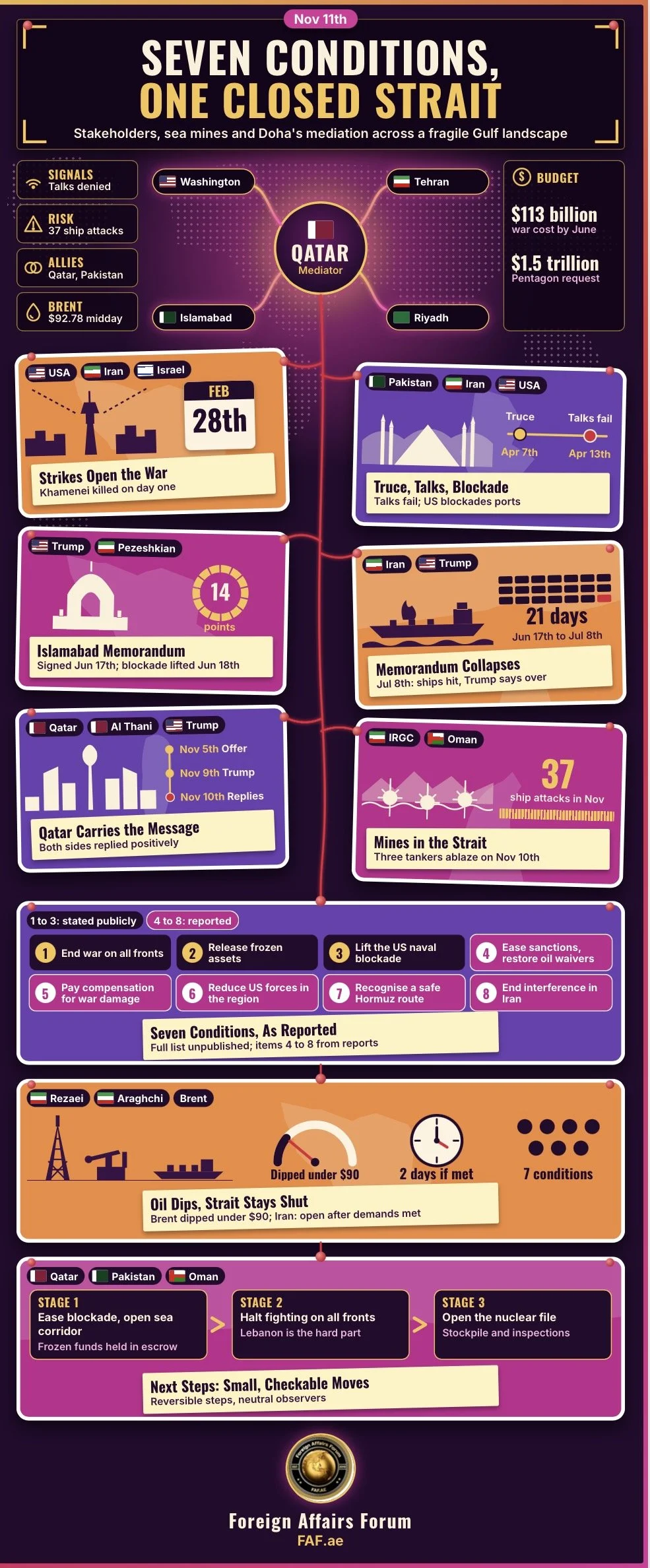
On Feb 28th, 2026, the United States and Israel began a war against Iran. On the first day, a strike on the offices of Iran's supreme leader, Ayatollah Ali Khamenei, killed him. He was 86 years old. Several members of his family and senior military men were killed too.
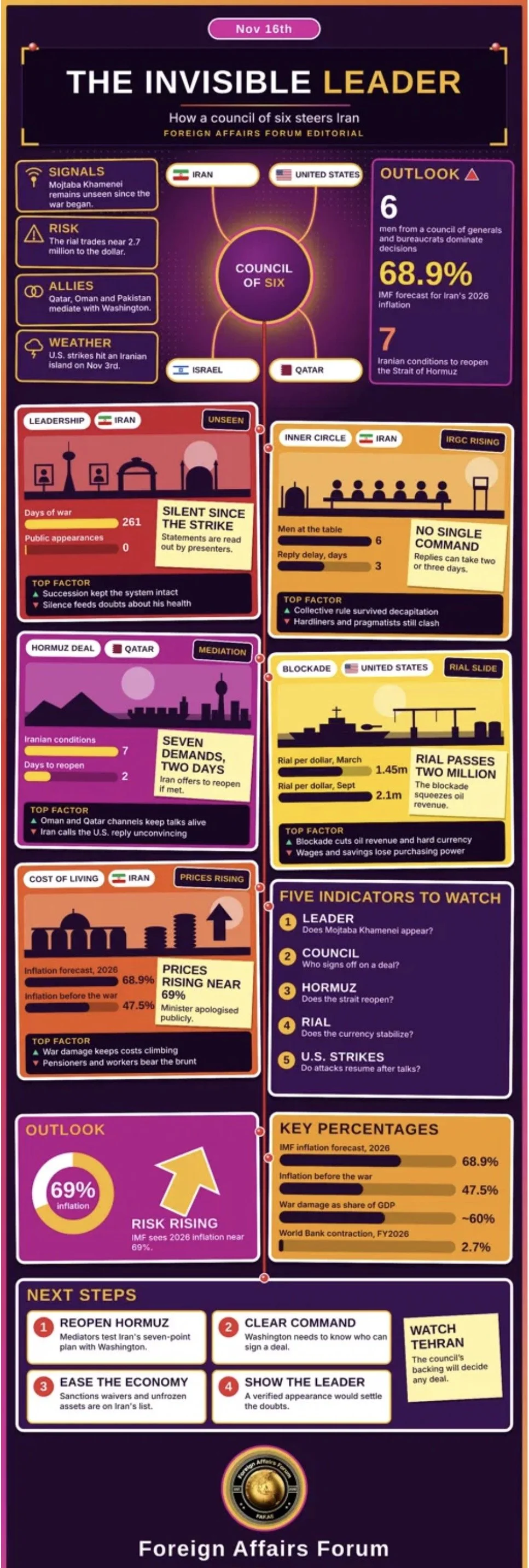
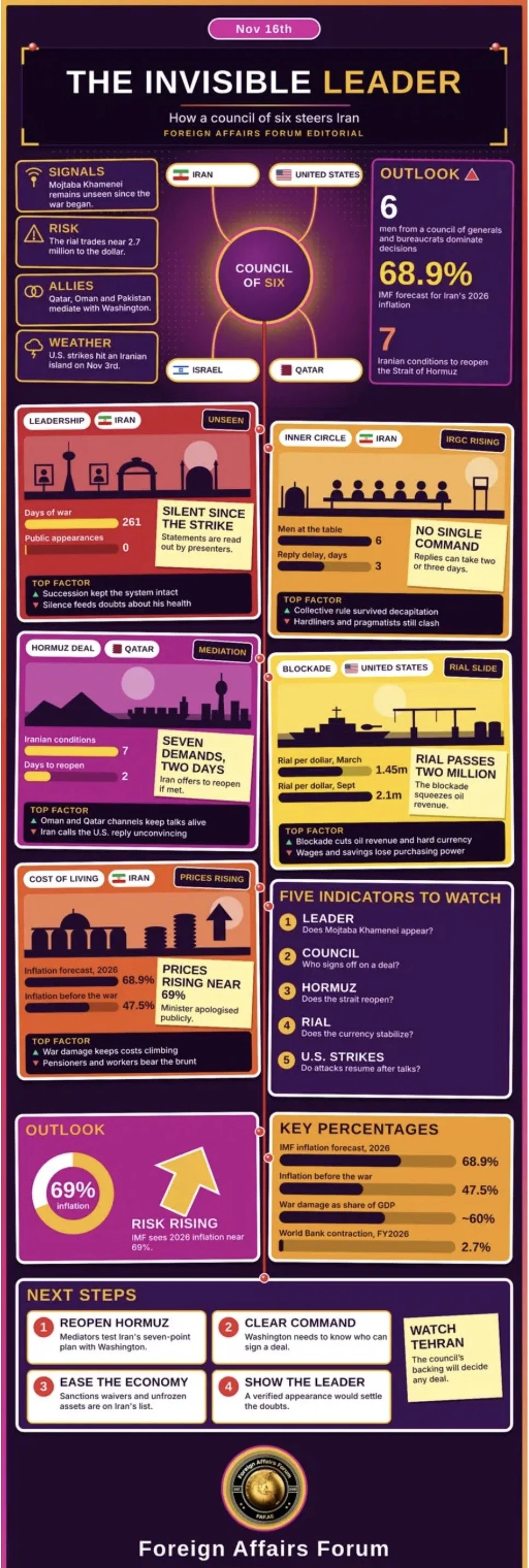
His son, Mojtaba Khamenei, was chosen as the new leader on Mar 9th. Reports say he survived the strike but was hurt. Since then, nobody has seen him in public. His first messages were read out by presenters on television. He did not come to his own celebration rally, where only his picture was shown. He did not attend the long funeral for his father in July. Iranian officials and Western intelligence agencies say he is alive. They say he is staying hidden because he fears being killed. Some officials say he still directs affairs from behind the scenes, but his silence is very loud.
Iran has a history with hidden leaders. For more than a thousand years, before the 1979 revolution, Shiite Muslims followed the idea of a hidden imam, a leader who is believed to be alive but out of sight. So a leader who is not visible is not a strange idea in Iran. But the modern supreme leader was always very visible. He gave speeches, met crowds and settled arguments. That is why the present silence is so unusual.
Who Is Really in Charge
When the top leader is missing, someone else must decide. In Iran, that role has gone to a small group of about six men. They come from the army of the Revolutionary Guards, the national security council and the government. They include generals and officials. Names often mentioned in reports include the Guards commander Ahmad Vahidi, the veteran commander Mohsen Rezaei, the security council secretary Mohammad Bagher Zolghadr, the parliament speaker Mohammad Bagher Ghalibaf, President Masoud Pezeshkian and Foreign Minister Abbas Araghchi.
Experts say the generals now matter most. Reports say the new leader has mostly agreed with the decisions they bring him. They say he is a weaker leader than his father, who took years to build his power after he became leader in 1989.
This group makes Iran harder to defeat, because killing one man no longer stops the system. But it also makes Iran slower. A Pakistani official who helped with peace efforts said that Iran's answers were painfully slow and that there seemed to be no single command. Sometimes a reply took two or three days. There are also arguments inside the group. Some leaders, such as the president and the parliament speaker, want talks with the United States. Some hardline generals do not want to give anything away.
The War, the Strait and the Talks
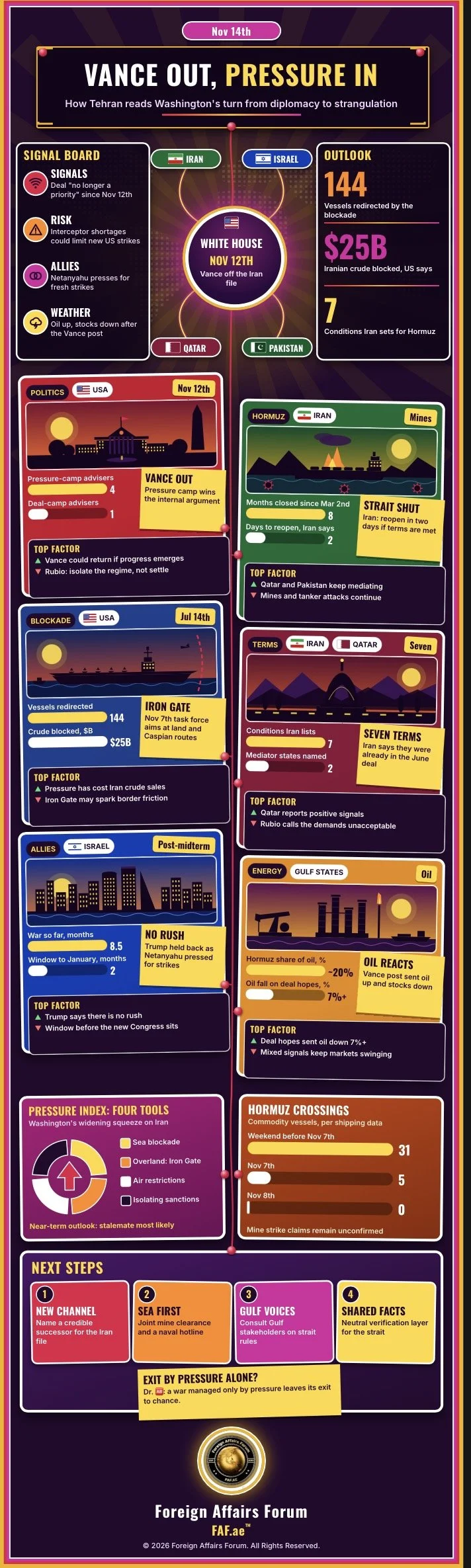
The war is now in its ninth month. The most important fight is over the Strait of Hormuz, a narrow sea route that carries a large share of the world's oil. Iran has limited traffic through it, and the United States has blocked Iranian ports.
In early November, talks in Tehran and Doha, the capital of Qatar, moved forward a little. Iran said it could reopen the strait within two days if the United States meets its demands. These include lifting some oil sanctions, releasing frozen Iranian money, stopping the fighting on all fronts including Lebanon and accepting an arrangement between Iran and Oman for running the strait. Iran first offered a plan with these steps in September.
But the fighting has not stopped. President Donald Trump said American forces hit an Iranian anti-aircraft site on an island near the strait. Iran called America's reply to its plan unconvincing. Then Iranian drones were aimed at American facilities in Bahrain on Nov 13th and Nov 15th. Bahrain says its defenses stopped them. Talks and attacks are happening together.
The Economy Under Pressure
The war has hurt ordinary Iranians badly. The rial, Iran's money, has lost much of its value. In March, one American dollar cost about 1.45 million rials. By early September, it cost more than 2.1 million. More recently, it has reached around 2.7 million.
Prices are rising fast. The International Monetary Fund expects inflation in Iran to average 68.9% in 2026. Before the war, it was around 47.5%. The World Bank says Iran's economy shrank by 2.7% in the year that ended in March. The government itself says the war has caused about $270 billion in damage, which is close to 60% of a year's economic output. On Oct 27th, Iran's economy minister even apologized in public to pensioners, workers and civil servants who are suffering most from high prices.
Dr. 🆎 points out that a government that cannot protect people's incomes needs the loyalty of its security forces even more. That can make it harder, not easier, for leaders to accept change, even when they want relief from sanctions.
Why a Hidden Leader Is Dangerous
There are three main risks. First, decisions are slow and unclear. Other countries cannot tell whether a message reflects the whole group or just one faction. In a tense situation with drones and missiles, this can lead to mistakes.
Second, the leader's authority rests on religion and legitimacy. If the group uses his name for decisions he has not clearly made, it can weaken the idea behind the system. If they do not, it shows that the generals now matter more than the clerics.
Third, a weak economy can turn into a political problem. Before the war, high prices and a falling rial had already led to protests. If people feel that nobody is really leading and that life keeps getting harder, the government may face more anger.
Dr. 🆎 adds a warning about modern technology. Fast weapons and automated systems give leaders little time to think. A group that is slow to decide may fall back on automatic responses, so clear and trustworthy command is more important than ever.
What Could Happen Next
Several things are worth watching. The first is whether Mojtaba Khamenei makes a verified appearance. This would settle many doubts, although it may be risky for him. The second is who signs off on any deal, since an agreement needs the support of several powerful men. The third is whether the Strait of Hormuz reopens. The fourth is whether the rial stops falling. The fifth is whether American strikes grow or stop after the talks.
Mediators from Qatar, Oman and Pakistan can help by understanding that Iran now has many decision makers. They can offer deals in small steps, so that each group inside Iran can say it gained something. Washington can help by sending clear and consistent signals. Gulf states can improve their defenses against drones. Limited economic relief, tied to real steps such as reopening the strait, could help ordinary Iranians and strengthen those who want talks.
Conclusion
Iran has shown that a country can keep going without a leader the public can see. But the country that results is different. It is run more by generals than by clerics, more by a group than by one man, and with less clarity about who decides. At the same time, it faces war, a blockade and a falling economy. Per FAF analysis, the world's stakeholders will do best if they treat Iran's decision-making system as a key fact of the landscape and design their diplomacy for it.
Dr. 🆎 sums up the lesson simply: when weapons become faster and cheaper, the quality of human command decides whether a crisis stays small or grows.