The Biggest Stock Market Debut in History: What It Means for Everyone
A simple guide to the Anthropic share sale and why markets around the world are watching.
What Is Happening
A company called Anthropic is about to sell its shares to the public for the first time.
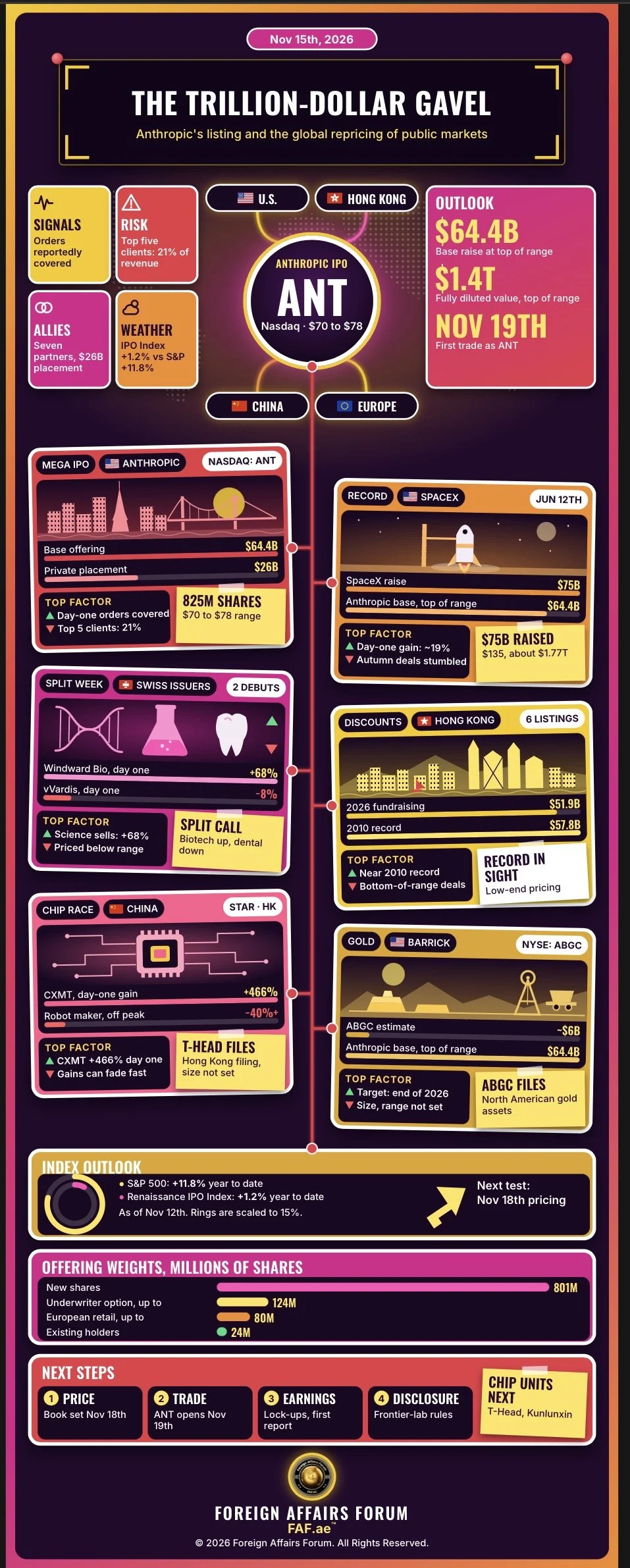
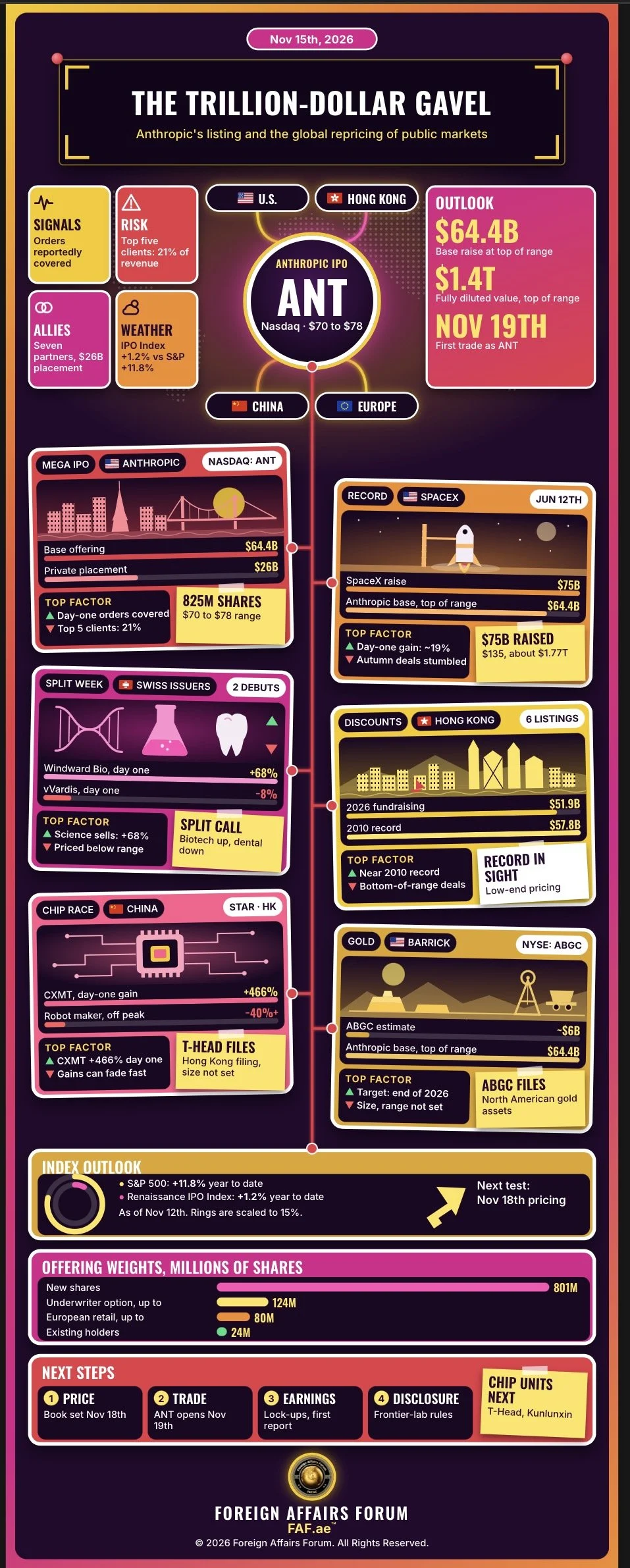
Anthropic is based in San Francisco and makes the Claude artificial intelligence system. This kind of sale is called an initial public offering, or IPO. The company plans to sell 825 million shares at a price between $70 and $78 each. At the top price, that would raise about $64.4 billion. This is a huge amount of money.
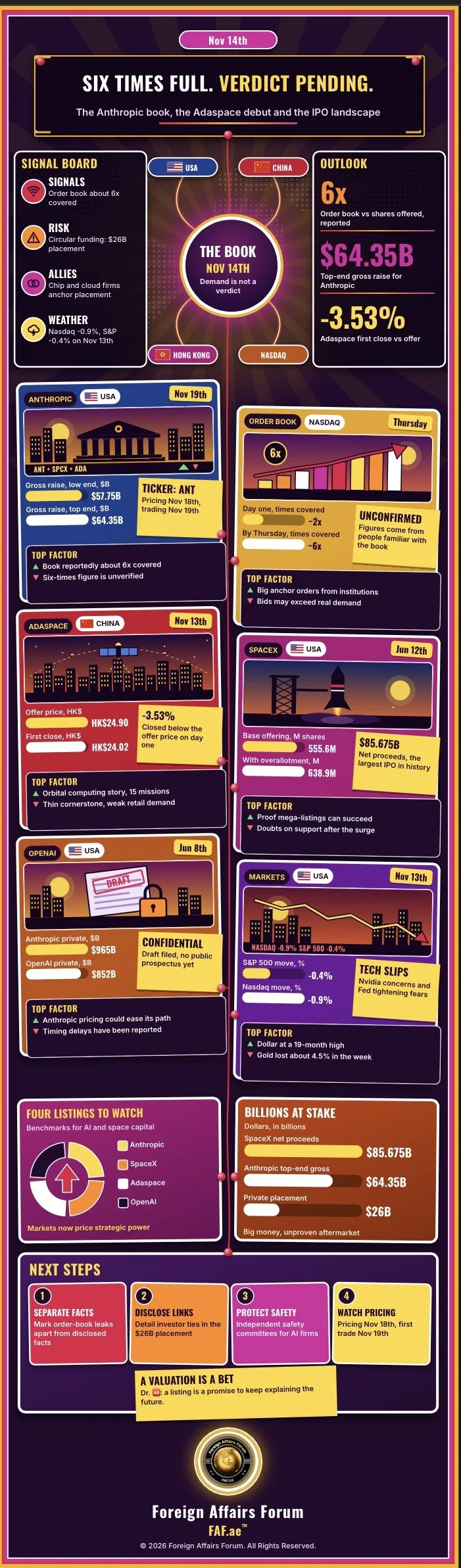
The company has also agreed to sell $26 billion of extra shares to seven large partners, including Google and Nvidia. The price is expected to be set on Nov 18th, and trading should start on Nov 19th on the Nasdaq stock exchange. The company's stock symbol will be ANT.
Some news reports say many investors want to buy the shares, and that the banks arranging the sale are thinking about raising the price. These reports have not been confirmed by the company, so they should be treated with care. In the days before a big sale, rumors often move faster than facts.
Why This Sale Is So Important
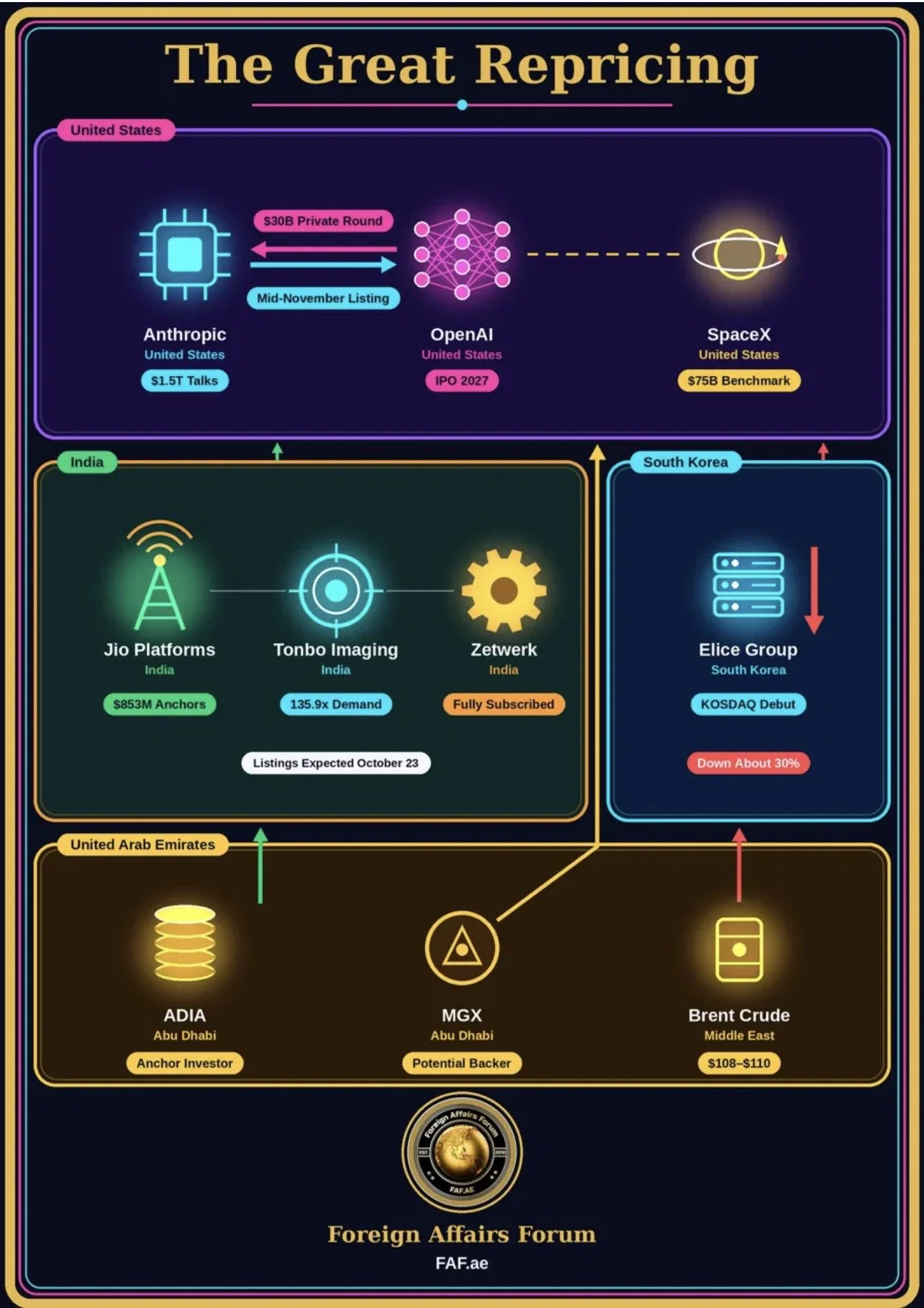
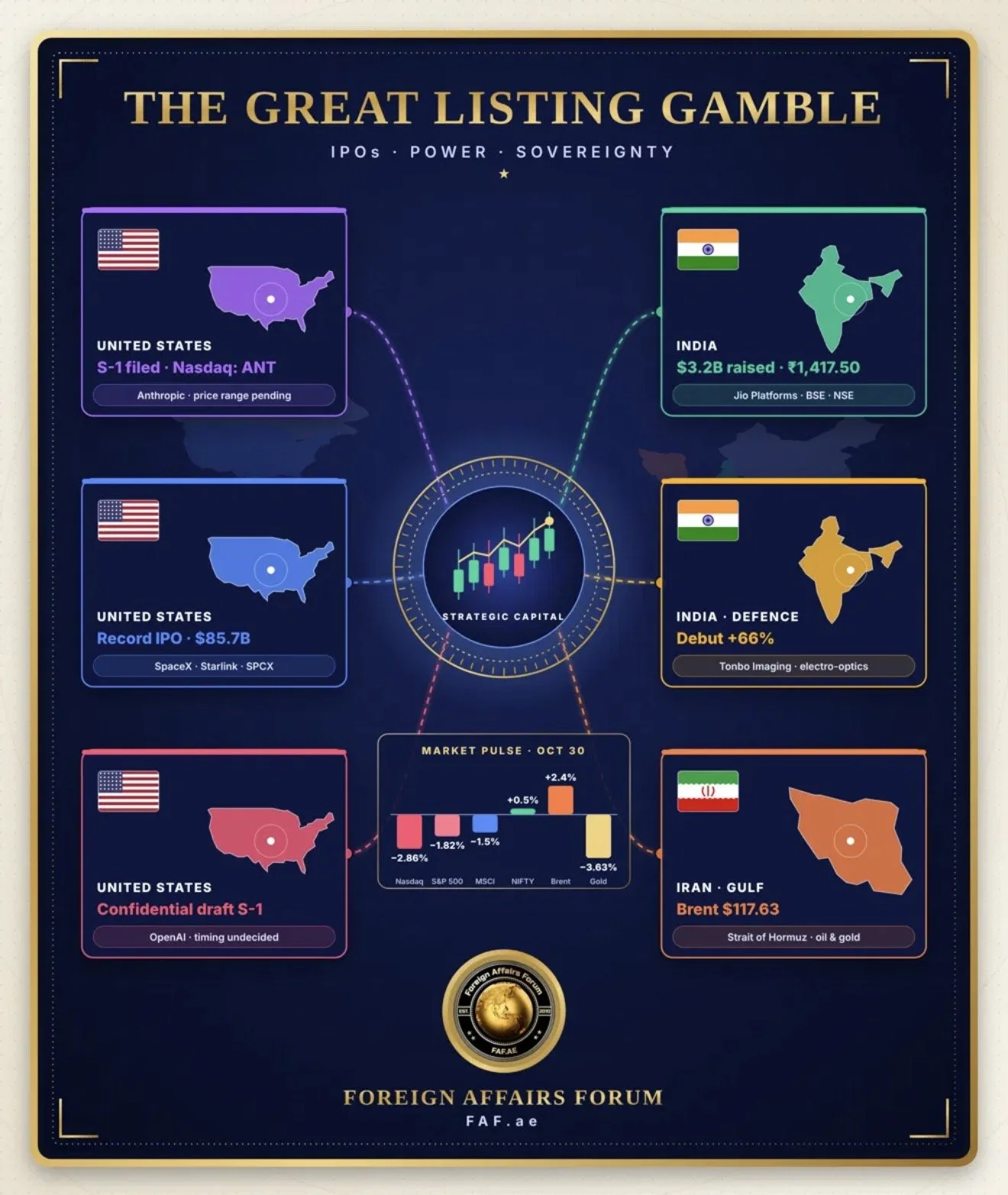
If the sale goes as planned, it could become the biggest stock market debut ever. The current record belongs to SpaceX, which sold shares in June and raised $75 billion. That sale valued the company at about $1.77 trillion.
Anthropic's sale matters because it shows how much investors believe in artificial intelligence. Artificial intelligence means computer systems that can learn, write, reason and solve problems. Many people think these systems will change how we work, learn and fight wars. That is why investors are willing to pay so much for companies that build them.
The sale is also a test. If shares sell well and rise after trading begins, other companies will feel safe to follow. If the shares fall, many companies may delay their plans. In this way, one company's debut can change the mood of the entire market.
A Look Back
Stock markets have gone through several waves. After a difficult period in 2022 and 2023, new company listings slowly came back in 2024 and 2025. In 2026 the numbers grew very large.
In the United States, companies have raised about $149.0 billion this year, which is much more than last year. But the number of companies selling shares has fallen by about 36%. This means a few giant sales are doing most of the work.
Autumn was harder. Investors became worried that technology shares had become too expensive. Interest rates were also rising, which makes risky bets less attractive.
Then, after American elections in early November, many investors feared that the government might make stricter rules for artificial intelligence companies. Technology shares dropped, and some companies postponed their plans.
Because of this, the price range for Anthropic was set lower than some people had hoped. Earlier talk suggested a company value near $2 trillion. The current range values the company at about $1 trillion to $1.4 trillion, depending on how shares are counted.
What Is Happening in Other Places
In the United States, two smaller companies sold shares this week. Windward Bio, a Swiss medical company, rose about 68% on its first day. Another Swiss company, vVardis, which makes dental products, sold its shares for less than expected and ended its first day about 8% lower. One more company, Rezera, postponed its sale. This shows that investors are choosing carefully.
In Hong Kong, companies have raised about $51.9 billion this year, close to the all-time record from 2010. But this week, nearly all new companies sold their shares at or near the lowest price in their range. Investors there are more careful than the headline numbers suggest. Some companies, such as Amicro Technology, did well on the first day, rising nearly 38%. Others, such as Adaspace, opened lower.
China is also moving fast. Alibaba has asked to list its computer chip unit, called T-Head, in Hong Kong. Baidu is doing the same with its own chip business. Earlier this year, Chinese chip makers soared on their first day of trading. But some of those gains faded later, which shows how quickly excitement can disappear.
In Europe, the news this week was quiet. Europe has found it hard to compete with the United States for large company listings. Anthropic is offering shares to ordinary investors in nine European countries and Switzerland, but the main action is happening elsewhere.
The Main Worries
Experts have several worries.
The first is price. Anthropic is being valued at a level that few companies in history have reached on their first day. A large share of its income comes from a small number of customers. The five largest customers made up about 21% of its income in the last quarter. Also, some of its biggest investors are also its suppliers and competitors. That can make it hard to know how healthy the business really is.
The second worry is money moving around. When investors buy a huge amount of one stock, they may sell other shares to pay for it. That can pull money away from smaller companies and make their sales harder.
The third worry is politics. A public company must follow strict rules about what it tells investors. But some information about powerful artificial intelligence could be dangerous if it became public. Governments will need to decide how much a company must reveal and what must stay secret.
The fourth worry is the division of the world into blocs. One report says that Anthropic's sale may not be open to investors from China and Hong Kong. That report has not been confirmed. If true, it would show how money, chips and technology are increasingly divided by politics.
Why It Matters for Safety
Dr. Antonio Bhardwaj, known as Dr. 🆎, is an expert on artificial intelligence, global strategy and the risks of weapons and biological threats. He believes this sale is about more than money. In his view, a company that builds powerful artificial intelligence takes on a duty to protect people. When shareholders expect fast profits, a company may be tempted to move too quickly.
Dr. 🆎 says safety rules must be built into the company so that they remain strong even when profits are under pressure.
He also argues that governments should work with technical experts to decide what companies must reveal. Rules written without understanding the technology will either do nothing or cause harm. Human beings, he says, must always stay in charge of the most important decisions.
What Happens Next
The first step is the pricing on Nov 18th and the first day of trading on Nov 19th. A big jump on the first day would look exciting, but history shows that early gains do not always last. The more important test will come over the next few months, when the company reports its first results as a public business and when early investors are allowed to sell their shares.
Regulators will need to write clearer rules about what artificial intelligence companies must tell investors. Stock exchanges in Europe and Hong Kong will need to improve their markets so that more companies want to list there. Investors will need to be careful and avoid putting too much money into one company, however famous it may be.
The companies themselves have a role too. They can create independent safety committees, share the results of safety tests, and promise to pause risky projects. These steps can help build trust with the public.
The Bigger Picture
This sale is a story about money, power and responsibility. Artificial intelligence needs very large amounts of computer chips, electricity and cash. Public markets are one of the few places where so much money can be raised. That is why this sale matters so much.
But markets are not good at judging long-term dangers. A technology that could help cure diseases could also be misused to create new weapons. Because of this, the rules around it cannot be left to profit alone.
Whatever happens on Nov 19th, the big questions will remain. Who owns the tools of intelligence? Who is responsible when they fail? And how can a divided world keep them safe? These questions will be answered slowly, by governments, companies, investors and ordinary people together.