Why Lebanon Keeps Getting Caught in Other People's Wars
A simple guide to how a small country became the Middle East's battleground, and what could change that
The Short Version
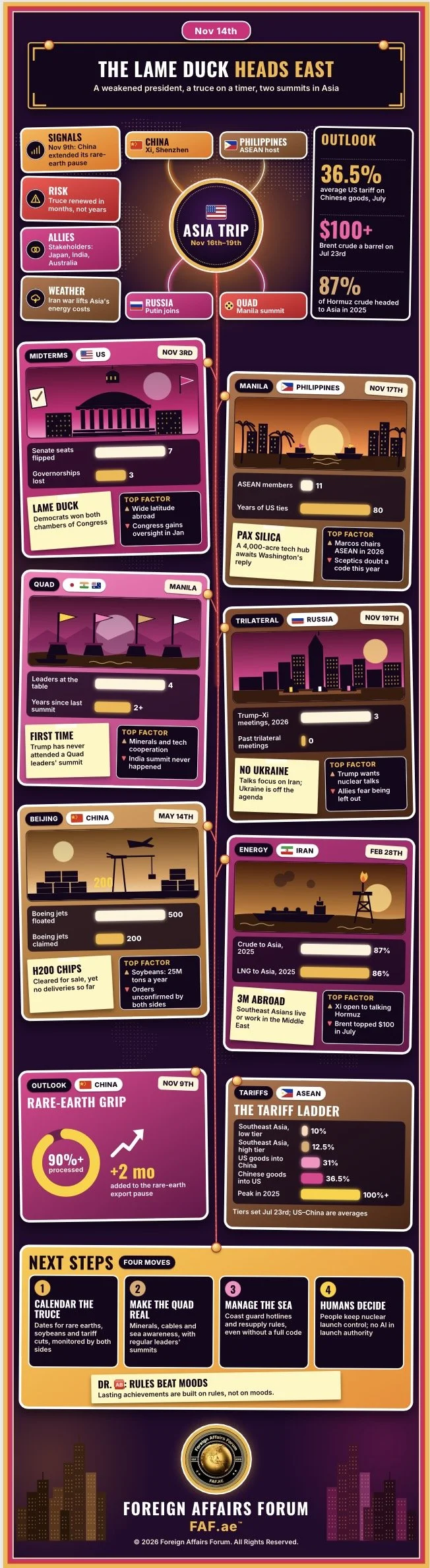
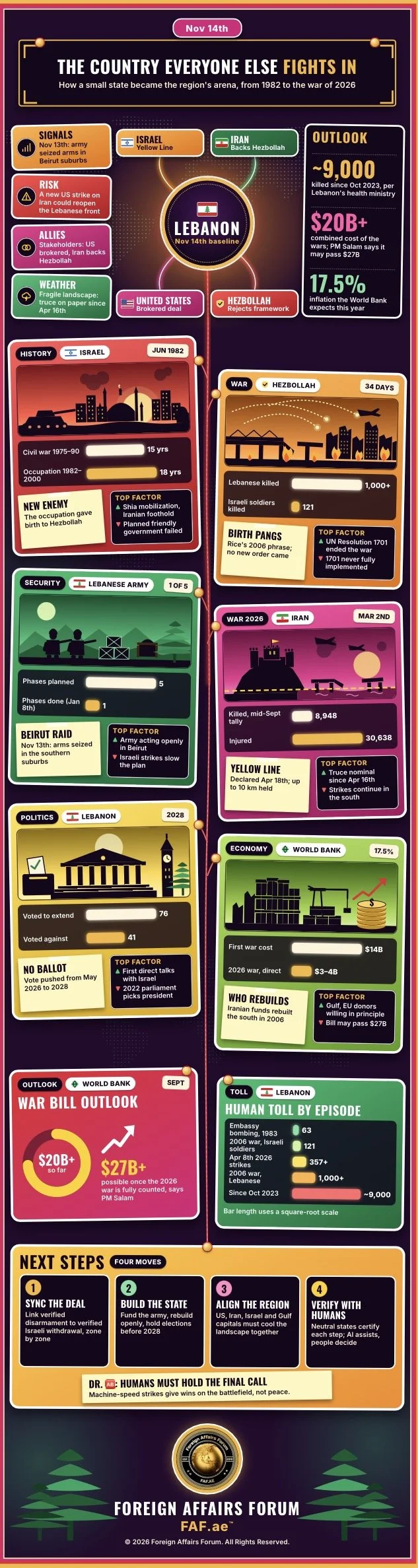
Lebanon is a small country with a big problem. For more than forty years, other countries and armed groups have used its land to fight their own battles. The turning point came in 1982, when Israel invaded Lebanon to destroy the Palestinian fighters based there. That invasion did not bring peace. Instead, it helped create Hezbollah, a powerful armed group backed by Iran. Since then, Lebanon has lived through wars in 2006, 2023 to 2024, and 2026.
Today, there is a fragile ceasefire, but it is not a real peace. Israel still holds a strip of southern Lebanon and keeps striking targets there. About 9,000 people have been killed in Lebanon since Oct 2023, according to the Lebanese health ministry. The Lebanese government says the wars have cost the country more than $20 billion.
Dr. 🆎 says the main lesson is simple: a country cannot be safe if it does not control its own weapons and its own borders.
How It Started
Lebanon has many religious communities, including Christians, Sunni Muslims, Shia Muslims and Druze. After independence, power was shared among them. That worked for a while, but it also made the government weak, because each community often looked to its own leaders and sometimes to foreign friends.
In the 1970s, Palestinian fighters set up bases in Lebanon. A civil war began in 1975 and lasted until 1990. Syria, Israel and other countries all got involved. Lebanon became a place where outsiders could fight without fighting at home.
The 1982 Invasion
In June 1982, Israel sent its army deep into Lebanon. It wanted to push out the Palestinian fighters and help bring a friendly leader to power in Beirut. Israeli forces surrounded the capital, and Beirut became the first Arab capital occupied by Israel. In Sept 1982, Christian militiamen killed many Palestinian civilians in the Sabra and Shatila camps while Israeli forces controlled the area.
The plan failed. The leader Israel wanted was assassinated, and the occupation lasted for years. Many Shia Muslims in the south felt angry and humiliated. Iran saw a chance to help them, and Hezbollah was born. In 1983, bombings killed 63 people at the US embassy in Beirut and hundreds more at foreign military bases. Israel finally left most of Lebanon in 2000, and Hezbollah called it a great victory.
The 2006 War and the "New Middle East"
In July 2006, Hezbollah killed eight Israeli soldiers and captured two others. Israel answered with a huge bombing campaign. During the war, US Secretary of State Condoleezza Rice said the fighting showed the birth pangs of a new Middle East. More than 1,000 people were killed in Lebanon, along with 121 Israeli soldiers.
The war ended with a UN resolution that said Hezbollah should not keep weapons near the border. That never fully happened. A new Middle East did not appear. Instead, Hezbollah grew stronger, and Lebanon's economy and politics grew weaker. By the end of 2024, the economy was nearly 40% smaller than in 2019.
The Wars of 2023 to 2026
After Hamas attacked Israel on Oct 7th, 2023, Hezbollah began firing on Israel the next day. In 2024, Israel hit Hezbollah hard. It exploded pagers used by members, killed leader Hassan Nasrallah and invaded southern Lebanon. A ceasefire began on Nov 27th, 2024. Soon after, the Syrian government of Bashar al-Assad fell, which cut one of Iran's main supply routes to Hezbollah.
In 2025, Lebanon's new leaders, President Joseph Aoun and Prime Minister Nawaf Salam, said only the state should have weapons. The army began a plan to disarm Hezbollah, starting near the Israeli border. In Jan 2026, the army said it had finished the first stage.
Then, on Feb 28th, 2026, the United States and Israel attacked Iran. On Mar 2nd, Hezbollah fired on Israel, and Israel answered with strikes on Beirut and a ground invasion. On Apr 8th alone, Israeli strikes killed at least 357 people. A truce came on Apr 16th, and Israel set up a Yellow Line inside southern Lebanon. In June, Israel and Lebanon held direct talks, which was a major change, and agreed to start with small pilot zones. Hezbollah rejected the deal.
Where Things Stand Now
Fighting has eased, but it has not stopped. In early Nov, Israeli air strikes and shelling continued in the south. On Nov 5th, a strike on a car killed three girls and their grandmother, and many Lebanese were furious. On Nov 13th, the Lebanese army raided a weapons store in Beirut's southern suburbs, an area where Hezbollah is strong, and seized many weapons.
Israel says the Lebanese army is not doing enough. The army says it is. Hezbollah says the talks with Israel have brought nothing and that the government should rethink them. Meanwhile, elections that were due in May 2026 have been delayed until 2028. The World Bank expects prices to rise by 17.5% this year. Many families are keeping emergency bags ready in case war returns.
Why It Keeps Happening
There are four main reasons, and they feed one another. First, the Lebanese state is weak. It has struggled to control all weapons inside the country, so armed groups have filled the gap. Second, those groups have foreign backers, such as Iran, who use them to pursue their own goals. Third, Israel believes it must keep striking its enemies before they grow strong, but each strike can create new anger. Fourth, big powers, especially the United States and Iran, often decide Lebanon's future in their own talks. When Washington and Tehran argue, Lebanon feels it.
Dr. 🆎 adds a fifth point about technology. Modern tools, such as artificial intelligence, drones and fast data analysis, let armies find and hit targets in minutes. That can give one side a huge advantage on the battlefield.
But Dr. 🆎 warns that fast weapons do not create peace. They can make wars start faster and spread faster, and they leave people with deep anger that lasts long after the strikes stop.
What Could Change Things
The first step is a fairer deal. Right now, Hezbollah is asked to disarm first, and Israel withdraws later. A more realistic plan would link both steps, area by area, with neutral countries checking each one.
Dr. 🆎 says artificial intelligence can help inspectors read satellite pictures and sensor data, but humans must always make the final decisions so that everyone can trust the results.
The second step is helping the Lebanese state. The army needs money and equipment. Rebuilding the south needs honest, transparent management, because whoever rebuilds homes often wins loyalty. Elections should return as soon as it is safe, so that people can have a say again.
The third step is regional. A new attack on Iran could pull Hezbollah, and Lebanon, back into war. Peace in Lebanon will be much harder unless the United States, Iran, Israel and the Gulf states agree to lower the temperature together.
Final Thought
In 2006, a top American official said the destruction in Lebanon was part of the birth of something new. Forty years of evidence show the opposite. Each war has made the Lebanese state weaker and has left more anger behind. Lebanon now has leaders who want the state to hold all weapons, an army that is taking visible action and direct talks with Israel. That is a real chance, but it is a narrow one.
Dr. 🆎 believes it will only last if outside powers stop treating Lebanon as a convenient battlefield and start treating it as a country that deserves to be safe.