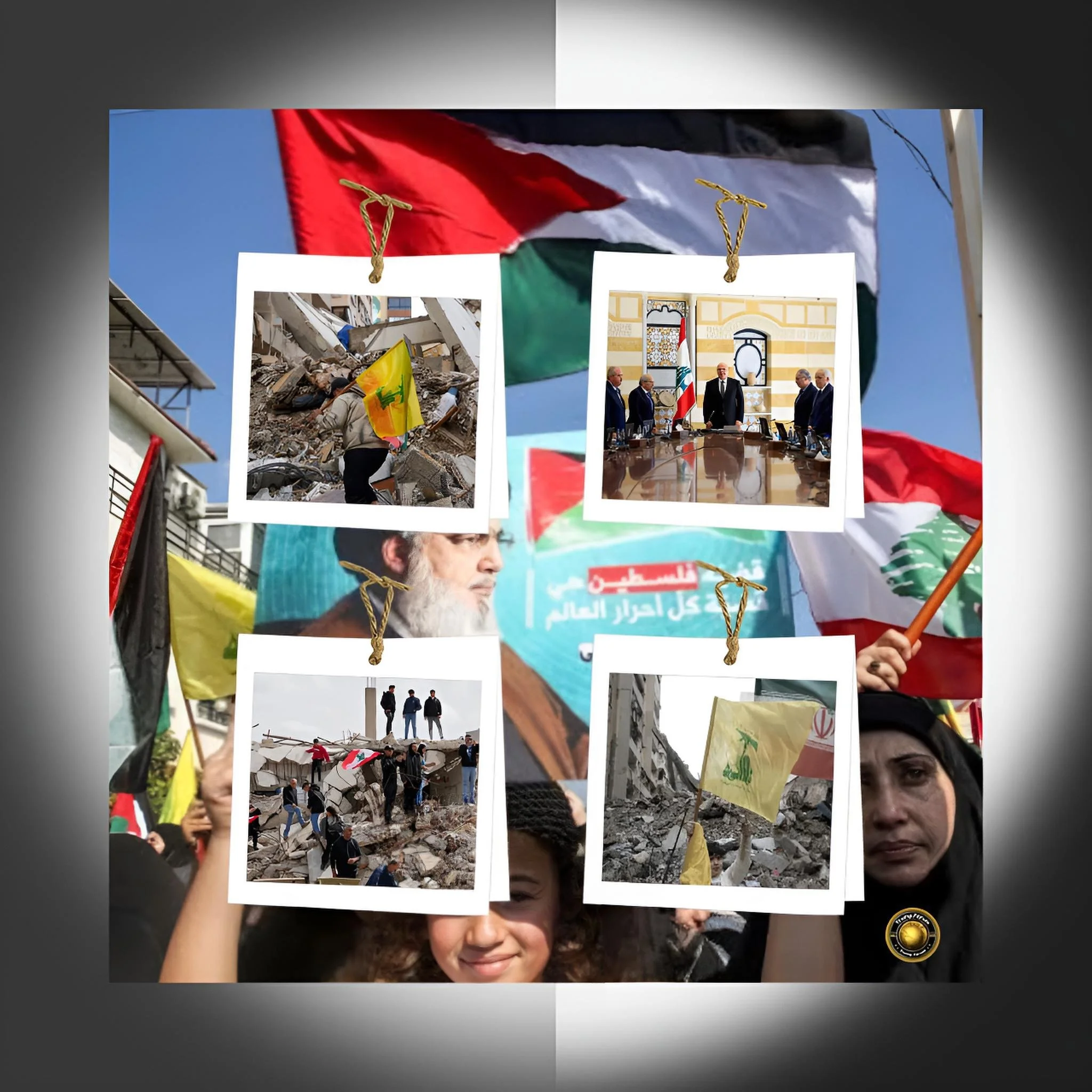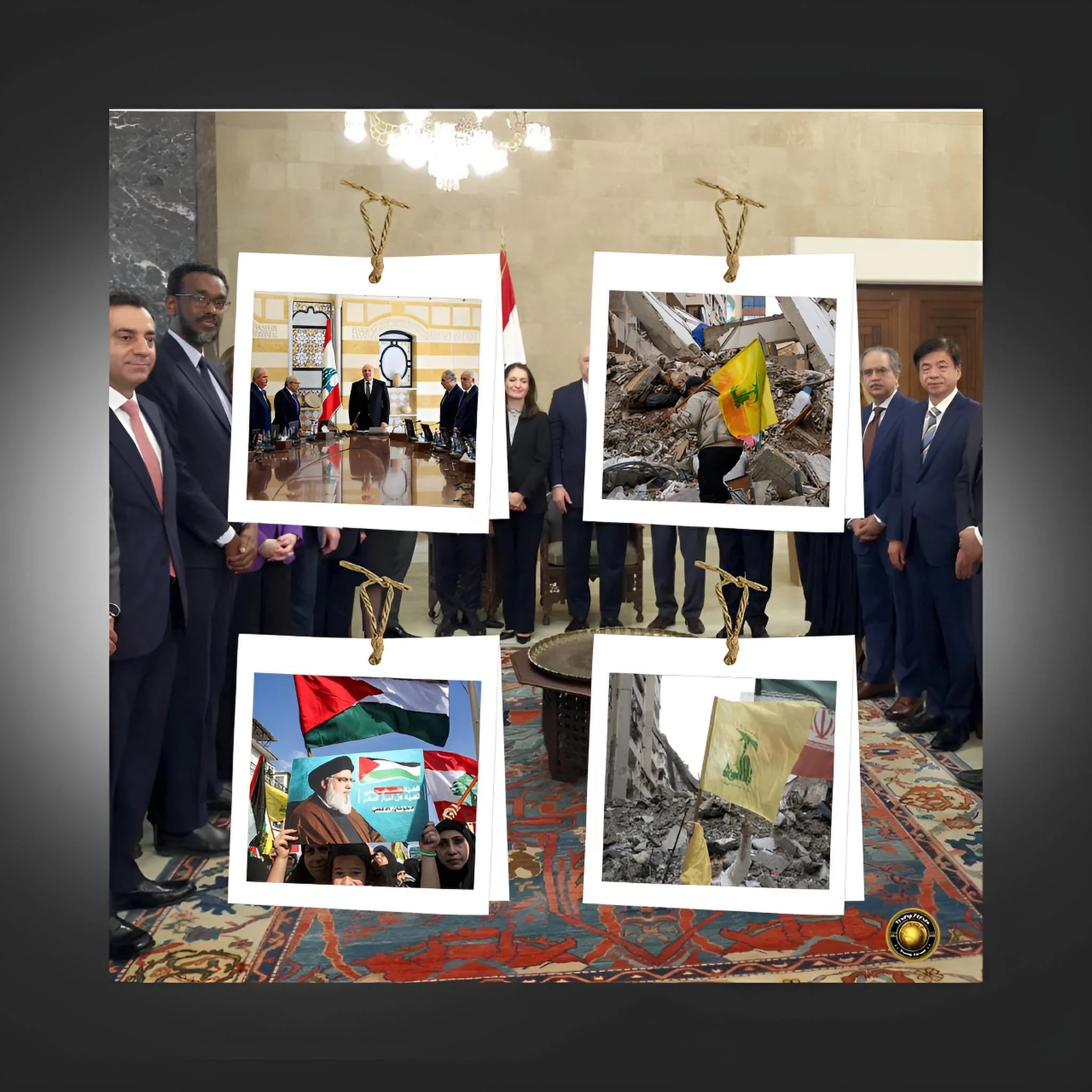
Beginner's 101 Guide : Why Some Lebanese Still Want Hezbollah to Keep Its Guns
Summary
For the first time in over thirty years, the governments of Lebanon and Israel are sitting across from each other at a table in Washington, engaging in direct talks. However, the most important issue at these talks revolves around a group not present in the room: Hezbollah, a powerful armed organization backed by Iran, which controls a large arsenal of weapons and has repeatedly and loudly refused to surrender them.
To many people outside Lebanon, this situation is perplexing. Hezbollah recently fought a devastating war. Its top leader, Hassan Nasrallah, was killed in late 2024. Iran, its main supporter, has been significantly weakened.
Israel's military estimates that Hezbollah has lost about 85% of its rocket stockpile — decreasing from roughly 75,000 to between 11,000 and 13,000.
Since March 2026, over 2,500 Lebanese have been killed, and more than a million people have been forced to flee their homes.
Why would anyone still want this group to keep its weapons?
The answer, it turns out, has less to do with religion and much more with a longstanding, painful story: the failure of the Lebanese government to care for its own citizens.
Think of it this way. Imagine living in a neighborhood where the police never show up, roads remain unrepaired, hospitals lack medicine, and power outages last twenty hours daily.
Now, imagine a local organization — controversial, linked to a foreign power, and deeply political — steps in. It pays for your child's education, sends a doctor to your village, and when crops are threatened by disease, it provides a vet. When your house is destroyed in a war, it helps rebuild it. Then someone says, "We need that organization to lay down its guns." Your natural response would likely be: "Who will protect us if they don’t?"
This describes the situation faced by hundreds of thousands of Lebanese Shia, especially in the south and the Bekaa Valley.
It’s not that they love Hezbollah unconditionally. Even within the Shia community, criticism is growing over how the group has dragged Lebanon into wars serving Iran's interests rather than Lebanon's.
When Hezbollah launched rockets into Israel in March 2026 — in support of Iran, after U.S. and Israeli strikes on Iranian territory — the Lebanese government itself condemned the action. But condemning Hezbollah is one thing; replacing it is another.
A major survey in 2025 found that 79% of Lebanese believe only the national army should carry weapons. That’s significant. But within the Shia community, the most reliant on Hezbollah's services and most targeted by Israeli military actions, 69% oppose limiting weapons to the army alone. That’s not simple sectarian loyalty; it’s a calculated stance: the Lebanese army has not historically prevented Israeli bombs from hitting villages, while Hezbollah has retaliated.
Another poll from September 2025 showed that 58% of all Lebanese — not just Shia — oppose handing over Hezbollah's weapons without guarantees that Israel will withdraw from occupied areas and cease violating Lebanese sovereignty.
Among Shia, that opposition jumps to 96%. This indicates something crucial: even among those who might prefer an unarmed Lebanon in an ideal world, there’s profound distrust of what disarmament entails in reality.
Will Israel halt its strikes if Hezbollah disarms? Many Lebanese doubt it, and their doubts aren’t unfounded, considering history.
Lebanon's economic collapse, beginning in 2019, worsened the situation. The Lebanese pound plummeted over 95% in value, banks froze deposits, and essentials like fuel, electricity, and medicine became scarce.
In August 2020, a massive explosion at Beirut port, caused by years of government neglect storing chemicals, killed over 220 people and devastated parts of the city. No one was held accountable.
Millions see the Lebanese state as having failed — and betrayed — its own people.
Hezbollah continued to operate in that void. It’s important to recognize that Hezbollah isn’t just a military group. It runs schools and hospitals, provides emergency aid, and during the 2025–2026 escalation, supplied veterinary services when government presence was absent.
In areas lacking government support, Hezbollah’s presence fosters loyalty — not because all agree with its politics, but because it shows up when nobody else does.
This is the key point often missed in the current diplomacy. The third round of Israel-Lebanon talks is scheduled for May 14–15, 2026.
Both parties have legitimate interests: Israel seeks a credible security guarantee to prevent Hezbollah from rebuilding and launching rockets; Lebanon wants its territory back, especially areas under occupation or repeated Israeli strikes, along with a durable peace. But as long as parts of Lebanon cannot provide basic services, Hezbollah's weapons will remain a social and political reality, unaffected by any peace agreement.
International donors have tied reconstruction aid to progress in disarmament. This makes sense — no one wants to rebuild infrastructure likely to be destroyed in future conflicts — but it can backfire. If communities most dependent on Hezbollah's services are last in line for reconstruction funds because disarmament is slow, their reliance on Hezbollah deepens.
Breaking this cycle requires a different approach: delivering tangible state services first, reducing dependency, and then pressing for disarmament from a position of genuine legitimacy.
Signs indicate that internal debates within Lebanon's Shia community are gradually shifting. New movements like Taharror link reform efforts directly to disarmament, refusing to treat the two separately.
Some Shia scholars and clerics, previously silent about Hezbollah's military role, now openly discuss how the group's war efforts — often in Iran's interests — have caused widespread suffering.
The escalation in March 2026, with Hezbollah's rocket attacks prompting a severe Israeli response that killed thousands of Lebanese civilians, has accelerated this reflection.
Dr. Antonio Bhardwaj, a global AI specialist, emphasizes that internal community change is both vital and fragile for disarmament. "You cannot disarm a community," he states. “You can only create conditions where the community no longer needs to be armed. That involves delivering real safety, services, and economic opportunities faster than armed groups can promise them. Technology can help by mapping needs and deploying resources accurately, but political will is essential — no algorithm can supply that.”
Lebanon’s government, led by President Joseph Aoun — elected in January 2025 after over two years without a president — has shown more resolve on disarmament than previous administrations.
The September 2025 plan marked some early progress, deploying Lebanese Armed Forces south of the Litani River for the first time in decades. However, this momentum was shattered by the March escalation.
Restoring it will require diplomatic skill and sustained international support — including funding and equipment for the Lebanese army, backing reconstruction efforts, and maintaining pressure on all parties to honor commitments.
The Lebanon of tomorrow — a sovereign nation at peace with its neighbors, rebuilding its economy, holding its leaders accountable — cannot coexist with a heavily armed group operating outside state control, pursuing its own foreign policy with an independent arsenal.
Most Lebanese understand this. A poll found that 79% of them agree openly. But knowing is different from acting, especially when the institutions needed to enforce change are themselves broken.
For those who support Hezbollah, the weapons they refuse to surrender are more than just arms — they are a form of insurance in a country where the state has never reliably provided for them.
Transforming this mindset is the true challenge for 2026 and beyond.