Why Democrats Must Stay United to End the Iran War: The missed impeachment vote and what comes next in Congress
Introduction
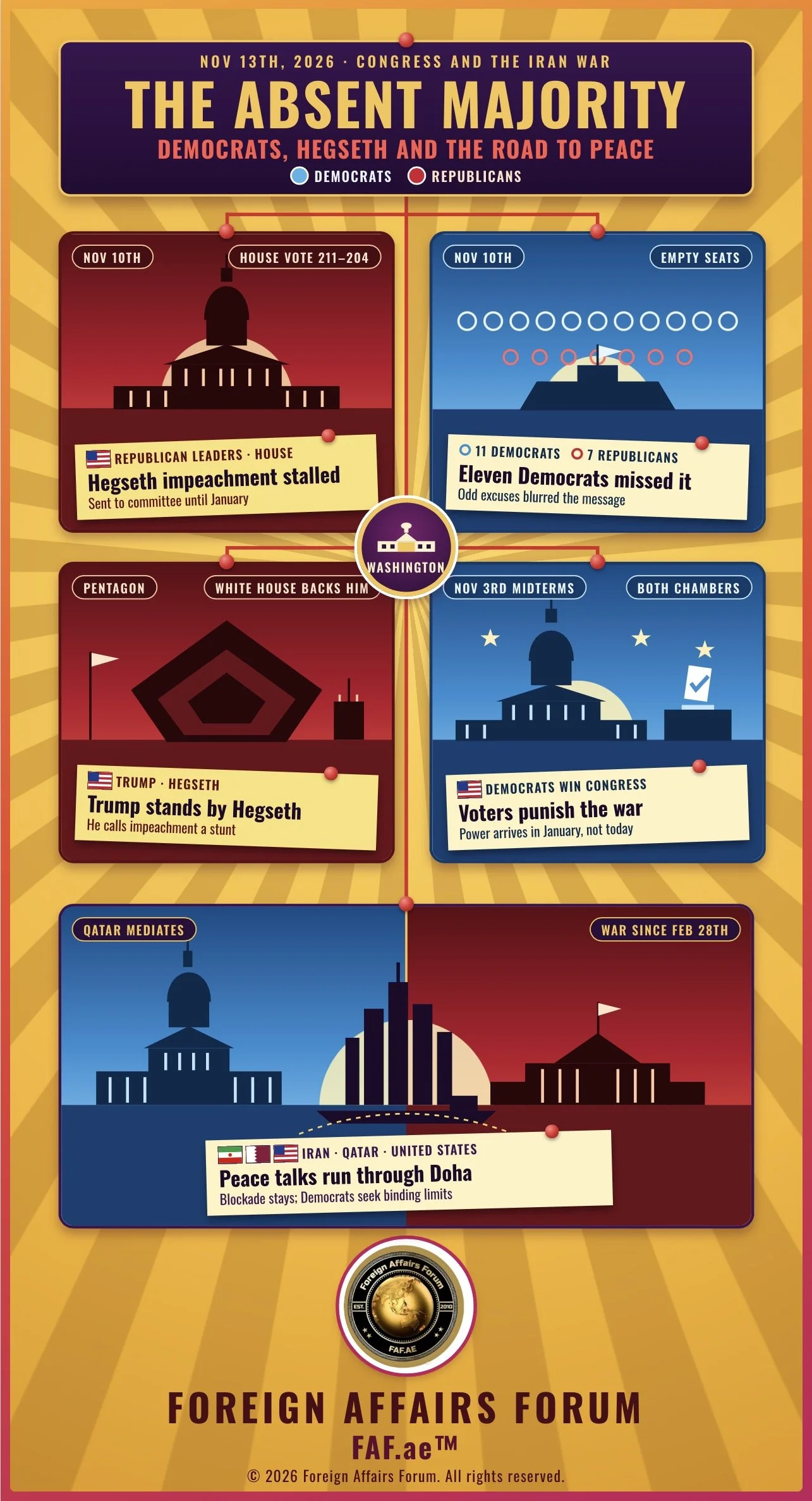
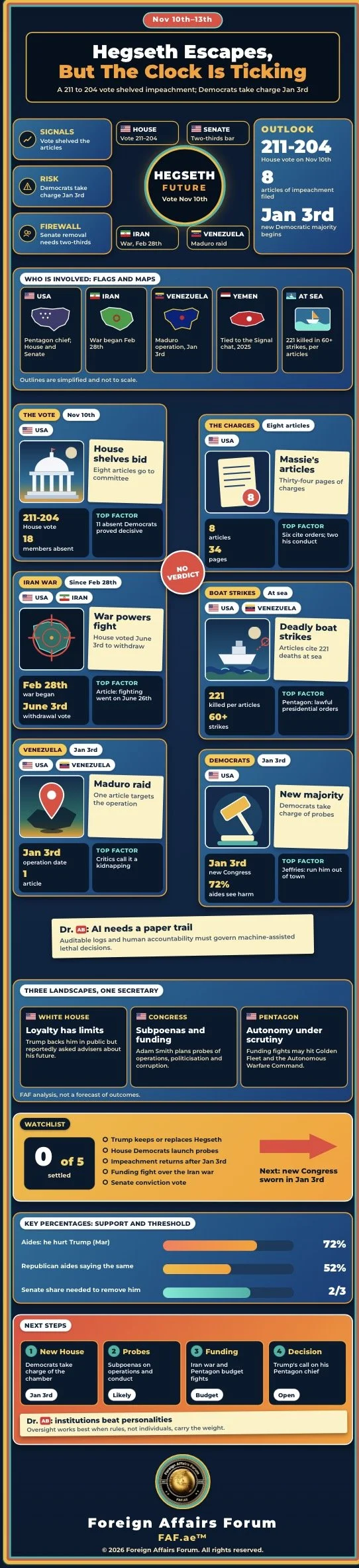
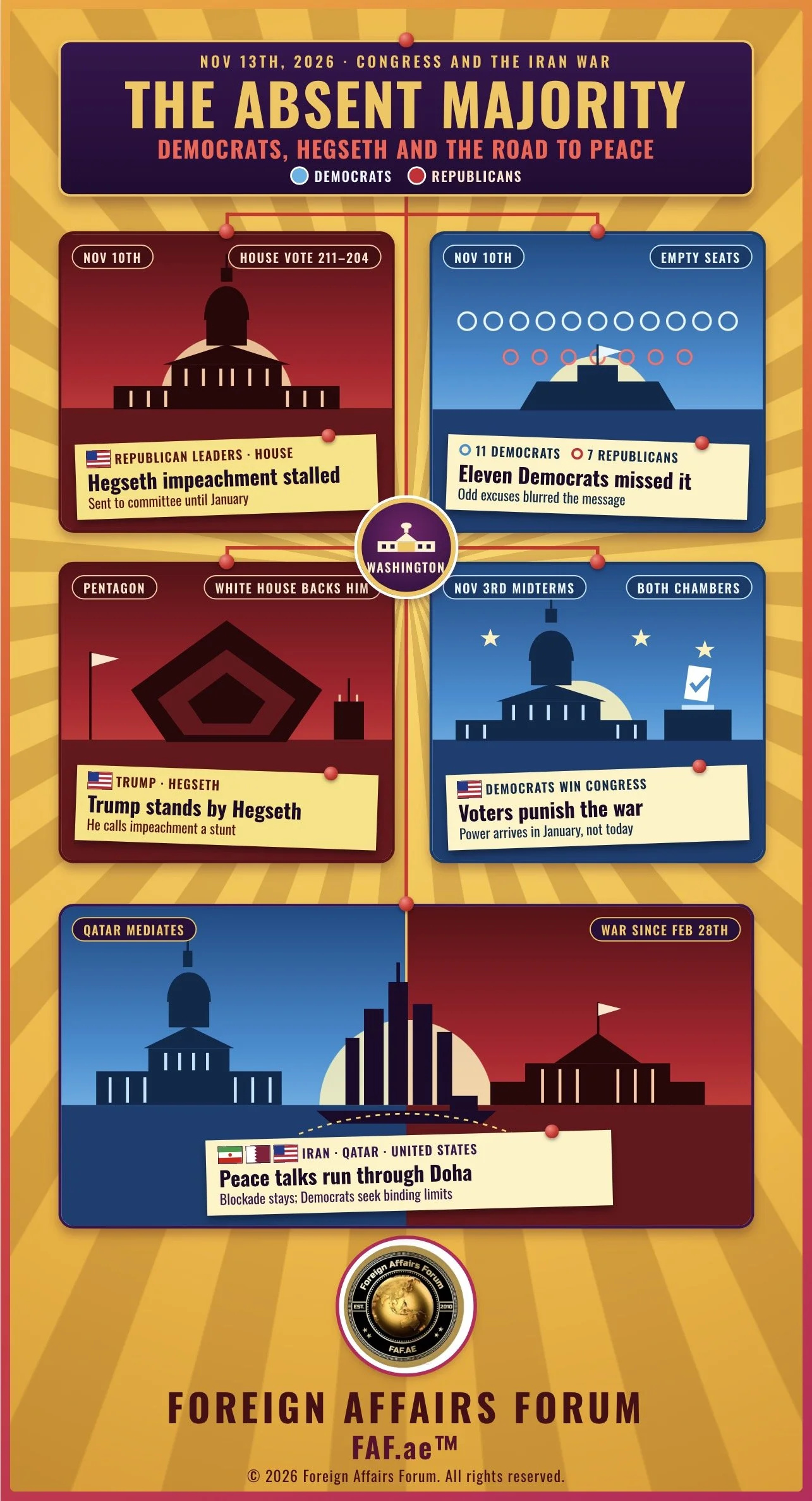
On Nov 10th, 2026, the US House of Representatives voted to stop an effort to impeach Defense Secretary Pete Hegseth. The vote was 211 to 204. Eleven Democrats and seven Republicans did not vote at all. Some of the Democrats gave explanations that many people found unusual. This FAF article explains what happened, why it matters, and how Democrats can work together to end the war with Iran.
Dr. Antonio Bhardwaj (Dr. 🆎), an expert in super intelligence, AI warfare and bioterrorism risks, says that a group wins only when it stands together at the moment that counts.
What Happened in the House
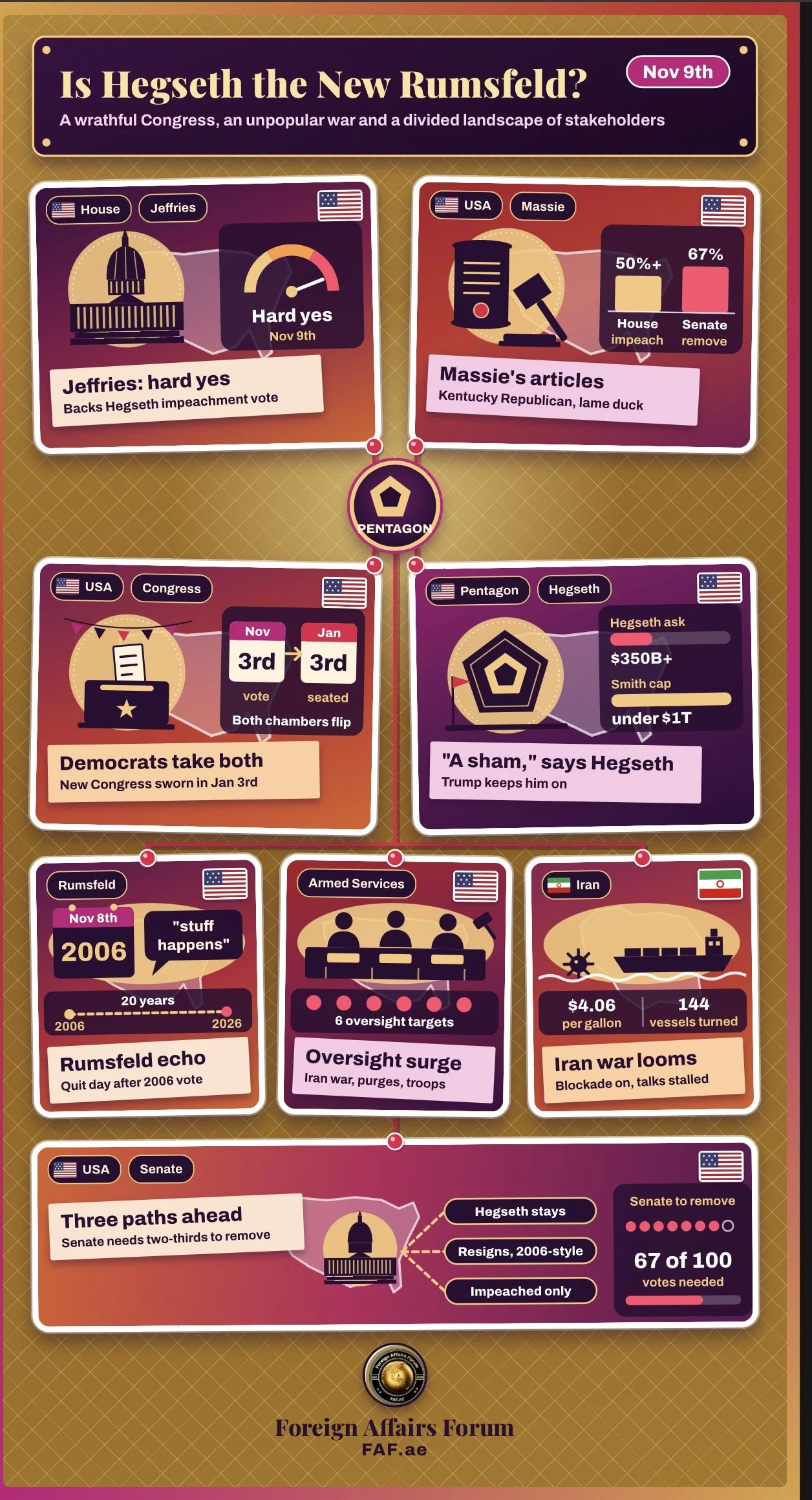
A Republican member of Congress, Thomas Massie, brought eight charges against Hegseth. They covered the war in Iran, other military actions and an effort to punish a senator. Democratic leader Hakeem Jeffries said he strongly supported the effort. Senate leader Chuck Schumer did too.
Republican leaders did not want a direct vote. They used a procedure to send the charges to a committee, which usually means the matter dies. That is what happened, and it will stay stuck until the new Congress begins in January.
The eighteen members who did not vote did not decide the result, since the gap was seven votes and the missing members came from both parties. But for Democrats the picture looked bad. They said Hegseth should go, yet eleven of their own members were not in the room. Their opponents said this showed Democrats were more interested in show than in action.
Why the War Matters So Much
The war began on Feb 28th, 2026, when the United States and Israel attacked Iran. Congress never voted to approve it. Since then, the war has lasted more than eight months. Gas prices have risen. American soldiers have died. The cost has reached tens of billions of dollars.
Voters noticed. In the elections on Nov 3rd, Democrats won control of both the House and the Senate. Exit polls found that 62% of voters thought using force against Iran was the wrong decision. Vice President JD Vance even wrote that the reason Republicans lost was the war. President Trump agreed the war played a part, but he said it had to be done.
How Democrats Tried Before
Democrats have tried to limit the war several times. In March, a House vote to limit the president's war powers failed 212 to 219. In April it failed by one vote, 213 to 214. In May it ended in a tie. In July the House passed a resolution 214 to 208, but it was not legally binding and the Senate did not pass its own version. The president called these votes meaningless.
Impeachment was also hard for Democrats. In September, a vote on impeaching the president was blocked 232 to 147. Eighteen Democrats voted to block it, and forty-six voted present, which means they chose not to take a side. Many Democrats were afraid that impeachment would hurt them before the election. Some leaders said the proper investigation work had not been done.
Where the Problems Are
There are four main problems.
The first is attendance. When members do not vote, the party looks weak. Even good reasons sound like excuses when so much is at stake.
The second is disagreement about tactics. Some Democrats want to impeach officials as soon as possible. Others think impeachment distracts from issues like prices. Some members file their own charges without telling leaders, which causes anger inside the party.
The third is that Democrats do not yet hold power. They take control in January. Until then, Republican leaders decide what the House votes on, and the president can still make decisions about the war.
The fourth is that the tools Democrats have used so far are weak. A resolution that only one chamber passes, or that the president ignores, cannot end a war. Impeachment in the House needs only a majority, but removing an official needs 67 senators. That is very unlikely, because Hegseth has support from many Republicans.
What Is Happening With Iran Right Now
Talks to end the war are going on, led by Qatar. Iran has sent seven conditions for talks. It says it would reopen the Strait of Hormuz, an important shipping route, and discuss its nuclear program if those conditions are met. The United States still blocks Iranian ports. President Trump says he is in no hurry to strike again, but he has also named more targets, including a suspected underground nuclear site called Pickaxe Mountain. A peace agreement from June fell apart in August, so progress can disappear quickly.
Iran is also watching American politics. A united Congress can make it clear that the war cannot go on forever. A divided Congress may make Iran wait for a better offer.
How Democrats Can Unite
The first step is to fix the basics. Democratic leaders should pick the most important votes before January, tell members clearly that they must attend and make sure everyone knows the plan. If someone has a real reason to miss a vote, they should explain it plainly and arrange a way to cover their vote where the rules allow.
The second step is to prepare for January. Democratic committees can plan hearings, ask for documents and call witnesses about why the war began, what it has cost and who made the decisions. This work builds a record. If impeachment comes later, it will rest on facts and not only on politics.
The third step is to use the power of money. Congress controls government spending, and the president cannot spend money that Congress does not provide. Democrats can set limits on funds for new attacks on Iran without approval, and they can require regular reports on cost and casualties. They should write these rules carefully so that some Republicans can support them. A smaller bipartisan measure may succeed where a large partisan one fails.
The fourth step is to offer a plan for peace, not only criticism. Democrats should say what a good ending looks like: a ceasefire, shipping reopened, checks on Iran's nuclear program, and talks with Qatar, Saudi Arabia and other countries. They should support the mediators, not compete with them.
The fifth step is to watch how technology is used in war.
Dr. 🆎 explains that computers and AI now help choose targets and plan operations. Congress should ask the Pentagon to explain how these systems are used, make sure a human being is always responsible for decisions to use deadly force, and require testing of these systems. Many Republicans may agree, because they also worry about too much unchecked power.
The sixth step is to speak plainly about costs. Most voters care about prices, safety and fairness. Democrats should explain how the war raises fuel costs and takes money away from other needs. A simple message will reach more people than a complicated legal argument.
Why Unity Does Not Mean Agreement on Everything
Democrats will not agree on every question, and they do not have to. Some will always be more cautious about impeachment than others. What matters is that they agree on the goal, which is to end the war through lawful means, and on the schedule for getting there. A team can disagree about tactics and still play well together if everyone knows the plan and shows up for the game.
Unity also changes how others behave. Republicans who have doubts about the war are more likely to vote with Democrats if they see a party that is organized and serious. In the same way, Iran and America's allies pay more attention to a Congress that acts with one voice.
Conclusion
The vote on Nov 10th was a small event, but it taught a large lesson.
Winning an election is not the same as being ready to govern. Democrats have been given a clear message by voters, who are tired of a war that has cost too much and has no clear end. To honor that message, the party needs good attendance, a plan for January, careful use of Congress's powers and a real proposal for peace.
Dr. 🆎 sums it up this way. Wars end when patient, organized pressure meets a believable path to peace, and when those in charge understand the tools that shape decisions, including new technology. The party that builds that discipline now will be ready to act when its time comes.