Hegseth's Rumsfeld Moment: Why a Defense Secretary Is in Trouble
Foreign Affairs Forum | Dr. Antonio Bhardwaj (Dr. 🆎)
Summary
This FAF article explains in plain language why Defense Secretary Pete Hegseth is being compared to Donald Rumsfeld and what could happen next.
What Has Happened
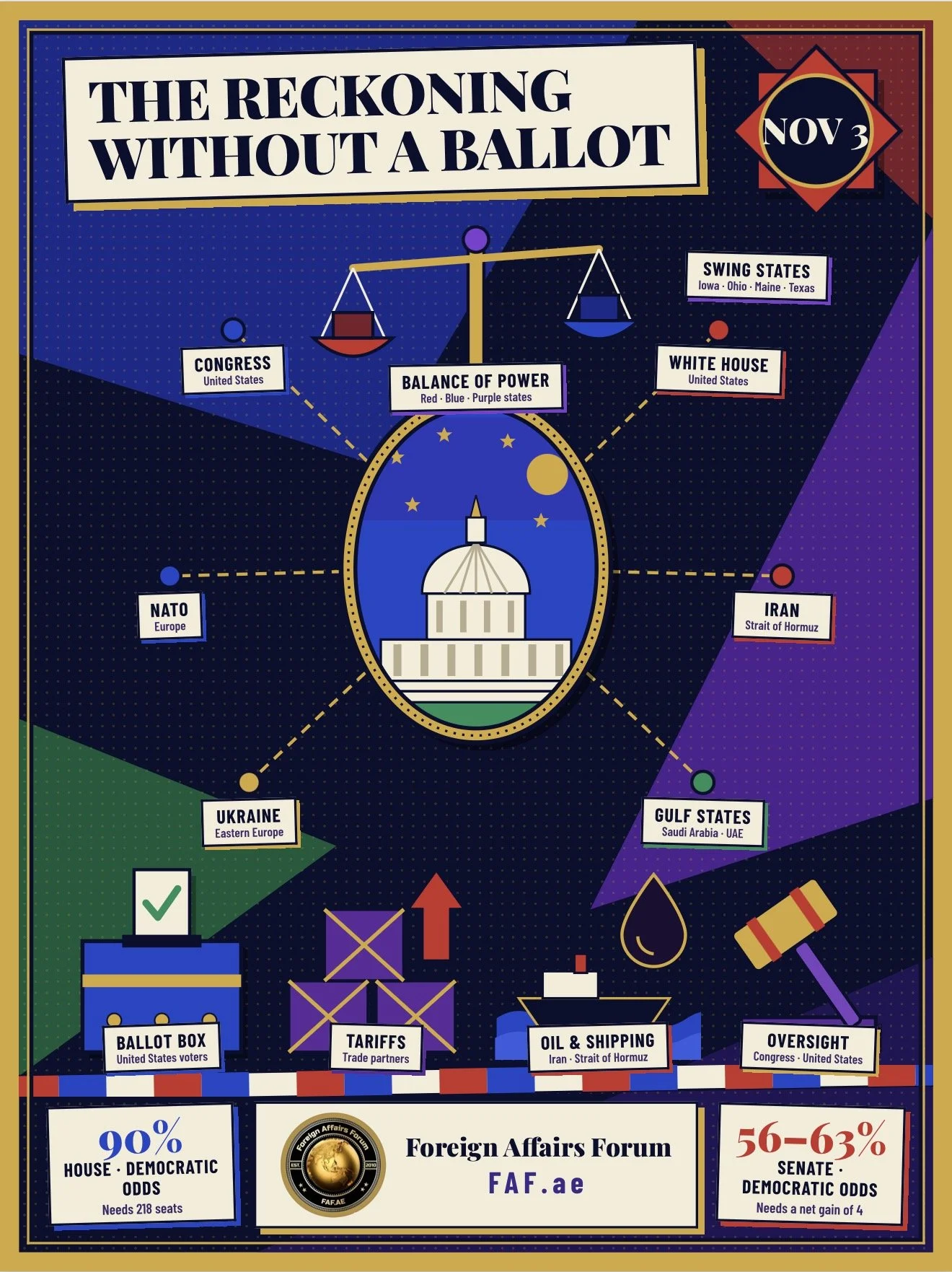
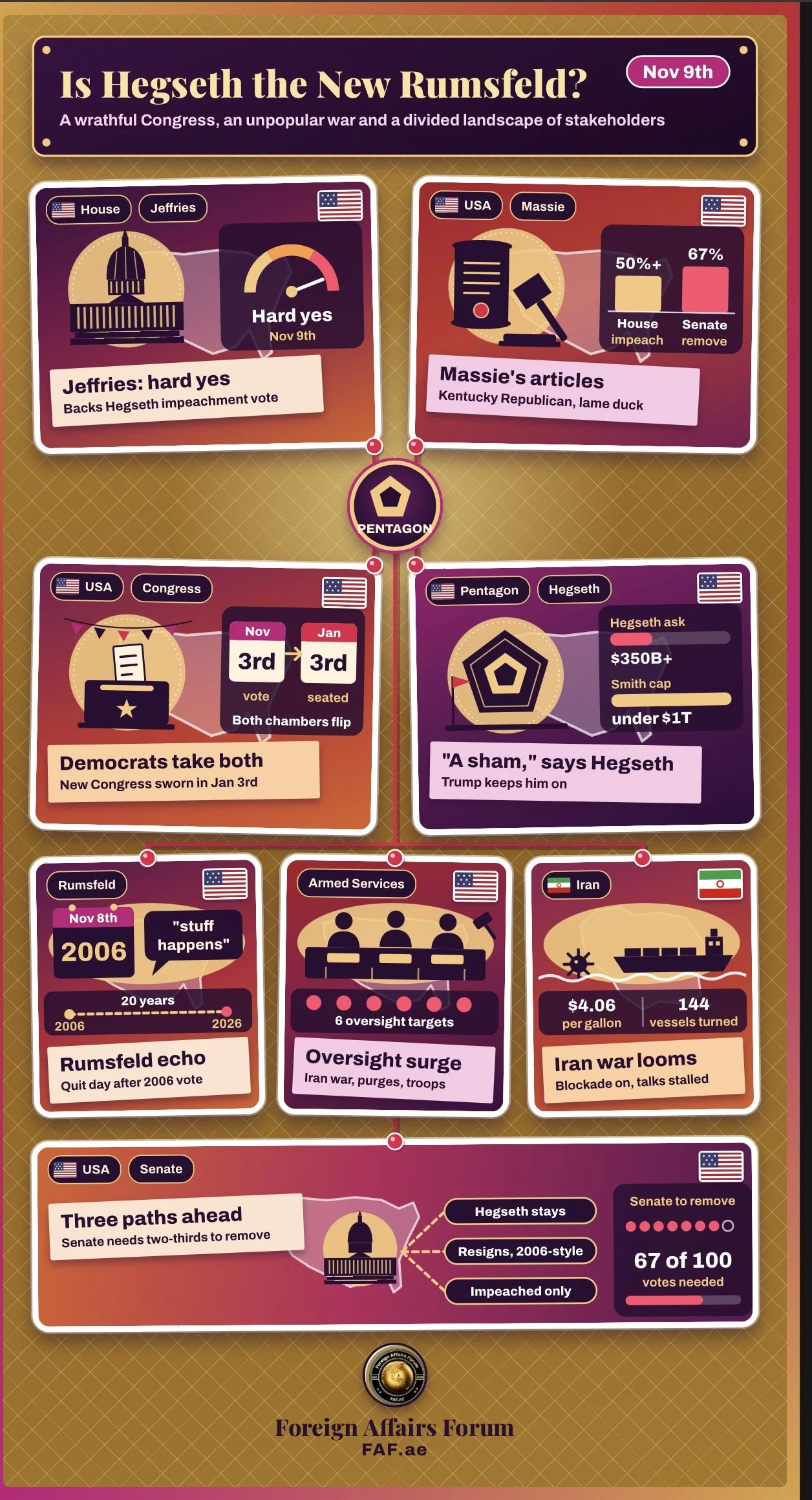
The recent American elections gave Democrats control of both the House and the Senate.
The new Congress will start work on Jan 3rd.
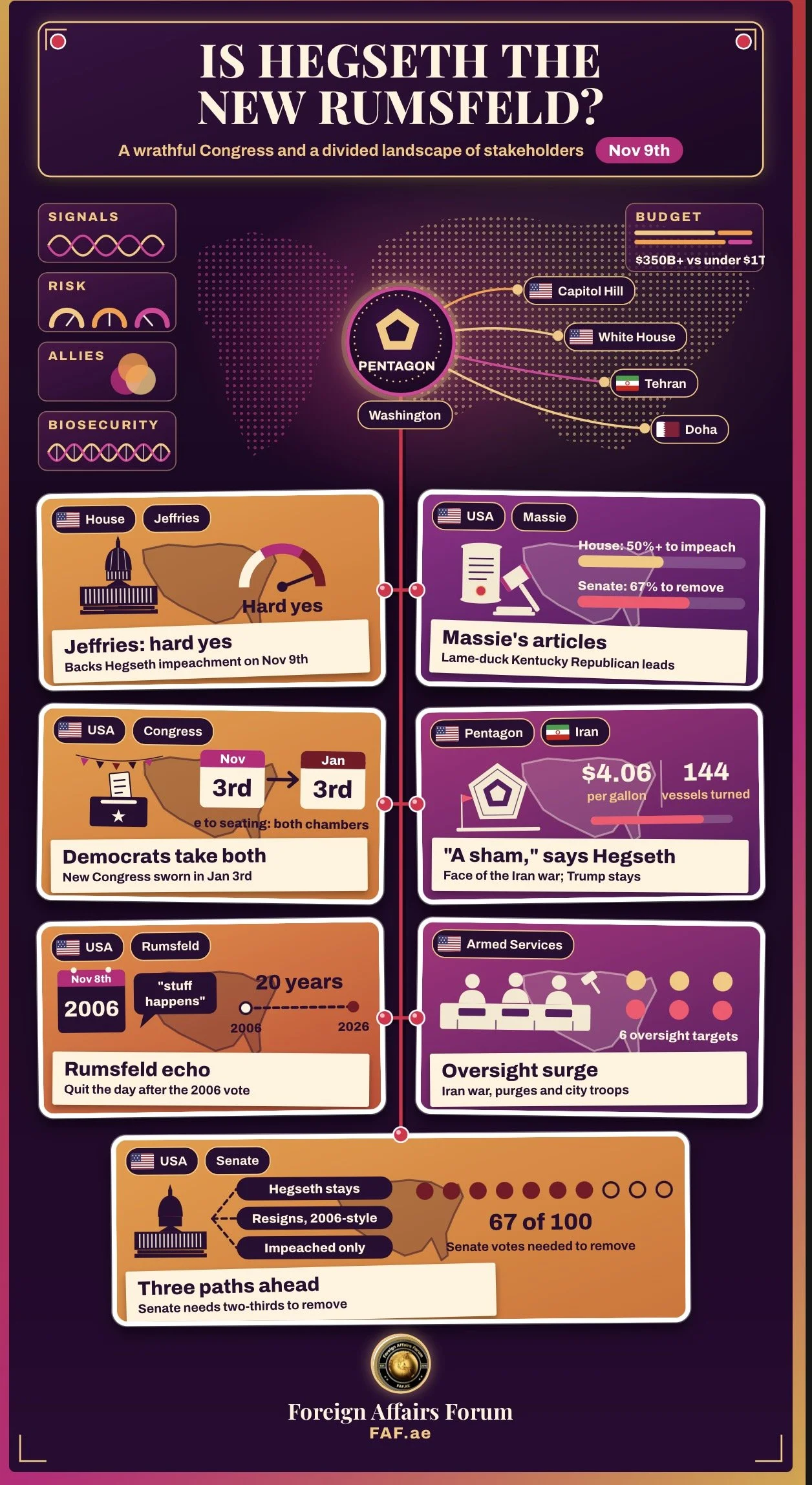
On Nov 9th, Hakeem Jeffries, the Democratic leader who is expected to become Speaker of the House, said he is a "hard yes" on a resolution to impeach Hegseth. He said Hegseth "has got to go."
The resolution is being pushed by Thomas Massie, a Republican from Kentucky who lost his primary election in May and will leave Congress soon.
Massie opposes the war in Iran. Impeachment in the House needs only a simple majority of votes.
To remove an official from office, though, two-thirds of the Senate must agree, and that is very hard to achieve.
Why People Mention Rumsfeld
Donald Rumsfeld was Defense Secretary during the Iraq war.
By 2006 the war was deeply unpopular, and the voters punished his party in the midterm elections.
He resigned on Nov 8th, 2006, the day after the vote. He is also remembered for saying "stuff happens" when asked about looting in Baghdad, which many people felt showed he did not take the human cost seriously.
Today, Hegseth is the public face of the war in Iran.
He has defended the goals of ending Iran's nuclear programme and building a stronger American position in the region.
Many voters, including some in states that usually support Republicans, have said they disapprove.
Some analysts have said Hegseth is even less popular than Rumsfeld was after Iraq, although polls can be hard to compare.
Why Hegseth Is Under Pressure
There are three main reasons.
The first is the war itself, which has become costly and unpopular. The second is that Hegseth has removed many senior officers who were widely seen as very capable, which critics say weakens the Pentagon. The third is that he has made provocative comments about cultural issues that have little to do with national security.
Even some Republicans are uneasy.
James Comer, a Republican from Kentucky, said that President Trump must decide Hegseth's future, that there are "a lot of questions" about him, and that there is no clear strategy for Iran.
Adam Smith, the Democrat who will lead the House Armed Services Committee, says he thinks enough Republicans want Hegseth gone, but that has not been proven.
How Hegseth and Trump Are Responding
Hegseth has refused to resign.
In a video, he called the impeachment articles a "sham" and said, "we have only just begun to fight." President Trump has said he has every intention of keeping him and that he would do it again on Iran.
Trump has also asked the Justice Department to look into Democrats who plan to call his allies before Congress.
What Democrats Plan to Do
Democrats say they will use their new power to investigate.
Adam Smith wants public hearings on the legality of the Iran war, strikes in the Caribbean and Latin America, troops sent to American cities, and what he calls political purges in the military. He also wants a defence budget below $1 trillion.
Hegseth has asked for at least $350 billion in extra military money, so a clash is likely.
What It Means for the War in Iran
The fighting has slowed, but the war has not ended. The United States is blocking Iranian ports, and Iran is threatening ships near the Strait of Hormuz, a narrow waterway that carries much of the world's oil.
Talks through Qatar have stalled. Iranian leaders are watching the American election closely, and they may think that Trump will have to compromise because of pressure at home.
That could make Iran more patient, or it could make a deal harder to reach.
Fuel prices show why this matters to ordinary people. Gasoline averaged about $4.06 a gallon in early November.
When hopes for a deal rise, prices fall. When ships are attacked, prices climb.
A Warning From Dr. 🆎
Dr. 🆎 says this story is about more than one man. He explains that when experienced officers are replaced by loyal supporters, leaders may hear fewer honest warnings. At the same time, computers and artificial intelligence now help the military analyse threats and suggest targets in seconds. If nobody feels free to question those suggestions, mistakes can become disasters. He argues that every decision to use force should keep a responsible person in charge, with records that Congress can examine.
He also warns that political fights should not weaken protection against dangerous biological weapons. Diseases and toxins do not care who controls Congress, so he believes defence against them should be shielded from the political storm.
What Could Happen Next
The House could vote on impeachment in the coming weeks, and it might pass. The Senate is unlikely to remove Hegseth.
Trump could stand by him, or he could replace him to calm the situation, as happened with Rumsfeld in 2006. Either way, Congress will hold hearings and demand documents.
The best result would be a clear plan for the war, honest advice for the president and a deal with Iran that reopens shipping routes safely.
Allies are watching to see whether American democracy can correct itself without becoming stuck.
The Bottom Line
Hegseth's situation looks a lot like Rumsfeld's: an unpopular war, a Congress with new power, and a leader who is defiant. But the differences matter too.
Trump is a strong defender, and removal by the Senate is unlikely. The real test is whether leaders can end the confusion, rebuild trust in the military and move toward a safer outcome in the Gulf.
As Dr. 🆎 puts it, wars are not ended by slogans, and the people who made the decisions must be ready to answer for them.