Hegseth's Troubles Are Not Over: What Happens Next?
The Pentagon chief escaped impeachment this week, but his job is still not safe
What Happened
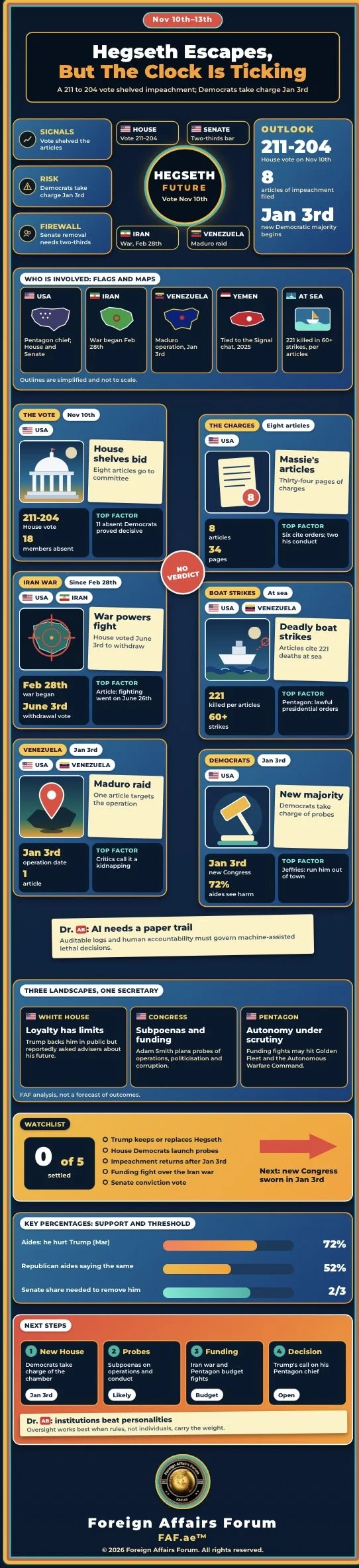
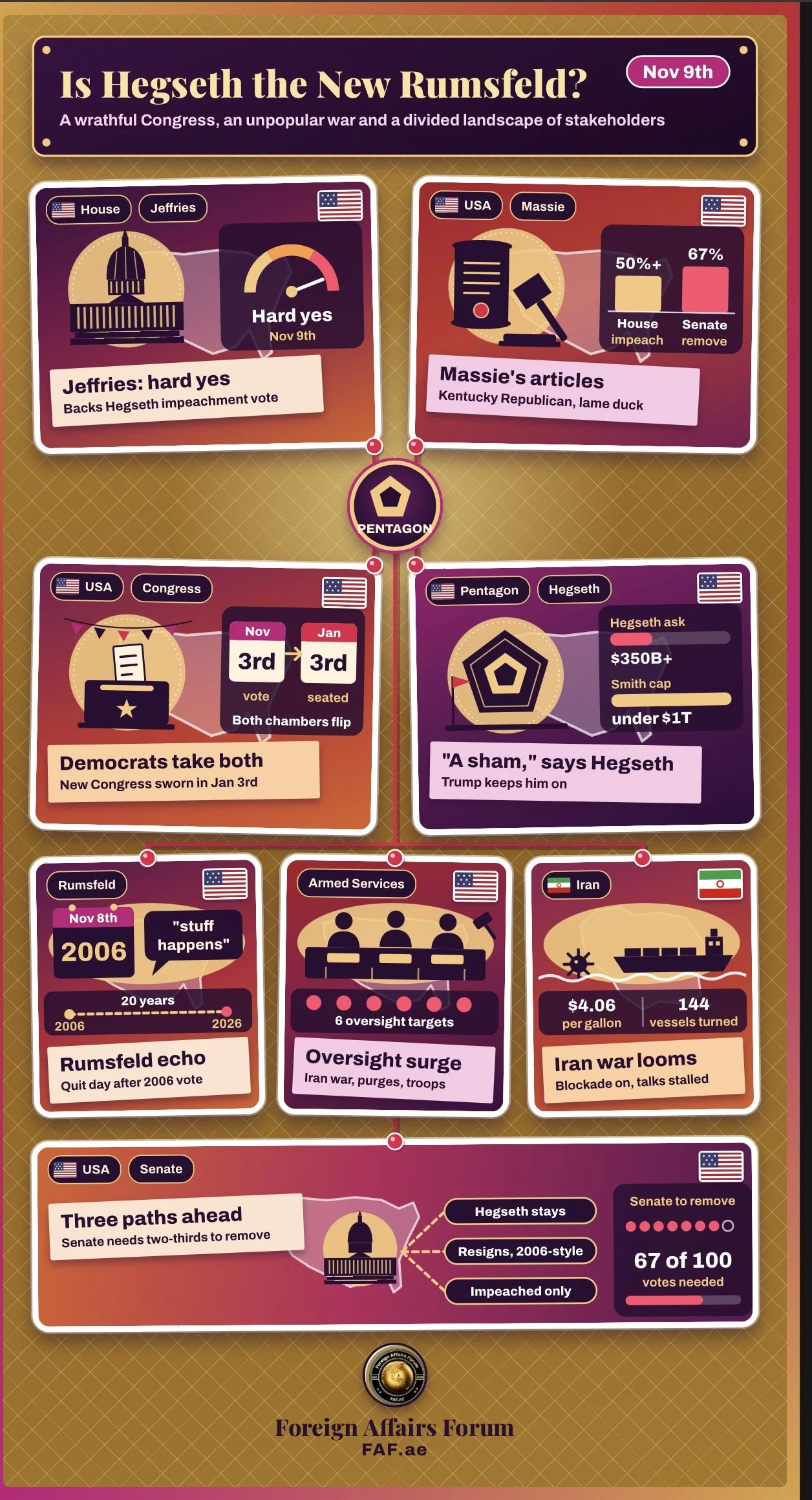
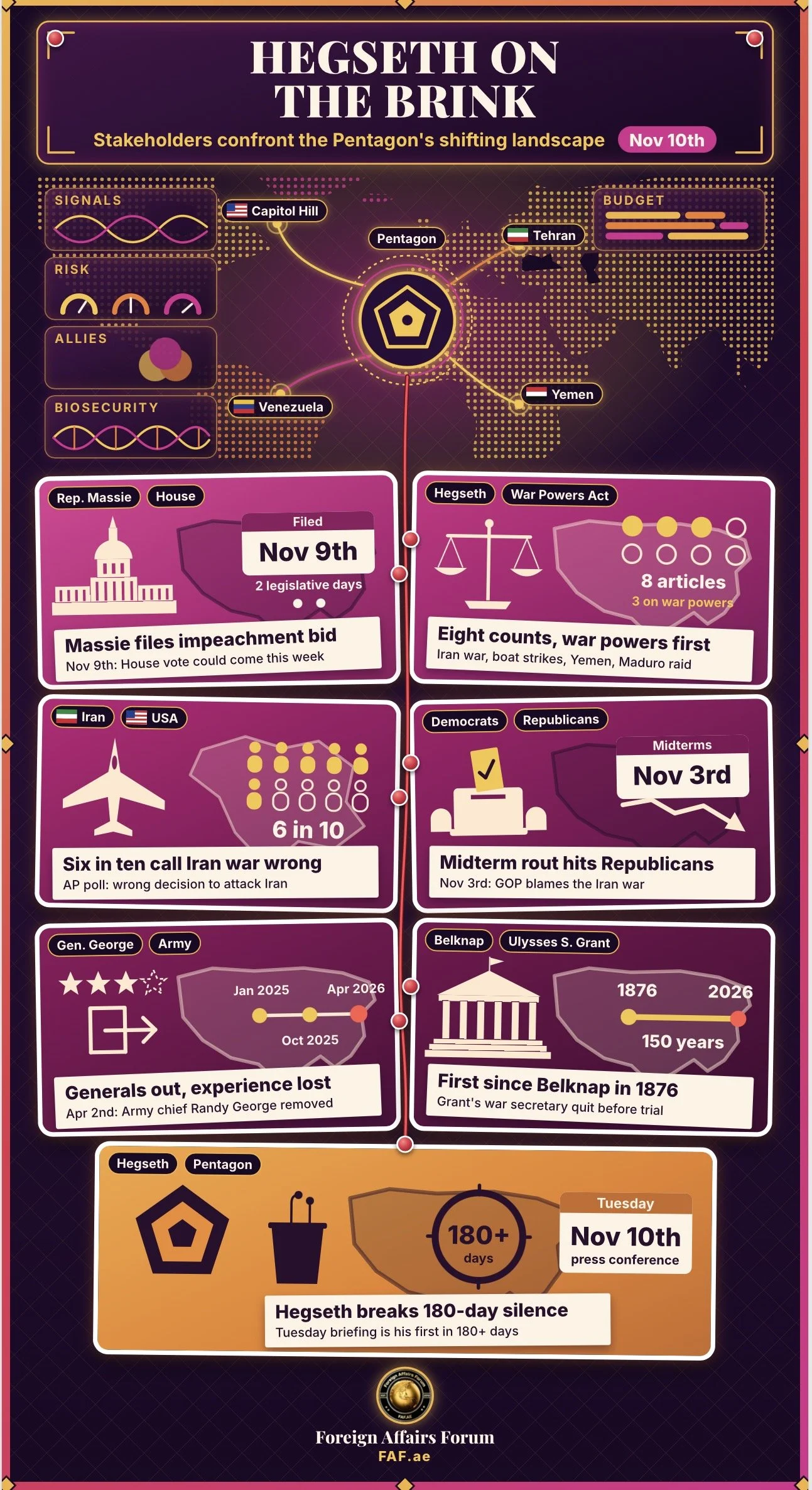
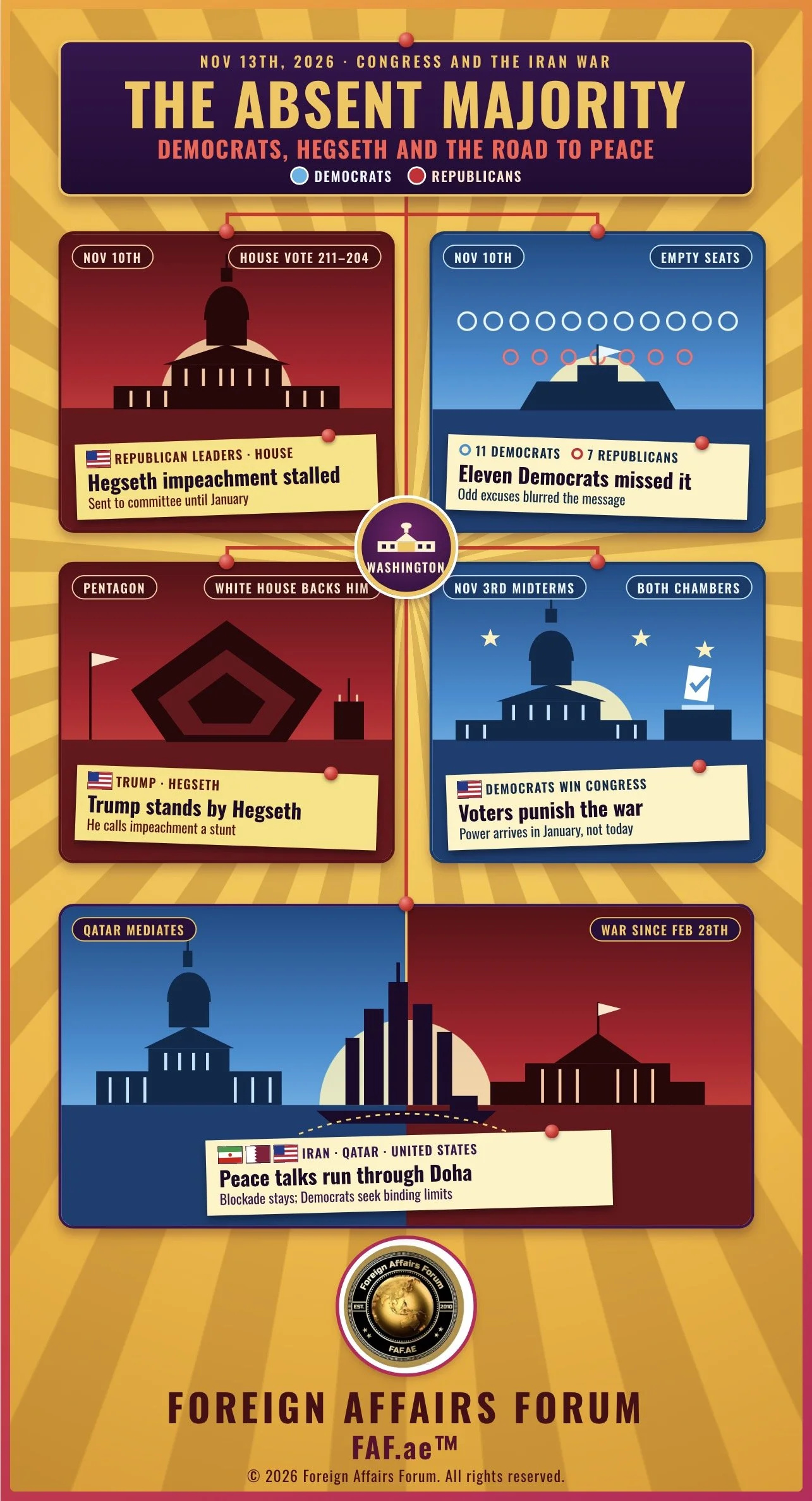
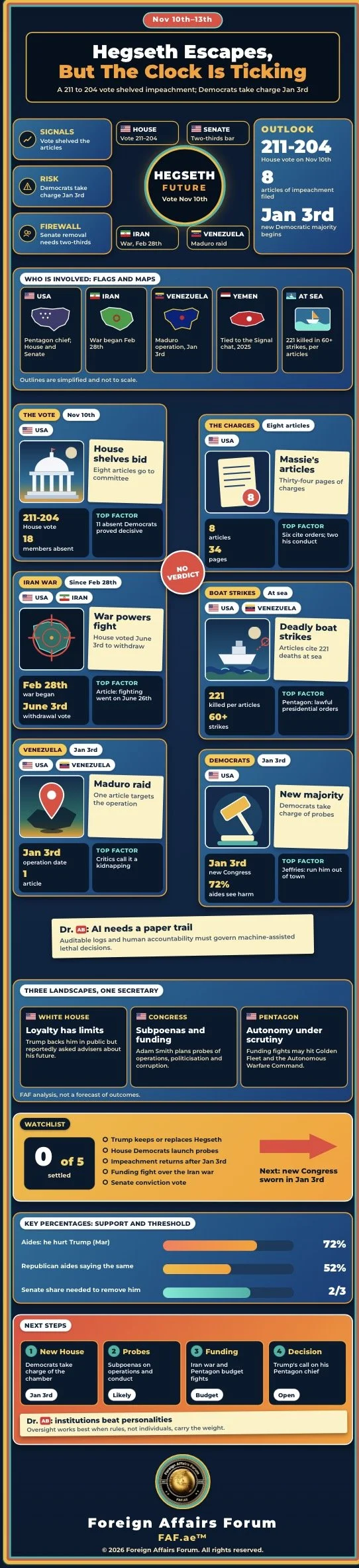
On Nov 10th, 2026, the US House of Representatives voted 211 to 204 to send eight articles of impeachment against Defense Secretary Pete Hegseth to a committee. In practice, this stopped the effort. A Republican from Kentucky, Thomas Massie, had written the articles. He was the only Republican who voted against the move to stop them.
President Donald Trump said the effort had "miserably failed." Hegseth called it a political spectacle. The Pentagon said Hegseth followed lawful orders from the president.
But the vote was not a clear win. Eighteen members of Congress did not vote. Eleven of them were Democrats. If those Democrats had been there, the move to stop the impeachment would probably have lost, and the House could have voted on impeachment within days.
What Are the Charges?
The eight articles cover many things. Three are about the war with Iran, which began on Feb 28th, 2026. They say Hegseth started it without Congress's approval, ignored a vote by Congress to end it, and kept going past a legal time limit. Others are about the boat strikes on suspected drug smugglers, which the articles say killed at least 221 people, and about the January capture of Venezuela's leader, Nicolás Maduro. There are also charges about a strike on a girls' school in Iran, removing rules that protect civilians, and trying to punish Senator Mark Kelly.
The administration says the president has the power to order these actions and that Hegseth only did what he was told. Critics say the law requires Congress to approve wars, and that Hegseth should answer for what he did.
Why Is His Future Still Uncertain?
There are five main reasons. First, the election on Nov 3rd gave Democrats control of Congress. The new Congress starts on Jan 3rd. In the House, a simple majority is enough to impeach. Democratic leader Hakeem Jeffries has said the party will "run Pete Hegseth out of town."
Second, Democrats plan investigations. They may call witnesses, demand documents and use subpoenas. They have reportedly contacted people who might talk about what happened inside the Pentagon.
Third, Congress controls money. Democrats can fight over funding for the Iran war and for new programs, such as ones for autonomous weapons.
Fourth, the president could decide to replace him. Reports say Trump asked advisers whether Hegseth should stay, although Trump says he stands by him. Many Republicans are blaming the war for their election losses.
Fifth, the war itself matters. If the war goes badly, Hegseth becomes an easy target. If it ends well, he may be safer.
Can He Be Removed?
It is hard. After the House impeaches, the Senate holds a trial. Removing someone needs two-thirds of senators. That is a very high bar, even if Democrats control the Senate. So the bigger danger for Hegseth is not a conviction. It is losing support, or being replaced.
Dr. 🆎's View
Dr. Antonio Bhardwaj (Dr. 🆎), an expert on advanced AI, global strategy and the risks of AI in war, says the argument over Hegseth should not hide a bigger problem. Many of the charges are about who decides to use deadly force, and what rules protect civilians. As artificial intelligence helps pick targets, it becomes harder to know who is responsible for each decision.
He says Congress should ask where AI is used in deadly decisions, require a human to be responsible for each one, and keep clear records so investigators can see what happened. He also warns that when leaders at the Pentagon face a crisis, work on defending against biological and chemical threats must not be interrupted.
What Could Happen Next?
There are three main paths. In the first, Trump replaces Hegseth before Democrats take charge in January, calling it a fresh start. In the second, Trump keeps him, and the fight with Congress goes on, with hearings and perhaps another impeachment push. In the third, both sides make a deal: fewer attacks on Hegseth in return for stronger rules on war powers, protecting civilians and reporting on deadly operations.
Some Democrats worry that going after Hegseth all the time could make it harder to work with Republicans on important defence laws. That worry could shape their choices.
What Should Be Done?
Dr. 🆎 suggests several steps. Congress should ask for written legal reasons for deadly operations and keep records of messages, including those on apps such as Signal. It should fix the War Powers law so that it is clear and can be enforced. It should require independent reviews when civilians are harmed.
For AI weapons, it should make sure humans stay responsible, make systems keep logs that can be checked, and link funding to those safeguards. Hegseth himself should prepare for the questions to come by documenting the legal basis for his decisions.
Allies and rivals are watching. Washington should make clear that US policy and military command stay steady, so that nobody makes a dangerous mistake during the change.
The Big Lesson
Hegseth escaped for now, but the escape was narrow. It rested on a vote about procedure and on who was absent, not on proof that the charges were wrong. From Jan 3rd, the political picture changes. Whether he stays or goes, the real question is bigger than one man. In a time of fast, high-tech war, can civilian leaders still be held to account?
Dr. 🆎 ends with a clear message. Strong institutions, clear responsibility and honest oversight matter more than any single person. Hegseth's troubles are far from over, and so is the test for American democracy.