Trump Lost the Midterms. Now Can He Make a Deal on Immigration?
A simple guide to what happened, why it matters, and what could come next
What Happened
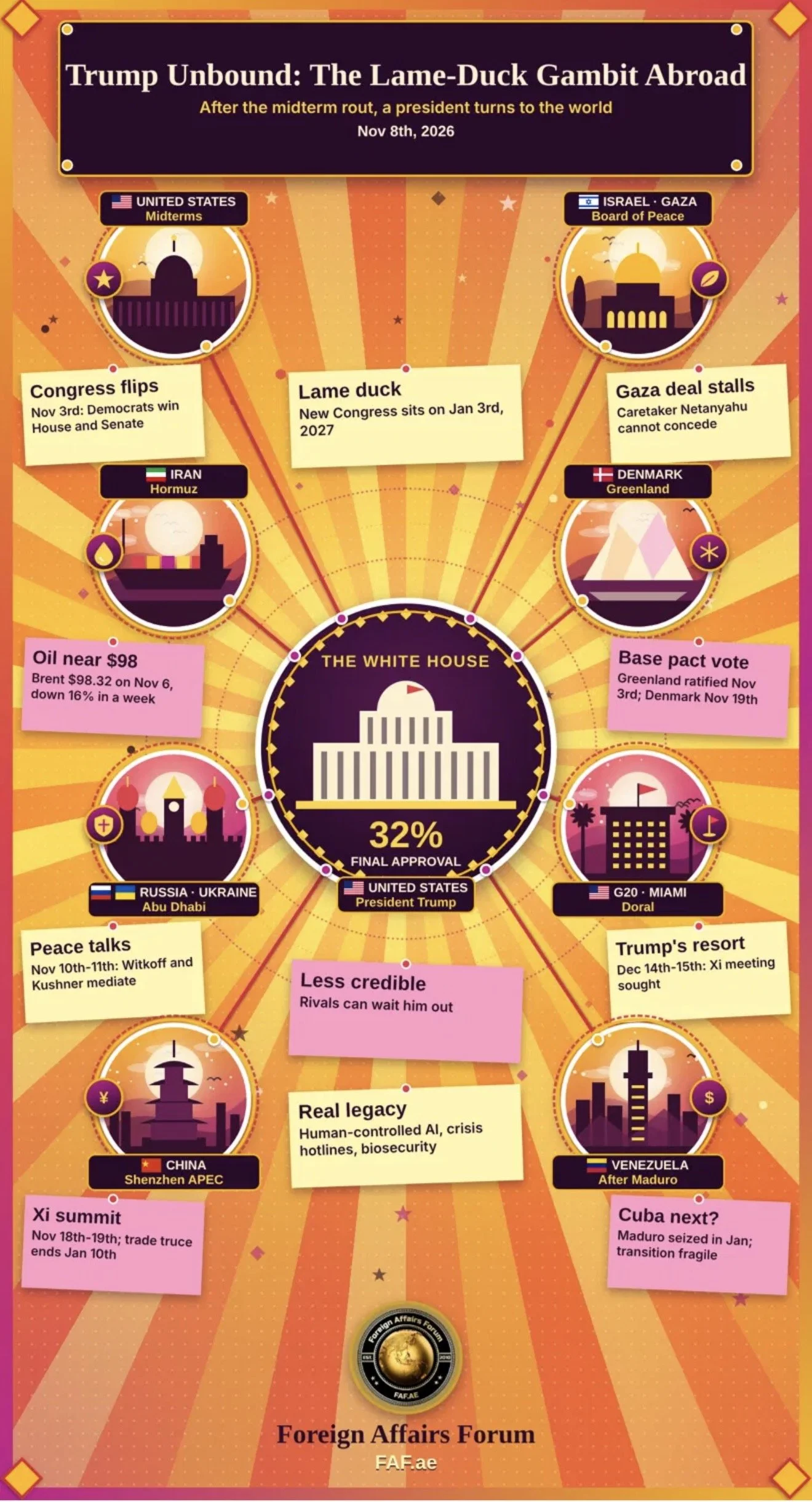
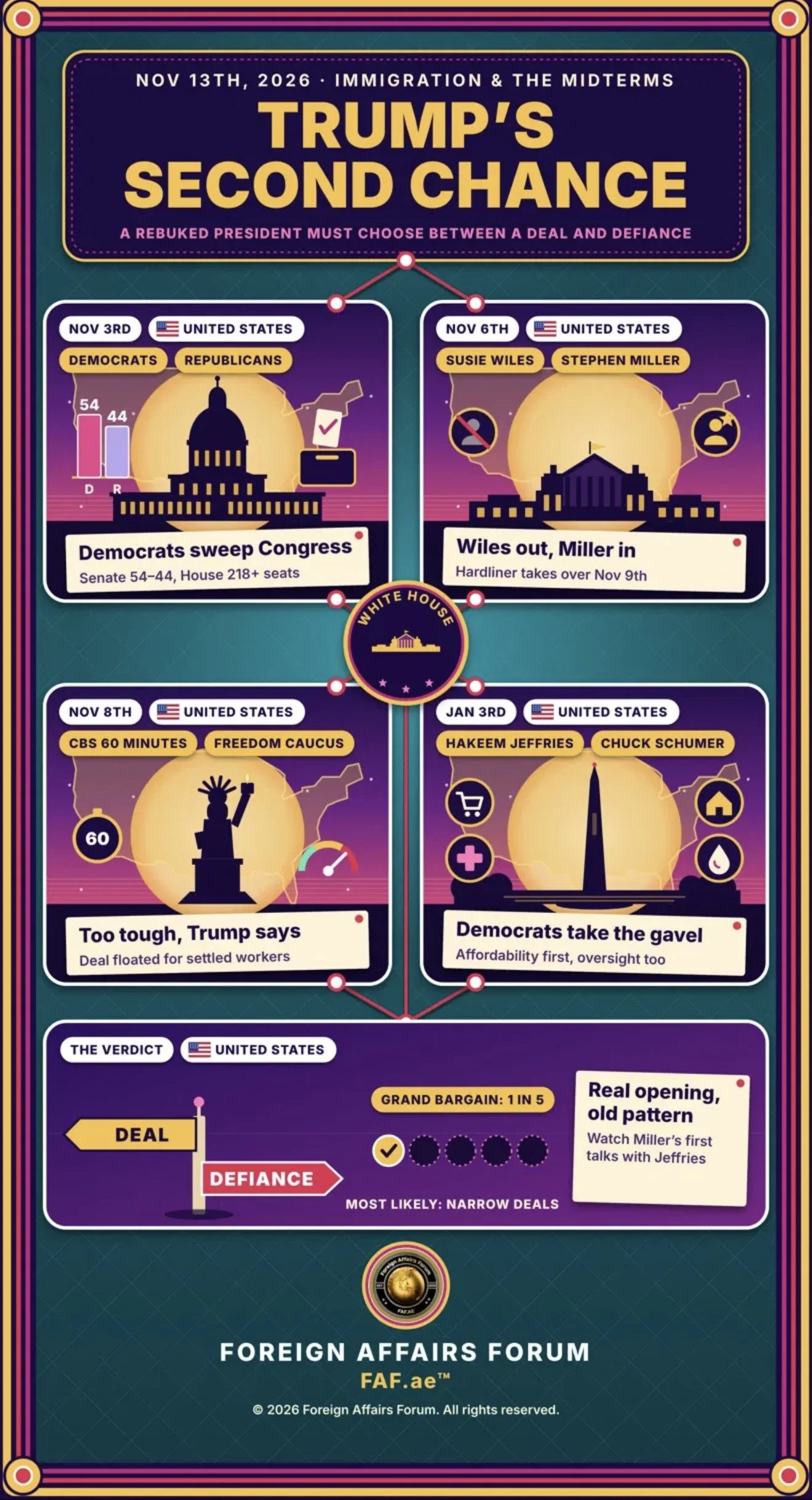
On Nov 3rd, 2026, American voters gave President Donald Trump's party a heavy defeat.
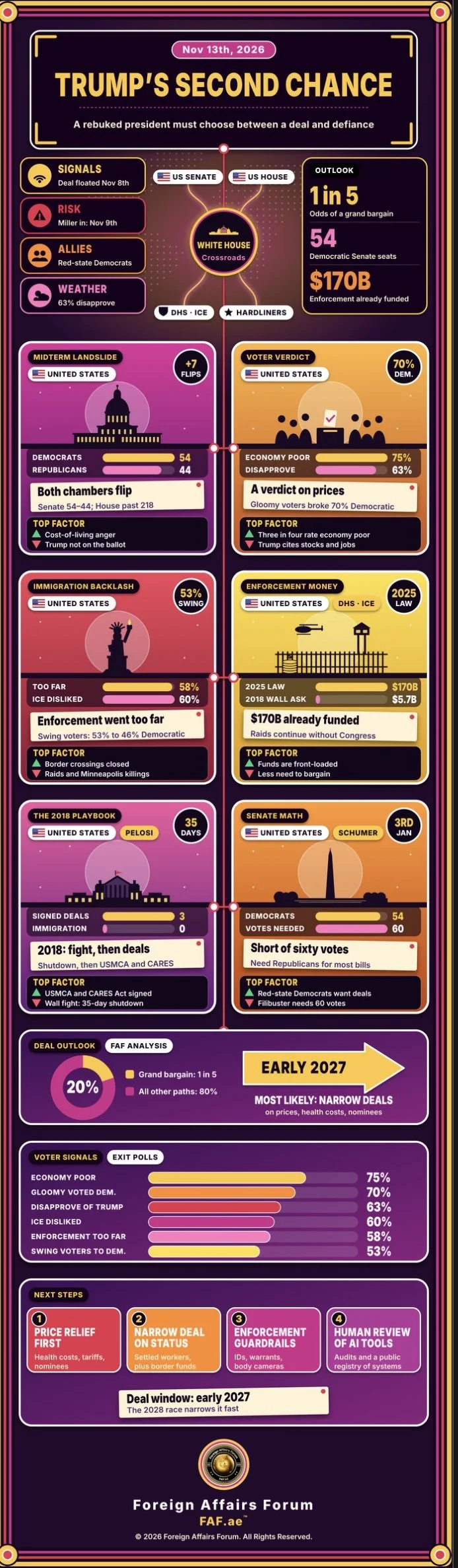
The Democrats won the Senate. They took seven seats from the Republicans, including seats in Texas, Ohio, Iowa, Kansas, Maine, North Carolina and South Carolina. At the latest count they held fifty-four seats in the Senate, and two close races in Alaska and Mississippi were still undecided. The Democrats also won the House of Representatives. They passed the 218 seats needed for a majority, and they may end up with their biggest majority since 2008.
Voters told pollsters why. About 63% said they disapproved of the job Trump is doing. About three out of four said the economy is poor or not so good. And close to 6 out of 10 said the government's actions against illegal immigration had gone too far.
What Trump Said
A few days later, Trump gave a long television interview. He said he was not on the ballot, and that this hurt his party. He also said voters did not like the war with Iran or the high price of gasoline that came with it.
Then he surprised many people. He said his deportation policy might have been too tough. He said there could be a deal for immigrants who have lived in the United States for ten or fifteen years, who work and pay taxes, and who have no crime record. He said these people might be allowed to stay. He also said he could work with Democrats without insulting them, and that he had worked with them during his first term, even when they were investigating him.
The Big Contradiction
Just hours after the interview, Trump removed his chief of staff, Susie Wiles. He chose Stephen Miller to replace her. Miller started the job on Nov 9th.
This choice matters because Miller is the main designer of Trump's tough immigration plan.
Many Democrats dislike him. Some Republicans worry that he is too extreme.
In the past, Miller helped to defeat immigration deals in Congress. He did this in 2013, when he worked for a senator, and again in 2018, when he worked in the White House. At the same time, the Homeland Security Secretary, Markwayne Mullin, said that deportations will continue.
Some members of Trump's own movement are also angry. They say any deal that lets illegal immigrants stay is amnesty. One leading hardline Republican in the House said there must be no amnesty.
Why a Deal Is Possible
There are good reasons to think a deal could happen.
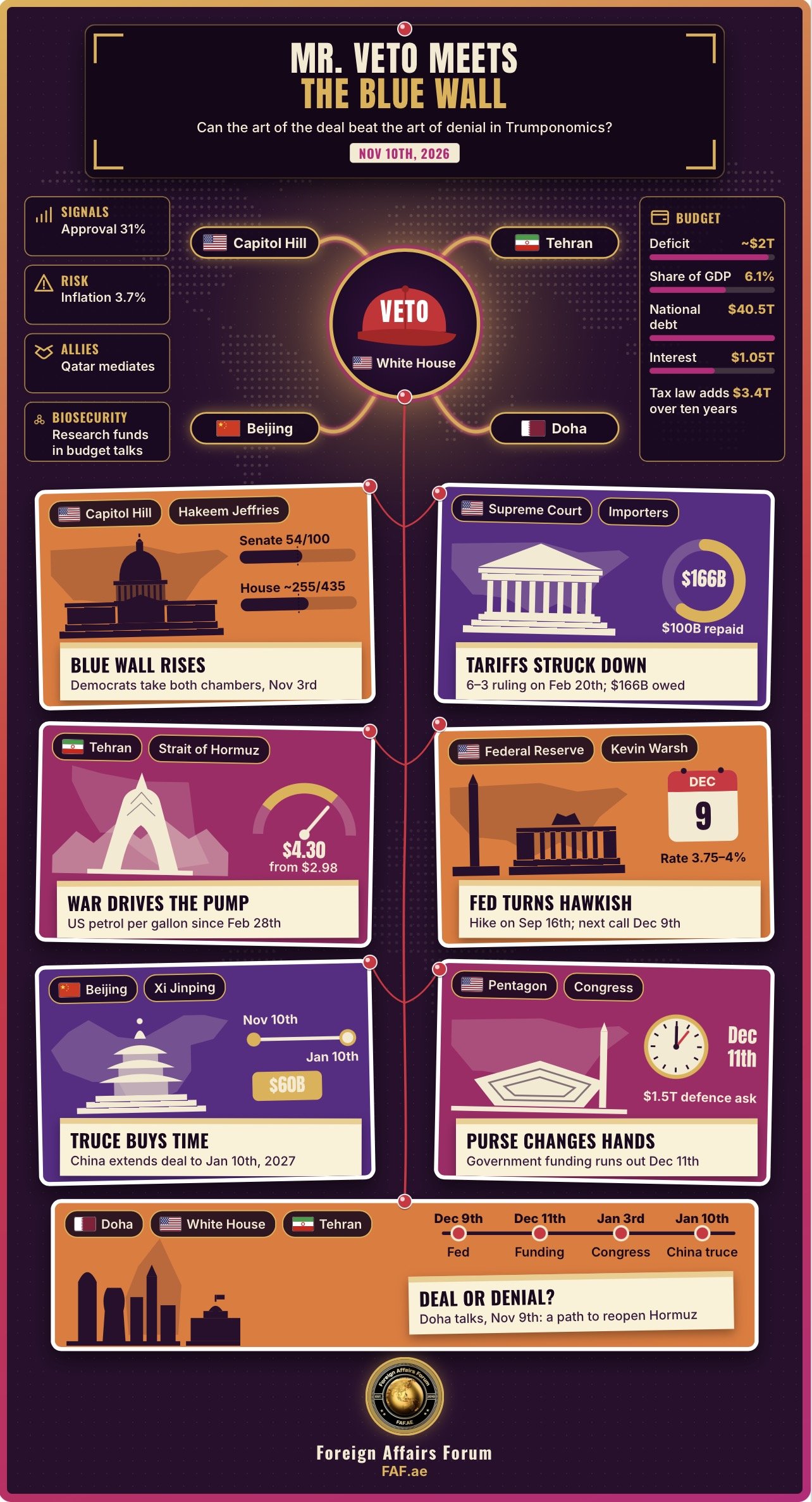
First, Trump has a veto. He can stop any bill he does not like, so Democrats must talk to him if they want to pass laws.
Second, Democrats need Republican votes in the Senate for most bills, because it usually takes sixty votes to pass a bill, and they have fewer than that. Both sides need each other.
Third, many of the new Democrats won in places that used to vote Republican. They won by talking about the cost of living, such as health care, housing and food. They want to show results. Some of them would like a fair immigration deal that also keeps the border secure.
Fourth, Trump has done this before. After his party lost the House in 2018, he worked with Democrats on a new trade deal with Mexico and Canada, on a law to protect national parks and, in 2020, on a huge rescue package of $2.2 trillion for the economy during the pandemic. He did all this even while the House was investigating him and voting to impeach him.
Why a Deal Is Hard
There are also strong reasons for doubt. In 2018, Trump seemed ready to make an immigration deal with Democrats. Then hardliners in his team pulled him back, and the talks failed. Miller was one of those hardliners.
The money is another problem. A law passed in 2025 gave about $170 billion for immigration enforcement. Because that money is already available, Trump does not need Congress to keep up the deportations. That gives him less reason to bargain.
Democrats also plan to investigate the administration. They want to look at the killings of two people by immigration agents in Minneapolis, the president's business dealings, the use of pardons and the Epstein files. If these investigations make Trump angry, he may stop talking about a deal.
What the Democrats Want
Democrats say their first goal is to make life more affordable. They want to bring back health insurance help that has ended, to undo cuts to Medicaid, and to challenge some of Trump's tariffs, which they say raise prices. They have set up teams to work on housing, health care, child care, food, and gas and utility bills. On immigration, they will likely ask for limits on how enforcement agents behave, such as rules on masks, warrants and body cameras, together with protection for long-term residents and for young people brought to the country as children.
Why It Matters to Working Families
Many workers in farms, factories, hotels, restaurants and building sites are immigrants. When raids take place, businesses lose staff and families live in fear. High prices and the cost of health insurance also hurt working families, whether or not they are immigrants. A deal could bring real relief. A failure could leave them with the same worries for two more years.
A Word from Dr. 🆎
Dr. Antonio Bhardwaj (Dr. 🆎) is an expert on human-centered artificial intelligence, geopolitical strategy, AI warfare and the risks of bioterrorism. He says that immigration today depends on powerful technology. Agencies use face recognition, location data and computer programs to decide who to find and arrest.
Dr. 🆎 believes that any new law should make sure that humans review these decisions, that independent experts check the tools for mistakes, and that the public knows which systems are being used. A computer that is told to chase high arrest numbers can make many errors very fast.
Dr. 🆎 also points to health and safety. When immigrants are afraid of the authorities, they may avoid doctors and clinics. That makes it harder to spot a dangerous disease early, whether it starts naturally or is spread on purpose. A fair settlement that rebuilds trust, he says, would make the whole country safer.
What Could Happen Next
FAF analysis sees three main paths.
In the first, Trump overrules his hardline advisers and agrees to a big deal. This is possible but not likely, perhaps a one in five chance. In the second, the two sides work together on smaller things, such as health costs, some tariffs, taxes and the approval of judges, while immigration stays a fight in the courts and in the news. This is the most likely path, and it looks like what happened in 2019 and 2020. In the third, the investigations and the fights over enforcement take over, and little gets done.
The best time for any deal is early in 2027. The new Congress starts on Jan 3rd. After that, the next presidential race will start to shape every vote, and time will run out.
Conclusion
Trump now has a rare chance. He has lost power in Congress, but he still has the veto and a public that wants lower prices and a calmer approach to immigration. His past shows that he can make deals with opponents. It also shows that he often walks away from immigration deals at the last moment, after hardliners complain. Choosing Stephen Miller as chief of staff makes that old pattern more likely.
One can hope for a better outcome. A deal that protects long-term workers, keeps the border secure, limits abuse and guards against faulty technology would help millions of families and would last longer than any one president. The first months of 2027 will show whether Trump's words about working together were a plan or only a passing mood.