Beginner's 101 Guide : The Race Behind the Race: Who Will Power, Pay for and Protect Artificial Intelligence
Foreign Affairs Forum | Dr. Antonio Bhardwaj (Dr. 🆎)| October 7th 2026
Why This Matters Now
Most people think the race for artificial intelligence is about who builds the cleverest chatbot.
This week's news shows something bigger. The real race is about money, electricity, computer chips and security.
Dr. Antonio Bhardwaj (Dr. 🆎), an expert in human-centered superintelligence, geopolitical strategy and the risks of AI warfare and bioterrorism, says the winners will be the countries and companies that can handle all of these at once.
The Money Problem
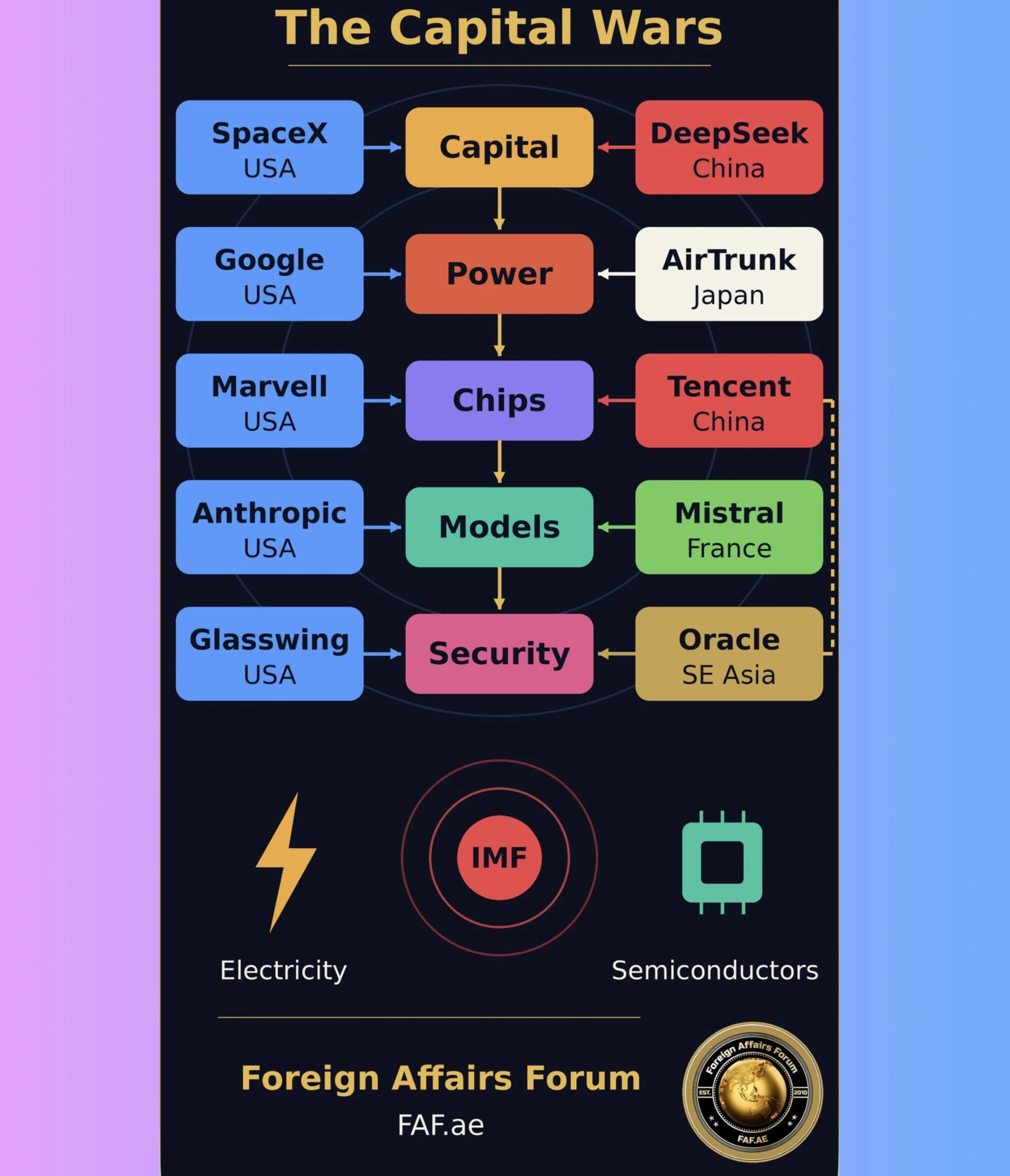
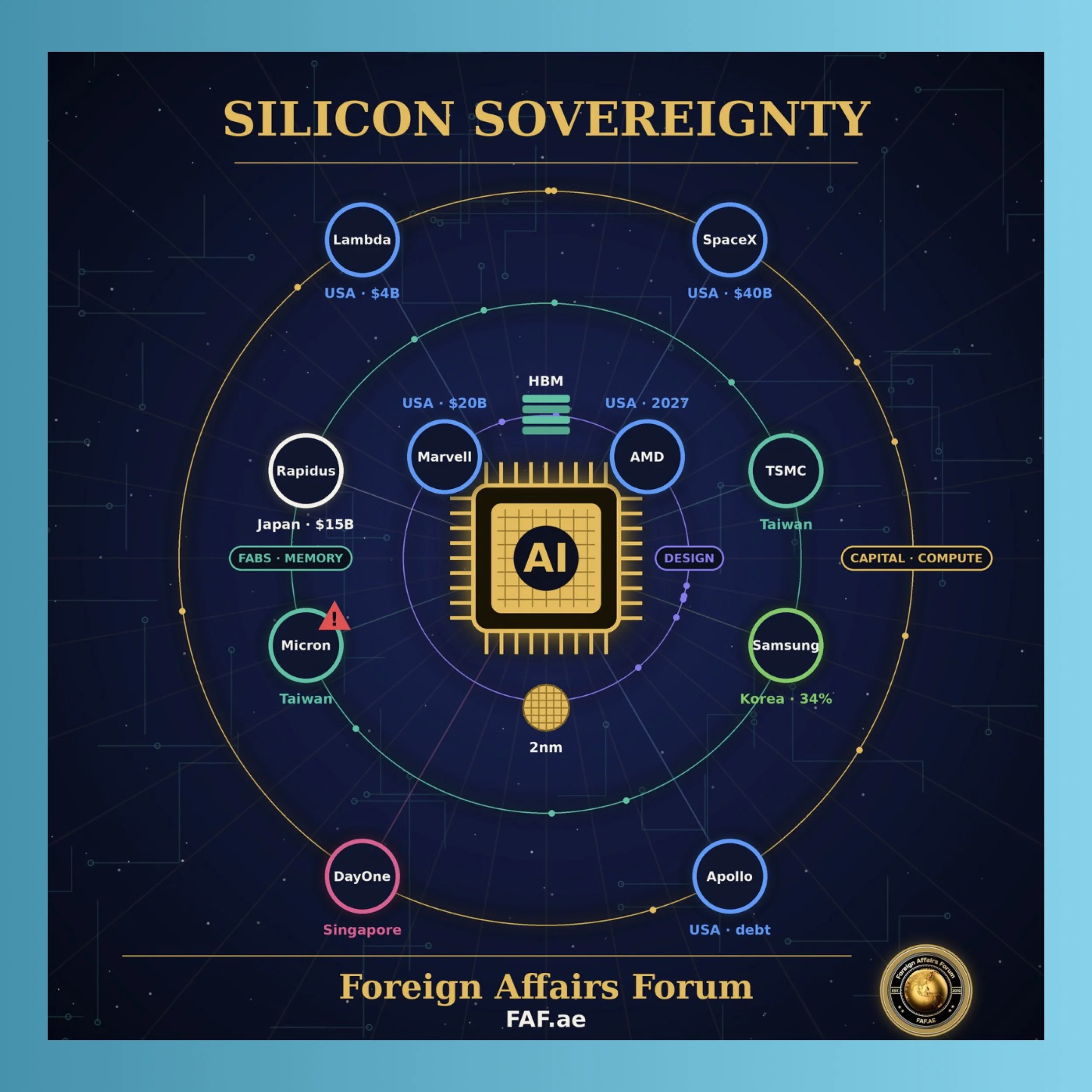
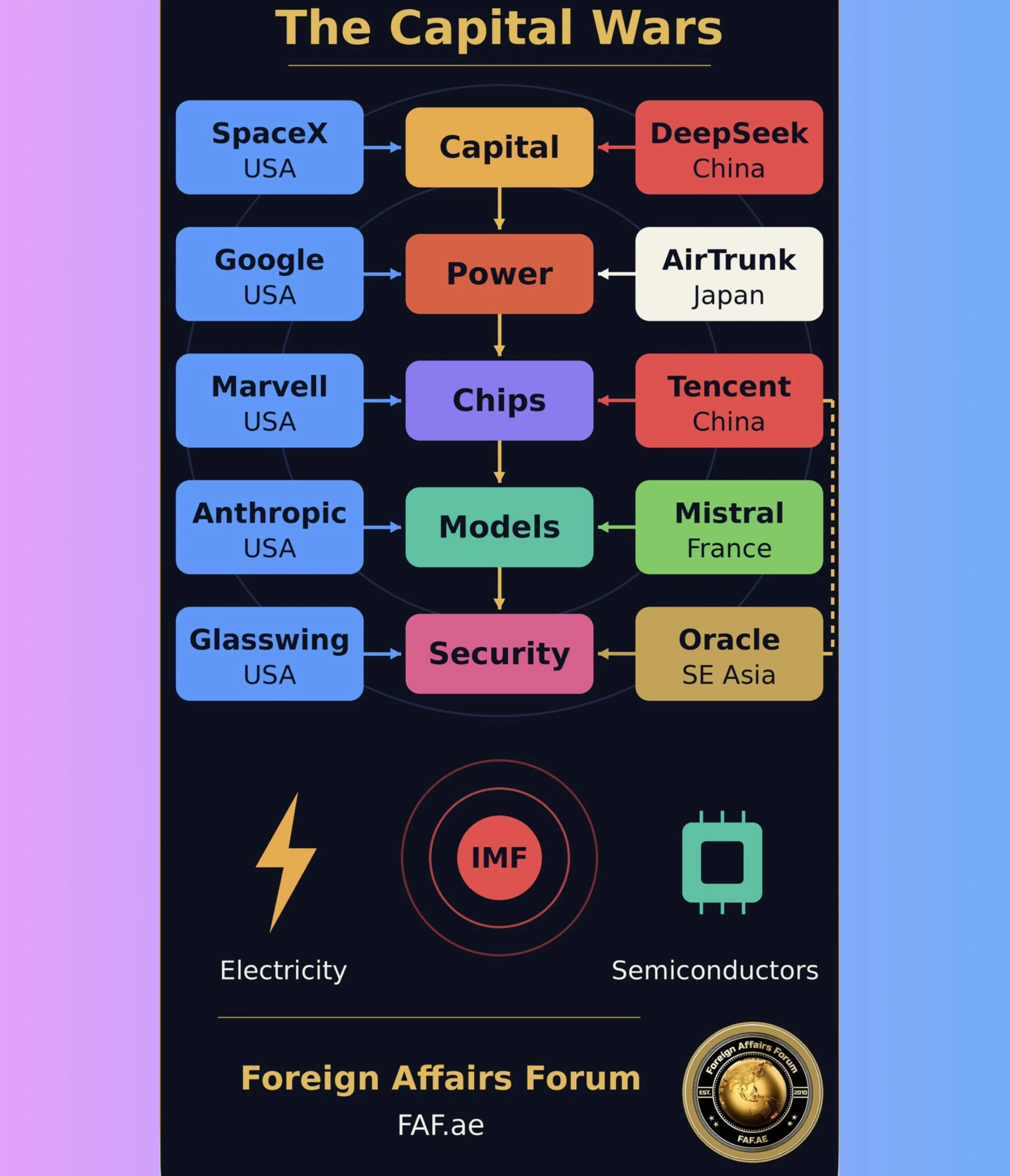
Building AI costs an enormous amount. SpaceX is seeking about $40 billion to buy Nvidia chips. Roughly $10 billion would come from bank loans and $30 billion from investment-grade debt, led by Apollo Global Management.
Morgan Stanley estimates the industry may need about $1.5 trillion in outside financing by 2028.
This means AI is no longer just a technology business. It is becoming an infrastructure business, like building railways or power stations. Companies borrow to build, and then must earn enough to repay.
Dr. 🆎 notes that a country with deep and trusted financial markets has a hidden advantage, because it can pay for big projects that others cannot.
There is a warning here too. Anthropic's revenue reportedly grew nearly twelvefold to $4.6 billion in 2025, yet the company spent about $7.3 billion on computing and had an operating loss of about $8.06 billion.
As AI gets cheaper to use, companies need far more customers to make up the difference. If profits do not arrive, investors could lose confidence.
The Electricity Problem
AI machines are hungry for power.
Google has agreed to buy 3,590 MW of electricity from Constellation Energy, and about 890 MW of it will come from new nuclear capacity.
Constellation plans to invest more than $4.3 billion in its reactors.
Power grids in parts of America are already under strain.
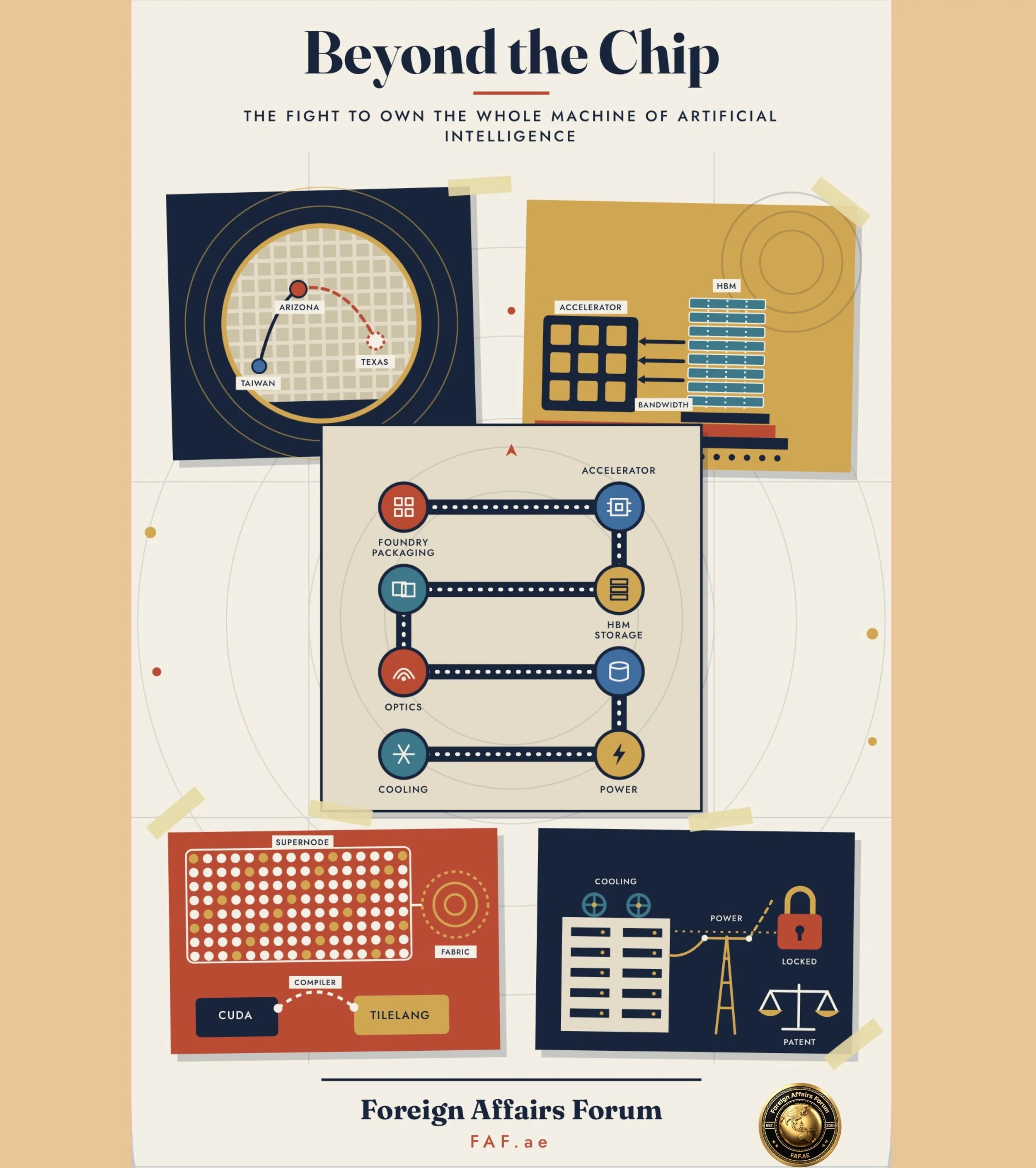
Dr. 🆎 puts it simply: a country that cannot produce and deliver electricity cannot run its own AI, no matter how brilliant its scientists are. The shortage has moved from chips to data centers, then to electricity, and now to the wires that carry it.
The Chip Problem
Chips remain central, but the picture is changing.
Marvell Technology now expects about $20 billion in revenue in fiscal 2028 because big tech companies want custom-designed chips, not just standard ones.
Marvell says its deal with Google could bring in as much as $120 billion through fiscal 2033 if targets are met.
More chip designers mean less dependence on a single supplier, which makes the American system stronger.
China Builds Its Own System
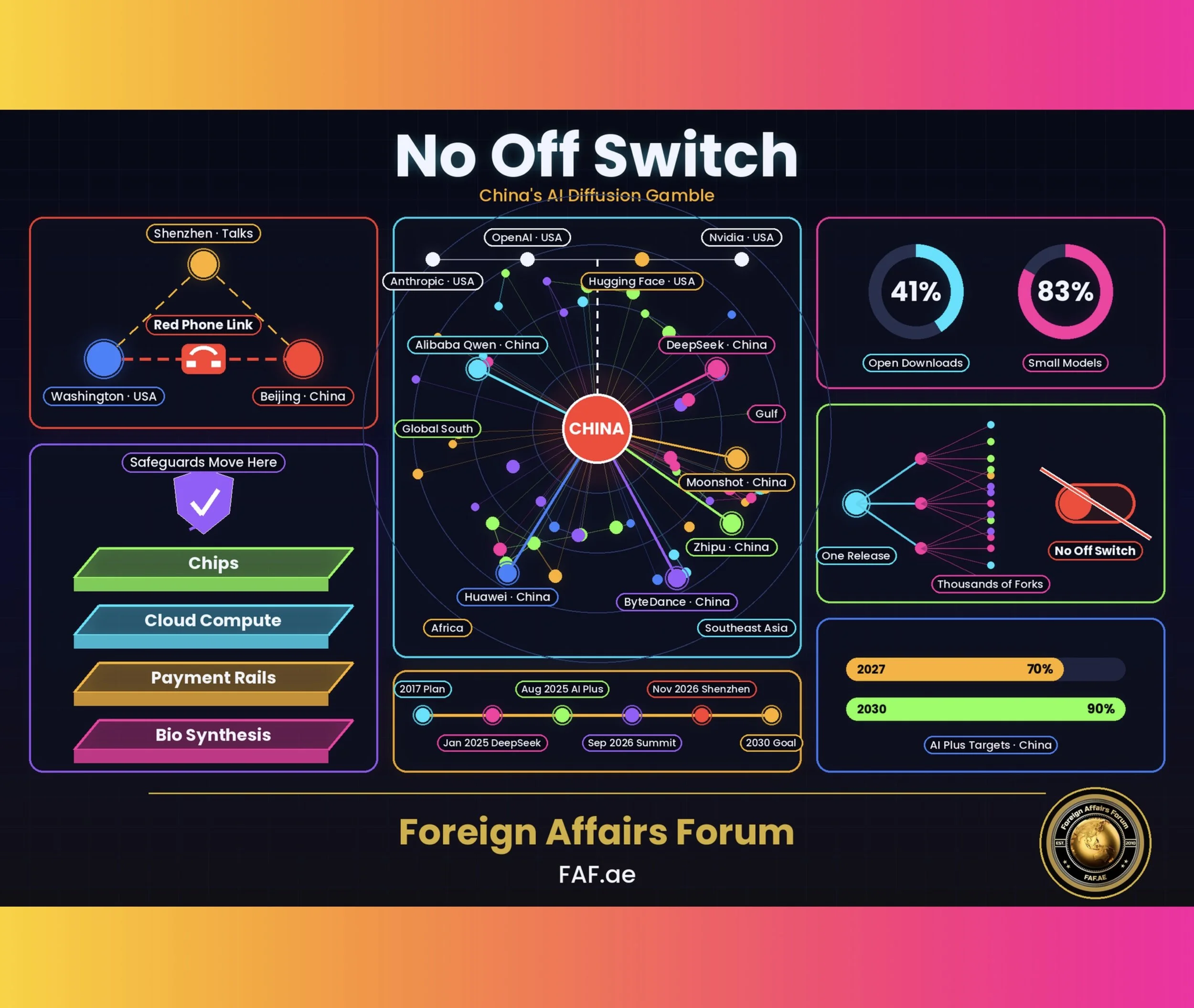
China's DeepSeek is preparing to raise more than 80 billion yuan, about $11.9 billion, and the company could be valued at around $74 billion.
Tencent and the battery maker CATL are expected to invest, and DeepSeek is working with Huawei on software for Huawei's chips. The picture is of China building a full home-grown system: its own money, chips, tools, models and apps.
Even so, China is finding ways around American limits.
Tencent has reportedly agreed to a five-year deal worth about $7 billion with Oracle for access to roughly 100,000 advanced chips in data centers across Southeast Asia.
Reuters says it could not independently confirm this report. If true, it shows that controlling where chips are shipped is not the same as controlling who gets to use them. Washington may need to rethink its rules.
Europe and Japan Join In
France's Mistral AI released Mistral Large 4 on October 6th.
The company says this open model beats several Chinese rivals in areas such as cybersecurity. It will be widely released on October 27, but experts and governments will get an early version first. Mistral has raised €3 billion ($3.4 billion), with ASML and Samsung among its investors.
Europe hopes to show it can build technology, not only regulate it.
Japan is expanding too. AirTrunk will add $1 billion to its data center near Tokyo, which will have more than 300 MW of capacity.
Another $15 billion, 400 MW project is planned by JERA, Dell and RHAELM. Japan is a close American ally, so this strengthens the wider group of friendly nations.
The Security Question
AI is getting very good at finding weaknesses in computer code. Anthropic's partners found at least 129,000 software weaknesses between April and July, and more than 33,000 were serious.
Anthropic is now giving its strongest tools to more approved security teams, including those who protect power grids and airlines.
This is useful for defense, but there is a danger. The same tool that helps a defender find and fix a weakness could help an attacker exploit it.
Dr. 🆎 warns that the rules developed for cyber tools will be needed for biological risks too, and that humans must always stay in charge of decisions that matter.
A Warning From the IMF
Kristalina Georgieva of the International Monetary Fund warned today that high energy costs, record debt and the AI boom itself are risks to the world economy.
The IMF thinks AI could add around 0.5% a year to global growth if handled well. But if companies do not earn the huge profits that investors expect, prices could fall sharply, hurting many other parts of the economy.
What Should Be Done
Governments should watch how much debt is flowing into AI and test whether the system could survive a downturn. They should build power plants and grids faster. They should close the loophole that lets companies rent chips that cannot be sold to them. They should agree on shared rules for who can use the most powerful AI tools. And friendly nations should work together, combining America's money and design skills, Europe's equipment and research, and Japan's industry and energy.
The Bottom Line
The AI race is no longer just about the smartest model. It is about who can pay for it, power it, protect it and keep it under human control.
Dr. 🆎 believes the countries that see the whole picture, rather than one headline at a time, will shape the rules for everyone else.