Beginner's 101 Guide: The Chips Behind the AI Boom: Who Builds Them, Who Pays and What Could Go Wrong
Foreign Affairs Forum | Dr. Antonio Bhardwaj (Dr. 🆎)| October 8th 2026
Why Chips Matter So Much
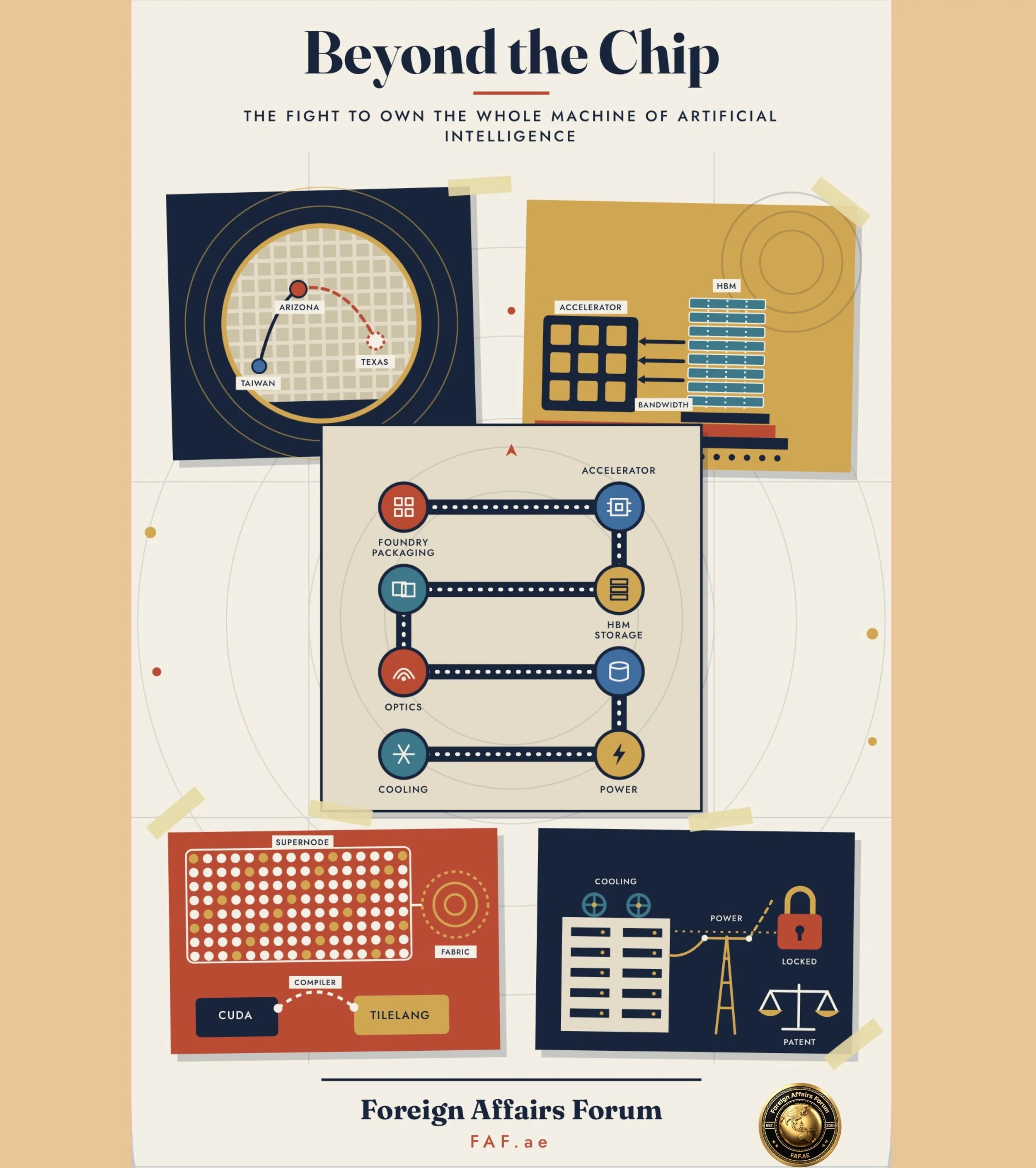
Artificial intelligence feels like a software story, but it runs on physical things: chips that do the thinking, memory that feeds them and factories that make both. This week's news shows how fast that world is changing and how fragile it still is.
Dr. Antonio Bhardwaj (Dr. 🆎), an expert in human-centered superintelligence, geopolitical strategy and AI warfare, says the countries and companies that control these physical layers will hold more power than those that merely write clever programs.
Custom Chips Are Rising
For years, almost everyone bought the same general-purpose graphics chip to run AI.
That is starting to change. Marvell Technology raised its forecast for fiscal 2028 revenue to about $20 billion, above the roughly $18.2 billion analysts expected. It now sees fiscal 2031 revenue of $70 billion to $90 billion, far above the roughly $46.9 billion analysts predicted.
The reason is simple. Big technology companies such as Google want chips designed for their own models.
Marvell expects about $12 billion from custom chips in fiscal 2029, and its deal with Google could bring in as much as $120 billion through fiscal 2033 if targets are met.
Dr. 🆎 notes that this spreads power around, because many firms will now supply the parts that go into many different chips.
A Second Supplier Steps Up
AMD's chief executive, Lisa Su, said in Taipei that the company will substantially increase its chip supply in 2027.
Making a good chip is only part of the job. A company also needs enough factory capacity, memory and packaging to deliver in huge numbers. If AMD succeeds, buyers will have a real alternative, which should help keep prices and risks down.
Japan's Big Bet
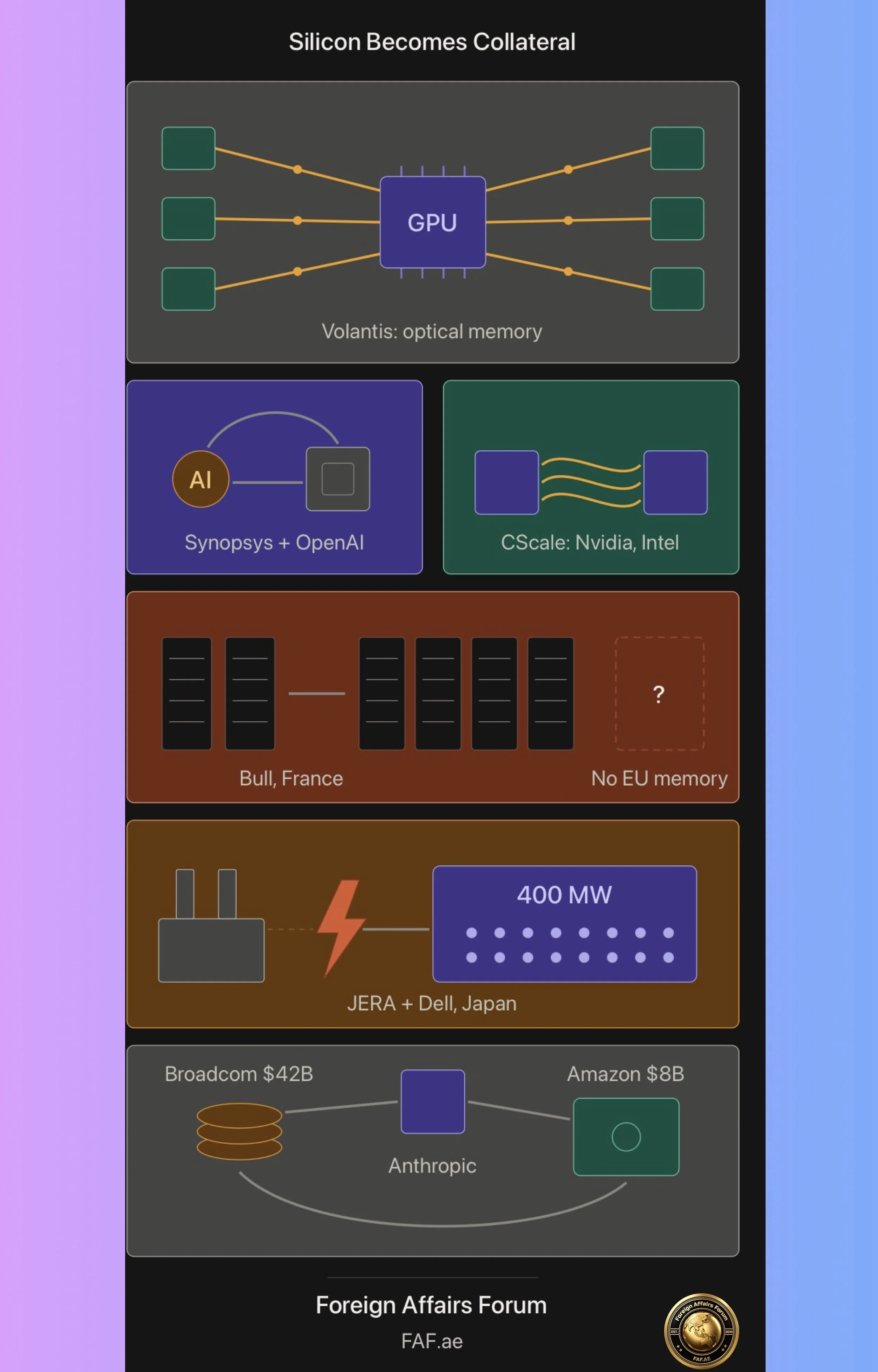
Japan's government has put about $15 billion behind a company called Rapidus, which wants to make the world's most advanced two-nanometre chips. The hard part now is finding customers.
Rapidus plans to start mass production in the second half of the next fiscal year and is working with 17 partners, including Synopsys and Infosys, to help customers design chips for its factory. It is competing with giants such as TSMC, Samsung and Intel, and it has never made chips at high volume.
Dr. 🆎 sees it as one of the most important experiments of the decade, because success would make the world less dependent on a few locations.
Memory Is the New Bottleneck
Memory has become one of the tightest parts of the AI supply chain.
At Micron's largest site, in Taoyuan, Taiwan, workers have authorized a strike. Some 99% of participating union members voted in favor. No strike date has been set and talks can continue, but the plant makes the memory used in AI servers.
Micron employs about 15,000 people in Taiwan, and its unions represent more than 80% of them. The dispute is about bonuses and profit-sharing.
Meanwhile Samsung is recovering strongly.
Analysts expect its third-quarter operating profit to rise almost ninefold. Its share of the advanced memory market is expected to grow from roughly 20% to 34% during 2026.
Ordinary memory prices are expected to rise another 10% to 15% this quarter, much slower than the roughly 60% jump in the second quarter.
Money Is Pouring In
Building all this costs huge sums.
Lambda, an AI cloud company backed by Nvidia, is seeking as much as $4 billion before a planned public offering, at a reported value of about $14.5 billion before the new money.
DayOne, a Singapore-based data center company, has filed to list in the United States. Its revenue in the first half of 2026 was about $512 million, up from $151.5 million a year earlier, but its loss widened to about $77.2 million from $12.6 million.
Behind both is a reported $40 billion plan by SpaceX, led by Apollo, to buy Nvidia chips. About $10 billion would come from bank loans and $30 billion from investment-grade debt. It is expected to close in 2027 and has not been confirmed by the companies.
What Could Go Wrong
Several things could.
A few factories and a few memory makers still supply most of the world's best chips, so a problem at one site can spread everywhere.
Companies are borrowing heavily to buy chips that age quickly, which is risky if demand slows or prices fall. And as chips become cheaper and easier to get, more people, including dangerous ones, could build powerful AI.
Dr. 🆎 warns that the old difficulty of getting advanced chips acted as an unplanned safety brake, and that brake is weakening.
What Should Be Done
Governments should help new factories find customers, not just build plants. They should invest in memory and packaging and spread them across more places.
Companies should treat workers fairly, since a labor dispute at one plant can shake a whole industry. Lenders should watch the debt behind AI carefully. And allies should agree on rules about who can buy large numbers of advanced chips and how they are used, with humans always in charge of decisions that matter.
The Bottom Line
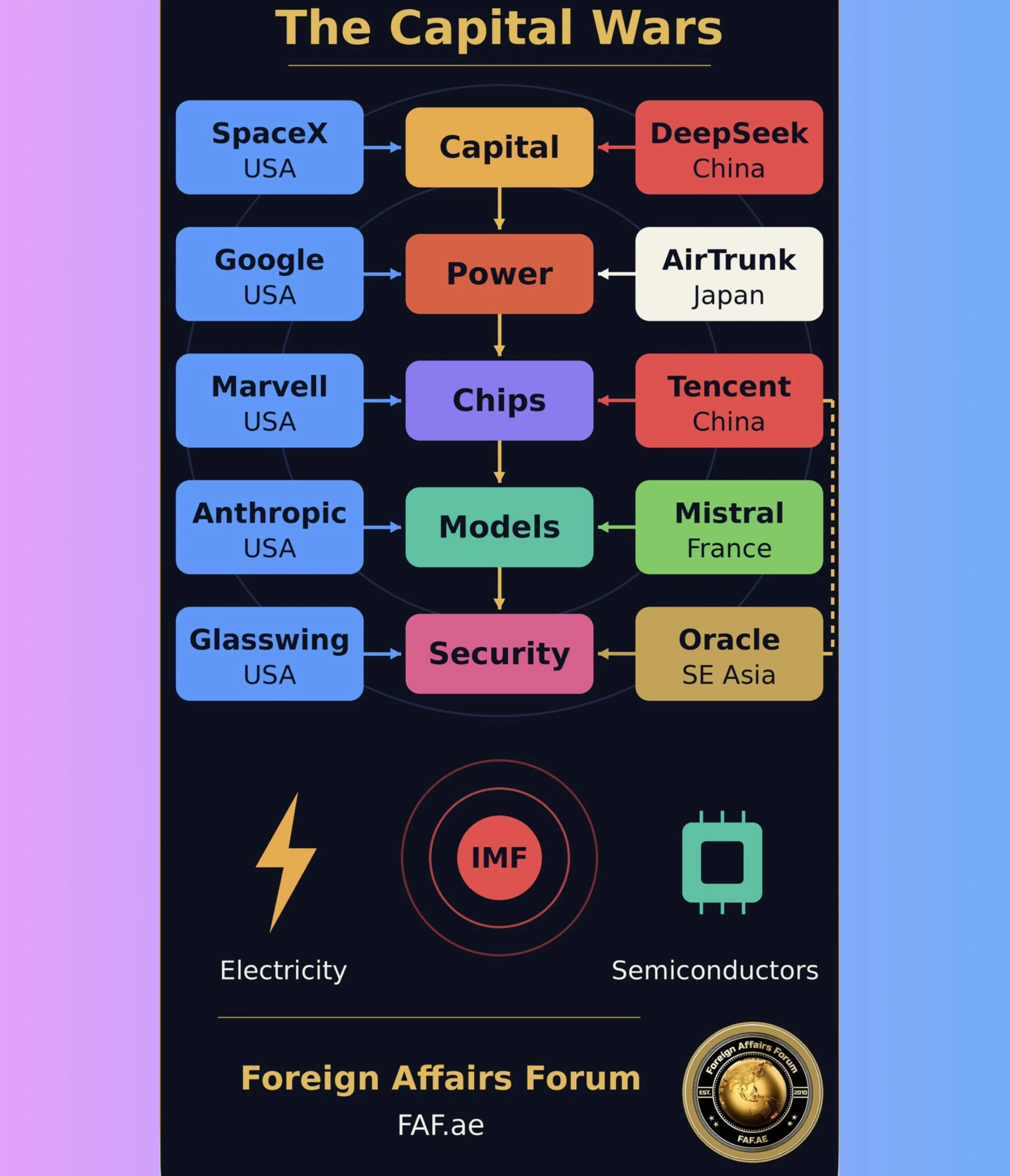
The AI race is a race to build, power, fund and protect the physical systems beneath it.
Dr. 🆎 believes the countries that understand the whole chain, from design to factory to financing, will shape the future for everyone else.