A Beginner's Guide: Seven Crises, One Message—The World Is Getting More Dangerous and More Connected
Introduction
Many news stories are arriving at the same time, and it can be hard to see how they fit together. A huge wave of drones has hit Russia. A war in Yemen is now reaching Saudi Arabia. A small country in Europe wants to allow nuclear weapons. A ship has sunk in the Black Sea.
These stories seem separate, but they share one idea, and Dr. Antonio Bhardwaj (Dr. 🆎), a specialist in human-centered artificial intelligence, geopolitical strategy and AI warfare, explains it clearly. In his view, the world is entering a period in which cheap weapons, key sea routes and energy supplies decide who has power. This article explains the seven main stories in simple language and shows how they connect.
Drones Over Russia
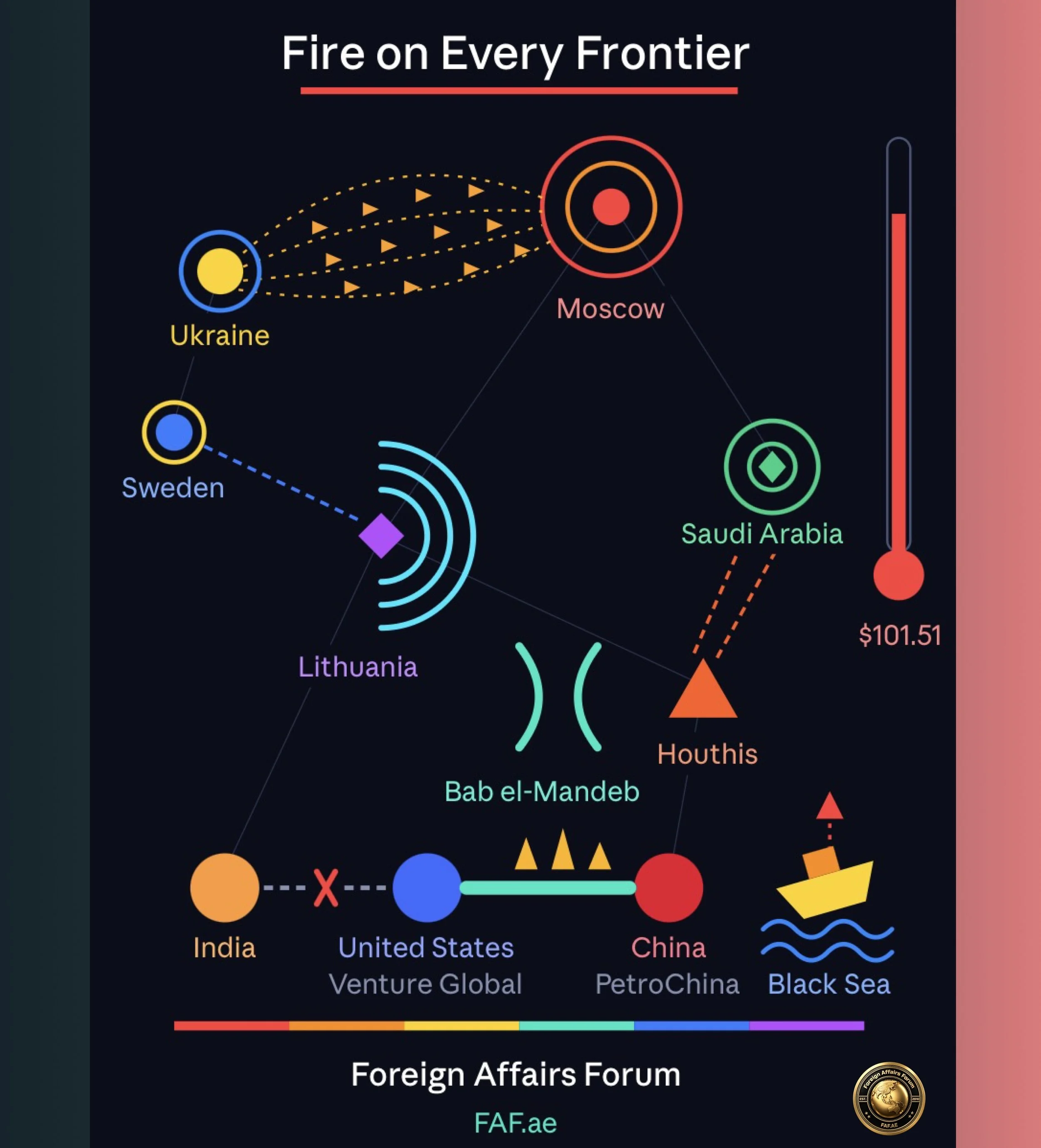
Ukraine sent more than 650 drones toward Russia, according to Russian authorities. Russia says it stopped 185 of them near Moscow. Two people died and several were hurt. Russian military bloggers said a large fuel depot that supplies Moscow's airports was hit. Russia then attacked the Ukrainian capital, Kyiv, early on October 7, and a factory site in Dnipro was also struck.
Why does this matter?
Both countries are now trying to damage each other's fuel, transport and industry, not just fight on the front line. Drones are cheap, but the systems that stop them are expensive. Armies around the world, including in Asia and Europe, are watching closely.
Dr. 🆎 says this changes the cost of war, because a small group with simple machines can now threaten very valuable targets.
War Reaches Saudi Airports
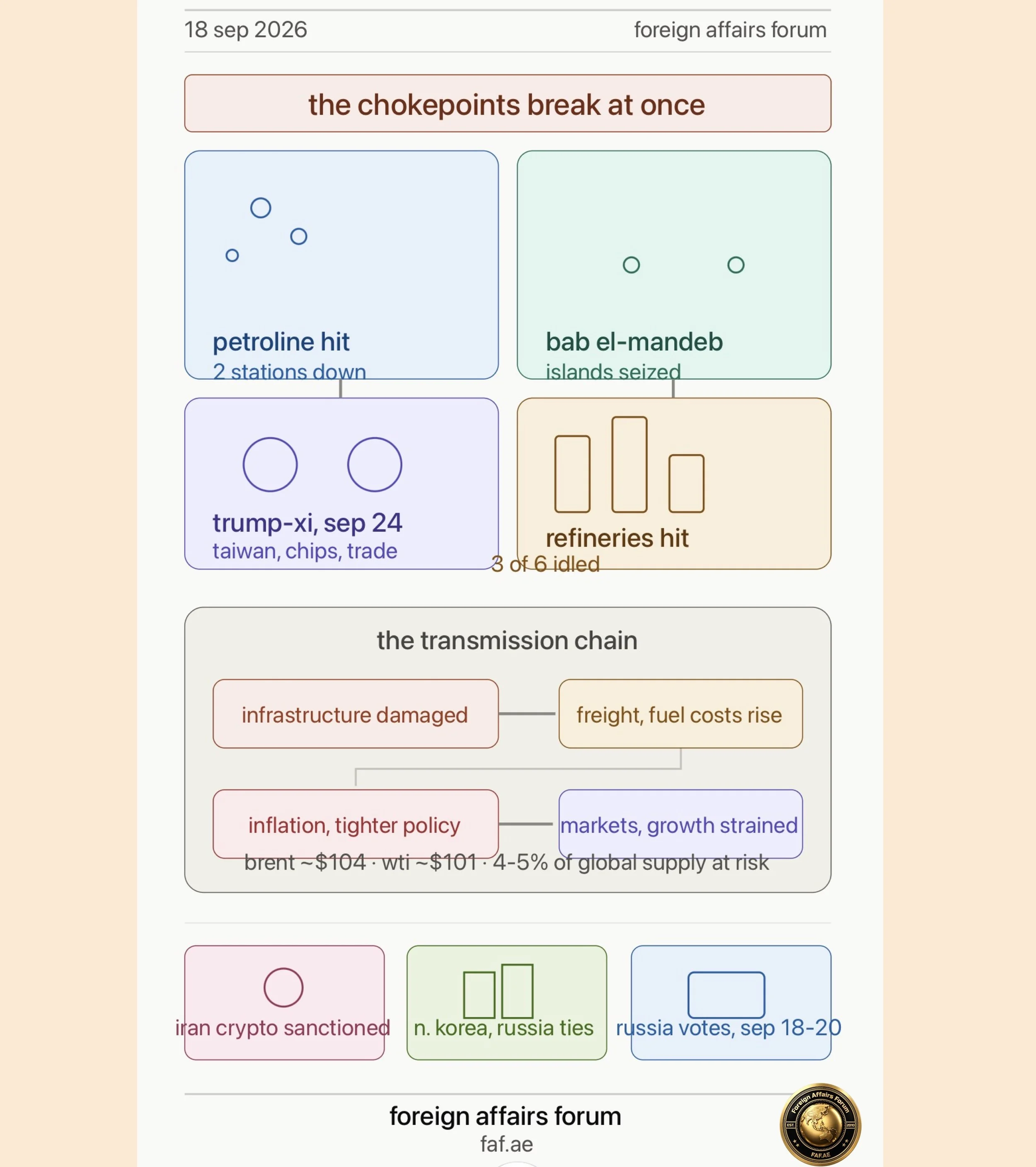
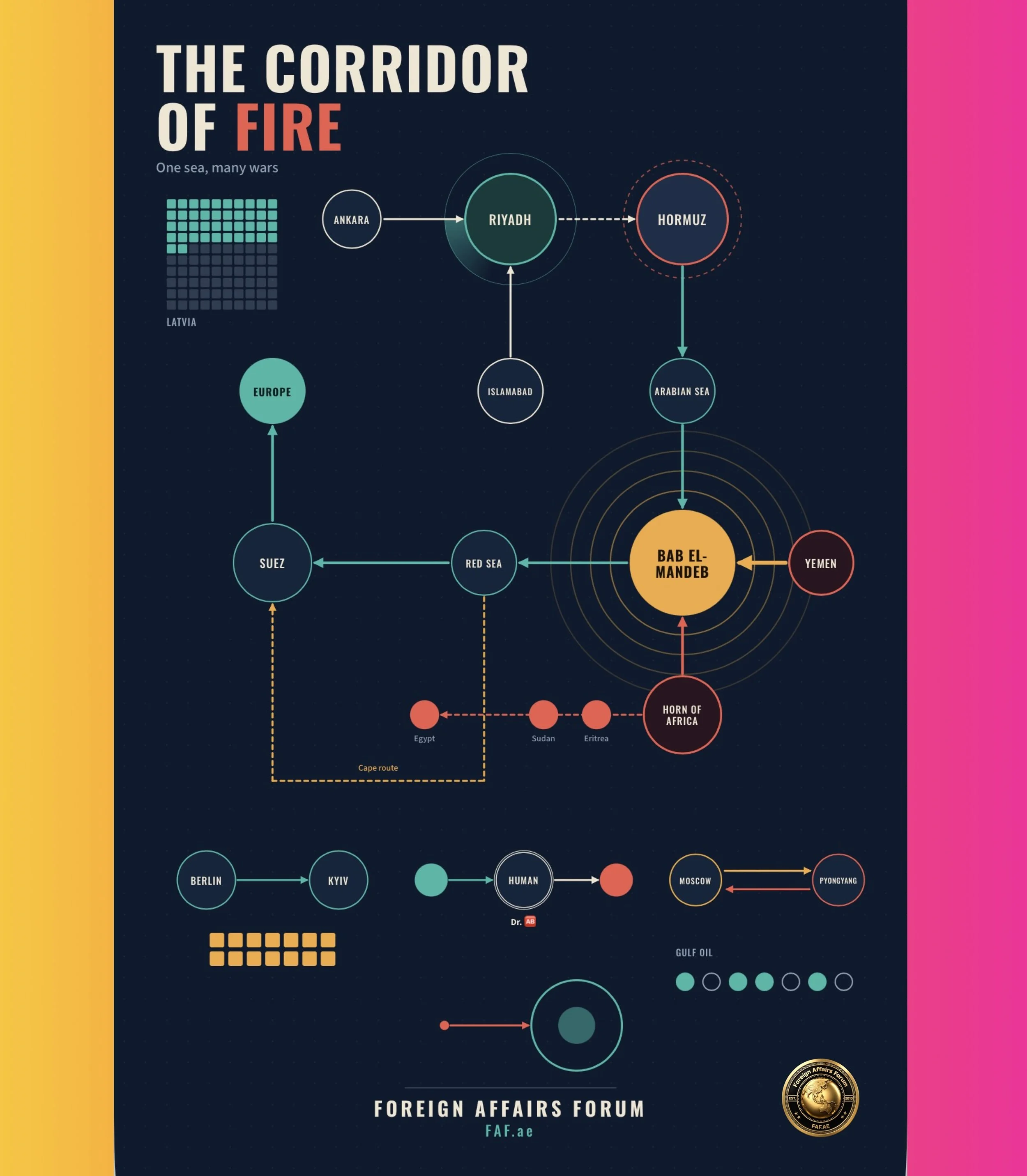
In Yemen, the Houthis, a group backed by Iran, attacked two airports in southern Saudi Arabia and fired missiles at the airport in Aden. Three people were reportedly injured at the Saudi airports. This came after forces backed by Saudi Arabia won back some areas near the Bab el-Mandeb Strait, a narrow sea passage that many oil and gas ships use.
The danger is that the fighting may spread to Saudi oil sites. Oil prices have already risen. Brent crude is now about $101.51 a barrel. Ships might again avoid the Red Sea and take the much longer route around Africa, which costs more time and money.
Dr. 🆎 warns that markets often react too late, because a small attack can become a large one very quickly.
Lithuania and Nuclear Weapons
Lithuania's parliament has passed the first of two votes needed to remove a ban on nuclear weapons in its constitution. Russia said this would be a serious escalation. Lithuania sits next to Russia and Belarus, and close to Russia's Kaliningrad region. It already hosts about 1,000 American troops on a rotating basis.
Supporters say it would make Russia think twice before attacking. Critics say it would shorten the time leaders have to react in a crisis and make mistakes more likely.
Dr. 🆎 sees the vote mostly as a message that small countries near Russia want stronger and clearer protection from their allies.
Sweden Helps Poland
Sweden announced on October 6 that it will send Patriot missile defenses to eastern Poland. Poland is the hub through which a great deal of help for Ukraine travels. Sweden joined NATO only recently, yet it is already taking on an important job.
Russia does not have to attack NATO soldiers to cause trouble. Cyberattacks, sabotage or strikes on railways and warehouses could slow down aid. Protecting these places is therefore very important. Together with Lithuania's decision, this shows that the area from the Baltic Sea to Poland is becoming the most heavily defended part of NATO's border since the Cold War.
India, America and Russian Oil
Trade talks between India and the United States have stopped again. The United States is unhappy that India still buys Russian oil. There is also talk of new tariffs and an American investigation into industrial overcapacity. India sold about $42.79 billion of goods to the United States between April and August 2026, so a lot of money is at stake.
India wants cheap energy and wants to make its own decisions, and it also wants to protect farmers. The United States wants India to help weaken Russia's income but also to stand beside it against China's growing power. If Washington pushes too hard, India may move further away.
Dr. 🆎 notes that when a country has many partners, it is much harder to pressure.
China, America and Gas
There is a surprising story in energy. The American company Venture Global is reported to be talking with at least three Chinese buyers, including PetroChina, about long-term sales of liquefied natural gas. One deal could be more than one million metric tons a year. China had stopped buying American gas after it put a 15% tariff on it in 2025.
Now, because the Iran war has made Middle Eastern routes risky, China wants more safe sources of energy. Another Chinese company has already agreed a 20 year deal that begins in 2030.
This shows that rivals can still need each other. It may even help keep the relationship steadier. But it could also make gas more expensive for Europe, which competes for the same supplies.
Ships Under Attack in the Black Sea
A merchant ship reportedly sank after a drone attack in Bulgaria's waters. Some crew members were hurt and others are missing. The head of the European Commission, Ursula von der Leyen, said attacks on civilian ships are unacceptable. Investigations continue.
The Black Sea carries grain, fertilizer and fuel to many countries. Attacking one ship is cheap, but the fear it creates can make insurance much more expensive for every ship that follows. Higher costs can lead to higher food prices, especially in Africa and the Middle East.
What It All Means
Taken together, these stories show that the map matters again. Straits, ports, airports and borders are now key tools of power, and energy, trade and shipping are closely tied to security.
Oil is above $101 a barrel, and oil stocks around the world are low. Saudi Aramco's chief executive, Amin Nasser, has warned that rebuilding them could take up to two years.
Three things deserve attention in the next few days.
First, whether the Houthis start attacking Saudi oil sites and not only airports. Second, whether Lithuania completes its second vote. Third, whether Ukraine's drone campaign truly disrupts Russian fuel supplies.
Dr. 🆎 believes the biggest danger is not one dramatic decision but many small steps that, added together, leave less room for calm. His advice is that leaders should keep humans in charge of key decisions, keep talking to rivals, and protect the roads, airports and sea lanes that everyone depends on.