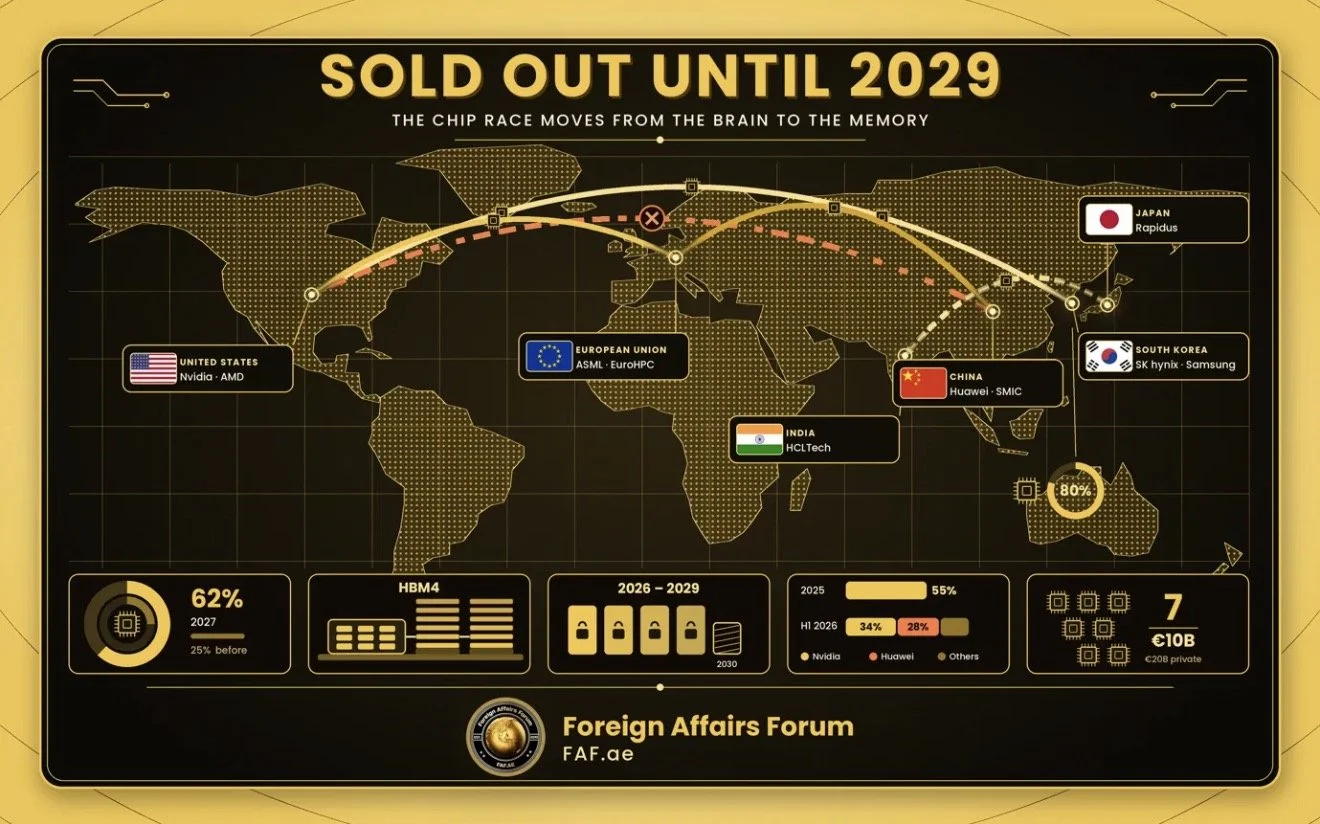
Sold Out Until 2029: The Chip Race Has Moved From the Brain to the Memory
Introduction
This week's chip and supercomputing news shows that processing power is no longer AI's scarce resource.
For most of the past decade, the semiconductor story was about the processor: who could design the fastest GPU, and who could manufacture it at the smallest node.
This week's news points somewhere less glamorous. The bottleneck is increasingly the memory that feeds those processors, and the packaging that bolts it all together.
Governments from Washington to Brussels to Beijing are reorganizing their strategies around that shift, even if they don't always say so.
The Number That Stopped Traders Cold
On Wednesday, SK hynix reported third-quarter revenue of KRW 104.6 trillion, the first time the company has crossed KRW 100 trillion in a single quarter.
Operating profit reached KRW 83.3 trillion, an 80% margin that would be remarkable for a software firm and is almost unheard of for a company that makes physical goods in multibillion-dollar factories. Both figures beat analyst forecasts.
The headline is the margin, but the more important detail is the order book.
SK hynix says its DRAM and high-bandwidth memory output is effectively sold out through 2029, and it expects shortages to last into 2030. It has signed long-term supply agreements with 14 major customers, up from 10 last quarter, and those contracts already cover more than half of planned 2027 and 2028 production.
Its next-generation HBM4 is expected to overtake the current HBM3E generation in both shipments and revenue in the fourth quarter.
Press reports say Samsung also posted record results. We couldn't verify its figures.
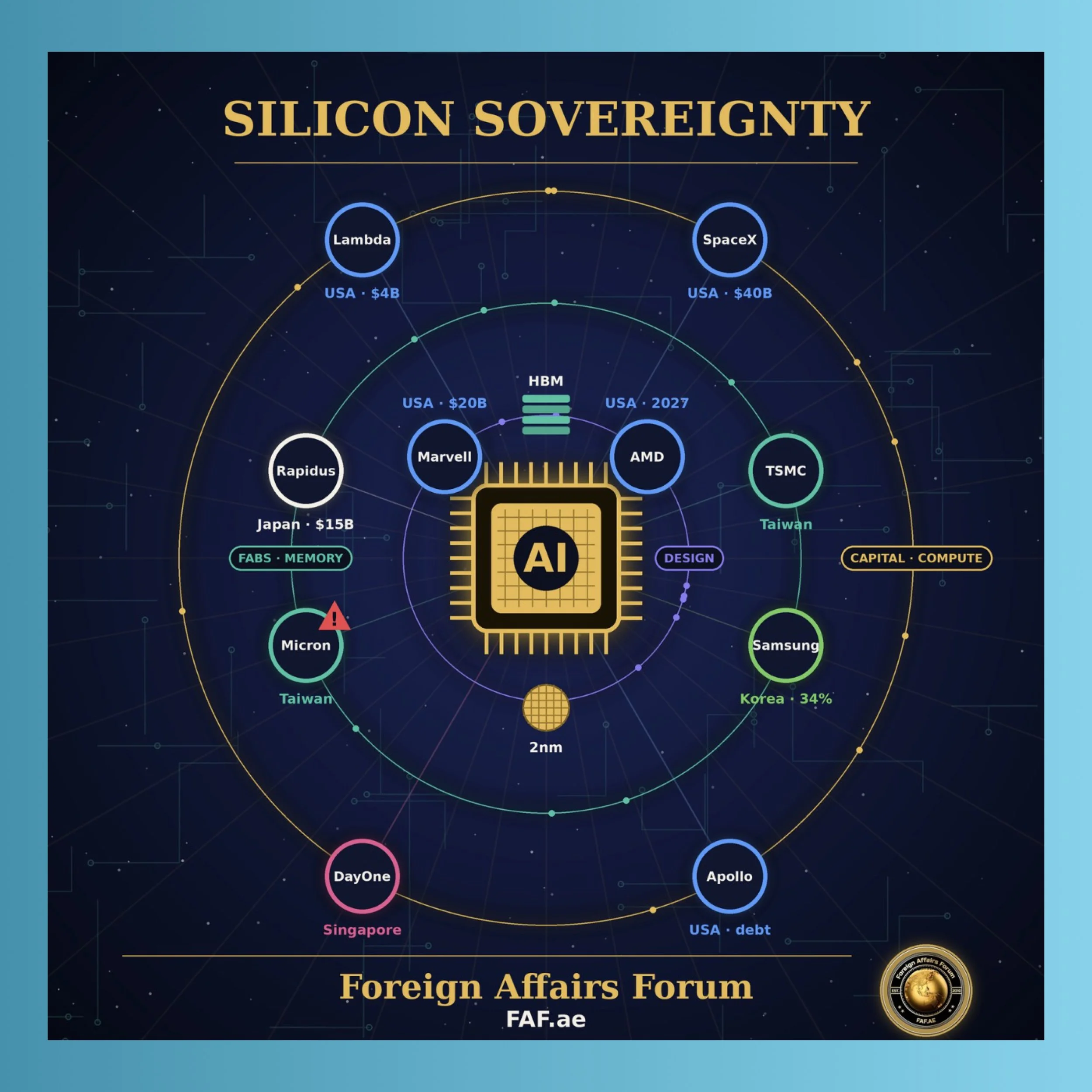
A separate industry outlook published this week by TechInsights projects that memory will account for roughly 62% of all semiconductor revenue in 2027, compared with about 25% historically. If that holds, the industry's center of gravity is shifting from logic to memory.
"We spent years asking who would build the best AI chip," says Dr. Antonio Bhardwaj. "The better question now is who can actually feed it. A processor waiting on memory is just an expensive heater, and the companies that control HBM supply are quietly setting the pace for everyone else's roadmap."
That observation has uncomfortable implications for smaller players.
Multi-year contracts and sold-out capacity favor hyperscalers with the balance sheets to commit early.
A startup building AI hardware or a regional cloud provider may find that the constraint is not funding or talent but simply getting an allocation.
Washington and Beijing: A Standoff With Leaks
The geopolitical layer runs through the same hardware.
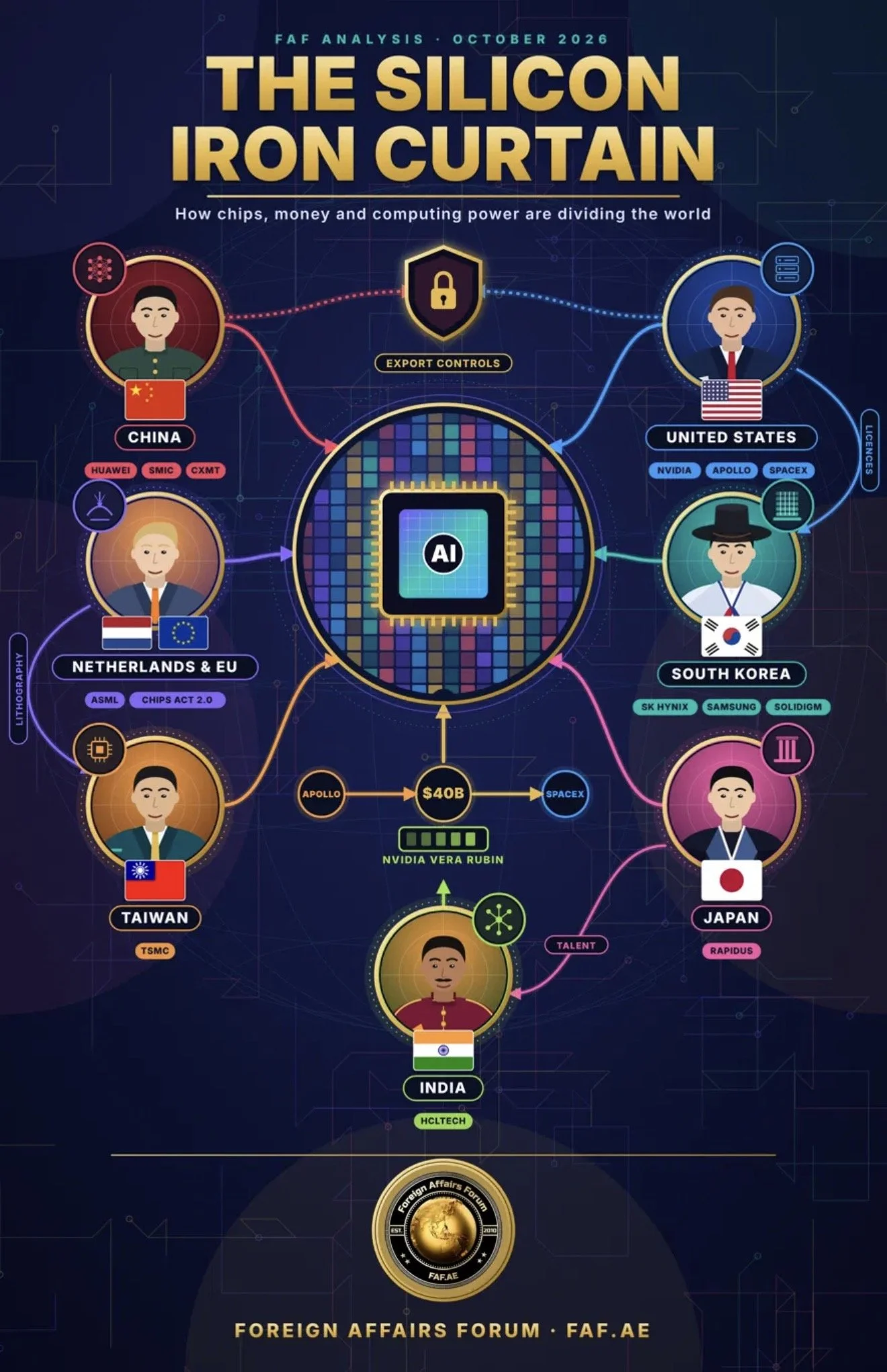
The U.S. position is still defined by a January 2026 Commerce Department rule that moved licensing for chips such as Nvidia's H200 and AMD's MI325X to a case-by-case review.
Applicants must show compliance procedures, independent U.S.-based testing, and that exports won't reduce supply for American customers.
In practice, the policy has been slow-moving on both ends.
Commerce Secretary Howard Lutnick said earlier this year that no H200S had been sold to China, and reports suggest Beijing itself rationed purchases, with one August account putting deliveries at just 13% of the approved quota. Neither government appears eager to let the trade flow freely.
This week added a new complication.
CNBC ran a story on a report alleging that Nvidia CEO Jensen Huang had been targeted as a Chinese intelligence asset, and Nvidia responded that earlier diversion allegations had been "investigated and debunked."
We could confirm the headline and Nvidia's response, but not who made the underlying allegations or what evidence exists, so readers should treat the claims with caution.
The political effect is predictable: any story linking Nvidia to China's security services strengthens lawmakers pushing for tighter chip-security rules.
China Builds Its Own Stack
While Washington and Beijing negotiate over what Nvidia can ship, China's domestic industry is filling the gap.
IDC figures cited by one industry newsletter put Nvidia's share of China's AI accelerator shipments at 34% in the first half of 2026, down from 55% in 2025.
Huawei nearly doubled its shipments to about 572,000 units and now holds roughly 28%. Five Chinese suppliers together account for about 47%.
Two caveats matter.
IDC counts units, not revenue, so Nvidia's share by value is almost certainly higher than 34%. And some figures circulating online are less reliable: one analyst estimate puts Huawei near 50% of the market, and reports of a draft national AI-grid plan requiring 80% domestic technology are unconfirmed.
Manufacturing is more constrained than demand. SMIC's second-quarter revenue rose 36% year on year to $3.0 billion, but its fabs ran at roughly 94% capacity.
That suggests Chinese chipmakers are not short of orders. They cannot produce enough advanced chips and, in particular, enough high-bandwidth memory packaging at volume.
"Export controls were designed to deny capability," Dr. Antonio Bhardwaj notes. "What they have done instead is create a captive customer base for every Chinese chip designer.
The open question is whether China's manufacturing ceiling arrives before its software ecosystem matures. That race, not any single license decision, will determine how much the controls ultimately achieved."
For investors, the signal is the listing pipeline. YMTC, the memory maker, is reportedly preparing a Shanghai IPO of roughly $4.9 billion, which fits a pattern of state-backed capital flowing through the domestic substitution chain and exiting through public markets.
Europe Buys Compute and Writes the Rules
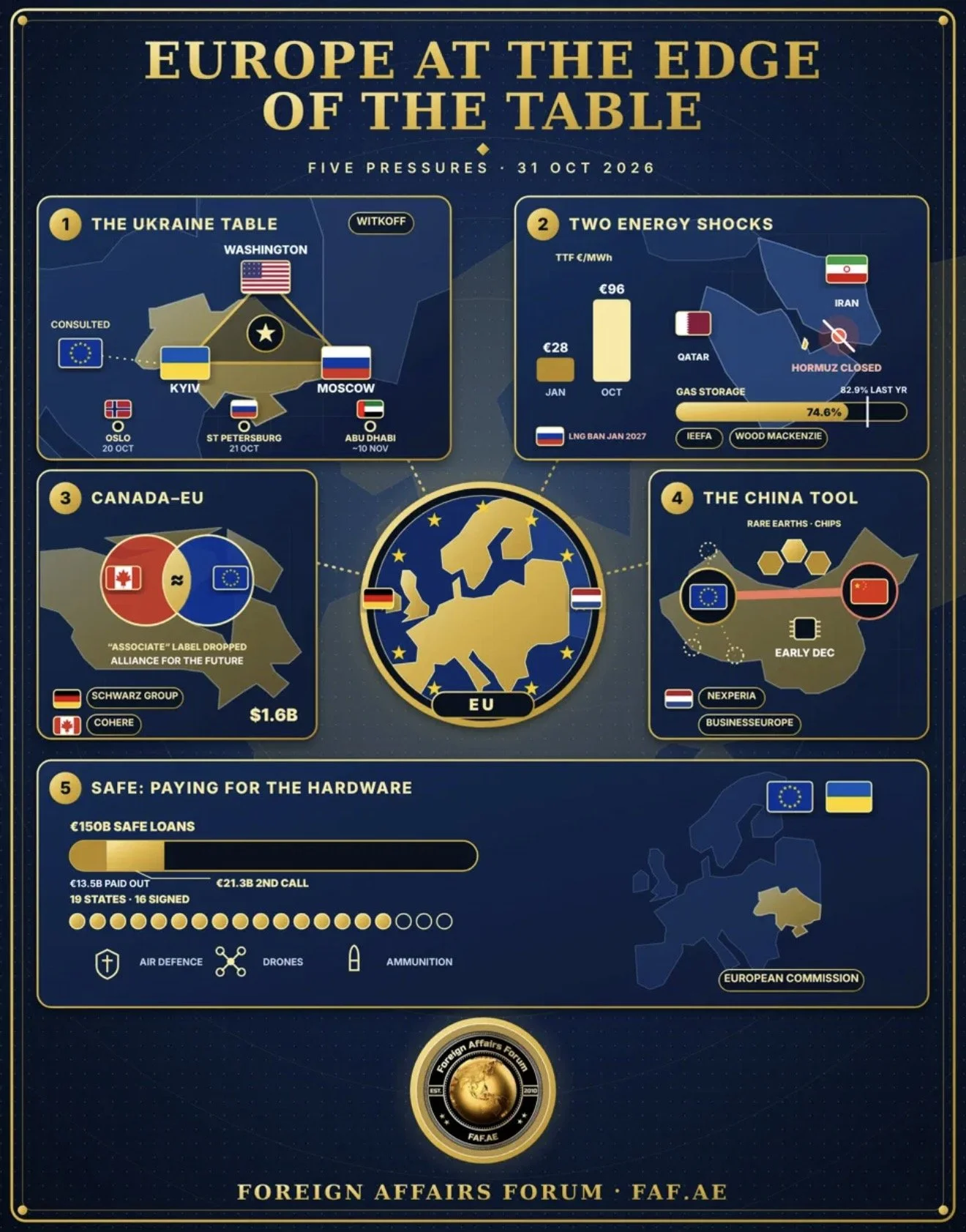
Europe's response is characteristically institutional. EuroHPC's call for up to seven "AI Gigafactories" was issued on July 30, with tenders due November 12.
The program offers up to €10 billion in combined EU and national support and aims to unlock at least €20 billion in private investment. Each site is expected to host tens of thousands of H100-equivalent accelerators in its first phase, scaling to as many as 100,000.
The most interesting part is the fine print.
The tender is chip-neutral, so bidders can use whatever accelerators they choose. Still, it requires a European-controlled cloud and AI software stack, keeps core operational data under EU jurisdiction, and encourages European-designed chips in a later phase.
Non-EU investors can participate but cannot gain direct or indirect control.
In effect, Europe is trying to secure sovereignty at the layer where it still has leverage, which is control of services and data, rather than at the manufacturing layer where it has fallen behind.
That gap is stark. Reporting from September, which were seen only in headlines and snippets, says ASML has sold no lithography systems in Europe in 2026, even as the EU debates a "Chips Act 2.0."
Europe builds the machines that make the world's chips, but it barely buys them for its own use.
"Europe is trying to win on rules and procurement what it lost on fabrication," says Dr. Antonio Bhardwaj. "That can work if the demand is real and the bids are credible. But sovereignty that depends on imported accelerators is only as strong as the supply agreements behind them, and this week's memory numbers show how tight those are."
Japan and India Build Talent Bridges
The quieter story comes from Asia.
On October 27, Digitimes reported that HCLTech and Japan's Rapidus opened development centers in Bengaluru and Hubli, India.
The reported aim is to connect Indian engineers to Rapidus's planned manufacturing in Japan.
Details such as staffing, investment size, and timelines were behind a paywall, so the effort's scale is unclear.
The logic is nonetheless sound.
Rapidus is attempting to build a leading-edge foundry from a standing start, and it needs design and process talent as much as capital.
India has the engineers and wants a larger place in the chip supply chain. Together they sketch a supply-chain alternative that runs through neither China nor Taiwan, though Rapidus still has to prove it can win major customers.
A supercomputing outlet also reported that Japan's next flagship machine, FugakuNEXT, will use Nvidia GPUs and abandon the chase for a top spot on the TOP500 ranking. If accurate, it reflects a broader change: national supercomputers are increasingly judged by AI throughput rather than benchmark prestige.
What to Watch
Several threads will resolve soon.
Bids for the European gigafactories close on November 12, and the list of consortia will show whether private capital is willing to meet the EU's conditions.
The TOP500 list is expected at the November supercomputing conference, though the date couldn't be confirmed, and it will offer a fresh comparison of U.S., European and Asian systems.
In Washington, watch for congressional reaction to the Nvidia report and any Commerce action on offshore data centers or transshipment through Southeast Asia.
In Seoul, watch Samsung's HBM4 progress, since one analyst reportedly expects it to lead in 2027, which is a forecast, not a fact.
The common thread is scarcity. Memory is sold out, advanced fabs are full, and export policy is built around controlling access to a short supply.
For founders, investors, and governments alike, the winners of the next phase may be the ones who secured their allocation early.