After the Ballot: Oil, Strikes, and Two Governments in Limbo
Foreign Affairs Forum | Dr. Antonio Bhardwaj (Dr. 🆎) | October 31, 2026
Executive Summary
Three decisions will be made in the next ten weeks, and none belongs to a single government. Washington will learn on November 3 how much political room the White House retains.
Jerusalem will spend November working out whether Benjamin Netanyahu can assemble a majority or whether voters return to the polls.
Between those events sits a possible renewed American campaign against Iran, which Gulf officials quoted by MS NOW place as early as November 4.
Brent crude, which closed the week near $117.56 a barrel and is heading for a fourth straight monthly gain, is the market's running estimate of how these decisions will interact.
This FAF article argues that oil is pricing a range of outcomes rather than a single forecast.
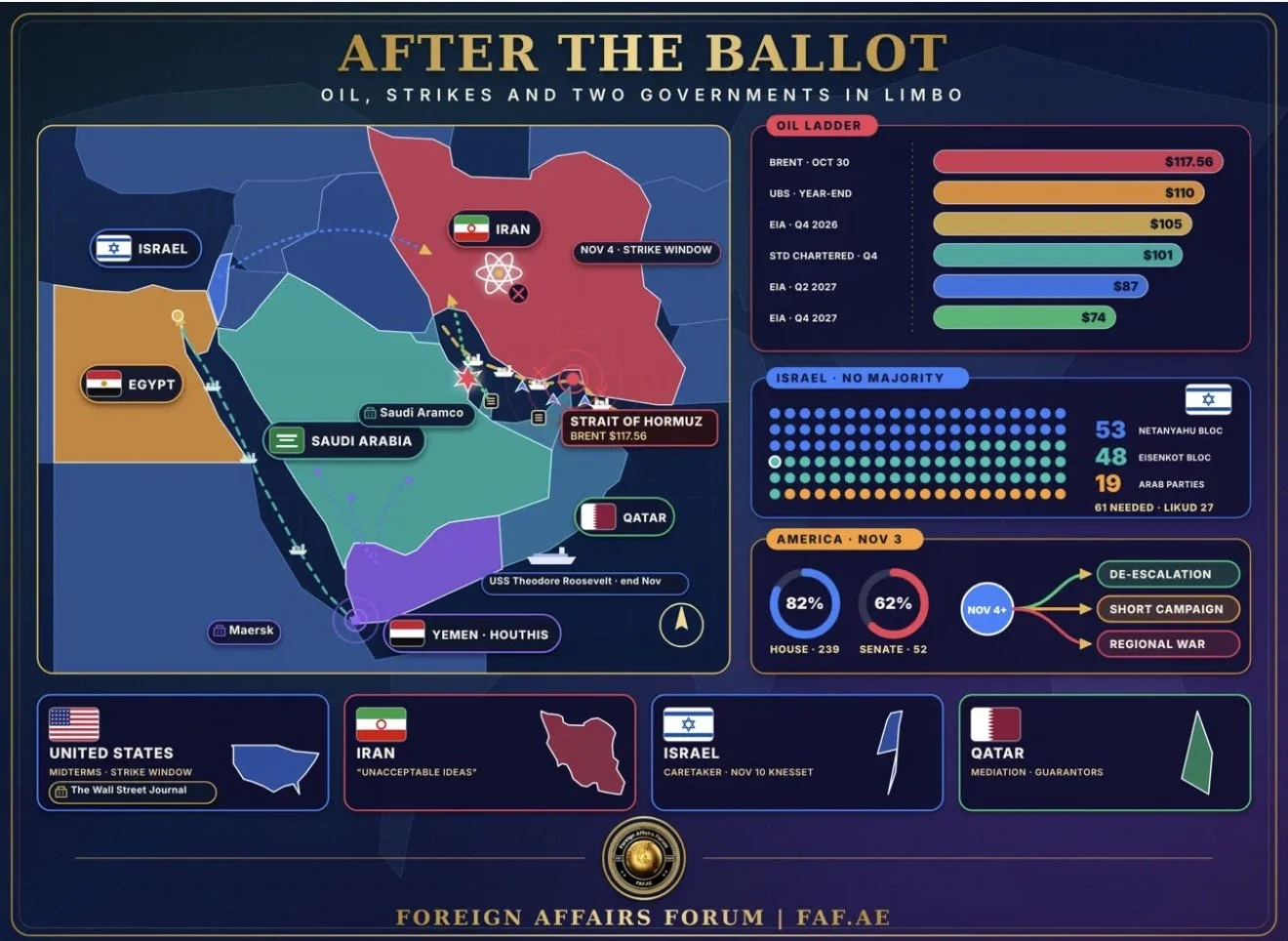
Official and bank forecasts already assume constrained Gulf flows: the US Energy Information Administration expects Brent to average $105 in the fourth quarter of 2026, UBS has lifted its year-end view to $110, and Standard Chartered sees about $101 for the quarter.
A renewed campaign would add a spike on top of that baseline, while a credible deal would remove much of the war premium.
The shared constraint is the calendar. The Knesset is sworn in on November 10, a possibly hostile new American Congress sits on January 3, and Israel's caretaker government retains its security powers until a successor is formed.
Dr. 🆎 argues that the stretch between the American vote and the new Congress is the most consequential of the war, because it combines maximum executive freedom with minimum political accountability.
The Strategic Stakes
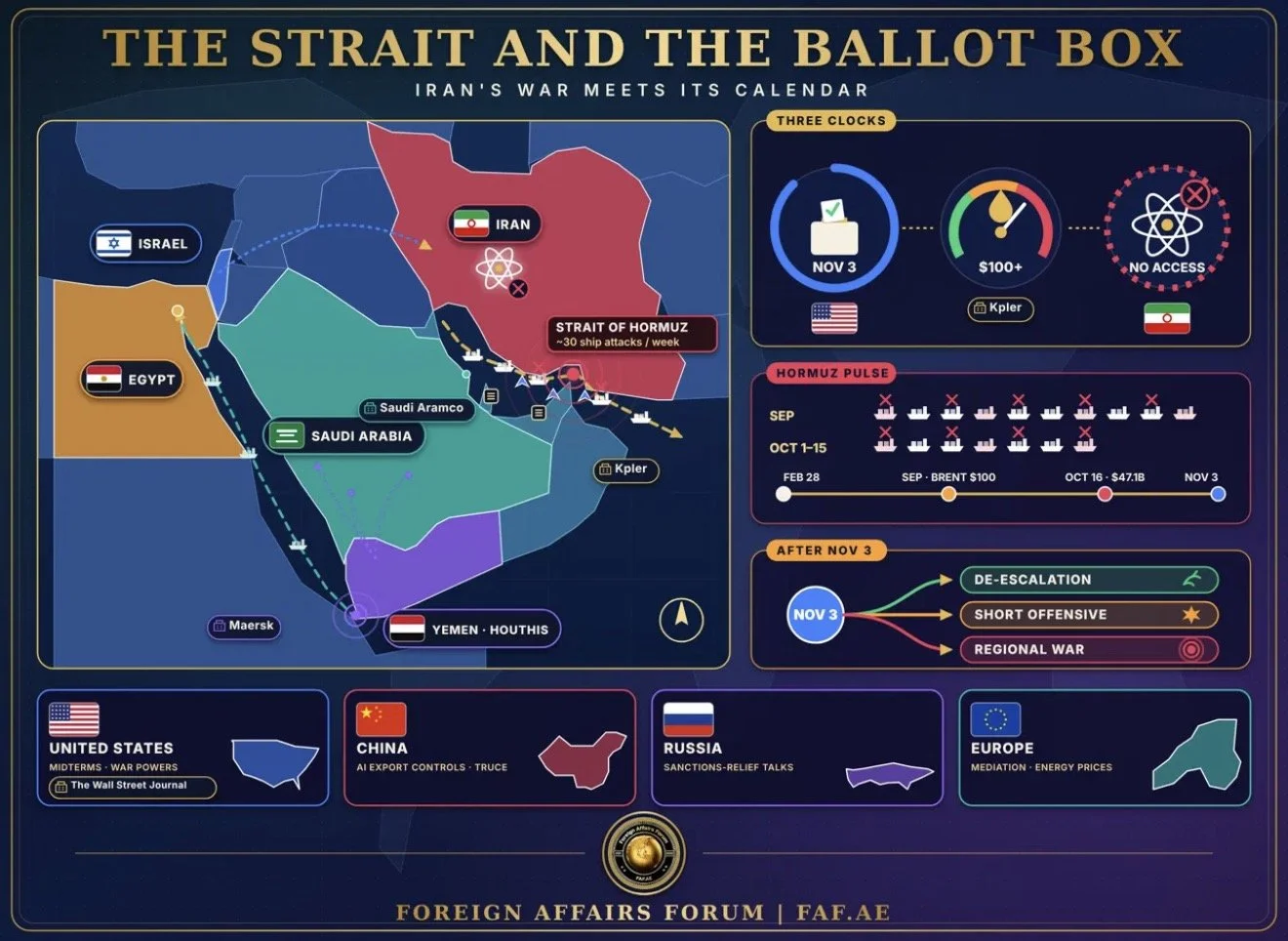
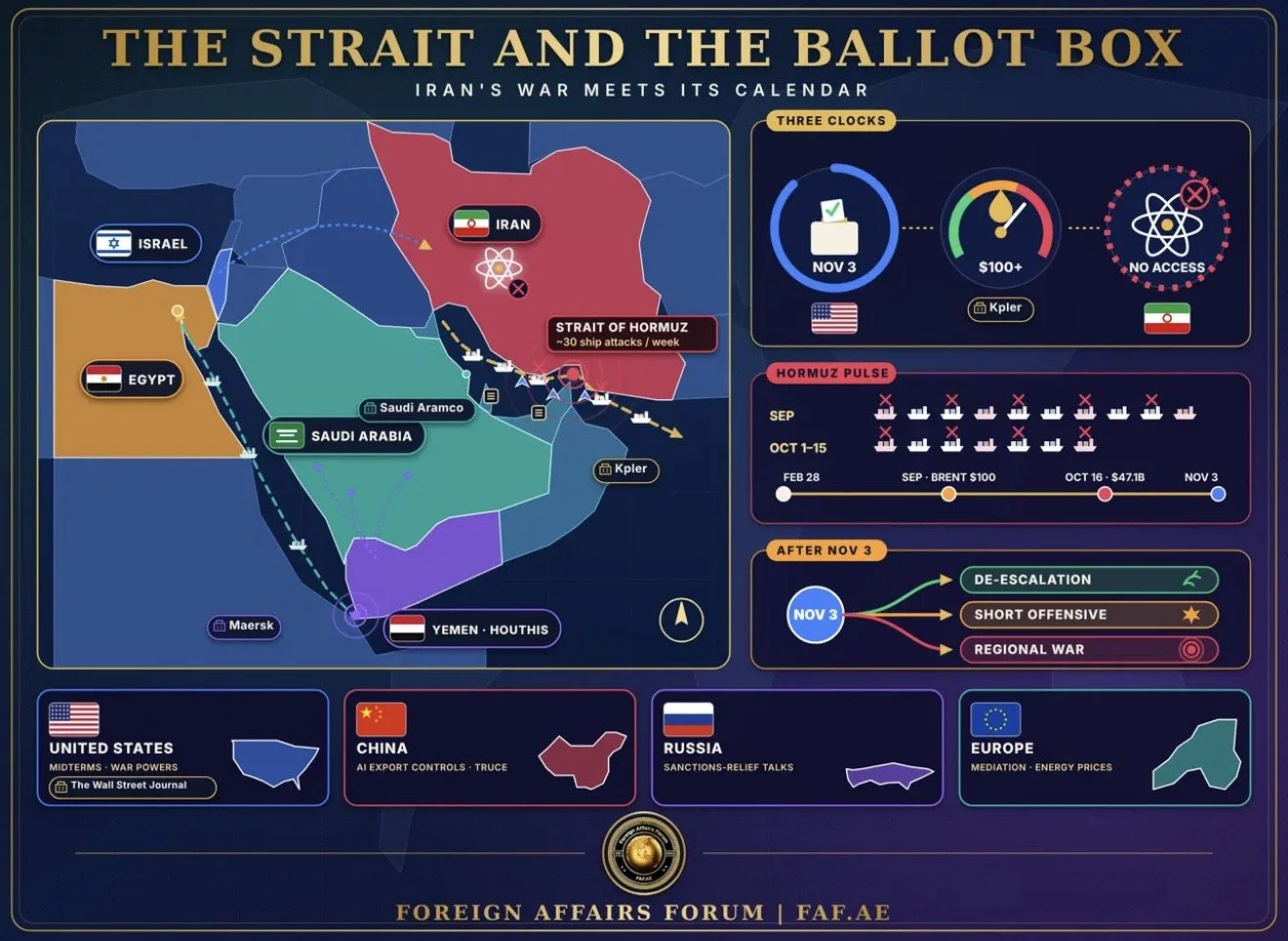
The war began on February 28, 2026, and is now in its ninth month. It has settled into intermittent exchanges, disrupted traffic through the Strait of Hormuz, which carried roughly a fifth of pre-war global energy supplies, and elevated prices.
The Pentagon estimates the cost to American taxpayers at $47.1 billion.
The United States has not struck Iran since early September, according to AP, although Iranian pressure on shipping continues.
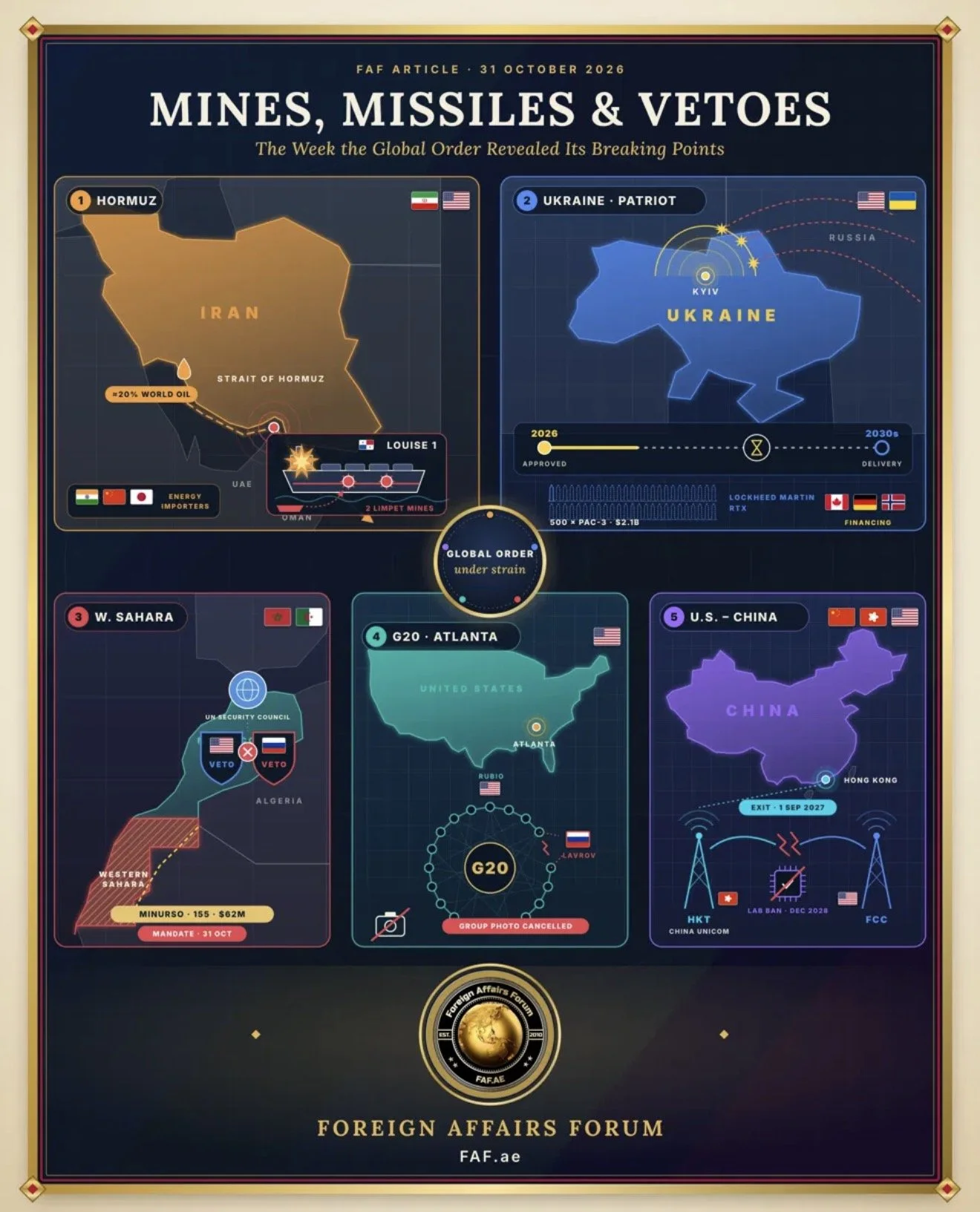
This week the Revolutionary Guard said a tanker hit a mine on an unauthorised route, and the UK Maritime Trade Operations agency reported another tanker struck by explosives attached to its hull.
A Houthi attack on Saudi Arabia's Ras Tanura refinery pushed oil above $115 on Wednesday.
Two elections that were scheduled independently of the war now shape its timing.
Israel voted on October 27 and the United States votes on November 3.
Trump has said Washington would not strike before the midterms, and Netanyahu was held back ahead of both elections, so the interval after the ballots is where the risk concentrates.
Israel: A Caretaker With Full Security Powers
The Central Elections Committee published final results on October 30.
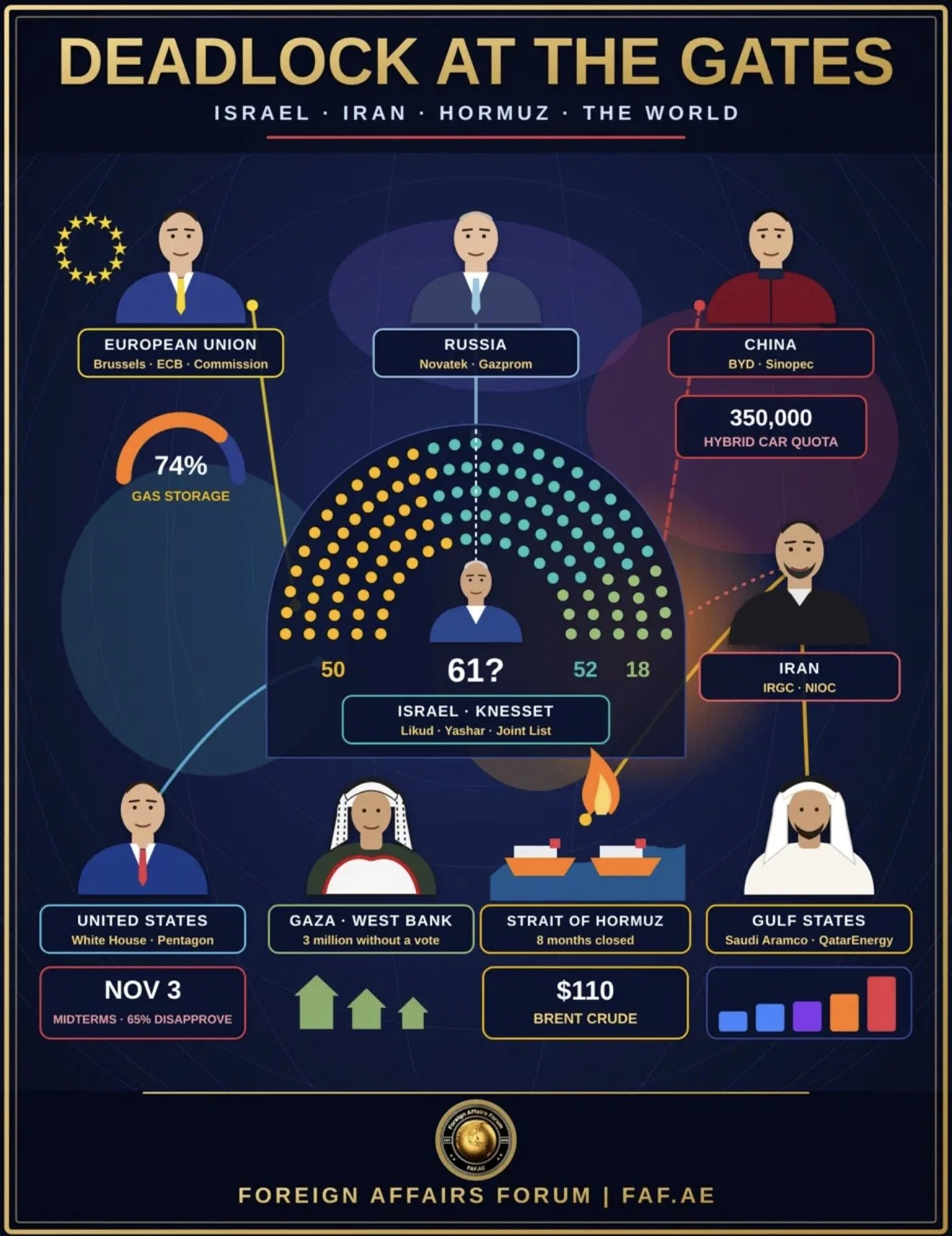
Netanyahu's bloc won 53 seats, the opposition bloc led by Gadi Eisenkot won 48, and the Arab parties won 19.
Likud is the largest party with 27 seats, ahead of Eisenkot's Yashar with 21.
Turnout was 77.9%. Neither side reaches 61.
The anti-Netanyahu parties together hold 67 seats on paper, but most Zionist parties in Eisenkot's bloc have rejected cooperation with the Arab-led lists, and only one opposition figure, Yair Golan, has met Arab party leaders about a coalition.
Analysts argue the opposition cannot form a government without them.
The procedure is set by law. Final certified results go to President Isaac Herzog on November 4, and the Knesset is sworn in on November 10.
Herzog consults party leaders and chooses the member he judges most able to form a government, not automatically the leader of the largest party.
That candidate has 28 days, extendable by up to 14, and repeated failure leads to another election.
Netanyahu remains caretaker prime minister.
Israeli law and court precedent give a caretaker government essentially the same security powers as a regular one, and courts have historically avoided interfering in decisions to go to war. His corruption trial continues, and a new election in 2027 is a realistic outcome if talks fail.
The United States: A Window Before a Possibly Hostile Congress
Forecasts favour Democrats.
As of October 30, the Decision Desk HQ model gives them an 82% chance of winning the House, with about 239 seats, and a 62% chance of winning the Senate, with about 52 seats.
Other models differ, and the Senate remains the closer contest, since Democrats hold 47 seats and need 51.
Democrats lead the generic ballot by nearly 9 points on average, and Trump's approval stands near 37%, with disapproval near 60%. These are probabilities, not results.
The political arithmetic creates an unusual incentive.
A president likely to face a Democratic House has less to lose from a foreign policy gamble after November 3 and a reason to complete it before January 3. AP reports that American officials have told regional allies to prepare for possible renewed action after the election and for Iranian retaliation against energy facilities and other critical infrastructure.
Trump has not made a final decision, according to two diplomats, and it is unclear how quickly the military could resume strikes.
MS NOW, citing three senior Gulf officials, reports a plan to resume as soon as November 4, with a deeply buried site known as Pickaxe Mountain among reported targets.
The White House declines to comment on sensitive military plans. Allies were told a new round could last several days.
The force picture is more nuanced than first reported.
A third carrier strike group led by the USS Theodore Roosevelt, with about 9,000 sailors and Marines, is heading to the region, but American officials say it will not arrive until the end of November.
Extra Patriot batteries have moved to Saudi Arabia and Qatar.
The practical reading is that action on November 4 would rely on forces already present, while a larger campaign becomes more feasible later in the month.
The Oil Landscape: Baseline and Scenarios
Brent rose about 2.4% on Friday to $117.56, and is up about 15% for October.
The baseline forecasts already embed constrained flows.
The EIA, in its October outlook, raised its fourth-quarter Brent forecast by $14 to $105, expects a 2026 average near $96 and a 2027 average near $84, and sees about $87 in the second quarter of 2027 and about $74 in the fourth quarter of 2027 as Middle East production recovers and global inventories rebuild.
UBS expects $110 by year end, citing Gulf loadings still below pre-war levels, a record number of attacks on vessels near Hormuz in October, and sharply lower global inventories. Standard Chartered has about $101 for the fourth quarter.
Against that baseline, three scenarios follow.
The following ranges are the author's scenario judgments, not published forecasts.
First, strikes followed by Iranian retaliation against Hormuz traffic or Gulf energy assets would plausibly push Brent well above its current level, with the upside greatest if Saudi or other Gulf flows are hit.
Second, brief and targeted strikes, with workarounds holding, would limit the downside but leave volatility high.
Third, a face-saving sequence of limited action followed by mediated talks could remove much of the war premium and move prices toward the $85 to $95 range initially, before tracking the EIA path lower.
A weak or temporary deal would leave prices closer to the $100 to $110 bank forecasts. Normalisation would take months, not days.
Diplomacy: Qatar's Seven-Day Framework
Mediation is active but strained.
Qatar presented a new draft of a seven-day plan of daily confidence-building steps, coordinated with Washington and backed by several guarantor countries, and Qatari mediators returned to Tehran on Friday.
A senior Iranian official called the contents unacceptable ideas and not an offer, said Tehran's position on the nuclear issue is unchanged, and said a response is expected by the end of the week.
Foreign Minister Abbas Araghchi says Iran continues to give diplomacy a chance.
The core dispute is sequencing: Washington wants the nuclear programme on the table from the start, while Tehran demands that the American blockade of its ports and sanctions on its oil exports be addressed first.
Vice President JD Vance has sent a letter to Iranian security chief Mohsen Rezaei proposing talks, and Trump has said the war could end in a couple of weeks while also threatening new bombing.
A workable bargain would phase the easing of the blockade and oil sanctions against verifiable nuclear steps and a reopened strait, with guarantors and a short timeline giving it credibility.
Trump's incentives point the same way, since high fuel prices burden American households and his approval on inflation is only 25%.
Cause and Effect: Why the Pieces Move Together
The links are mechanical rather than coincidental. Weak coalition arithmetic raises the value to Netanyahu of a successful security operation, while caretaker status removes legal obstacles to one.
A likely Democratic House raises the value to Trump of acting before January 3 and of pairing action with a deal he can present as victory. High oil prices raise the cost of both.
Each stakeholder is therefore pulled toward a short demonstration followed by negotiation, and the same logic that makes that sequence attractive makes escalation likely if the demonstration does not produce a deal.
In the view of Dr. 🆎, the main danger is not the decision to strike but the speed at which the response cycle runs once strikes begin. Attacks on energy infrastructure, or on the digital systems that support Gulf exports, would reach markets within hours, long before diplomats can intervene, and automated surveillance and targeting compress the time available for restraint. Stakeholders should therefore agree on rapid communication channels before any campaign starts, not after.
Future Steps
Observers should watch the certified results and Herzog's consultations after November 4, the Knesset's swearing-in on November 10, the American results on November 3, the timing and scale of any strike, Iran's response on Hormuz and against Gulf infrastructure, and the answer to the Qatari drafts.
Three recommendations follow.
Washington should state publicly the terms on which it would accept a settlement, so that limited action is linked to a visible exit. Gulf governments should harden energy and data infrastructure while keeping mediation channels open. Energy importers should prepare for a volatile fortnight and a slow normalisation.
Conclusion
Two elections and one war now share a calendar. Israel's vote has produced a government that cannot yet form and a caretaker that can still act. America's vote will determine how much freedom the White House has until January.
Brent near $117 shows that markets see both a path to higher prices and a path to the mid-$80s, and that the gap between them will be settled in early November by decisions that are as political as they are military.
When electoral timetables, force deployments and energy markets converge, the interval after the ballot, not the ballot itself, is where the risk concentrates.