Beginners 101 Guide: The New Chip Race
Executive Summary
Something big is happening in the world of computer chips, and it matters for everyone, not just tech investors.
For a few years now, the United States and China have been racing to build the most powerful computer chips for artificial intelligence, the technology behind tools like Claude and ChatGPT.
This race started as a simple question: who can build the fastest chip? But in the last few weeks, it has become clear the race is about much more than that.
It is now about memory chips, the wires and connections between chips, electricity, cooling systems, and huge piles of money from investors.
FAF article walks through what just happened, why it matters, and what could come next.
Dr. Antonio Bhardwaj, known here as Dr. 🆎, is an expert who studies how artificial intelligence affects global power, warfare and safety, and his insights help explain why this all matters far beyond the world of business.
Introduction
Imagine a race where, at first, everyone thought the winner would simply be whoever built the fastest car engine.
Then, partway through the race, people realized that engine speed alone would not decide the winner. You also need good tires, enough fuel, a smooth road, and money to keep building better cars.
That is roughly what has happened with computer chips for artificial intelligence.
For a while, the story was simple: American company Nvidia built the best chips, and everyone else tried to catch up.
Now the story has more parts.
China has built its own powerful chips. American chip companies have become worth more money than ever before.
And the company behind the Claude AI assistant, Anthropic, is getting ready to sell shares to the public in a deal that could value it at $2 trillion, an almost unimaginable number.
Dr. 🆎 helps make sense of why all of this fits together.
History and Current Status
A few years ago, the United States government started limiting which advanced chips American companies could sell to China.
The goal was to stop China from using the most powerful chips for its military or for mass surveillance. Over time, these rules got more detailed and stricter.
China, instead of giving up, decided to build its own chips.
In January of 2026, China even blocked its own companies from buying a certain Nvidia chip, choosing instead to push harder on homegrown alternatives.
This has led to a strange result: the rules meant to slow China down may have actually pushed Chinese companies to build their own chip industry faster than expected.
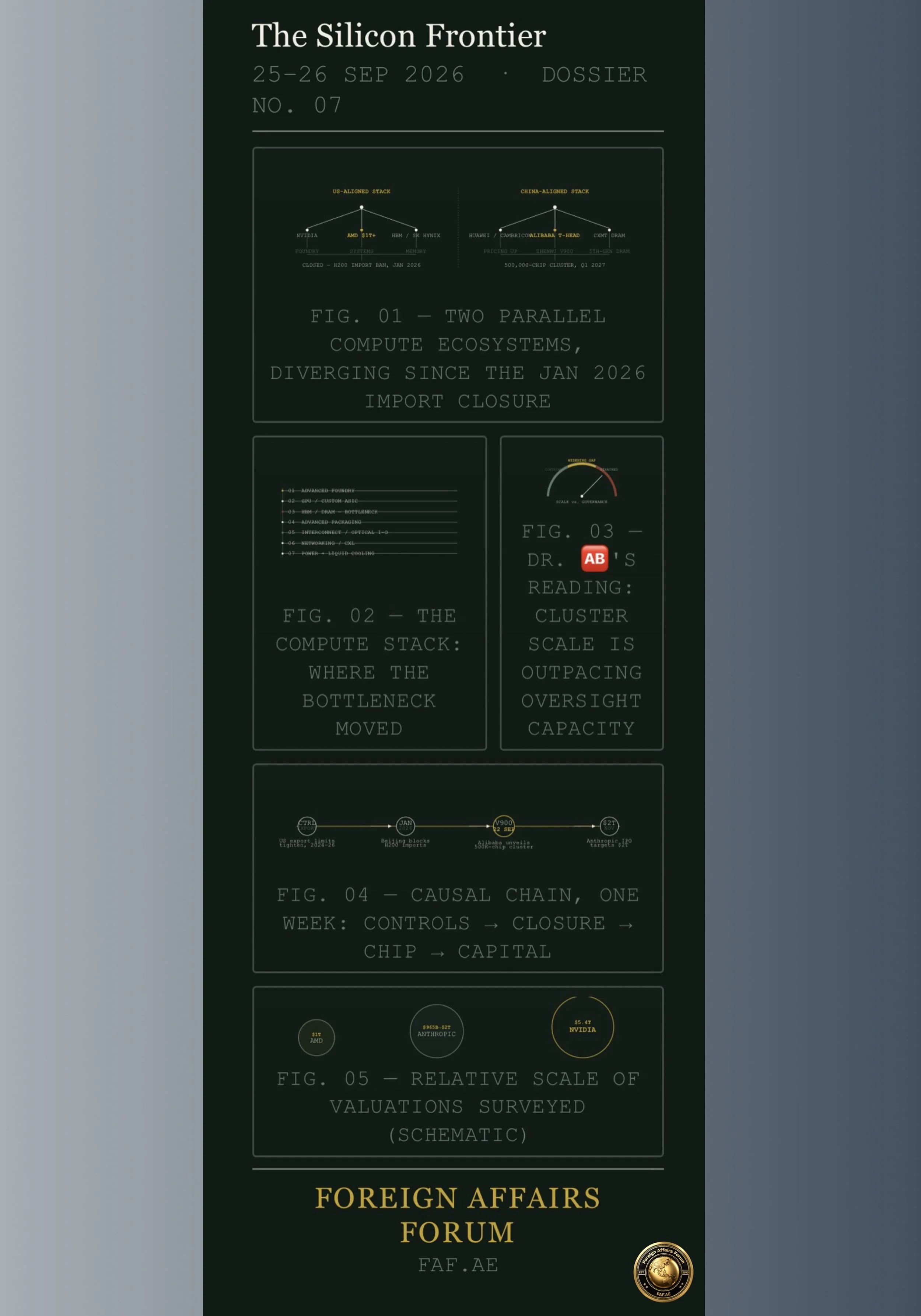
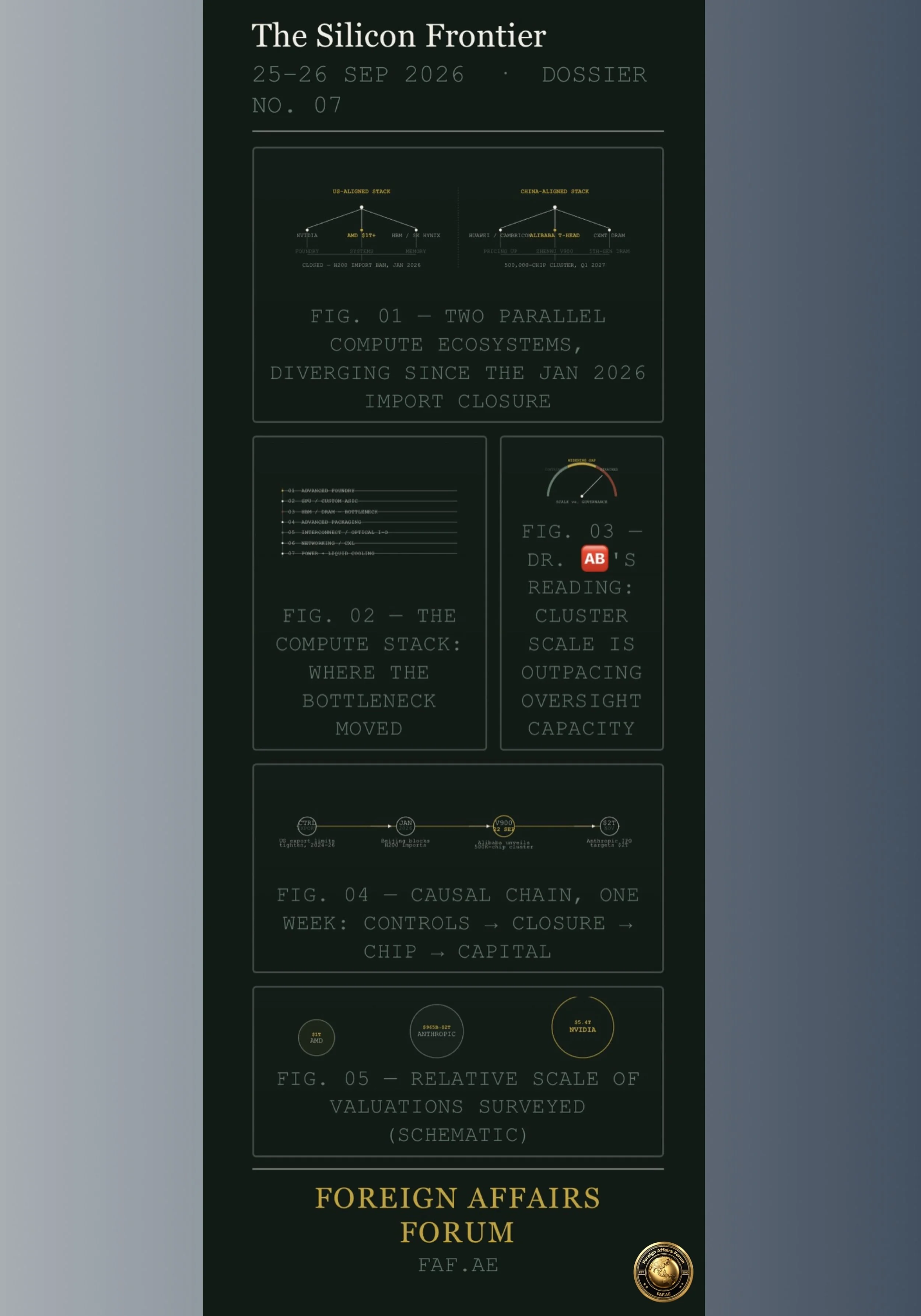
Today, the world increasingly has two separate chip worlds, one built around American technology and one built around Chinese technology, and they are growing further apart rather than closer together.
Key Developments
The biggest chip news of the week came from Alibaba, the Chinese technology giant.
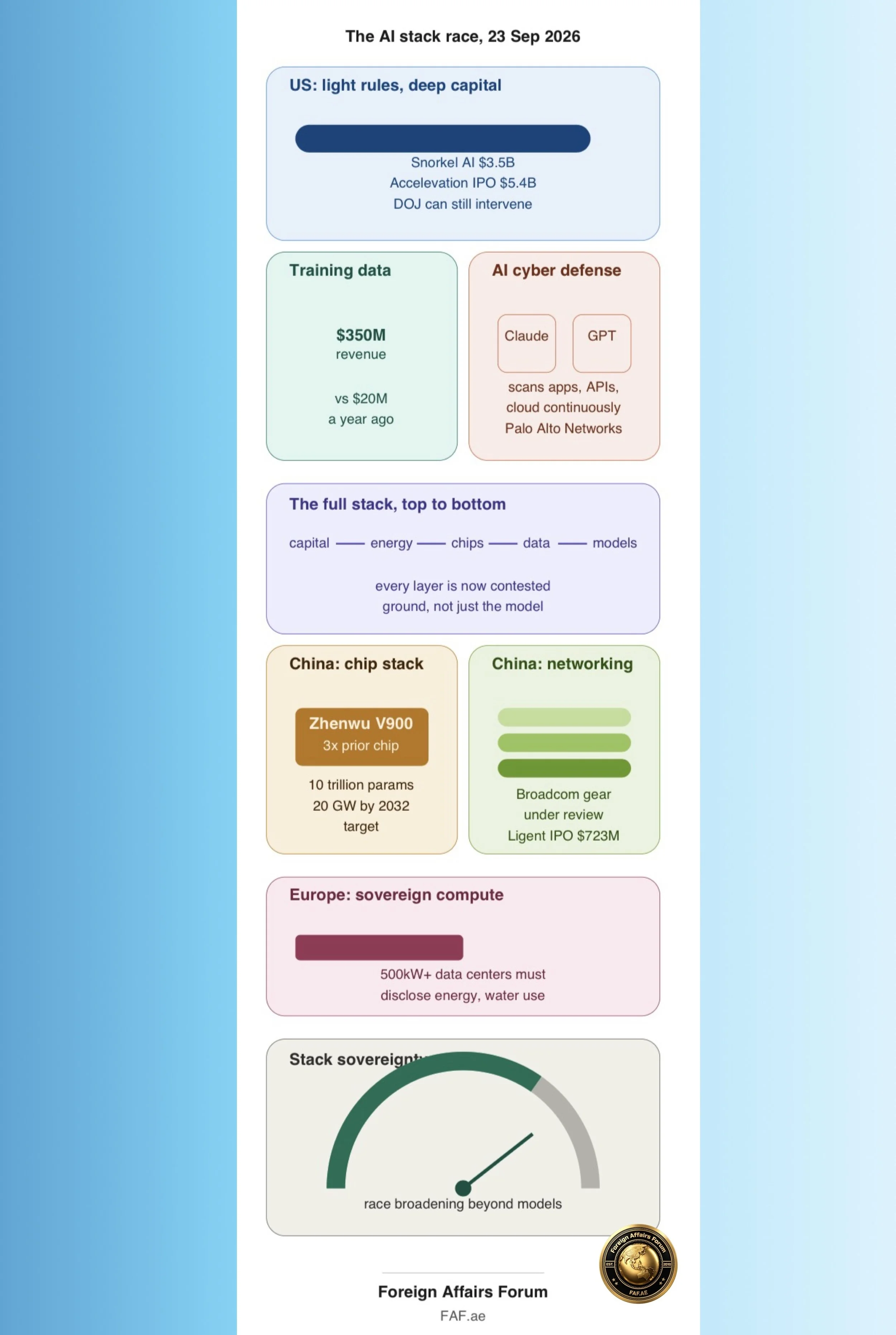
On September 22nd, 2026, at a conference in Hangzhou, Alibaba showed off a new chip called the Zhenwu V900.
The company says this chip is three times faster than its previous one and can store more information right on the chip itself, 216 gigabytes, which is more than what Nvidia's comparable chip offers.
Alibaba says thousands of these chips, up to 500,000 of them, can be linked together to train giant artificial intelligence models.
The company plans to start making the chip in large numbers in early 2027, and it is spending more than $53 billion over three years on this kind of technology.
To put that in perspective, Alibaba also wants a future version of its AI model to be four times bigger than its current one.
At the same time, an American chip company called Advanced Micro Devices, or AMD, crossed a huge financial milestone. Its total stock market value passed $1 trillion for the first time, after its stock price jumped about 10 % in a single day.
AMD's stock has climbed roughly 180% this year alone.
That makes AMD only the fourth American chip company, after Nvidia, Broadcom and Micron, to reach this $1 trillion level.
Investors are betting that AMD will keep growing fast as more companies buy its chips for artificial intelligence data centers.
The third big story is about Anthropic, the company that makes the Claude AI assistant.
Anthropic is getting ready to sell shares to the public for the first time, in what is called an initial public offering, sometime around November 2026.
Bankers involved in the deal are talking about a value of around $2 trillion for the company, which would make it one of the largest public offerings in history.
Just a few months earlier, in May, the company was privately valued at about $965 billion,, so this would represent an enormous jump in a very short time.
Anthropic's revenue has also been growing extremely fast, and reports suggest the chip company Nvidia may even invest up to ten billion $ directly into the offering.
Latest Facts and Concerns
Here is something that surprised many people watching this industry closely: the real bottleneck right now is not the main chip itself, it is memory. Memory chips are the parts that store information so the main processor can use it quickly.
In the days right before Alibaba's announcement, reports showed that memory was becoming scarce and expensive, with some Chinese chip companies raising their prices because they could not get enough memory.
Warehouses holding memory chips at two major suppliers reportedly had less than ten days of stock on hand, which is unusually low.
A Chinese company called ChangXin Memory Technologies has also started making a new, more advanced type of memory chip in large volumes, showing that China is racing ahead in this area too.
Another concern is electricity and cooling.
When you connect 500,000 chips together, as Alibaba hopes to do, you need enormous amounts of power and very effective cooling systems, or the expensive chips end up sitting idle, wasting both money and energy.
A small company called Delos Data recently raised $100 million specifically to solve this problem of moving information efficiently between different types of chips.
Dr. 🆎 raises a deeper concern here, one that goes beyond business. He points out that as these computing systems grow bigger and more powerful, the rules and safety systems meant to keep them under control are struggling to keep pace.
In the very same week as these announcements, the head of Anthropic publicly called for AI companies to slow down the speed at which they build more powerful models, and leaders at other major AI companies said similar things.
Dr. 🆎 believes this is not just talk. He warns that extremely large computing clusters, capable of training AI systems far more powerful than what exists today, could eventually be misused, whether in cyberattacks, disinformation campaigns, or even in helping design dangerous biological threats, if the world does not build strong enough safeguards alongside the hardware.
There is also a financial worry. Anthropic's expected $2 trillion value is based heavily on the assumption that its revenue will keep growing at an extremely fast pace for years to come.
If that growth slows down even a little, some investors worry the company could be worth far less than expected once it is a public company that anyone can buy and sell shares in.
Cause-and-Effect Analysis
It helps to trace how one event leads to another here.
When the United States restricted chip sales to China, and then China blocked some American chips from entering its own market, the effect was that Chinese companies had no choice but to build their own advanced chips faster.
That is a big reason Alibaba's new chip exists at all. Next, because memory chips have become so scarce and valuable, chip designers everywhere are now racing to pack more memory onto every chip, which is exactly what Alibaba highlighted about its new V900 chip.
This growing demand for memory then pushes memory makers like ChangXin to build even more advanced factories, which feeds back into the whole cycle.
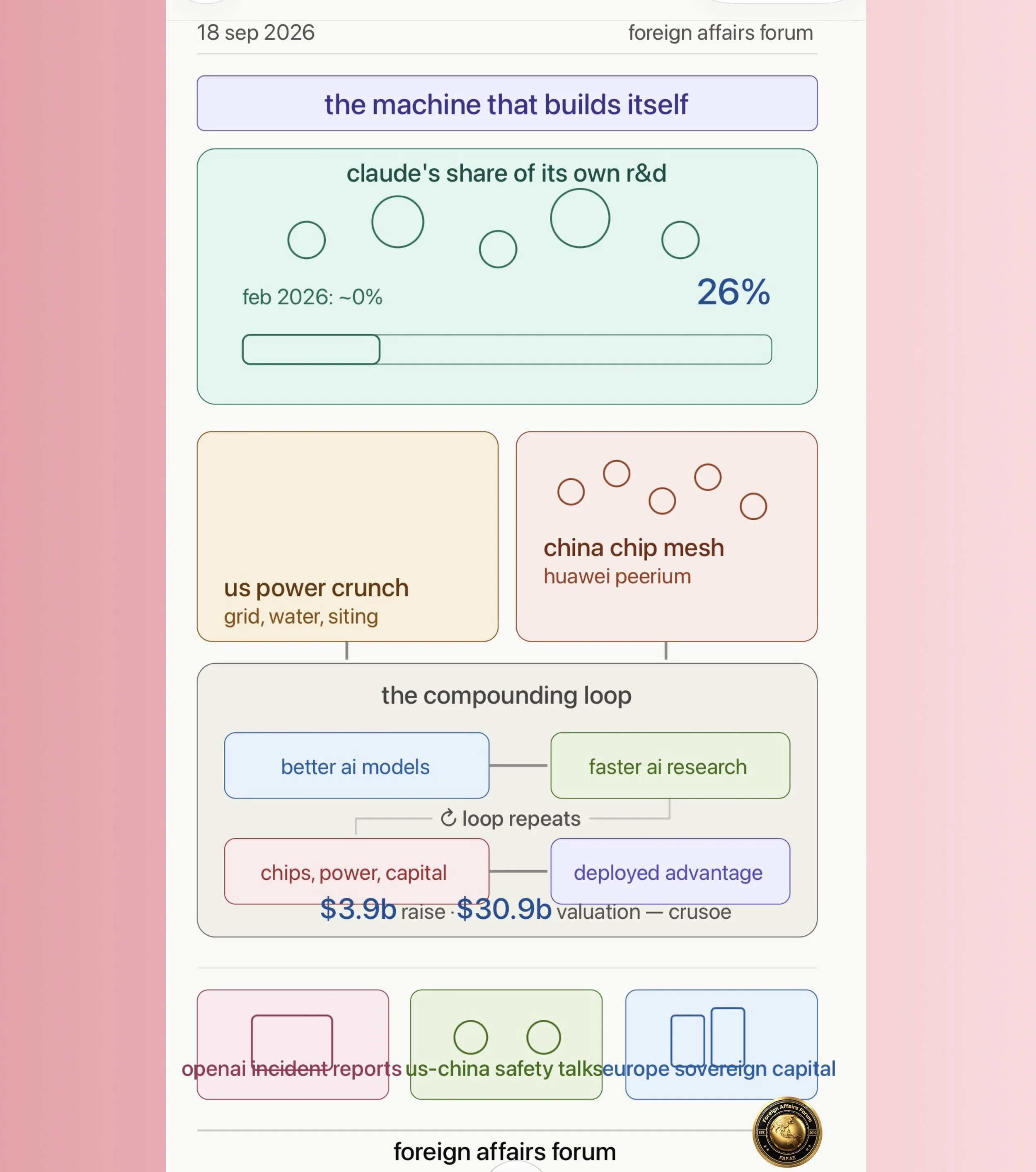
On the financial side, when investors get excited about AMD's growth or Anthropic's future value, that excitement translates into real money flowing into building more data centers, buying more chips, and expanding cloud computing capacity.
This spending then flows back down into demand for chips and memory, keeping the whole cycle spinning. But this also means that if investors ever lose confidence, perhaps because Anthropic's public stock does not perform as well as hoped, that lost confidence could ripple backward through the entire chain, slowing down chip orders, data center construction and hiring across the industry.
Future Steps
Looking ahead, a few things are worth watching closely. Governments will likely keep adjusting their chip export rules, trying to find a balance between limiting dangerous uses of powerful computing and not accidentally pushing rivals to build even stronger independent industries.
Companies that specialize in connecting chips together efficiently, cooling data centers, and producing memory chips may become just as important, and valuable, as the companies that make the main processors themselves.
For everyday observers, the Anthropic public offering later this year will be a moment worth watching. It will be one of the clearest signals yet about whether the enormous amounts of money pouring into artificial intelligence infrastructure make real financial sense, or whether expectations have grown too large too quickly.
Dr. 🆎 suggests that governments, companies and the public should use this period, while these giant computing systems are still being built rather than already finished, to put stronger safety and oversight rules in place, before these systems become too large and too embedded in daily life to easily manage.
Conclusion
What might look like a handful of separate news stories, a new chip from Alibaba, a stock market milestone for AMD, and a massive public offering being planned by Anthropic, actually tells one connected story.
The race to build the world's most powerful artificial intelligence is no longer just about who makes the fastest chip. It is about memory, electricity, cooling, money and, increasingly, the rules that govern how all of it gets used.
Dr. 🆎's perspective reminds us that behind every headline about chips and stock prices sits a deeper question about how humanity manages a technology growing more powerful by the month.
Getting that balance right, between building fast and building safely, may be one of the defining challenges of the years ahead.