Beginner's 101 Guide: Cheap Weapons, Smart Machines: What This Week Reveals About Modern War
Introduction
Modern war is no longer only about who has the most advanced weapon. It is about who can afford to use it, who can make enough of it, and who can trust the machines that run it.
Dr. Antonio Bhardwaj (Dr. 🆎), Chief Executive of the Foreign Affairs Forum and an expert in human-centered superintelligence, AI warfare and bioterrorism risk, puts it simply. "People admire the weapon and forget the factory," he says. "A weapon you cannot make in numbers, buy parts for safely or control responsibly is just a promise." This article explains in plain language what happened in defense technology over the past four days, why it matters, and what might come next.
What Happened This Week
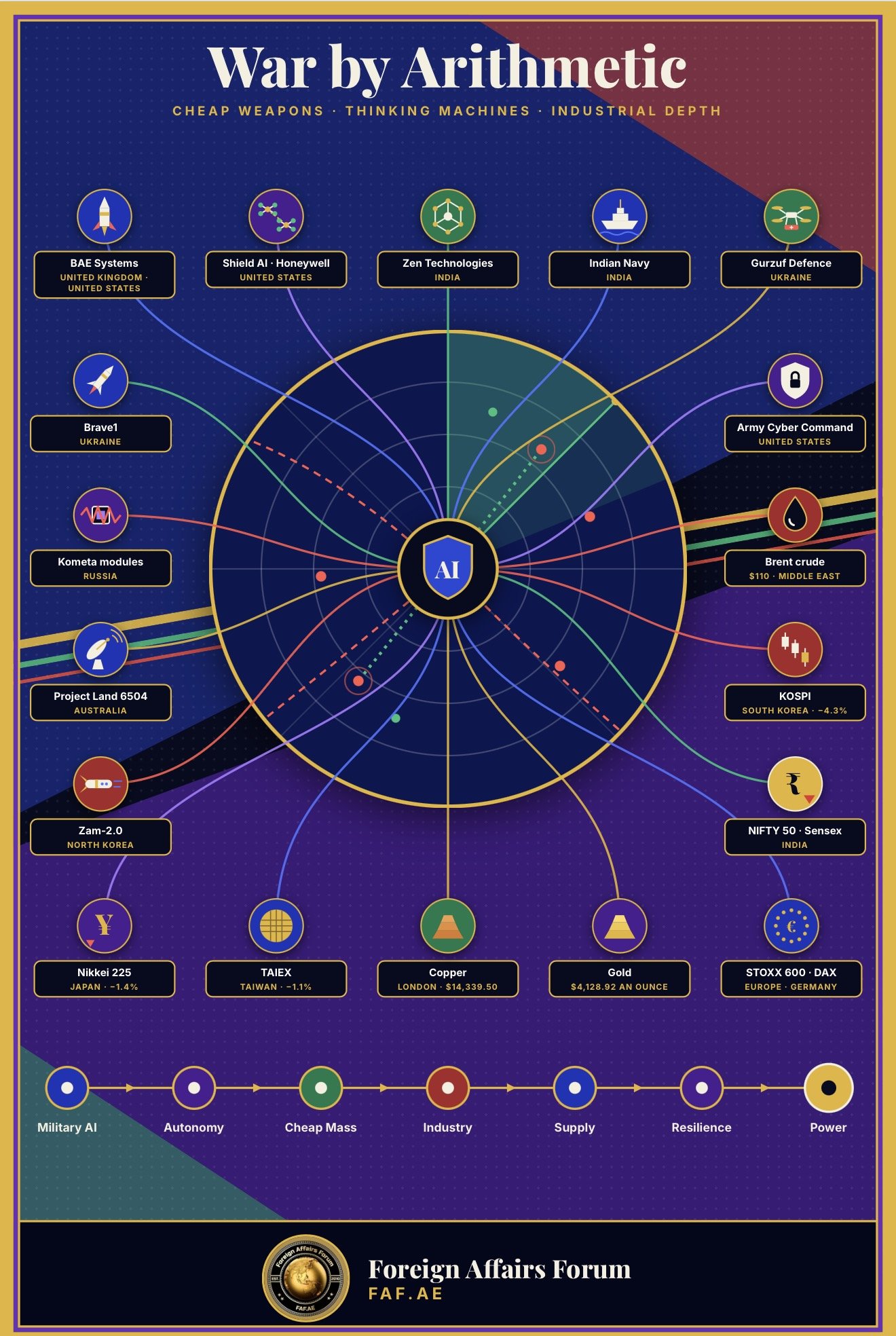
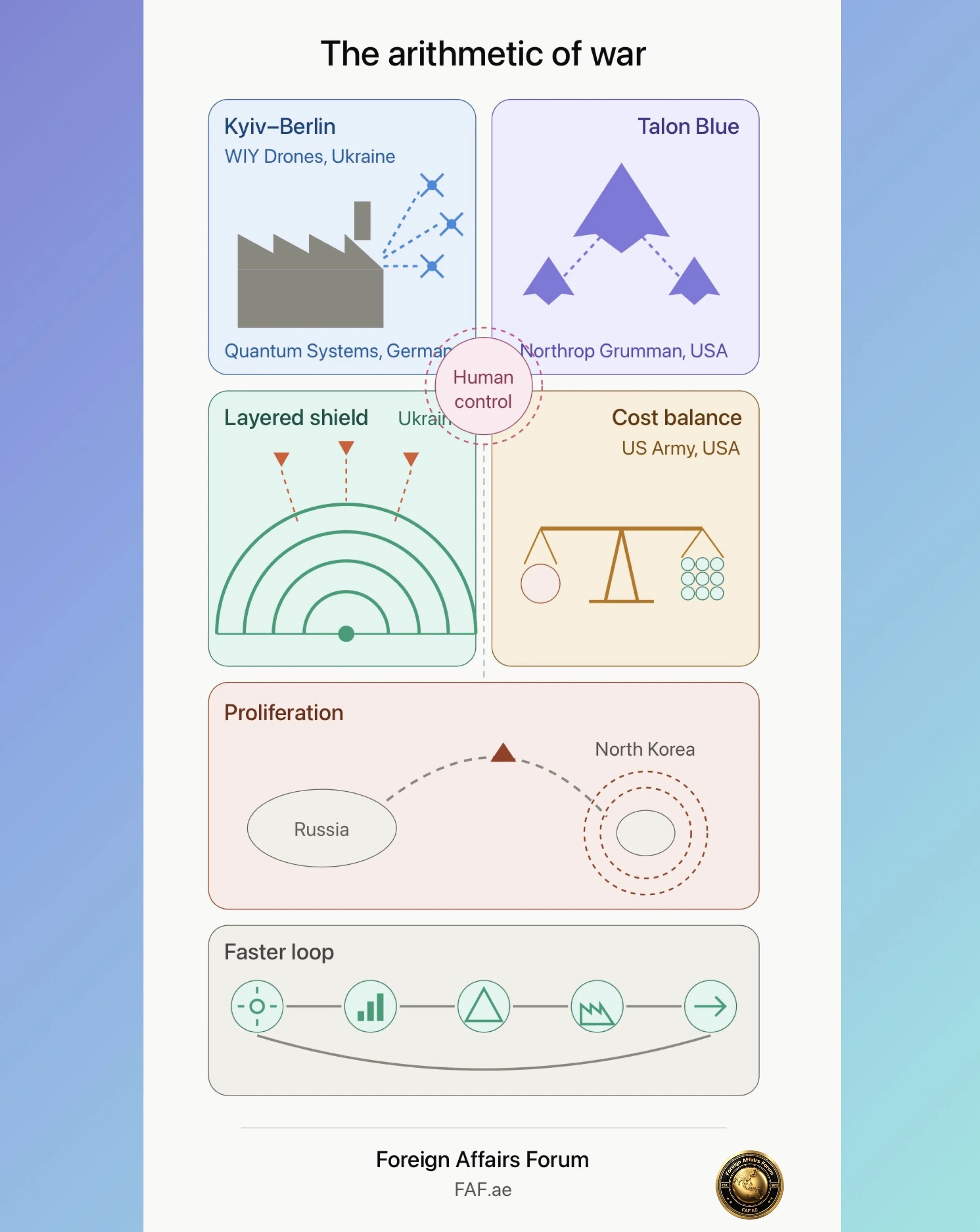
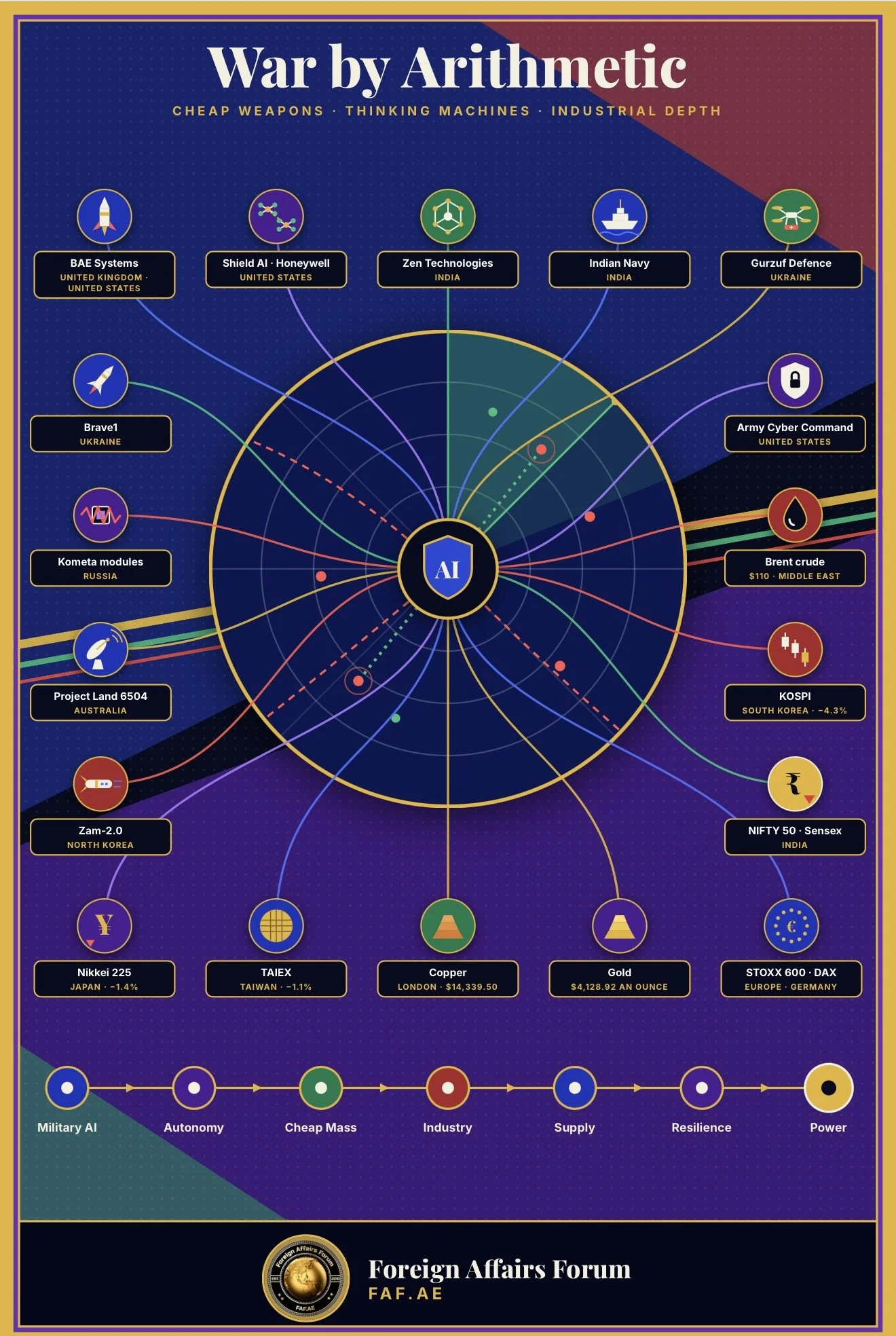
The United States Department of Defense has agreed a framework with the British company BAE Systems to buy as many as 25,000 guidance kits a year for up to 7 years.
The kits turn ordinary rockets into precise ones, which is a cheap way to shoot down cheap drones.
The deal could grow to 35,000 kits a year if allies join in. But it is not final.
The United States Congress must still approve it and provide the money.
Two companies, Shield AI and Honeywell, say that smart flying software helped an aircraft fly on its own after about six weeks of work, instead of the 54 weeks first expected.
Later, one aircraft found and tracked a target and passed the information to another.
The big idea is that one piece of software can be reused on many aircraft, so each new machine does not need a brand-new brain.
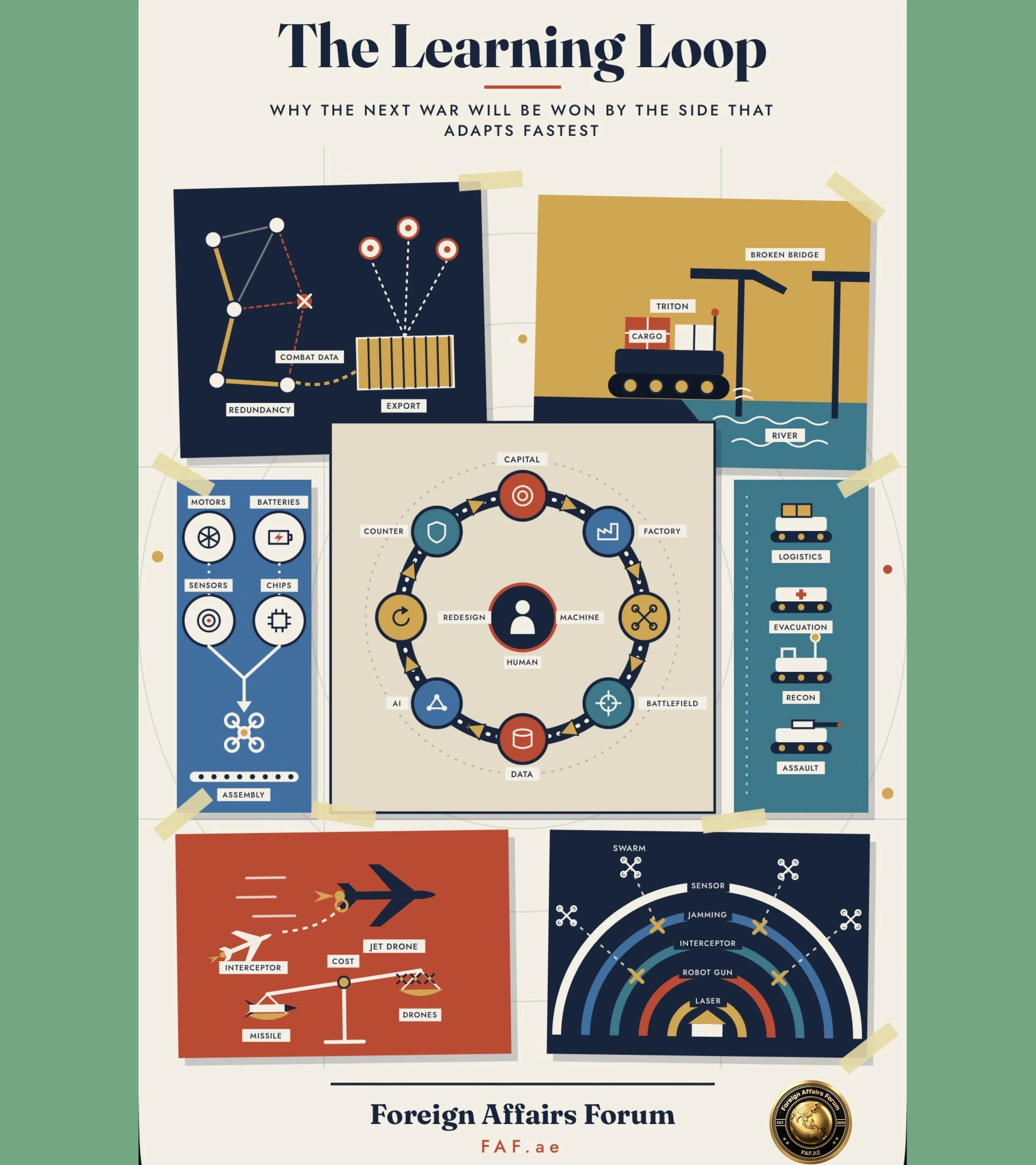
In Ukraine, soldiers say a large drone carried a wounded soldier out of a dangerous area on a trip of about 75 minutes and nearly 40 miles, because mines and enemy drones made the ground route too risky.
This comes from Ukrainian reports and has not been checked by outsiders.
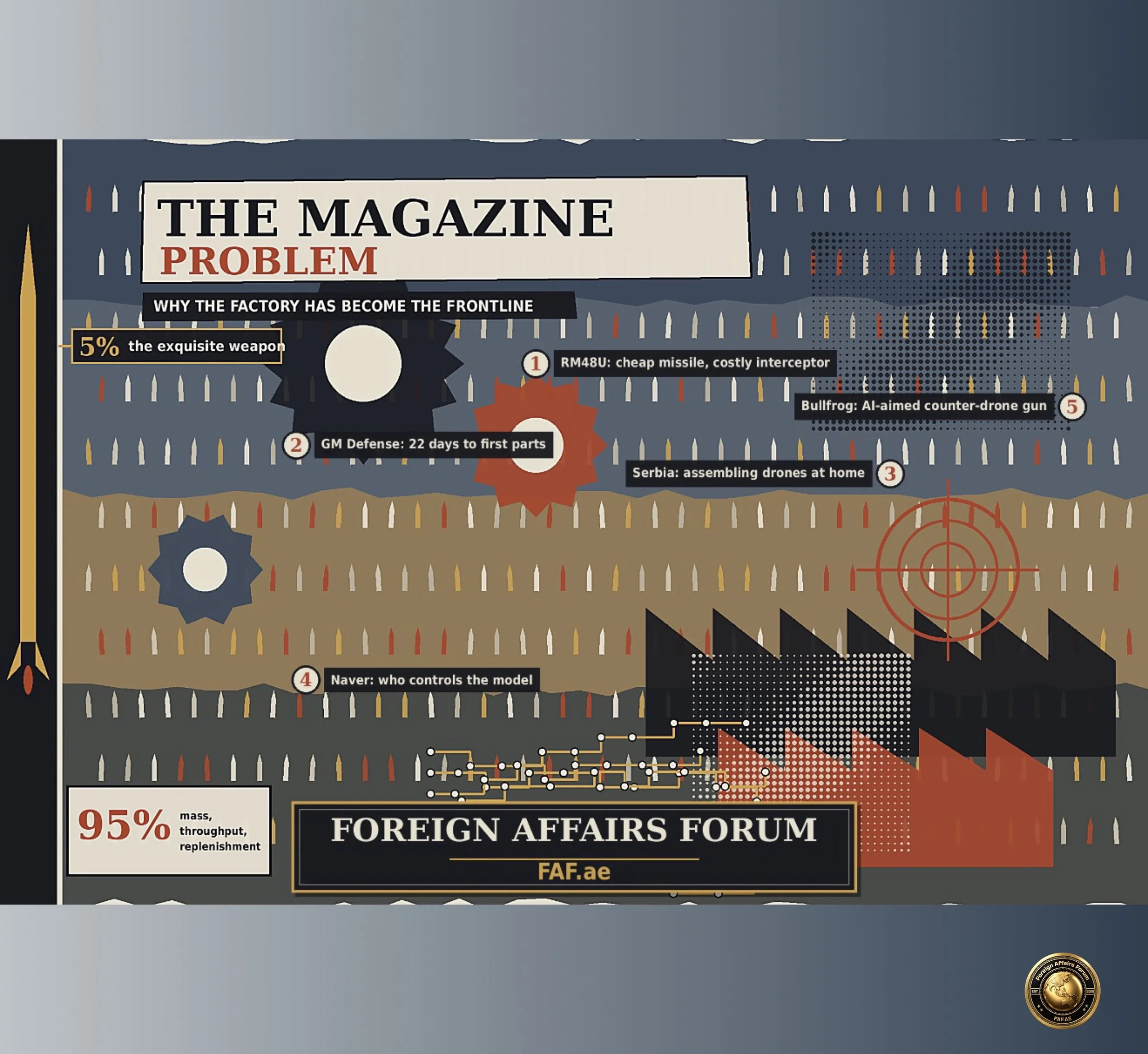
Ukraine is also supporting companies that are trying to build cheap missiles, costing less than $20,000 each, to shoot down enemy drones. Some early models may cost about $10,000.
To see why this matters, imagine a country that must fire an expensive missile every time a cheap drone appears.
Even if every shot succeeds, the country slowly runs out of money, and the attacker keeps winning the price battle. Cheaper defenses are an attempt to change that sum.
Ukrainian intelligence says that when it examined Russian devices that help drones and missiles keep their course despite jamming, it found 28 American-made parts among 37 foreign parts.
This does not prove the American companies knew where their products ended up.
Meanwhile Australia has opened a competition to buy a new air-defense system, North Korea says it has tested a torpedo that uses artificial intelligence, though nobody outside the country has confirmed it, and the United States Army Cyber Command is testing AI agents to help defend its computer networks, with humans still in charge.
India also made news.
A company called Zen Technologies plans to buy a majority stake in a software company called Cogknit Semantics for ₹135.15 crore, to strengthen battlefield technology that links vehicles, soldiers and information.
The Indian Navy says it has signed more than ₹1,900 crore in contracts for homegrown technology, ahead of an event in New Delhi on October twenty-sixth and twenty-seventh.
Why Markets Are Nervous
Financial markets were jumpy, but not mainly because of these weapons.
In the United States on Monday, the S&P 500 rose about 0.4% and the Nasdaq rose about 1.1%, helped by technology shares.
On Tuesday, Asian markets fell. South Korea's KOSPI dropped about 4.3%, Japan's Nikkei 225 about 1.4%, Taiwan's TAIEX about 1.1% and Hong Kong's Hang Seng about 1.2%. European markets opened lower too.
Oil is the bigger worry.
Brent crude costs around $110 a barrel, because of fears about damage to energy facilities and shipping in the Middle East.
High oil prices make everything more expensive, especially for countries that must import it.
India's stock markets were closed on Tuesday for the festival of Dussehra.
On Monday the NIFTY 50 closed at about 22,889, down 1.1%, and the Sensex closed at about 73,853, down 1.2%.
The rupee ended Monday near ₹94.925 to the $. Gold slipped about 0.3% to $4,128.92 an ounce.
Dr. 🆎 reminds readers not to mix these things up. "Defense innovation is a long story," he says. "Oil and interest rates are today's story. An investor who confuses the two will misjudge both."
The Main Worries
There are four main worries.
The first is trust in information. Many claims, such as the drone rescue, the findings about parts and North Korea's torpedo, come from the side that benefits from the news.
They may be true, exaggerated or incomplete, and outsiders cannot easily check them.
Dr. 🆎 says, "A claim is a message, not a measurement. We need ways to check before the next crisis arrives."
The second worry is parts.
Modern weapons need chips, sensors and magnets that are made for ordinary products and sold around the world. If an enemy can buy them through middlemen, then rules on exports and tracking become part of national security. At the same time, Western forces depend on materials that are made in only a few places.
The third worry is control.
Army Cyber Command is right to keep humans in charge, but the need for speed creates pressure to hand more decisions to machines. In computer networks, a mistake can spread in seconds.
Dr. 🆎 warns that the same fast tools that help defenders can help people misuse biology or spread false information. "Rules that move at the speed of committees will lose to attackers who move at the speed of code," he says.
The fourth worry is money.
A deal on paper is not a deal in practice until the money is approved. High oil prices and interest rates also squeeze government budgets, which makes it harder to pay for the weapons that countries say they need.
How One Thing Leads to Another
Follow the chain of cause and effect.
Cheap drones force defenders to use costly missiles, which drains their budgets.
So Ukraine tries to build cheaper interceptors, and the United States buys kits that turn rockets into precise weapons.
A long-term deal gives factories a reason to build more, which lowers prices, which helps allies afford them. But if the money never arrives, the chain breaks and the problem comes back.
Jamming works in a similar way.
When enemy signals cut the link between a drone and its operator, the drone needs its own intelligence.
That makes reusable software more valuable, and it makes the parts inside navigation devices strategic.
Each of these steps leads to more pressure on chip makers, more checking of exports, and more effort by countries such as India to build their own software and equipment at home.
Oil links in too.
Cheap drones aimed at costly energy sites keep oil prices high, and high prices strain the budgets that pay for defense.
Dr. 🆎 puts it this way. "Every cheap drone aimed at an expensive refinery is a tax on the whole world economy, and every cheap interceptor that stops it is a gift to stability."
What Should Be Done Next
Governments should turn paper deals into funded orders, and allies should state clearly how much they will buy.
They should pay for results and cost, not just for clever technology, and they should keep spare factory capacity and backup suppliers ready for a crisis.
Militaries that use AI should insist on three things. Every system needs a named human owner, a full record of what it did, and a reliable way to stop it.
Dr. 🆎 says, "If any of the three is missing, the system should not be trusted with anything important."
Countries should also protect their supply chains, track important parts, and cooperate on chips, magnets and rare minerals.
They should build ways to check claims about new weapons and watch for misuse of drones and AI agents in dangerous areas such as biology. India's challenge is to turn announcements into deliveries, and investors should look for funded contracts and real production rather than headlines.
Conclusion
This week showed that modern power rests on four simple things: cost, speed, supply and trust.
Cheap and smart weapons are changing how wars are fought, but they matter only if they can be built in numbers, supplied safely and controlled by people who can be held to account.
Markets, for now, are worried more about oil and technology prices than about any single weapon, and that is a useful reminder that war and money move together.
As Dr. 🆎 says, "Military AI, factories, safe supplies and strong economies are not separate subjects. Together they are national power." The winners will be those who build wisely, not just those who build first.