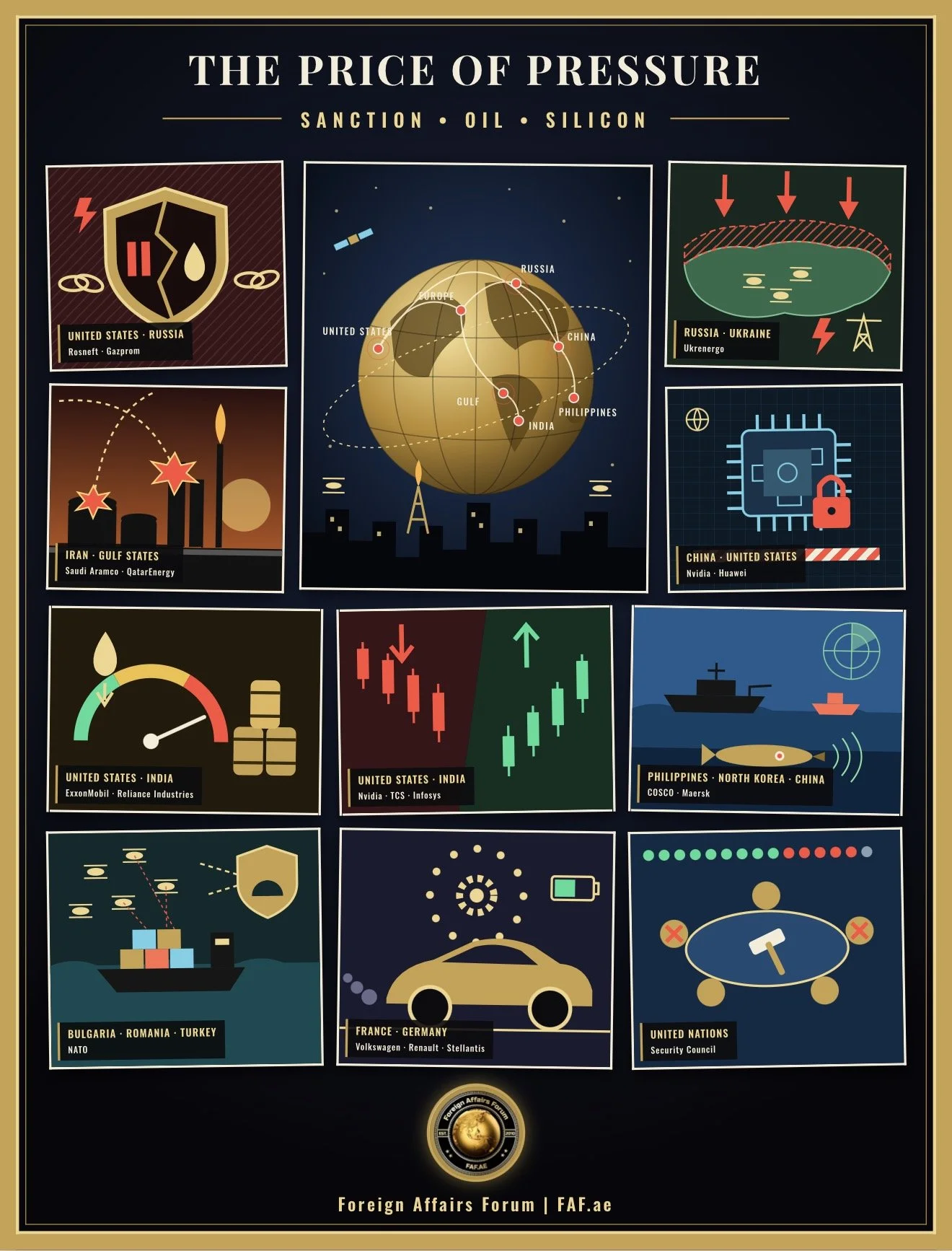
The Price of Pressure: How Sanctions, Oil and Silicon Are Rewriting the Global Order
Foreign Affairs Forum | Dr. Antonio Bhardwaj (Dr. 🆎) | October 17th 2026
Executive Summary
The seventy-two hours between October 15 and October 17th, 2026 delivered an unusually dense cluster of strategic signals.
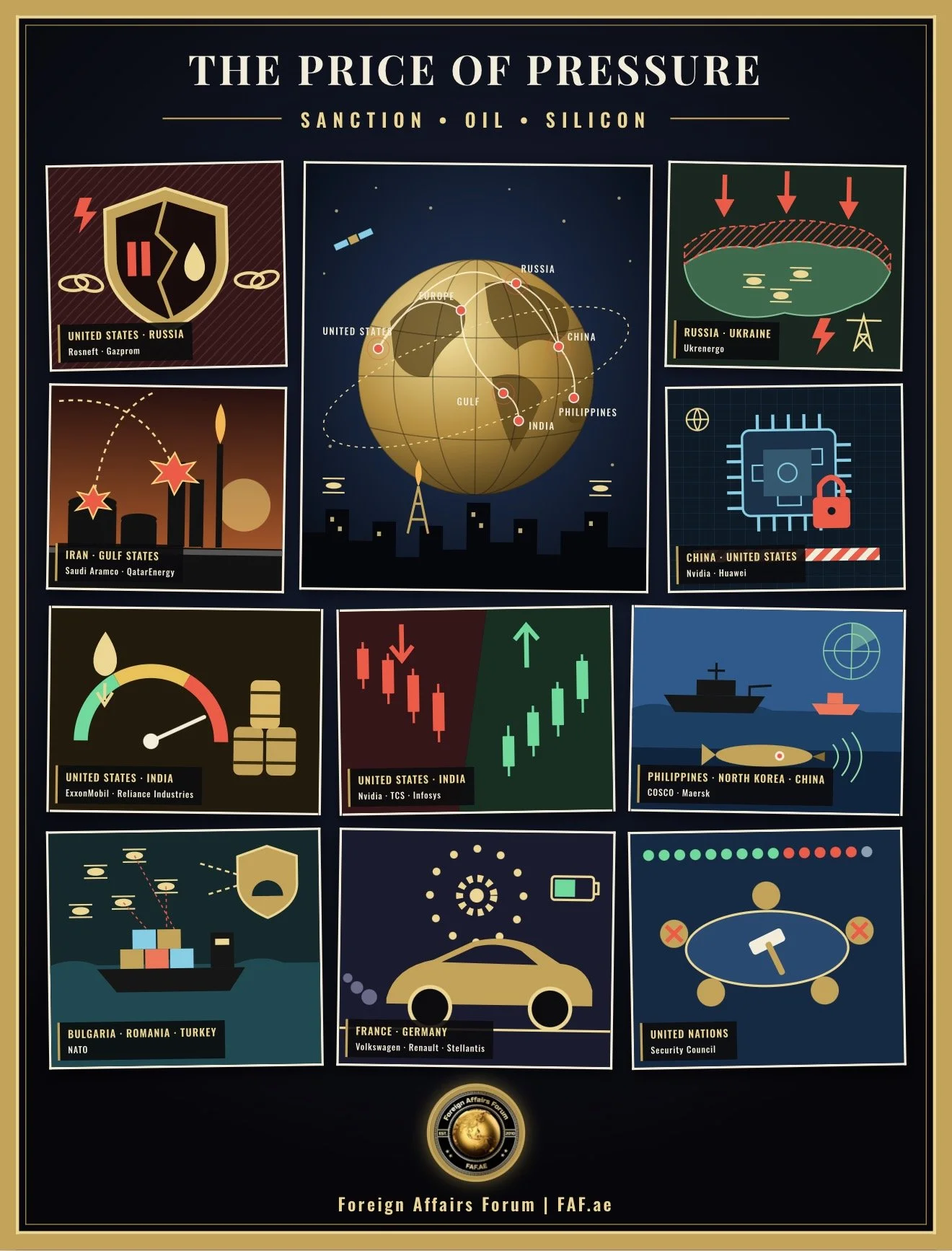
Washington suspended a new sanctions package against Russia. Moscow declared a non-negotiable security zone inside northern Ukraine.
A major investigation documented the scale of precision attacks on Gulf energy infrastructure.
Beijing proposed export controls on twenty-three artificial intelligence technologies.
Financial markets then rendered their verdict, with American technology equities falling sharply while India's equity benchmark recorded its strongest week in six months.
This FAF article argues that these developments are not separate stories. They are expressions of a single structural tension between the imperative of economic stabilization and the logic of strategic competition.
Governments are trying to hold down fuel prices, protect industrial bases and contain inflation, while simultaneously pursuing leverage over adversaries through sanctions, technology controls and military posture.
The two goals increasingly collide. When Washington eases pressure on Russian energy in order to manage costs, it weakens the coercive architecture it spent years building. When Beijing controls the export of its own technologies, it converts commercial interdependence into an instrument of sovereignty. When Tehran and its associates strike interconnected Gulf infrastructure, they show that a militarily weaker stakeholder can impose economic costs on much stronger adversaries.
Dr. 🆎 observes that the common thread is the migration of strategic competition from battlefields into systems: energy grids, capital markets, computational supply chains and multilateral institutions. His assessment is that the stakeholders who adapt fastest to this systemic competition will shape the next decade, while those who treat each crisis as a discrete event will find themselves perpetually reacting.
The FAF article traces the historical background, examines the principal developments, sets out the latest facts and concerns, analyses causal chains, and proposes a sequence of practical steps for policymakers, investors and institutions.
Introduction
Every era of international politics has its characteristic instruments.
The nineteenth century had the concert of great powers and the gunboat. The Cold War had the nuclear umbrella and the proxy conflict. The early twenty-first century, after the financial crisis and the return of great-power rivalry, has increasingly relied on economic coercion, supply-chain dependence and technological denial.
The events of mid-October 2026 show this toolkit at its most stressed, because its instruments now pull against one another.
Consider the arithmetic that confronts any government today.
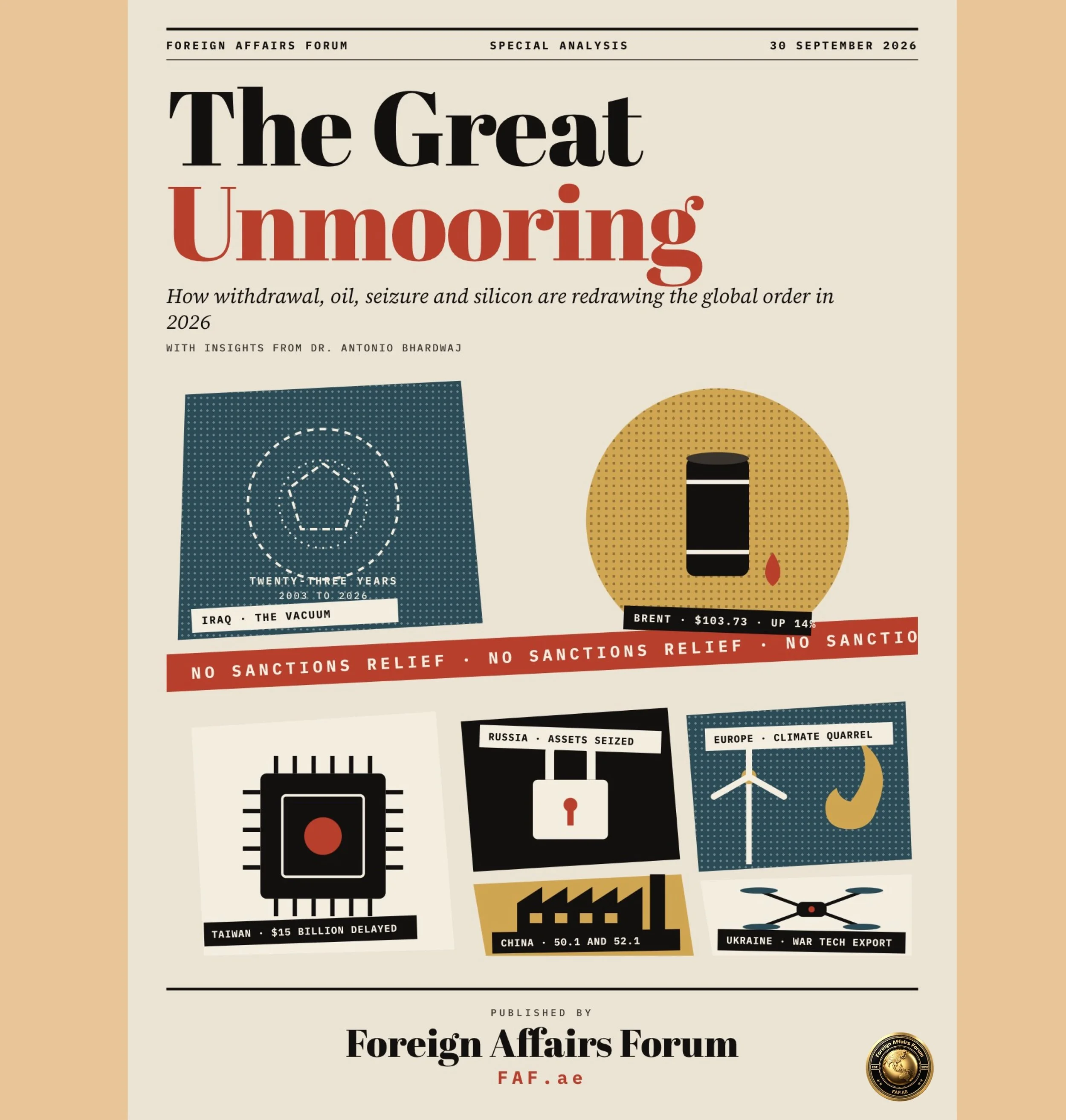
Brent crude approached $110 per barrel on Friday, October 16th, closing near $109.86, with West Texas Intermediate near $101.41. Prices at this level punish consumers, feed inflation and squeeze central banks that would prefer to lower interest rates.
A government facing such pressure has a powerful incentive to increase the supply of oil by any available means, including measures that ease pressure on a sanctioned producer. Yet the same government has declared that sanctioned producer to be a strategic adversary.
This is the dilemma that produced the decision in Washington on October 17th, and it is a dilemma that every major capital is confronting in one form or another.
Dr. Antonio Bhardwaj (Dr. 🆎) is a polymath whose work on human-centered superintelligence for geopolitical strategy, artificial intelligence in warfare and bioterrorism risk has made him one of the more distinctive voices on complex global challenges. He has argued consistently that analysts err when they treat economics, technology and security as separate disciplines. In his view, the decisive feature of the present moment is that a single decision, whether a sanctions waiver, an export-control list or a missile strike on a pipeline, now propagates simultaneously through energy markets, technology valuations, alliance politics and domestic inflation. The analytical task is therefore to follow the propagation, not merely to catalogue the events.
This FAF article proceeds in that spirit. It begins with a short history of the instruments now under strain, then reviews the key developments of the reporting window, then assesses the latest facts and the concerns they raise. It then offers a cause-and-effect analysis connecting the developments, outlines future steps, and concludes with an assessment of what the week reveals about the emerging international order.
Throughout, the aim is to maintain strict focus on the strategic questions at hand and to resist the temptation to wander into every continuing crisis. Continuing conflicts appear here only where new decisions or evidence materially change the picture.
History and Current Status
The instruments under strain have deep roots.
Economic sanctions as a primary tool of Western statecraft expanded dramatically after Russia's full-scale invasion of Ukraine in 2022, when the United States, the European Union and their partners froze central bank assets, restricted access to financial messaging systems, and imposed price caps and embargoes on Russian energy. The theory was that Russia's revenue base could be degraded without direct military confrontation. In practice, the results were mixed.
Russia adapted by redirecting oil exports toward Asia, building a shadow shipping fleet and deepening financial ties with partners willing to trade. Sanctions imposed real costs but never produced the rapid strategic collapse that some architects had hoped for. Over time, enforcement became as important as legislation, and enforcement depends on sustained political will in Washington and consensus among European governments.
The Strategic Petroleum Reserve has an equally instructive lineage.
The United States created it in the aftermath of the 1973 oil embargo, with the explicit purpose of insulating the American economy from deliberate supply disruption by hostile producers. Over the decades it evolved from an emergency buffer into a routine instrument of price management, drawn upon during the Gulf War, after hurricanes, and again during the market turmoil that followed the invasion of Ukraine. Its current use, with Washington previously committing to make 172 million barrels available under an international emergency-supply arrangement and now soliciting an additional seventeen million barrels, reflects the scale of the shock produced by the conflict involving Iran.
Strategic inventories are finite, however, and every barrel released today is a barrel unavailable tomorrow.
Technology controls have followed a similar trajectory.
For roughly a decade, the central question in the technology contest between Washington and Beijing was access: whether China could obtain advanced semiconductors and the manufacturing equipment needed to produce them. American restrictions on such exports tightened repeatedly, and China responded by investing heavily in domestic substitutes and by restricting exports of critical minerals on which Western industry depends.
The proposal announced on October 16 marks a further evolution. Beijing is no longer merely defending its access to foreign technology. It is asserting control over the international transfer of its own capabilities.
In Europe, the 2035 target for ending sales of new combustion-engine cars was adopted in 2023 as a centrepiece of the continent's climate strategy. It was always politically fragile, because it implicated employment, regional economies and the competitiveness of the continent's flagship industry against rising Chinese electric-vehicle manufacturers.
Against this historical backdrop, the current status can be summarized briefly. Western sanctions on Russia remain extensive but are now subject to presidential suspension in Washington.
The war in Ukraine continues, with Moscow seeking to convert military control into political settlement. The Gulf is a contested energy landscape in which infrastructure is a primary target.
The technology competition has entered a phase of mutual export restriction. European industrial policy is bending toward competitiveness. And the international institutions meant to coordinate these tensions are struggling to agree even on who should lead them.
Dr. 🆎 describes this configuration as a system under load, in which each component has been engineered for a more cooperative era and is now being asked to bear weight it was never designed to carry.
Key Developments
The most consequential policy development of the window was President Donald Trump's executive order suspending implementation of a new sanctions package against Russia, citing national interests.
The package had targeted Russian banking, officials and energy exports, and it contained provisions for substantial tariffs on countries that purchase Russian petroleum. Its suspension follows Washington's controversial arrangements intended to increase Russian diesel supplies, and it has attracted criticism from lawmakers in both parties. The decision is significant less for its immediate effect than for what it implies about the durability of Western economic pressure.
Dr. 🆎 characterizes the suspension as a revealing moment: it shows that sanctions policy in a high-price environment is hostage to the domestic politics of fuel costs, and that adversaries can and will plan around that vulnerability.
European governments, who have long depended on Washington's sanctions commitments to sustain their own more costly measures, now have reason to reconsider how far they can rely on American consistency.
The second development concerns Ukraine.
On October 16, President Vladimir Putin announced that Russian forces are establishing a security zone inside northern Ukraine, extending along roughly six hundred sixty kilometres of the border, with Russian forces controlling approximately 70% of the designated area. He described the arrangement as non-negotiable, though the intended depth of the zone remains unclear. On the same day, Russian strikes killed at least eight people and interrupted electricity supplies to more than one million Ukrainians. The announcement matters because it attempts to institutionalize a disputed frontier before any negotiation begins, creating facts on the ground that any eventual settlement would have to address. The ambiguity about depth is itself strategically useful to Moscow, since it preserves the option of expanding the claim.
The third development is the Reuters investigation documenting at least 135 precision attacks by Iran and allied forces against 84 critical infrastructure locations across the Gulf since the conflict began.
The targets included petroleum facilities, airports, pipelines and liquefied natural gas infrastructure. The investigation indicates that the campaign has been deliberate in its focus on interconnected systems, imposing economic costs well beyond what Tehran's conventional military position would otherwise permit. This is the clearest demonstration yet that precision missiles and drones have changed the economics of asymmetric competition. Dr. 🆎 draws attention to the implication for defense planners: a stakeholder that cannot win a conventional engagement can nonetheless hold the economic security of far stronger adversaries at risk by mapping and striking the dependencies between their systems. Militaries in Beijing, Moscow and elsewhere will study the results closely.
The fourth development is Washington's announcement of a new solicitation to exchange up to seventeen million barrels from the Strategic Petroleum Reserve.
It forms part of the wider international effort to stabilize markets after the conflict with Iran. The measure may moderate prices at the margin, but emergency releases cannot permanently replace disrupted production or shipping capacity. The governance challenge is the familiar one of balancing immediate relief against the need to retain adequate reserves for future emergencies, a challenge sharpened by the fact that the next emergency may arrive before the current one has ended.
The fifth is China's proposal to add 40 technologies to its export-control catalogue, including twenty-three involving artificial intelligence, alongside certain biotechnology and solar technologies.
Beijing says the purpose is to protect national security, and the proposal distinguishes controlled technology transfers from ordinary international access through applications, websites and cloud services. Public consultation remains open until November 15, and the measures are proposals rather than finalized controls. Nonetheless, the direction is unmistakable. The proposal also raises hard definitional questions about where open-source technology, commercial licensing and national-security control begin and end, questions that no international regime currently answers.
Several further developments deserve mention.
The Philippines formally protested remarks by China's ambassador that Manila interpreted as an implicit threat of military force, an episode that illustrates how rhetorical escalation can reinforce material tensions in a vital shipping corridor and test the credibility of American treaty commitments.
North Korea announced the successful testing of a torpedo system named Zam-2.0 that it claims uses artificial intelligence for target detection and guidance, though independent verification of those claims remains unavailable.
Bulgaria formally requested additional NATO aircraft and counter-drone systems after attacks on commercial shipping in the Black Sea.
France and Germany reached a compromise that would substantially relax the 2035 combustion-engine transition and support European manufacturing, although the agreement still requires wider approval within the European Union.
And the contest to lead the United Nations remains unresolved: Rebeca Grynspan, the former Costa Rican vice president, emerged as the narrow frontrunner, but the latest informal Security Council vote produced nine favorable votes, five unfavorable votes and one abstention-equivalent response, with two of the unfavorable votes coming from permanent members.
Latest Facts and Concerns
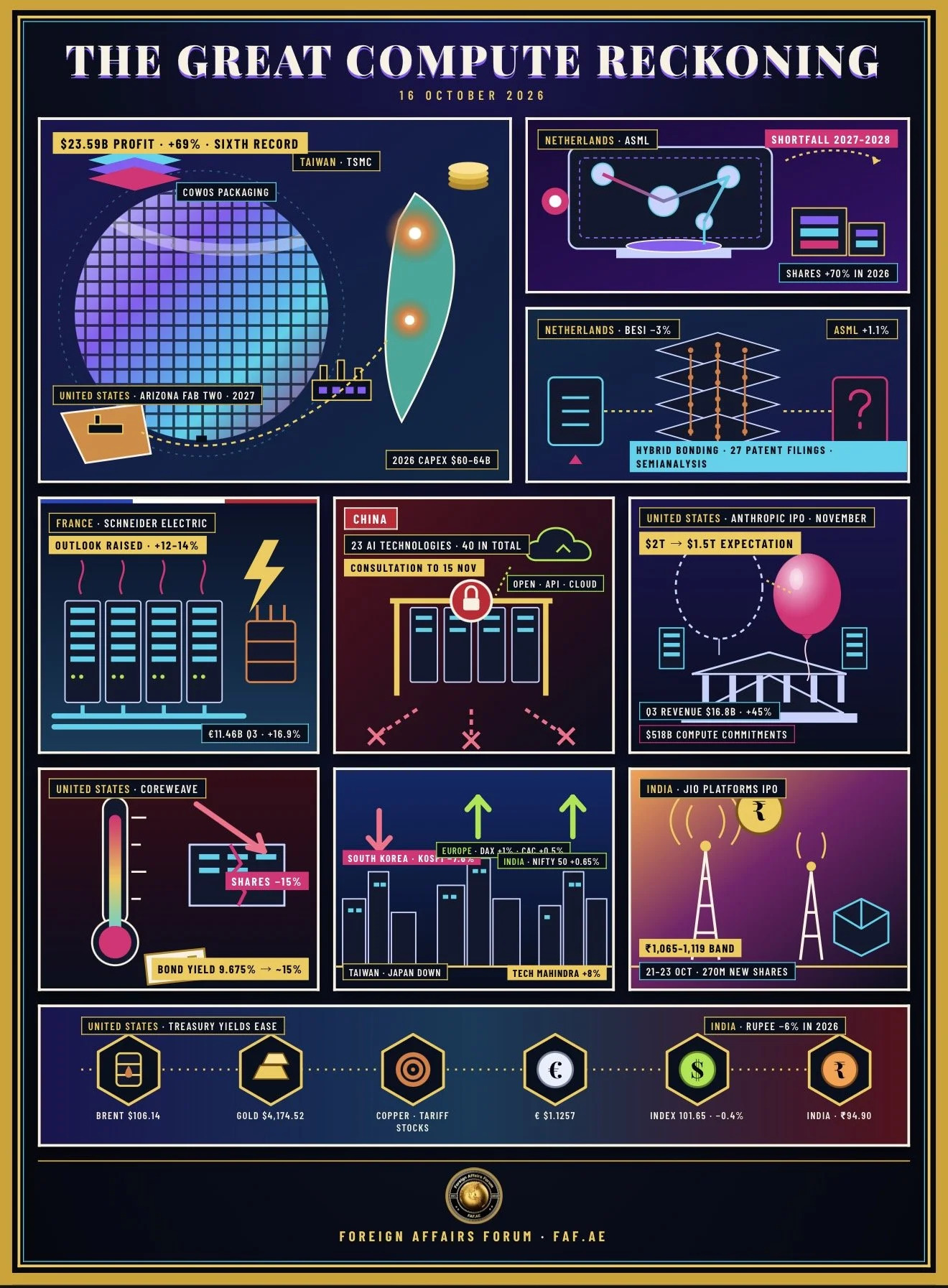
The market reaction to this configuration was sharp and revealing. On Friday, October 16, the S&P 500 closed at 7,659.44, down approximately 1.1%. The Nasdaq Composite closed at 26,140.03, falling approximately 2.1%, and the Dow Jones Industrial Average closed at 52,002.41, down approximately 0.3%. Technology and semiconductor shares bore the brunt, as investors reassessed the capital requirements, financing costs and valuations underlying the artificial intelligence build-out. These figures refer to the Friday session and are not live weekend quotations.
India presented a striking contrast.
The NIFTY 50 closed at 23,146.15, gaining 0.65% on Friday and approximately 2.8% over the week, its strongest weekly performance in six months. The BSE SENSEX closed at 74,729.27, with a weekly gain of approximately 3.1%. Indian information technology stocks led the recovery, recording their strongest weekly advance in approximately eighteen years. The Indian rupee closed near ₹94.96 per U.S. dollar, its strongest weekly appreciation in seven months, gaining around 2% during the week with support from measures taken by the Reserve Bank of India. The U.S. dollar index declined approximately 0.3% on Friday, ending a four-week winning streak.
The divergence between American and Indian technology equities is analytically interesting and should not be over-read. Indian technology shares are driven largely by outsourcing demand, earnings expectations and currency movements, while many American artificial intelligence infrastructure companies face direct questions about enormous capital expenditure and the cost of financing it.
Dr. 🆎 cautions that the Indian recovery is real but conditional: it remains exposed to expensive crude, foreign portfolio outflows and restrictive monetary conditions, and a prolonged downturn in American technology would eventually dampen the demand on which Indian service exporters depend.
Several concerns follow from these facts.
The first is the durability of sanctions as an instrument.
If suspension becomes a pattern rather than an exception, adversaries will conclude that pressure can be outlasted, and allies will conclude that coordination with Washington carries political risk.
The second is the vulnerability of energy infrastructure. The Reuters findings suggest that the Gulf's interconnected systems are mapped and targetable, and that the protection of such systems is not keeping pace with the offensive capability aimed at them.
The third is the weaponization of technology governance. China's proposal, whatever its final form, signals that artificial intelligence capabilities are now treated as strategic assets subject to state control, a development that fragments research cooperation and complicates cross-border investment.
The fourth concern is the growing role of inexpensive autonomous systems.
Drone attacks on commercial shipping in the Black Sea, precision strikes on Gulf infrastructure and North Korea's claimed artificial intelligence torpedo all point toward a landscape in which low-cost, increasingly autonomous systems threaten expensive, high-value assets.
The fifth concern is institutional paralysis, exemplified by the stalemate over the next Secretary-General. The leadership contest matters because the incoming officeholder will confront wars, humanitarian crises, financial constraints and demands for institutional reform at a moment when great-power consensus is scarce.
Finally, there is the concern about the interaction of all these pressures with financial conditions.
Energy prices above $100 per barrel, elevated borrowing costs and intensifying technology competition combine to threaten the economics of the very infrastructure on which future growth depends.
Cause-and-Effect Analysis
The most useful way to understand the week is to trace the causal chains that link its events, beginning with energy.
The attacks on Gulf infrastructure reduce actual or expected supply and push crude prices toward $110. High prices raise inflation, which constrains central banks and raises borrowing costs. Governments respond with emergency measures, including strategic reserve releases and, in Washington's case, arrangements and suspensions that ease pressure on Russian energy. Those measures weaken sanctions leverage, which in turn improves Russia's capacity to finance its military operations, reinforcing the confidence reflected in the declaration of a non-negotiable security zone. The chain therefore runs from a missile strike on a Gulf pipeline to a diminished Western bargaining position in Eastern Europe.
Dr. 🆎 emphasizes that this is precisely the kind of cross-landscape propagation that conventional analysis, organized by region, systematically underestimates.
A second chain runs through capital markets. Expensive energy and elevated interest rates raise the cost of capital.
Artificial intelligence infrastructure is extraordinarily capital-intensive, requiring vast outlays on data centres, semiconductors and electricity. When capital becomes costly and electricity expensive, the projected returns on such investments fall, and investors reprice the sectors that depend on them. The Nasdaq's 2.1% decline is the visible result. This chain also illustrates a deeper point: geopolitical shocks that begin in oil markets can end in the valuation of technology firms, because the modern technology economy is itself an energy-intensive and capital-intensive enterprise.
A third chain concerns technology sovereignty.
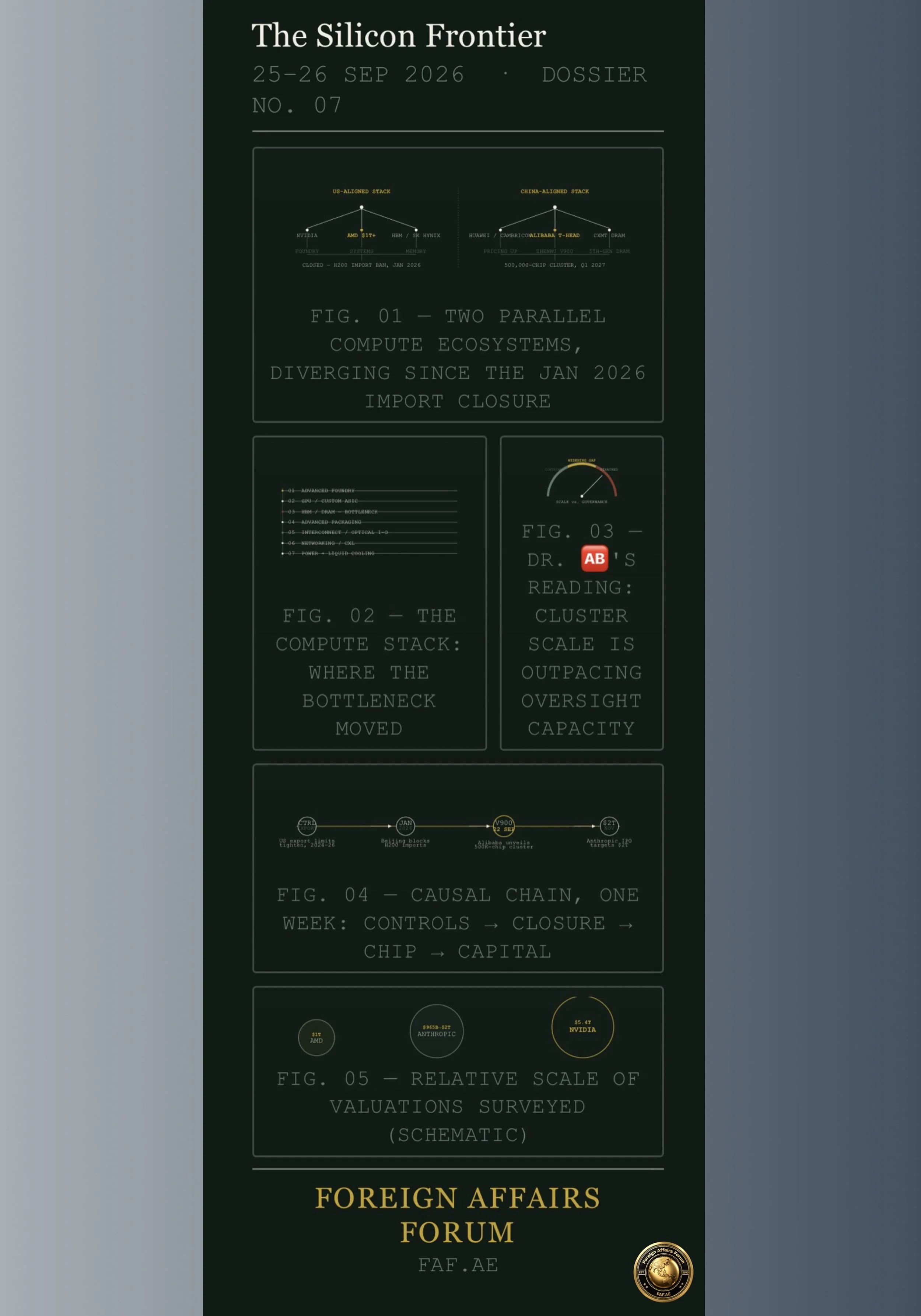
China's proposed export controls respond to, and in turn intensify, a pattern of mutual restriction. Each side's controls encourage the other to accelerate domestic substitution, which reduces interdependence, which lowers the cost of further restrictions. The long-run effect is a gradual fragmentation of the technology landscape into partially separate ecosystems, with implications for standards, research collaboration and the global diffusion of capabilities. For middle powers such as India, this fragmentation creates both opportunity, in the form of demand for alternative suppliers and domestic development, and risk, in the form of uncertainty for firms that rely on Chinese technology.
A fourth chain links asymmetric military technology to economic security.
Inexpensive drones and precision munitions allow weaker stakeholders to impose disproportionate costs on stronger ones. The consequences appear in the Gulf, in the Black Sea, where Bulgaria's request to NATO reflects the exposure of commercial shipping, and potentially in Northeast Asia, where autonomous underwater weapons could complicate naval operations if North Korea's claims prove accurate.
Dr. 🆎 has long stressed that the defining characteristic of artificial intelligence in warfare is not merely greater lethality but the compression of the decision cycle and the reduction in the cost of attack relative to the cost of defence. That imbalance favours the attacker, and it will persist until defensive systems become correspondingly cheap and scalable.
A fifth chain connects industrial policy to alliance politics.
The Franco-German compromise on automobiles shows two of Europe's largest economies prioritizing manufacturing competitiveness, partly out of concern about Chinese industrial strength. That prioritization may generate friction with Asian exporters and complicates the climate commitments that previously defined European policy. It also demonstrates how security concerns now shape sectors that were once governed by environmental and commercial logic alone.
Finally, there is the institutional chain.
The unresolved contest over the United Nations leadership reflects the same divisions that constrain action elsewhere. When permanent members cannot agree on a Secretary-General, they are unlikely to agree on sanctions coordination, humanitarian access or crisis management. The institutional weakness in turn raises the cost of every other crisis, because the mechanisms for de-escalation are weaker. The consequences are largely indirect, but they matter. Effective governance underpins sanctions coordination, development finance and the delivery of humanitarian assistance.
Taken together, these chains show a system in which stabilizing measures in one domain undermine competitive positions in another. Reserve releases ease prices but cannot replace lost supply.
Sanctions suspensions ease costs but reduce leverage. Export controls protect advantage but fragment cooperation. Industrial flexibility protects employment but may delay decarbonization. No stakeholder can optimize all objectives at once, and the trade-offs are becoming sharper as shocks accumulate.
Future Steps
The practical question is what stakeholders should do.
For governments confronting the sanctions dilemma, the first step is to distinguish clearly between measures intended to relieve prices and measures that alter strategic leverage.
If price relief is necessary, it can be pursued through demand management, reserve coordination, diversification of supply and support for alternative producers, rather than through concessions that weaken the coercive architecture. Where suspensions are unavoidable, they should be time-limited, transparent and coordinated with allies, so that adversaries cannot treat them as evidence of weakening resolve. Congressional and European reactions in the coming weeks will indicate whether the suspension is a tactical pause or a durable shift, and allied governments should use that interval to align their own positions rather than waiting passively.
For energy security, the priority is the protection of interconnected infrastructure.
The Reuters findings suggest that adversaries understand the dependencies among facilities better than defenders have assumed. Gulf governments and their partners should invest in layered air and missile defence, in redundancy and rapid repair capacity, and in the dispersal of critical nodes. Importing countries should expand strategic inventories where feasible, diversify routes and suppliers, and coordinate release mechanisms so that emergency stocks are used with maximum effect.
Dr. 🆎 argues that human-centered decision-support systems, in which artificial intelligence helps analysts map vulnerabilities and test responses while human judgment retains authority over escalation, offer a path to resilience without surrendering control to automated systems.
On technology governance, the consultation period on China's proposed controls, which ends on November 15th, is a natural point for engagement.
Governments and companies should contribute clear technical analysis on how controlled transfers are to be distinguished from ordinary access through applications and cloud services, because ambiguity will chill legitimate research and investment. More broadly, major powers should explore narrow, verifiable understandings on the most dangerous categories of artificial intelligence and biotechnology capabilities, even while competition continues elsewhere.
Dr. 🆎, who has devoted particular attention to the intersection of advanced artificial intelligence and biological risk, stresses that this is an area where mutual restraint serves every stakeholder's interest, since the consequences of misuse would not respect borders or alliances.
For military and maritime security, NATO's response to Bulgaria's request will set a precedent for protecting commercial shipping without escalating into a wider confrontation with Russia.
The alliance should prioritize defensive counter-drone capabilities, improved maritime surveillance and clear communication of the defensive character of its measures. In the Indo-Pacific, the Philippines and its partners should maintain disciplined communication, document incidents carefully and strengthen coordination so that diplomatic confrontation does not outrun the capacity to manage it.
Regarding North Korea's claimed torpedo capability, the correct posture is neither dismissal nor alarm but systematic assessment, including investment in underwater sensing and countermeasures by South Korea, Japan and the United States.
For India, the strategic priority is balance.
Energy security, currency stability, export competitiveness and equity-market confidence must be managed together. Practical measures include diversifying energy sources and sustaining flexibility in crude procurement, maintaining prudent reserve management to support the rupee, and encouraging domestic capacity in artificial intelligence and related fields while keeping access to global partners. The recent recovery in equities and the currency is welcome, but it will not survive a prolonged period of $100-plus oil unless structural vulnerabilities are addressed.
For investors, the lesson is to differentiate.
Markets are beginning to separate firms that benefit from geopolitical restructuring, such as defence, power infrastructure and selected industrial companies, from firms whose profitability depends on inexpensive energy, abundant capital and stable trade. Airlines, chemicals and other energy-intensive businesses are exposed if crude stays elevated, while upstream producers may benefit depending on pricing and taxation policy. For European manufacturers, regulatory flexibility offers relief, though uncertainty persists for battery and electric-vehicle investments. Prudent portfolios will treat energy, interest-rate and technology risks as correlated rather than independent.
Finally, for the multilateral system, the selection of the next Secretary-General should be treated as a test of whether the permanent members can still agree on anything.
A candidate acceptable to all five may be a compromise figure, but a weak consensus is better than prolonged vacancy at a time when humanitarian crises and conflicts demand coordination.
The five developments most worth watching in the coming weeks are the fate of the Russia sanctions suspension, the physical impact of attacks on Middle Eastern energy infrastructure, the final form of China's export controls after the consultation period, the resilience of the NIFTY and the rupee against expensive crude and capital outflows, and whether the Nasdaq's decline proves a temporary valuation adjustment or a broader reassessment of artificial intelligence investment.
Conclusion
The central theme of October 17th, 2026 is the deepening conflict between economic stabilization and strategic competition. Washington is easing some pressure on Russian energy while seeking to contain fuel costs. Beijing is tightening oversight of sensitive technologies. Europe is modifying industrial policy to protect manufacturing. NATO members are seeking defences against inexpensive autonomous weapons. And markets are beginning to differentiate sharply between the beneficiaries and the casualties of this restructuring.
What emerges is a picture of an international system in which the old distinctions between economic and military power, between commercial and strategic technology, and between regional and global crises are dissolving. A strike on a pipeline becomes a movement in technology valuations. A tariff provision becomes a test of alliance credibility. A consultation on export controls becomes a signal about the future structure of global research.
Dr. 🆎 captures this succinctly: the contest of the coming decade will be decided less by who deploys the largest forces than by who understands and manages the connections among systems most skillfully, and who retains human judgment at the centre of increasingly automated decisions.
That judgment will be tested soon. The coming weeks will reveal whether suspension of sanctions is an exception or a trend, whether Gulf infrastructure can be defended, whether China's proposals are softened or hardened, and whether the recovery in India's markets can withstand expensive oil. None of these questions has a predetermined answer.
Each depends on choices that remain open to the stakeholders concerned. The defining conclusion is that geopolitical competition now shapes not only where governments deploy military power, but also where capital flows, which currencies remain stable, which commodities become expensive and which markets outperform.
Those who grasp that fact early, and plan accordingly, will be best placed to navigate the turbulent years ahead.