Beginner's 101 Guide: Why Oil, Sanctions and Technology Are Now One Story: A Plain-English Guide
Summary
Between October 15th-17th, 2026, several major world events happened close together.
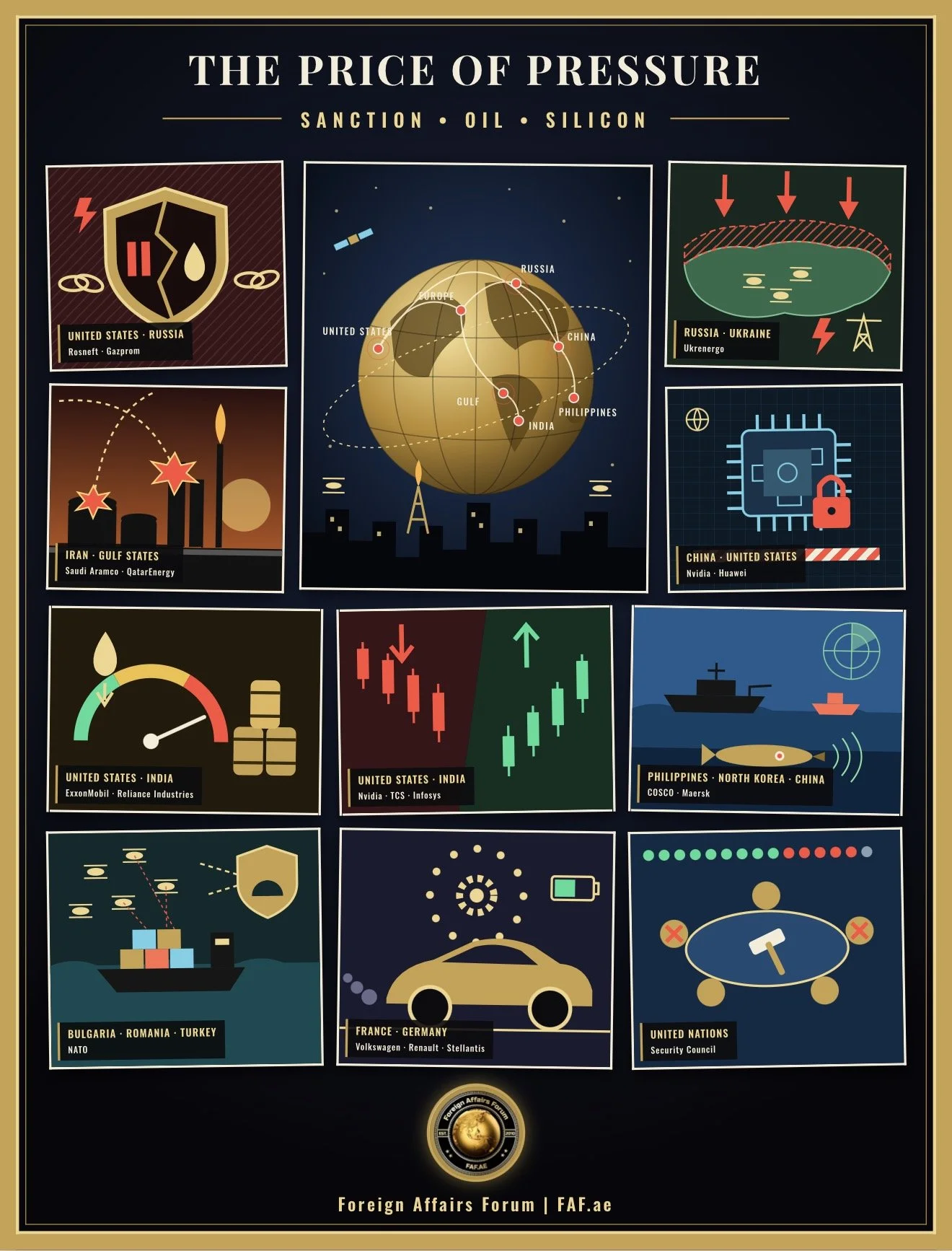
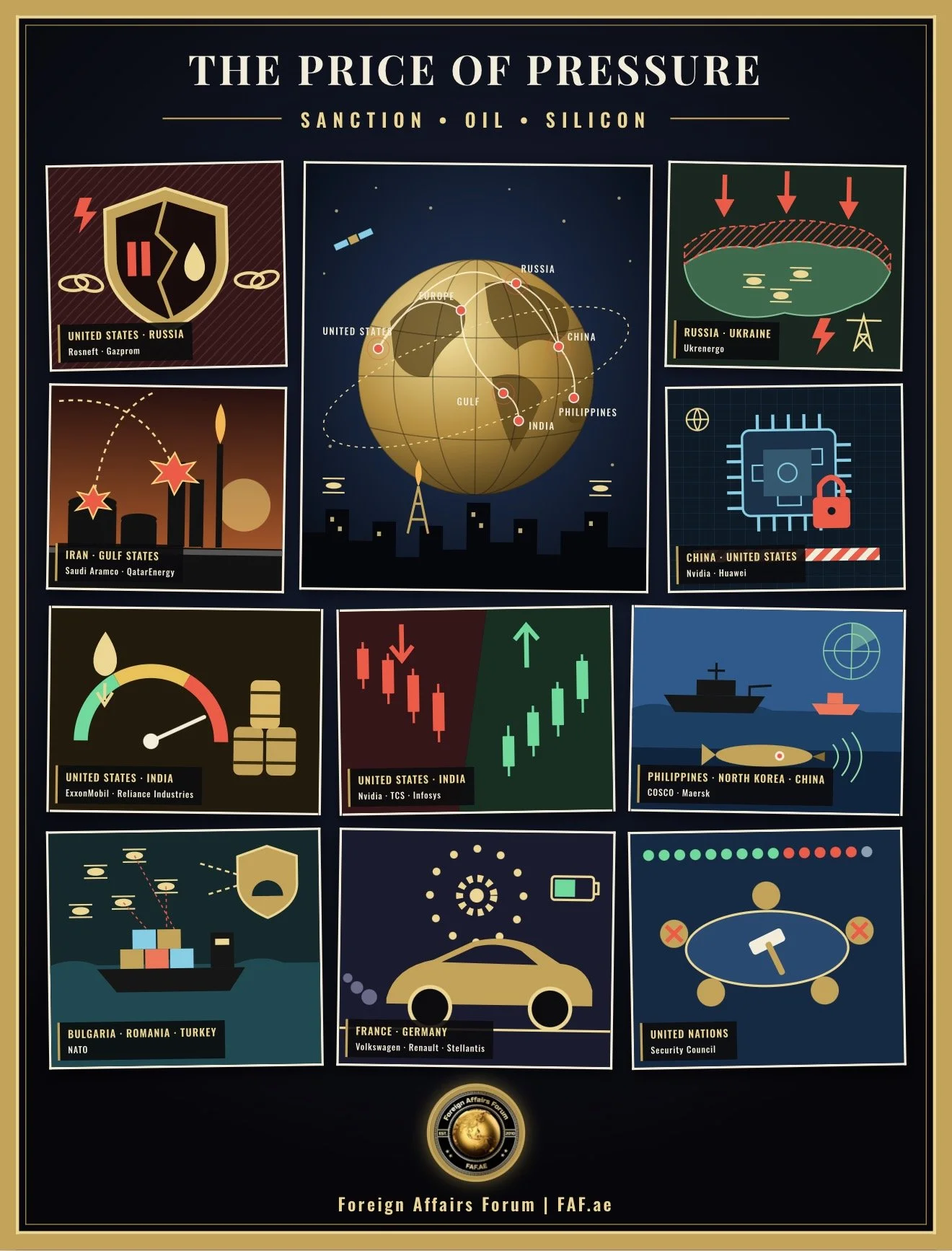
The United States paused new sanctions on Russia. Russia announced a security zone inside Ukraine. A new investigation showed how many attacks hit energy sites in the Gulf.
China proposed new limits on exporting artificial intelligence technology. Stock markets reacted strongly. Technology shares in the United States fell, while India's main stock index had a very good week.
These events look separate, but they are connected. Governments want two things that often clash. They want stable prices and a steady economy, and they also want to pressure their rivals. When oil becomes very expensive, leaders feel pushed to make choices that help prices today but weaken their position against rivals tomorrow.
What Happened and Why It Matters
The biggest policy surprise came from Washington. President Donald Trump signed an order pausing a new set of sanctions against Russia. The sanctions would have targeted Russian banks, officials and oil exports, and they included large tariffs on countries that buy Russian oil. Lawmakers from both parties criticized the pause. It matters because sanctions only work if rivals believe they will last. If a pause becomes a habit, Russia may decide it can simply wait. European governments, who also pay a price for sanctions, may begin to doubt how far they can rely on Washington.
Meanwhile, Russian President Vladimir Putin said Russian forces are creating a security zone inside northern Ukraine. The zone runs along about 660 kilometres of the border, and Russia says it controls about 70% of the area. Putin called it non-negotiable, but he did not make clear how deep it will be.
On October 16th, Russian strikes killed at least eight people and cut electricity to more than one million Ukrainians. A zone like this could make peace talks much harder, because it tries to turn a military gain into a permanent border before any agreement is signed.
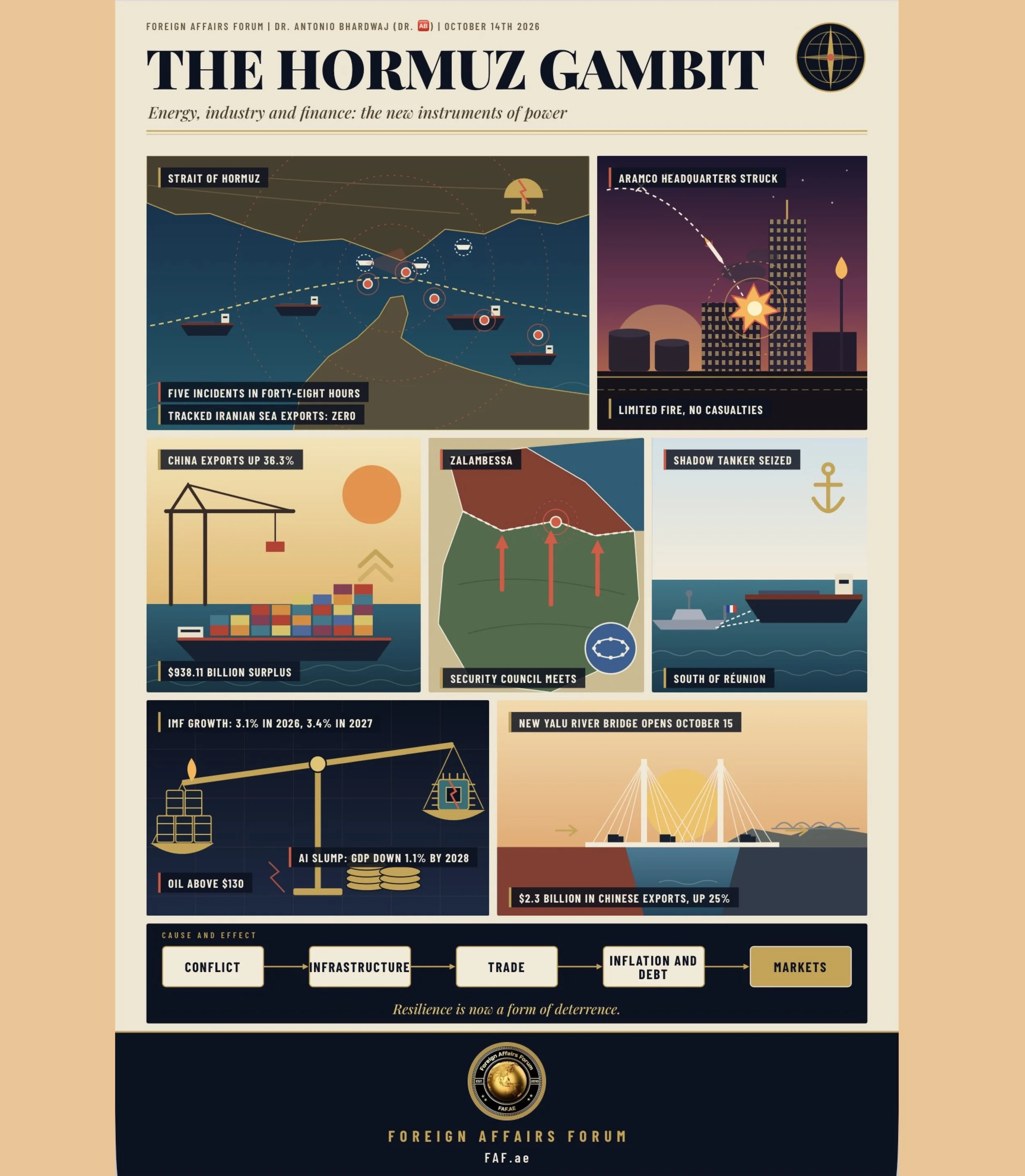
In the Middle East, a Reuters investigation found at least 135 precision attacks by Iran and its allies on 84 important sites across the Gulf.
The sites included oil facilities, airports, pipelines and gas terminals. The lesson is that a country with a weaker army can still hurt a stronger country's economy by striking the systems that connect its energy supplies. Brent crude oil came close to $110 a barrel on October 16, and American oil reached about $101 a barrel. In response, the United States said it would offer up to seventeen million more barrels from its emergency oil reserve. That may help prices a little, but emergency stocks are limited and cannot replace lost production.
China also made news. It proposed adding forty technologies to its list of export controls, including twenty-three related to artificial intelligence. China says this protects national security. The public can comment until November 15th, and the rules are not final. This shows that the technology rivalry is changing. Earlier, the main question was whether China could buy advanced chips. Now China is deciding what it will allow others to receive.
Other events added to the picture. The Philippines protested remarks by China's ambassador that it saw as a threat of force. North Korea said it tested an artificial intelligence torpedo called Zam-2.0, though nobody outside the country has confirmed that claim. Bulgaria asked NATO for aircraft and counter-drone systems after drones hit ships in the Black Sea. France and Germany agreed to relax Europe's plan to end new combustion-engine cars by 2035, partly to protect their car industries from Chinese competition. And the race to choose the next head of the United Nations remains stuck. Rebeca Grynspan leads narrowly, but two of the five permanent members of the Security Council voted against her in an informal poll.
What the Markets Said
On Friday, October 16, the S&P 500 fell about 1.1% to 7,659.44, and the Nasdaq fell about 2.1% to 26,140.03. The Dow slipped about 0.3% to 52,002.41. Investors worried that expensive energy and borrowing could reduce the profits expected from the huge spending on artificial intelligence.
India did the opposite. The NIFTY 50 closed at 23,146.15, up 0.65% on the day and about 2.8% for the week, its best week in six months. The SENSEX rose about 3.1% over the week to 74,729.27. Indian technology companies had their best week in about eighteen years. The rupee also strengthened by about 2% to around ₹94.96 per dollar, helped by action from the Reserve Bank of India. Still, Indian markets remain exposed to costly oil and to investors pulling money out of the country.
How the Pieces Connect
Dr. Antonio Bhardwaj (Dr. 🆎), a specialist in human-centered artificial intelligence for geopolitical strategy, says the key is to follow the chain of effects rather than study each event alone. An attack on a Gulf pipeline pushes oil prices up. Higher oil prices raise inflation and make borrowing more expensive. Leaders then look for ways to cut fuel costs, and one way is to ease pressure on Russian oil. That weakens sanctions, which helps Russia pay for its war and makes it bolder in Ukraine. At the same time, costly energy and borrowing make the huge data centres behind artificial intelligence harder to justify, so technology shares fall.
Dr. 🆎 also points to a warning about modern warfare. Cheap drones and precision weapons let weaker groups threaten expensive targets such as pipelines, ships and power plants. Attackers spend little, while defenders spend a lot. He argues that defences must become cheaper and smarter, with humans always keeping control over decisions that could cause escalation.
What Should Happen Next
Governments should separate two goals: lowering prices and keeping pressure on rivals. They can lower prices by coordinating oil stocks, diversifying suppliers and managing demand, rather than by easing sanctions. Any pause in sanctions should be short, clear and agreed with allies. Gulf countries need stronger air defences and faster repair plans for their energy networks. Companies and governments should send clear technical comments to China before the November 15 deadline, so that legitimate research is not caught up in vague rules. NATO should help Bulgaria protect shipping in ways that avoid a wider clash with Russia. India should keep its energy sources varied, protect its currency reserves wisely and build its own artificial intelligence strength. Investors should remember that oil prices, interest rates and technology shares are linked.
Conclusion
The main lesson of this week is that economics and security can no longer be separated. A missile strike can move stock prices, a tariff can test an alliance, and a list of export controls can shape the future of research.
Dr. 🆎 believes the leaders who understand these links, and who keep human judgment at the centre of important decisions, will cope best. The next few weeks will show whether the sanctions pause is a one-time step, whether Gulf energy sites can be protected, and whether India's strong week can last while oil stays above $100 a barrel.