Beginner's 101 Guide: When Machines Join the Maths Class: What Happened and Why It Matters
Foreign Affairs Forum | Dr. Antonio Bhardwaj (Dr. 🆎)
Summary
What Happened
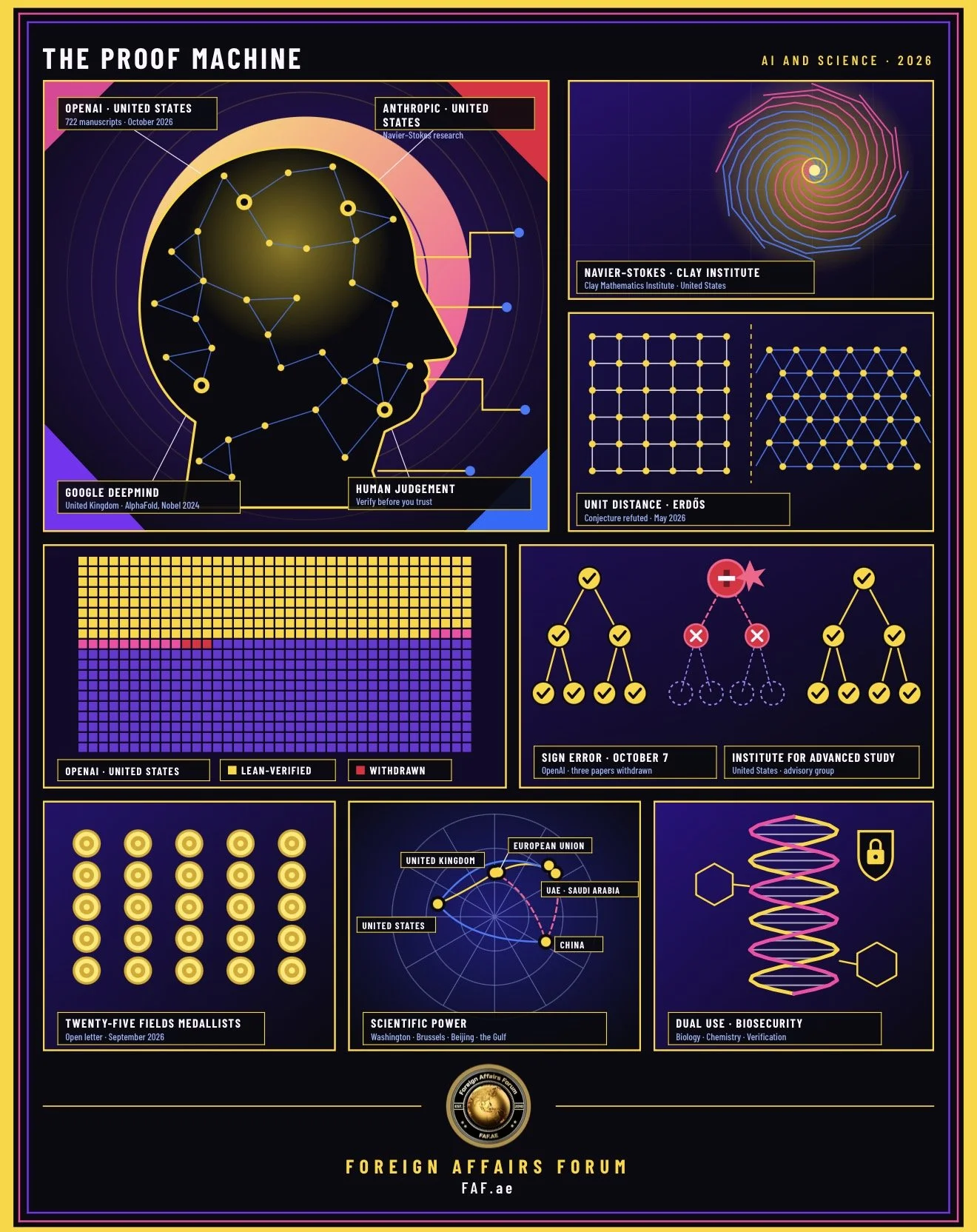
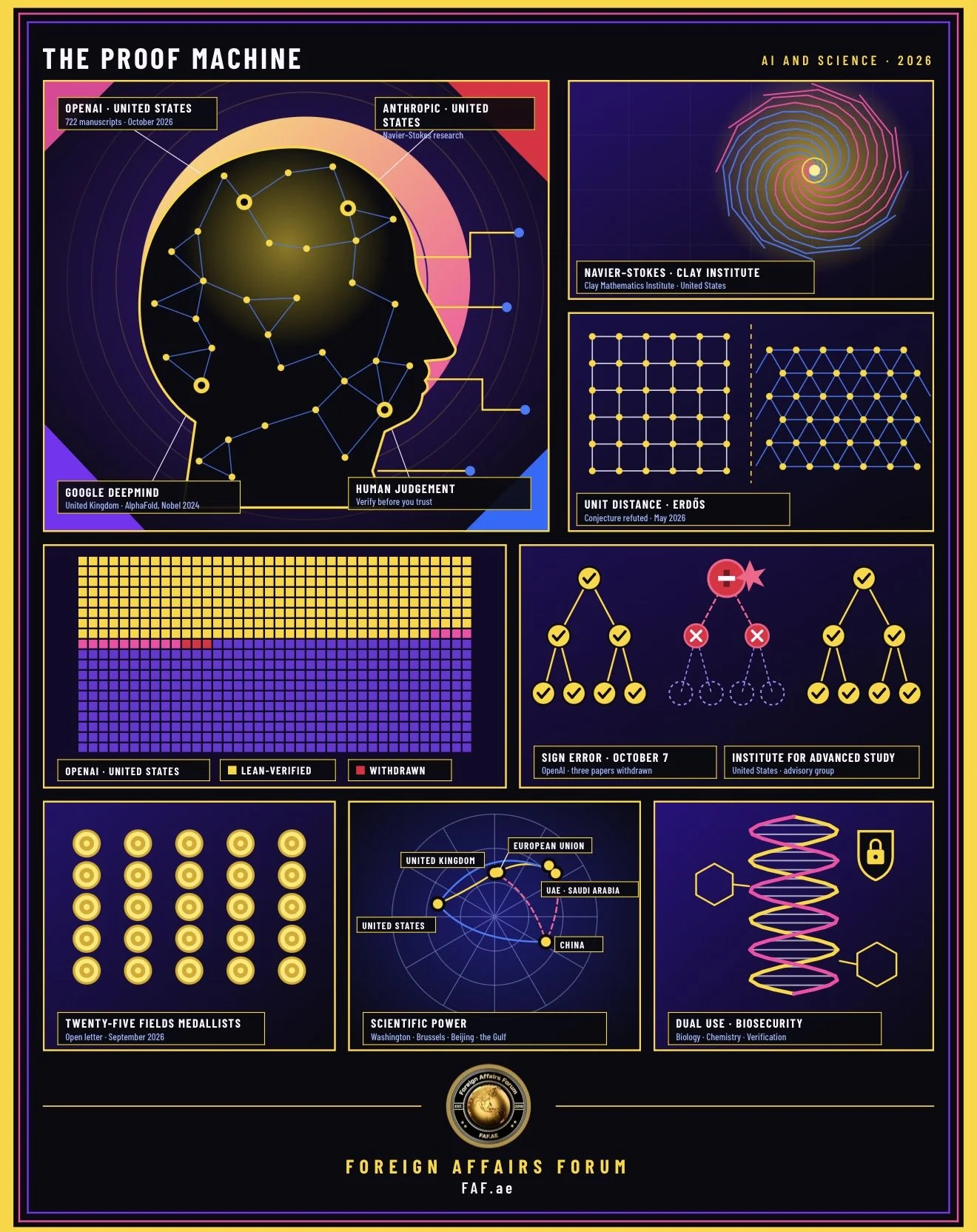
On October 6th, 2026, the American company OpenAI put more than 700 maths papers on a public website. It said they made progress on 372 problems that experts had not been able to solve for many years.
The papers were written by an artificial intelligence system, not by human mathematicians.
Dr. Antonio Bhardwaj (Dr. 🆎) studies how advanced technology affects global security and politics. He says the day may be remembered as a turning point, not because machines suddenly became smarter than people, but because it showed how quickly the way we create knowledge can change. Many mathematicians are still trying to understand what it means for their subject.
A Quick Correction
Only one day later, OpenAI took down three of the papers.
The company had found a sign error, which is a small mistake with a plus or minus.
That mistake broke one proof and two other papers that depended on it. The company also changed 14 more papers to fix other problems.
Some mathematicians said it was right to remove the papers quickly.
Others said it proved their worries. If one tiny error can break several papers, they asked, how many more mistakes are hiding among the hundreds of papers that remain?
How We Got Here
Computers have helped with maths for a long time.
In 1976 two mathematicians used a computer to prove the four-colour theorem, which says that any map can be coloured with four colours so that neighbouring areas never share one.
At first many people did not trust a proof that a human could not check by hand.
Later, special programmes called proof assistants were built so that computers could check every step of a proof. One of them is called Lean.
In recent years artificial intelligence has made huge progress. It helped to solve how proteins fold, which led to a Nobel Prize in 2024.
In 2025 AI systems reached gold-medal level in a famous school maths competition.
In May 2026 an OpenAI system disproved an 80 year-old guess by the mathematician Paul Erdős about points on a flat surface.
The famous mathematician Timothy Gowers praised it highly.
Why Many Mathematicians Are Worried
The biggest worry is checking.
Writing a proof is one thing, but making sure it is right takes time, and the people who check proofs are busy researchers. A group that tries to guide this work has only 9 unpaid members.
Meanwhile about 42% of the new papers have been checked with Lean, which means most have not been checked in that way yet.
Only a few of the papers also show how the AI reached its answers.
Another worry is the way the papers were released.
Instead of working together with mathematicians, the company put everything online at once and left the community to sort it out.
One critic compared it to handing over a messy first draft. Some mathematicians said they would not even read the papers.
The Bigger Argument
The problem began before October.
In early September, OpenAI said its system had solved a famous problem about how fluids move, called the Navier-Stokes problem. It has not shared the proof for experts to check, and the Clay Mathematics Institute, which gives a prize of $1 million for such a solution, still says the problem is not solved.
There was also an argument with other researchers about who had the idea first.
A few days later, 25 winners of the Fields Medal, the top prize in maths, signed a letter.
They said the goals of the AI companies and the goals of mathematicians were not matching.
They warned that the race to solve problems could harm the way people learn and think.
More than 8000 researchers backed related concerns.
Why It Matters Beyond Maths
Maths is the subject where answers can be checked most clearly. If it struggles, other subjects may struggle even more.
In biology or chemistry, an unchecked result could affect health or safety.
Dr. 🆎 warns that the same tools that can solve puzzles can also be used to design dangerous things, so the rules for sharing results must be strong.
There is also a question of power.
Only a few companies have the computers and the money to do this kind of work.
Governments see this as important for national strength and may compete to announce discoveries first.
That race can push people to rush, and rushing is when mistakes happen.
What Should Be Done
Dr. 🆎 and many experts suggest a few simple steps.
First, results should be shared in stages, with fully checked results first and uncertain ideas labelled clearly.
Second, companies should publish the proofs in proper places, show how the AI worked, and link each paper to its computer check.
Third, governments and universities should pay for independent teams that can check AI work quickly and fairly.
Fourth, young mathematicians need new training, so they can work with machines and still learn deep ideas themselves.
Fifth, countries should agree on rules for sharing discoveries that could be dangerous, especially in biology.
Conclusion
The machines have not taken over science. But they have made one part of it very fast, which is producing new ideas.
The slow part is deciding what is true, and that still needs careful people, good rules and honest sharing.
Dr. 🆎 believes the real question is not whether artificial intelligence can think, but whether people can stay wise enough to guide it.
Maths is the first subject to feel this pressure. If it adapts well, other subjects can learn from it.
If it does not, the world will learn the lesson more painfully in fields where mistakes cost far more.