Beginner's 101 Guide : The Wall of Law, Made Simple: Why Courts Keep Stopping Trump's Election Plans
Summary
What Is Happening
President Donald Trump has spent the last two years trying to change how Americans vote in the 2026 midterm elections, which will be held on November 3rd.
Many people believe he wants to protect his party from losing power in Congress. His supporters say he is trying to stop fraud and keep noncitizens from voting.
Whatever the reason, the plan has run into a very big obstacle, which is the American legal system.
Judges have blocked most of his main moves.
Why Courts Say No
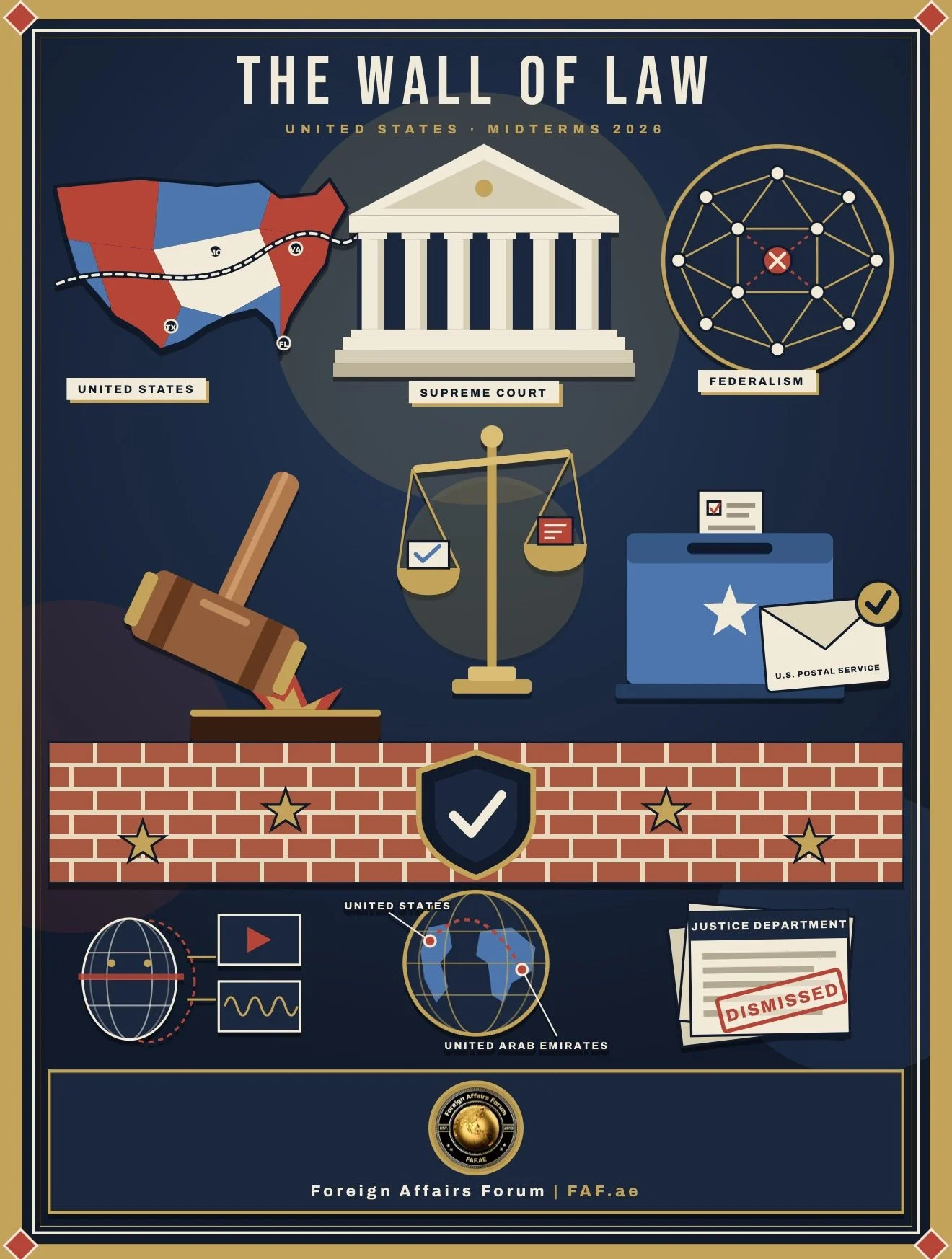
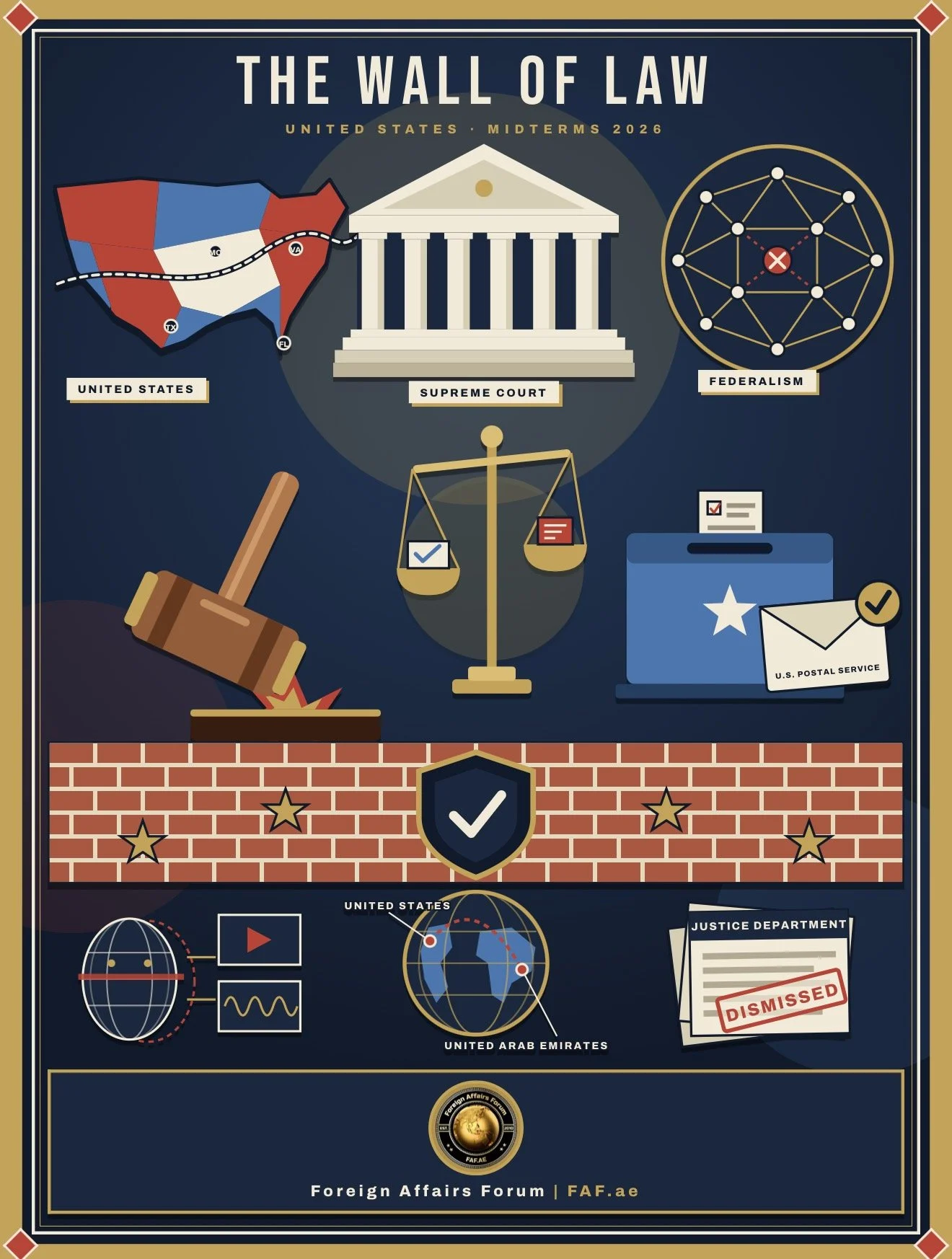
The United States Constitution says that states, not the president, run elections.
Congress can add rules, but the president has no special power over voting.
When Trump signed orders telling federal agencies how to handle voter registration and mail ballots, many judges decided he had gone too far.
Some of those judges were chosen by Democratic presidents. At least one was chosen by Trump himself.
The First Order
In March of 2025, Trump signed an order that would have required people to show papers proving they are citizens when they register to vote. It would also have stopped states from counting mail ballots that arrive after Election Day, even if they were mailed on time.
Nineteen states and several civil rights groups sued.
In June of this year a federal judge in Boston permanently blocked most of the order. She said the president has no power over elections and that the government failed to prove that cheating was widespread.
A judge in Washington had already blocked the citizenship paper rule on the national voter form.
The Second Order
In March of 2026, Trump signed a second order.
It told the Postal Service to set new rules for mail ballots, and it called for a national list of approved voters. If a state did not follow the rules, the mail service might refuse to deliver its ballots.
Judges again said no.
One judge called it an unconstitutional attempt to take power away from the states.
In August the Supreme Court gave Trump a small, early win by lifting one block on technical grounds.
But on September 14th the Court refused to let the new mail rules start before the election, saying the government was unlikely to win the case.
Trump called this a big loss for Republicans and for America. For now, mail voting works the same way as before.
The Fight Over Voter Lists
The Justice Department also asked nearly every state for its full list of registered voters, including private details such as driver's license numbers.
Many states said no, because their own laws protect that information.
The department sued thirty states and Washington, D.C.
So far it has lost more than twenty cases and has not won a single ruling in its favor.
Even a judge who was appointed by Trump said that running elections is a state job.
Seventeen states did hand over their lists, so the effort was not a complete failure.
The administration has also said that its review found as many as 250,000 possible noncitizens on voter lists in four states, but experts say such numbers are often wrong because of mistakes in matching records.
Where Trump Has Done Better
The picture is not all bad for the president.
The biggest success has been redrawing the maps of congressional districts.
Normally, states redraw them once every ten years. Starting in Texas in 2025, Republican-led states began redrawing them early to win more seats.
In April of this year the Supreme Court decided a case called Louisiana v. Callais by six votes to three.
It made a key part of the Voting Rights Act much weaker. This law had protected districts where Black and other minority voters could elect the candidates they prefer.
After the ruling, states such as Florida, Alabama, Tennessee and Louisiana moved quickly to draw new maps, and Florida's map could give Republicans four extra seats.
Trump said Republicans might gain twenty seats, but most experts think the real gain will be far smaller, perhaps a handful of seats.
Democrats have tried similar moves, but with mixed results.
California voters approved new lines.
Utah's courts ordered a new map that helps Democrats. In Virginia, voters approved a plan in April that could have given Democrats up to ten of eleven seats, but the state's highest court struck it down in May because of a process error, and the United States Supreme Court would not step in.
In Missouri, a fight over a new map and a public vote has gone back and forth in the courts, and for this year the older map seems likely to be used.
Why Courts Behave Differently on Maps and Orders
The Supreme Court has seemed to draw a line.
When state legislatures draw district maps, the Court usually lets them.
That is because the Constitution gives legislatures a lot of power over elections. But when the president tries to take over election rules himself, the Court is far more careful.
That is why Trump has done better with maps than with orders.
What the Polls Say
Trump's approval rating has fallen below 40% in many surveys. Voters are unhappy about high prices and about the war with Iran. Democrats lead by around eight or nine points in some polls that ask people which party they would back for Congress.
Even a poll by a Republican firm close to Trump found Democrats slightly ahead in the most competitive districts.
Trump's political committee has $416 million to spend, so Republicans will not be short of money. Still, if the wave against the party is big enough, new maps may not save them.
Dr. 🆎's View
Dr. Antonio Bhardwaj (Dr. 🆎), an expert in human-centered artificial intelligence, geopolitical strategy, AI warfare and bioterrorism risk, offers a different way to look at all this. He says the American voting system is like a network with many small parts instead of one central control. Because fifty states and thousands of local offices each run their own elections, no single person can take control easily. That is why the plan has been so hard to carry out.
Dr. 🆎 also warns about a danger that is easy to miss. New artificial intelligence tools can make fake videos, fake voices and false messages very cheaply. In a time of legal confusion, such fakes can spread fast. A false message saying that a voting place has closed could keep people from voting. He also says that foreign governments that are unfriendly to America may try to make Americans lose trust in their own elections. For this reason, he urges states to build teams that can spot fake media, confirm official announcements, and answer lies quickly.
What Could Happen Next
The next few weeks will test the system.
Election officials must deliver ballots, protect voters, and count votes fairly and openly.
After November 3rd, the legal battles will probably continue.
The Supreme Court has not yet decided whether the mail rules may start after the election. If Republicans lose the House, Democrats will gain the power to investigate the administration. If Republicans keep the House, they may redraw more maps before 2028.
States may also vote on new rules that make early redistricting harder for both parties. In Congress, a bill to require proof of citizenship has passed the House but is stuck in the Senate.
Conclusion
The main lesson is that the American system has worked as a set of checks and balances.
The president tried to change the rules from the top, and judges, states and election workers pushed back.
This does not mean that the contest is over, nor does it mean that every ruling has gone against him.
Redistricting has probably helped Republicans a little, and the Voting Rights Act is much weaker than before. But the plan to control voting through presidential orders has mostly failed.
Dr. 🆎 reminds readers that laws alone are not enough. People must also believe that the vote is fair, and that belief needs protection from lies, from fake media, and from foreign interference.
The wall of law has held this year. Keeping it strong will take care from everyone.