Introduction
This should be a good year for Democrats in America.
The latest forecasts say they are very likely to win control of the House of Representatives in the November 2026 midterm elections. There is even a real chance they could take back the Senate.
Donald Trump is deeply unpopular, the economy is struggling because of his tariffs, and gas prices are rising partly because of the ongoing war in Iran.
People are angry, and in America, when people are angry at the president, they usually vote against his party in midterm elections.
So if things look good for Democrats, why are experts worried about democracy itself?
The answer is important and everyone should understand it.
The problem is not simply about who wins in November.
The problem is about how elections are being run, who gets to vote, and whether the results will be trusted.
Imagine you are playing a board game, but before the game begins, someone changes the rules, removes some players, and then threatens to say the game was rigged if they lose.
Even if you win, the game is no longer fair. That is the situation America faces right now.
Trust in elections has collapsed. Just 60% of Americans now say they are confident that votes in the 2026 midterms will be counted accurately.
Just two years ago, right after the 2024 election, 77% of Americans felt that way — a drop of 17 percentage points.
This collapse in trust has happened across all groups: Republicans, Democrats, and independents have all lost confidence.
The reasons are different depending on which side you ask.
Republicans say they are worried about mail-in ballot fraud.
Democrats and independents say they are afraid of being intimidated at polling places, possibly by ICE immigration officers.
Both groups are losing faith — and when citizens stop trusting elections, democracy begins to break down.
Trump notable moves
The Trump administration has taken several actions that experts say are dangerous for democracy.
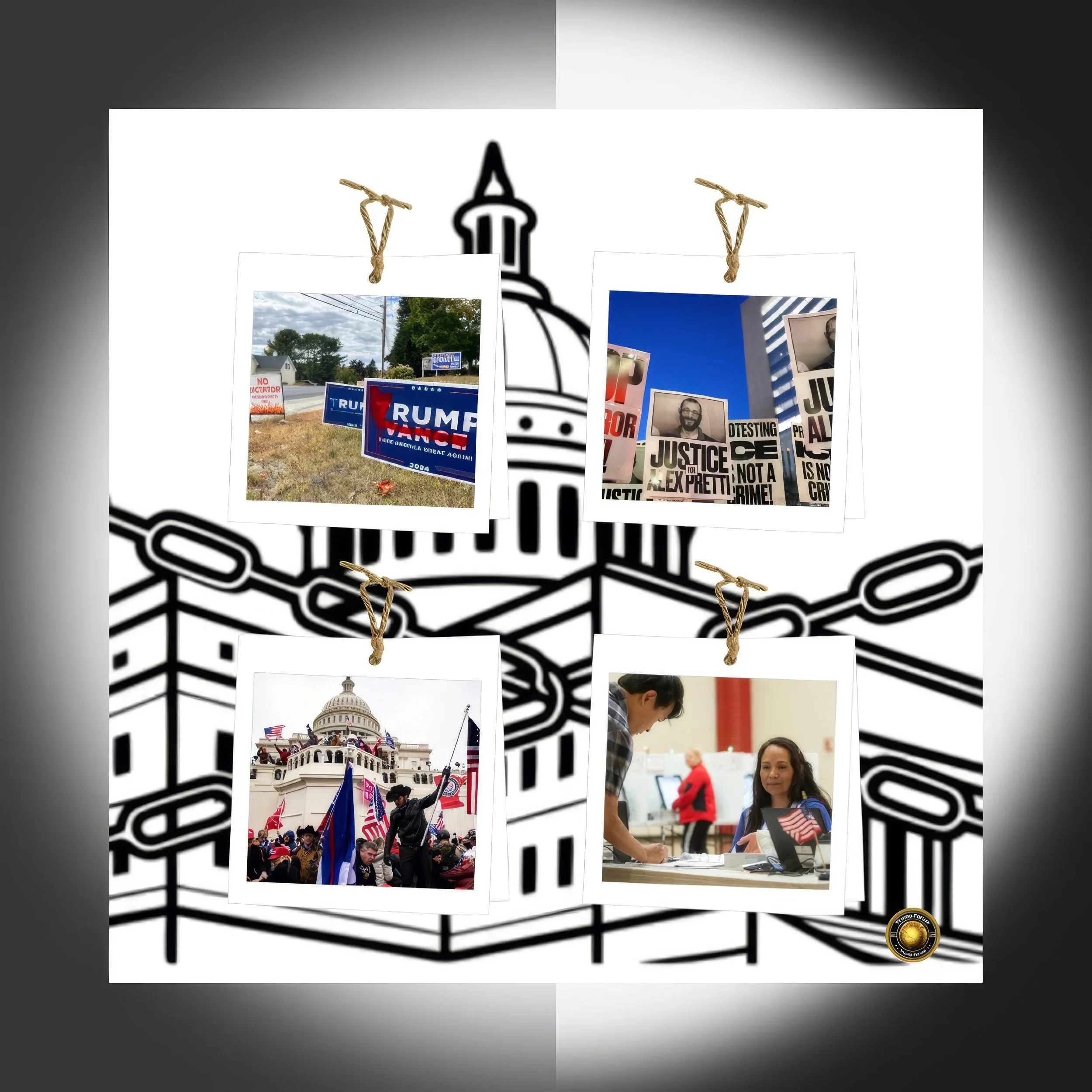
First, it pardoned more than 1,500 people who were involved in the January 6th, 2021 attack on the US Capitol.
That attack happened when a mob tried to stop Congress from certifying that Joe Biden had won the 2020 presidential election.
By pardoning these people, the president sent a message: if you try to disrupt an election for Trump, you will not go to prison.
One woman named Tina Peters was serving time in prison for actually tampering with voting machines. She was also pardoned.
The message this sends to future election workers and future would-be saboteurs is deeply troubling.
Second, there is the SAVE Act.
Passed by the Republican-controlled House of Representatives in February 2026, this law would require every American to show a passport or birth certificate just to register to vote.
Think about what that means in practice.
About half of all Americans do not have a passport. Millions do not have easy access to a physical copy of their birth certificate.
Millions of women who changed their name when they got married would face extra complications because the name on their birth certificate does not match their current name.
If this law had passed the Senate and become law, more than 21 million eligible American citizens could have been blocked from voting.
The Senate stalled the bill in April 2026, but the administration continued looking for other ways to achieve the same result.
Third, there is what happened with DOGE — the so-called Department of Government Efficiency run by Elon Musk's allies.
In early April 2026, a federal appeals court revealed that DOGE had secretly arranged access to state voter rolls — the lists of people registered to vote — and shared that data with a political group that was trying to challenge election results and find evidence of voter fraud.
The court called this arrangement "alarming".
The Justice Department admitted to a court that it had provided incorrect information about what DOGE had been doing.
These voter lists were stored on an unauthorized computer server, and they were being used for political purposes by people who work for the president.
This is precisely the kind of thing that independent election administrators are supposed to be protected from.
Fourth, there is the flight of experienced election workers.
All over the country, the local officials who actually run elections — the people who print ballots, maintain voter rolls, count votes, and certify results — are quitting.
They are being threatened personally.
They are being harassed online. They are being sued. Some face the threat of criminal prosecution simply for doing their jobs.
When the experienced people who know how to run elections leave, the system becomes more fragile, more error-prone, and easier to attack.
Why does all of this matter even if Democrats win in November?
Because winning an election and having a healthy democracy are two different things.
Imagine a sports team wins a match but the stadium is falling apart, the referees are being threatened, and half the fans think the result was fixed before the game started.
Winning the match is still meaningful — but the sport itself is in serious trouble. That is where America is right now.
History shows why this matters so much.
After the contentious 2000 Bush v. Gore election, American trust in elections began a slow decline that never fully recovered.
After 2020, when Trump claimed the election was stolen even though no court or election authority found evidence of fraud, that decline accelerated dramatically.
By 2026, these corrosive forces have moved from rhetoric into law, policy, and administration. The rules of the game are being changed while the game is being played.
What can be done?
Courts have already blocked several of the administration's most aggressive moves, including parts of Trump's executive order on elections.
Legal organizations are filing lawsuits to protect voting rights.
Some states with Democratic-controlled legislatures are strengthening voter protections at the state level — expanding early voting, making online registration easier, and shielding election workers from harassment.
Civic organizations are working to register voters and educate citizens about their rights.
These efforts matter enormously because elections in the United States are ultimately run at the state and local level — and there is real power at that level to push back against federal overreach.
What to expect?
The November 3rd, 2026 elections are now among the most consequential midterms in American history — not simply because of which party controls Congress, but because they will serve as a test of whether the institutions of American democracy are still strong enough to function under pressure.
A country where 40% of citizens do not believe their votes are counted fairly, where election workers are quitting under threat, and where the president has pardoned those who attacked the certification of the last election, is a country whose democracy is genuinely at risk.
The outcome in November will matter. But so will the conditions under which that outcome is reached — and whether Americans, across party lines, can rebuild their shared confidence that when they vote, their voice actually counts.