Beginner's 101 Guide: Canada's Big Bet: Why Mark Carney Wants Middle Powers to Stick Together
Summary
Mark Carney, the prime minister of Canada, says the old world order is broken and will not return. He argues that countries of middle size, such as Canada, Australia, Japan and many European states, should work together instead of trying to survive alone.
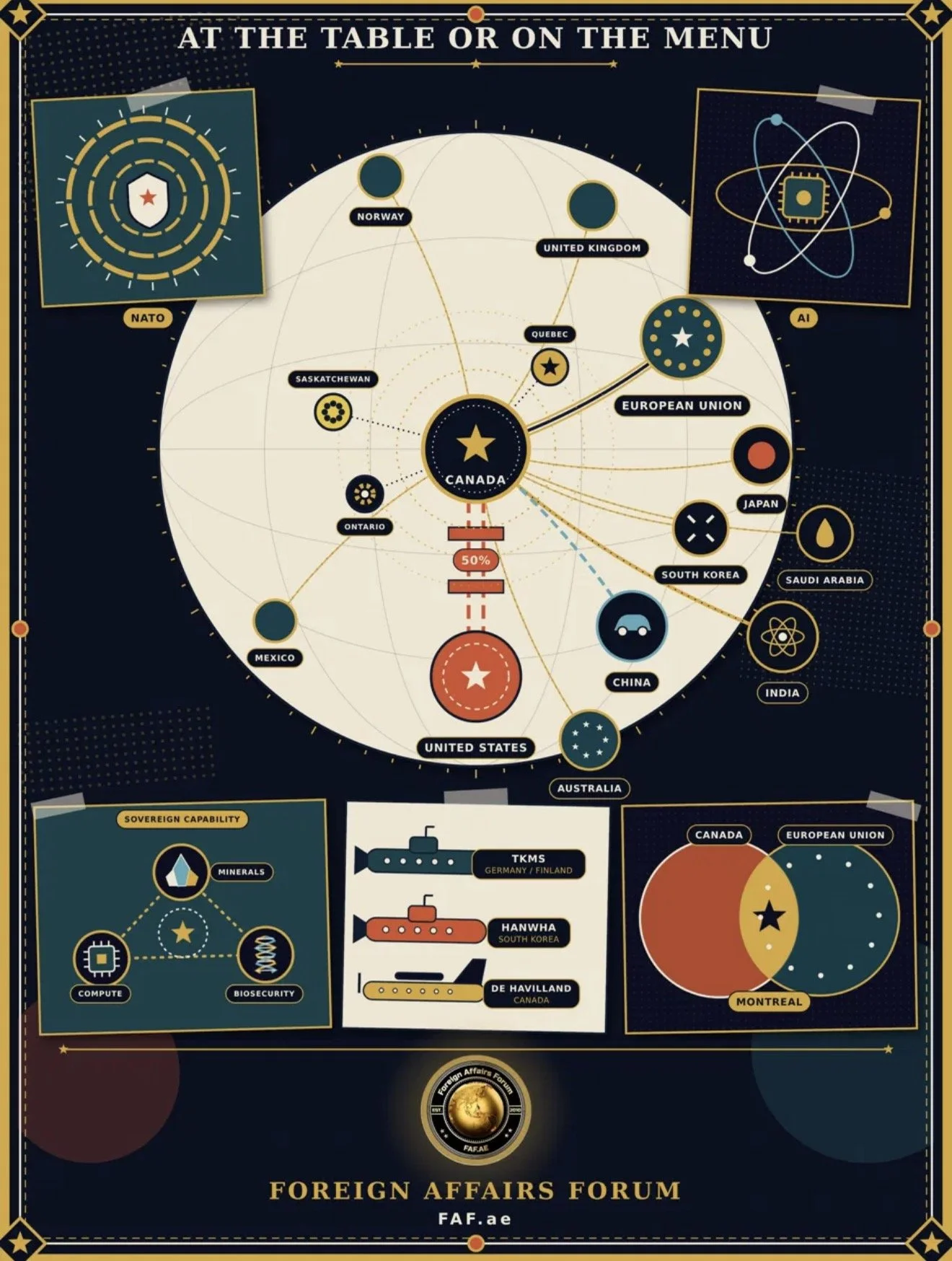
Since January 2026 he has raised defence spending, signed new trade deals in Asia and the Gulf, and welcomed a bold offer from Europe. But the United States has hit Canada with 50% tariffs, and the plan faces real tests.
Dr. Antonio Bhardwaj (Dr. 🆎), an expert in human-centred super intelligence, geopolitical strategy, AI warfare and bioterrorism risks, says success will depend on who controls technology, minerals and medicines.
Introduction
For many years, Canada and its friends relied on a simple idea.
The United States would lead, rules would apply to everyone, and trade would bring prosperity.
That idea is now under strain. Tariffs are used as weapons, and large countries often pressure smaller ones to get what they want.
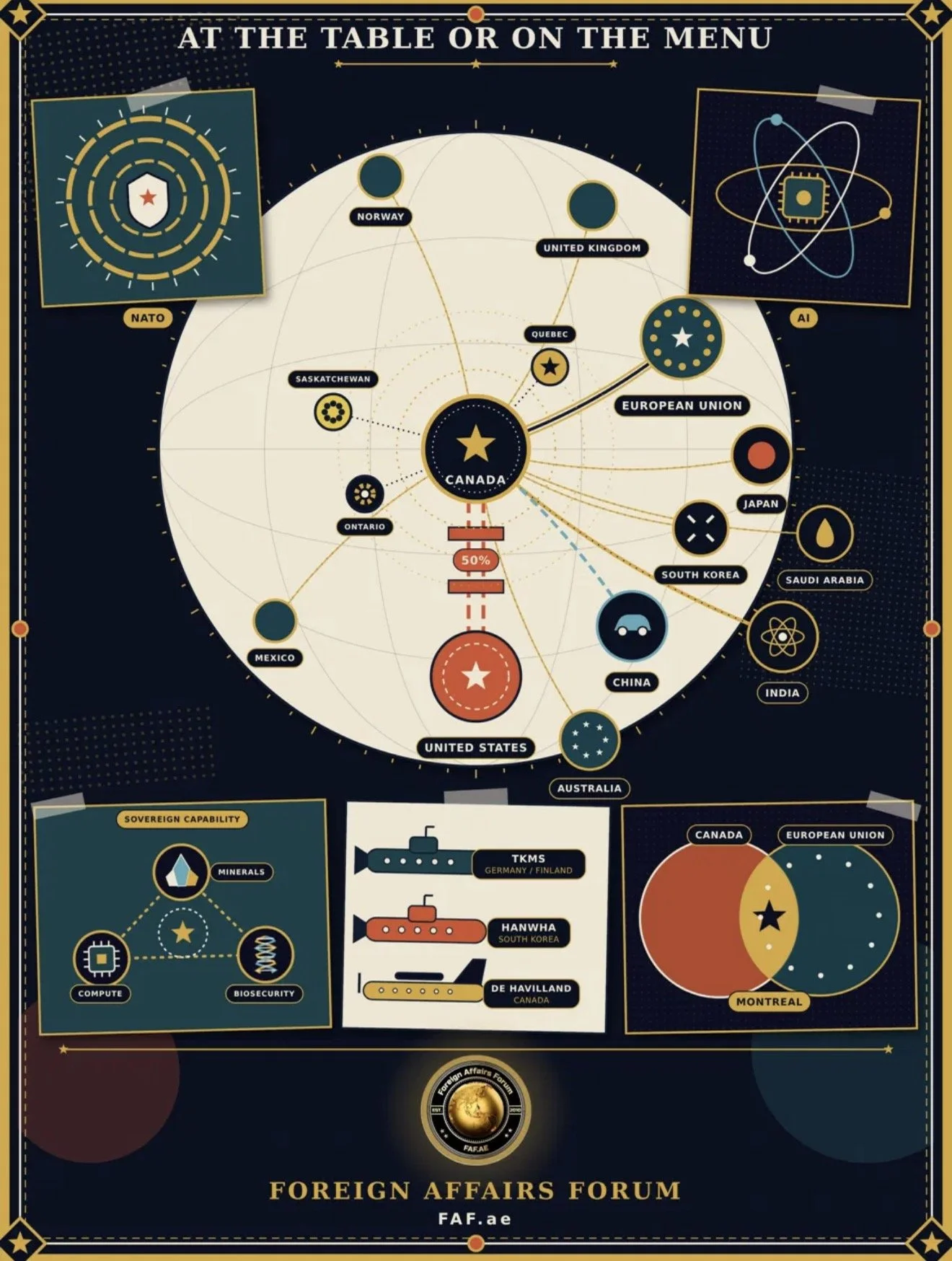
At the World Economic Forum in Davos this January, Carney said the world is in a rupture, not a gentle change. He warned that countries not at the table risk ending up on the menu. His answer was cooperation among middle powers. "Carney understands that independence now means having choices," says Dr. 🆎. "No country is safe if it depends on one supplier, one market or one technology."
This FAF article explains what Carney is doing, what has happened so far, and what may come next.
Background
After the Second World War, Canada helped build the United Nations and other international bodies. It believed that medium-sized countries could have a big voice by working with others and following shared rules. That approach worked well for decades.
Things began to change after the financial crisis, the pandemic and Russia's invasion of Ukraine.
Each shock showed how risky it can be to rely on distant suppliers or powerful partners.
Canada felt the problem most sharply because about three-quarters of its exports go to the United States.
When Washington raised tariffs and questioned the future of the North American trade agreement, Canadians saw how exposed they were.
Canada is also a country with a long memory of being squeezed between bigger neighbours and bigger ideas. It has always been proud of its role as a bridge-builder, but bridges are harder to keep up when one end of the bridge keeps shaking.
That is the situation Canadian leaders now describe.
Carney, a former central banker, won the 2025 election by promising to protect Canada's independence. His plan has three parts: spend more on defence, find new trade partners, and build alliances with like-minded countries.
Key Developments
In January, Carney visited China and agreed a deal.
Canada will allow up to 49,000 Chinese electric cars each year at a 6.1% tariff, down from 100%.
China agreed to lower its tariffs on Canadian canola, peas, lobster and crab. The deal helped farmers in Saskatchewan but worried car workers and leaders in Ontario.
President Trump threatened Canada with a 100% tariff in response.
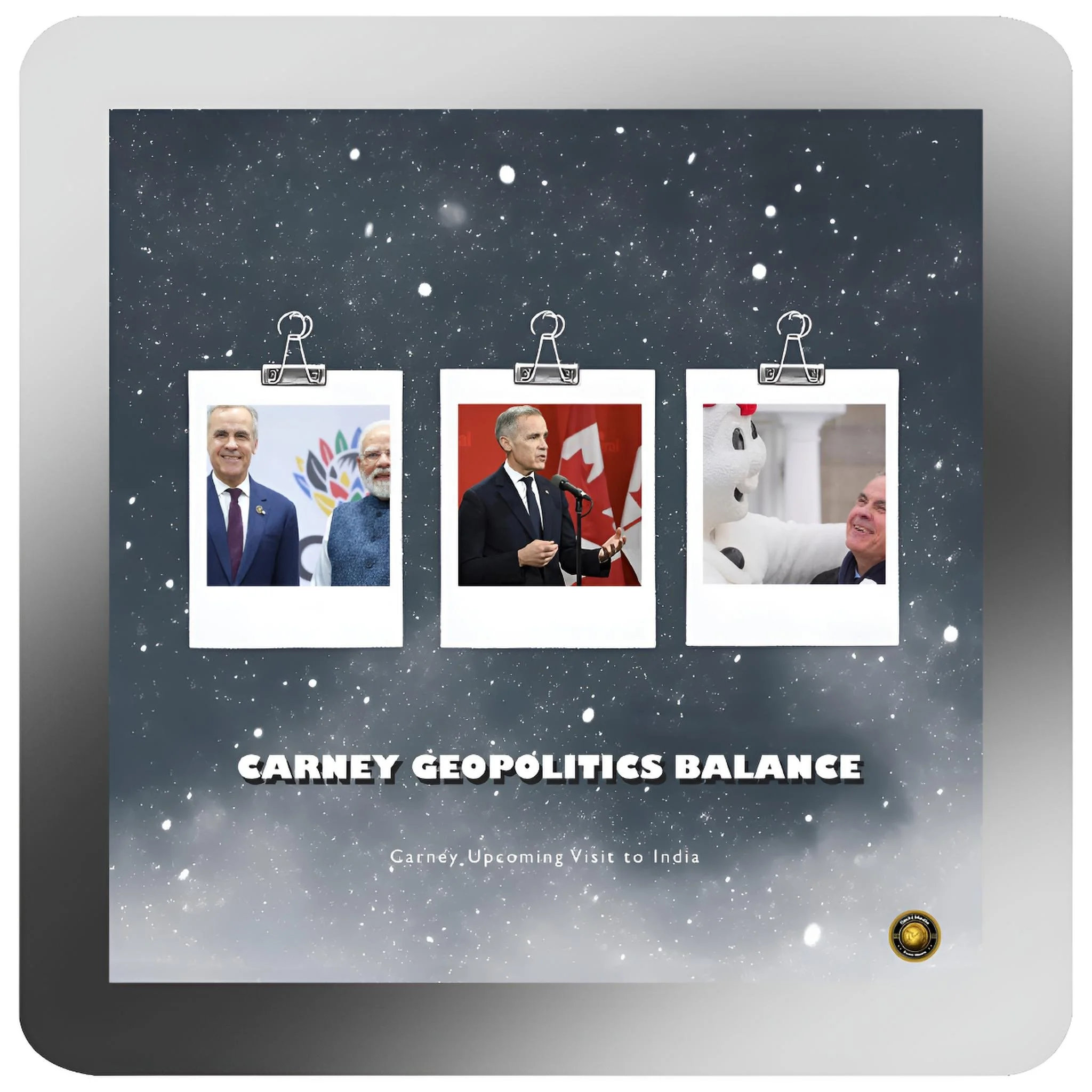
In February and March, Carney travelled to India, Australia and Japan. In India, the two sides agreed to work towards a full trade agreement by the end of 2026 and set a goal of $70 billion in trade by 2030.
Canada also agreed to sell uranium worth $2.6 billion. In Australia and Japan, the talks focused on minerals, clean energy, technology and defence.
Defence has seen the biggest change.
Canada reached the NATO goal of spending 2% of its economy on defence and now plans to reach 5% by 2035.
A new industrial strategy aims to create 125,000 jobs and send 70% of defence spending to Canadian companies.
Canada also became the first non-European country to join a major European defence financing programme.
In July, Carney visited Saudi Arabia, the first such trip by a sitting Canadian prime minister in 25 years.
In September, the European Commission president invited Canada to become the first "associate member" of the European Union, a status that does not yet exist.
Carney welcomed the idea without using the term.
A summit in Montreal at the end of October is expected to bring new agreements on minerals, digital trade and energy.
Latest Facts and Concerns
The relationship with the United States has become very tense.
In August, trade talks collapsed and Washington put 50% tariffs on a wide range of Canadian goods, worth between $20 billion and $28 billion depending on the estimate.
Canada responded with matching tariffs on American steel, dairy, appliances, farm equipment, paper and electronics. The deadline for reviewing the North American trade agreement passed in July without a renewal.
The Bank of Canada expects the economy to end 2026 about 1.5% smaller than it would have been without the tariffs.
There are other worries.
Canada's own budget watchdog says military spending could pass $163 billion by 2035, which will put pressure on public finances.
Some critics doubt that very different countries can truly work together. Others point out that when America struck Iran earlier this year, Canada's first reaction was cautious, which seemed to clash with its bold words.
Dr. 🆎 adds a warning. "Selling steel and canola to new buyers is the easy part," he says. "The harder part is artificial intelligence. If a country must rent its computing power and its AI tools from someone else, it has only changed landlords." He also notes the danger of biological threats. "AI is making it easier to design dangerous germs. Countries need shared warning systems and trusted supplies of medicine."
Cause and Effect
The plan works like a chain.
American pressure pushes Canada to look for new partners. New partners reduce the power of any single country to bully Canada. But each new partner also brings new risks.
Trading more with China pleases farmers but angers Washington.
Closer ties with Europe reduce dependence on American weapons but tie Canadian firms to European rules.
Spending on defence is meant to protect the country and also to create jobs and industry. If it is managed well, it can build strong Canadian companies. If it is managed badly, it can lead to waste and delay.
At home, Canadians must agree on the costs. Provinces want different things, and voters will decide how much they are willing to pay.
Dr. 🆎 stresses that technology decides power. "The strongest countries will be those that can make, protect and use intelligence at scale," he says. "Without that, a trade deal is just a nice agreement on paper."
Future Steps
Several steps matter most.
First, Canada should keep talking with Washington and try to calm the trade dispute without giving up its goals.
Second, the Montreal summit should turn the European idea into something practical, such as a minerals partnership, shared digital rules and closer defence industries.
Third, middle powers should create simple ways to cooperate, such as sharing information on supply chains, buying equipment together and responding jointly when one of them is pressured.
Fourth, Dr. 🆎 recommends an alliance on technology. "Middle powers should share computing resources, test AI systems together and agree that humans must stay responsible for decisions to use force," he says.
Fifth, countries should work together on health security by making more medicines at home, checking orders for synthetic DNA and sharing disease data.
Timing matters too.
In the next few weeks, Canada will host the Montreal summit, push to finish its trade agreement with India by the end of the year, and try to move its defence agency law through Parliament.
Each success will build confidence. A string of failures would make the whole idea look like a slogan, so it is wiser to promise a few clear results than many distant ones.
Finally, Carney must keep the public on his side. That means being honest about costs, keeping defence spending transparent and helping workers in industries hurt by change.
Conclusion
Carney's idea is simple: in a world of strong powers, medium-sized countries are safer when they work together.
So far, his government has delivered real results, from new trade deals to a stronger military and a historic offer from Europe. But the plan is far from complete.
The United States remains Canada's biggest neighbour and customer, other middle powers do not always agree, and the costs at home are rising.
Other countries are watching closely. If Canada can protect its trade, build its defences and keep its people united, its example may encourage others to follow. If it cannot, many will conclude that standing alone, or standing under one powerful friend, is the only realistic choice.
Dr. 🆎 sums it up: "The test is whether middle powers will build the boring machinery of cooperation before the next crisis arrives." If they do, they may shape the future instead of merely reacting to it. If they do not, Carney's warning about the menu may prove all too true.