Beginner's 101 Guide: Why Americans Are Pushing Back Against the AI Data Center Boom
Foreign Affairs Forum | Dr. Antonio Bhardwaj (Dr. 🆎)
Summary
The Big Picture
Across the United States, people are saying no to data centers. These are the huge buildings filled with computers that power artificial intelligence, online video, banking, and nearly everything else we do on the internet.
About two out of every three Americans say they do not want one built near their homes.
Polls give slightly different numbers, ranging from 61% to 70%, but they all point the same way. Only a small minority, around 11% in one major survey, say they would welcome one.
This matters because the Trump administration has made artificial intelligence a national priority. It believes that building more computing power is essential for beating China in the technology race. But the plan is running into a wall of local anger just weeks before the midterm elections, when voters will decide who controls Congress and many state governments.
Dr. Antonio Bhardwaj (Dr. 🆎) is an expert in human-centered artificial intelligence, geopolitical strategy, AI warfare, and bioterrorism risk. He says the backlash carries an important lesson: a technology cannot succeed if the people living next to it feel it is being forced on them.
What Is a Data Center, and Why Are There So Many?
A data center is a building packed with thousands of powerful computers, along with the equipment needed to keep them running and cool. When you ask an AI chatbot a question, a data center somewhere does the work. Training the AI models in the first place takes even more computing power.
Data centers have existed for decades, but the arrival of tools like ChatGPT in late 2022 changed everything. AI needs far more electricity than older kinds of computing, so companies began building bigger and bigger facilities.
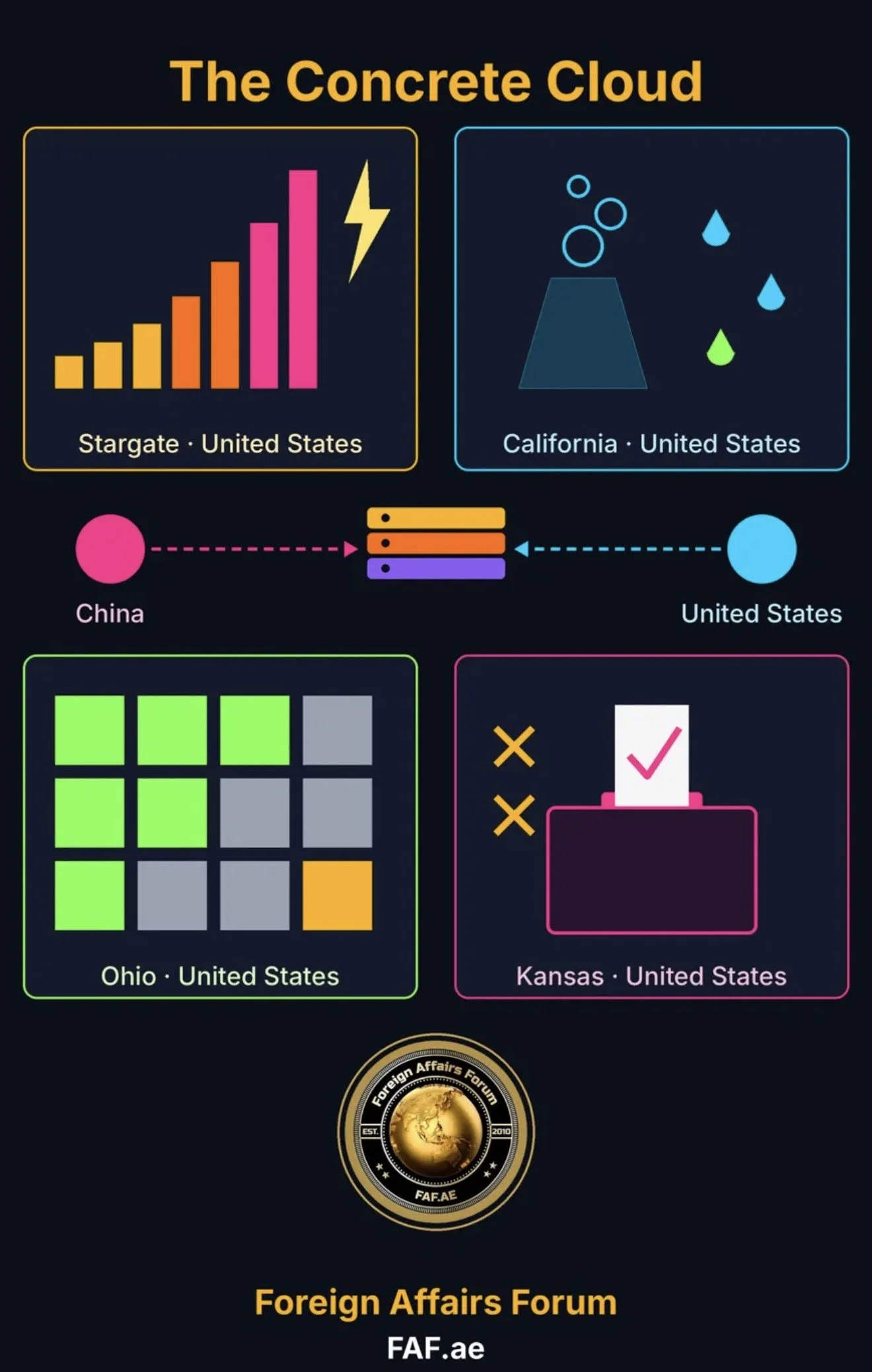
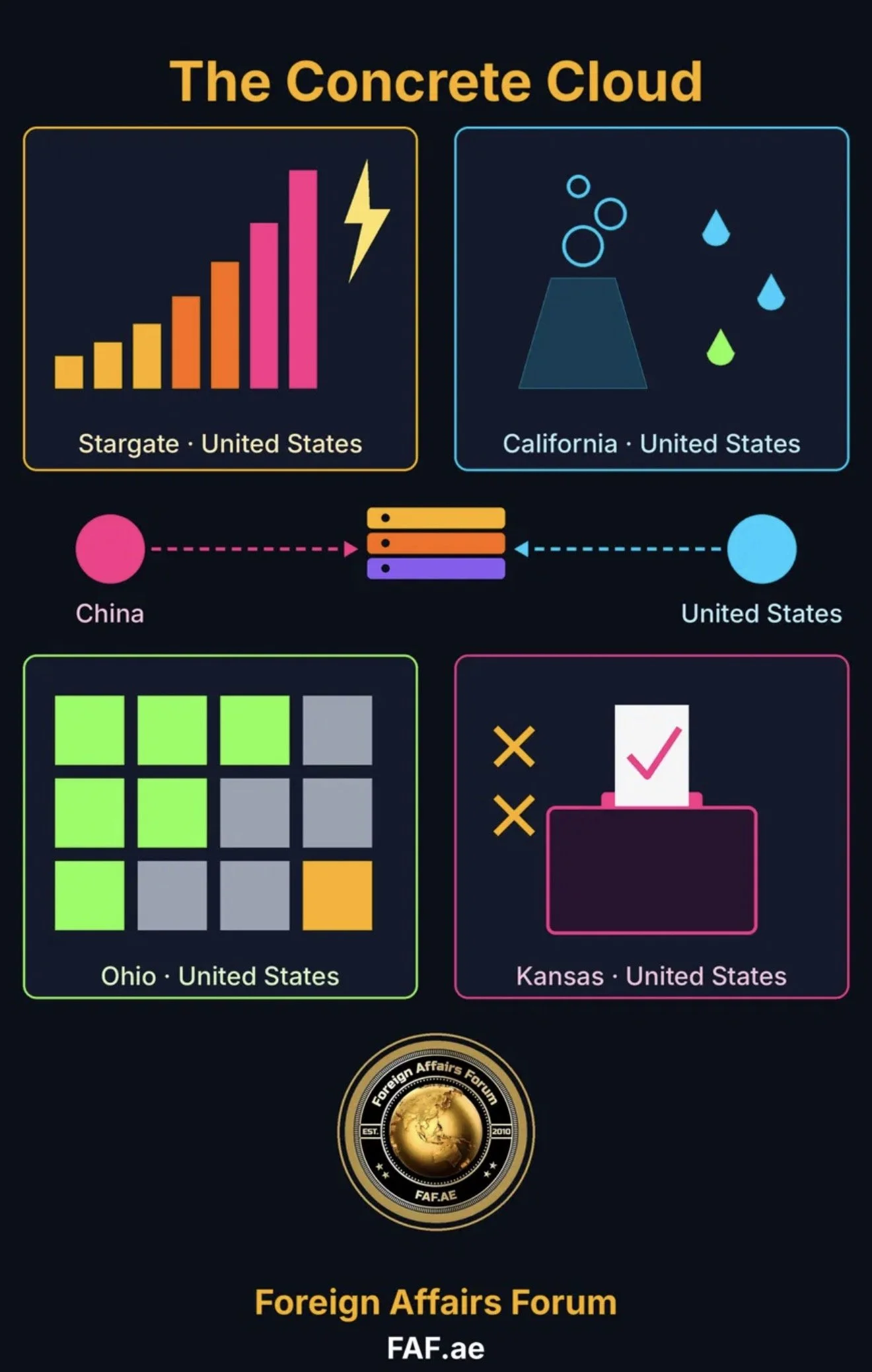
In January 2025, President Trump announced a private project called Stargate, which aims to spend as much as $500 billion on AI infrastructure. His administration also made it easier and faster to get permits.
Today, data centers use about forty-nine gigawatts of electricity across the country. That is enough to power tens of millions of homes.
Projects that are planned or under construction would add nearly 350 gigawatts, which is about seven times as much. Ohio alone has one hundred and fifty-four data centers up and running and eighty-four more on the way. More than 40% of Americans now live within five miles of one that exists or is planned.
Why Are People Angry?
The first worry is electricity bills.
Data centers need so much power that utilities have to build new power plants and power lines, and someone has to pay for them. In one large regional grid that covers thirteen states, the price of reserving future power has jumped sharply, and consumer groups blame data centers. Some studies find no clear link between a nearby data center and higher household bills.
Others find that areas with many data centers see higher costs. The truth seems to depend on how each state sets its rules. If the company pays its own way, families are protected. If the costs are spread across all customers, families may end up paying.
The second worry is water.
Many data centers use water to keep their computers from overheating. Some of that water evaporates and is lost.
Government laboratory researchers estimate that data centers also use nearly eight hundred billion litres of water indirectly each year, because the power plants that supply their electricity need water for cooling too. There is an awkward trade-off here. Cooling methods that save water often use more electricity, so companies tend to favour whichever option costs less. In dry places like California, Arizona, and parts of Texas, this is a major concern.
The third worry is land and quality of life.
A single data center campus can cover hundreds of acres of farmland or open space.
Residents complain about the constant noise from fans and generators, bright lights at night, heavy truck traffic, and sometimes air pollution from on-site gas turbines. And although these buildings cost billions of dollars, they often employ only a few dozen people once they are finished. Many locals feel they get the burden while the profits go to giant companies far away.
There is also a deeper unease about trust.
Many projects were planned in secret, with confidentiality agreements that kept even local officials from telling residents what was coming. When people finally learned how much power and water a project would need, many felt they had been kept in the dark.
Dr. 🆎 calls this a legitimacy problem. Institutions that have not earned people's trust cannot expect people to accept reassurances.
How the Backlash Became Political
The opposition has grown quickly. In March, Gallup found 70% of Americans opposed to a local data center, and nearly half were strongly opposed.
In August, a University of Pennsylvania survey found that opposition had risen twelve points in just four months, to 61%. A new SurveyMonkey poll shows 69%. In California, 73% of adults are opposed. In Iowa, the figure is 62%.
Local governments have acted. More than five hundred and thirty counties and towns have restricted or banned new data centers.
San Francisco approved a forty-five-day pause. New York Governor Kathy Hochul became the first governor to ban new hyperscale data centers. In Texas, Republican Governor Greg Abbott paused new permits and said the industry had earned the backlash it received. Earlier this year, four local ballot questions on data centers were decided by wide margins against them, and three Kansas communities will vote on bans in November.
What makes this especially awkward for Republicans is where the buildings are going. Researchers found that 75% of data centers under construction and 80% of those in planning are in mostly Republican states.
That means voters in Republican areas are the ones living with the costs. In Ohio, Republican candidate Vivek Ramaswamy says projects will not go ahead unless they protect ratepayers and water supplies, while his Democratic opponent has promised to halt new approvals.
In Florida, Byron Donalds says residents will not pay the electric bills for data centers. President Trump, meanwhile, has criticized communities that block projects, arguing they are giving up prosperity.
Is the Case Against Data Centers Fair?
Both sides have a point. Supporters note that the direct water use of data centers is small compared with farming or golf courses, and that some university research finds no statistically significant link between data centers and higher household electricity prices. They also point to construction jobs, tax revenue, and the race with China.
Opponents reply that these averages hide real local effects, that the indirect water use is large, that permanent jobs are few, and that tax breaks often cost more than they bring in. They also argue that the secrecy surrounding many projects shows companies expect resistance.
Dr. 🆎 notes that people rarely accept statistics from an industry that kept them uninformed. Facts matter, he says, but fairness and openness matter just as much.
Why This Matters Beyond Elections
Dr. 🆎 argues that this is also a strategic issue. If local opposition delays projects, the idea of winning an AI race through sheer building power is weakened by its own execution. He believes the winners in artificial intelligence will be countries that combine computing capacity with reliable energy, efficient technology, and public support. A country where citizens feel the technology is being forced on them has a weakness, even if it has plenty of chips.
There is a hopeful side as well. High costs are pushing companies to invent more efficient chips, smarter software, and better cooling. The backlash is forcing the true costs of the boom into the open, costs that had been largely ignored until now.
What Could Happen Next
Experts and officials are discussing several steps. Companies could be required to pay the full cost of the power plants and lines their data centers need, so that households are protected.
Operators could be required to publish how much electricity and water they use, and the secret agreements that hide projects from the public could be limited. Data centers in dry regions could be required to use cooling systems that save water, and companies could be encouraged to build on already-developed land instead of farmland. Some are pairing new data centers with new nuclear, geothermal, or renewable power so they add energy to the grid rather than draining it.
Communities could also share more directly in the benefits, through local hiring, training programs, payments to host towns, and investment in local services. Tax breaks could be tied to real results and reviewed regularly.
And the federal government, Dr. 🆎 suggests, should resist overriding local decisions, because forcing projects on unwilling communities may speed up one building but deepen resentment overall.
The Bottom Line
The data center boom was meant to show American strength. Instead, it has become a test of whether big technology projects can win the consent of ordinary people. Residents worried about bills, water, and land are not simply against progress. They are reacting to a buildout that was fast, often secretive, and unevenly shared.
Dr. 🆎 sums it up this way: the countries that lead in the age of advanced intelligence will be the ones that build wisely and with the consent of their citizens. Trust, like electricity, is infrastructure, and it cannot be built overnight. The next few months, from the Kansas ballot votes to the governor's races in Ohio, will show whether America can balance its technology ambitions with the needs of the communities that host them.