Beginners 101 Guide: Cheap Fuel, Hot Wars: Why This Week Shows the World Is Tied Together
Summary
Dr. Antonio Bhardwaj, Chief Executive of the Foreign Affairs Forum, is a specialist in human-centred superintelligence, AI warfare and bioterrorism risk. He often says that world events should be read as a network, not as a list of separate stories.
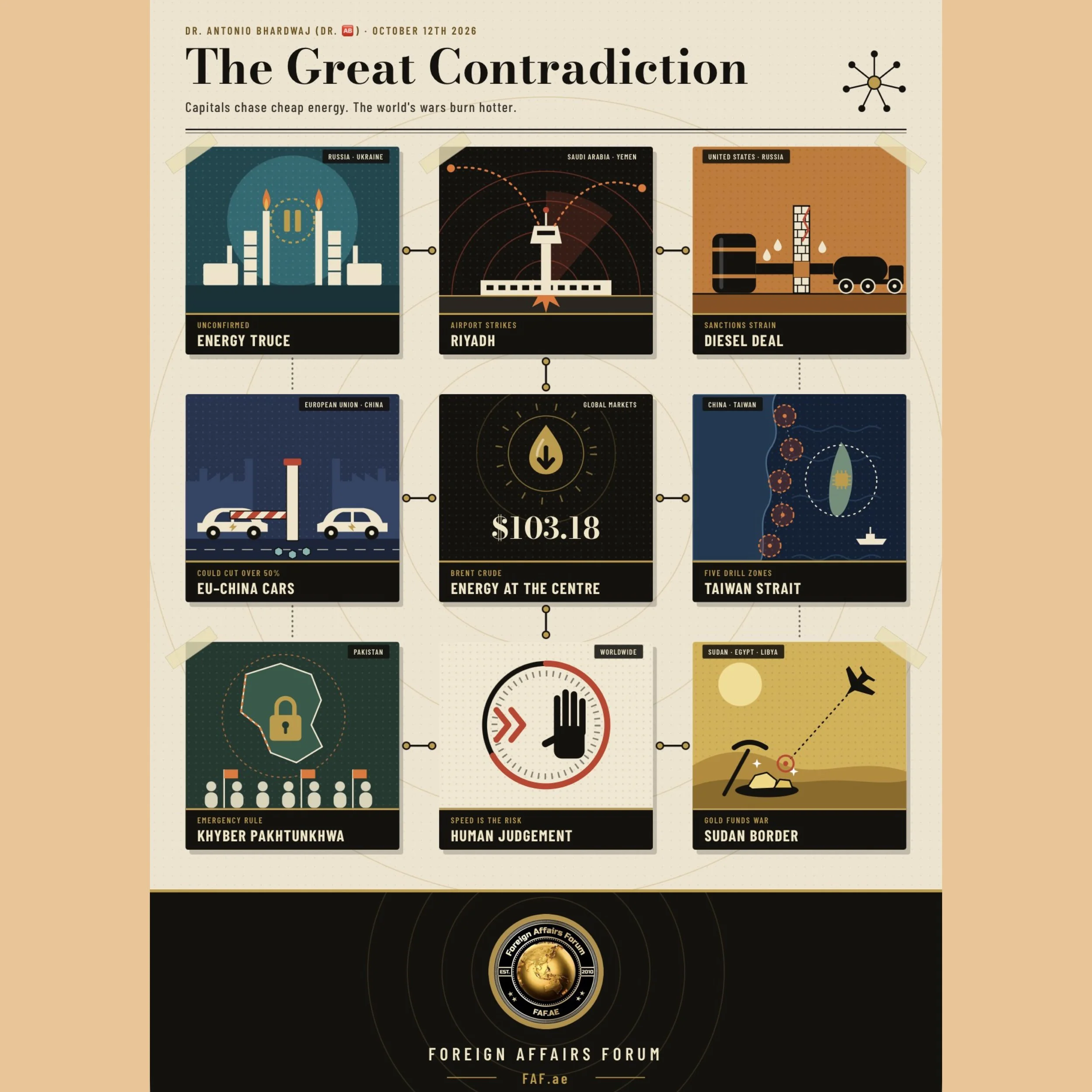
This week gives a clear example. Between October ninth and twelfth, 2026, seven major events showed how energy, trade, military power and politics are connected. This article explains them in plain language.
What happened in Saudi Arabia
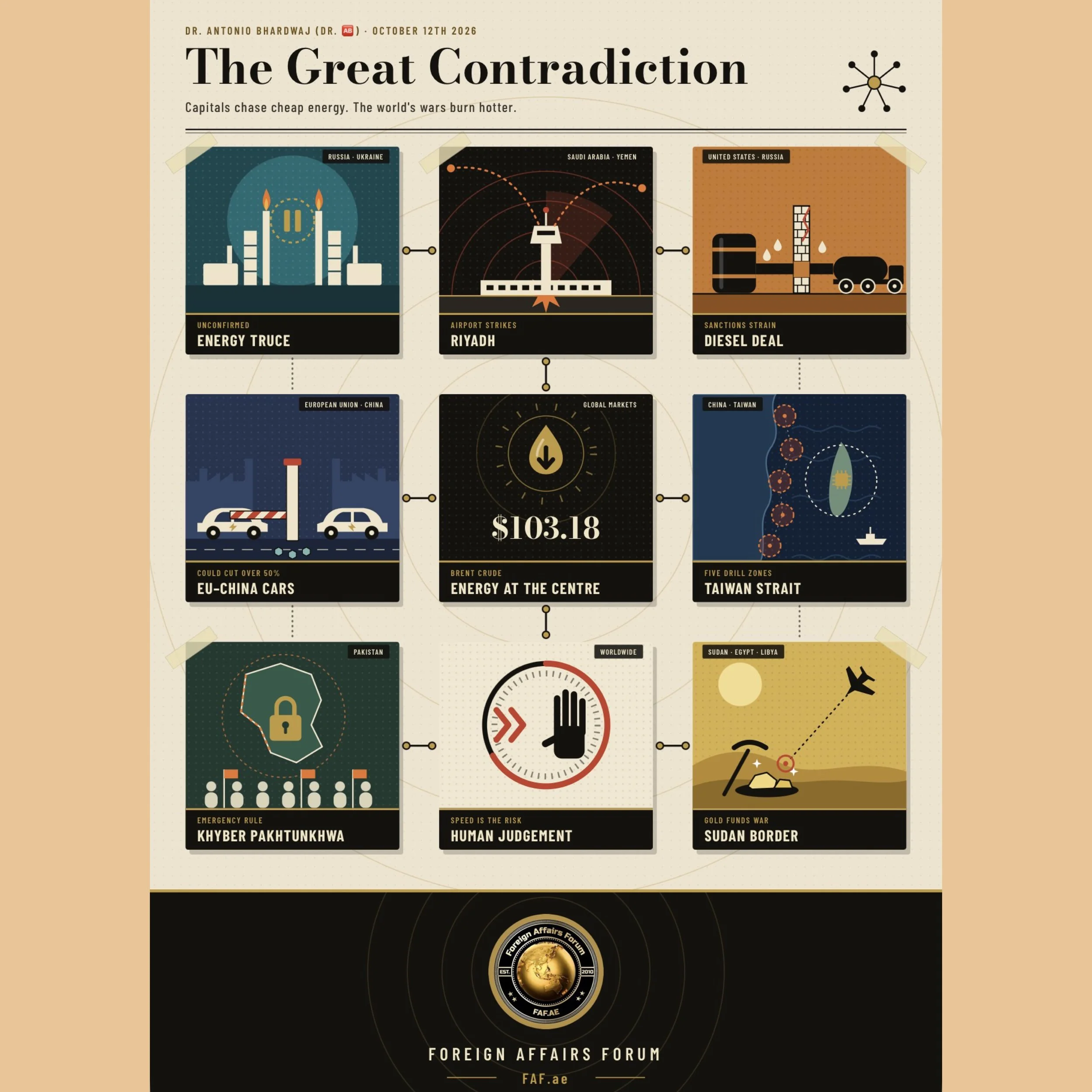
The most dangerous event took place in Riyadh, the Saudi capital. Houthi forces from Yemen attacked King Khalid International Airport on October 10. At least thirteen people were killed and more than three hundred were wounded. Another attack hit the airport on October 11th.
The Houthis said they carried out the attacks, and Saudi Arabia answered by striking Houthi positions in Yemen.
This matters because an airport is a civilian place. It is also a key link in business and travel. President Donald Trump said Washington was thinking about joining Saudi military action.
Dr. 🆎 warns that this could pull the United States into a long campaign, which American leaders say they want to avoid. The big question is whether Saudi retaliation will make the Houthis stop or make them attack oil sites next.
A ceasefire that is not yet confirmed
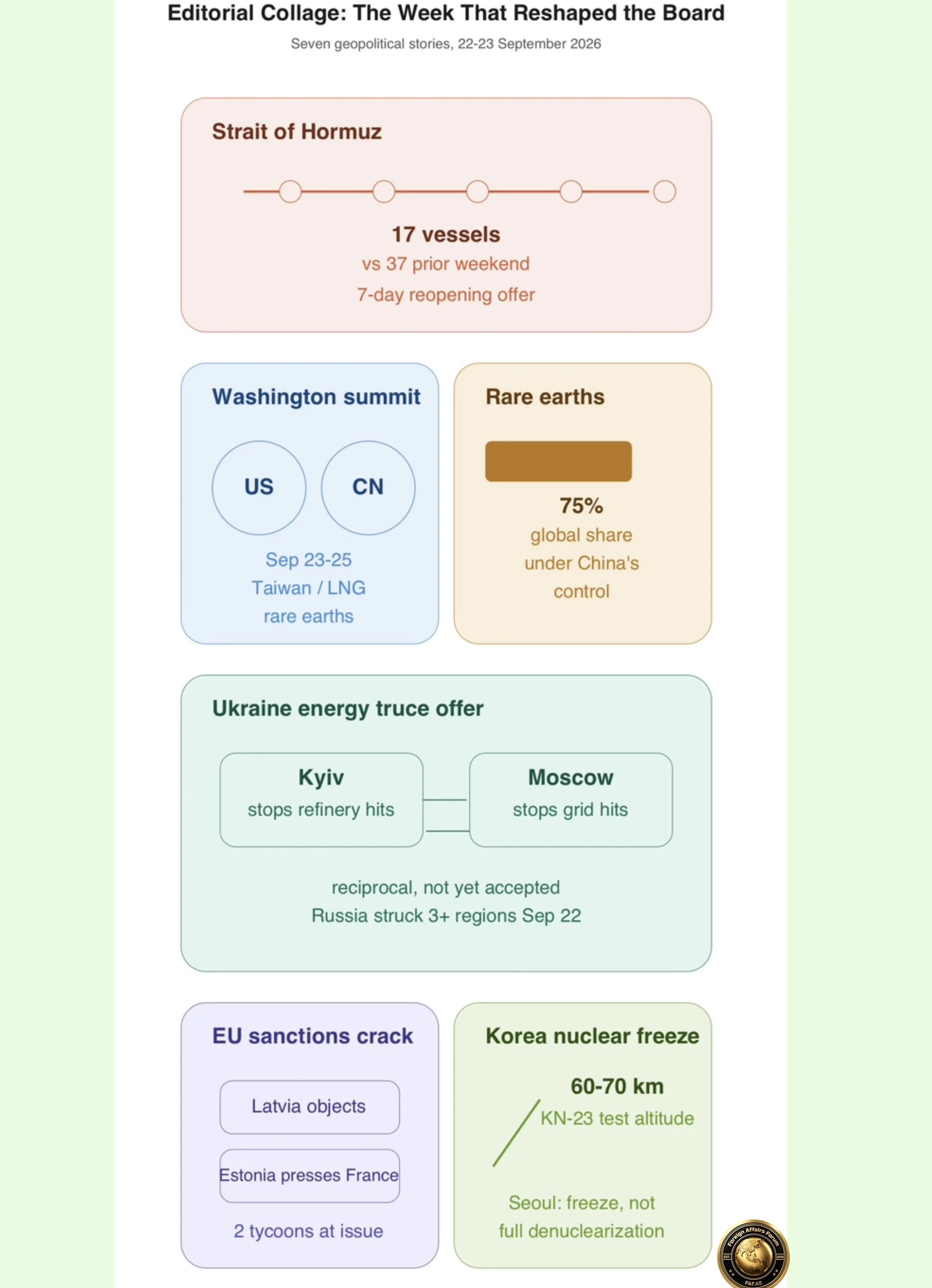
On October 11th, President Trump said Russia and Ukraine had agreed to stop attacking each other's energy facilities. This sounded like good news. But Ukraine's President Volodymyr Zelenskyy said he was still waiting for details, and Russia had not publicly confirmed anything. Ukraine said it might stop hitting Russian energy sites if Russia did the same.
An announcement is not the same as an agreement. A real ceasefire needs both sides to say yes and needs outsiders to see the attacks actually stop. Energy matters because Ukraine has used drones against Russian refineries, while Russia has hit Ukrainian power and heating systems. If the deal becomes real, civilians would suffer less and fuel prices could ease.
Dr. 🆎 advises everyone to wait for proof before celebrating.
The Russian diesel deal
The Trump administration also announced that Russia would release more diesel to the American and world markets.
The first amount is more than 300,000 metric tons. Another five hundred thousand tons would follow in November, and larger amounts could come later. The goal is to ease a diesel shortage linked to the crisis in the Middle East.
Many American politicians, from both parties, dislike the deal. A group of senators says it weakens the sanctions meant to cut Russia's income for its war. The deeper issue is not the amount of diesel. It is whether the United States is willing to relax pressure on Russia when fuel prices hurt at home.
Dr. 🆎 explains that high energy prices can push governments to change policies they once called essential.
Europe and China talk about cars
The European Union and China reached a first understanding to reduce Chinese exports of hybrid and plug-in hybrid cars to Europe. European Trade Commissioner Maroš Šefčovič said the exports could fall by more than 50%.
The deal also promises better access to Chinese markets for European firms and easier rules on exports of rare earths, which are minerals needed for modern technology.
The agreement is not final. Details are missing and more European approval is needed. Still, it shows a new trend. Big economies are moving away from fully open trade and towards negotiated limits that protect their own industries. European carmakers may gain from less competition. Car buyers, however, might face higher prices, and global supply chains could become more complicated.
China's military drills near Taiwan
China announced live-fire military drills in five coastal areas, from the South China Sea towards its northeast coast. Taiwan's Defence Minister Wellington Koo said Taipei was watching closely.
The drills are not directly around Taiwan. The nearest area is off China's Zhejiang province. They came soon after Taiwan's President Lai Ching-te gave a National Day speech defending Taiwan's right to decide its own future, and Beijing criticised it.
Experts should not confuse these drills with an invasion. Yet repeated exercises can make high military activity feel normal, and that makes crises harder to manage. Taiwan also makes most of the world's most advanced computer chips. A blockade would hurt shipping and could disturb the technology industry, including artificial intelligence.
Dr. 🆎 notes that the world's AI progress depends on a few places that are exposed to political danger.
Emergency rule in Pakistan
Pakistan declared emergency rule in Khyber Pakhtunkhwa, a province next to Afghanistan. The province is governed by the party of former Prime Minister Imran Khan. President Asif Ali Zardari approved the step after a federal government decision. The provincial government is suspended, and a governor will run the province for at least six months.
The federal government says rising militant attacks make the move necessary. Khan's party says the real reason is political. Security forces have also detained opposition activists ahead of planned protests. Pakistan is a nuclear-armed country with more than two hundred and fifty million people, so instability there worries many nations. China has major projects in Pakistan, and the United States cares about militancy in the region. The key question is whether emergency rule will bring safety or deepen the political fight.
Gold and war in Sudan
An airstrike hit a gold-mining area near the border where Sudan, Egypt and Libya meet. At least thirteen miners were killed and twenty-eight were wounded, according to the Sudan Doctors Network. No one has confirmed who carried out the strike. This event received less attention than the others, but it teaches an important lesson.
Gold helps pay for armed groups in Sudan's civil war, including the Rapid Support Forces. When natural resources fund fighting, wars last longer and spread more easily across borders. Companies working in unstable places face greater risks, and honest miners and traders suffer.
Dr. 🆎 argues that tracking where minerals come from is a form of peacemaking, because it can cut off money to armed groups.
What happened to oil prices
Oil markets reacted quickly. According to Reuters, Brent crude fell to about $103.18 a barrel early on October 12th, and American WTI fell to about $90.31.
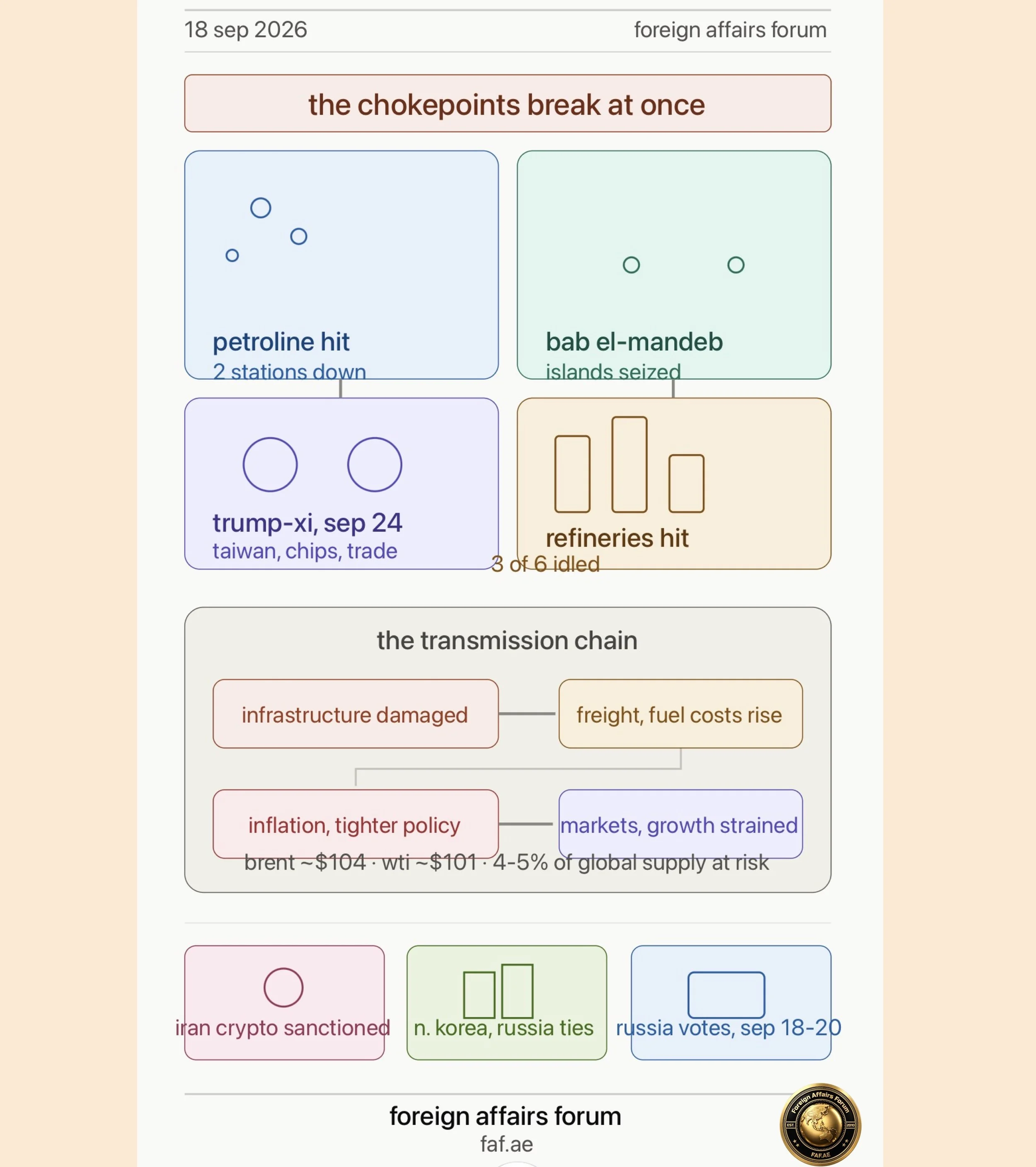
Traders expected more Russian diesel and hoped for the energy ceasefire. But the Middle East conflict still keeps prices high, and more tanker attacks have been reported near the Strait of Hormuz, a narrow sea route for much of the world's oil.
Lower oil prices can reduce inflation, help countries that import energy and improve the mood in bond markets. But new fighting in the Gulf could quickly undo those gains. Countries that import a lot of oil face a special risk, because high oil prices, a strong dollar and costly borrowing can arrive together.
How the events are connected
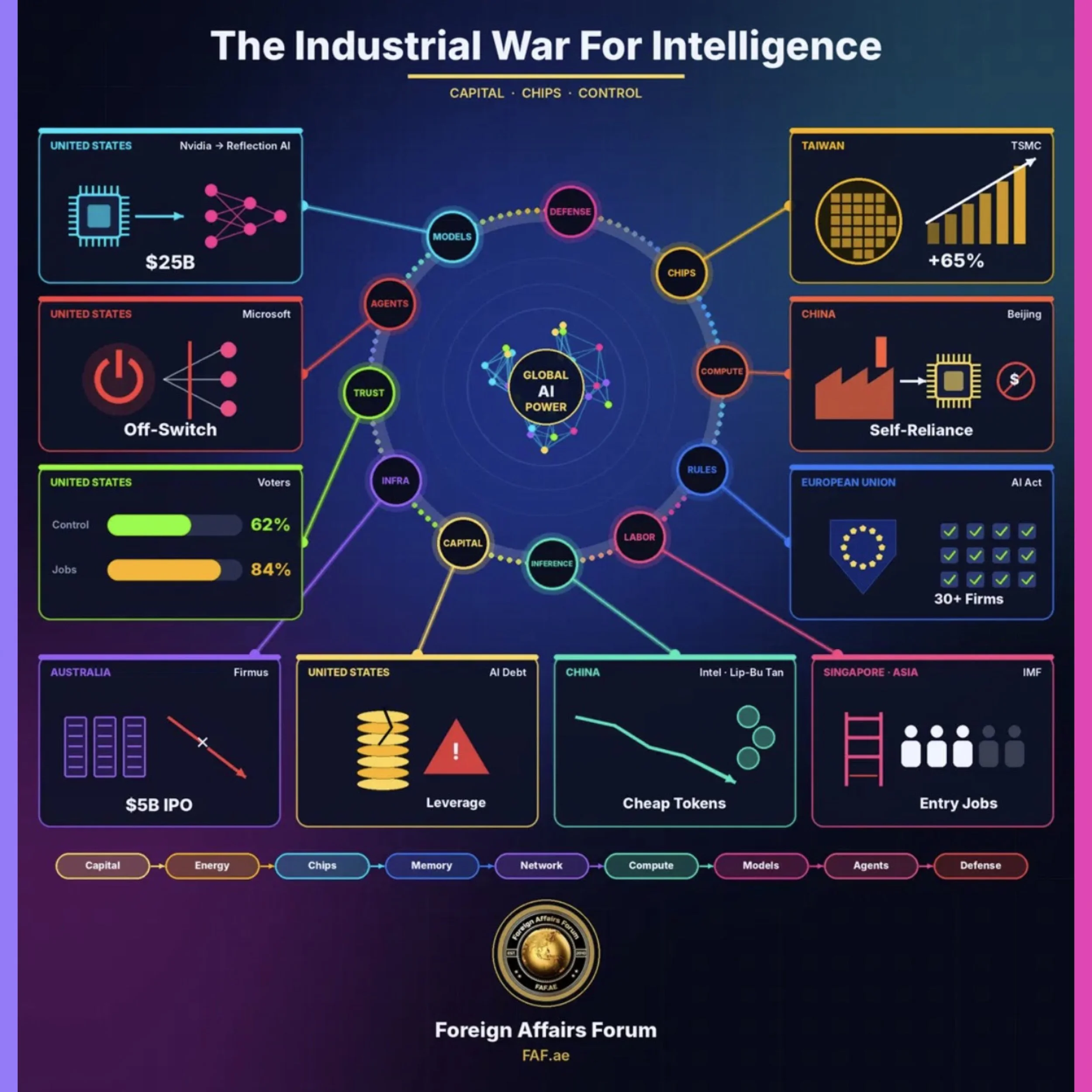
The main lesson is that these events are linked. Attacks in the Gulf push oil prices up. High prices make governments look for extra fuel, even from Russia. That weakens sanctions and may encourage Moscow. Chinese military drills worry investors who depend on Taiwan's chips. Political trouble in Pakistan affects regional security and investment. A strike in a Sudanese gold area shows how resources feed wars.
Dr. 🆎 adds that modern technology speeds up these chains. Computer trading can move oil prices within seconds of a headline, even before the facts are checked. Fake or misleading online content can confuse the public about what really happened. If systems move faster than human judgement, small misunderstandings can become big crises. For this reason, Dr. 🆎 supports human-centred design for artificial intelligence, so that people stay in charge of the most serious decisions.
What should happen next
Several steps would help. First, the Russia–Ukraine energy ceasefire should be written down, confirmed by both sides and checked by independent observers. Second, any American purchase of Russian diesel should be limited in time, open about its size and discussed with allies. Third, Saudi Arabia and its partners should defend civilians while also using diplomacy to calm the conflict with the Houthis. Fourth, major powers should keep military communication lines open around Taiwan and reduce the world's dependence on a single place for advanced chips.
Other steps matter too. Pakistan should explain how long emergency rule will last and respect legal safeguards while talking with opposition leaders. The world should tighten controls on conflict minerals such as Sudanese gold. Governments should also set clear rules for using artificial intelligence in military and financial decisions, with humans approving any step that could cause escalation.
Finally, Dr. 🆎 calls for stronger protection against biological threats, because crises in many regions draw attention away from the cooperation that prevents such dangers.
Conclusion
This week shows that energy, trade, military power and politics cannot be handled separately. A step taken to lower fuel prices can weaken sanctions. A trade deal can depend on rare earths. A drill in one sea can shake the technology industry. Leaders who ignore these links will face surprises. Those who accept them can plan better.
Dr. 🆎 ends with a hopeful but serious message. Wars, markets and political crises are made by human decisions, and humans can make better ones if they check facts, act consistently and invest in cooperation.
The coming weeks will show whether Russia and Ukraine confirm their energy truce, whether Saudi Arabia and Washington choose a careful response, and whether Europe and China complete their vehicle deal.
The larger test is whether the world's leaders can build habits of cooperation before the next shock arrives..