Federal Escalation and Institutional Decay: Minneapolis as a Test Case for Authoritarian Police Power in the United States
Executive Summary
Between January 7 and January 24, 2026, federal immigration enforcement agents fatally shot two American citizens in Minneapolis—Renée Good and Alex Pretti—within the span of eighteen days. Both incidents occurred amid an unprecedented federal operation designated "Operation Metro Surge," which deployed 2,000 to 4,000 armed federal agents to the Twin Cities ostensibly to enforce immigration law.
The administration's response to both killings followed a consistent pattern: immediate defamation of the deceased, insistence on victim culpability despite video evidence contradicting official narratives, and categorical rejection of independent investigation.
This pattern mirrors tactics employed by authoritarian regimes to obviate judicial oversight, delegitimize victims, and signal prosecutorial impunity for security apparatus operatives.
The events in Minneapolis exemplify how democratic institutions become corrupted through reflexive defense of state violence, the substitution of propaganda for investigation, and the militarization of civilian law enforcement under administrative pretexts.
Introduction
The killing of Alex Pretti on January 24, 2026, marked an inflection point in the Trump administration's immigration enforcement campaign.
Unlike preceding incidents that garnered regional attention, Pretti's death occurred with comprehensive video documentation from multiple angles, near-simultaneous defamation from the highest echelons of government, and immediate acknowledgment from city law enforcement that the official narrative contradicted available evidence.
The Minneapolis police chief declared that the video "speaks for itself," while federal officials simultaneously claimed that Pretti had "approached" agents with a firearm in an apparent mass casualty attack.
This bifurcation between observable reality and official narrative—and the state's unwillingness to pause before investigating—reveals a fundamental departure from democratic governance.
The immediate context for Pretti's death was the fatal shooting of Renée Good seventeen days earlier.
Good, a 37-year-old mother of three, was shot by Immigration and Customs Enforcement agent Jonathan Ross on January 7, 2026, as she sat in her vehicle following her young son's elementary school drop-off. In both cases, federal officials characterized the victims as threats despite evidence showing neither individual brandished a weapon before being engaged by agents.
The administration's capacity to sustain these narratives in the face of contradictory video evidence, and to broadcast defamatory statements before investigations commenced, suggests a deliberate strategy of narrative control aimed at neutralizing accountability mechanisms.
History and Institutional Context
Operation Metro Surge commenced in December 2025 as the Trump administration's largest federal immigration enforcement initiative. Officials characterized the operation as targeting criminal illegal aliens and alleged Somali community welfare fraud—an administrative pretext that authorized the deployment of thousands of masked, armed federal agents to Minneapolis and St. Paul.
The choice of Minnesota as the target was not incidental. Minnesota is a sanctuary jurisdiction that has resisted federal immigration enforcement; its government officials accurately reported 2024 election results; and it is led by Democratic officials who publicly oppose the Trump administration's immigration agenda.
Multiple legal filings, including Minnesota's federal lawsuit against the Department of Homeland Security, allege that Operation Metro Surge constitutes political retaliation disguised as immigration enforcement.
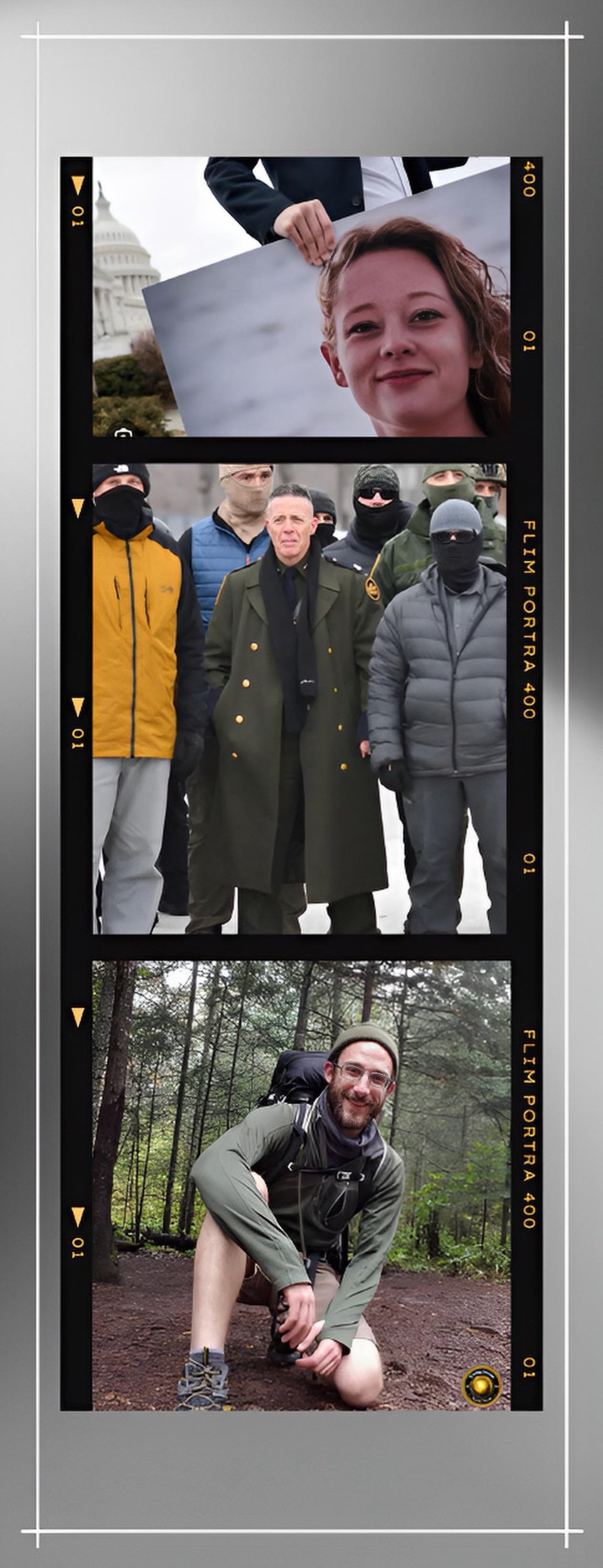
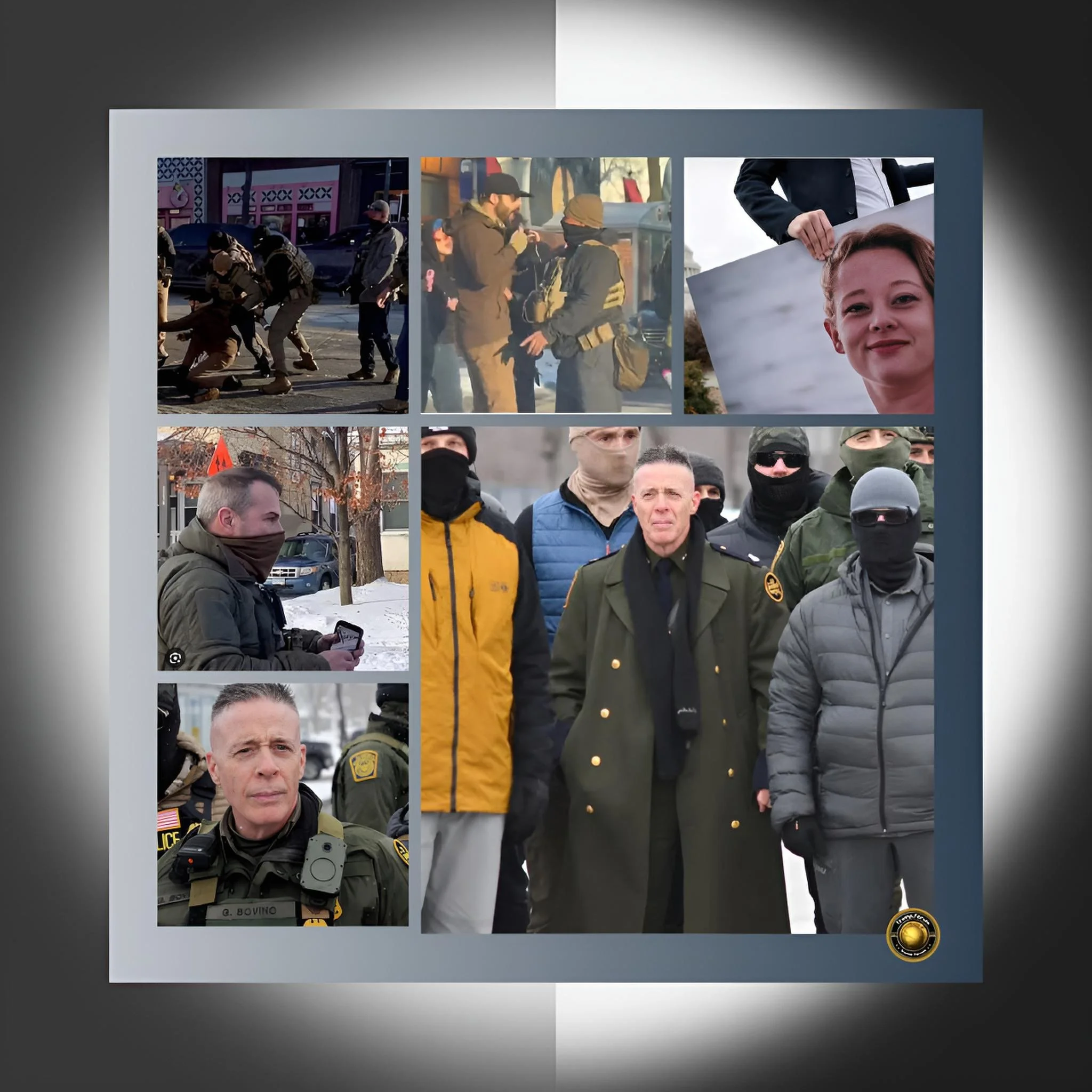
The federal operation introduced a paramilitary apparatus to a civilian context. These agents—primarily from Immigration and Customs Enforcement and Customs and Border Protection—operated with minimal transparency, wore masks and tactical gear obscuring their identities, and reported to a command structure largely unaccountable to local law enforcement or elected officials. Border Patrol commander Gregory Bovino emerged as the public face of the operation, conducting daily press conferences and issuing statements that often contradicted Minneapolis police assessments of incidents. Bovino's role represented a departure from traditional law enforcement hierarchy.
Rather than deferring to local authorities or proceeding through established protocols, Bovino operated as a quasi-independent authority, engaging in public disputes with elected officials and deploying agents in ways that created legal and constitutional friction with local governance.
The Context of Federal Lethal Force
Prior to Pretti's killing, federal immigration agents had opened fire multiple times in Minneapolis. On January 7, 2026, ICE agent Jonathan Ross fatally shot Renée Good. The administration's response illustrated a strategic pattern.
Within hours, Department of Homeland Security Secretary Kristi Noem issued a statement claiming that Good had attempted to "weaponize her vehicle" to run over federal agents—a characterization contradicted by video footage reviewed by Minneapolis Mayor Jacob Frey, Minneapolis Police Chief Brian O'Hara, and journalists examining frame-by-frame analysis.
Yet despite this contradiction between official claims and observable evidence, the defamatory narrative persisted in official communications and aligned media outlets, amplified through social media algorithms and coordinated online networks.
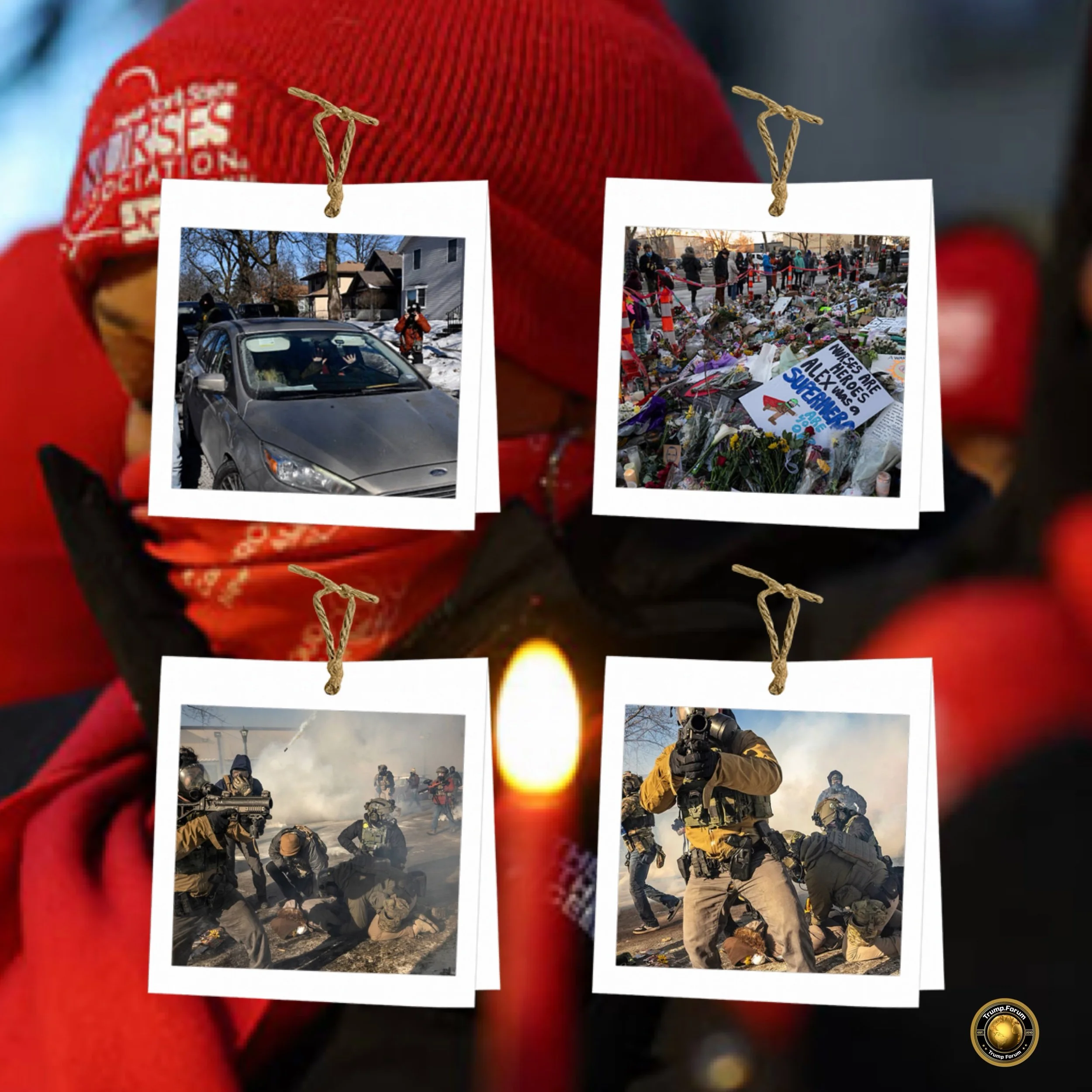
The pattern escalated with Pretti's death. At approximately 9:05 AM on January 24, 2026, Border Patrol agents engaged Pretti near the intersection of 26th Street and Nicollet Avenue in the Whittier neighborhood.
According to Department of Homeland Security accounts, Pretti "approached" agents while brandishing a 9-millimeter semi-automatic handgun and allegedly intended to "massacre" federal officers. However, bystander video recorded from multiple angles demonstrated that Pretti held a cell phone in his right hand, not a firearm. Witness testimony and forensic analysis of video footage confirmed he never displayed a weapon before agents tackled him to the ground.
A licensed pediatrician present at the scene provided testimony to federal investigators documenting that agents removed a firearm from Pretti's holster after subduing him and prior to the gunfire that killed him.
The medical evidence confirmed what video suggested: Pretti sustained at least five bullet wounds, including multiple wounds to his back and an additional wound to his neck.
The timeline recorded by The New York Times indicated that two officers fired at least ten shots over approximately five seconds. After the shooting, according to the pediatrician's statement, federal agents prevented her from rendering aid and instead occupied themselves with counting Pretti's wounds rather than attempting resuscitation.
Key Developments and Divergent Narratives
The administration's initial response to Pretti's death demonstrated extraordinary coordination in narrative control. Within hours of the shooting, before comprehensive investigations could commence, officials including Homeland Security Secretary Kristi Noem, Border Patrol commander Gregory Bovino, and others issued statements characterizing Pretti as a "domestic terrorist" and "assassin."
These characterizations preceded any investigative findings and contradicted video evidence available to the public. This sequencing revealed an institutional commitment to defending the shooters prior to establishing facts, a hallmark of authoritarian governance in which security apparatus operatives are shielded from scrutiny by preemptive propaganda.
The discrepancy between what video evidence demonstrated and what officials claimed produced a credibility crisis. Minneapolis Police Chief Brian O'Hara, who had access to video footage, indicated that the available evidence supported citizens' interpretations that the federal agents bore responsibility for the escalation and lethality.
His statement that the video "speaks for itself" constituted an indirect but unmistakable repudiation of federal authorities' claims. This gap between local law enforcement assessment and federal assertions signaled the breakdown of institutional coordination that typically characterizes democratic governance.
The federal government deployed additional forces and infrastructure following Pretti's death. Trump announced he would dispatch Tom Homan, the administration's "border czar," to Minnesota to oversee immigration enforcement operations. Homan, who had led Immigration and Customs Enforcement during Trump's first term, reportedly advocates a more "targeted" approach to deportations, focusing on individuals with criminal records rather than mass enforcement.
The White House simultaneously announced that Border Patrol commander Gregory Bovino would be removed from his position as "commander at large" and reassigned to El Centro, California—a demotion widely interpreted as an acknowledgment that the Minneapolis operation had become politically untenable.
This administrative shuffle appeared to signal that the Trump administration recognized a credibility problem requiring managerial adjustment.
Yet it did not involve acknowledgment of wrongdoing, independent investigation, or accountability for the two killings. Rather, it represented tactical repositioning designed to contain political fallout while preserving prosecutorial impunity for the agents involved. Bovino remained employed; the involved agents were not suspended or charged; and the administration maintained that federal operations would continue.
Cause-and-Effect Analysis
Institutional Pathologies
The Minneapolis incidents reveal four interrelated institutional pathologies characteristic of authoritarian police systems. These pathologies do not constitute incidental abuses but rather reflect systematic departures from democratic governance.
First, the reflexive defense of security apparatus violence has replaced investigative neutrality. In democratic systems, state-involved killings trigger a procedural pause during which forensic evidence is gathered and facts established before officials issue definitive statements on culpability. In Minneapolis, this pause never occurred.
Federal officials issued defamatory statements before investigations began, signaling that the outcome of any investigation was predetermined: the agents would be exonerated.
This foreclosure of investigative openness illustrates what scholars of authoritarianism designate as the "prerogative state"—a dimension of executive power that operates independently of law and subordinates legal institutions to executive preference.
Second, the state's immediate and sustained defamation of victims performs a crucial authoritarian function. By characterizing the deceased as terrorists, assassins, and threats, the administration does more than defend the agents; it signals to the broader population that the state's power extends beyond the moment of killing to the destruction of the victim's memory and reputation.
This strategy serves as a warning to potential dissidents: resistance to state authority will result not merely in death but in posthumous dehumanization. It also protects the regime's supporters from the moral intuition that would naturally arise from witnessing the killing of an innocent person. If the victim can be redefined as a legitimate target, supporters need not confront the contradiction between democratic values and state violence.
Third, the administration weaponized an administrative pretext—alleged welfare fraud—to authorize a paramilitary operation targeting a political opponent. Minnesota's Democratic leadership had opposed federal immigration enforcement and the Trump administration.
By framing the operation as addressing Somali community fraud, the administration created legal and rhetorical cover for what was, by multiple reliable accounts, a political operation designed to intimidate a jurisdiction and suppress opposition. This tactic mirrors the use of administrative pretexts in authoritarian regimes worldwide: the regimes do not declare war on a city; they announce an audit and send in the gunmen to protect the auditors.
Fourth, the militarization of civilian law enforcement produced a psychological and tactical transformation. Federal agents deployed with tactical gear, assault rifles, and body armor in a civilian urban context.
This militarization served multiple functions: it normalized overwhelming force against civilians, created psychological distance between enforcers and the enforced upon, signaled to the population that resistance was futile, and produced what law enforcement scholars term the "friend/enemy distinction"—a categorization of citizens as threats rather than constituents. When militarization becomes routine, the exclusion of the policed community from the political collective becomes normalized.
Broader Implications and International Precedent
The Minneapolis incidents do not occur in a vacuum. Similar patterns characterize contemporary authoritarian and semi-authoritarian regimes worldwide. The immediate defamation of victims, the substitution of propaganda for investigation, the use of administrative pretexts to authorize political suppression, and the deployment of militarized forces against civilian populations represent a consistent authoritarian playbook.
In Hong Kong, during the 2019-2020 protest movement, authorities regularly characterized protesters and bystanders as threats justifying lethal force, a narrative often contradicted by video evidence. In Belarus, the regime deployed militarized forces against protesters opposing the disputed 2020 election, with authorities subsequently defaming victims and denying investigations.
In Venezuela, similar patterns of paramilitary operations, victim defamation, and administrative pretexts have characterized state violence against opposition figures and protesters.
The innovation in the Minneapolis context is the application of these tactics not in a regime explicitly authoritarian but within a formal democracy.
The United States retains democratic institutions including free elections, constitutional protections, and an independent judiciary. Yet the Trump administration's willingness to deploy these tactics—and the apparent unwillingness of other institutional actors to intervene decisively—demonstrates the fragility of democratic safeguards when leadership commits to circumventing them.
International legal standards and human rights frameworks condemn the pattern evidenced in Minneapolis. The UN Principles on the Use of Force and Firearms by Law Enforcement Officials establish that lethal force may be used only when strictly necessary to protect life and only after warning and opportunity to comply. The victims in Minneapolis—neither of whom brandished weapons before being engaged—did not meet this threshold.
The International Convention for the Protection of All Persons from Enforced Disappearance and the Convention Against Torture both establish state obligations to investigate lethal force incidents independently and impartially. The administration's refusal to commission independent investigation and its categorical defense of the agents violate these international standards.
The Breakdown of Interagency Coordination
A secondary but significant consequence of the federal operation was the breakdown of coordination between federal and local law enforcement. Minneapolis police leadership, including Chief Brian O'Hara, indicated that federal agents conducted operations without proper notification, coordination, or accountability to local command structures.
This breakdown created dangerous conditions on the ground: federal and local officers sometimes found themselves in direct conflict; federal agents made stops and arrests without proper evidentiary basis that local authorities then had to address; and political disputes between federal and local leadership filtered down to operational tensions among frontline officers.
This institutional dysfunction exemplifies how authoritarian police systems operate. The militarized federal apparatus was answerable primarily to the Trump administration and its appointed officials—Bovino, Homeland Security Secretary Noem—rather than to local elected officials or law enforcement command structures.
This vertical accountability bypassed local authority and created what amounted to an occupation force within an American city. The resulting breakdown of coordination did not reduce enforcement activity; it intensified it while simultaneously degrading public safety.
Constitutional and Legal Challenges
Minnesota and its municipalities filed federal litigation challenging Operation Metro Surge's constitutionality. The lawsuit alleged violations of the First Amendment (suppression of protest rights), the Tenth Amendment (federal encroachment on state police powers), and the Administrative Procedure Act (arbitrary and capricious agency action).
A federal judge, Kate M. Menendez, heard arguments in late January 2026 on whether the operation should be enjoined pending trial.The judge's apparent reluctance to second-guess the administration's judgment regarding the "values" of the operation illustrated a broader judicial deference to executive authority in immigration and national security contexts.
Even so, the lawsuit established a legal record of the operation's design and intent. State attorneys argued that the operation's targeting of Minnesota, a jurisdiction that had voted against Trump and resisted federal immigration enforcement, indicated pretextual motivation rather than good-faith immigration enforcement.
They presented evidence that the administration had explicitly retaliated against Minnesota for its election conduct and policy positions.
Federal courts also heard motions regarding protest rights. A judge issued an initial order barring federal agents from retaliating against, arresting, or using chemical munitions against peaceful demonstrators and legal observers.
This order was immediately appealed and partially suspended by a higher court, illustrating the vulnerability of injunctive protection when the executive opposes it.
Future Institutional Trajectories
The removal of Gregory Bovino and deployment of Tom Homan may signal a tactical adjustment but not a fundamental policy reversal. The administration indicated that Operation Metro Surge would continue, though possibly in modified form.
The shift from Bovino to Homan represented a change in operational style rather than a cessation of federal enforcement activity. Homan's appointment suggested that the administration would persist in aggressive immigration enforcement but attempt to do so with less visible provocation and with greater attention to targeting criteria that might survive legal challenge.
The fundamental question is whether the incidents in Minneapolis trigger institutional responses capable of constraining executive authority or whether they represent a new normal of unchecked federal police power.
The administration's willingness to deploy militarized federal forces without clear legal authority, to defame victims reflexively, and to reject independent investigation suggests that traditional democratic constraints have become attenuated. If the federal government can conduct paramilitary operations in domestic cities, deploy thousands of armed agents without local authorization, and shield those agents from investigation and prosecution, the foundational principle that law constrains state power becomes hollow.
Conclusion
The fatal shootings of Renée Good and Alex Pretti in Minneapolis do not constitute isolated incidents of excessive police force. They represent a threshold moment in American politics: the emergence of a paramilitary federal enforcement apparatus operating under political direction, deploying tactics characteristic of authoritarian regimes, and developing immunity from traditional accountability mechanisms.
The immediate defamation of victims, the rejection of independent investigation, the militarization of civilian space, and the use of administrative pretexts to authorize political suppression constitute a systematic departure from democratic governance.
The administrative changes—Bovino's removal and Homan's deployment—may reduce the visibility of federal operations but do not address the underlying pathology: an executive willing to deploy security forces against domestic political opponents and an institutional ecosystem insufficiently resilient to prevent it.
The question facing the United States is whether democratic institutions can restore meaningful constraints on executive power or whether the Minneapolis incidents inaugurate a permanent transformation in the relationship between state and citizen.
The answer will depend not on the resolve of federal officials but on the willingness of other institutions—Congress, the judiciary, the press, and civil society—to impose costs on the administration's actions sufficient to restore democratic norms.
As of January 27, 2026, that institutional resistance remained nascent and uncertain.