ICE Impunity as Constitutional Crisis: The Structural Architecture of Violence Without Accountability
Executive Summary
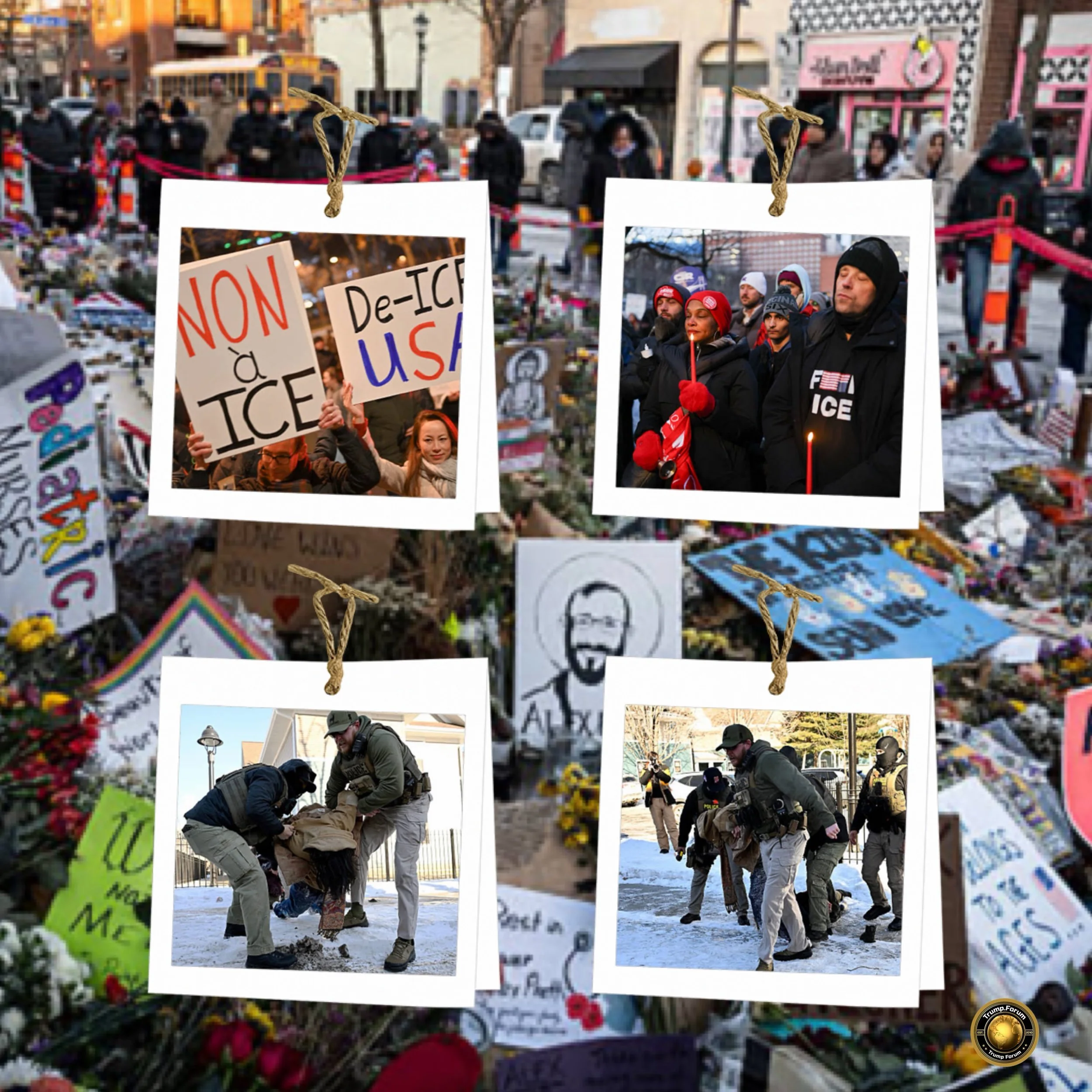
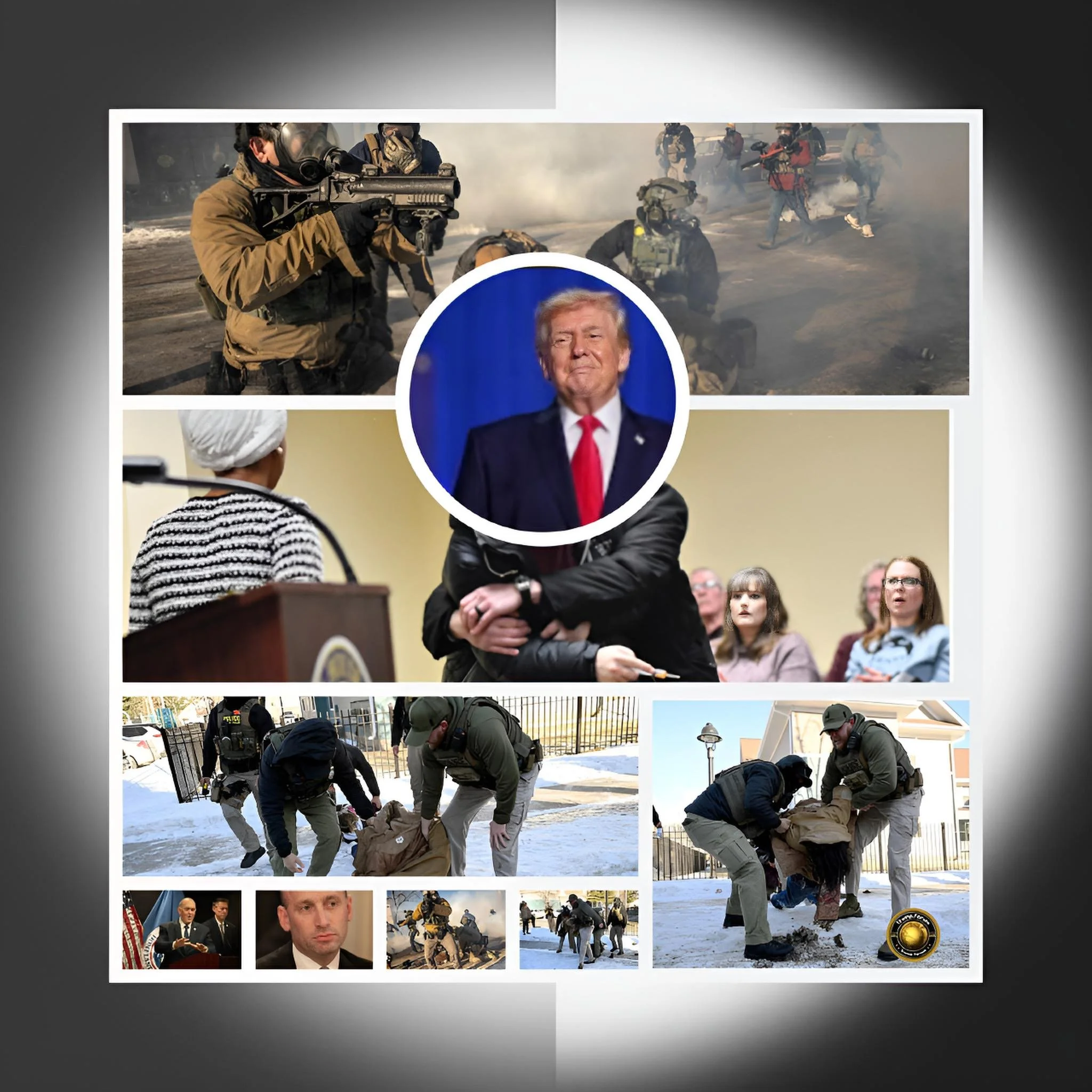
The killings of Renée Good and Alex Pretti in Minneapolis during Operation Metro Surge have exposed a profound accountability deficit in federal immigration enforcement that extends beyond domestic concerns to international alarm.
ICE and CBP operate within a legal architecture that systematically insulates agents from criminal and civil liability through qualified immunity, federal supremacy assertions, and executive branch control of investigative processes.
The Trump administration has accelerated this trajectory by more than doubling ICE's workforce to approximately 22,000 personnel within 4 months, while reducing training from 6 months to 6 weeks, creating what critics, domestically and internationally, characterize as a paramilitary force loyal to presidential authority rather than constitutional constraint.
Foreign governments, including Germany and Ecuador, have issued formal protests, while 60 Minnesota Fortune 500 CEOs—representing Target, 3M, UnitedHealth, General Mills, and Cargill—broke their longstanding silence to demand de-escalation.
The absence of meaningful accountability mechanisms transforms isolated incidents of violence into a predictable structural outcome—a formula for more violence embedded within the institutional design of immigration enforcement itself.
Introduction: From Isolated Incidents to Systemic Patterns and International Crisis
On January 7, 2026, ICE agent Jonathan Ross fired 3 shots at Renée Good's departing vehicle in Minneapolis, killing the 37-year-old mother of 3. On January 24, 2026, 2 CBP agents discharged their weapons approximately 10 times, killing Alex Pretti, a 37-year-old intensive care nurse and licensed gun owner who was filming federal operations.
As of January 29, 2026, no officer has been charged in either killing. The identities of the shooters remain undisclosed. Minnesota law enforcement has been denied investigative access to the crime scenes despite possessing valid judicial warrants.
The Trump Justice Department has signaled no intention to pursue federal civil rights prosecutions. Administrative investigations remain internal to DHS, an agency with a documented history of exonerating its personnel in use-of-force incidents.
This is not an aberration. It is the predictable outcome of a legal and institutional framework designed to place immigration enforcement beyond democratic accountability.
What distinguishes the Minneapolis crisis from prior episodes is its spillover into international relations and corporate activism. Germany's Federal Foreign Office issued a travel advisory warning German citizens to "be vigilant and stay away from crowds where violence might occur" in Minneapolis and other U.S. cities.
Ecuador's Foreign Ministry filed a formal diplomatic complaint after an ICE agent attempted to enter the Ecuadorian Consulate in Minneapolis without authorization, in violation of the Vienna Convention's protections of diplomatic sovereignty.
As Foreign Policy reported, concerns over "the deadly actions of U.S. Immigration and Customs Enforcement agents in Minneapolis have expanded beyond domestic borders," with foreign countries "increasingly worried that the Trump administration's immigration crackdown could have spillover effects."
The corporate response represents an equally unprecedented development. More than 60 CEOs of Minnesota-based Fortune 500 companies—including Target, Best Buy, 3M, UnitedHealth Group, General Mills, Cargill, and Land O'Lakes—signed an open letter organized by the Minnesota Chamber of Commerce calling for "immediate de-escalation" and cooperation among federal, state, and local leaders.
As the Los Angeles Times noted, "this collection of elite businesses largely has been silent about the federal government's assault on the people of Minneapolis" since December 2025. Still, the Pretti killing "compelled corporate leaders to do something they have seldom done since President Donald Trump's return to office: openly contest his policies."
The statement emphasized stability, safety, and economic continuity. Still, it stopped short of directly condemning ICE or calling for a halt to operations—reflecting what observers characterized as "a pragmatic balance" designed to avoid "confrontation with an administration known for targeting perceived adversaries."
History and Current Status
The Construction of an Accountability-Free Zone
The institutional foundation for contemporary ICE and CBP operations was established in the post-9/11 security expansion. The Department of Homeland Security's creation in 2003 consolidated immigration enforcement under a mandate emphasizing national security over civil liberties.
The 100-mile border zone doctrine—encompassing roughly 2/3 of the U.S. population—granted ICE and CBP extraordinary search-and-seizure authority without traditional warrant requirements. Internal watchdog agencies repeatedly warned that accelerated hiring without adequate vetting was admitting personnel "potentially unfit to carry a badge and gun," yet those warnings were subordinated to operational volume.
Trump's second term has supercharged this trajectory through what internal ICE documents characterize as "wartime recruitment." Between September 2025 and January 2026, ICE expanded from approximately 10,000 to over 22,000 personnel—a 120% increase in workforce achieved in 4 months.
The Federal Law Enforcement Training Center reduced ICE training from 6 months to approximately 6 weeks, enabling newly onboarded agents to deploy rapidly into enforcement operations. ICE offered $50,000 signing bonuses, expanded student loan repayment programs, removed age caps, and obtained direct hire authority to circumvent traditional federal hiring safeguards.
The agency processed more than 220,000 applications to identify 12,000 recruits, deploying thousands into the field before completing full training protocols.
This expansion was funded through the One Big Beautiful Bill Act, which allocated approximately $170 billion for immigration enforcement operations over 4 years—funding that dramatically exceeded allocations for traditional justice agencies, including the FBI and DEA.
As the Council on Foreign Relations documented, the Trump administration has also "granted immigration enforcement authorities and responsibilities to several other federal law enforcement agencies, including the Drug Enforcement Administration, Federal Bureau of Prisons, U.S. Marshals Service, U.S. Postal Inspection Service, and the Bureau of Alcohol, Tobacco, Firearms and Explosives," creating what one expert called a "blending of federal law enforcement" that will have "long-term implications for public safety and trust in federal law enforcement."
Operation Metro Surge represents the operational deployment of this expanded capacity, with approximately 2,000 ICE officers and 1,000 CBP agents concentrated in Minneapolis beginning in December 2025. DHS characterized it as "the largest immigration enforcement operation ever carried out," with approximately 3,000 arrests reported as of late January 2026.
The operation has disrupted schools, businesses, and daily life—prompting Minneapolis schools to shift to remote learning and families to avoid public spaces.
Key Developments
The Good and Pretti Killings, Institutional Response, and International Fallout
The Good killing on January 7, 2026, established the pattern.
Video analysis by The New York Times and ABC News demonstrated that Good's vehicle was moving away from the officer who fired, with the steering wheel turned to the right—contradicting DHS Secretary Kristi Noem's characterization of Good as having committed "an act of domestic terrorism" by attempting to "run over" federal agents.
Agent Ross fired 3 shots in under 1 second as the vehicle departed. Good was pronounced dead at Hennepin County Medical Center approximately 45 minutes after being shot.
The Trump administration's immediate response was not investigative restraint pending factual determination but rather rhetorical escalation—branding a citizen killed by federal agents as a "domestic terrorist" and a "rioter" obstructing immigration enforcement.
Minnesota law enforcement sought to conduct an independent investigation in partnership with the FBI. Federal authorities blocked their access to the crime scene and refused to cooperate with state investigative processes.
This denial of state investigative authority represents a novel assertion of federal supremacy—preventing sovereign state authorities from investigating a homicide occurring within their jurisdiction because the perpetrator was a federal agent.
The Pretti killing on January 24, 2026, followed an identical trajectory and triggered the international and corporate responses. Video evidence reviewed by BBC Verify and multiple news organizations showed Pretti engaged in a physical altercation with CBP agents during which 1 agent shouted that Pretti possessed a gun, prompting 2 agents to discharge their weapons approximately 10 times.
A DHS report to Congress acknowledged these basic facts while asserting that Pretti was "brandishing" a firearm. Multiple videos show Pretti with a holstered weapon that local authorities confirmed he was authorized to carry under Minnesota law; at least 1 video angle shows an agent removing the gun from Pretti's waist moments before shots were fired.
The agents' identities remain undisclosed. Minnesota authorities were again denied access for investigative purposes. The Justice Department declined to open a civil rights investigation—a departure from longstanding protocol following federal officer-involved fatalities.
The international response crystallized within days. Germany's travel advisory explicitly warned citizens about violence in Minneapolis involving "migration and security authorities." Ecuador's diplomatic complaint followed an incident captured on video in which an ICE agent attempted to enter the Ecuadorian Consulate without permission, violating the Vienna Convention.
As Foreign Policy reported, "ICE agents will accompany the U.S. delegation to the Winter Olympics—held this year in Milan—next week to 'vet and mitigate risks from transnational criminal organizations,'" prompting Italian officials to emphasize that "all security operations remain under Italian authority" and that "ICE does not conduct immigration enforcement operations in foreign countries."
The reassurances suggested an underlying concern that ICE's operational culture in Minneapolis could manifest at international events.
The corporate statement from 60 Minnesota CEOs represented what former Medtronic CEO Bill George characterized as "a remarkable feat," given the difficulty of achieving consensus among competitive business leaders. Yet observers noted significant limitations.
As the Los Angeles Times reported, the statement "stopped short of directly condemning ICE, naming Pretti or calling for a halt to enforcement operations." Religious leaders and community organizers criticized the response as insufficient. "It felt like nothing," remarked Bardwell, pastor of Saviours Church in Minneapolis. "We understand that if Trump is going to heed anyone, corporate leaders wield significant influence.
We expect CEOs to articulate their positions clearly and leverage their power." A CNBC flash poll of 34 corporate leaders found that only 1 reported supporting the expanded ICE presence in Minnesota, yet most remained reluctant to speak publicly against the administration.
As of January 29, 2026, both shootings remain under internal DHS review. The 2 CBP agents who shot Pretti have been placed on administrative leave pending investigation—a standard procedural step that does not imply discipline. No charges have been filed. No independent investigation by state or federal prosecutors has been initiated.
The structural outcome is that federal agents have killed 2 U.S. citizens in circumstances where video evidence contradicts official narratives, and no accountability mechanism has been activated.
Latest Facts and Concerns
The Architecture of Impunity and Operational Adjustments
The absence of accountability reflects not administrative oversight but institutional design. Multiple legal and structural mechanisms systematically insulate federal immigration agents from criminal and civil liability.
First, the qualified immunity doctrine shields federal officers from civil lawsuits unless their conduct violates "clearly established" constitutional rights.
This legal standard, articulated by the Supreme Court in a series of decisions beginning in the 1980s, has proven nearly insurmountable for plaintiffs alleging excessive force. Reuters investigative reporting in 2020 documented that qualified immunity effectively bars police officers accused of constitutional violations from civil liability.
Federal officers enjoy even broader protection than state and local police because they can remove state civil cases to federal court and assert federal supremacy as an additional barrier.
Second, the federal removal mechanism allows federal officers charged in state court to transfer cases to federal jurisdiction and assert immunity from prosecution. To overcome this immunity, state prosecutors must demonstrate that the agent's actions fell outside the scope of official duties and were "objectively unreasonable."
This is an extraordinarily high bar. Even where video evidence contradicts federal narratives—as in both the Good and Pretti killings—federal courts may determine that the agent was acting within the scope of duties, thereby granting immunity. Legal scholars note that courts have been willing to pierce qualified immunity "only in cases where the facts are particularly egregious," and even then, outcomes remain uncertain.
Third, federal prosecutorial discretion determines whether to pursue civil rights charges under 18 U.S.C. Section 242, which criminalizes deprivation of rights under color of law. This statute has been successfully employed in high-profile cases, including the prosecution of Minneapolis police officers for the killing of George Floyd.
However, its application requires the Justice Department's willingness to investigate and prosecute. Trump administration officials—including the President, Vice President JD Vance, and DHS Secretary Noem—have publicly defended the agents involved in the Good and Pretti shootings and characterized the victims as threats to federal officers.
These statements signal that federal prosecutors, under political pressure from the executive branch, are unlikely to pursue charges.
Fourth, organizational culture within ICE and CBP reinforces impunity through peer solidarity, union support, and executive protection. ICE and Border Patrol unions endorsed Trump, with over 95% of their members approving.
The unions have consistently defended agents accused of excessive force and lobbied against external oversight mechanisms. When agents understand that their organizational leadership, union representatives, and political superiors will defend their conduct regardless of factual circumstances, the behavioral incentive structure shifts decisively away from restraint and toward escalation.
Fifth, the systematic refusal to disclose officer identities and the practice of masked operations eliminate the most basic form of accountability: public identification.
When communities cannot know which agents exercised lethal authority in their streets, individual accountability becomes impossible. The operational practice of masking agents—ostensibly for officer safety—also serves to render agents anonymous and unidentifiable, insulating them from both formal investigation and informal community oversight.
Following the Pretti killing and the resulting political, international, and corporate pressure, the Trump administration announced tactical adjustments.
On January 28, 2026, internal ICE guidance obtained by Reuters directed officers in Minnesota to avoid engaging with "agitators" and adopt "targeted enforcement" focusing exclusively on immigrants with criminal charges or convictions.
The guidance stated: "We are moving to targeted enforcement of aliens with a criminal history. This includes arrests, not just convictions. ALL TARGETS MUST HAVE A CRIMINAL NEXUS."
Border Patrol commander Gregory Bovino, whose aggressive tactics had drawn bipartisan criticism, was replaced. Tom Homan was dispatched to Minneapolis to announce a planned "drawdown" of federal agents.
However, Homan's public statements indicated these changes represented a tactical retreat rather than a policy reversal. Speaking at a press conference covered by the Economic Times, Homan stated clearly: "ICE and Border Patrol officers will stay in Minnesota until the issue is fully handled. Federal officials are 'not leaving the state until the problem is gone.'"
He emphasized that ICE is "a legal law enforcement agency that must enforce immigration laws passed by Congress" and that President Trump "does not agree that Minnesota state and local officials should take part in immigration enforcement."
Homan told protesters to "protest Congress, not ICE" if they disapproved of enforcement operations. The operational model—deploying thousands of heavily armed federal agents into cities to conduct sweeps, excluding local authorities, and asserting federal supremacy over state objections—remains fundamentally intact.
Cause and Effect Analysis
How Impunity Manufactures Violence
The causal chain from institutional design to predictable violence operates through multiple mechanisms. When agents understand that violence carries minimal risk of consequence, the behavioral calculus shifts. Restraint becomes optional rather than mandatory.
De-escalation techniques become secondary to asserting dominance. The use of force escalates because there is no institutional counterweight to discourage it.
The expansion of ICE from 10,000 to 22,000 personnel in 4 months, coupled with a reduction in training from 6 months to 6 weeks, predictably degrades professional competence and institutional culture.
Agents deployed with abbreviated training have not been adequately socialized into constitutional norms, de-escalation protocols, or situational decision-making under stress. As NPR reported, these are agents who are "poorly trained, overwhelmed, and inexperienced."
They rely more heavily on peer culture and informal norms established by veteran agents—norms shaped by years of operating with minimal accountability.
The recruitment messaging employed by ICE—emphasizing aggressive enforcement, targeting "criminal aliens," and "taking back our streets"—attracts personnel predisposed toward hard-line tactics.
Financial incentives, including $50,000 signing bonuses and accelerated hiring timelines, prioritize volume over quality, admitting recruits who may lack the temperament or judgment required for law enforcement work.
When this recruitment strategy is combined with an organizational culture that valorizes aggressive enforcement and executive political leadership that defends agents regardless of conduct, the predictable outcome is an organization that operates with a paramilitary ethos rather than professional law enforcement standards.
The deployment pattern reinforces this trajectory. Operation Metro Surge concentrates 3,000 heavily armed, often masked federal agents in a single metropolitan area without coordination with local authorities and in explicit defiance of state objections.
The visible saturation of the streets with black-clad agents in tactical gear and unmarked vehicles creates an atmosphere of occupation rather than community policing. As NBC News reported, Minneapolis residents describe the situation as "It feels like an invasion."
This atmosphere telegraphs a message: federal authority will be asserted through overwhelming force, and local opposition is futile.
The rhetorical framing employed by Trump administration officials completes the causal chain. When DHS Secretary Noem characterizes Renée Good as having committed "an act of domestic terrorism," she reframes a contested use-of-force incident as an act of war by the victim.
When Vice President Vance asserts that ICE agents are "protected by absolute immunity," he signals that agents need not fear legal consequences for their actions. When federal officials brand protesters and observers as "agitators" and "domestic terrorists," they delegitimize dissent and implicitly authorize force against those who resist federal operations.
All of these factors—qualified immunity doctrine, federal prosecutorial discretion controlled by the executive, organizational culture shaped by union solidarity and executive protection, systematic non-disclosure of agent identities, rapid expansion with degraded training, recruitment messaging emphasizing aggression, deployment patterns resembling occupation, and rhetorical framing that delegitimizes victims—combine to create a structural formula in which violence is not an aberration but a predictable output.
Impunity manufactures violence by removing the institutional constraints that make restraint rational.
Future Steps
Accountability Mechanisms or Entrenchment of Impunity
The trajectory from this point depends on whether institutional countermeasures can be imposed against executive resistance.
Three arenas will determine the outcome: judicial intervention, legislative reform, and electoral accountability.
In the judicial arena, Minnesota's constitutional challenge and parallel civil rights litigation could establish binding precedents that restrict where and how ICE and CBP may operate.
If federal courts rule that Operation Metro Surge violates the 1st, 4th, and 10th Amendments and issue injunctions prohibiting similar operations, those rulings could constrain future deployments.
However, judicial authority depends on executive compliance. Courts have no enforcement mechanism beyond the threat of contempt citations, which themselves require executive branch cooperation to implement. If the Trump administration chooses to ignore or circumvent judicial orders—as ICE has already violated at least 96 court orders in Minnesota since January 1, 2026—the effectiveness of judicial remedies remains uncertain.
In the legislative arena, Congress possesses constitutional authority to condition DHS funding on structural reforms.
As NPR reported on January 29, 2026, Democrats are demanding significant changes to ICE operations as conditions for funding the Department of Homeland Security, including ending roving patrols, prohibiting masked operations, mandating body cameras with public release requirements, creating independent investigative bodies, and making it easier to pursue legal action against immigration officers.
Civil rights organizations have called for withholding further ICE funding unless such reforms are enacted.
Democratic legislators have indicated their willingness to risk a government shutdown over these issues, with the current continuing resolution expiring on January 30, 2026.
However, whether a legislative majority sufficient to impose such reforms will exist depends on the outcome of the November 2026 midterm elections.
In the electoral arena, the 2026 midterms will determine whether the political costs of Operation Metro Surge and the killings in Minneapolis translate into policy change.
Polling indicates that independent voters—crucial in competitive districts—disapprove of the enforcement tactics employed in Minneapolis, even as Republican base voters continue supporting the broader immigration agenda.
As Foreign Policy noted, "The Trump administration's mass deportation campaign has become a major domestic political issue in this midterm election year, and this latest killing promises to escalate the issue's importance even further." Some Republican legislators representing swing constituencies, including Senator Susan Collins of Maine, have publicly criticized ICE tactics as "excessive."
Republican strategists have warned that maintaining support for aggressive interior enforcement while failing to address violence constitutes a political liability approaching the midterm elections.
If Democrats gain control of the House or Senate, they could conduct oversight investigations, impose funding conditions, and potentially pursue impeachment or removal proceedings against DHS leadership. If Republicans retain control, executive authority over immigration enforcement will remain largely unconstrained.
The most likely scenario absent structural reform is incremental normalization.
The Trump administration's recent tactical retreat—replacing Border Patrol commander Gregory Bovino, dispatching Tom Homan to announce a planned "drawdown" of agents, shifting to "targeted enforcement" with criminal nexus requirements, and placing the shooters on administrative leave—suggests responsiveness to political pressure but not abandonment of core objectives. Homan explicitly stated that the drawdown does not constitute "surrender" of the immigration enforcement mission.
The operational model of deploying thousands of heavily armed federal agents into cities to conduct sweeps, the organizational culture that valorizes aggressive tactics, and the legal architecture that insulates agents from accountability remain intact.
Absent binding legal constraints or legislative reforms, future operations will replicate the Minneapolis model, and future killings will occur under identical circumstances with identical outcomes: no charges, no independent investigation, no accountability.
Conclusion
Violence as Structural Output and International Warning
The deaths of Renée Good and Alex Pretti represent not tragic accidents but structural outputs of an institutional system designed to place immigration enforcement beyond democratic accountability—a system whose consequences now extend beyond U.S. borders to provoke formal diplomatic protests and corporate resistance. When federal agents can kill U.S. citizens in circumstances where video evidence contradicts official narratives, when state authorities are denied investigative access to crime scenes within their own jurisdictions, when federal prosecutors decline to open civil rights investigations, when qualified immunity shields agents from civil liability, when executive political leadership publicly defends agents and characterizes victims as domestic terrorists, and when foreign governments issue travel warnings about violence by U.S. authorities—the result is not isolated incidents but a predictable formula for violence.
The international dimension underscores the severity of the crisis. Germany's travel advisory and Ecuador's diplomatic complaint signal that allied democracies view the Minneapolis operations as qualitatively different from normal law enforcement—an assessment that carries reputational and diplomatic costs for the United States.
When ICE agents attempt to enter foreign consulates in violation of the Vienna Convention, when allied nations warn their citizens to avoid American cities because of U.S. government violence, and when the United States must reassure Olympic host countries that its agents will not conduct enforcement operations on foreign soil, the system has crossed from domestic policy dispute into international crisis of legitimacy.
The corporate response, though limited in its demands, represents an acknowledgment by economic elites that the operational model threatens stability and prosperity. Fortune 500 CEOs who typically avoid political controversy felt compelled to speak because the violence and chaos in Minneapolis directly threaten their ability to recruit talent, maintain operations, and project normalcy to customers and investors.
Their reluctance to name victims or demand operational cessation reflects the administration's success in creating a climate of fear regarding retaliation—but their willingness to sign any statement represents recognition that the status quo is unsustainable.
Impunity does not merely tolerate violence; it manufactures violence by removing the institutional constraints that make restraint rational.
Agents who understand that their conduct will be defended regardless of factual circumstances, that their identities will be protected from public disclosure, that their union will lobby against accountability measures, and that their political superiors will valorize aggressive tactics have no institutional incentive to exercise restraint.
The behavioral outcome is escalation, not de-escalation. The operational outcome is more violence, not less.
The question facing American democracy—and now, given international reaction, the international community—is whether this formula can be disrupted through judicial intervention, legislative reform, or electoral accountability, or whether Operation Metro Surge represents the normalized future of federal law enforcement.
If courts issue injunctions and the executive complies, if Congress imposes binding structural reforms, and if voters punish the party responsible in the 2026 midterms, the trajectory could shift toward accountability. If none of these countermeasures materialize, the architecture of impunity will remain intact, and the following Good and Pretti killings will occur not in Minneapolis but in the next city targeted for federal enforcement operations.
The Minneapolis crisis has clarified that the central question is not whether ICE agents should enforce immigration law but whether any domestic security force should operate with the combination of lethal authority and zero accountability that currently characterizes immigration enforcement.
When agents can shoot civilians and face no consequence, when states cannot investigate federal crimes within their borders, when courts cannot compel executive compliance with their orders, when political leadership defends violence against citizens as counterterrorism, and when allied democracies issue diplomatic protests and travel warnings—the system has crossed the threshold from law enforcement to state-sponsored violence that threatens both domestic constitutional order and international legitimacy.
Whether America can step back from that threshold depends on whether institutional antibodies sufficient to constrain executive power can be mobilized before the architecture of impunity becomes permanently embedded in American governance and normalized in international relations.