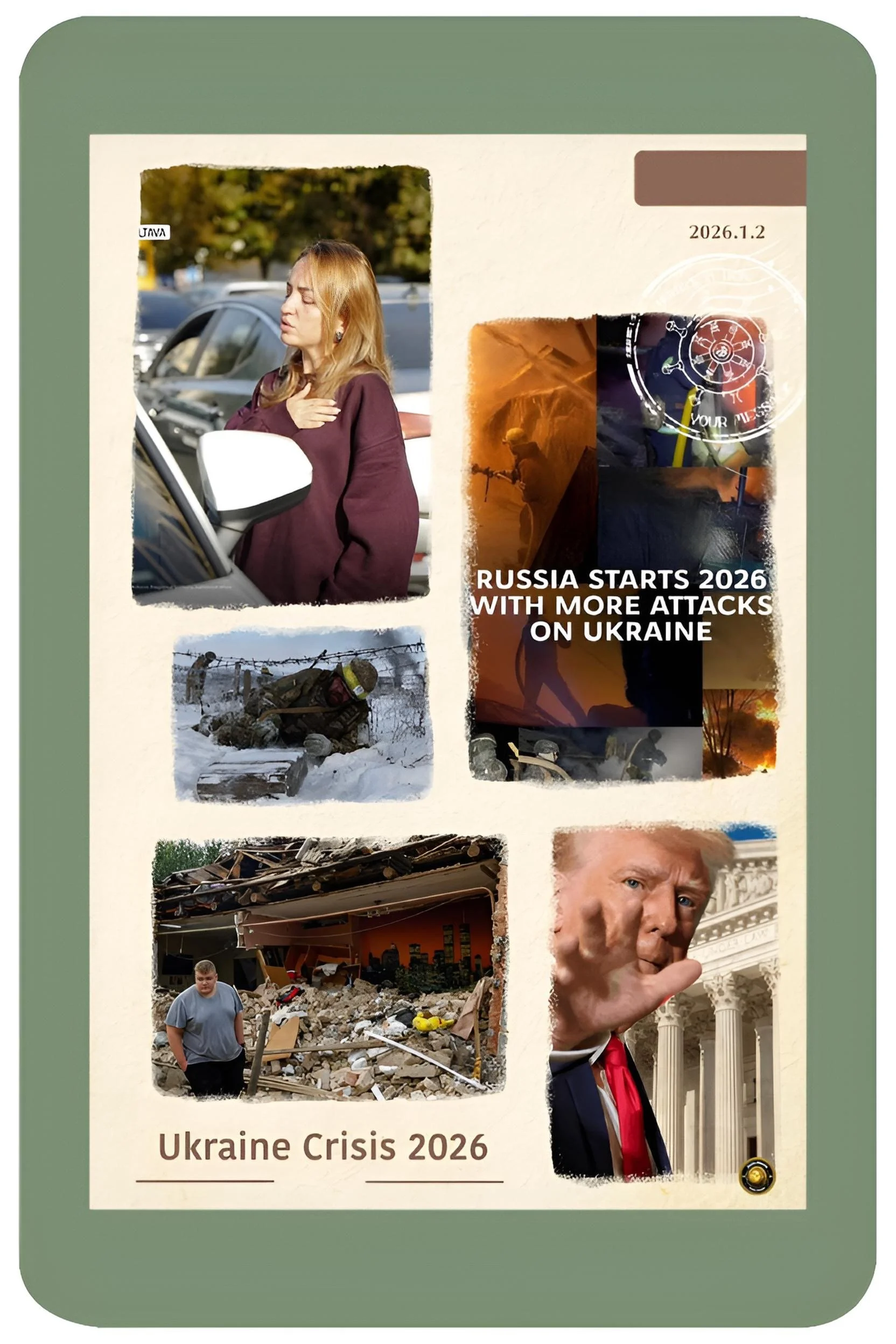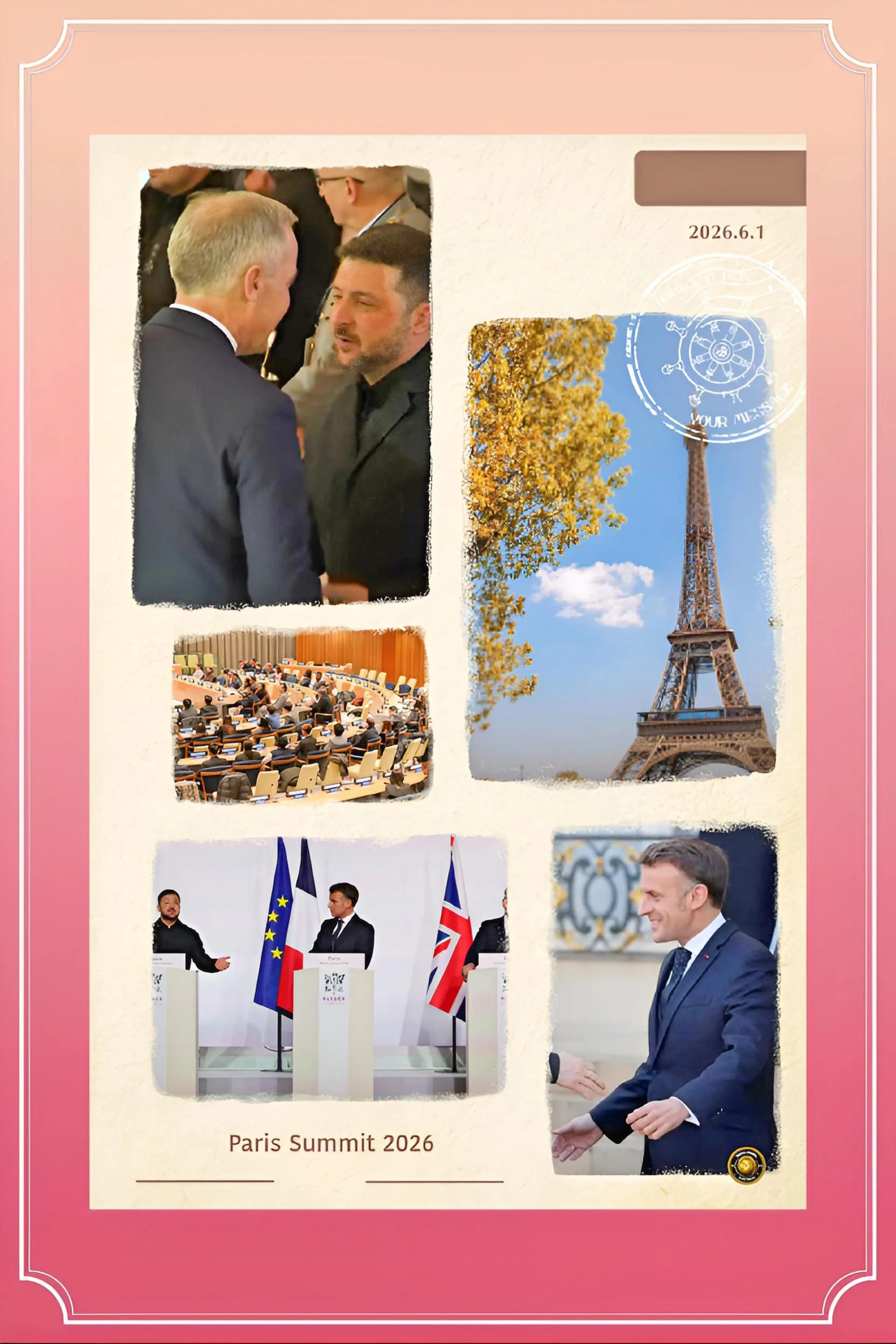
Europe's Perilous Gambit: Multilayered Security Guarantees for Ukraine and the Kremlin's Categorical Rejection
Executive Summary
The Western Illusion—Security Guarantees Without Strategic Backing
The West finds itself at a precipice where theoretical frameworks meet grim geopolitical realities.
In January 2026, thirty-five nations assembled in Paris to forge what they deemed "robust security guarantees" for Ukraine—a framework predicated upon legally binding multilateral commitments, European-led military forces, and American-backed monitoring mechanisms to deter future Russian aggression.
Yet Moscow has already made its position unambiguous: such guarantees are not merely unacceptable but represent an existential affront to Russia's declared sphere of influence. The fundamental impasse remains fixed upon Russia's maximalist territorial demands, particularly its insistence upon complete Ukrainian withdrawal from the Donbas, coupled with its categorical refusal to accept any NATO-equivalent military presence on Ukrainian soil.
The Zaporizhzhia Nuclear Power Plant crisis adds an additional layer of catastrophic risk, with Russia having violated every international principle governing nuclear safety.
Meanwhile, the Trump administration's deliberate distancing from European security commitments, amplified through the caustic rhetoric of Pete Hegseth and JD Vance, has forced Europe into an uncomfortable reckoning: the postwar security architecture for Ukraine must rest primarily upon European shoulders, not American guarantees—a reality that arrives only now that Washington has fundamentally reoriented its strategic priorities away from the continent it has protected since 1945.
Introduction
When America Abandons Europe—The Unravelling of Postwar Order
The contemporary international system stands witness to a tectonic realignment of strategic relationships, one whose implications extend far beyond the immediate confines of Ukraine. The Paris Summit of January 6, 2026, represented an attempt by the Western alliance to salvage both Ukraine's territorial integrity and the broader architecture of European security through mutual legal commitments rather than military force.
This gathering of the so-called Coalition of the Willing, featuring heads of state from twenty-seven nations alongside American representatives Steve Witkoff and Jared Kushner, endeavored to crystallize the mechanisms by which Ukraine might transition from a condition of acute military vulnerability to a state of defensible stability within an international framework.
However, this diplomatic initiative confronts a reality far more forbidding than the rhetorical optimism of Western capitals suggests. The Russian state, under Vladimir Putin's leadership, has demonstrated not merely skepticism but categorical rejection of the fundamental premises underlying these security proposals. Simultaneously, the Trump administration's withdrawal of what had constituted America's core security commitment to Europe over eight decades has precipitated an existential crisis within the transatlantic relationship itself.
European leaders find themselves compelled to construct a security architecture that amounts, in essence, to European self-determination divorced from meaningful American participation—a condition that would have been unthinkable merely years prior.
The question before contemporary policymakers transcends the narrow matter of Ukrainian security guarantees. It encompasses the future viability of European strategic autonomy, the credibility of international law, the technological and military capacity of European nations to project deterrence without American backing, and the capacity of the Western alliance to maintain cohesion when its organizing principle—American strategic commitment—has been fundamentally undermined.
To understand this moment requires examining the historical genesis of the conflict, the current diplomatic status, Russia's intransigent position, and the structural constraints that render comprehensive peace increasingly elusive.
From Budapest to Betrayal—The Precedent That Haunts Current Negotiations
The contemporary crisis finds its roots in a foundational agreement that would prove as consequential for what it failed to deliver as for what it purported to guarantee. In December 1994, Ukraine became the first post-Soviet state to voluntarily relinquish an arsenal of nuclear weapons—the third-largest in the world at that moment—in exchange for security assurances from the United States, the Russian Federation, and the United Kingdom.
The Budapest Memorandum of December 5, 1994 represented a deliberate choice of nomenclature, distinguishing between "security guarantees" (which would imply military obligations under international law) and "security assurances" (which denoted merely political commitments to respect Ukraine's territorial integrity). American legal authorities made this distinction intentionally, aware that a true security guarantee would require Senate ratification and would likely face insurmountable congressional opposition.
Ukraine accepted this lesser formulation because the alternatives appeared profoundly worse. The state had inherited from the Soviet Union approximately 1,900 nuclear warheads and was neither economically nor technologically positioned to maintain them independently. The Trilateral Statement of January 1994 and its subsequent crystallization in the Budapest Memorandum promised Ukrainian leaders that the elimination of these weapons would produce not vulnerability but enhanced security—that international law, codified in the form of binding declarations by nuclear powers, would suffice to protect them from aggression.
For nearly two decades, this gamble appeared to have succeeded. Ukraine experienced a substantial period during which its territorial integrity remained secure, albeit constantly contested through economic pressure and periodic military incursions in the eastern Donbas region.
The conflict in eastern Ukraine that began in 2014, following Russia's invasion and annexation of Crimea, demonstrated that the Budapest Memorandum's assurances possessed no enforcement mechanism. When Russia seized the Crimean Peninsula through what it euphemistically termed a "peacekeeping operation," the United States and United Kingdom issued formal protests, but these amounted to expressions of disapproval rather than military responses. The security assurance, rendered meaningless through non-enforcement, revealed itself as what it had always been structurally: a moral commitment unsupported by legal obligation.
The 2014 Crimean crisis and the subsequent war in Donbas, which claimed over 14,000 lives prior to Russia's 2022 full-scale invasion, created a fundamental contradiction within Ukraine's strategic position. The nation had become progressively more isolated and vulnerable precisely because it had disarmed. The only plausible pathway to genuine security lay through NATO membership, which would trigger the alliance's Article 5 collective defense clause—the very condition that Russian strategic doctrine had defined as fundamentally unacceptable.
When Putin ordered the full-scale invasion of Ukraine on February 24, 2022, he deployed language that obscured rather than explained his motivations. The rhetoric of "demilitarization and denazification" served as cover for a maximalist ambition: to subordinate Ukraine to Russian strategic control, to prevent its integration into Western institutions, and to reassert Russian hegemony over the post-Soviet space. The scale of this ambition became evident only as the invasion proceeded and Russian operational objectives encompassed not merely the contested Donbas but the entire nation, including the capital itself.
The Paris Gambit—Thirty-Five Nations Promise What They Cannot Enforce
The Paris gathering of January 2026 represented the culmination of months of intensive diplomatic activity, much of it directed by the Trump administration through its special envoys.
The meeting succeeded in formalizing, for the first time, a comprehensive framework of multilateral security commitments to Ukraine, endorsed by the vast majority of NATO members as well as significant non-NATO partners. The joint statement issued after the summit articulated four principal components to the proposed security arrangement.
First, the Western coalition committed to sustaining "long-term military assistance and armament" to the Armed Forces of Ukraine, ensuring that Kyiv would maintain sufficient military capability to deter renewed Russian aggression. This commitment encompasses continued provision of advanced weapons systems, financial support for military procurement, and technical assistance in weapons employment and maintenance. The framework explicitly stipulates that Ukraine's military forces would constitute "the first line of defense and deterrence" following any ceasefire agreement.
Second, the coalition endorsed the formation of a European-led "multinational force" capable of deploying to Ukrainian territory following a ceasefire. This force would incorporate contributions from willing NATO and non-NATO nations, with military planning already underway to prepare reassurance measures across land, sea, and air domains. The United Kingdom and France signed a separate Declaration of Intent committing to the establishment of military installations throughout Ukrainian territory—so-called "military hubs"—that would facilitate the rapid mobilization and sustainment of coalition forces in response to any renewed Russian aggression.
Third, the coalition committed to establishing "a system of politically and legally binding guarantees" to activate upon the effectuation of a ceasefire. These guarantees would encompass binding commitments to support Ukraine in the case of future armed attack by Russia, potentially including the deployment of military capabilities, intelligence support, logistical assistance, diplomatic initiatives, and the imposition of additional economic sanctions. The framework explicitly attempted to create commitments that would mirror NATO's Article 5 provisions while operating outside the NATO framework itself, thereby allegedly satisfying Russian objections to NATO expansion while providing Ukraine with credible deterrence.
Fourth, the coalition committed to deepening "long-term defence cooperation" with Ukraine through enhanced training, joint defence industrial production utilizing European mechanisms, and expanded intelligence cooperation. The framework contemplates Ukraine's eventual integration into European Union and NATO structures, though these remain prospective rather than immediate guarantees.
The American role in these deliberations proved complex and ambivalent. The Trump administration, through Witkoff and Kushner, signaled commitment to the security framework and pledged that the United States would provide a "strong" guarantee component, though the precise legal nature of this commitment remained opaque.
Witkoff declared the security protocols "largely finished" and suggested that American backing would prove "vital" to deterring future Russian aggression. Yet the administration simultaneously made clear that no American troops would be deployed to Ukrainian territory and that the primary responsibility for Ukraine's postwar security would devolve upon European shoulders.
This represented a fundamental departure from postwar practice, wherein American military presence had underwritten European security architecture.
Moscow's Maximalist Ambitions—Why Russia Will Never Accept Western Guarantees
The Russian response to these Western diplomatic initiatives has been one of sustained and categorical rejection. Moscow has articulated its position through multiple channels, with Kremlin spokesman Dmitry Peskov emerging as the primary voice articulating Russia's objections.
The fundamental Russian position rests upon a conviction that external military guarantees for Ukraine constitute merely a euphemism for NATO expansion by another nomenclature—a transparent attempt to circumvent Russian security interests while preserving Western dominion over a nation Moscow considers integral to its own sphere of legitimate influence.
Peskov has stated with remarkable clarity: "We definitely will not at any moment subscribe to, agree to, or even be content with, any presence of NATO troops on the Ukrainian territory." This formulation extends not merely to NATO forces per se but to any foreign military contingents that would function as deterrents against Russian action.
The Kremlin explicitly rejects the notion that European multinational forces, even if operating under European command and without American participation, could provide acceptable security guarantees to Ukraine. In Peskov's formulation, such arrangements "cannot serve as a security guarantee for Ukraine that would be acceptable to our country."
Beyond this principled objection to foreign military presence, Russia has articulated a set of territorial demands that represent the fundamental impediment to any negotiated settlement.
Putin has consistently insisted that Ukraine must cede the entirety of the Donbas region—the provinces of Donetsk and Luhansk—to Russian sovereignty. The Russian Federation currently controls approximately ninety percent of the Donbas, though Ukrainian forces continue to contest the remaining portions, which encompass significant cities and complex fortifications that could prove crucial to preventing further Russian advances westward.
Russian calculations suggest that at current rates of military attrition and operational tempo, the complete conquest of the Donbas would require until approximately August 2027, a timeline that suggests Russia believes it can achieve its maximalist objectives through continued military pressure.
The Kremlin has also insisted that Ukraine forswear any aspiration to NATO membership in perpetuity. This demand extends beyond the mere postponement of membership; it constitutes a demand for the permanent subordination of Ukraine's foreign policy to Russian veto authority.
Putin has coupled these territorial demands with language invoking "demilitarization" and "denazification"—euphemistic formulations that translate operationally into the disarming of Ukraine and the installation of a political regime amenable to Russian direction.
Significantly, Russia has refused to acknowledge any reciprocal obligation to withdraw from Ukrainian territory or to cease military operations. The distinction is crucial: whereas Ukraine is expected to make permanent territorial concessions and accept permanent restrictions upon its sovereignty, Russia maintains the prerogative to expand its territorial claims and to pursue its strategic objectives through military means should diplomacy fail to produce satisfactory outcomes. Putin has explicitly stated that Russia will seize additional territory by force if Ukraine does not accept Russian conditions through negotiation.
The Russian position on security guarantees themselves embodies a fundamental contradiction. Moscow simultaneously rejects Western guarantees as unacceptable interference while proposing itself as a potential guarantor of Ukrainian security.
This proposal—that Russia itself should participate in guaranteeing Ukraine's security—represents a transparent assertion of Russian hegemonic ambitions. A security guarantee from Russia would amount to a Russian veto over Ukraine's foreign policy and military acquisitions, rendering Ukraine a vassal state incapable of seeking genuine protection from external threats.
The assessment of analysts and policy institutions observing Russian negotiating postures suggests that the Kremlin does not currently believe peace is in its interest. Putin has demonstrated remarkable confidence in Russia's ability to achieve its objectives through continued military pressure, bolstered by substantial mobilization of reserve forces, acceptance of enormous casualty levels, and procurement of military equipment and ammunition from allied nations including North Korea and Iran.
From Moscow's perspective, time remains an ally. Ukraine's military manpower resources are increasingly strained, its economy devastated, and Western military aid subject to the vicissitudes of American domestic politics. Putin's calculation appears to be that continued military pressure will ultimately force Ukraine into concessions far more expansive than those currently being negotiated.
The Territorial Trap—Concessions Without Credible Protection
The Donbas region represents far more than a contested piece of territory; it constitutes the fulcrum upon which the entire architecture of potential Ukrainian security rests. The region, comprising the provinces of Donetsk and Luhansk, encompasses heavily industrialized areas containing significant population centers and represents the most defensible position Ukraine currently holds in its eastern territories.
Ukrainian military planners have calculated that should Russia achieve control of the entire Donbas, the resulting geographic configuration would create a situation of profound military vulnerability for the remainder of Ukraine. The vast eastern steppes provide limited natural impediments to large-scale mechanized warfare, and the loss of Ukraine's current forward positions would compel the nation to defend along terrain far less favorable to asymmetric resistance.
The compromise proposal that has circulated through negotiations envisions a "demilitarized zone" or "free economic zone" in the contested portions of western Donbas, wherein Ukrainian forces would withdraw and Russian forces would theoretically maintain equivalent distance.
This arrangement appears superficially balanced but embodies profound asymmetries. The historical precedent of such arrangements—the Minsk agreements of 2014-2015, themselves ostensibly demilitarization measures—demonstrates that Russia has proven entirely willing to violate such commitments and utilize demilitarized zones as staging grounds for renewed offensive operations.
Moreover, Russia has explicitly indicated that any such arrangement would require the stationing of Russian paramilitary forces in the zone, most notably the FSB's Internal Troops and other security apparatus formations that operate under only nominal civilian control. Putin's adviser Yuri Ushakov has stated that while no uniformed military forces might be present, Russia would maintain "national guard" and "police" forces in any demilitarized zone, formulations that provide transparent pretexts for military presence.
The precedent of Russia's 2014 seizure of Crimea demonstrates that Russia can mobilize military forces rapidly from ostensibly civilian positions when strategic circumstances warrant.
Zelenskyy has signaled willingness to consider Ukrainian withdrawal from western Donbas conditioned upon Russian acceptance of reciprocal withdrawal and upon the provision of genuine security guarantees of sufficient strength to deter renewed aggression. He has indicated that such a decision would require popular ratification through referendum, a constitutional requirement intended to embed democratic legitimacy into territorial decisions.
However, this willingness remains contingent upon security assurances that Moscow has already categorically rejected. The negotiating dynamic thus creates a scenario in which Ukraine might accept territorial concessions that it considers deeply unpalatable in exchange for security guarantees that Russia refuses to acknowledge as legitimate.
The consequence is a tragic situation in which the most consequential concession Ukraine could make—the cession of territory—would be offered in exchange for guarantees that the party most capable of violating them refuses to recognize. The asymmetry is not incidental; it reflects the fundamental imbalance in coercive power between Russia and Ukraine, and Moscow's conviction that it can achieve superior outcomes through continued military pressure rather than through negotiated settlement.
A Ticking Timepiece—Zaporizhzhia and the Specter of Catastrophic Unravelling
Underlying the territorial and security guarantee negotiations is a nuclear dimension whose catastrophic potential renders all other considerations subordinate. The Zaporizhzhia Nuclear Power Plant, Europe's largest nuclear facility, has been under Russian military occupation since Russia's forces captured it on March 4, 2022, during the opening weeks of the invasion.
The plant comprises six reactors and represents a concentration of radioactive material whose uncontrolled release could generate catastrophic consequences extending far beyond Ukraine's borders, potentially rendering vast areas of Europe uninhabitable and generating cascading effects through global climate and food systems.
Since Russia's occupation, the facility has experienced what can only be characterized as a systematic deterioration of nuclear safety protocols.
The International Atomic Energy Agency, under Director-General Rafael Grossi, has articulated five fundamental principles for ensuring nuclear safety at the plant: prohibition of attacks upon the facility, prohibition of its use as a weapons storage or military base, maintenance of off-site power supply, preservation of physical integrity of the facility and its safety systems, and unimpeded access for IAEA inspection personnel. Russia has violated every single one of these principles with apparent indifference to the catastrophic risks thereby incurred.
The plant has experienced multiple episodes of loss of external power supply—the tenth such occurrence in September 2025—with backup diesel generators proving inadequate to sustain essential cooling and safety systems for prolonged periods. Ukrainian authorities have documented Ukrainian military strikes on Russian positions adjacent to the facility and Russian military installations at the plant itself.
The distinction matters operationally: Russian forces have utilized the plant as a military base, storing weapons and positioning forces within the facility, thereby transforming it from civilian infrastructure into a legitimate military target. When Ukrainian forces conduct strikes upon these military positions, they inevitably create risks to the nuclear facility itself.
Most significantly, Russia has staffed the plant with personnel drawn primarily from Rosatom, the Russian state nuclear corporation, including individuals lacking proper qualifications and training in the Ukrainian facility's specific operational characteristics.
Ukrainian and international observers have documented systematic mistreatment of Ukrainian nuclear personnel, including unlawful detention, torture, and threats against family members designed to coerce cooperation with Russian authorities.
The evident result has been a deterioration in operational competence, with the facility now operated by inadequately trained personnel under conditions of physical and psychological coercion.
The Zaporizhzhia Nuclear Power Plant has thus become, in effect, a Russian hostage against Western action. Any Western military intervention to recapture the facility risks triggering the very nuclear catastrophe that such action would be intended to prevent. Similarly, any negotiated settlement that fails to address the return of the facility to Ukrainian control leaves this fundamental source of catastrophic risk unresolved.
Russia has demonstrated through its actions that it considers the plant not as a civilian energy facility requiring protective measures but as a strategic asset whose operational integrity matters less than its utility as a coercive instrument against both Ukraine and the West.
Ukraine and its Western allies have maintained that the only lasting resolution to the nuclear crisis requires the de-occupation of the facility and the restoration of full operational control to Ukrainian authorities.
However, no current diplomatic or military scenario appears capable of achieving this outcome without first resolving the broader question of Russian territorial demands and security guarantees—creating a circular impasse wherein the nuclear crisis can be addressed only once the underlying territorial and security questions have been resolved, yet those underlying questions appear utterly incapable of resolution given Russia's categorical rejection of any arrangement it does not unilaterally control.
The Transactional Withdrawal—How American Abandonment Forces European Reckoning
The role of the Trump administration in both enabling and constraining the current diplomatic moment requires careful analysis, as it encompasses multiple seemingly contradictory elements that reflect both the administration's strategic ambivalence toward Europe and its genuine commitment to achieving some form of negotiated settlement in Ukraine.
In February 2025, within weeks of Trump's inauguration, the administration transmitted a series of signals through its defense and national security leadership that constituted, in aggregate, a fundamental redefinition of American security commitments to Europe.
Secretary of Defense Pete Hegseth delivered remarks at NATO headquarters stating bluntly that the United States would not deploy troops to Ukraine and that Ukraine should not entertain aspirations for NATO membership. More provocatively, Hegseth suggested that Ukraine's prewar territorial integrity was not a realistic objective and that Ukraine should prepare for permanent territorial loss.
Vice President JD Vance, addressing the Munich Security Conference, launched what European observers characterized as a wholesale assault upon European institutions and values, attacking what he termed European censorship of "populist" voices and suggesting that Europe faced greater internal threats from immigration and cultural change than from Russian military aggression.
These statements, understood within the context of Trump's campaign rhetoric regarding NATO's obsolescence and his transactional approach to alliance relationships, conveyed a unambiguous message: the United States would no longer guarantee European security.
The postwar consensus that American military presence and security commitments would remain permanent fixtures of European security architecture had been explicitly repudiated.
European leaders found themselves confronting a reality that would have seemed inconceivable merely years prior: the question was no longer how to manage American military dominance or to persuade America to bear greater burden-sharing costs, but rather how to construct a viable security architecture in the complete absence of meaningful American military commitment.
The subsequent role of Witkoff and Kushner in the negotiations over security guarantees reflected a more nuanced administration position. Both envoys signaled American willingness to provide security guarantees to Ukraine, albeit with significant limitations. The guarantees would not include American troops deployed to Ukrainian territory.
The administration would not commit to open-ended military aid to Ukraine. The guarantees would be legally binding and would require congressional approval, a stipulation intended to render them more credible than mere executive commitments. However, the fundamental American position remained that Europe bore primary responsibility for Ukraine's security, and that American guarantees would function as a supplementary layer rather than as the foundational commitment.
This represents a dramatic shift from historical precedent. Throughout the Cold War and the post-Cold War period, American security guarantees constituted the essential pillar upon which European security architecture rested.
NATO itself was fundamentally an American-led alliance, with American military supremacy and American nuclear weapons comprising the core deterrent against potential Soviet and later Russian aggression. The notion that Europe could construct a credible security architecture independent of American military backing would have been dismissed as fantastical merely years prior.
The consequence has been to force upon Europe what French Presidents had long advocated but which European governments had consistently rejected: the imperative for genuine European "strategic autonomy." The phrase, popularized by Emmanuel Macron, had denoted an aspirational objective that European nations might maintain some independent capacity to shape their own strategic circumstances.
The Trump administration has converted it from aspiration to necessity. European nations now face the prospect that they must defend Europe without America—not as a matter of strategic preference but as a matter of grim necessity.
European response has been substantial. Defense spending has increased by eighty-three percent since 2015, and European nations have committed to spending at least 3.5 percent of GDP on defense, levels that approach American spending as a percentage of GDP.
Germany has allocated one hundred billion euros for rearmament and is emerging as the potential military leader of a Europe no longer assured of American backing. Yet even these historically unprecedented expenditures leave unresolved the question of whether European military capabilities, even when substantially augmented, would prove sufficient to deter Russian aggression without the backing of American nuclear weapons and American military-industrial capacity.
The Trump administration's approach has been characterized by critics as one of abandoning Europe precisely when Ukrainian security requires deepest Western commitment, and precisely when Russian military ambitions pose perhaps their greatest threat to European stability since 1945.
The administration's simultaneous threats toward Denmark regarding Greenland and threats of tariffs against European trade have compounded European perceptions that the Trump administration views European security concerns as subordinate to American transactional interests.
The Logic of Failure—Why Security Guarantees Cannot Overcome Strategic Reality
The fundamental architecture of the security guarantee framework represents an attempt to solve through legal and institutional innovation a problem that is fundamentally political and strategic in character.
The logic proceeds as follows: if Ukraine can be provided with security guarantees credible enough to deter Russian aggression, then Ukraine's leaders might accept territorial concessions in Donbas that they find deeply objectionable but which might be preferable to continued warfare. If such territorial concessions can be agreed, then a ceasefire and eventual peace settlement might become possible, thereby concluding Europe's largest and deadliest conflict since 1945.
However, this logic encounters a fundamental challenge: the guarantees are constructed with the participation and explicit rejection of the party against whom they are primarily directed. Russia has not merely declined to endorse these guarantees; it has articulated a position that such guarantees violate Russian interests and constitute unacceptable interference in Russia's legitimate sphere of influence.
From Moscow's perspective, these guarantees represent an attempt to freeze territorial gains and to prevent Russia from achieving its maximalist objectives through continued military pressure.
The consequence is a mechanism predicated upon deterring Russian aggression that Russia refuses to recognize as legitimate. This creates a tragic scenario in which Ukraine might accept territorial concessions based upon the assumption that security guarantees will prove credible, only to discover that when future Russian aggression occurs, the guarantors prove either unwilling or incapable of providing the promised response.
This is not mere speculation; it is the precise historical precedent established by the Budapest Memorandum. Ukraine made the irreplaceable concession of relinquishing its nuclear weapons in exchange for security assurances from Russia, the United States, and the United Kingdom. When Russia violated those assurances through the seizure of Crimea, the guarantors proved unwilling to provide meaningful response.
The European-led multinational force component of the proposed guarantees faces similar challenges. No agreement has been reached regarding the size, composition, or command structure of such forces. No mechanism exists for their rapid deployment should Russian aggression recommence. No agreement exists regarding the threshold that would trigger their deployment or regarding the rules of engagement that would govern their operations.
Most fundamentally, the capacity of European forces to provide effective deterrence against Russian military power, even when substantially augmented, remains profoundly questionable given that such forces would operate without meaningful American backing or access to American intelligence and logistical support.
The effect of this architecture is to create what might be termed a "security guarantee illusion"—an apparent edifice of commitments that lacks the substantive foundation necessary to generate genuine deterrence.
Ukraine, confronting the prospect of indefinite conflict and economic devastation, faces an agonizing choice: accept territorial concessions in exchange for guarantees that may prove worthless, or continue fighting in the hope that time and Western aid will eventually prove sufficient to achieve a more favorable outcome.
This is precisely the calculation that Russian strategy is designed to generate. By refusing to accept Western guarantees as legitimate and by maintaining conviction in the ultimate viability of military solutions, Russia forces Ukraine into a condition of strategic attrition from which emergence appears increasingly difficult.
The effect upon European unity has been similarly destabilizing. Rather than producing unified European commitment to Ukrainian security, the requirement that Europe bear primary responsibility has revealed profound differences in defense spending, military capability, and strategic orientation among European nations.
Poland, the Baltics, and other frontline states face incomparably greater security threats and have mobilized defense resources accordingly. Western European nations, particularly Germany and France, face immense economic and political constraints upon further military spending.
Southern European nations express skepticism about the necessity of such expenditures. The requirement for European consensus on matters as consequential as Ukraine's security has thus revealed that European strategic autonomy is not merely an institutional challenge but is constrained by profound political divisions among European states.
Five Paths to Catastrophe—The Bleak Arithmetic of Current Strategic Momentum
Current diplomatic trajectories suggest several possible scenarios, each characterized by substantial risk and limited positive outcomes. The most optimistic scenario envisions a compromise in which Ukraine accepts Russian territorial control over contested portions of Donbas in exchange for security guarantees sufficiently credible to deter renewed Russian aggression.
This outcome would be deeply objectionable to Ukrainian society, which has mobilized substantial portions of its population precisely to resist Russian territorial conquest. Public opinion in Ukraine suggests overwhelming opposition to permanent territorial concessions.
However, continued warfare threatens to exhaust both Ukraine's military manpower and the economic resources upon which its survival depends. In this scenario, a negotiated settlement might eventually emerge not from enthusiasm for compromise but from exhaustion and desperation.
A second scenario envisions the indefinite continuation of grinding warfare along contested lines, with neither side capable of achieving decisive advantage. This represents the path toward which current circumstances point most directly. Ukraine can prevent Russian conquest of the entire nation, but Russia can prevent Ukrainian liberation of occupied territories.
The result would be a frozen conflict reminiscent of the Korean peninsula or the situation in Eastern Europe during the Cold War. This outcome presents profound dangers, as it would leave unresolved the fundamental question of Russian intentions and would permit Russia to utilize occupied territories as springboards for renewed aggression when circumstances appear advantageous.
A third scenario envisions the complete military defeat of Ukraine followed by Russian imposition of a subordinate political regime amenable to Russian direction. While Russian forces have proven unable to achieve this outcome despite nearly four years of warfare, the continuation of current trajectory could eventually produce this result, particularly should Western military aid prove insufficient or should the Trump administration substantially reduce American support.
This outcome would represent not merely the defeat of Ukraine but the elimination of an independent Ukrainian state as a meaningful political entity, with profound implications for European stability and for the credibility of Western security commitments to other nations.
A fourth scenario, more troubling in its implications, envisions direct military escalation between NATO and Russia, triggered by miscalculation, accident, or deliberate escalation as conflict pressures increase.
The current situation creates numerous potential trigger points for such escalation: NATO provision of advanced weapons systems that Russia considers existential threats; Russian strikes on NATO territory in pursuit of Ukrainian forces; American or European intervention to prevent nuclear catastrophe at Zaporizhzhia; accidents or incidents in the nuclear domain that spiral into broader confrontation.
The strategic risk inherent in the current situation is not merely that Ukraine will be defeated or that Europe will fail in efforts to sustain Ukrainian independence, but rather that the conflict could expand into direct American-Russian or NATO-Russian confrontation with consequences incomparably more catastrophic than the current situation.
Each of these trajectories appears more probable than the achievement of a just and lasting peace. The fundamental impediment remains unchanged: Russia refuses to accept international commitments limiting its freedom of action, Ukraine refuses to accept permanent territorial concessions without credible guarantees against future aggression, and the West faces profound constraints upon its capacity to provide such guarantees credibly while maintaining strategic cohesion.
Conclusion
The Fragility of Promises and the Persistence of Power—Why Institutional Innovation Cannot Overcome Fundamental Geopolitical Asymmetries
The European initiative to provide multilayered security guarantees to Ukraine represents a sincere and substantial attempt to construct a framework capable of deterring Russian aggression while permitting the termination of warfare through negotiated settlement.
The framework encompasses elements of strategic sophistication and recognizes the essential role that credible security guarantees must play in any sustainable peace arrangement. However, the framework confronts a reality that institutional innovation cannot overcome: Russia refuses to recognize the legitimacy of these guarantees, continues to insist upon territorial concessions incompatible with Ukrainian sovereignty, and maintains conviction in its capacity to achieve superior outcomes through continued military pressure rather than through negotiated settlement.
The European response to Trump administration disengagement has been substantial and reflects a historical turning point in the organization of European security. European nations are mobilizing resources for defense at levels unprecedented in the post-Cold War era. Germany is emerging as a potential military leader of Europe.
NATO is expanding and strengthening. Yet all of these developments occur in the context of fundamental uncertainty regarding the ultimate durability of Western commitment to Ukraine and regarding whether European military capabilities, even when substantially augmented, can generate sufficient deterrent effect to convince Russia that aggression carries unacceptable costs.
The Budapest Memorandum of 1994 established a precedent that haunts the current moment. Ukraine accepted the lesser assurance of security assurances rather than binding security guarantees, calculating that the political commitments of nuclear powers would suffice to protect its territorial integrity.
This calculation proved catastrophically mistaken. The current proposals for multilayered security guarantees attempt to learn from this historical lesson by constructing arrangements that are "politically and legally binding" and that involve concrete military mechanisms rather than mere political commitments.
Yet the fundamental vulnerability persists: guarantees are ultimately only as credible as the capacity and willingness of guarantors to enforce them. When the primary guarantor (the United States) has explicitly decoupled itself from European security, and when secondary guarantors (European nations) lack the military capacity to defend Ukraine unilaterally, the credibility of any guarantee is inherently limited.
The tragedy of the current moment is that Europe and the United States may be constructing an elaborate edifice of commitments at precisely the moment when the strategic foundations underlying those commitments are eroding.
The post-Cold War moment in which American military dominance and American commitment to European security could be taken as given has passed. The transatlantic relationship finds itself in the process of fundamental reconstitution, driven by American strategic reorientation toward the Indo-Pacific and by the Trump administration's explicit repudiation of the burden-sharing arrangements that have characterized the postwar period.
Whether Europe can succeed in constructing a viable security architecture independent of American backing remains the defining question of the contemporary European strategic environment.
The Paris Summit of January 2026 represents a sincere and substantial attempt to address this question. Yet the categorical Russian rejection of these initiatives, the continued deterioration of military circumstances for Ukraine, and the unresolved crisis at Zaporizhzhia suggest that the moment for negotiated settlement may be passing without yielding a just or durable peace.
The consequences may extend far beyond Ukraine, shaping the nature of the international order and the capacity of states to rely upon legal and institutional commitments for protection against coercive state action.