Syria After Assad: The Collapse of Reconstruction, Sectarian Resurgence, and the Failure of Transitional Governance
Executive Summary
The Disintegration of Hope: Syria's Transitional Authorities Confront Sectarian Violence, Geopolitical Fracture, and Economic Ruin Fourteen Months After Liberation
Syria stands at a precipice fourteen months after the December 2024 collapse of the Assad regime.
What began as cautious optimism for national reconciliation and reconstruction has fractured amid renewed military escalation, pervasive sectarian tensions, and the failure of transitional authorities to deliver promised economic stabilization or governance inclusivity.
Most alaringly, the January 2026 clashes in Aleppo between government forces and the Kurdish-led Syrian Democratic Forces—escalating to at least eleven confirmed deaths and the displacement of ten thousand civilians—epitomize the brittle foundations upon which the interim government rests.
Simultaneously, coordinated British and French airstrikes against Islamic State weapons caches underscore the persistent terrorist threat even as the nation grapples with internal disintegration.
FAF assessment examines the cascading failures of political transition, the economic catastrophe confronting over ninety percent of Syrians living below the poverty line, the systematic dissolution of health infrastructure and educational services, and the sectarian violence targeting minority communities including Alawites, Christians, and Kurds.
Without fundamental institutional reforms, genuine power-sharing, and massive international financial and technical support, Syria faces a trajectory toward renewed fragmentation or prolonged instability.
Introduction: The Hollow Promise of Liberation
The Hollow Promise of Liberation: From December 2024 Optimism to January 2026 Aleppo Carnage
The overthrow of Bashar al-Assad in December 2024 generated unprecedented optimism across Syrian civil society and the international community.
After fifty-four years of dynastic Alawite-dominated Ba'athist authoritarianism and thirteen years of catastrophic civil war, Syrians dared to envision reconstruction, national reconciliation, and the restoration of dignity.
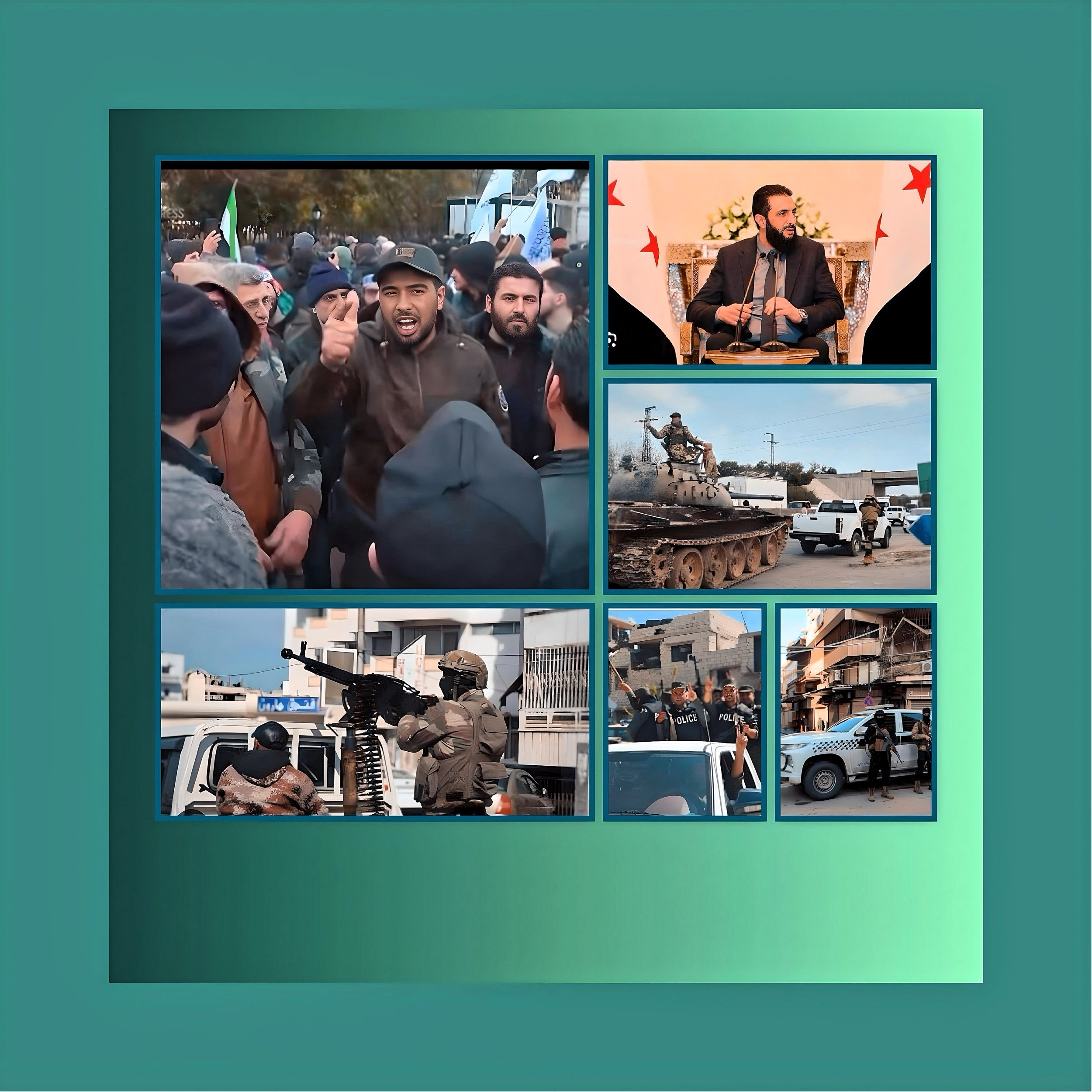
President Ahmed al-Sharaa, leader of the Islamist rebel coalition Hayat Tahrir al-Sham, articulated a vision of inclusive governance, minority protections, and rapid economic recovery. International donors pledged billions; Saudi Arabia cleared Syria's World Bank debt and committed over six billion dollars in investment agreements; the United States moved toward normalization, culminating in al-Sharaa's historic White House visit in November 2025.
Yet within mere weeks of transitional authority consolidation, this narrative unraveled. By mid-2025, sectarian violence had claimed approximately eight hundred Alawite lives in coordinated March attacks.
Kurdish-controlled territories in the northeast and enclaves in Aleppo resisted integration into a centralized military structure perceived as dominated by Sunni Islamists.
The Druze population in southern Suwayda province clashed with government forces over autonomy demands. Economic reforms that promised stability produced only deeper currency devaluation, inflation exceeding fifty percent, and widespread unemployment.
As of January 2026, Syria's economy remains in near-total collapse, with real gross domestic product having contracted by fifty-three percent since 2010.
The January 6-7, 2026 Aleppo violence represents not an anomalous outbreak but rather the inevitable consequence of a transitional government that has prioritized state consolidation and security over genuine reconciliation, institutional pluralism, and socioeconomic stabilization.
FAF scholarly examination analyzes the structural failures, geopolitical entrapments, and human toll of Syria's failed transition, while exploring whether the narrow window for successful reconstruction remains open or has definitively closed.
Historical Context: The Deep Roots of Syrian Instability
Inherited Sectarianism and Institutional Decay: How the Assad Regime's Sectarian Architecture Poisoned the Foundations for Post-War Reconciliation
To comprehend the contemporary Syrian crisis, one must situate it within the longer arc of institutional degradation and sectarian bifurcation that preceded the 2011 uprising.
The Assad family's consolidation of power beginning in 1970 under Hafez al-Assad deliberately constructed a state apparatus dependent upon Alawite elites, who constituted only approximately twelve percent of Syria's twenty-four million population. Through selective recruitment into military, security, and intelligence organs, the regime created a sociological compact wherein Alawite material advancement became contingent upon regime loyalty. Sunni-majority cities such as Aleppo, Damascus, and Homs developed deep resentments toward what they perceived as sectarian favoritism and resource monopolization by a religious minority they viewed as heterodox.
The 2011 civil uprising, initially rooted in economic grievance and democratic aspiration, rapidly metastasized into sectarian warfare as the regime mobilized its Alawite constituencies for existential defense and Western-backed and Gulf-financed Sunni jihadist movements seized the revolutionary mantle.
Fourteen years of conflict produced not merely physical destruction—nearly one-third of Syria's pre-conflict capital stock was damaged, with direct infrastructure losses exceeding one hundred eight billion dollars—but also the psychological atomization of Syrian society into mutually hostile confessional and ethnic blocs. The conventional narrative that Assad's overthrow would automatically catalyze national healing fundamentally misapprehended the depth of traumatized sectarianism.
The expectation that the same rebel forces that had prosecuted the insurgency could suddenly transform into inclusive nation-builders proved naïve.
Current Status: The January 2026 Military Escalation and Counterterrorism Operations
Blood and Rubble: The January 2026 Aleppo Escalation and the Persistence of Terrorist Threats Within Syria's Crumbling State
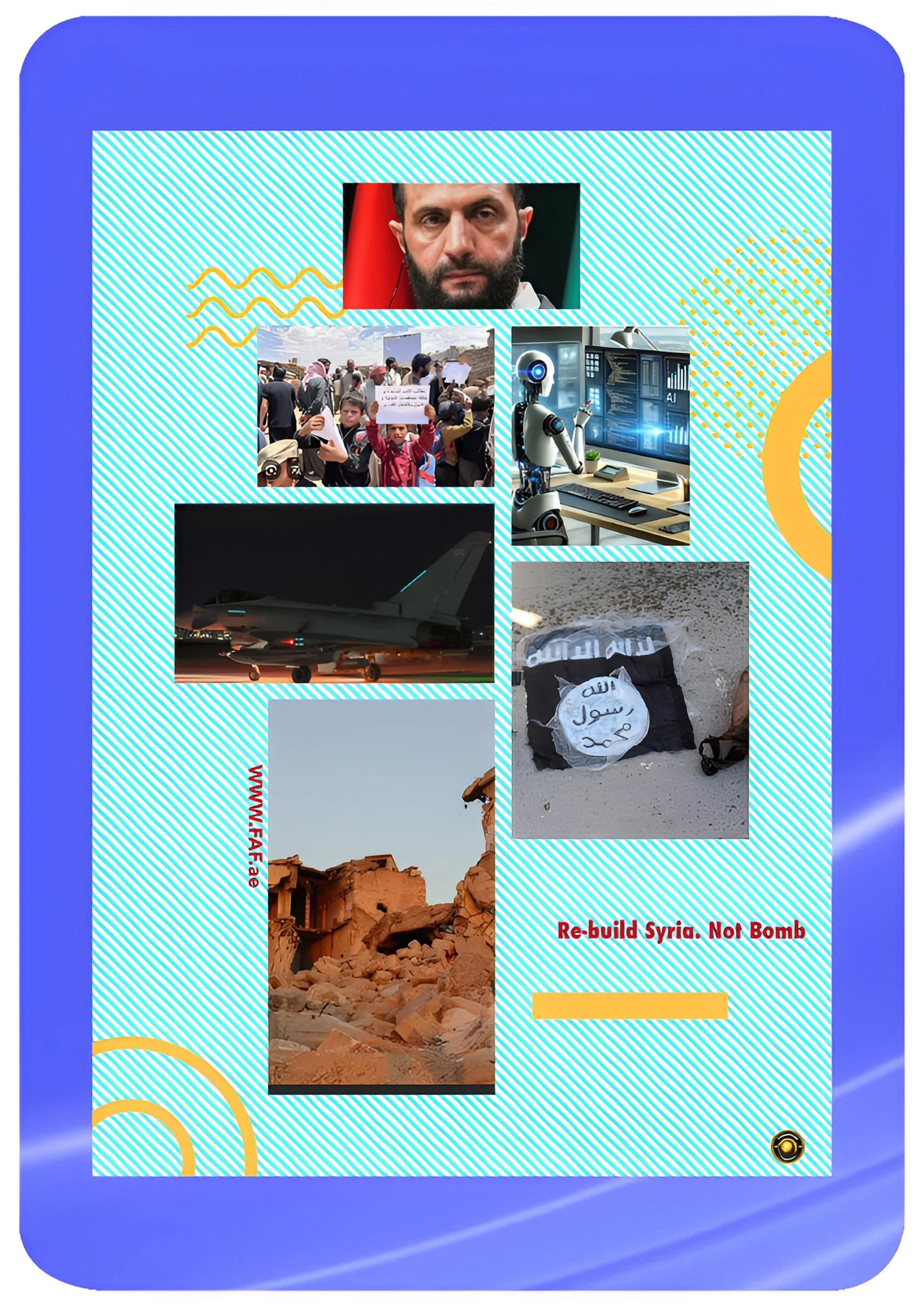
On January 3-4, 2026, the Ministry of Defence in the United Kingdom confirmed that Royal Air Force Typhoon FGR4 fighter jets, supported by a Voyager refueling tanker, executed a coordinated strike with French military aircraft against an underground weapons facility situated in a mountainous region north of Palmyra in Syria's Homs province.
The facility, assessed to have been utilized by Islamic State operatives for storage of explosives and ordnance, represented a resurgence of terrorist activity that had not entirely dissipated despite the 2019 military defeat of the so-called caliphate. British Defence Secretary Sir John Healey characterized the operation as demonstrating the United Kingdom's "determination to stand shoulder to shoulder with our allies" in countering extremist resurgence.
The United States military simultaneously conducted counterterrorism operations in late December 2025, killing or apprehending approximately twenty-five Islamic State operatives across a nine-day campaign initiated following an ISIS attack on December 13 that claimed two American soldiers and a civilian interpreter.
Turkish authorities announced the detention of over one hundred Islamic State suspects across twenty-five provinces, signaling that the terrorist organization continues operational activity even within states outside Syria's borders.
Yet even as Western powers mounted renewed counterterrorism efforts, Syria's internal security architecture deteriorated precipitously. Beginning Tuesday, January 6, 2026, fierce fighting erupted in Aleppo between government forces aligned with President Ahmed al-Sharaa's transitional authorities and the Kurdish-led Syrian Democratic Forces, which maintains semi-autonomous control over the Sheikh Maqsoud and Ashrafiyah neighborhoods.
According to reports from Aleppo's health directorate and civil defence rescue forces, at least eleven individuals perished during the initial thirty-six-hour period of conflict, including civilians among government-controlled areas and combatants on both sides.
The intensity of shelling reportedly intensified in the afternoon of Wednesday, January 7, prompting the Damascus government to declare the SDF-held neighborhoods "legitimate military targets" and to establish humanitarian corridors for civilian evacuation. Approximately ten thousand residents fled the flashpoint areas via government-provided transportation.
The violence forced closure of Aleppo's civilian airport, the primary transportation corridor to Turkey, and industrial zone operations, effectively paralyzing Syria's second-largest city.
Key Developments: The Collapse of Kurdish Integration and the Deepening North-South Divide
The Dissolution of Kurdish Integration and Turkey's Shadow War: How Failed Negotiations Became Military Catastrophe
The Aleppo escalation represents the culmination of systematically failed negotiations regarding SDF integration into a unified Syrian military structure. In March 2025, President al-Sharaa and SDF leader Mazloum Abdi signed an accord stipulating full integration by December 31, 2025. This deadline passed without substantive progress.
The SDF, which had administered semi-autonomous zones throughout northeastern Syria and maintained control of vital hydrocarbon resources and agricultural lands, harbored fundamental skepticism regarding the transitional government's commitment to genuine power-sharing and minority protections.
The SDF's political ideology—anchored in secular, decentralized governance and women's rights—fundamentally clashes with the conservative Islamist orientation of the Hayat Tahrir al-Sham-dominated interim government.
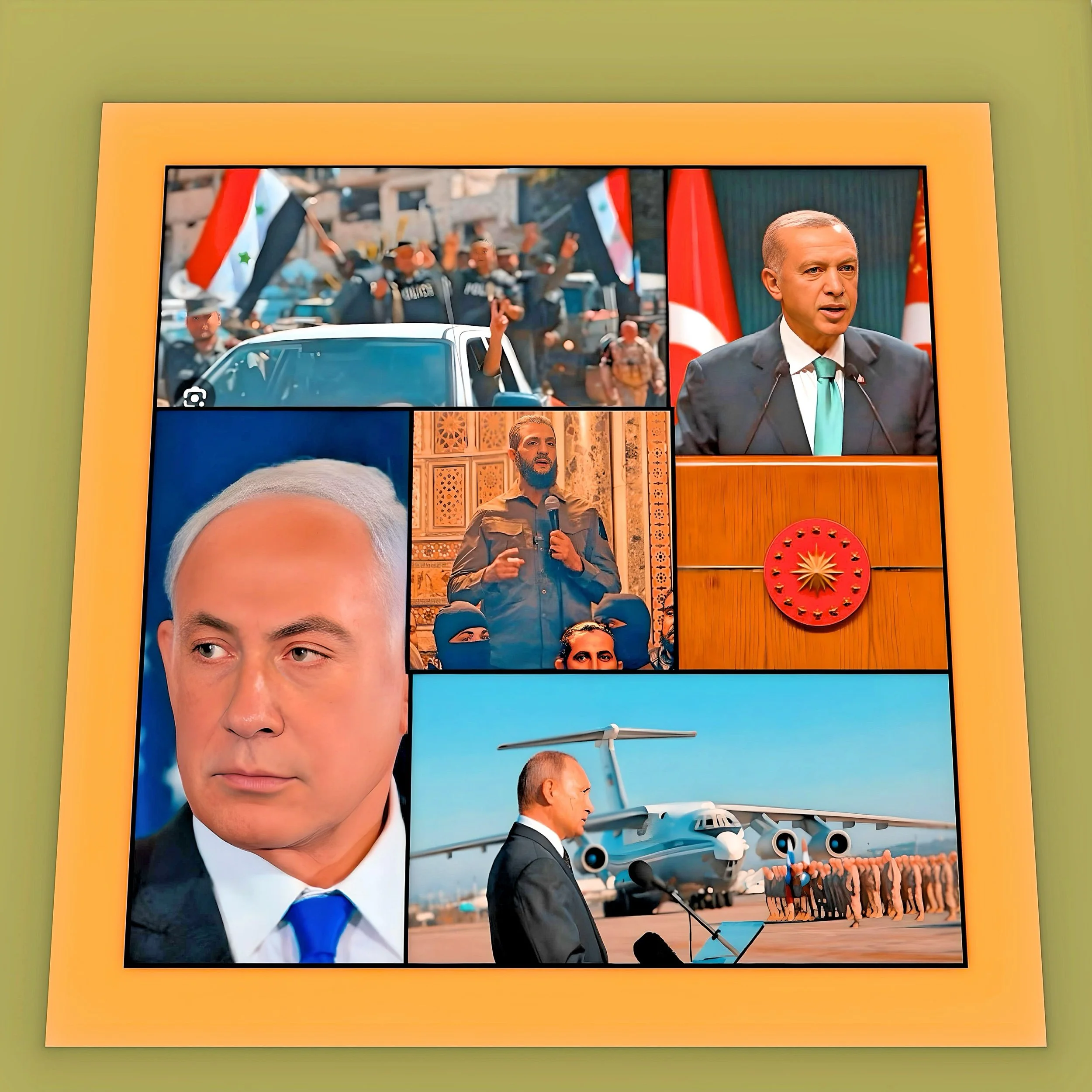
Turkey's role in precipitating the Aleppo violence cannot be overlooked. Ankara, viewing the Kurdish-led SDF as a terrorist organization due to its alleged links to the Kurdistan Workers' Party, has consistently demanded that the Syrian government dissolve Kurdish autonomous structures.
Turkish Foreign Minister Hakan Fidan visited Damascus in late December 2025, reportedly articulating Ankara's dissatisfaction with stalled SDF integration and implying that military pressure would escalate if the SDF continued to defy integration mandates. This external pressure, combined with the HTS-dominated government's own consolidation imperatives, rendered armed conflict nearly inevitable.
Beyond the immediate Aleppo clashes, the broader geography of Syrian fragmentation remained contested. The Druze-majority Suwayda province, located in southern Syria, continued to resist central government authority. Tensions had dramatically escalated in July 2025, when local armed groups clashed with transitional government forces over autonomy demands and opposition to military conscription.
Druze leaders had explicitly called for increased regional self-determination and were notably excluded from the October 2025 parliamentary elections conducted on the pretext that security conditions did not permit democratic participation. This exclusion signaled to Druze constituencies that the transitional authorities viewed minority self-determination as an impediment rather than a legitimate political aspiration.
Latest Facts and Concerns: The Sectarian Bloodshed and the Erosion of Minority Protections
Revenge Killings and Vanished Protections: Systematic Violence Against Alawites, Christians, and Minorities Reveals the Transitional Government's Incapacity to Enforce the Rule of Law
Perhaps most alarming among the immediate factual developments is the systematic violence directed against Syria's religious minorities. While the new government under Ahmed al-Sharaa had made rhetorical commitments to protect minority communities and prevent retribution against individuals associated with the fallen regime, implementation has proven inadequate.
Between March 6 and March 9, 2025, coordinated attacks occurred across Alawite villages and towns along Syria's Mediterranean coast, including Latakia and Tartous.
According to the Syrian Network for Human Rights, widely regarded as a generally reliable documentation organization despite its activist orientation, approximately eight hundred Alawites were killed during this period. Perpetrators included armed groups loosely affiliated with HTS as well as independent vigilante forces exploiting the security vacuum created by the transition. While HTS forces have arrested some perpetrators and expressed rhetorical commitments to preventing sectarian violence, reports indicate that state security apparatus responses have been reactive and insufficient.
The Christian minority, comprising a modest but historically significant presence in Aleppo, Damascus, and rural Homs, reported a pattern of targeted harassment and property confiscation. Under HTS's administration of Idlib province prior to the 2024 regime collapse, Christian homes and properties were systematically seized.
The transitional administration pledged to reverse these confiscations and restore religious freedom; yet, curriculum changes implemented in schools—reportedly introducing more conservative Islamic content—have alarmed civil society observers and raised questions regarding genuine minority rights protections.
Credible but unconfirmed reports suggest that the current Syrian president may bear responsibility for atrocities committed during prior military campaigns, including the alleged beheading of twenty-one Coptic Christians in Libya, an accusation that should fundamentally inform Western assessments of transitional legitimacy.
Alawites, who had dominated the security apparatus under Assad, faced particular persecution rooted in sectarian revenge. While many observers acknowledge that only Alawites who had actively participated in regime violence deserved accountability, the sectarian narrative mobilized by some armed groups portrayed the entire Alawite confession as culpable. Testimonies from Alawite professionals indicate that despite rhetorical reassurances, communities felt vulnerable to mass retribution.
One Alawite anaesthetist noted that contrary to international perceptions of Alawite privilege, only those who directly cooperated with regime elites had accumulated wealth, while the broader Alawite population experienced poverty comparable to other marginalized groups. This factual reassessment complicates the simplistic sectarian narratives that had justified indiscriminate violence.
Cause-and-Effect Analysis: The Structural Determinants of Syrian Instability
Power Concentration, Economic Despair, and Armed Fragmentation: Structural Determinants of Syria's Unstoppable Descent into Sectarian Bloodshed
The eruption of violence in Aleppo and the systematic targeting of minorities cannot be understood as spontaneous or anomalous phenomena divorced from deeper structural failures. Rather, they represent the predictable consequence of a transitional governance architecture that has prioritized security consolidation and state centralization over genuine political inclusion and justice accountability.
The first causal pathway involves the concentration of power within a narrow Islamist leadership cadre. The transitional government, while nominally inclusive—with cabinet positions allocated to Alawites, Kurds, Christians, and Druze—has consolidated real authority within HTS-controlled ministries (defense, foreign affairs, justice) and within the office of the president. A small circle of individuals, predominantly drawn from Idlib, makes consequential decisions regarding resource allocation, security operations, and minority protections.
This Idlibi dominance is not accidental but reflects HTS's control of the only functioning governance structure among the rebel coalition that toppled Assad. However, it generates deep suspicion among other communities and armed factions that the new regime represents merely an updated version of sectarian authoritarianism, with the confessional identity of the ruling elite transformed but the exclusionary logic intact.
The second causal pathway connects economic desperation to sectarian mobilization. With approximately ninety percent of Syrians living below the poverty line, unemployment tripled from pre-war levels, inflation exceeding fifty percent, and currency depreciation reaching two-hundred-fold relative to pre-2011 values, Syrian populations face existential economic uncertainty.
In such conditions of scarcity, competition for remaining resources becomes expressed through sectarian and ethnic identity claims. Alawites blamed for Assad-era favoritism become targets for economic expropriation by Sunni majority populations; Kurds controlling hydrocarbon and agricultural resources face pressure to surrender assets to a central state perceived as dominated by others.
The transitional government's failure to implement robust social protection systems, job creation programs, or equitable resource distribution has transformed economic hardship into zero-sum sectarian competition.
The third causal pathway involves the persistence of armed factions beyond governmental control. The collapse of the Assad regime created a vacuum filled not by a unified military structure but by a proliferation of armed groups with competing interests and loyalties.
HTS has attempted to dissolve former rebel factions and integrate combatants into a national army; yet, hundreds of thousands of armed men with no civilian livelihood alternatives continue to occupy strategic positions throughout the country.
These forces, often lacking loyalty to the transitional government, have engaged in looting, kidnapping, and summary execution targeting individuals associated with the fallen regime or rival communities.
The HTS security apparatus, numbering approximately thirty thousand fighters, is insufficiently resourced to prevent or even adequately investigate these crimes, rendering state authority over violence fundamentally compromised.
The fourth causal pathway connects Kurdish autonomy resistance to regional geopolitical pressures. The SDF's reluctance to integrate into a centralized military controlled by an Arab-dominated, Islamist-inflected government reflects not merely administrative preference but existential security concerns.
The SDF has governed substantially self-rule territories for five years, implementing secular governance and advancing women's rights in ways incompatible with the transitional regime's conservative orientation.
Surrender of this autonomy would expose Kurdish constituencies to potential persecution by central authorities and eliminate their ability to resist Turkish military incursions.
Turkey's repeated threats to invade SDF-held territories to eliminate what Ankara designates as terrorist organizations (due to alleged PKK linkages) transformed SDF integration resistance from internal political negotiation into a matter of national survival. When the transitional government, pressured by Turkey, moved toward military enforcement of integration mandates, armed resistance became inevitable.
Pressing Socio-Economic and Political Issues: The Quantification of Humanitarian Catastrophe
Humanitarian Devastation Quantified: Ninety Percent Poverty, Collapsed Health Systems, and the Education Apocalypse Confronting Twenty-Four Million Syrians
Syria's post-transition landscape presents an accumulation of humanitarian and development challenges whose scale strains comprehension. These challenges operate across multiple dimensions—health, education, employment, housing, food security—and interact in ways that amplify vulnerability for the poorest and most marginalized populations.
The poverty crisis constitutes the foundational catastrophe. With over ninety percent of the Syrian population existing below the poverty line and more than one quarter subsisting in conditions of extreme poverty, the nation confronts a humanitarian emergency of proportions comparable to the world's worst humanitarian crises.
The United Nations estimates that sixteen point seven million Syrians require humanitarian assistance as of late 2025, of which fifteen point eight million require urgent health support. Over twelve point nine million Syrians face food insecurity, meaning they lack consistent access to adequate nutrition for active and healthy living. For context, this food-insecure population exceeds the total pre-war population of many nations.
The health infrastructure collapse presents particularly dire implications. Only fifty-four percent of hospitals and thirty-nine percent of primary healthcare centers function at full capacity. More than ninety percent of medical equipment exceeds five years in age, rendering it obsolete for modern clinical practice.
The density of qualified healthcare workers remains catastrophically inadequate, with approximately one point five physicians per thousand population compared to the World Health Organization standard of four point forty-five per thousand. Shortages of nurses, midwives, and specialized health personnel are even more severe in rural areas, where travel distances to functioning hospitals often exceed what critically ill patients can tolerate.
Out-of-pocket health expenditure accounts for forty-five percent of total health spending—a proportion far exceeding acceptable thresholds and forcing households to choose between purchasing medicines and acquiring food.
The educational collapse threatens to produce a generation without functional literacy or numeracy. Approximately two point four million Syrian children remain out of school entirely, while an additional one point six million face imminent dropout.
The destruction of educational infrastructure, the displacement of teachers, and the concentration of families' limited resources on survival needs rather than education have created an educational emergency with consequences extending decades into the future. For children and adolescents who have spent formative years amid warfare and displacement, the absence of psychosocial support and structured educational engagement creates conditions for normalized violence, reduced future earning potential, and perpetuated intergenerational poverty.
The unemployment crisis intersects with education failure to produce a generation without pathways to dignified livelihoods. Unemployment has tripled to approximately twenty-five percent since the onset of conflict, though this figure vastly understates actual joblessness given the absence of formal employment structures throughout much of the country.
Young people, particularly those from minority communities or areas ravaged by conflict, perceive no legitimate opportunities for advancement, making recruitment into armed groups, migration toward Turkey and Europe, or participation in predatory informal economies increasingly attractive.
The housing crisis remains unresolved. The World Bank estimates that reconstruction costs will range between one hundred forty billion and three hundred forty-five billion dollars, with a conservative best estimate of two hundred sixteen billion dollars.
This figure nearly equals ten times Syria's projected 2024 gross domestic product, an astronomical reconstruction requirement without historical precedent in modern development. Residential housing reconstruction alone requires seventy-five billion dollars, while infrastructure reconstruction demands eighty-two billion dollars.
The governorates of Aleppo and Rif Dimashq, among the most densely populated regions, face the most severe housing deficits. Millions of Syrians remain internally displaced or in refugee camps, with limited prospects for return absent massive reconstruction investment that has failed to materialize.
The currency and monetary collapse creates cascading economic dysfunction. The Syrian pound has depreciated approximately two hundred times relative to the pre-war exchange rate, meaning a family that possessed one hundred thousand pounds in 2010 would require twenty million pounds in 2025 to purchase equivalent goods.
The central bank's foreign exchange reserves have collapsed from eighteen point five billion dollars before the civil war to approximately two hundred million dollars in early 2026. This reserve depletion limits the government's ability to finance essential imports of fuel, medicines, and food commodities.
Inflation has exceeded fifty percent annually in some periods, rendering long-term economic planning impossible for ordinary households. The central bank, under new leadership since the regime collapse, has initiated reforms including currency redenomination (removing zeros) to restore confidence; however, these technical adjustments cannot address the underlying structural problems of capital flight, sanctions-related constraints, and import dependency.
The international sanctions regime, while theoretically removable through diplomatic normalization, continues to constrain economic recovery.
The United States Caesar Syria Civilian Protection Act, implemented in 2020 to punish regime actors, has created a chill on international commercial and financial engagement with Syria broadly, as foreign companies and financial institutions fear secondary sanctions. While the transitional government has secured some relief through negotiations with the U.S., the continued designations of key sectoral actors and entities limit access to international capital markets.
The World Bank cleared Syria's debt arrears in May 2025, symbolically important but economically modest in impact. Saudi Arabia, Qatar, and the United Arab Emirates have pledged billions in investment and development support; however, implementation has proceeded slowly, with much announced capital remaining undeployed.
The political economy of reconstruction presents particular risks regarding governance capture.
Syria's transitional authorities have indicated commitment to market liberalization and private investment as primary reconstruction drivers; yet, the concentration of economic authority around President al-Sharaa's brother, Hazem al-Sharaa, who heads a covert committee reshaping the economy through negotiated asset transfers from state-linked business networks, suggests potential replication of the nepotistic patronage structures that characterized the Assad regime.
Investigation by Reuters revealed that this committee has captured control of approximately one point six billion dollars in assets, raising concerns that "reconstruction" will enrich political insiders while failing to benefit broader populations.
Future Steps and Pathways Forward: The Narrowing Window for Inclusive Reconstruction
The Narrowing Window for Inclusive Reconstruction: What International Action and Transitional Governance Reform Must Accomplish Before Syria Becomes a Permanent Failed State
Syria's trajectory over the coming twelve to thirty-six months will determine whether the nation can achieve inclusive, equitable reconstruction or descends toward prolonged fragmentation and renewed violence. Several critical junctures and necessary actions merit consideration.
The most urgent requirement involves establishing effective sectarian reconciliation and transitional justice mechanisms. The International Criminal Court has initiated investigations into potential crimes against humanity committed by both Assad-era forces and post-2024 armed groups; yet, accountability mechanisms must be perceived as legitimate rather than as vehicles for victor's justice.
This necessitates establishment of truth commissions with representation from affected communities, civilian oversight of military investigations, and meaningful compensation programs for victims of sectarian violence. The current trajectory—wherein retribution against Alawites continues and perpetrators operate with near-impunity—represents a catastrophic failure that accelerates sectarian bifurcation.
A second critical requirement involves genuine power-sharing and constitutional architecture that distributes authority beyond the presidency and HTS-controlled ministries. The provisional constitution adopted in March 2025 and the parliamentary elections conducted in October 2025 have not adequately addressed minority concerns regarding representation and substantive decision-making authority.
A successful transition requires constitutional guarantees of minority rights, federalist or decentralized governance arrangements that respect Kurdish and Druze autonomy preferences, and mechanisms ensuring that no single faction can monopolize coercive capacity.
The current trajectory toward centralized presidential authority, while potentially stabilizing in the short term, creates conditions for renewed authoritarianism that minority communities rightfully fear.
A third critical requirement involves massive international reconstruction investment coupled with transparent governance frameworks that prevent corruption and ensure resources reach vulnerable populations. The announced pledges of Saudi, Emirati, and other international investors must be converted into actual capital deployment.
This requires: debt relief and favorable financing terms from international financial institutions; technical assistance for institutional capacity-building; and monitoring mechanisms ensuring that reconstruction funds do not enrich political elites or finance military consolidation.
The current gap between announced pledges and actual implementation represents a fundamental failure of international solidarity with Syrian reconstruction.
A fourth critical requirement involves rehabilitation of health, education, and social protection systems sufficient to arrest further human deterioration and create conditions for longer-term development. The Syrian government's National Health Compact, adopted in December 2025 and outlining an eight-pillar approach toward universal health coverage by 2030, provides a framework; however, implementation requires external funding of approximately one point nine billion dollars through 2030 and institutional capacity that currently does not exist.
Similarly, massive investment in educational infrastructure and teacher training is prerequisite for interrupting intergenerational poverty transmission.
A fifth critical requirement involves resolution of the Kurdish integration question through negotiated power-sharing arrangements that protect Kurdish territorial and political autonomy rather than through military coercion.
The January 2026 Aleppo clashes demonstrated that military enforcement of integration is counterproductive, generating civilian casualties and strengthening Kurdish separatist sentiment. A successful transition requires recognition that Kurdish communities represent a legitimate autonomous minority whose governance preferences warrant accommodation rather than suppression.
This accommodation must also include concrete Turkish security guarantees preventing military incursions that would threaten Kurdish populations regardless of their formal integration status.
Conclusion
The Clock Is Ticking: Why Sectarian Transition Will Fail Unless Conditional International Support Forces Genuine Power-Sharing and Minority Protections*
Fourteen months after the Assad regime's collapse, Syria stands at a critical crossroads. The immediate optimism that characterized December 2024 has given way to a more sober recognition of the enormity of challenges confronting transitional authorities.
The January 2026 Aleppo clashes, the March 2025 massacres of Alawites, the systematic economic deterioration, and the erosion of minority protections represent not isolated incidents but rather expressions of deeper structural failures in transitional governance and international engagement.
The transitional government led by Ahmed al-Sharaa and Hayat Tahrir al-Sham has consolidated state authority more effectively than many skeptics anticipated; yet, this consolidation has occurred through mechanisms that privilege HTS organizational interests over genuine national reconciliation.
The concentration of power within a narrow Islamist leadership circle, the exclusion of minorities from meaningful decision-making authority, and the failure to implement robust accountability mechanisms for sectarian violence have transformed the post-Assad transition from a moment of possibility into one of renewed institutional dysfunction and communal fragmentation.
The socio-economic catastrophe confronting the Syrian population—with ninety percent in poverty, health and educational systems in near-total collapse, unemployment exceeding pre-war levels, and reconstruction requirements exceeding ten times annual GDP—creates conditions of desperation in which sectarian conflict and social violence proliferate.
The Syrian people, exhausted by fourteen years of warfare, desire stability and prosperity; yet, they confront instead a governance architecture that appears incapable of delivering either equitable resource distribution or minority protections. The consequence, tragically, may be renewed displacement, with millions of Syrians calculating that the risks of remaining in their homeland exceed the opportunities for dignified reconstruction.
The window for a successful inclusive transition remains open but is narrowing. International actors, particularly the United States, Saudi Arabia, the United Nations, and the World Bank, must move rapidly from rhetorical support to sustained financial and technical engagement.
This engagement must be conditioned explicitly upon the transitional government's commitment to constitutional guarantees of minority rights, federalist governance arrangements, transparent reconstruction mechanisms, and accountability for sectarian violence.
The alternative—a Syria that remains a failed state, a humanitarian catastrophe, and a potential source of renewed regional destabilization—serves no one's legitimate interests, including those of the transitional authorities themselves.
The Syrian people deserve better than a transition that replicates the exclusionary logic of the regime Whether they courageously overthrew. Whether Syria's post-Assad future can transcend sectarianism and constitute a genuinely inclusive, reconciled nation remains uncertain.
That outcome, however, requires urgent international support, fundamental governance reforms, and a transitional leadership willing to place national unity ahead of factional consolidation. The clock is ticking.