Sam Altman’s Strategic Gambit: How OpenAI Navigates the Race Toward Superintelligence
Executive Summary
The Competitive Emergency: When Markets Demand Strategic Compression
Sam Altman’s recent strategic declarations regarding OpenAI’s future reveal a company at a critical inflection point, pivoting simultaneously toward immediate product competitiveness, enterprise market dominance, and the longer-term ambition of achieving artificial general intelligence and superintelligence.
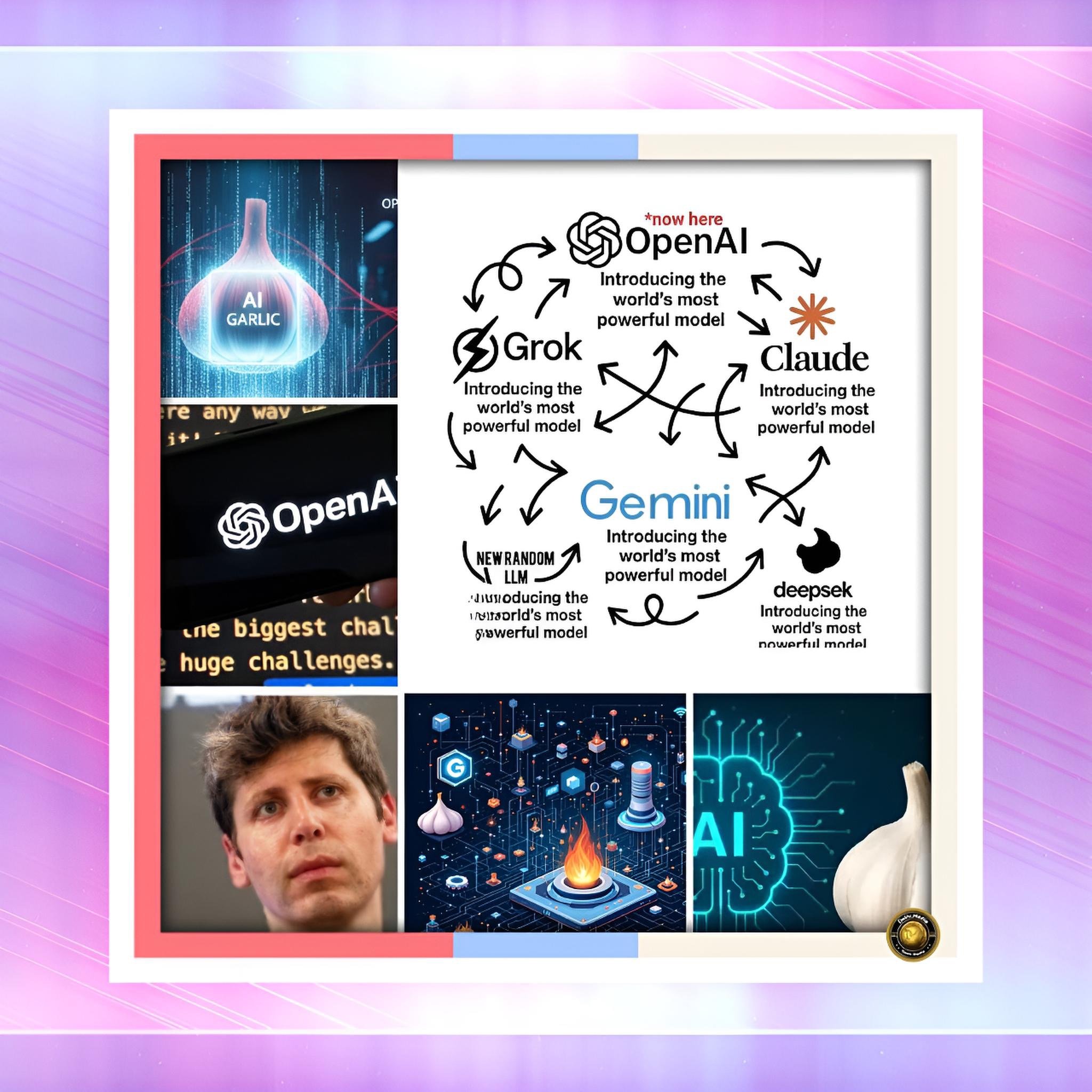
The December 2025 “code red” directive exemplifies Altman’s tactical responsiveness to competitive pressure from Google and Anthropic, whose latest models have surpassed OpenAI’s GPT-5 on key benchmarks. Yet this defensive maneuver sits uneasily alongside OpenAI’s foundational commitment to advancing toward superintelligence through ever-greater computational investment—commitments exceeding one trillion dollars to cloud and semiconductor providers.
The tension illuminates the fundamental strategic dilemma confronting OpenAI: the company must simultaneously deliver profitable products meeting current market demand while sustaining the enormous capital expenditure required to develop systems that may render current business models obsolete. Altman’s recent public statements disclose a calculus in which consumer-first strategies yield to enterprise monetization, advertising revenues become acceptable despite previous opposition, and the definitional slipperiness of “AGI” retreats before the concrete reality of building superintelligent systems.
The governance frameworks, safety standards, and international regulatory mechanisms that Altman publicly championed in 2023 remain largely aspirational while development pressures intensify. This article examines Altman’s strategic thinking across multiple temporal horizons: the immediate competitive present demanding ChatGPT improvements, the near-term enterprise transformation reshaping work through AI agents, and the long-term superintelligence ambition that animates all of OpenAI’s capital commitments.
The vision suggests an organization increasingly focused on technological capability advancement and commercialization while managing the economic imperatives that threaten to compromise the safety-first postures Altman articulated only years earlier.
Introduction
The announcement of OpenAI’s “code red” in early December 2025 crystallizes fundamental tensions embedded within Sam Altman’s strategic vision for OpenAI’s future. The directive, reportedly issued in an internal memo, reallocated resources across the organization to concentrate effort on improving ChatGPT’s speed, reliability, and personalization capabilities.
This decision followed the competitive shock of Google’s Gemini 3 and Anthropic’s Opus 4.5 models achieving performance exceeding OpenAI’s GPT-5 on multiple benchmarks—an outcome that would have seemed unthinkable when OpenAI possessed near-monopolistic dominance over the generative AI landscape merely months earlier.
The “code red” suspended work on ambitious longer-term projects including advanced AI agents for health and shopping domains, the Pulse personal assistant product, and advertising integration initiatives.
This appears to constitute a reversal of OpenAI’s strategic momentum, a tactical retreat from diversified product expansion toward defensive focus on the core ChatGPT platform.
Yet characterizing this move as merely defensive misses essential strategic complexity. For Altman, the reallocation reflects not capitulation but rational resource optimization in response to changed market conditions. OpenAI possesses the financial resources and organizational capability to pursue multiple strategic priorities simultaneously only if they do not compete for scarce human capital and computational resources.
The decision to pause certain initiatives does not reflect abandonment of those strategies but rather conscious sequencing of efforts based on evolved competitive realities.
The deeper strategic implication concerns what Altman perceives as OpenAI’s competitive advantages and vulnerabilities. Google’s ascendancy in recent benchmarks stemmed substantially from custom-designed AI training chips and rapid product integration—capabilities reflecting Google’s integration of semiconductor design, cloud infrastructure, and product teams within a single organization.
OpenAI, by contrast, relies on partnerships with cloud and semiconductor providers, creating latencies and dependencies that constrain optimization. The “code red” responds to this structural vulnerability by concentrating effort on product optimization within OpenAI’s direct control: user-facing features improving ChatGPT’s responsiveness, reliability, and personalization.
These improvements address concrete user frustrations—sluggish responses, unreliable outputs, insufficient adaptation to individual user preferences—that create vulnerability to competitive alternatives.
Altman’s framing emphasizes that this tactical adjustment does not represent strategic reorientation but rather proper sequencing of a strategy that was always consumer-first. When earlier reporting suggested OpenAI was transitioning from consumer to enterprise focus, Altman clarified that consumer dominance has always been central to the strategy, with enterprise expansion representing the next phase after consumer platform consolidation.
This framing preserves strategic coherence even as immediate priorities shift. The company will intensify focus on consumer product quality precisely to strengthen the consumer base that provides foundation for enterprise expansion.
From Consumer Dominance to Enterprise Transformation: The Next Competitive Battleground
The most significant strategic evolution in Altman’s recent statements concerns the transition from consumer-first to enterprise-first operational priorities for 2026 and beyond. This transformation, announced in December 2025 interviews, represents not a reversal of consumer commitment but an acknowledgment that OpenAI’s models have matured sufficiently to serve demanding enterprise applications. Altman attributes the earlier consumer focus to practical necessity: when OpenAI’s generative models first emerged, their capabilities remained insufficiently robust and reliable for high-stakes enterprise contexts.
The models exhibited hallucinations, provided inconsistent responses, and failed on tasks requiring nuanced understanding or extended reasoning. In such circumstances, distributing models through consumer applications provided both broader exposure for continuous improvement and reduced legal and reputational risk compared to enterprise deployment.
The reasoning underlying this strategic shift deserves careful attention. Enterprise customers, unlike consumer users, demand reliability bordering on infallibility, integration with complex organizational systems, audit trails and explainability supporting regulatory compliance, and guaranteed service levels underpinning mission-critical operations. When OpenAI’s models lacked such capabilities, enterprise deployment would have been both technically impossible and commercially disastrous—initial failures would have generated litigation, regulatory scrutiny, and reputational damage undermining the entire enterprise business.
Consumer applications, by contrast, tolerate far higher failure rates and deliver continuous feedback enabling rapid improvement. The strategic move to enterprise focus in 2026 reflects judgment that OpenAI’s models have crossed a capability threshold rendering enterprise-grade applications feasible.
This enterprise transformation carries profound implications for OpenAI’s competitive positioning and financial sustainability. Enterprise markets command substantially higher unit economics than consumer markets, with large organizations willing to pay significant premiums for reliability, integration, and dedicated support.
An enterprise customer paying tens of thousands of dollars monthly for proprietary model access and customization yields far higher lifetime value than millions of consumer users paying subscription fees of twenty dollars monthly.
The enterprise pivot enables OpenAI to address its most pressing financial challenge: profitability in an organization with over twelve billion dollars in quarterly losses despite five-hundred-billion-dollar valuations. Altman has disclosed that OpenAI’s capital commitments to infrastructure providers now exceed one trillion dollars—financing levels unsustainable without corresponding revenue growth.
Yet the enterprise transition introduces new competitive vulnerabilities even as it addresses financial pressures. Enterprise customers demonstrate greater stickiness and switching costs than consumer users once fully integrated into organizational systems, but the integration process itself creates vulnerability to specialized competitors offering domain-specific solutions superior to generalist platforms.
Anthropic’s explicit positioning toward enterprise customers through its Claude models represents direct competition for the same revenue. Google’s integration with enterprise products—Gmail, Workspace, Android—provides distribution advantages and lock-in effects that OpenAI cannot easily replicate. Microsoft’s Copilot integration throughout its Office suite and Windows operating system positions Microsoft as enterprise AI distribution leader regardless of underlying model capabilities.
OpenAI’s enterprise success will depend on its ability to build integration and workflow advantages exceeding those available to more vertically integrated competitors.
The AI Agent Revolution: When Systems Begin Autonomous Action
Perhaps the most transformative element of Altman’s strategic vision concerns the deployment of autonomous AI agents capable of executing complex workflows with minimal human supervision. In multiple recent interviews, Altman emphasizes AI agents as the defining development of 2025 and 2026, representing the transition from AI systems that answer questions posed by humans to AI systems that autonomously pursue objectives within defined parameters.
OpenAI’s own agent frameworks enable multi-step planning, tool integration, and interaction with external systems. Competitor agents from Anthropic, Google, and others demonstrate similar capabilities. Yet Altman’s rhetoric suggests that AI agent adoption represents not merely product innovation but fundamental restructuring of how human work is organized.
The implications are staggering. If autonomous AI agents can reliably execute professional work—conducting market research, drafting analyses, managing customer interactions, coordinating multi-team projects—then the economic value proposition of human knowledge workers declines precipitously. Altman himself predicts that forty percent of work decisions will become autonomous by some future point, a figure that understates the potential impact when autonomous decision-making extends beyond analytical functions to include execution and implementation. He speculates about “zero-person startups” where AI agents manage all operational functions, though he hedges this vision with acknowledgment that genuine zero-person companies may require several more years to achieve economic viability.
The “AI slop” concept Altman introduces captures an important consequence of widespread agent deployment. When AI agents generate most written content, participate in most project coordination, and make routine decisions, the resulting outputs will reflect the biases, repetitive patterns, and simplified reasoning of the underlying models. Information environments saturated with AI-generated content may undergo qualitative degradation—reducing genuine human insight and creativity, homogenizing expression, and creating information ecosystems optimized for machine-readability rather than human understanding.
Altman’s acknowledgment of this phenomenon—referring to it somewhat dismissively as “slop” that society will gradually accept—suggests awareness of unintended consequences that accompany agent-driven work transformation.
From a strategic standpoint, agent deployment represents OpenAI’s path toward capturing value across the entire organizational value chain rather than merely the consumer or enterprise customer layer. If OpenAI can establish de facto standards for agent frameworks, protocols, and integrations, the company creates enormous switching costs for customers who embed agents throughout their operations.
Customers begin with ChatGPT for specific use cases, adopt agents for particular workflows, gradually extend agent deployment across more domains, and eventually find their organizations completely dependent on OpenAI’s agent ecosystem.
This represents the classic SaaS business model—recurring revenue tied to customer dependency—optimized for artificial intelligence contexts.
The Financial Squeeze: Monetizing at Velocity Insufficient to Sustain Burn
The strategic pivot toward enterprise and agents cannot be fully understood apart from OpenAI’s severe financial constraints. The company operates at extraordinary capital intensity.
OpenAI has committed more than one trillion dollars to cloud computing providers and semiconductor manufacturers over multiple years, essentially betting the organization’s existence on the proposition that AI capability scaling requires computational capacity matching Moore’s law-like expansion.
These capital commitments must be financed through a combination of equity funding and operating revenues. Yet current revenues remain insufficient by orders of magnitude to service such commitments.
The December 2025 decision to proceed with advertising integration within ChatGPT reflects this financial desperation more than strategic conviction. Altman has publicly stated his aesthetic dislike of advertising, praising instead subscription models where users pay for services knowing that advertisement dynamics don’t influence service quality. Yet as OpenAI’s financial pressures intensify, such scruples yield to necessity.
Advertising represents the most scalable revenue model available to platforms with hundreds of millions of users, allowing marginal monetization of every user interaction without requiring explicit willingness-to-pay demonstration. Focus groups testing advertising integration revealed that substantial numbers of ChatGPT users already believed advertisements existed within the platform—perception that internal OpenAI staff have leveraged to justify implementation.
The resulting proposal, allowing users to opt-out of advertising through payment while surrendering memory and personalization features, represents the classic freemium model dynamics: provide basic service with advertisements, charge for premium functionality.
This decision signals broader strategic reality: OpenAI’s financial constraints are forcing accelerated commercialization despite potential harms to user experience and brand positioning. The organization that positioned itself as developing AI for the benefit of humanity faces pressure to monetize that AI through advertising—creating misalignment between noble mission statements and commercial realities.
Altman’s pragmatism in accepting this contradiction suggests an organization increasingly focused on financial sustainability than ethical purity.
The Superintelligence Acceleration: When AGI Terminology Becomes Obstacle
The evolution of Altman’s thinking on artificial general intelligence and superintelligence deserves sustained attention, as it illuminates how strategic requirements reshape conceptual frameworks.
Merely eighteen months ago, Altman spoke of AGI as a concrete milestone—a specific capability threshold that would definitively be recognized upon achievement. More recent statements suggest AGI has become conceptually burdensome.
Altman now describes AGI as a “sloppy term” whose definition OpenAI itself continuously adjusts, explicitly acknowledging that the organization moves goalposts as capabilities advance. By August 2025, he suggested AGI had become a “pointless term” whose semantic imprecision undermines rather than clarifies strategic discussion.
This apparent reversal reflects deeper strategic reasoning. If OpenAI defines AGI as “human-level general intelligence,” then the company faces pressure to demonstrate achievement of such capabilities through performance on human-comparable tasks. Yet such demonstrations remain contested and contestable—other systems can always be characterized as outperforming on different metrics.
More problematically, AGI definitions create binary outcomes: either the company has achieved AGI (triggering investor excitement but also regulatory scrutiny and safety concerns) or it has not (raising questions about whether billions in capital investment are yielding promised results).
The semantic shift toward “super-intelligence” resolves these tensions. Superintelligence denotes not a specific capability threshold but an open-ended trajectory of increasing capability—a concept that cannot fail to be achieved because it admits infinite gradations.
Altman’s recent framing emphasizes that the meaningful question is not whether AGI has been achieved but whether deployed systems can accomplish economically valuable work and enable novel scientific discovery. On these criteria, current systems have demonstrably succeeded. GPT-5 exceeds human capability on many professional tasks. OpenAI’s systems enable hypothesis generation and literature synthesis supporting scientific research.
The focus on useful capability rather than definitional milestone allows strategic consistency: OpenAI continues advancing system capability while sidestepping disputes about whether specific terminology thresholds have been crossed.
Yet this reframing also enables rhetorical flexibility that blurs accountability. When Altman stated in January 2025 that OpenAI was “confident we know how to build AGI,” the statement suggested imminent achievement of some concrete milestone. When that milestone evaporates into semantic fog around “superintelligence,” stakeholders legitimately ask whether the original claim was overconfident or whether strategic incentives drove terminology shifts.
Altman’s subsequent statements—claiming that “everyone will see what we see” regarding superintelligence achievement within a few years—preserve the appearance of confident vision while remaining unfalsifiable because no specific definitional criterion establishes what constitutes success.
The Safety Governance Paradox: Rhetoric Versus Resource Allocation
Perhaps the most revealing tension in Altman’s strategic thinking concerns the relationship between OpenAI’s public commitments to AI safety and the organization’s actual resource allocation.
In 2023, Altman testified before Congress advocating for federal regulation of high-capability AI systems, proposing FDA-like licensing and oversight for advanced models. He published OpenAI’s “Governance of Superintelligence” framework suggesting the need for international authorities monitoring superintelligence research and enforcing safety standards. These statements positioned OpenAI as a responsible actor committed to careful deployment of powerful systems.
Yet the structural incentives embedded within OpenAI’s strategy systematically undermine these commitments. OpenAI’s trillion-dollar capital commitments cannot be serviced without exponential revenue growth from AI systems. Such growth requires accelerated capability scaling and broadened deployment. Yet capability scaling and broad deployment are precisely the activities most requiring safety oversight and governance friction. More capable systems demand more intensive evaluation and testing.
Broader deployment across diverse contexts increases risk of unintended consequences and misuse. International governance frameworks add bureaucratic overhead and slow iteration cycles. Altman’s framing—that AI safety matters but cannot slow innovation—reflects acknowledgment of this trade-off, with clear prioritization of speed over precaution.
The January 2026 report that OpenAI had flagged security and governance concerns regarding self-improving and autonomous AI systems suggests some organizational recognition that current governance frameworks remain inadequate. Yet flagging concerns and addressing them are separate phenomena.
The leadership departures documented in late 2025—including Ilya Sutskever, arguably OpenAI’s most prominent safety-focused executive—suggest organizational prioritization shifting from safety-first culture toward commercialization and capability advancement. Altman’s restructuring letters acknowledge this shift explicitly, reorienting organizational focus toward AGI development and deployment rather than safety research as the organization’s primary mission.
The Path Forward: Execution Constraints on Ambitious Vision
Altman’s strategic vision for OpenAI across the coming years embodies clarity regarding general direction but persistent ambiguity regarding execution constraints. The company will advance toward superintelligence through continued capability scaling.
It will monetize through enterprise customers, consumer subscriptions, and advertising. It will deploy autonomous agents across professional domains, fundamentally restructuring knowledge work.
It will maintain rhetorical commitment to safety governance while avoiding mechanisms that would materially slow development. These strategic commitments are reasonably coherent if one accepts that OpenAI’s primary mission is capability advancement and financial sustainability.
Yet significant execution risks lurk within this strategy. Competitive pressures may prevent OpenAI from achieving cost-competitive capability scaling if Google’s custom chips and vertical integration prove superior to partnerships with external providers. Enterprise customers may resist OpenAI’s agent-based transformation if deployment risks appear unmanageable.
Financial markets may lose confidence in OpenAI’s path to profitability if advertising integration fails to generate sufficient revenue relative to capital commitments. Regulatory scrutiny may intensify in response to large-scale agent deployment without adequate safety validation. The workforce displacement effects Altman acknowledges may provoke political backlash constraining AI adoption.
Most subtly, OpenAI faces the risk of capability advancement outpacing organizational maturity. The systems being developed may exceed the organization’s actual ability to govern them safely.
The agents being deployed may behave in unpredictable and harmful ways despite safety testing. The concentration of power within AI systems may create vulnerabilities to misuse. Altman’s confidence in OpenAI’s ability to build safe superintelligence rests substantially on faith that technical safety measures will suffice—a faith that many AI researchers regard as overconfident given the difficulty of predicting advanced system behavior.
The Competitive Landscape: When Advantage Becomes Contestable
The strategic picture for OpenAI must account for accelerating competitive intensity. Anthropic’s explicit focus on enterprise customers and safety-first positioning creates direct competition for OpenAI’s emerging enterprise strategy.
Google’s vertical integration and custom chip capabilities provide structural advantages in capability-to-cost tradeoffs. Microsoft’s distribution through enterprise software provides pathways into organizations that would require OpenAI to build from scratch.
China’s competitors, though currently behind in capability, command substantial state resources and will likely narrow capability gaps within years.
Altman’s implicit assumption—that OpenAI can maintain capability advantage through greater scale and resources—may prove optimistic. Capability scaling demonstrates diminishing returns; incremental improvements require disproportionate increases in computational resources. If other organizations achieve comparable resource levels, capability advantages compress.
Distribution becomes the determining competitive factor—not which model is best but which model is most accessible through trusted channels and integrated into customer workflows. Here, Google and Microsoft possess structural advantages that no amount of technical superiority by OpenAI can overcome.
The Transformation Pathway: Humanity in an AGI-Scaled Future
Altman’s vision implicitly assumes a transformation pathway where AI agents gradually absorb more organizational functions, humans adapt to working alongside increasingly autonomous systems, and society benefits from expanded productive capacity and scientific capabilities. This vision embeds assumptions about adaptation dynamics that may not hold empirically.
Labor markets adjust sluggishly to technological displacement; workers losing well-compensated knowledge work positions to AI agents face decades of career disruption. Communities dependent on knowledge work employment face economic stagnation absent deliberate policy intervention. The concentration of power among companies and nations controlling advanced AI systems may increase sharply.
Altman acknowledges these consequences—predicting forty percent autonomous decision-making and articulating awareness of “AI slop”—but frames them as inevitable transitions requiring societal acceptance rather than problems demanding policy solutions.
This reflects a techno-determinist posture in which technology development follows inexorable trajectories and society must adapt rather than technology adapting to societal needs. Whether this vision of necessary transformation proves politically sustainable as displacement accelerates remains uncertain.
Conclusion
The Summit Visible But Uncharted: Toward the Strategic Horizon
Sam Altman’s strategic vision for OpenAI embodies coherent ambition pursued through rational prioritization of near-term competitive pressures, enterprise monetization, and autonomous agent deployment toward longer-term superintelligence advancement.
The December 2025 “code red” exemplifies tactical flexibility within consistent strategic direction: when competitive pressure threatens core product dominance, resources concentrate on product improvement; when models mature sufficiently for enterprise, business model shifts to exploit higher-value segments; when financial pressures mount, monetization expands despite prior aesthetic objections.
Yet this vision coexists uneasily with foundational ambiguities and tensions. The company maintains public commitment to safety governance while organizational incentives systematically undermine safety priorities. It promises that superintelligence will benefit all humanity while concentrating power within the organization and broader AI ecosystem.
It positions disruption of professional work as inevitable progress while remaining ambiguous regarding policy responses addressing displacement consequences. It frames regulatory governance as important while structurally resisting mechanisms that would materially constrain development velocity.
The coming years will reveal whether Altman’s vision achieves realization or whether execution constraints prove more formidable than anticipated. OpenAI’s ability to maintain capability leadership against intensifying competition remains uncertain.
The path to enterprise profitability at the scale required to service trillion-dollar capital commitments remains unproven. The safety of autonomous agents deployed at scale without adequate governance frameworks remains unvalidated. The political sustainability of massive workforce displacement without compensatory policy remains untested.
What remains clear is that Altman is betting OpenAI’s existence on capability acceleration and competitive consolidation rather than safety-first governance or measured deployment.
The organization that began with Herculean ambition to ensure artificial general intelligence benefits all humanity now pursues superintelligence advancement with single-minded focus on technical capability and financial sustainability. Whether this course proves vindicated or calamitous will shape not merely OpenAI’s future but the broader trajectory of artificial intelligence development for decades.
The stakes could scarcely be higher or the path forward more uncertain.