OpenAI Develops ‘Garlic’ AI Model: The Competitive Context
Introduction
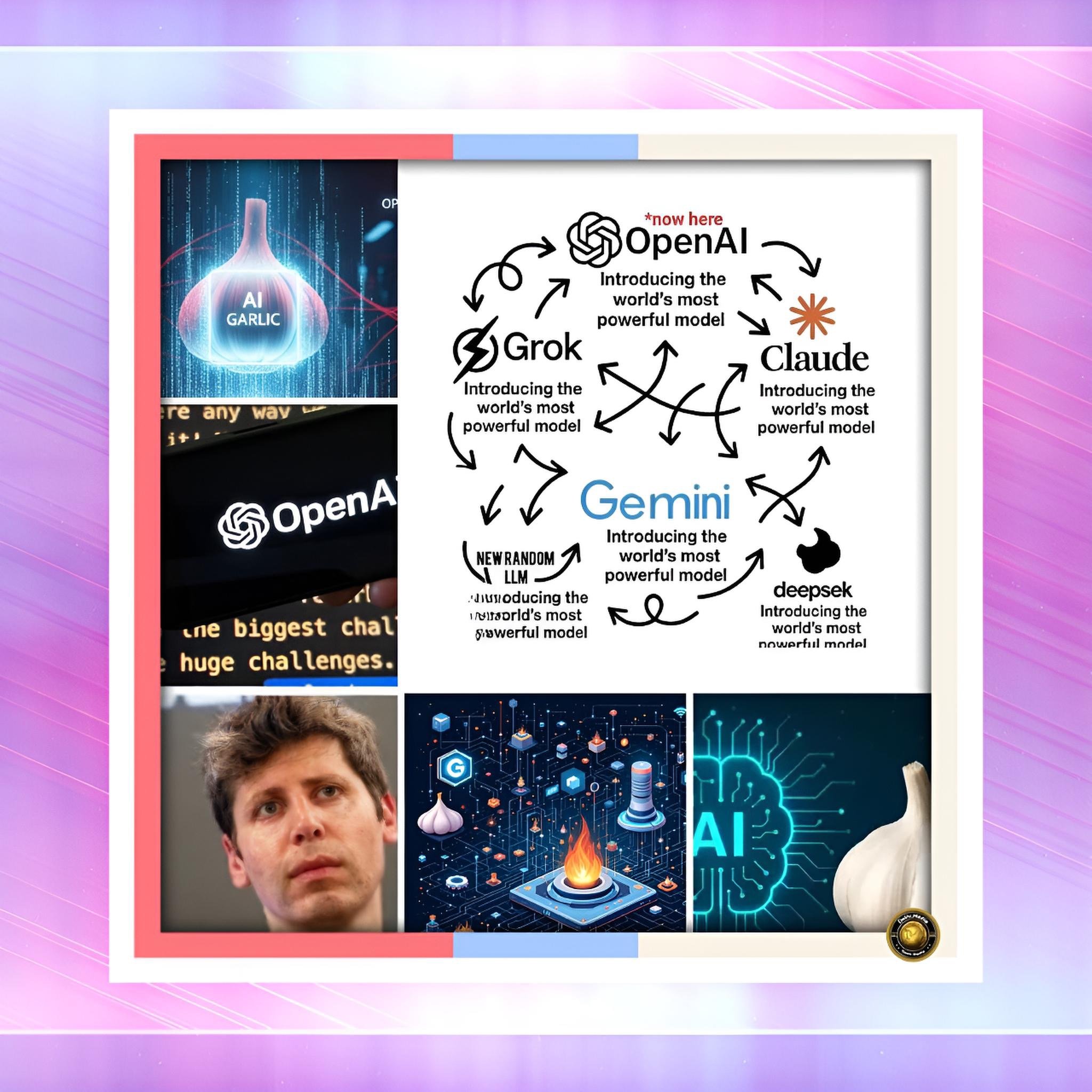
OpenAI is developing a new large language model codenamed “Garlic” as part of a strategic response to intense competition from Google and Anthropic in the artificial intelligence market.
Here’s what has been revealed about this project
Technical Capabilities and Performance
According to OpenAI’s Chief Research Officer, Mark Chen
(1) Garlic demonstrates strong performance in coding and reasoning tasks, reportedly outperforming both Google’s Gemini 3 and Anthropic’s Claude Opus 4.5 in internal evaluations.
(2) The model represents a significant breakthrough in pretraining efficiency, a critical area where OpenAI has struggled compared to competitors.
(3) A key technical innovation is Garlic’s ability to infuse smaller models with the same amount of knowledge previously requiring much larger architectures.
This advancement allows the company to deliver capabilities comparable to GPT-4.5 level performance at lower cost and faster inference speeds—a crucial competitive advantage.
Addressing Pretraining Challenges
Garlic builds upon lessons from an earlier internal project codenamed Shallotpeat, incorporating bug fixes and refinements, particularly in the pretraining phase.
Mark Chen indicated that Garlic has resolved key technical bottlenecks that affected GPT-4.5, which launched in February 2025.
These improvements represent OpenAI’s strategic shift back toward optimizing pretraining methodology after the company had increasingly focused on “reasoning” models like o1.
Release Timeline
OpenAI aims to release an early version of Garlic as soon as possible, with potential launches under the GPT-5.2 or GPT-5.5 names by early 2026.
Before public release, the model will undergo post-training evaluation on specialized datasets and comprehensive safety testing.
The Competitive Context
The Garlic announcement comes amid OpenAI’s “code red” initiative, declared by CEO Sam Altman on December 1, 2025. This urgent push reflects the intensifying competitive landscape:
The contemporary artificial intelligence market is witnessing a fundamental recalibration of competitive hierarchies, in which OpenAI confronts an unprecedented convergence of technological advancement and market consolidation pressures that collectively threaten its erstwhile dominance in the generative AI domain.
The Technological Inflection: Capabilities Parity and Domain Specialization
The November 2025 release cycle witnessed two transformative competitive developments that fundamentally alter the calculus of market leadership.
Google’s Gemini 3, launched November 18, represents a comprehensive advancement across multiple capability dimensions, demonstrating particularly pronounced gains in abstract reasoning, mathematical problem-solving, and multimodal integration.
The model achieves a 2x improvement in abstract reasoning on the ARC-AGI-2 benchmark and delivers a revolutionary 23.4% score on MathArena Apex—representing a >20x improvement from its predecessor.
Critically, Gemini 3 Deep Think mode achieves 45.1% performance on ARC-AGI-2 with code execution, representing the highest performance any frontier model has achieved on these benchmarks and thereby establishing operational superiority in scientific reasoning and mathematical problem-solving previously unattained in the industry.
Gemini 3’s multimodal capabilities merit particular emphasis; the model achieves 81.0% on MMMU-Pro, establishing a significant 5-point performance differential over OpenAI’s GPT-5.1 (76.0%) and demonstrating 87.6% on Video-MMMU—a capability dimension wherein competitors have historically lagged.
This native multimodal integration, coupled with Google’s vertically integrated infrastructure advantage (control over custom silicon, data center architecture, and the computational stack), confers architectural efficiencies unavailable to competitors operating in constrained ecosystem environments.
Anthropic’s Claude Opus 4.5, released November 24, has simultaneously established competitive dominance in the agentic reasoning domain—arguably the most commercially significant capability frontier.
Opus 4.5 demonstrates marked superiority in autonomous task execution, achieves higher pass rates on held-out software engineering tests whilst consuming up to 65% fewer tokens, and exhibits unprecedented robustness against adversarial prompt injection attacks.
Particularly noteworthy is Opus 4.5’s performance on multi-agent coordination tasks, where the model demonstrates the capacity to autonomously refine capabilities across iterative cycles, achieving peak performance in 4 iterations, whilst competitors require 10 or more.
Market Consolidation Dynamics and the Subsidy-to-Acquisition Paradigm
The competitive context must be understood within the broader framework of unsustainable AI economics and strategic market consolidation.
OpenAI, despite achieving 2025 revenue projections of $11 billion, faces annual operating losses exceeding $14 billion, with a cost-to-revenue ratio of $2.25 per $1 of revenue.
This structural deficit reflects an industry-wide phenomenon in which major technology corporations have deliberately adopted a “subsidy-to-acquisition stratagem”—deploying heavily subsidized consumer-facing AI tools to establish market dependency whilst systematically positioning themselves for eventual consolidation through the acquisition of vulnerable competitors and subsequently, price correction.
This strategy manifests acute implications for OpenAI’s strategic positioning.
The company’s consumer segment has been explicitly designed as an acquisition channel to unlock value within the enterprise ecosystem, wherein high retention and recurring usage patterns generate stable, predictable revenue streams.
However, this approach faces demonstrable execution challenges, as evidenced by deteriorating engagement metrics within OpenAI’s core consumer base.
User Engagement Deterioration and Market Saturation Signals
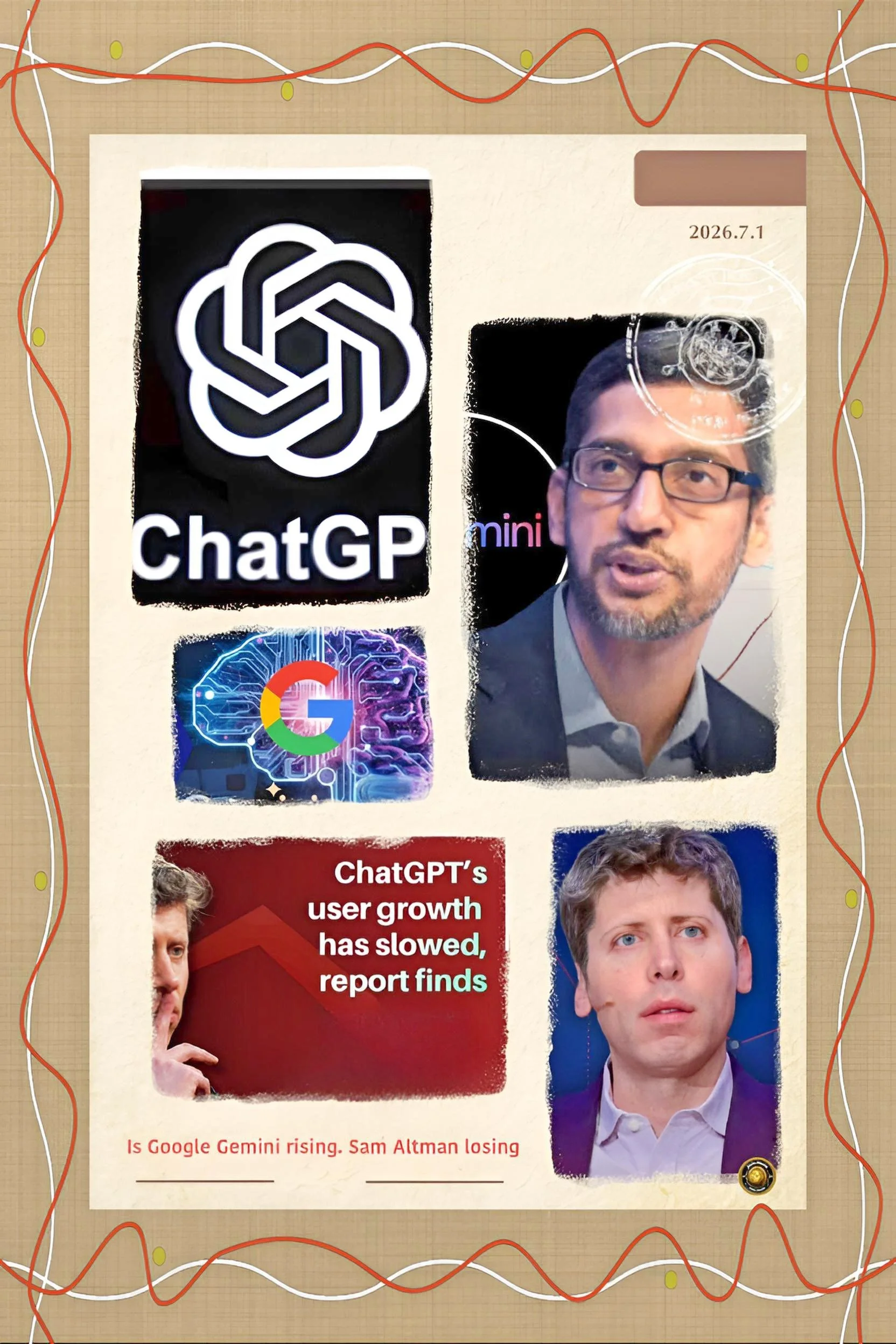
OpenAI confronts an acute strategic vulnerability: despite commanding 800 million weekly active users globally, the platform exhibits unmistakable signs of engagement stagnation and user attrition.
ChatGPT’s mobile application has experienced pronounced deceleration in downloads since April 2025, with October projected to mark a month-over-month decline of 8.1% in global downloads.
More consequentially, engagement metrics in the United States—OpenAI’s primary revenue market—demonstrate significant deterioration: average time spent per daily active user has contracted 22.5% since July, whilst sessions per user have declined 20.7%.
This engagement trajectory cannot be attributed exclusively to exogenous competitive pressures.
Research analysis indicates that downward engagement trends predated Google’s Gemini competitive emergence, suggesting endogenous product design modifications as a causative factor.
Specifically, OpenAI’s August 2025 GPT-5 release, whilst introducing specific technical improvements in multi-step reasoning and model routing, precipitated unexpected user dissatisfaction rooted in perceived degradation of affective responsiveness and emotional nuance.
User-initiated petitions successfully compelled OpenAI to restore access to earlier model iterations, a reversal reflecting profound dissatisfaction with the trajectory of the consumer experience.
The GPT-5 deployment represents a strategic miscalculation, in which OpenAI prioritized task performance and inference efficiency over the preservation of conversational continuity and emotional resonance—attributes that had previously distinguished the platform from competitor offerings.
This prioritization fundamentally misapprehended the nature of consumer demand in the AI assistant category, where affective engagement and a sense of continuous relationship constitute non-trivial value components for extended user cohorts.
Market Share Compression and User Growth Differential
While OpenAI retains quantitative user base advantages, qualitative metrics reveal accelerating competitive displacement.
Google’s Gemini application reached 650 million monthly active users as of October 2025, an increase of 200 million users within a three-month window following Gemini 3’s release.
This growth trajectory substantially exceeds ChatGPT’s current user-acquisition patterns; a quarterly AI chatbot market growth analysis shows that ChatGPT exhibits approximately 8% quarterly user growth, whereas competitors Perplexity and Deepseek command projected quarterly growth rates of 10% and 12-14%, respectively, for Claude AI.
The differential growth trajectories, whilst perhaps appearing marginal in percentage terms, reflect profound market momentum asymmetries favoring competitors.
In winner-take-most market dynamics characteristic of software platform industries, such growth differential compounds exponentially, with implications for long-term market structure and competitive hierarchy.
Strategic Implications: Technological Catch-Up and Execution Risk
The Garlic initiative must be contextualized as OpenAI’s recognition that preserving market leadership requires fundamental innovation in model architecture and pretraining methodology—not merely incremental post-training optimization.
The concurrent declaration of “code red” and Altman’s reorientation of organizational resources toward ChatGPT enhancement and Garlic acceleration signals OpenAI’s assessment that the company operates under elevated competitive threat conditions requiring extraordinary organizational mobilization.
However, Garlic’s development timeline—targeting early 2026 release—presents acute competitive timing challenges.
The interval between now and release affords competitors a substantial opportunity for further advancement iteration.
Anthropic’s demonstrated capacity for rapid model improvement cycles (November 2025’s Opus 4.5, which represents a significant advancement over summer iterations) suggests the competitive landscape will likely feature multiple successive rounds of capability advancement before Garlic’s market introduction, potentially limiting the significance of any individual advancement differential.
The talent dimension compounds execution risk. OpenAI’s research cadre has experienced significant departures, including prominent researchers joining Mira Murati’s Thinking Machines Lab and Meta’s Superintelligence Labs.
The departure of specialized technical expertise during a period of organizationally critical model development introduces non-trivial execution risk and knowledge discontinuity within core research functions.
Structural Market Consolidation and Long-Term Positioning
Beyond immediate competitive dynamics, the AI market architecture itself exhibits consolidation pressures favoring infrastructure-dominant platforms with asymmetric computational resources.
The “trough of disillusionment” phenomenon, in which the commercial deployment of generative AI has failed to deliver transformative business outcomes for enterprises lacking specialized vertical integration or industry expertise, naturally creates pressure toward market consolidation around platforms that possess both frontier technical capabilities and domain-specific deployment expertise.
This consolidation trajectory disadvantages pure-play consumer AI providers operating without adjacent enterprise ecosystems (contrasting Microsoft’s integrated Copilot suite ecosystem with OpenAI’s comparatively constrained deployment pathways.
OpenAI’s strategic positioning as an acquisition channel for enterprise deployment represents a rational acknowledgment of this structural dynamic, yet simultaneously imposes constraints upon consumer-facing innovation and feature investment, thereby creating reinforcing cycles of engagement decline and competitive displacement.
Strategic Implications
Garlic’s development signals OpenAI’s recognition that competitive advantage requires innovation in fundamental model architecture and training methodology, not just post-training optimization.
The successful development of Garlic has reportedly already enabled OpenAI to begin working on an even more advanced successor model.
This initiative also occurs against a backdrop of significant talent departures, with dozens of top researchers leaving for competitors, including Mira Murati’s Thinking Machines Lab and Meta’s newly organized Superintelligence Labs.
Conclusion
The Strategic Dilemma
Garlic represents a technically necessary but strategically insufficient response to fundamental market pressures.
OpenAI’s situation reflects a critical asymmetry: the company possesses technological capability to match competitors in isolated capability dimensions yet lacks structural capacity to translate technical achievement into competitive advantage or financial sustainability.
Technical Adequacy Does Not Resolve Business Model Obsolescence
Garlic’s anticipated superiority in coding and reasoning tasks addresses tactical competitive positioning but cannot resolve OpenAI’s core vulnerabilities.
The model arrives in early 2026—a timeline that affords competitors (particularly Anthropic, demonstrating rapid iteration capacity) multiple advancement cycles before market introduction.
Incremental technical differentiation will prove insufficient against entrenched platform incumbents leveraging ecosystem integration advantages.
Structural Disadvantages Persist Regardless of Model Performance
Three structural liabilities transcend individual model releases
(1) Market saturation
ChatGPT’s 800 million weekly users represents ceiling growth, whilst engagement metrics deteriorate (22.5% decline in daily time spent, 8.1% October download decline).
The GPT-5 miscalculation—prioritizing performance over emotional continuity—signals organizational misalignment regarding consumer value perception.
(2) Unsustainable economics
OpenAI operates at $2.25 cost per $1 revenue with projected unprofitability through 2030 despite user expansion.
This fundamental deficit necessitates continued Microsoft capital infusions, ultimately positioning OpenAI as a subordinated entity within Microsoft’s ecosystem rather than an independent competitor.
(3) Platform consolidation dynamics
By 2026, embedded AI within existing applications (Gmail, Search, Office) will generate 300% more usage than standalone tools.
Google’s vertically integrated infrastructure—custom silicon, data centers, ecosystem integration—provides architectural efficiencies unavailable to pure-play providers.
OpenAI lacks adjacent distribution channels to match this integration depth.
Competitive Trajectory Remains Unfavorable
Gemini 3’s 45.1% ARC-AGI-2 performance with code execution represents industry-leading scientific reasoning capability.
Claude Opus 4.5 dominates agentic reasoning—arguably the most commercially significant deployment vector—achieving 4-iteration convergence versus competitors’ 10+ iterations.
These competitive leads emerge from platform incumbents with superior capital resources, infrastructure control, and ecosystem positioning.
Garlic’s isolated capability advantages cannot overcome these structural asymmetries.
The Probable Outcome
OpenAI’s long-term trajectory points toward acquisition by a platform incumbent, most likely Microsoft.
Garlic represents organizational competence vindication and provides tactical competitive respite through early 2026, but cannot alter the fundamental strategic dynamic wherein technological excellence proves necessary yet insufficient when confronting consolidated platform incumbents, deteriorating unit economics, and market saturation conditions.
The company transitions from independent competitor to technology subsidiary leveraging ecosystem integration.
This outcome reflects not technological failure but rather structural market consolidation wherein winner-take-most dynamics, capital intensity requirements, and platform convergence imperatives favor infrastructure-dominant incumbents over standalone model providers.
Garlic succeeds as engineering achievement but fails as strategic inflection point. It extends rather than reverses OpenAI’s strategic marginalization within consolidating AI market structure.