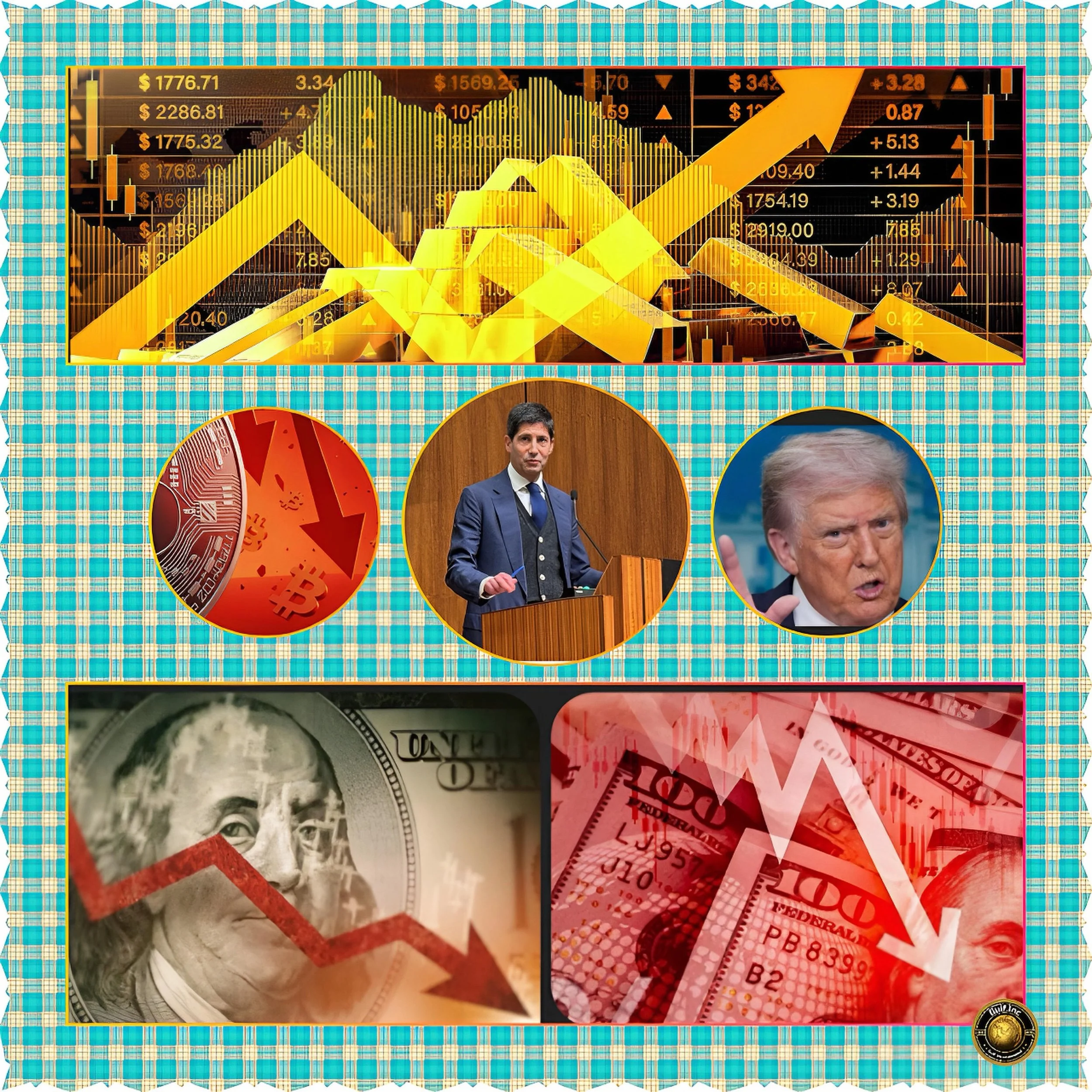
Trump Nominates Kevin Warsh to Chair the Federal Reserve: Institutional Implications and Monetary Policy Trajectories
Executive Summary
The designation of Kevin Warsh as the prospective chairman of the Federal Reserve represents a consequential inflection point in the political economy of United States monetary governance. Warsh's nomination, announced on 30 January 2026, follows an extended period of unprecedented presidential pressure on the incumbent Jerome Powell, whose term concludes in May 2026.
The appointment crystallizes a deliberate recalibration of the Fed's institutional orientation, away from the technocratic consensus that has nominally insulated monetary policy from short-term electoral imperatives. Market participants have absorbed the announcement with relative equanimity, interpreting Warsh as a credible steward of central banking possessing sufficient institutional gravitas to forestall the most radical policy deviations.
Nevertheless, substantive concerns persist regarding the preservation of central bank autonomy, the macroeconomic risks attendant to accelerated rate reductions in an environment of elevated sovereign debt and tariff-induced supply-side inflation, and the long-term implications for the international standing of the United States dollar as the pre-eminent reserve asset.
Introduction
The Dissolution of Central Bank Independence as Institutional Norm
The Trump administration's campaign to displace Jerome Powell represents the most forthright presidential assault upon Federal Reserve autonomy since the tenure of Franklin Delano Roosevelt. The mechanism of pressure has evolved from crude public vilification—Trump characterized Powell variously as a "moron" and an "idiot," lamenting that Powell's tenure was "costing America hundreds of billions" in superfluous interest expense—to more institutionally sophisticated forms of coercion.
The Department of Justice initiated a criminal investigation into Powell's congressional testimony regarding the financing of the Fed's headquarters renovation, a probe Powell himself characterized as politically motivated and designed to compel monetary concessions.
The normative significance of this escalation cannot be overstated: it signals a willingness to deploy prosecutorial instruments to achieve policy ends, thereby breaching historical conventions that have functionally insulated central banks from executive retaliation for policy disagreements.
Into this contested terrain enters Kevin Warsh, a 55-year-old economist, investment banker, and former Federal Reserve governor. Warsh served as a junior governor from 2006 to 2011, a tenure bracketing the 2008 financial crisis and its immediate aftermath. His intellectual evolution from a self-identified inflation hawk, skeptical of the scale of quantitative easing, to a contemporary advocate for more aggressive monetary accommodation merits scrutiny.
That evolution, coupled with his connections to Trump's donor network through his marriage to Jane Lauder (whose father Ronald Lauder is a billionaire cosmetics magnate and long-standing Trump confidant), raises substantive questions regarding whether Warsh will function as an independent custodian of the central bank's statutory mandate or as a politically conscious instrument of executive monetary preferences.
History and Current Status
Warsh's Ideological and Professional Trajectory
Kevin Warsh completed his undergraduate education at Stanford University and his legal training at Harvard Law School before joining Morgan Stanley's mergers and acquisitions division. His career took a decisive turn when the George W. Bush administration recruited him as a special assistant for economic policy and subsequently as executive secretary of the National Economic Council, positioning him at the apex of economic policymaking during the formative crisis years of 2001 to 2006.
This experience established Warsh as a trusted figure within Republican economic circles and demonstrated his facility with both financial markets and governmental institutions.
In 2006, President Bush nominated Warsh to the Board of Governors of the Federal Reserve System. At age 35, Warsh became the youngest governor in the institution's history, a distinction that signified both his intellectual promise and his ideological compatibility with the Bush administration's economic worldview.
During the 2008 financial crisis, Warsh functioned as a critical liaison between the Fed and Wall Street financial institutions, participating in the design and defense of extraordinary liquidity facilities—the Primary Dealer Credit Facility, the Commercial Paper Funding Facility, and the Term Asset-Backed Securities Loan Facility—that preserved the functioning of capital markets in the immediate aftermath of the Lehman Brothers collapse.
However, Warsh's tenure at the Fed revealed growing ideological tensions with Chairman Ben Bernanke's expansionary monetary posture. As the Fed transitioned from emergency crisis measures toward more durable forms of balance sheet expansion, particularly following the August 2010 Jackson Hole speech in which Bernanke signaled the imminence of a second phase of quantitative easing (QE2), Warsh emerged as a solitary dissenting voice within the Board. In a November 2010 Wall Street Journal op-ed, Warsh articulated his concerns with prescient clarity: prolonged quantitative easing, he contended, risked creating market distortions, fueling asset price bubbles, and fostering a pathological dependence of financial markets upon central bank accommodation.
The Fed should, he argued, impose temporal and quantitative constraints upon such programs, lest it sacrifice long-term price stability for short-term financial stability.
This principled opposition to quantitative easing intensified following the Board's decision to authorize an additional $600 billion in Treasury purchases under QE2. Warsh's discomfort crystallized into institutional withdrawal: he resigned from the Board in March 2011, three years before the conclusion of his term, citing the intellectual poverty of perpetuating unconventional monetary measures beyond the exigencies of genuine financial crisis. His departure was accompanied by public statements asserting that emergency monetary measures should be provisional, circumscribed both temporally and in magnitude, lest they metastasize into permanent institutions that distort price discovery and inflate financial asset valuations divorced from fundamentals.
The Current Federal Reserve Warsh Is Poised to Inherit
The Fed that Warsh departed in 2011 bears only a superficial resemblance to the institution he is now positioned to lead.
The balance sheet, then still elevated from crisis measures, has since been compressed and then re-expanded to extraordinary dimensions—standing at approximately $6.6 trillion in Treasury securities and mortgage-backed securities as of early 2026.
The Federal Funds Rate has traversed a secular arc from crisis lows near zero percent through a period of gradual normalization (2015-2018) to aggressive tightening (2018-2019), followed by yet another emergency-phase reduction (2020-2021) and subsequent tightening (2022-2023).
The institution has also undergone a significant expansion of its mission architecture. Under the stewardship of Jerome Powell and his predecessors, the Fed has substantially elaborated its mandate beyond the statutory dual objective of price stability and maximum employment. Climate-related financial risk, systemic racial equity in credit allocation, and financial inclusion have become increasingly salient within Fed policy discourse and internal operations.
The Fed has, moreover, assumed a more active role in implementing macroprudential regulatory frameworks, stress-testing regimes, and supervisory guardrails designed to constrain excessive risk-taking by systemically important institutions. For Warsh, who has consistently characterized these accretions as "mission creep," the contemporary Fed represents an intellectual affront. This institution has subordinated its core mandates to an expansive array of social and environmental objectives for which no statutory foundation exists.
The macroeconomic environment the Fed confronts in early 2026 is itself perilous. The United States labors under a public debt burden approaching $38 trillion, a fiscal trajectory that the Congressional Budget Office has characterized as unsustainable without structural reform. Inflation, though substantially moderated from the peaks of 2022, remains approximately 2.5 to 2.7 percent on a core basis, persistently above the Fed's stated 2 percent target.
Simultaneously, the Trump administration's tariff regime—characterized by an effective tariff rate of approximately 16.9 percent across U.S. trading partners as of January 2026, a figure some 6.7 times higher than the 2024 average—has introduced supply-side inflationary pressures that complicate the Fed's dual mandate. Supply-chain inflation, measured by the Fed's preferred metrics, has risen to approximately 3.47% on an annualized basis in the fourth quarter of 2025, signaling emerging producer-level cost pressures that may manifest in consumer prices in subsequent quarters.
Powell's Fed has responded to these cross-pressures with caution, executing three rate cuts totaling 75 basis points since September 2025 but subsequently pausing to assess the trajectory of inflation and financial conditions. The FOMC's December 2025 Summary of Economic Projections indicated expectations for only a single additional rate cut in 2026, reflecting a consensus assessment that the Fed's policy rate remains meaningfully above the neutral rate that neither stimulates nor restrains economic activity.
Key Developments Preceding Warsh's Nomination
The nomination of Warsh crystallizes the culmination of several intersecting developments.
First, Trump's relationship with Powell became progressively acrimonious as Powell refused to architect the aggressive easing regime the president demanded.
Trump, interpreting the Fed's reticence as a constraint upon his growth and market-support agenda, unleashed a sustained rhetorical assault, characterizing Powell as intellectually inadequate to the role and asserting that termination would represent a superior outcome.
Though presidential removal of a sitting Fed chair absent explicit statutory cause remains legally uncertain—the Supreme Court's ongoing consideration of Trump's attempt to remove Fed Governor Lisa Cook on specious fraud charges may establish jurisprudential parameters—the weight of executive pressure became progressively intolerable.
Second, the initiation of a criminal investigation into Powell's testimony regarding the Fed building renovation provided an institutional mechanism to translate political preference into legal pressure. Powell's extraordinary response—a recorded video statement denouncing the probe as a pretext for policy coercion—publicly acknowledged the unprecedented character of the assault upon Fed autonomy.
That Powell felt compelled to respond in such fashion signified a rupture in longstanding norms: historically, Federal Reserve leadership has eschewed direct public engagement with executive pressure, preferring instead to signal policy preferences through technical adjustments and deflecting political criticism through studied institutional indifference.
Third, Warsh himself actively campaigned for the position. From his institutional perch at Stanford's Hoover Institution and in partnership with prominent investors such as Stanley Druckenmiller, Warsh articulated an increasingly coherent critique of contemporary Fed policy. He authored Wall Street Journal op-eds calling for a "regime change" at the institution, criticized Powell's overemphasis upon climate and social-equity mandates, and dismissed Powell's characterization of tariff-driven inflation risks as intellectually incoherent.
TherapyIn television appearances and public forums, Warsh championed lower rates and characterized the Fed's current policy orientation as betraying the institution's core mission.
Fourth, the field of prospective successors narrowed in Warsh's favor through a process of elimination. National Economic Council Director Kevin Hassett, initially considered a strong candidate due to his proximity to Trump and his hawkish credentials, saw his standing diminish amid concerns that his appointment would signal an even more thoroughgoing subordination of the Fed to White House preferences. Other candidates—BlackRock executive Rick Rieder, sitting FOMC Governor Christopher Waller—either lacked the requisite political credentials or failed to demonstrate sufficient ideological alignment with Trump's monetary preferences.
Finally, the gravitational pull of Trump's donor network, particularly the influence of Ronald Lauder (via his son-in-law status to Warsh), appears to have been decisive. Lauder, who has reportedly influenced Trump's geopolitical thinking on issues ranging from Greenland acquisition to Arctic resource competition, leveraged his relationship to champion Warsh's candidacy.
The cosmetics magnate's commercial interests in Greenland and participation in investor consortia seeking access to Arctic resources suggest that Trump's consideration of Warsh may have been partly conditioned upon broader strategic calculations regarding resource access and Arctic hegemony.
Warsh's Intellectual Evolution and Contemporary Policy Positions
The most intellectually consequential question surrounding Warsh's nomination concerns the authenticity of his policy pivot.
As a Federal Reserve governor, Warsh articulated clear skepticism regarding the sustainability of unconventional monetary measures and expressed concern that quantitative easing risked creating asset bubbles divorced from fundamental value. His 2011 resignation constituted an institutional statement: prolonged accommodation, in Warsh's judgment, threatened the Fed's long-term credibility and risked engendering future inflation dynamics that would vindicate the critics.
In recent years, Warsh's public statements have undergone a marked reorientation. In a July 2025 interview with Fox Business, Warsh asserted that "tariffs are not inflationary," directly contradicting the position articulated by Powell and consensual macroeconomic analysis. He has characterized the Fed's leadership under Powell as "broken" and has called for a "regime change" that would involve fundamental restructuring of the institution's balance sheet and policy frameworks. In op-eds published in the Wall Street Journal, Warsh has argued that the Fed's "bloated balance sheet" should be substantially reduced, with the resulting capacity "redeployed in the form of lower interest rates to support households and small and medium-size businesses."
This intellectual reorientation admits of multiple interpretations. One construction—charitable to Warsh—posits that his views have genuinely evolved in light of new macroeconomic conditions and empirical evidence that inflation can indeed be controlled even as the Fed maintains accommodative monetary stances.
This interpretation suggests that Warsh has become persuaded that the inflation risks he articulated in 2010-2011 have been substantially mitigated by transformations in labor market dynamics, globalization, and technological deflationary forces. Under this reading, lower rates become compatible with price stability provided that fiscal policy remains appropriately disciplined and that supply-side productivity gains offset demand-side stimulus.
A second construction—less charitable—suggests that Warsh has opportunistically repositioned his views to align with Trump's preferences and thereby secure the Fed chairmanship. This interpretation observes that Warsh's policy stances since 2024 correspond precisely with Trump's publicly expressed monetary demands, and that Warsh's earlier skepticism regarding quantitative easing has been rhetorically abandoned without sustained intellectual justification.
Under this reading, Warsh functions as a sophisticated political actor who has calculated that ideological flexibility constitutes a preferable strategy to principled but quixotic opposition to executive preference.
The truth likely admits of elements of both constructions. Warsh appears to be a serious macroeconomist whose views have plausibly evolved in response to changing circumstances. However, the proximity of his policy repositioning to the timeline of his emergence as a candidate for the Fed chairmanship suggests that electoral calculations have influenced the pace and character of that intellectual evolution.
His assertion that tariffs are essentially non-inflationary, for instance, represents a stark departure from established economic consensus and from his own prior skepticism regarding supply-side shocks, and appears driven more by political alignment with Trump than by technical macroeconomic analysis.
Latest Facts and Implications
Market reaction to Warsh's nomination was notably muted. Equity indices declined modestly (the S&P 500 declined approximately 0.3% on the announcement day), while Treasury yields and dollar strength increased, reflecting market interpretation of Warsh as marginally less dovish than some alternative candidates. Interest rate futures markets indicated minimal revision of rate-cut expectations for 2026, with the prevailing consensus continuing to anticipate two 25-Texas basis-point reductions during the calendar year.
This market comportment suggests that sophisticated participants view Warsh as likely to navigate between Scylla and Charybdis: delivering sufficient rate cuts to satisfy Trump's political demands while preserving sufficient adherence to data-dependent monetary policy to forestall a catastrophic loss of Fed credibility.
However, beneath this superficial market stability, significant institutional concerns have materialized. Former Federal Reserve officials, including prior chairs Paul Volcker's contemporaries and scholars of central banking, have expressed alarm regarding the normalization of political pressure upon the Fed.
Senator Elizabeth Warren, perhaps the most intellectually serious Democratic voice on financial regulation, has characterized the Warsh nomination as evidence that Trump has succeeded in transforming the Fed into an instrument of executive will.
The statement itself represents a notable concession: Warren, typically protective of Fed independence for progressive reasons (emphasis upon employment and financial inclusion), has nonetheless recognized that the institution's autonomy has been substantially compromised.
Congressional response has bifurcated along partisan lines with exceptions.
Most Republicans have endorsed Warsh enthusiastically, with Senate Banking Committee Chairman Tim Scott emphasizing Warsh's experience and assuring constituents that he will work to "restore credibility" to the institution.
However, Senator Thom Tillis of North Carolina has signaled an intention to withhold support unless and until the Justice Department terminates its investigation into Powell, thereby attempting to preserve a modicum of institutional independence as a precondition for confirmation.
Tillis's objection may prove consequential: with Republicans holding a 13-11 committee majority, Tillis's defection, coupled with uniform Democratic opposition, would prevent Warsh's advancement from committee absent procedural mechanisms to circumvent such obstruction.
Cause-and-Effect Analysis
Political Pressure and Macroeconomic Consequences
The nomination of Warsh instantiates a causal chain linking political imperatives to monetary outcomes and ultimately to the macroeconomic and geopolitical standing of the United States.
At the political level, Trump's incentive structure is transparent: lower interest rates reduce the fiscal burden of servicing the public debt, support equity and real estate valuations (constituencies whose political importance Trump emphasizes), and generate growth narratives that can be mobilized in domestic political contexts.
The pressure upon Powell was fundamentally rooted in Trump's conviction that the Fed was implementing unnecessarily restrictive policy and sacrificing growth for inflation-fighting orthodoxy of which Trump is fundamentally skeptical.
Warsh's nomination represents the institutional mechanism through which Trump intends to translate political preference into monetary reality.
A chair sympathetic to rate reductions, skeptical of tariff-driven inflation narratives, and indifferent to newer Fed mandates regarding climate and social equity is more likely to prioritize short-term growth accommodation over longer-term price-stability preservation.
The committee structure of the FOMC—a 12-member body comprising five Board governors and seven regional bank presidents—constrains any individual chair's capacity to implement unilateral policy shifts. Nevertheless, a determined chair backed by presidential authority possesses substantial capacity to reshape internal consensus, marginalize dissenting voices, and accelerate the pace of policy evolution.
At the macroeconomic level, the consequences of accelerated monetary accommodation in the current environment carry risks that may materialize with substantial temporal delay. If market participants become convinced that the Fed will tolerate higher inflation in service to short-term growth, long-term interest rates may rise even as short-term rates decline—a phenomenon economists characterize as an inversion of the term structure driven by inflation expectations rather than by current short-term rates. In such a scenario, the ostensible benefit of lower policy rates (cheaper borrowing for households and businesses) could be substantially eroded by higher long-term mortgage rates, bond yields, and financial conditions premiums.
Moreover, persistently low real interest rates (nominal rates minus expected inflation) can catalyze unsustainable asset price appreciation and excessive leverage, particularly in speculative market segments already inflated by years of monetary accommodation.
The current real estate market, characterized by historically elevated price-to-income ratios in major metropolitan areas, and the equity market, trading at forward price-to-earnings ratios of approximately 18 to 19 times (above historical averages), are both vulnerable to repricing should the Fed's inflation tolerance become evident to market participants. A collapse in asset prices would itself have contractionary macroeconomic consequences, offsetting any short-term stimulus from lower rates.
The geopolitical implications may ultimately prove more consequential than the immediate macroeconomic effects. The United States dollar's role as the pre-eminent international reserve asset derives not merely from the size of the American economy or the depth of its capital markets, but fundamentally from an institutional reputation for technocratic competence and political insulation from short-term electoral imperatives.
The spectacle of a sitting president publicly insulting and intimidating the Fed chair, initiat a criminal investigation into that chair, and engineering the appointment of a more pliant successor signals to global investors that the Fed is no longer an autonomous technocratic institution but rather an instrument of executive preference.
This perception shift has profound implications for the international role of the dollar. Reserve currency status entails significant benefits—lower borrowing costs for the United States government, enhanced geopolitical leverage through financial sanctions, and seigniorage gains from the privilege of issuing the medium through which global commerce is conducted.
However, these benefits are ultimately contingent upon the willingness of global investors and central banks to maintain dollar reserves and dollar-denominated assets. If the Fed is perceived as politicized and inflation-tolerant, that willingness will attenuate.
Investors may demand higher yields on dollar-denominated assets as compensation for perceived inflation risk, or may diversify into euros, renminbi, or alternative reserve assets. Central banks may accelerate dedollarization initiatives, as has been proceeding at a modest pace in recent years.
The timing of this institutional erosion is particularly inauspicious given contemporary geopolitical tensions. The United States is engaged in strategic competition with China and Russia; the Trump administration has imposed tariffs substantially altering global trade patterns; and fiscal tensions with allies over NATO burden-sharing and burden-shifting have become more acute. In this environment, the capacity to deploy financial instruments as tools of geopolitical leverage—through sanctions, capital controls, and financial restrictions—becomes increasingly valuable.
Yet that capacity depends fundamentally upon the assumption that the dollar system remains politically insulated and that dollar-clearing mechanisms will continue to function according to technocratic rather than political logic. The Warsh nomination, by rendering the political foundations of Fed autonomy more transparent and more vulnerable to executive pressure, undermines that assumption.
Future Trajectories and Institutional Responses
The confirmation process will constitute the first institutional test of whether the Senate, as the purported guardian of constitutional equilibrium, can reassert normative constraints upon executive power.
Warsh will face interrogation regarding his views on Fed independence, the propriety of the Powell investigation, and his commitment to the dual mandate. Senators concerned about institutional independence will attempt to extract commitments regarding Fed autonomy; those aligned with Trump will focus upon Warsh's presumed willingness to implement rate cuts.
Senator Tillis's stance regarding the Powell investigation appears to represent the critical leverage point. Should Tillis succeed in conditioning Warsh's confirmation upon termination of the DOJ probe, he would establish a precedent that Fed independence constitutes a non-negotiable precondition for elevated office.
Alternatively, should Warsh be confirmed despite the investigation's continuation, it would signal that the Senate has acquiesced to the instrumentalization of legal processes for monetary policy objectives.
Within the Fed, Warsh's arrival will test the resilience of internal governance structures. The FOMC's committee-based decision-making is designed to insulate policy from the influence of any individual chair. However, historical experience demonstrates that a determined, intellectually coherent chair backed by political authority can substantially reshape institutional culture and consensus.
The arrival of a Fed chair perceived as politically connected and willing to accommodate executive preferences may induce self-selection effects—dissenting governors and regional bank presidents may economize on political capital by acquiescing to a chair with obvious presidential backing, rather than articulating principled opposition that risks retaliation or marginalization.
Warsh's early policy utterances will be closely monitored for signals regarding his approach to independence. Should he emphasize the Fed's statutory mandates, articulate clear decision rules for rate adjustments based upon economic data, and maintain rhetorical distance from the administration, confidence in Fed autonomy may be partially restored.
Conversely, should Warsh immediately echo Trump's rate-cut rhetoric or attempt to justify the Powell investigation as a legitimate governance mechanism, the reputational damage to the institution would be swift and consequential.
In global financial markets, the trajectory of dollar valuations will reflect international investors' assessments of Fed independence. Should the Fed be perceived as increasingly politicized, investors will demand higher yields on Treasury securities to compensate for inflation risk. The dollar may depreciate as capital flows shift toward euro-denominated and renminbi-denominated assets.
These shifts need not occur abruptly; they may unfold gradually over months and years as portfolios rebalance and as the costs of holding dollar assets rise relative to alternatives. However, the cumulative effect could be substantial: a loss of reserve currency status, even partial, would impose considerable costs upon the United States economy and geopolitical position.
Warsh's Policy Preferences: Balance Sheet Contraction and Rate Reductions
Warsh has articulated a distinctive policy framework that merits careful examination. He contends that the Federal Reserve's balance sheet, currently standing at approximately $6.6 trillion, has expanded far beyond the requirements of effective monetary policy.
This enlarged balance sheet, in his view, distorts financial markets by suppressing long-term interest rates (particularly mortgage and corporate bond rates), artificially inflating asset prices, and creating an inefficient allocation of capital.
Moreover, the balance sheet absorbs scarce Federal Reserve capacity—were interest rates to rise sharply in response to future inflation, the Fed's portfolio would incur substantial mark-to-market losses that would reduce dividend remittances to the Treasury and potentially require legislative recapitalization.
Warsh's solution involves a substantial contraction of the Fed's balance sheet, coupled with lower policy rates. His argument proceeds as follows: by reducing the balance sheet's size and duration, the Fed would remove distortions from financial markets, allowing price discovery to recommence.
This reduction would simultaneously generate space for conventional rate cuts, as the monetary stance would be loosened through two channels—the direct effect of lower policy rates and the indirect effect of reduced Fed balance sheet leverage reducing financial conditions stimulus.
In Warsh's formulation, a smaller balance sheet combined with lower rates is not contradictory but rather complementary: the balance sheet reduction removes one source of monetary accommodation (quantitative easing effects), while the rate reduction provides another (conventional monetary easing).
This framework has significant implications for financial stability. A substantial balance sheet contraction would reduce the Fed's presence in mortgage-backed securities markets, potentially increasing mortgage rates unless private investors substitute for Fed holdings. It would also reduce the supply of safe assets (Treasury bills) purchased by the Fed, potentially affecting short-term funding markets and the functioning of money markets. Whether these mechanisms would be disruptive or merely involve a salutary reallocation of holdings to private investors remains contested among economists.
Warsh's Positions on Regulatory Policy and the Fed's Expanded Mandate
Warsh has also signaled skepticism regarding the Fed's expansion into non-traditional policy domains. His criticism of "mission creep" extends to the Fed's regulatory role, its emphasis upon climate-related financial risk, and its mandate to address systemic racial inequities in credit allocation.
In a March 2025 interview with Fox Business, Warsh characterized bank regulation over the preceding four to five years as "very detrimental," introducing "friction" into the economy and suppressing financial intermediation.
This suggests that under Warsh's stewardship, the Fed may adopt a more permissive regulatory posture toward large financial institutions—reducing regulatory burden, relaxing capital requirements, and moderating the intensity of supervisory scrutiny.
This dimension of Warsh's agenda aligns with broader Trump administration objectives, particularly those articulated by Treasury Secretary Scott Bessent, to reduce the regulatory burden upon Wall Street.
However, it also represents a fundamental departure from post-2008 financial reform consensus, which held that the Fed's regulatory and supervisory functions constituted essential bulwarks against excessive risk-taking by systemically important institutions. The financial crisis of 2008 demonstrated that inadequate regulatory oversight of leverage, interconnectedness, and maturity mismatch could precipitate systemic collapse.
A Fed chair skeptical of regulatory intensity may be inadequately prepared for the next financial crisis, when the magnitude of leverage and interconnection reaches crisis-level proportions.
Conclusion
The Fed at an Inflection Point
Kevin Warsh's nomination represents a pivotal institutional moment for the Federal Reserve and, by extension, for the conduct of American economic policy and geopolitical strategy.
The explicit transactional framing of his appointment—lower rates in exchange for the position—threatens to normalize a model of politically subordinated monetary policy more characteristic of fragile or authoritarian regimes than of advanced democracies committed to institutional equilibrium and rule of law.
The institution Warsh is poised to lead faces a constellation of challenges that will test both his macroeconomic acumen and his commitment to institutional independence.
Inflation, though moderated from peaks, persists above target and is vulnerable to tariff-driven supply-side shocks. Public debt has reached unsustainable proportions, constraining fiscal space for countercyclical stimulus. Financial asset prices, by conventional metrics, appear elevated relative to fundamentals. In this environment, a Fed chair perceived as politically responsive to short-term executive preferences would risk jeopardizing both price stability and financial stability in service to near-term growth stimulation.
Yet Warsh possesses attributes that may allow him to navigate between political pressure and institutional independence. His experience during the 2008 crisis demonstrates an understanding of systemic risk and financial fragility. His earlier skepticism regarding quantitative easing suggests a capacity for intellectual rigor regarding the limits of monetary policy.
Should he choose to interpret his mandate as custodian of the Fed's autonomy and steward of price stability—rather than as an agent of executive accommodation—his tenure could constitute a reassertion of institutional boundaries against political transgression.
Conversely, should Warsh function as an instrument of executive preference, implementing the rate cuts Trump demands regardless of macroeconomic conditions, the consequences would extend far beyond monetary policy mechanics.
The Fed would be revealed as a captured institution, beholden to political actors rather than to the statutory mandate of price stability and maximum employment. Global investors, observing this institutional capitulation, would rationally reprrice their assessments of U.S. financial credibility. The dollar's role as reserve currency would be gradually attenuated. The United States would lose a critical instrument of geopolitical leverage precisely when strategic competition with China and Russia has intensified.
The Senate's judgment regarding Warsh's confirmation, and Warsh's subsequent conduct in the role, will determine whether the Fed enters a new era of political subordination or whether institutional norms, though tested, ultimately prove resilient.
The stakes—encompassing monetary stability, financial system soundness, and American geopolitical standing—could scarcely be higher.