Trump Nominates Kevin Warsh as Federal Reserve Chair: A Plain Language Guide to What This Means
Executive Summary
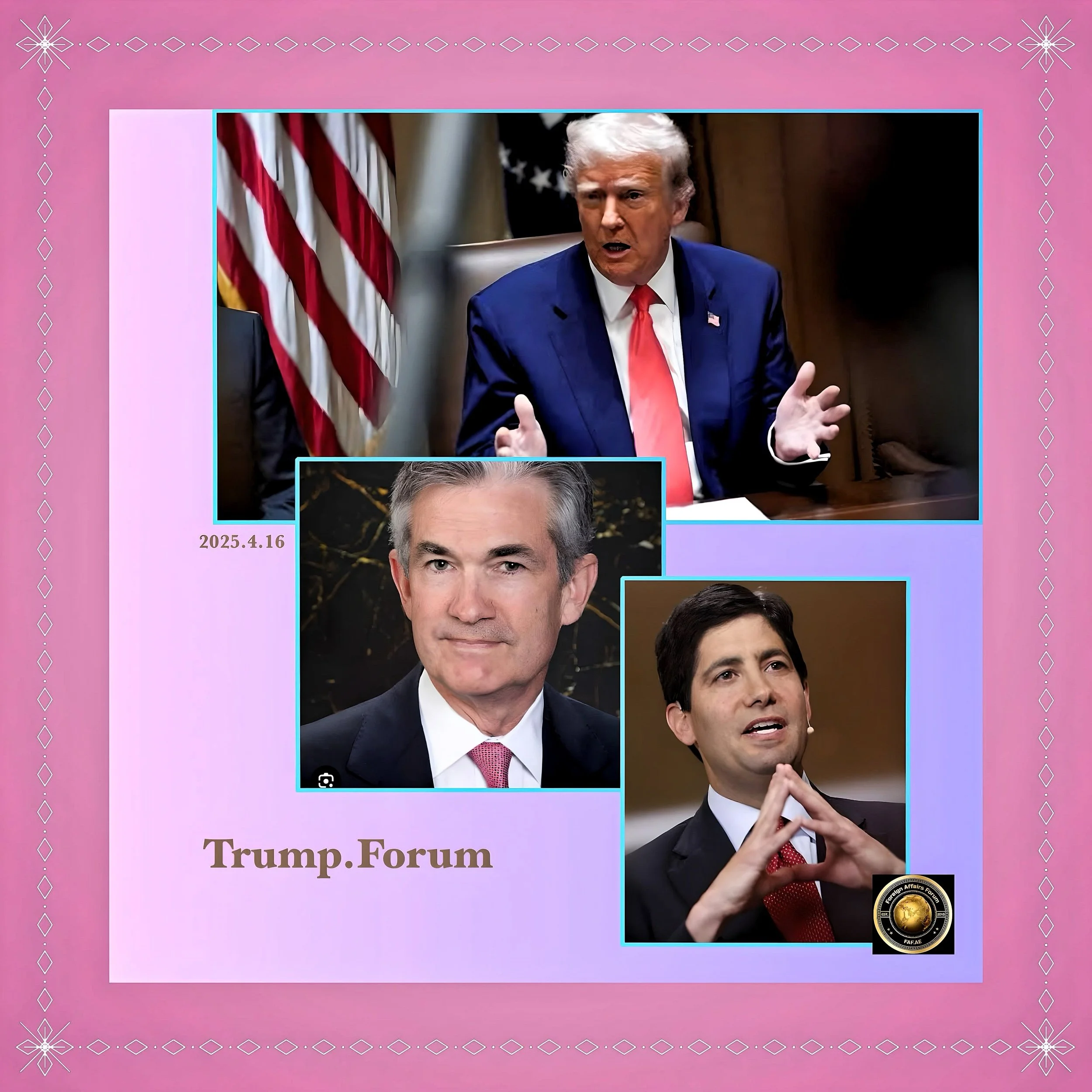
On 30 January 2026, President Donald Trump announced that Kevin Warsh would be the next chairman of the Federal Reserve. Warsh is a 55-year-old economist and investor who once worked at the Fed from 2006 to 2011.
Jerome Powell, the current Fed chair, will leave in May 2026 when his term ends. This choice is important because the Fed controls interest rates, which affect mortgage payments, car loans, credit card interest rates, and savings account yields for millions of Americans. Warsh's appointment comes after Trump spent years criticizing Powell for not lowering rates fast enough. Markets have responded calmly to the news, but experts worry about whether the Fed will remain independent from political pressure.
Introduction
Who Is Kevin Warsh and Why Should You Care?
Kevin Warsh is an economist who has worked in government, on Wall Street, and in academia. He earned his undergraduate degree from Stanford University and his law degree from Harvard Law School. After law school, he worked at Morgan Stanley, a central investment bank, doing deals for wealthy clients. In the early 2000s, he worked in the White House under President George W. Bush, advising on economic policy.
In 2006, President Bush appointed Warsh to the Federal Reserve's Board of Governors. At age 35, he became the youngest-ever Fed governor. He worked there during the 2008 financial crisis, when banks were failing, and the stock market crashed. Warsh helped design emergency programs to keep the economic system from collapsing.
Why should you care? Because the Fed's decisions affect your wallet. When the Fed raises interest rates, borrowing becomes more expensive. Your mortgage payment could go up, or a car loan might cost more. But higher rates help prevent inflation—the rise in prices at stores. When the Fed lowers rates, borrowing becomes cheaper, which helps people buy homes and cars, but there is a risk that prices will rise too fast. Warsh, as the new Fed chair, will make these decisions that touch your finances.
History and Current Status
The Conflict Between Trump and Powell
Trump has been unhappy with Jerome Powell for years. Trump initially appointed Powell as Fed chair in 2017, but later regretted the choice. Trump believed Powell kept interest rates too high. He argued that lower rates would help the economy grow faster and make it cheaper for the government to borrow.
The U.S. government has huge debts—around $38 trillion—, and Trump said higher interest expense was "costing America hundreds of billions" every year.
Powell and his Fed colleagues disagreed. They said rates needed to stay higher to keep inflation under control. They worried that if they cut rates too much, the prices of goods would rise too quickly, hurting families who rely on wages that do not keep pace with inflation.
The conflict grew worse. Trump publicly insulted Powell, calling him a "moron" and saying his "termination cannot come fast enough," even though the law prevents Trump from simply firing him. Then, in January 2026, the Justice Department started a criminal investigation into Powell. The investigation focused on what Powell told Congress about the costs of renovating the Fed's headquarters building. Powell responded by releasing a rare video message saying the investigation was a political attack designed to force him to cut rates. Powell said it was "unprecedented" for a president to use the legal system this way against a central banker.
While this drama was happening, Kevin Warsh began speaking out. From his position at Stanford's Hoover Institution, Warsh gave interviews and wrote articles criticizing the Fed's direction. He said the Fed was broken and needed significant changes. He argued that interest rates should be lower and that tariffs—taxes on imported goods—would not cause inflation. His views lined up well with what Trump wanted to hear.
Key Developments and Concerns
Several important events led to Warsh's selection. First, other candidates for the job fell away. Kevin Hassett, Trump's top economic adviser, was initially considered, but choosing him would have made it look like Trump was putting a loyalist right next to himself. Other candidates also faced obstacles. Warsh, by contrast, had Fed experience, was respected by Wall Street, and clearly supported lower rates.
Second, Warsh has family connections to Trump. Warsh is married to Jane Lauder, whose father is Ronald Lauder, a billionaire who owns a significant stake in Estée Lauder, the cosmetics company. Lauder is a longtime Trump supporter who has given millions to Trump's causes. Lauder is also known for convincing Trump that the U.S. should try to buy Greenland—an idea Lauder had and talked Trump into. These family connections matter in Trump's world.
Third, there is a significant concern about Warsh's flip-flopping on policy. When Warsh left the Fed in 2011, he was angry about a $ 600 billion bond-buying program he believed would cause inflation and create asset-price bubbles. He quit over this disagreement. But in recent years, Warsh has supported lower rates and said tariffs are not inflationary. Experts worry that Warsh changed his views not because his thinking evolved, but because he wanted the job and knew what Trump wanted to hear.
When the news broke that Warren would be chosen, the stock and bond markets barely moved. Investors know Warsh from his Fed days, and they see him as more thoughtful than some other candidates. However, many economists and former Fed leaders are worried. They are concerned that Trump is now making it clear that the primary test for being Fed chair is whether you will cut rates a lot. That violates an old tradition that the Fed should be independent from the president.
Cause and Effect
How This Could Affect Your Money and Life
Think about what lower interest rates would mean. If Warsh cuts rates quickly, a family looking to buy a house might get a cheaper mortgage payment. A small business owner wanting to borrow money to expand might find it easier and more affordable. In the short term, this feels good—people can borrow more, and the economy might grow faster.
But if rates stay too low for too long, problems build up. Prices at stores can start rising faster—a gallon of milk, a tank of gas, groceries. If people think the Fed no longer cares about keeping inflation down, they will demand higher pay or better returns on their savings to make up for the fact that inflation will erode their money's value. Also, when rates are very low, people and companies borrow too much. They buy houses and cars they cannot really afford, or invest in projects that do not make sense. When conditions change, and rates rise again, people cannot repay their debts, and a crash occurs.
There is also what economists call the "signaling effect." People and companies around the world hold U.S. dollar bonds and use dollars in trade. They do this partly because they trust that the Fed will act carefully, independently, and without short-term political pressure. But if Warsh is chosen mainly because Trump wants lower rates, that trust starts to crack. Other countries and investors might start thinking, "Maybe I should hold euros instead of dollars," or "Maybe I should keep gold or other things instead of dollars." This would not happen overnight, but over time, fewer people would want dollars. That would be a big problem for the United States.
Here is a concrete example: imagine a German company deciding where to keep its savings. If it trusts the Federal Reserve to act independently and keep inflation low, it might keep its money in dollar accounts and Treasury bonds. But if it starts to think the Fed is just doing what the president says, it might switch to euros. If millions of foreign investors and companies make this same choice, the dollar becomes less valuable. That makes it more expensive for Americans to buy goods from other countries, and it weakens America's ability to punish bad countries through financial sanctions.
Recent Facts and What Experts Are Saying
Markets were calm when Warsh's nomination was announced. The stock market fell very slightly, and Treasury yields (the interest rates the government pays on its bonds) rose a little. Many on Wall Street like Warsh because he has Fed experience, worked in finance, and is not a pure political loyalist like Kevin Hassett would have been. But beneath the calm is real worry.
Several critical senators and economists have raised concerns. Senator Elizabeth Warren, a leading Democrat on financial matters, said the nomination shows that Trump has succeeded in turning the Fed into a White House tool. She noted that Warsh worked to help Wall Street banks after the 2008 crisis, rather than helping regular people who lost their jobs.
Some Republicans have also expressed worry. Senator Thom Tillis said he will not support Warren's confirmation unless the Justice Department stops investigating Powell. Tillis is making a statement: the Fed's independence is so vital that this investigation should never have happened. He is using his vote to try to protect the institution.
Here is what worries experts the most: Tariffs and inflation. Trump has put high taxes on imported goods—about 16.9% on average as of January 2026. This is much higher than before. These taxes have already raised prices for businesses that import things. Companies have started raising their prices for customers. The Fed data shows that producer prices (what companies pay for goods and services) have been rising faster. Warsh will likely take office with tariffs already pushing prices up. If he cuts rates a lot at the same time prices are rising from tariffs, the Fed might lose control of inflation. Inflation could get worse, and that would be bad for everyone.
Future Steps and What to Watch
The first step is the Senate confirmation. Senators will ask Warren questions about whether he will protect the Fed's independence. They will ask about his views on the investigation into Powell. They will ask whether he will cut rates even if inflation is rising. Senate Democrats will try to get commitments about independence. Republicans will likely ask about when Warren will cut rates and how much.
Senator Tillis's position could be significant. Since Republicans have only a small majority on the Banking Committee (13 to 11), if Tillis and all Democrats vote against Warsh, the nomination could get stuck in committee. Tillis has said his vote depends on whether the DOJ investigation ends. This is his way of defending the Fed.
Inside the Fed, Warsh will have to work with other governors and presidents of the 12 regional Fed banks. The Fed makes decisions as a committee, not as a single person. But the chair has influence. Warsh's early speeches and actions will send a signal. If he talks about data and the dual mandate (inflation and employment), people will think he respects the Fed. If he talks about what Trump wants, people will think he is just following orders.
For your money, watch three things: First, watch mortgage rates. If they fall quickly, that is what Trump wants. But if they fall while store prices are rising, that is a bad sign. Second, watch the dollar. If the dollar weakens against the euro and other currencies, that suggests investors are losing faith in the Fed's independence. Third, watch what Warsh says in his first speeches. Does he talk about autonomy? Does he talk about inflation? Or does he echo Trump?
Tariffs and Inflation Risks
A significant challenge Warsh will face immediately is tariffs. Trump has already imposed high tariffs on imported goods. Companies are passing these costs on to consumers. Prices for many goods have started rising. Wholesale inflation (the prices companies pay) is 3.47%, which is relatively high. This is a problem for someone who wants to cut interest rates.
Usually, the Fed cuts rates when inflation is low and falling. If Warsh cuts rates while tariff-driven inflation is rising, the Fed might lose control of inflation. That means prices could keep going up, and people would demand higher wages and better returns on savings. Long-term interest rates (like mortgage rates) might actually rise even if the Fed cuts short-term rates, because lenders will demand greater protection against inflation.
Warsh once said " If tariffs are raisin” If tariffs are raising inflation and he cuts rates anyway, people might start to think the Fed does not care about inflation anymore. That belief itself can become a self-fulfilling prophecy: if people think inflation will be high, they demand higher pay, they spend money faster, and inflation actually becomes high.
Conclusion
Kevin Warsh's appointment as the next Federal Reserve chairman is a significant moment. For the first time in modern history, a president has openly selected a Fed chair based primarily on one criterion: that the chair will cut interest rates a lot. Warsh has experience at the Fed and worked on Wall Street, so he is not a complete outsider. However, the process and reasoning behind his selection are troubling to many people who believe the Fed should be independent.
Warsh faces a difficult challenge. He needs to satisfy Trump's demand for lower rates. But he also needs to keep inflation under control and protect the Fed's reputation. If he cuts rates too aggressively while inflation is rising from tariffs, he might lose credibility and inflation could spiral out of control. If he refuses to cut rates as much as Trump wants, he might face retaliation.
The most important thing to understand is that the Fed's independence matters for your wallet and your country. When people around the world trust that the Fed will act independently and keep inflation under control, they want to hold dollars and American bonds. That trust makes it cheaper for Americans to borrow and gives America power in the world. If that trust erodes because the Fed becomes seen as just another tool of the president, the costs could be high and lasting.
The next few months—Warsh's confirmation, his first speeches, and his early decisions—will show whether the Fed can maintain its independence or whether it has become another branch of the White House.