Trump’s Plan to Replace Fed Chair Powell with Kevin Warsh: Implications and Analysis
Introduction
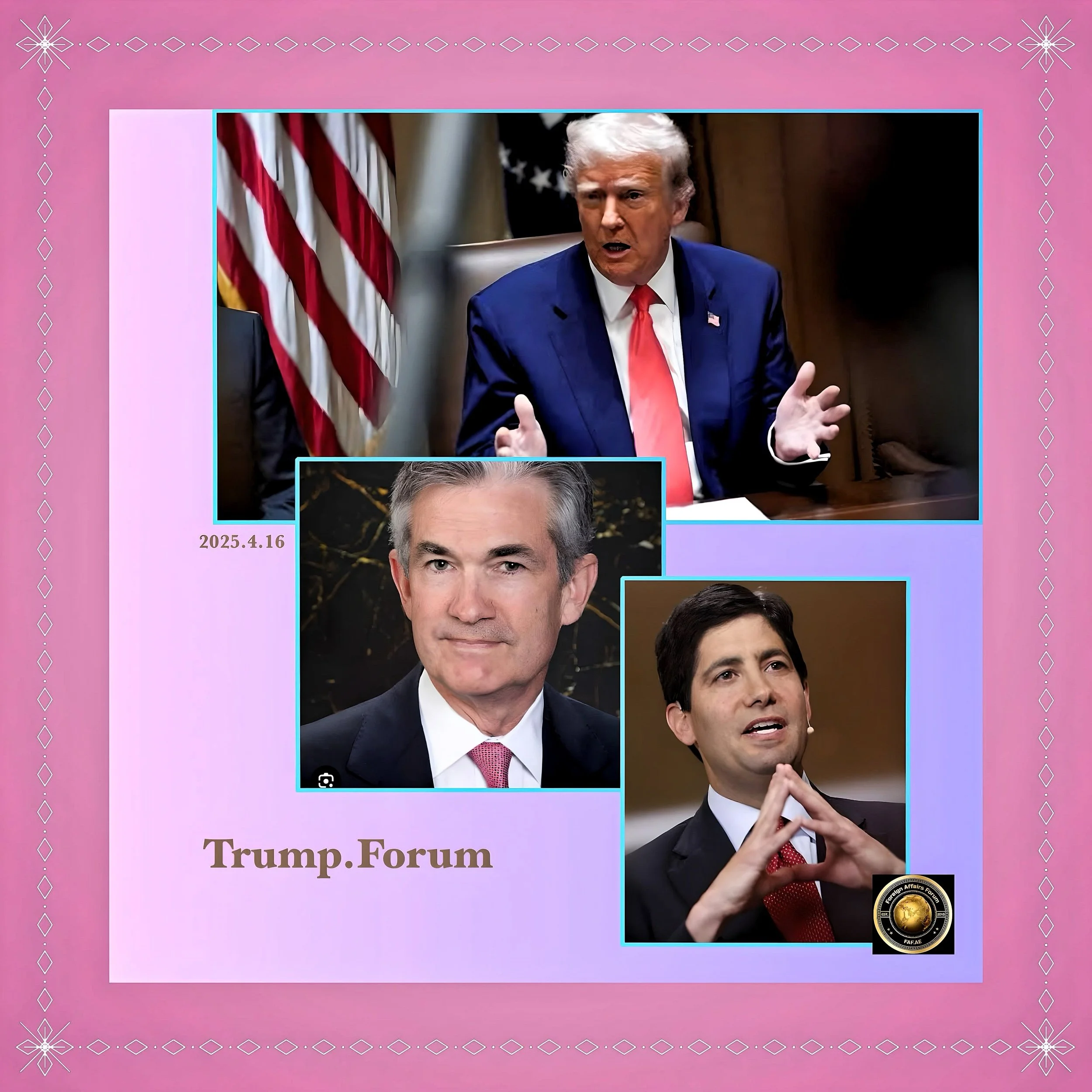
President Donald Trump is reportedly considering replacing Federal Reserve Chair Jerome Powell with former Fed Governor Kevin Warsh, creating significant tension between the White House and the traditionally independent central bank.
This brewing conflict comes as Powell warns that Trump’s tariff policies could accelerate inflation and hamper economic growth—directly contradicting the president’s campaign to lower prices for American consumers.
Kevin Warsh: Trump’s Potential Fed Chair Replacement
Multiple reports indicate that President Trump has been privately discussing the possibility of firing Jerome Powell and replacing him with Kevin Warsh, a former Federal Reserve Governor who served from 2006 to 2011.
These discussions have occurred over several months, including at Trump’s Mar-a-Lago resort in Florida.
Kevin Warsh, 55, brings significant experience to the potential role. He previously worked as a vice president and executive director in Morgan Stanley’s mergers and acquisitions department before serving as a special assistant to President George W. Bush on economic policy and as executive secretary at the National Economic Council.
Bush appointed him to the Federal Reserve Board in 2006, where he was the Fed’s chief liaison to Wall Street during the 2008 financial crisis.
Warsh left the Fed in 2011 after publicly opposing the central bank’s initiative to purchase $600 billion in bonds to stimulate the economy.
He serves as a distinguished visiting fellow at Stanford University’s Hoover Institution and a visiting scholar at Stanford University’s Graduate School of Business.
He is also a member of the Congressional Budget Office’s advisory panel and is married to Jane Lauder, granddaughter of cosmetics magnate Estée Lauder.
Interestingly, while Trump has discussed appointing Warsh, reports suggest that Warsh himself has advised against firing Powell before the conclusion of his term in 2026, arguing for maintaining the Fed’s independence.
Trump’s Escalating Conflict with Powell
The tension between Trump and Powell has been building, with the president making increasingly direct threats about removing the Fed chair.
On Thursday, Trump stated on his Truth Social platform that “Powell’s termination cannot come fast enough,” and later told reporters in the Oval Office, “If I want him out, he’ll be out of there real fast, believe me.”
Trump’s frustration stems primarily from two factors:
Interest Rate Policy
Trump has consistently pressured Powell to reduce interest rates, criticizing him for his reluctance.
In his recent social media post, Trump mockingly referred to Powell as “Too Late,” arguing that the Federal Reserve should have already decreased interest rates and insisted such action is necessary now.
Trump pointed to the European Central Bank’s expected rate cuts, suggesting the Fed should follow suit.
Powell’s Warnings About Tariffs
Powell has recently cautioned that Trump’s tariff policies could have adverse economic effects, directly challenging the president’s financial strategy.
During a speech at the Economic Club of Chicago, Powell stated that tariffs are “highly likely to generate at least a temporary rise in inflation” and that these inflationary effects “could also be more persistent.”
He further warned that tariffs were “likely to move us away from our goals” of price stability and maximum employment.
Powell’s Warning on Tariffs and Inflation
Powell’s warnings about the economic impact of Trump’s tariffs have been explicit and detailed. He characterized the announced tariff increases as “considerably larger than anticipated,” warning that the financial repercussions could include heightened inflation and slowed growth.
This creates a significant dilemma for the Fed as it pursues its dual mandate of price stability and maximum employment.
“We could find ourselves in the challenging scenario in which our dual-mandate goals are in tension,”
Powell explained. If tariffs lead to increased inflation alongside unemployment, the Fed will face difficult decisions about prioritizing one goal over another.
These warnings directly contradict Trump’s campaign promises to lower prices for inflation-weary consumers.
While Trump claims that tariffs will enhance American manufacturing and create jobs, Powell and many economists suggest they will instead act as a tax on consumers and a brake on growth.
Legal Challenges to Removing Powell
The legal authority for a president to fire a Fed chair remains untested and complicated. No Fed chair has ever been removed by a president.
The Federal Reserve Act of 1913 allows the president to dismiss a Fed chair only “for cause,” a standard that is both legally vague and rarely tested.
Powell himself has stated firmly that he does not believe a premature dismissal would be legally justified. “Our independence is a matter of law,” Powell said. “We’re not removable except for cause.
We serve very long terms, seemingly endless terms”. When previously asked whether he would resign if requested by Trump, Powell succinctly replied, “No”.
The question may soon receive legal clarity, as the Supreme Court is currently considering a case regarding the president’s authority to dismiss senior officials at independent agencies.
This case stems from Trump’s firings of officials from the National Labor Relations Board and an agency that protects workers from political interference.
A ruling in Trump’s favor could potentially overturn the nearly century-old legal precedent established in Humphrey’s Executor v. United States, which restricts a president’s ability to remove heads of independent agencies without cause.
While lawyers for the Trump administration have argued that the current case doesn’t involve the Fed, the outcome could signal how the Court might approach a legal conflict over Trump’s aim to remove Powell.
Economic and Market Implications
Attempting to fire Powell would likely have significant economic and market consequences:
Market Disruption
An effort to fire Powell would almost certainly cause stock prices to fall and bond yields to spike higher, pushing up interest rates across the economy.
Markets already reacted negatively to Powell’s recent comments about tariffs and inflation, with all three major Wall Street indices dropping sharply.
Economic Uncertainty
Trump’s trade policies have already created significant economic uncertainty. Powell noted that both consumer and business surveys indicated a “significant downturn in confidence regarding the economic future, primarily due to concerns surrounding the tariffs”.
This uncertainty has driven market volatility to levels not seen since the pandemic.
Monetary Policy Complications
If tariffs lead to increased inflation, as many economists predict, the Fed may opt to maintain or even raise interest rates rather than cut them as Trump desires. This would create a direct policy conflict between the president’s trade agenda and his desire for lower interest rates.
Political Ramifications
The political implications of attempting to fire Powell extend beyond the immediate economic concerns:
Institutional Independence
Most economists and Wall Street investors have long supported the Fed’s independence from political influence.
An attempt to remove Powell would be seen as a direct challenge to this independence, which is designed to maintain consistent economic management free from the electoral cycle’s pressures.
Bipartisan Concerns
Even Powell’s critics, including Senator Elizabeth Warren from Massachusetts, have cautioned that undermining the Federal Reserve’s independence could lead to “disastrous consequences for American markets”.
This suggests that an attempt to remove Powell might face bipartisan opposition.
Treasury Department’s Position
Interestingly, Treasury Secretary Scott Bessent recently indicated to Bloomberg that he anticipates starting interviews for potential successors to Powell in the fall.
However, he also described monetary policy as “a jewel that’s to be preserved,” suggesting some hesitation about disrupting Fed independence.
Conclusion
The standoff between President Trump and Federal Reserve Chair Jerome Powell represents a significant test for central bank independence in the United States.
While Trump has reportedly discussed replacing Powell with Kevin Warsh, such a move would face substantial legal challenges, likely market disruption, and potential political backlash.
Powell’s warnings about the inflationary impact of Trump’s tariff policies have created a direct conflict with the president’s economic messaging and desires for lower interest rates.
This tension highlights the complex relationship between trade policy, inflation, and monetary policy in the modern economy.
As the Supreme Court considers a case that could clarify presidential authority over independent agencies, the outcome could have far-reaching implications for the Federal Reserve’s structure and independence.
Whether Trump ultimately attempts to remove Powell before his term ends in May 2026 remains uncertain, but the mere suggestion has already added another layer of volatility to an already uncertain economic environment.