Peace Negotiations Offer Freezing Kyiv a Fragile Hope Amid Systemic Collapse
Executive Summary
The trilateral peace negotiations conducted in Abu Dhabi on January 23 and 24, 2026, between delegations from the United States, Russia, and Ukraine represent the first substantive diplomatic engagement between Moscow and Kyiv in 8 months and signal a potential shift toward negotiated settlement of a conflict that has consumed the lives of hundreds of thousands and displaced millions.
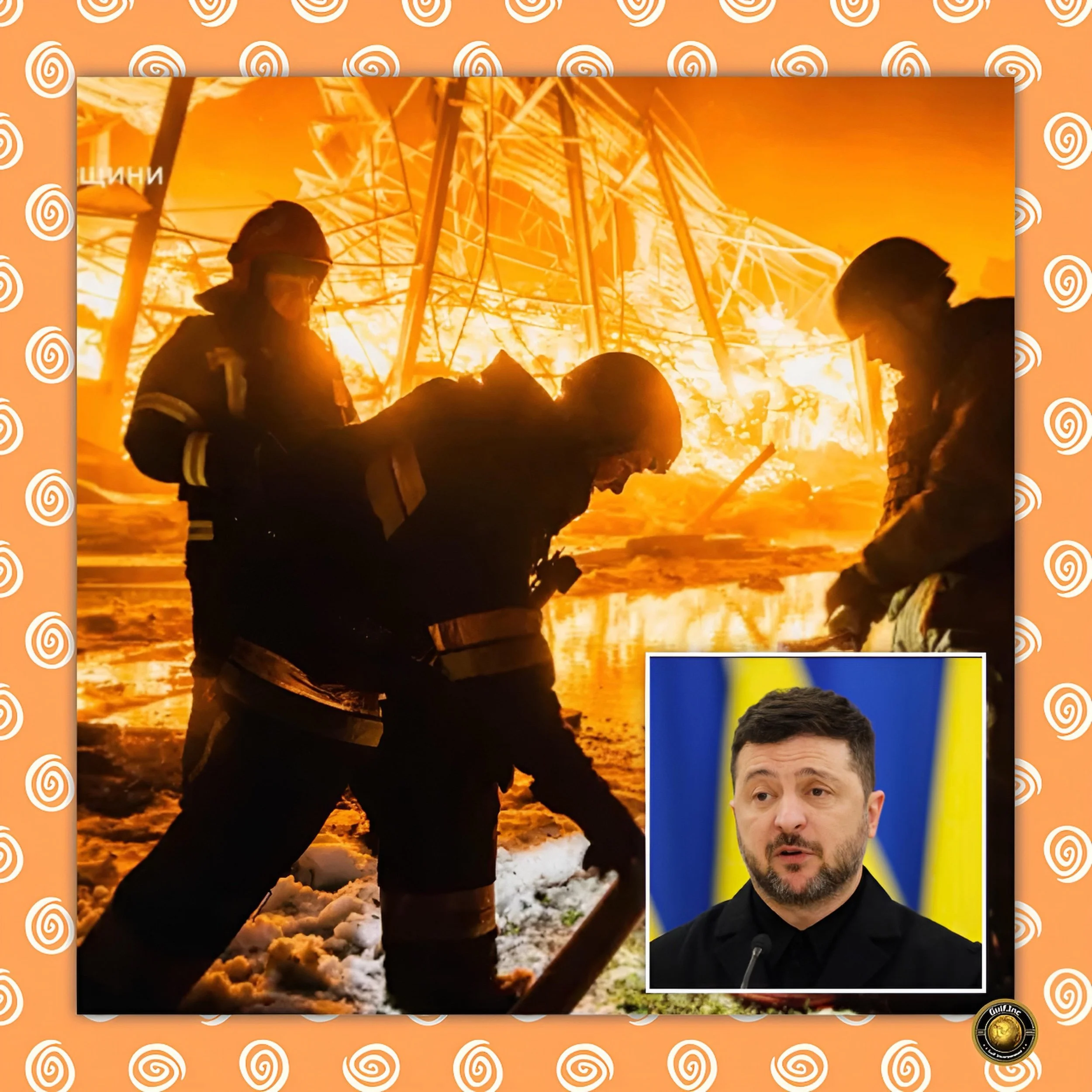
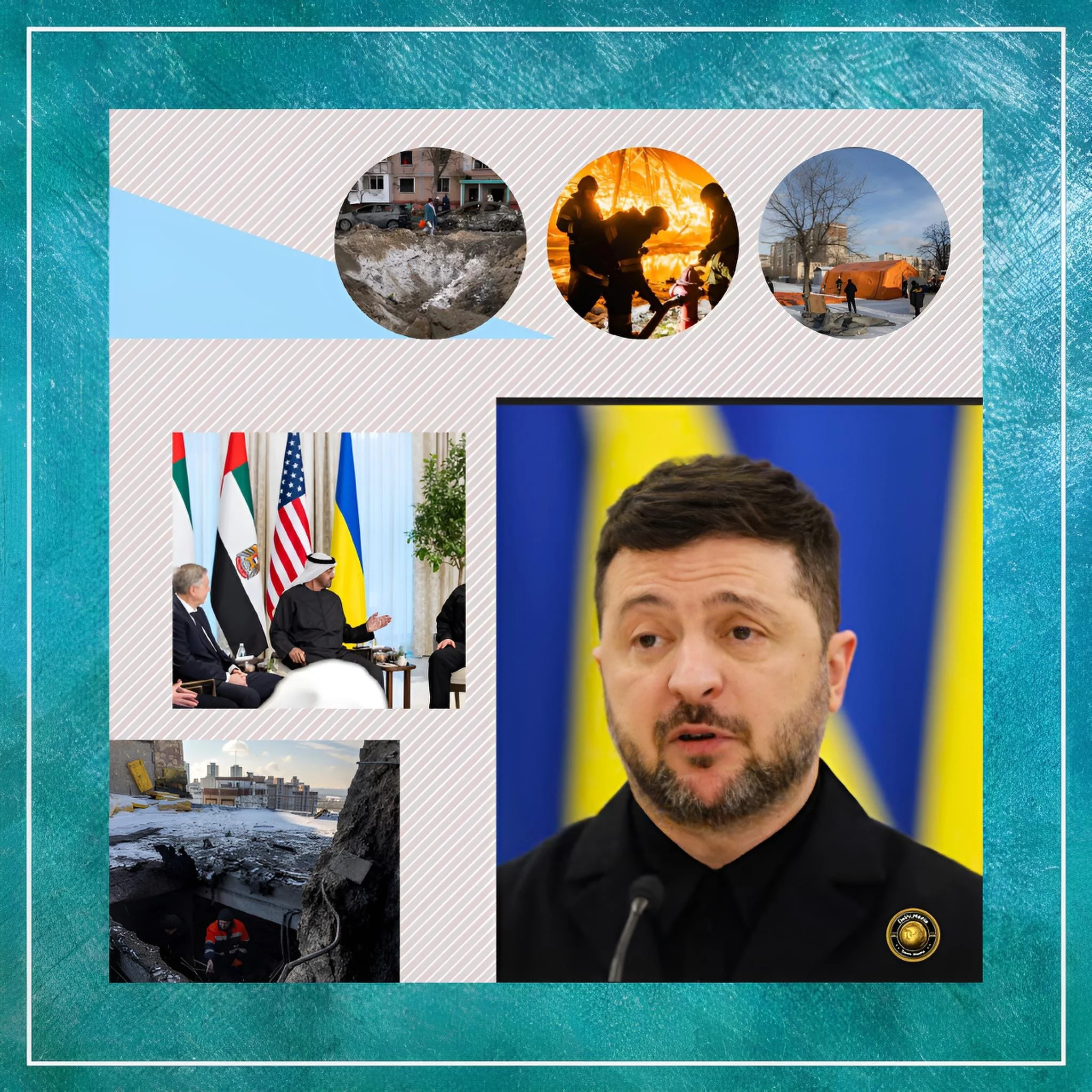
The negotiations proceeded amid acute humanitarian catastrophe in Ukraine's capital, where Russian systematic targeting of energy infrastructure has reduced power generation to less than 10% of normal capacity, left over 600 residential buildings without heating in temperatures plummeting to minus 18 degrees Celsius, and forced an estimated 600,000 residents to flee the city.
While President Donald Trump announced on January 29 that Russian President Vladimir Putin had agreed to a weeklong pause in attacks on Kyiv's energy infrastructure to allow negotiations to proceed unimpeded, the fragility of this arrangement and the unbridged gulf between Russian and Ukrainian negotiating positions suggest that humanitarian relief from the current crisis remains contingent upon political concessions that Ukraine views as existential threats to its sovereignty.
The negotiations reveal both the possibility of managed settlement and the profound structural obstacles that prevent genuine compromise between territorial maximalism and national self-determination.
Introduction and Historical Context
The Russia-Ukraine conflict, which entered its fifth year in February 2026, had previously seen substantive bilateral negotiations in June 2025 in Istanbul, when representatives from the two governments met directly.
Those talks, which lasted several days, failed to produce agreement on territorial arrangements and security guarantees, with both sides departing with their negotiating positions unchanged. The absence of direct talks between August 2025 and January 2026 reflected the hardening of positions and the collapse of confidence in the possibility of negotiated settlement.
The Trump administration's assumption of office in January 2025 had initially brought renewed emphasis on conflict termination, with special envoy Steve Witkoff and Secretary of State Marco Rubio conducting numerous meetings with both Russian and Ukrainian officials. However, these efforts produced only a controversial November 2025 draft 28-point proposal that Ukrainian officials characterized as a capitulation ultimatum and that provoked widespread international criticism.
The scheduling of trilateral talks in Abu Dhabi in January 2026 thus represented a reset of diplomatic efforts after months of failed unilateral and bilateral engagement.
The venue selection, the United Arab Emirates capital, reflected both the desire of Emirati leadership to position itself as neutral mediator and the practical requirement that neither Russia nor Ukraine could unilaterally determine negotiating location without the other party refusing to attend.
The involvement of senior American military figures—Army Secretary Dan Driscoll and General Alexus Grynkewich, the commander overseeing US forces in Europe—alongside the civilian special envoy Witkoff signaled that the Trump administration recognized the necessity of credible security commitments to any eventual settlement.
Simultaneously, Kyiv was experiencing unprecedented humanitarian crisis. Beginning with a massive Russian strike on January 9 employing 242 drones and 36 missiles, Russia had intensified its campaign of systematic infrastructure destruction targeting Ukraine's energy grid with deliberate strategy to render the capital increasingly uninhabitable.
This campaign, described by international observers as "weaponization of winter," targeted not merely military installations but deliberately concentrated firepower on civilian heating and electricity systems at a moment when temperatures had reached minus 18 degrees Celsius.
The convergence of peace negotiations and humanitarian catastrophe created a dynamic wherein Ukrainian negotiators faced overwhelming pressure to accept territorial concessions as the price of relief from the humanitarian crisis affecting their civilian population.
History of Negotiation Positions
The Territorial Impasse
Russian demands regarding Ukrainian territory have remained remarkably consistent throughout the four years of warfare. In the Trump-Putin summit conducted in Alaska in August 2025, according to reports from both the Kremlin and American officials, Putin had insisted that Russia would not accept any settlement that did not grant Moscow control of the entire Donbas region, comprising the Donetsk and Luhansk oblasts (provinces).
Russia currently occupies approximately two-thirds of Donetsk and nearly all of Luhansk, with Ukrainian forces continuing to hold several significant cities and portions of the region. Putin's demand thus encompasses not merely recognition of territory Russia currently controls, but also compulsory Ukrainian withdrawal from territory the Ukrainian government and military continue to defend.
The November 2025 draft 28-point American proposal, which some observers believed was negotiated in collaboration with Russian officials, essentially accepted this Russian maximalist position by calling for Ukrainian forces to withdraw from all remaining Donetsk holdings and for international recognition of Russian territorial acquisitions.
Ukraine's position, articulated by President Volodymyr Zelensky and reinforced by his government's negotiators, is similarly categorical: Ukraine's constitution prohibits presidential cession of national territory without a popular referendum.
Beyond this legal constraint, Zelensky and his government argue that ceding territory without genuine guarantee of Ukrainian sovereignty restoration would establish a precedent for further Russian territorial seizures.
Zelensky has noted that Russian forces have captured less than 1% of Ukrainian territory despite four years of warfare, and that the idea of compulsory surrender of territory Russia has not captured represents an unreasonable demand that Ukraine cannot accept without destroying the legitimacy of the government itself.
The psychological and political weight of this position cannot be overestimated: for Zelensky to surrender territory would be interpreted domestically as capitulation to invasion and would likely destroy his political authority.
The American position, as articulated by Witkoff and reflected in successive draft proposals, has evolved toward a middle position that seeks to accommodate both Russian demands and Ukrainian red lines through creative diplomatic formulations.
The modified 20-point plan discussed in Abu Dhabi proposes that fighting halt at current battle lines, which would become demilitarized zones. Russia would retain territory it currently controls. Ukraine would retain territory it currently controls.
The sovereignty question would be deferred through international peacekeeping forces (potentially from France, the United Kingdom, and other European nations) replacing the Ukrainian military in the contested zones. Eventually, referendums conducted under international supervision would determine final sovereignty.
This approach, which resembles mechanisms employed in the Kosovo conflict resolution process, would theoretically end the immediate warfare while postponing the sovereignty determination.
Current Status of Negotiations
The Abu Dhabi Talks
The trilateral talks conducted in Abu Dhabi on January 23 and 24, 2026, proceeded at a technical level without the participation of heads of state.
The American delegation included Witkoff, Secretary Driscoll, and General Grynkewich. The Russian delegation included Yuri Ushakov, a presidential aide, and Kirill Dmitriev, head of Russia's sovereign wealth fund and long-time commercial representative in peace negotiation efforts.
The Ukrainian delegation represented President Zelensky's office but did not include the president himself. This composition reflected both the sensitivity of the negotiations and the desire to maintain diplomatic flexibility without committing the highest levels of government.
President Zelensky characterized the talks as productive and indicated that multiple topics had been addressed. He emphasized that the fundamental focus remained on "parameters for concluding the conflict" and that discussions had explored the role of American security guarantees in any settlement. Steve Witkoff, in statements made immediately after the talks, described the engagement as "very constructive" and indicated that progress had been achieved.
However, he acknowledged that the discussions were not concluding negotiations but rather preliminary technical engagement. He announced that further talks were scheduled to resume in Abu Dhabi on February 1, 2026.
The most significant substantive achievement appears to have been finalization of a security guarantees framework. According to Zelensky, the document detailing security assurances that Ukraine seeks is "100% ready." The framework involves deployment of limited numbers of European troops (primarily from France and the United Kingdom) alongside American logistical and intelligence support.
This arrangement falls short of formal NATO membership, which Russia has explicitly rejected, but provides Ukraine with the external security commitment that Zelensky has argued is essential for any settlement. The framework appears to have achieved consensus among the American, Ukrainian, and European participants, suggesting that this element of settlement has been substantially resolved.
The territorial question, by contrast, remains fundamentally unresolved. Russia continued to insist throughout the talks that it will not accept any settlement that does not grant Moscow control of all currently Russian-held territory plus the entire Donetsk region, including areas currently held by Ukraine.
Kremlin aide Yuri Ushakov told reporters after discussions with American officials that there would be "no hope" of long-term settlement unless territorial issues were resolved "according to the framework agreed at the Trump-Putin Alaska summit," a formulation that implies Russian maximalist demands. Peskov, the Kremlin spokesperson, reiterated on January 24 that Russia would continue to pursue its "special military operation" until territorial demands were satisfied.
Kyiv's Humanitarian Crisis
Scope and Strategic Implications
The humanitarian catastrophe unfolding in Kyiv provides the temporal urgency that may ultimately drive Ukrainian acceptance of territorial compromise.
Following the massive Russian strike of January 9, employing 242 drones and 36 missiles, and subsequent strikes on January 20 and January 24, Ukraine's energy infrastructure has been degraded to a state of near-total non-functionality.
The Russian strikes have destroyed approximately 85 gigawatts of power generation capacity since October 2025—approximately 50% of Ukraine's normal generation capability.
For a city of 3.6 million residents operating in pre-war conditions, this destruction is catastrophic. Post-war, Kyiv's power consumption has contracted substantially, yet the city is operating at less than 10% of normal capacity.
In practical terms, this means that the city's central heating system is non-functional, water pumping systems operate intermittently, and electricity is available only to essential services, with residential buildings receiving power for limited periods rotating among different districts.
The human consequences have been severe and immediate. As of January 29-30, 2026, over 600 residential apartment buildings in Kyiv remain without central heating, concentrated particularly in the Troyeshchyna district where approximately 300,000 residents have been exposed to temperatures of minus 15 degrees Celsius without functioning heating systems.
Utility workers, described in press reports as being greeted as gods by residents desperate for heat restoration, have suffered casualties—at least 2 electricians died while attempting repairs during the crisis.
The pace of repair operations has been constrained by the fact that Russian strikes deliberately target repair teams and newly restored infrastructure, creating a Sisyphean cycle wherein repaired facilities are deliberately destroyed in follow-on strikes.
The displacement effects have been substantial. An estimated 600,000 residents have fled Kyiv since the January 9 strike, representing approximately 17% of the city's population.
Those remaining have been compelled to congregate in heated public spaces—over 1,200 such spaces have been organized throughout the city, including schools, community centers, and designated "invincibility points" equipped with generators.
Schools and universities have extended winter breaks indefinitely, as the buildings lack heating and operating conditions are unsafe. Businesses have shifted to remote work or dramatically shortened operating hours. Supply chains have been disrupted, with shops operating at reduced capacity and many closing entirely due to lack of electricity.
The psychological and political impact of this humanitarian crisis cannot be understated. For a government engaged in peace negotiations, the existence of a humanitarian catastrophe affecting the capital creates overwhelming pressure to accept terms that would otherwise be rejected.
Ukrainian negotiators, aware that millions of their citizens are suffering in freezing conditions, face powerful incentive to agree to territorial concessions that would, in principle, allow negotiations to conclude and humanitarian relief to follow.
This dynamic represents Russia's strategic calculation: by deliberately targeting civilian infrastructure and creating humanitarian pressure, Russia increases the likelihood that Ukraine will accept territorial surrender as the price of relief.
Trump's Ceasefire Claim and Questions of Implementation
On January 29, 2026, President Trump announced that he had personally requested that Russian President Putin refrain from attacking Kyiv and other cities for one week due to the extreme cold conditions Ukraine was experiencing. Trump stated: "I personally asked President Putin not to launch attacks on Kyiv and various towns for a week, and he agreed to that."
The Kremlin, through spokesperson Dmitry Peskov, confirmed on January 30 that Trump had made such a request and that Russia had agreed to suspend attacks on Kyiv until February 1. Peskov indicated that the arrangement had been made "to create favorable conditions for negotiations."
However, the precise nature of the agreement remains unclear, and multiple indicators suggest that actual implementation may be limited.
Zelensky indicated that the arrangement was not a formal ceasefire agreement but rather what the Ukrainian officials characterized as a "gentlemen's agreement" among negotiators. Zelensky explicitly stated: "There is no ceasefire. There is no formal agreement on a ceasefire, as is typically reached during negotiations."
He clarified that the understanding originated from American initiative and that there had been no direct communication between Ukraine and Russia regarding the pause.
Peskov's statements were similarly vague, declining to specify whether the pause applied only to energy infrastructure or to all aerial assaults, and notably failing to clarify whether the agreement would apply to areas beyond Kyiv.
The credibility of any Russian commitment to such a pause must be assessed against Russia's historical behavior. During January 25-27, while trilateral negotiations were supposedly ongoing in Abu Dhabi, Russian forces conducted drone and missile strikes on the southern port city of Odesa and a passenger train, killing 5 civilians and wounding numerous others. When Ukrainian negotiators raised the question of these violations during the talks, Russian representatives privately apologized, explaining that "not all military branches had been informed of the ceasefire."
This explanation is revealing: it suggests either that Russia possesses insufficient command and control over its military branches to prevent strikes contrary to Kremlin orders, or that the official explanation obscures a deliberate decision to continue military pressure while conducting diplomatic negotiations.
A similar pattern emerged in March 2025, when Russia and the United States had agreed to a 30-day ceasefire on energy infrastructure, which Russia violated within days, resuming strikes with the explanation that some military commanders had not received notification of the arrangement.
The timeline of the proposed ceasefire further raises questions. Trump indicated the pause would last "a week," which would theoretically end by February 6. However, Peskov specified the date as February 1, which is only 2 days from the time of the announcement.
The discrepancy suggests either confusion regarding the arrangement's duration or deliberate ambiguity that permits Russia to resume strikes at will by claiming the agreement has expired.
Additionally, weather forecasts predicted temperatures would drop significantly beginning February 2, potentially creating conditions worse than those existing on January 30, suggesting that the timing of any pause may be deliberately scheduled to expire precisely when humanitarian pressure would intensify further.
Cause and Effect
Strategic Implications of the Negotiation Dynamics
The convergence of peace negotiations and humanitarian crisis creates a strategic dynamic highly favorable to Russian interests. By deliberately creating conditions of civilian suffering through infrastructure destruction, Russia has simultaneously increased the cost of continued warfare to the Ukrainian population while increasing the incentive for Ukrainian negotiators to accept compromise terms.
The humanitarian pressure operates as a form of coercion distinct from but complementary to military pressure on the battlefield. Ukrainian negotiators face a constraint that their Russian counterparts do not: they must account for the welfare of their civilian population and face political accountability for their decisions regarding territorial compromise.
Simultaneously, the willingness of the Trump administration to facilitate negotiations and to claim diplomatic progress creates the perception, however tenuous, that negotiated settlement is achievable.
Trump's announcement of the ceasefire agreement, even if the arrangement proves to be largely nominal, creates the appearance of momentum toward settlement. This perception, while potentially illusory, creates political pressure on the Ukrainian government to reciprocate by demonstrating willingness to negotiate seriously and to accept compromise positions.
The result is that Ukrainian negotiating position is compressed between military pressure from Russian forces, humanitarian pressure from the civilian population, and diplomatic pressure from the American mediator.
Russia's negotiating position, by contrast, is reinforced by all 3 of these factors. Russian military forces continue to advance slowly in the Donbas, capturing less than 1% of Ukrainian territory annually but maintaining pressure.
Russian infrastructure destruction creates humanitarian pressure that constrains Ukrainian negotiating flexibility. And the American diplomatic efforts, whatever Trump's intentions, operate to legitimize Russian demands by treating them as negotiable components of a settlement package rather than as outright violations of international law.
The question of whether Putin is genuinely interested in a negotiated settlement remains contested among analysts.
Putin's statements and the Kremlin's official position continue to insist on maximalist territorial demands that are categorically incompatible with Ukrainian acceptance.
The observation by some analysts that Putin's objective may be the total conquest of Ukraine rather than a negotiated partition suggests that Trump's diplomatic efforts may be fundamentally misdirected, based on a misunderstanding of Putin's actual aims.
If Putin seeks not a settlement but the eventual capitulation of the Ukrainian state and its absorption into a Russian sphere of dominance, then negotiations conducted on the assumption that compromise is possible will likely prove futile.
Future Steps
Pathways Toward Settlement or Impasse
Three scenarios appear plausible based on the current negotiation trajectory.
In the first scenario, Russia, recognizing that further military advance is costly and that the international community is unlikely to grant recognition of conquered territory, accepts a compromise settlement modeled on the Kosovo arrangement. International peacekeeping forces would replace the Ukrainian military in demilitarized zones. Referendums would be conducted under international supervision at some future date.
Ukraine would accept the loss of currently held territory in Donetsk but would retain the possibility of eventual restoration of sovereignty through international legal mechanisms.
The American security guarantee would provide Ukraine with sufficient confidence that Russia would not renew warfare to justify acceptance of this arrangement. This scenario would require Putin to accept outcomes substantially below his maximalist demands, but would allow him to claim victory and consolidate Russian territorial acquisitions.
In the second scenario, Russia uses the negotiating process to extract concessions regarding security arrangements while maintaining maximalist territorial demands.
The talks could collapse, with each side accusing the other of intransigence. Russia would then resume military operations at an intensified pace, continuing to target Ukrainian infrastructure and accept the humanitarian costs as acceptable price for eventual territorial expansion.
This scenario reflects historical pattern: Russia has repeatedly used negotiation as a tactic for achieving political concessions while reserving the option to resume military operations when negotiations fail to produce desired results.
In the third scenario, the humanitarian crisis in Kyiv becomes sufficiently acute that Ukrainian negotiators, under pressure from their own government and international actors, accept territorial concessions as the price of immediate humanitarian relief and cessation of infrastructure destruction.
Ukraine would essentially surrender the territories that Russia has not yet conquered, accepting the logic that avoidance of further destruction justifies territorial loss. Zelensky would attempt to frame this as a successful negotiation given the constraints Ukraine faced.
The Trump administration would characterize this outcome as a major diplomatic achievement. European allies would face enormous pressure to accept the settlement as the least undesirable option among available alternatives.
Conclusion
The Paradox of Negotiation Under Coercion
The January 2026 Abu Dhabi talks represent a genuine diplomatic engagement after months of failed unilateral efforts. The development of security guarantee framework shows that consensus on some settlement components is achievable.
The proposed ceasefire, even if fragile, signals acknowledgment by the parties that indefinite warfare serves none of their interests. Yet the fundamental incompatibility between Russian maximalist demands and Ukrainian refusal to accept territorial loss without political safeguards remains unresolved.
The humanitarian catastrophe in Kyiv, while creating pressure for rapid settlement, simultaneously demonstrates Russia's willingness to inflict civilian suffering as a negotiating tactic.
This willingness, documented through repeated targeting of energy infrastructure and civilian areas, raises questions about whether a settlement achieved under such coercion would prove durable or whether it would merely represent a temporary pause before renewed conflict.
The Trump administration's optimistic rhetoric regarding negotiation progress may reflect genuine belief that settlement is achievable, or it may reflect the political desire to claim diplomatic victory regardless of actual settlement quality.
The answer to this question will become apparent in the coming weeks as further negotiations are scheduled and as the compliance (or non-compliance) of Russian forces with the announced ceasefire becomes apparent.
For Kyiv's freezing residents, the coming weeks will reveal whether diplomatic hope will translate into humanitarian relief or whether the city's suffering will continue as negotiations repeat the futile cycles of previous months.